A Day of Looking
New Haven, Connecticut
Art, architecture, gold, perfume, cigar smoke, pizza—and the feeling of autumn beginning to arrive.
I woke up wanting to see something.
Not necessarily anything specific. I just wanted to be around art, architecture, objects, texture—things that might make me look a little differently at whatever I was going to make next.
Sometimes I can spend too much time trying to force myself to come up with an idea. Sitting at a desk, staring at the same things around me and expecting some entirely new thought to suddenly appear. Yesterday I wanted the opposite. I wanted to go somewhere and just look.
On the drive to New Haven I spotted a building sitting in the grass that immediately caught my attention. Brutalist, heavy, almost sculptural. It didn't really feel like a building from the road. It felt like someone had placed an enormous concrete object in the landscape.
Of course, I had to photograph it.
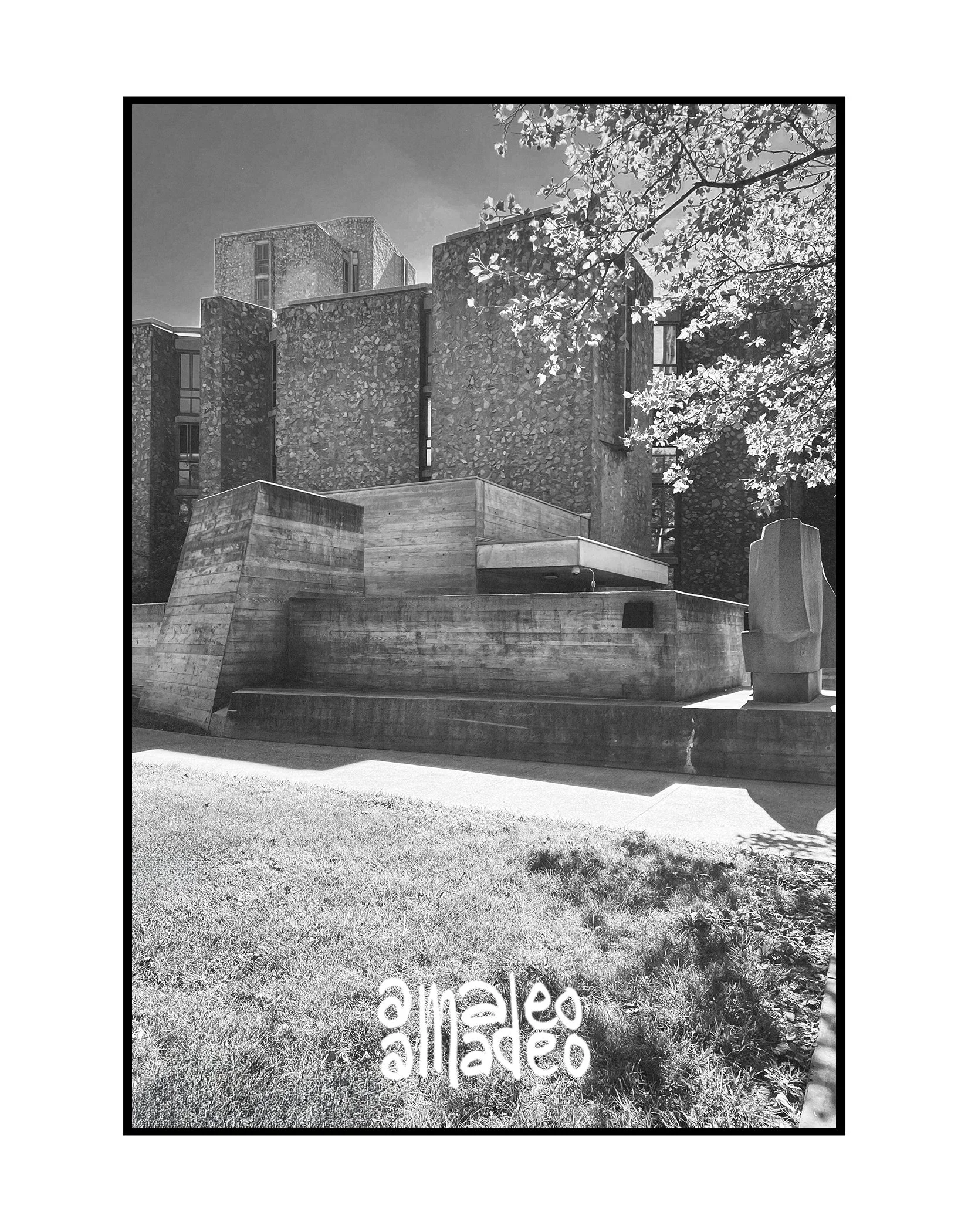
I love when architecture does that—when its purpose almost becomes secondary to its shape. Concrete can feel cold and institutional, but against grass and trees it becomes something completely different. There is something I continue to love about putting severe modernism against something organic, old, romantic or imperfect.
It was a good indication of where my head was going for the rest of the day.
By the time I got to New Haven, however, art could wait for about ten minutes. I needed caffeine.
Coffee first. Museum second.
I arrived at the Yale University Art Gallery with only about an hour before closing, which turned out to be almost perfect. There wasn't enough time to feel obligated to see everything. I couldn't approach the museum like a checklist. I just wandered and photographed the things that made me stop.
And there were many.
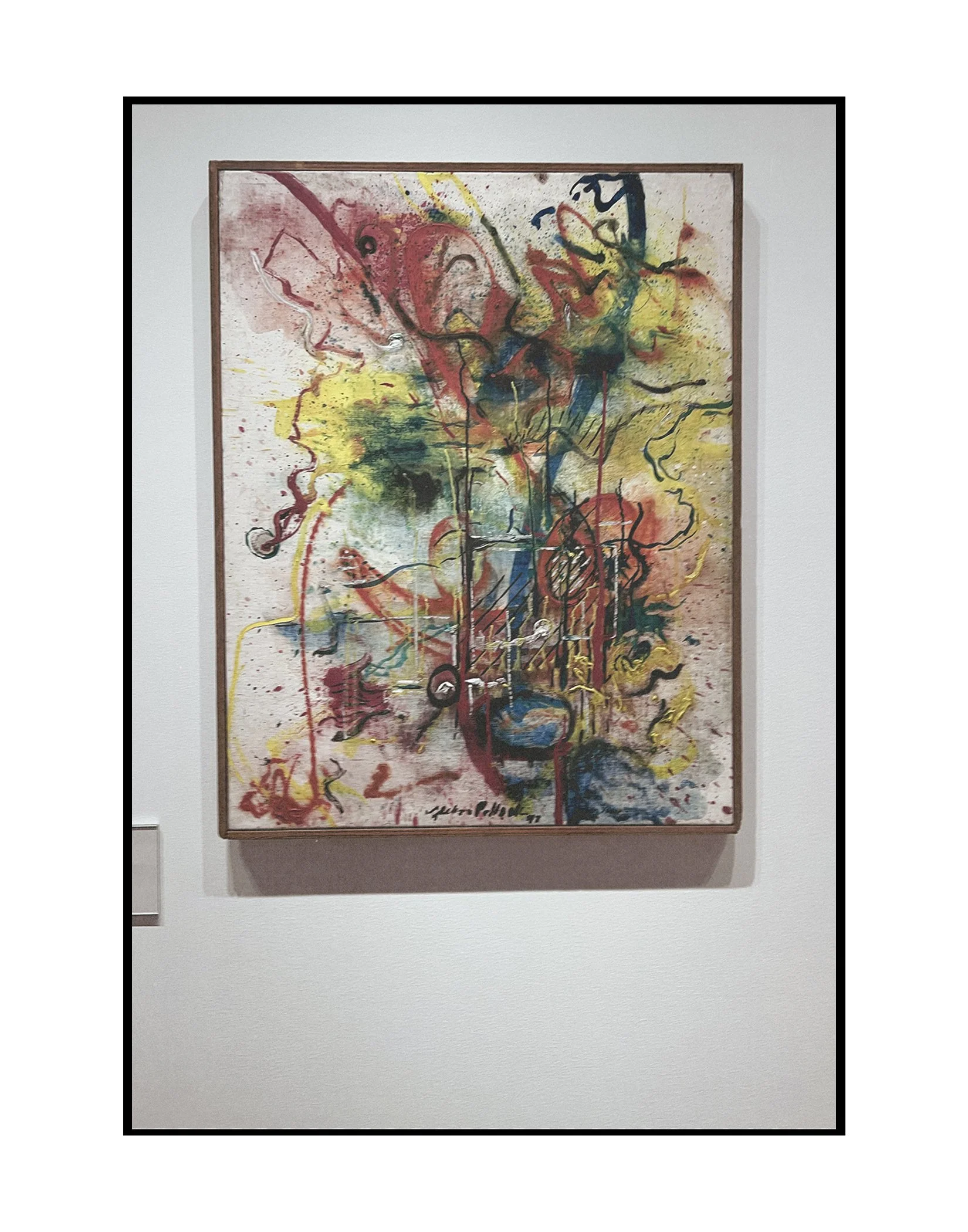
There is something exciting about walking into a museum collection and suddenly encountering an artist whose work you've seen reproduced hundreds of times—but not this work.
Pollock. Mondrian. Calder. Picasso.
Artists whose work I've encountered in enormous museums around the world were suddenly appearing here in New Haven, through pieces I had never stood in front of before.
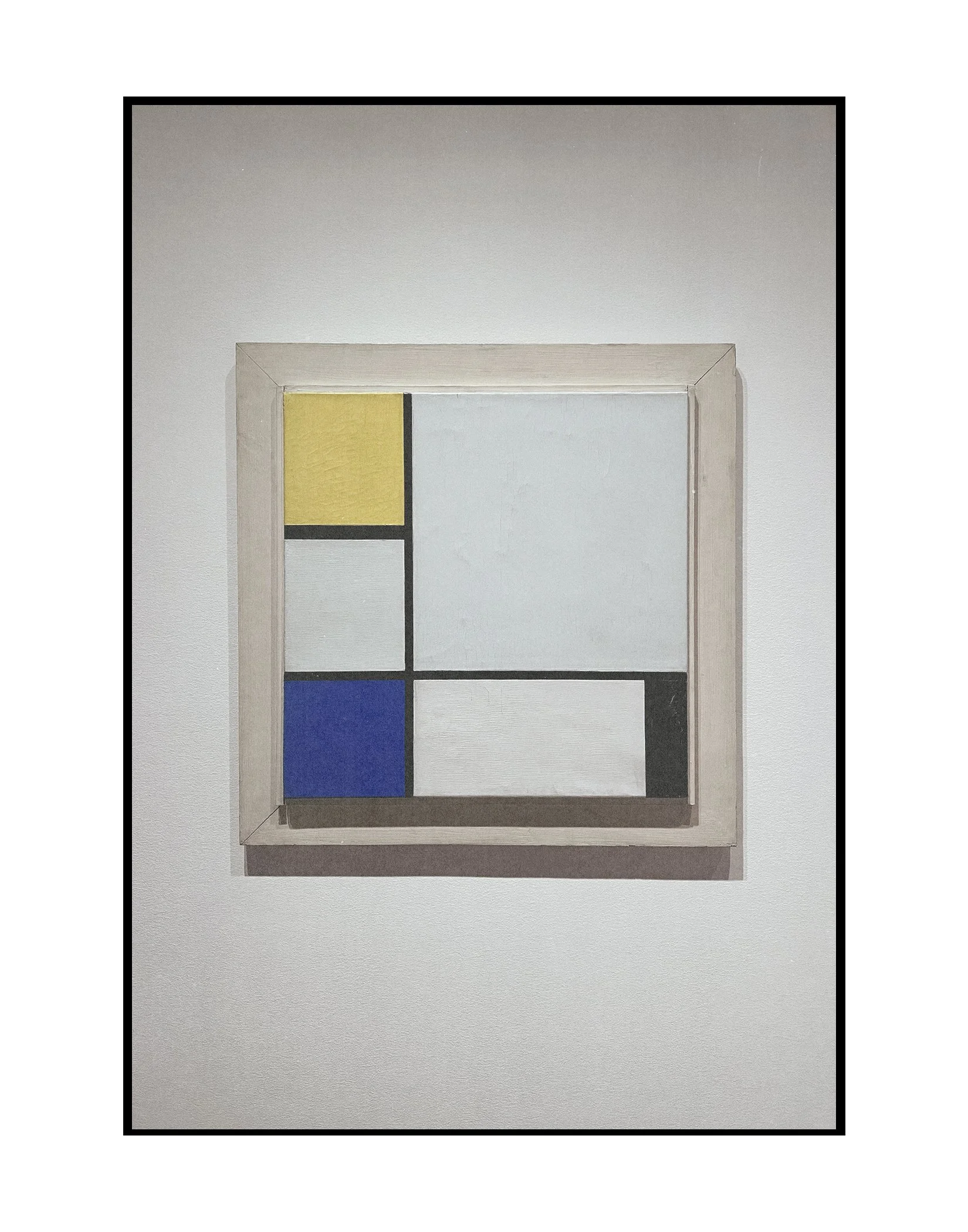
Seeing the Mondrian was particularly interesting because his vocabulary is so familiar that you almost think you already know what you're going to see: the black divisions, the white space, the primary colors.
But a reproduction flattens everything.
Standing in front of it, you see the object. You see the paint. You see the frame. You see scale. You notice that what has become an icon of modernism was first a physical thing made by someone's hands.
That distinction kept coming back to me throughout the museum.
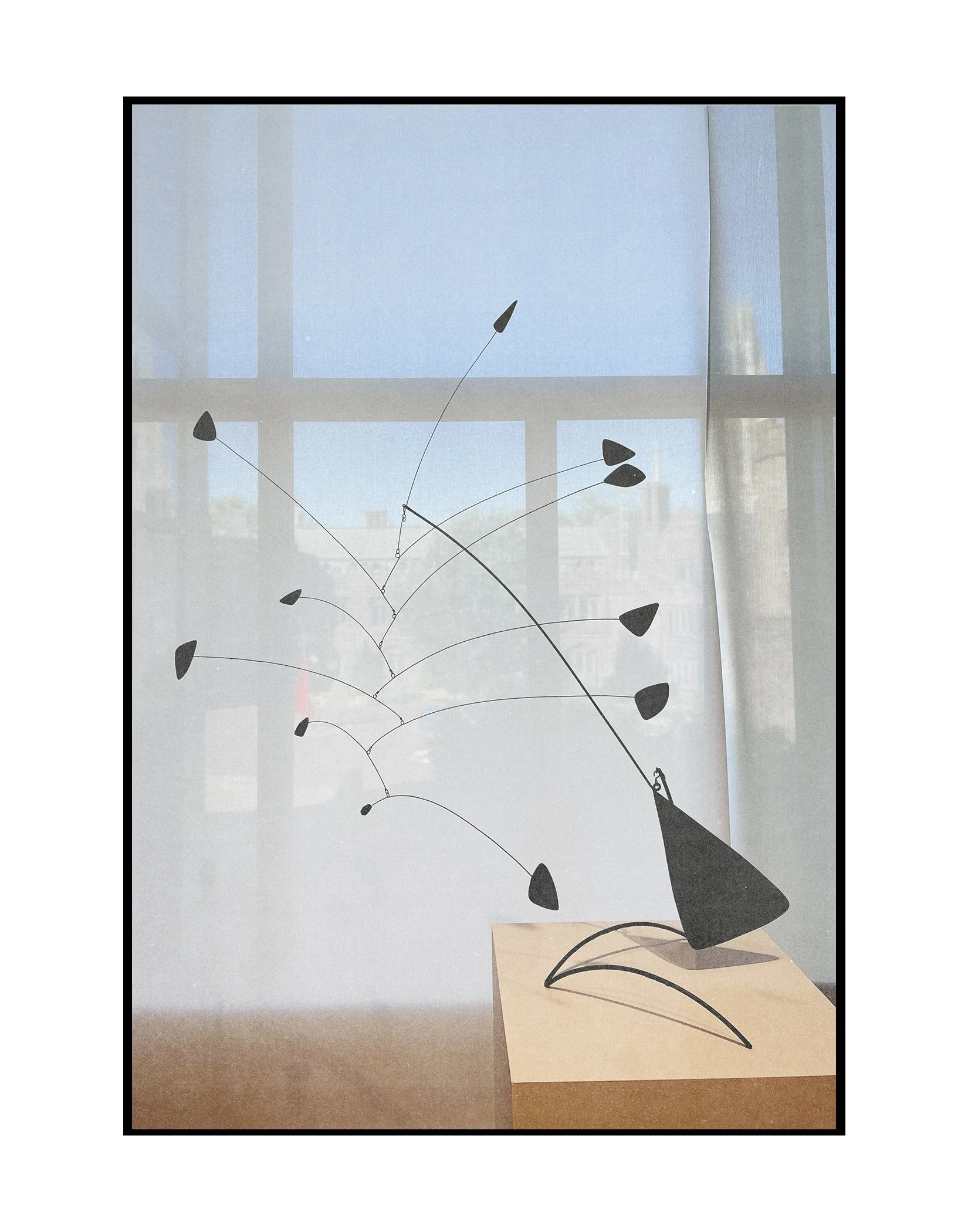
The Calder felt almost like punctuation in the room.
Lines drawing themselves through the air. Shape without mass. Movement waiting to happen.
I kept thinking about how little material is actually necessary to create a very strong silhouette. A few pieces of wire and metal suddenly take command of all the empty space surrounding them.
As someone constantly thinking about clothing and the body, I found myself looking at it almost like a garment: where does the weight sit? Where does the line begin? What happens when it moves?
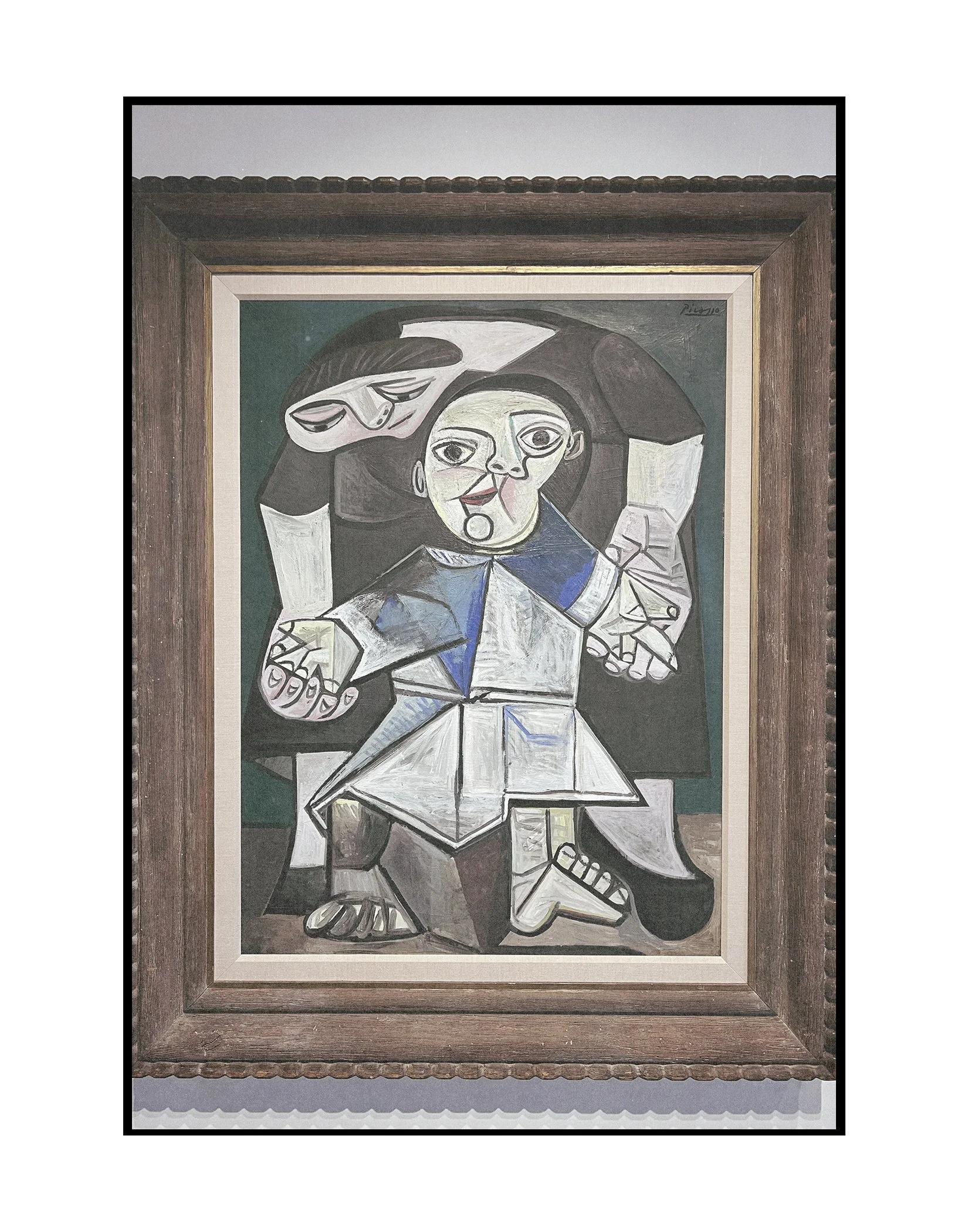
And then Picasso.
I don't think seeing work like this ever needs to become more complicated than the strange thrill of realizing: there it is.
Something that belongs to the history books is sitting a few feet away from you.
But some of the objects that stayed with me most weren't paintings at all.
Objects made to become alive
I became completely absorbed by the African galleries.
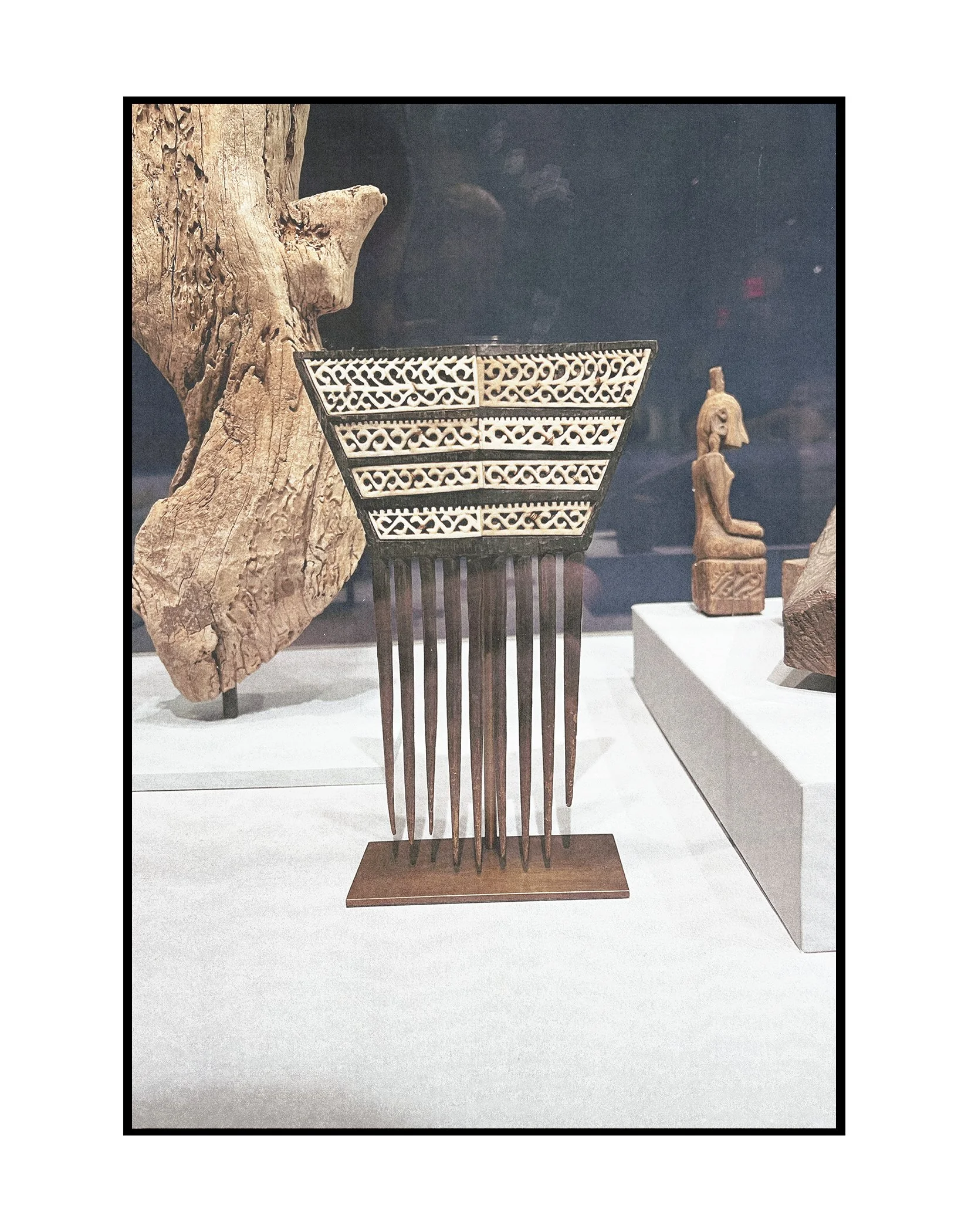
Hair ornaments. Combs. Hats. Jewelry. Ceremonial objects.
Immediately I stopped seeing them as static artifacts sitting behind glass and started trying to imagine them attached to people.
Moving.
Dancing.
Catching light.
Making sound.
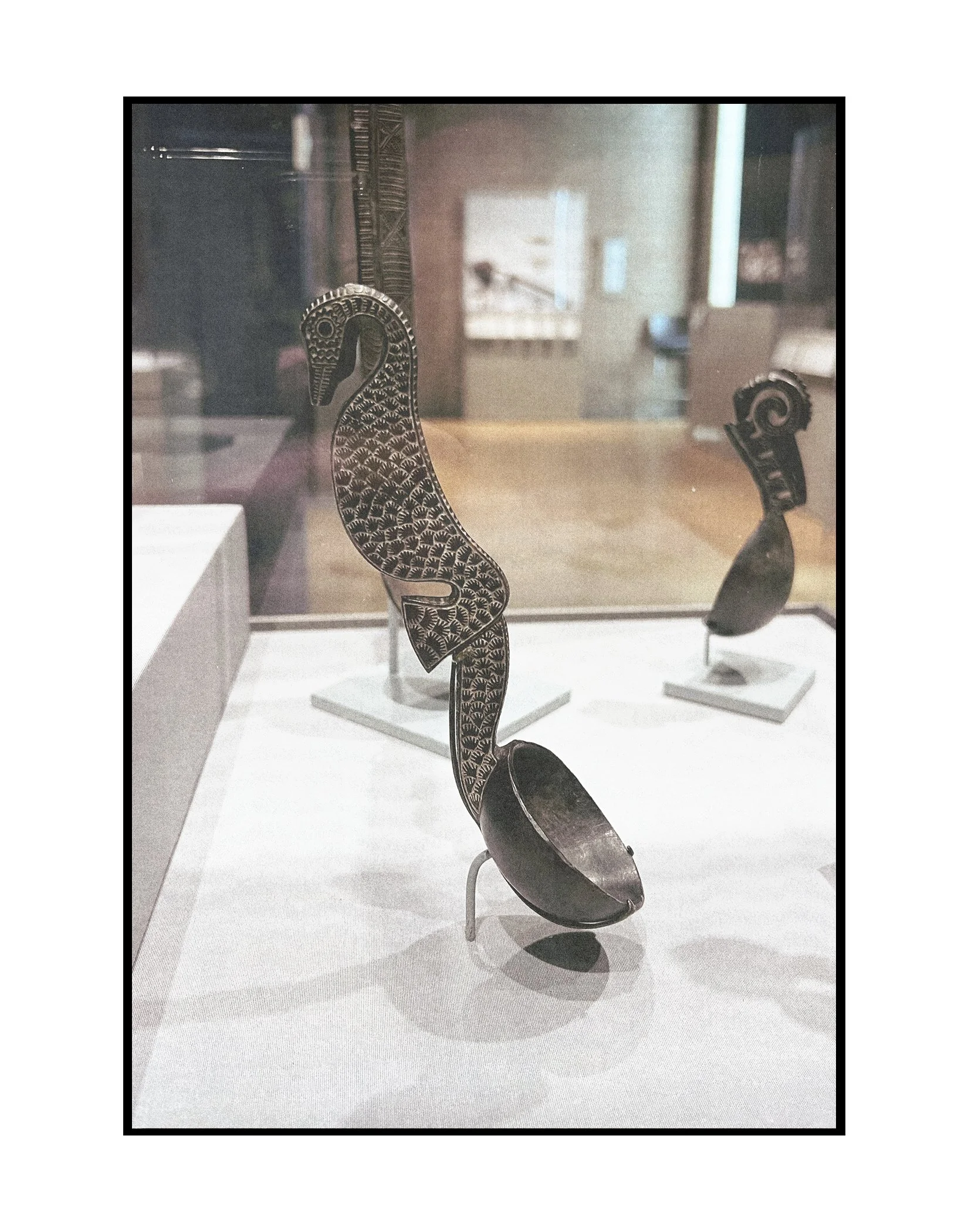
The combs especially interested me. They were practical objects, but they were also sculpture. Decoration and usefulness weren't separated from each other.
That is something I think about constantly.
Why shouldn't the thing you use every day also be beautiful?
Why shouldn't the beautiful thing also be useful?
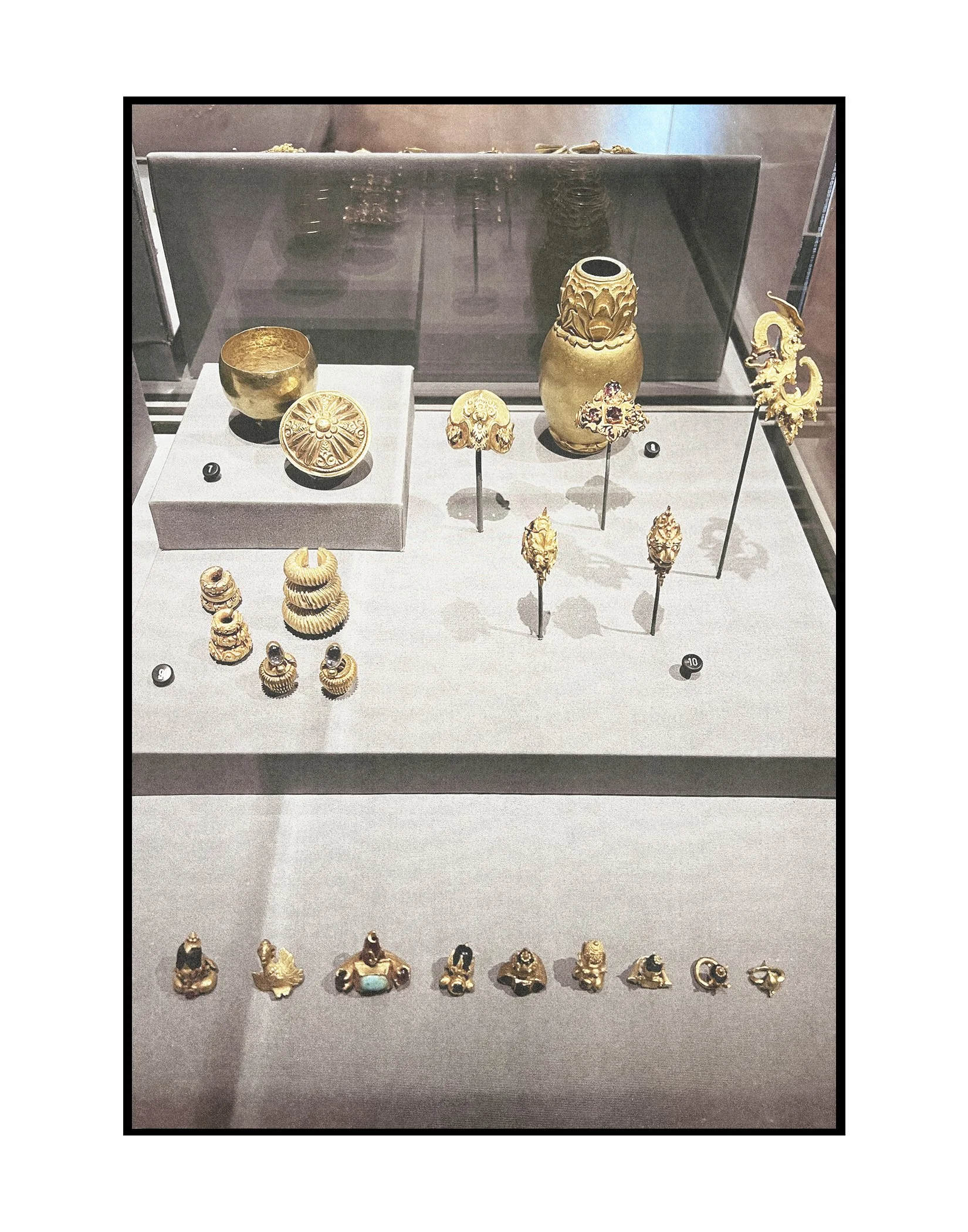
Then there was all the gold.
Tiny rings, ornaments and pieces of jewelry laid out like miniature sculptures.
The scale made me want to get closer. Some of the pieces were so small and yet carried such an extraordinary amount of decoration and symbolism.
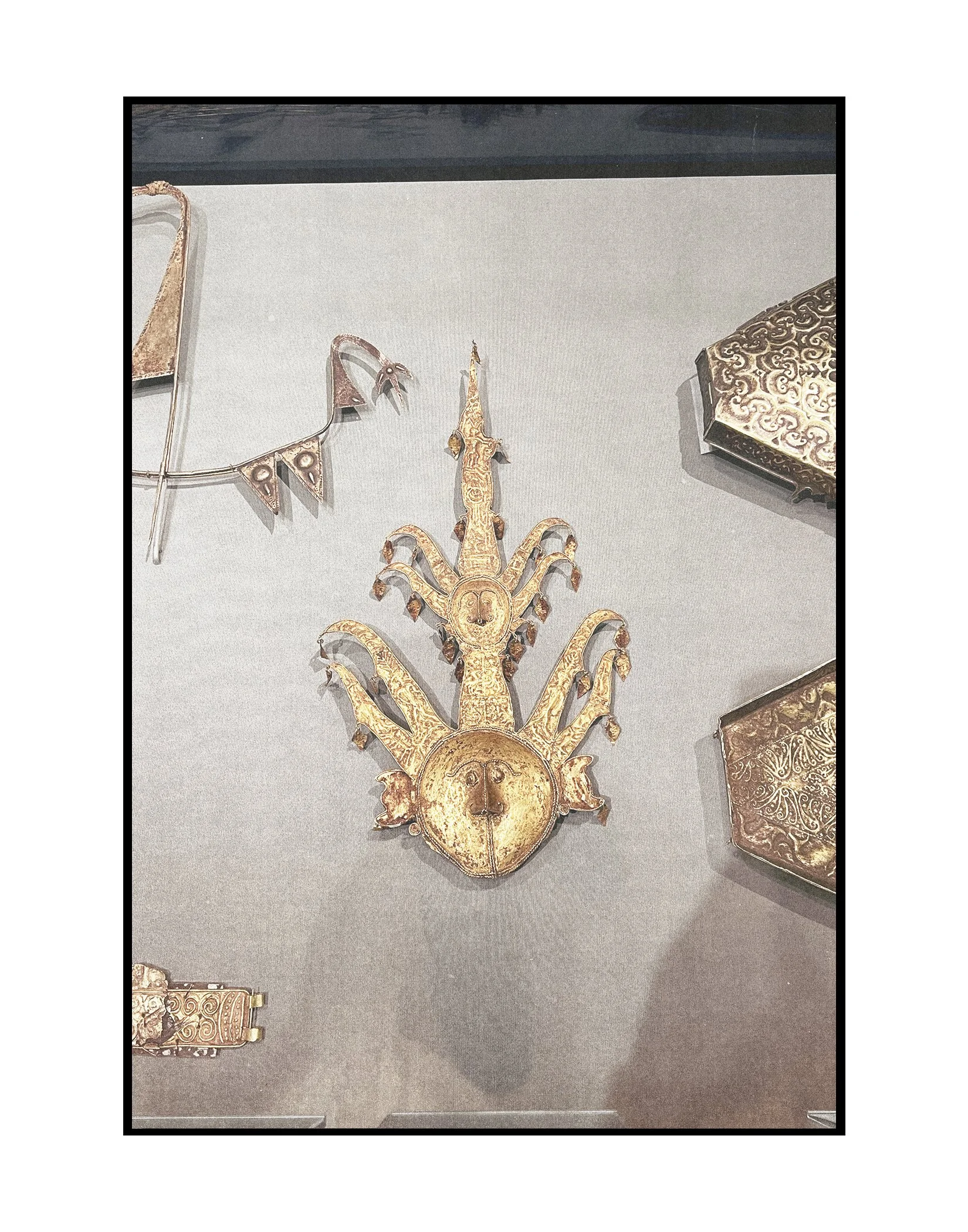
Gold always changes depending on its environment. Here it wasn't polished luxury-store gold. It felt ancient. Ceremonial. Almost spiritual.
It made me think again about objects accumulating meaning through handling, ritual and time.
A piece of metal becomes precious not simply because the material is valuable, but because someone has decided that it means something.
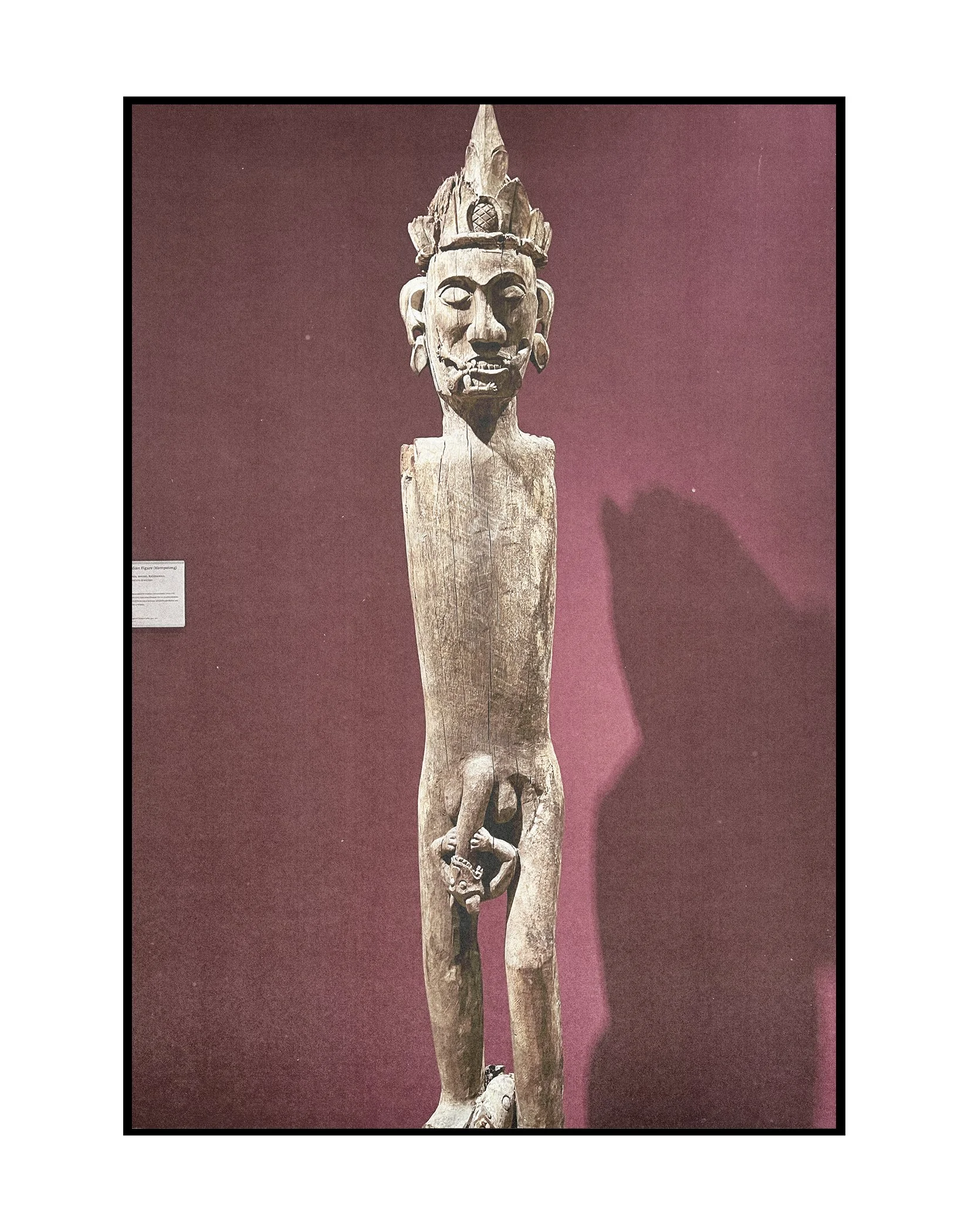
The figures were another thing entirely.
Long bodies. Distorted proportions. Faces reduced to particular gestures.
I love objects where anatomy doesn't need to be anatomically correct in order for the body to feel incredibly present.
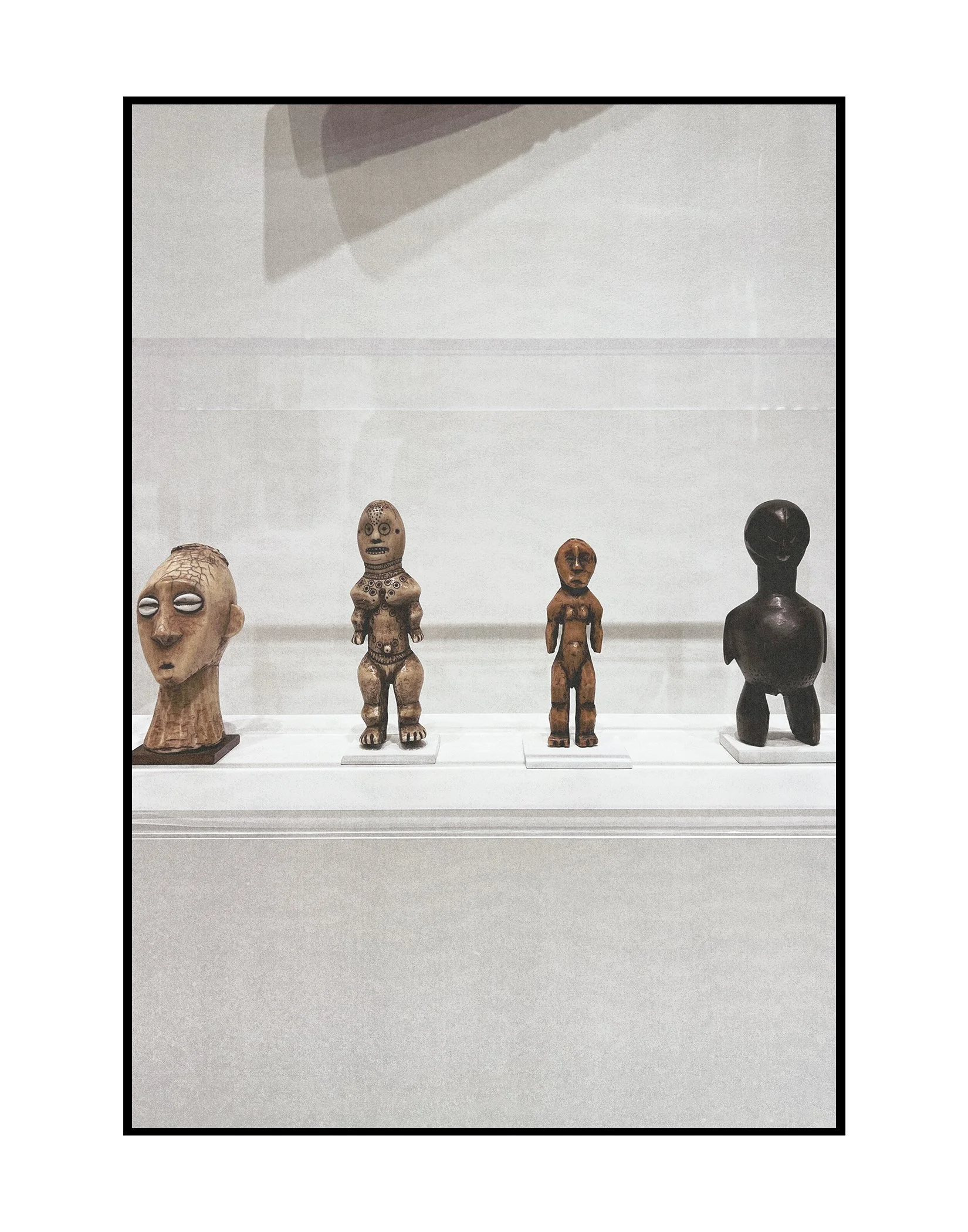
And then the masks and ceremonial costumes.
There were so many.
Standing there, I kept trying to erase the glass vitrines from my mind. I wanted to imagine these pieces where they originally belonged—not motionless under museum lighting but being worn during dances and ceremonies.
Fabric moving.
Raffia shaking.
Jewelry catching firelight.
Bodies underneath transforming the objects completely.
A museum necessarily freezes things. My imagination kept trying to make them move again.
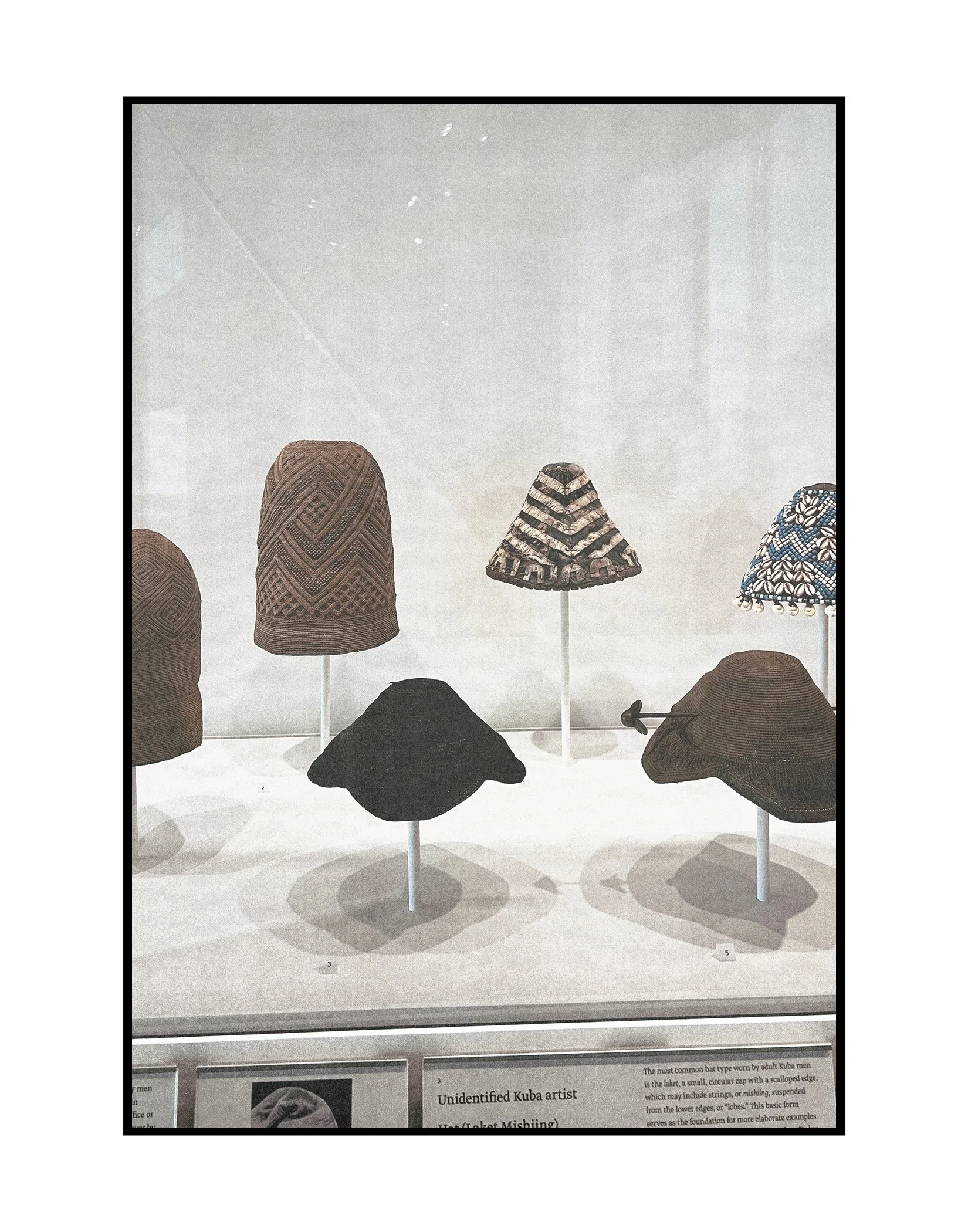
The hats and headpieces especially did this to me.
They made me think about silhouette before clothing even enters the equation. How radically you can alter someone's presence simply by extending, exaggerating or reshaping the head.
It made me want to make something.
Not something copied from what I was looking at—that isn't interesting to me—but something informed by the idea that an object worn on the body can change the way the body occupies space.
Photographs that stopped me
Then I found the documentary photography.
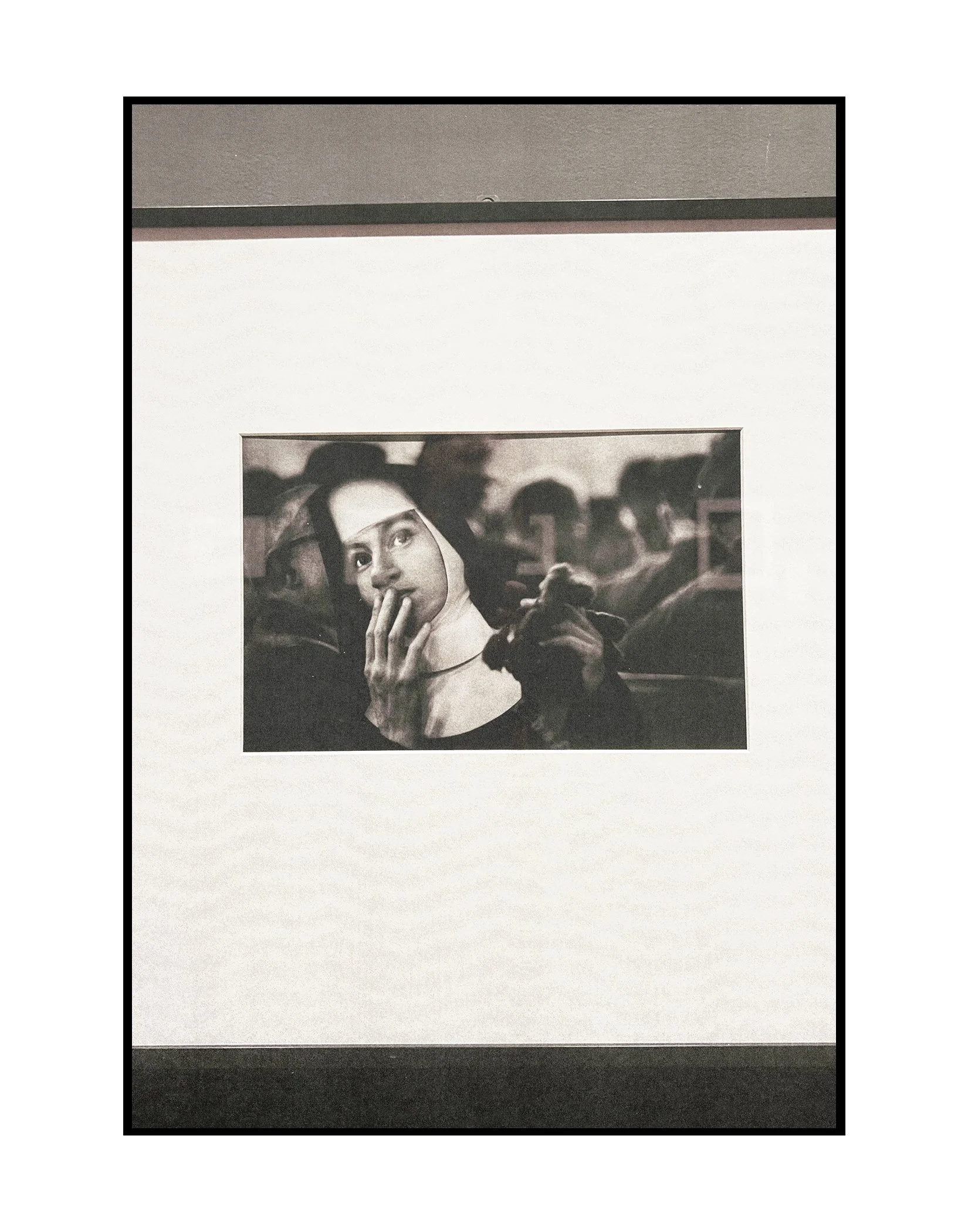
This section might have affected me the most.
There is something about documentary photography from this period that feels almost impossible to manufacture now. Maybe it is the film. Maybe it is the clothes. Maybe it is the relationship people had with cameras. Maybe it is simply knowing that the moment really happened and can never happen again.
The pictures weren't trying desperately to announce themselves as important.
They just were.
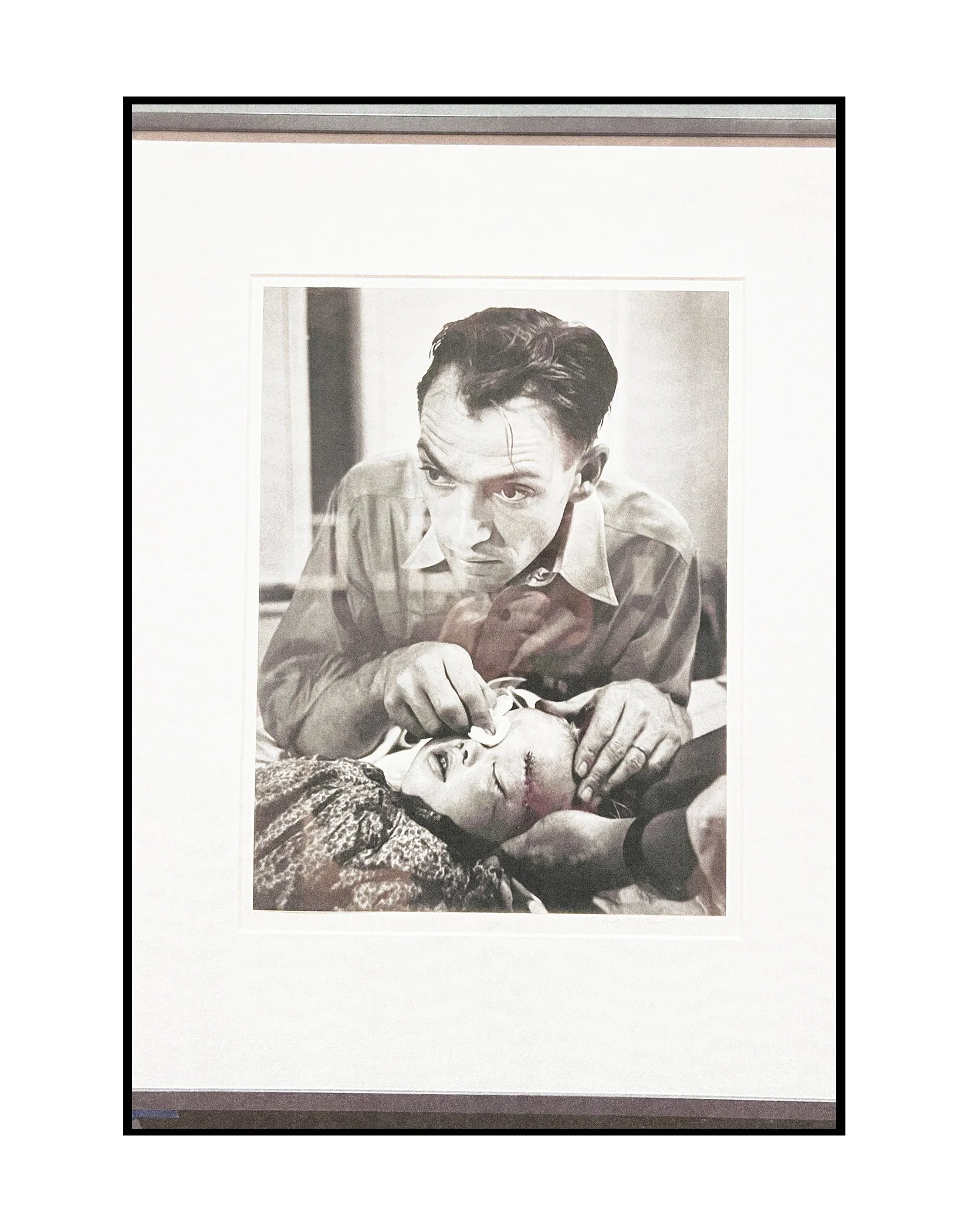
I found myself studying expressions more than compositions.
Hands.
The way someone looked away.
The information hiding around the edges of the photograph.
A photograph can tell you about the person being photographed, but it can also accidentally preserve wallpaper, furniture, clothing, hairstyles, social rituals, architecture—a whole world nobody necessarily realized they were documenting at the time.
That is one of the things I love most about photography.
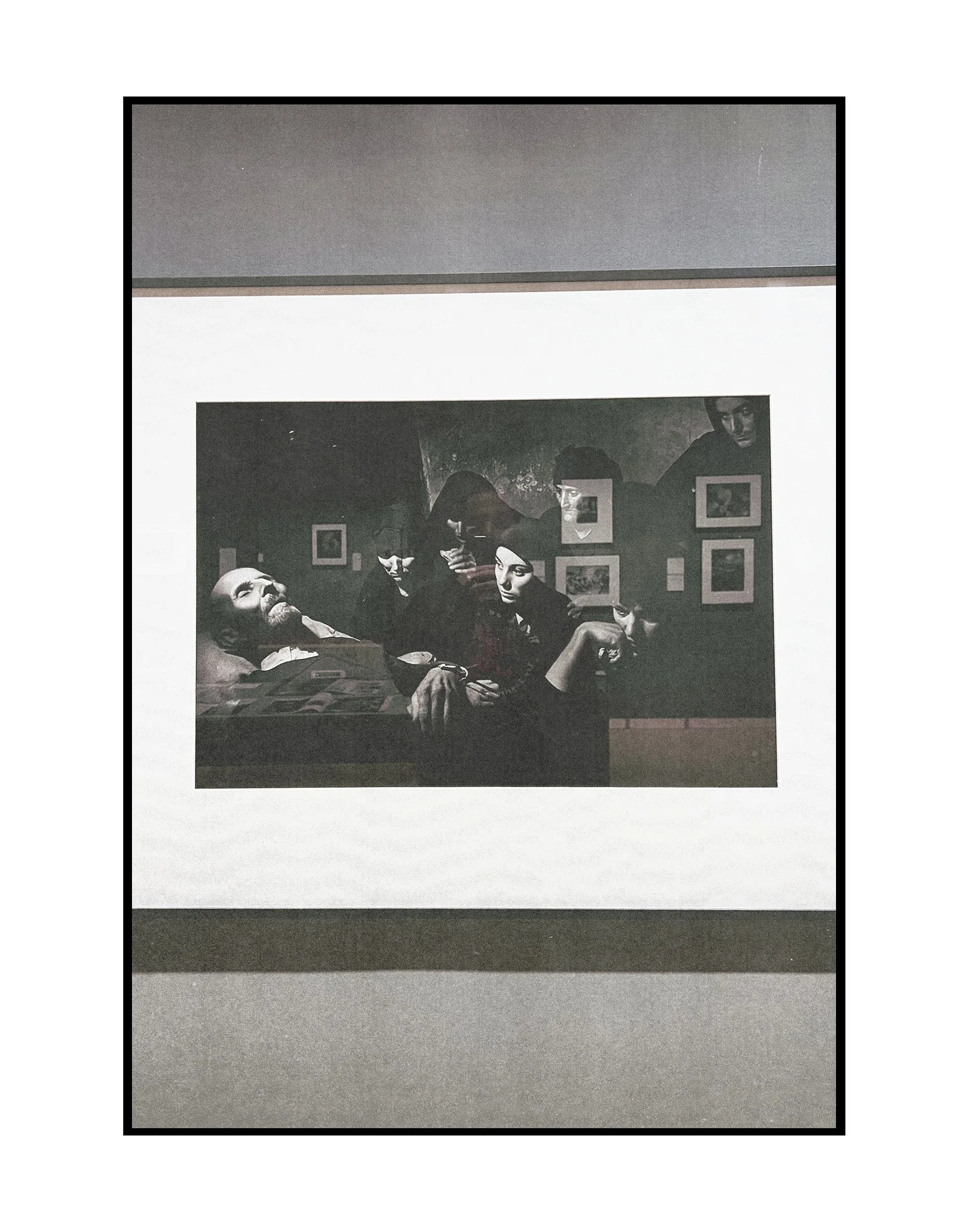
A good photograph keeps getting more valuable as time moves farther away from the instant the shutter clicked.
It becomes evidence.
And sometimes the smallest human gesture is what survives.
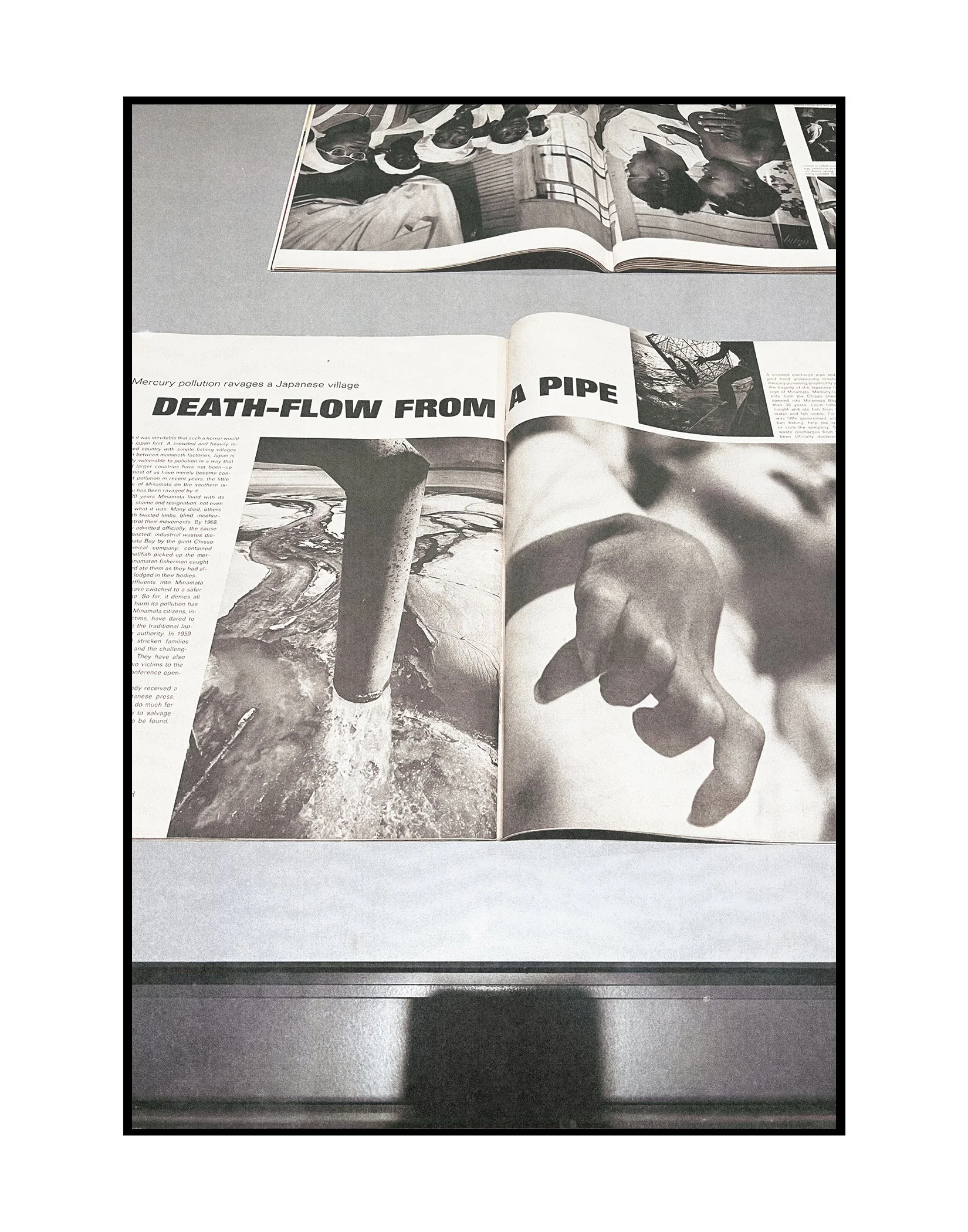
There were also old magazine spreads documenting environmental devastation in Japan.
Seeing photography in its original editorial context was fascinating. Image, typography, headline, sequencing—the photograph wasn't living alone on a white wall anymore. It was information.
That relationship between image and printed page is something I never tire of.
Maybe that's partly why I still love magazines so much.
Things that don't need to match
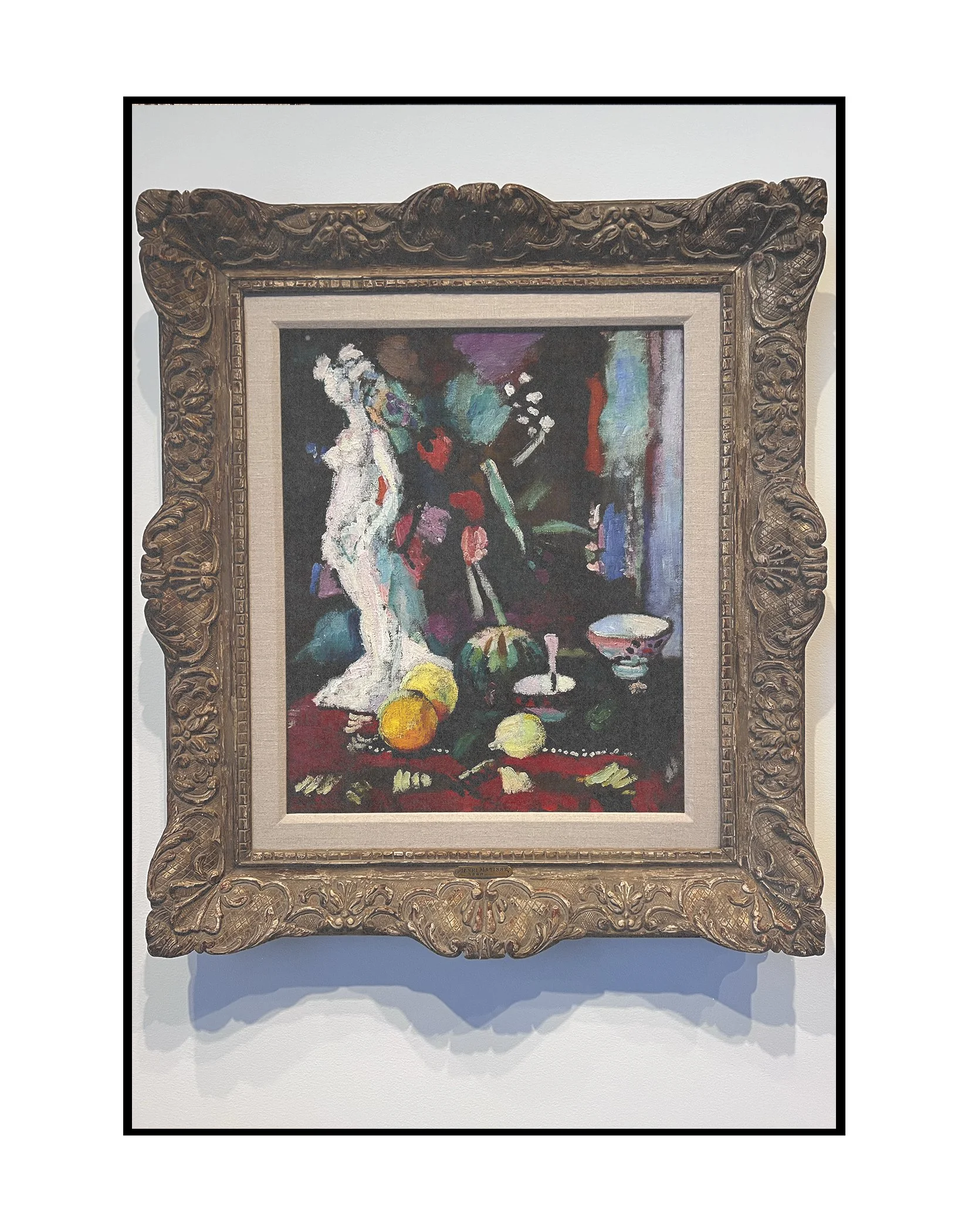
One of my favorite things about wandering a big collection is seeing objects and artworks that technically have absolutely nothing to do with one another begin having conversations inside your head.
An ornate carved frame.
An abstract painting.
A ceremonial gold object.
A modern sculpture.
A photograph.
A wooden figure.
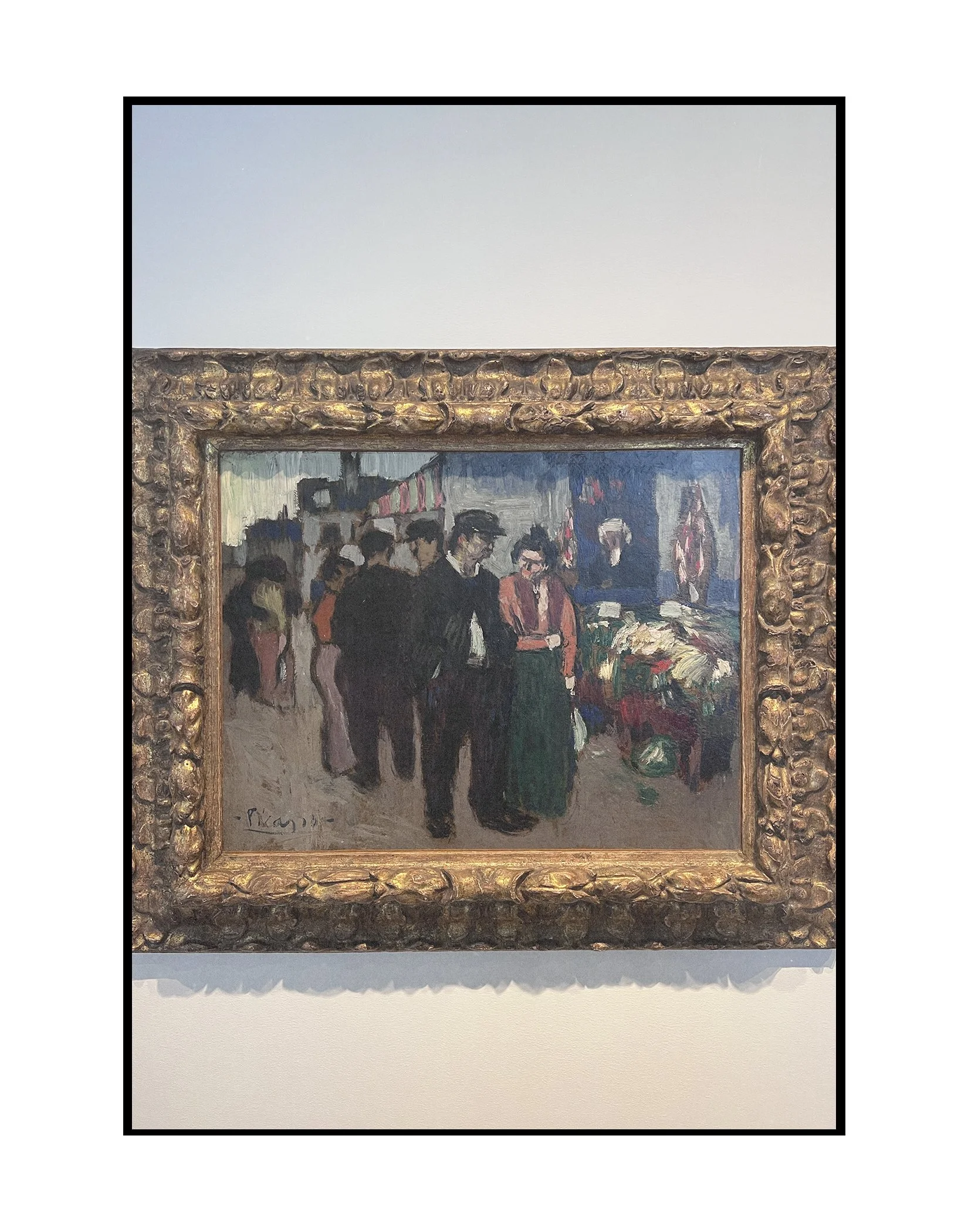
The museum doesn't need to tell me how they're connected.
I can make those connections myself.
That might have been my biggest takeaway from the entire day.
Things don't have to come from the same place, period or discipline to belong in the same world.
They just need a point of view connecting them.
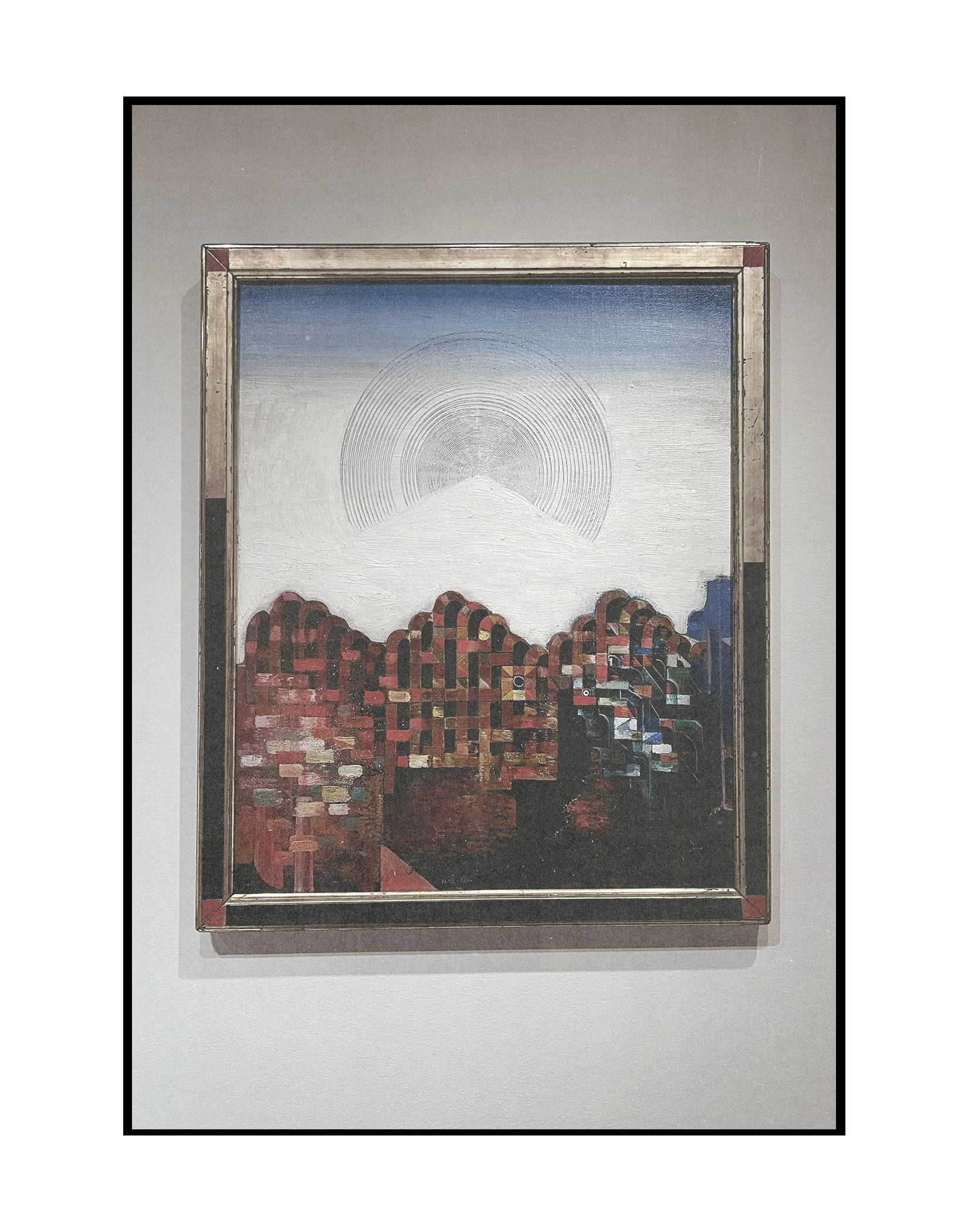
I think I needed to be reminded of that.
When the museum closed, we walked around Yale.
After spending an hour looking at objects made across centuries, suddenly the campus itself became the museum.
Buildings from the early 1700s. Stone. Carving. Ironwork. Windows. Archways. Details sitting thirty feet above the ground that somebody took the time to make beautifully even though most people probably never stop long enough to notice them.
There is something almost unbelievable about seeing architecture survive that amount of time in such immaculate condition.
And then, right beside it, something modern.
Sometimes extremely modern.
Glass against stone.
Concrete against Gothic ornament.
Old and new without one needing to pretend to be the other.
I love that.
The juxtaposition doesn't weaken either one. It makes you notice both more.
And while we were walking, something else had changed.
The air.
The sun was still out, but underneath the warmth I could feel that first crisp little interruption.
Autumn.
Not quite here, but announcing itself.
Immediately I wanted pumpkin-spiced everything.
Rose + Oud
We wandered into Dwell across from the museum.
Housewares, kitchen objects, things meant to live on tables and counters. I'm always fascinated by the small objects people use to organize their lives.
Especially catch-alls.
I love a catch-all.
My workspaces inevitably become little ecosystems of matches, fragrance samples, jewelry, scissors, scraps of paper, pencils, objects I found somewhere and things I swear I am going to deal with later.
A good little dish makes the chaos feel intentional.
But what stopped me there was a soap.
Rose and oud.
I smelled it expecting the combination to potentially feel heavy, but the two materials were dancing together beautifully.
Rose—soft, floral, familiar.
Oud—dark, woody, resinous.
Neither one disappeared.
That kind of juxtaposition seems to have followed me through the entire day.
Old and new architecture.
Gold beside wood.
Geometry beside gesture.
Rose beside oud.
From there, another smell.
We stopped at The Owl Shop because I wanted a cigar.
The Owl Shop is one of those places where you could easily lose an afternoon. Cigars, wood, leather, alcohol—the smell of the room hits you before anything else really does.
This time I wasn't staying.
I picked up an Italian cigar to take home, something I already know I will enjoy smoking later and probably enjoy smelling just as much.
I think scent becomes especially interesting when it isn't trying to be perfume.
A cigar shop isn't designing an ambient fragrance. Yet the combination of tobacco, old wood, leather, spirits and smoke creates something more memorable than most deliberately scented spaces.
I filed that away.
1740
Then we happened upon Lower Forms.
Vintage clothing is enough to make me stop, but what really pulled me farther into the shop was their selection of niche fragrance.
I started smelling.
One after another.
Until one made everything else disappear for a second.
1740 Marquis de Sade by Histoires de Parfums.
Leather.
Sweet resin.
Herbs.
Something dry.
Something antique.
And immortelle.
The immortelle in particular kept pulling me back.
The fragrance felt like I had somehow walked back into the cigar shop, except now everything was warmer, sweeter and stranger. Boozy. Deeply masculine. Resinous. Almost dusty.
It smelled old without smelling dated.
That distinction interests me.
I bought a sample because I don't think fragrances should always be understood in a store. I want to wear it. Let it heat up on my skin. Smell what remains several hours later. See what memories start attaching themselves to it.
And now I want to explore immortelle much further.
One new material can sometimes open an entire door.
By then, we were hungry.
And if you are wandering around New Haven and suddenly need dinner, pizza begins to feel less like a suggestion and more like an obligation.
We ended up at Ernie's Pizzeria.
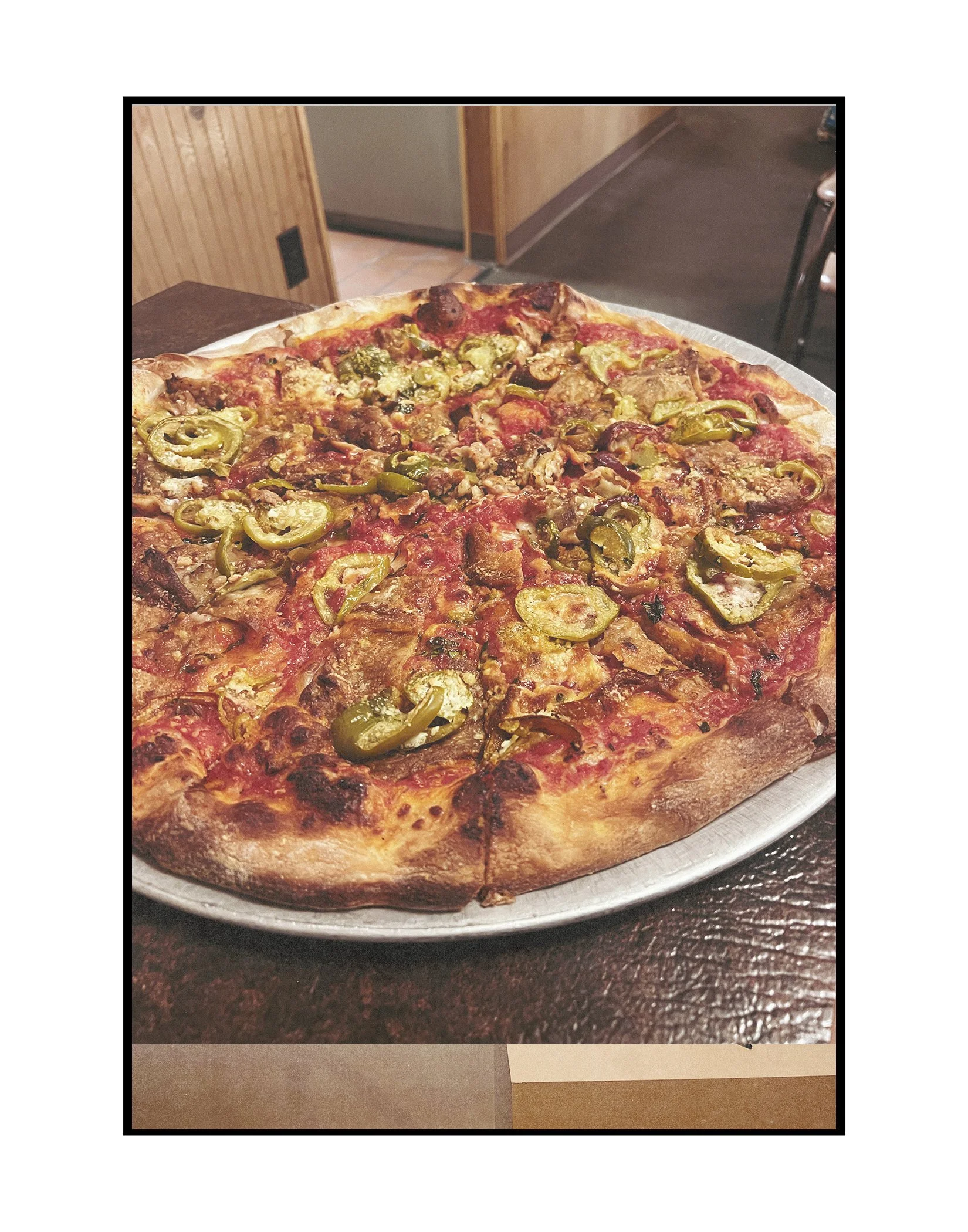
Walking inside felt like stepping backward in time.
Wood paneling.
Brown leather booths.
Linoleum.
Nothing looked like someone had recently sat down and decided to manufacture nostalgia. It simply looked as if the place had continued being itself.
That difference is enormous.
My first job was in a pizza shop, so immediately there was another little memory connection happening.
I ordered hot cherry peppers, eggplant and grated cheese.
It was so good.
Our waitress told us the restaurant was celebrating its 55th anniversary, which made the whole space feel even better.
Fifty-five years of pizza.
Fifty-five years of families sitting in booths.
First dates. Friday dinners. Regulars. Kids growing up and eventually bringing their own kids back.
The restaurant was filled with people who seemed to know the place.
I love seeing a mom-and-pop business survive like that.
Not reinventing itself every eighteen months.
Not chasing whatever is currently trending.
Just becoming more itself with time.
There might be a lesson in there too.
By the time we left, I realized I'd gotten exactly what I had been looking for that morning.
Not an idea.
Input.
Gold.
Concrete.
Wire.
Wood.
Photography.
Masks.
Rose.
Oud.
Leather.
Immortelle.
Tobacco.
Old stone.
Crisp air.
Cherry peppers.
Brown leather booths.
All completely unrelated until they passed through the same day.
I think creativity sometimes gets treated as if it only happens when you're producing something.
Painting.
Photographing.
Designing.
Writing.
But looking is part of making too.
Smelling is part of making.
Eating is part of making.
Walking around a city and noticing the building nobody else in the car cared about is part of making.
You fill yourself back up.
Yesterday made me feel full again.
And I didn't come home knowing exactly what I am going to make next.
I think that's better.
I came home wanting to make something.