LOOK BETWEEN THE LINES
19 portraits on perception, instinct, and the creative mind
Last night I asked people on Instagram to send me a favorite self-portrait or selfie.
Not just any photograph of themselves. I wanted the one they chose. The image they liked enough to say: this is how I want to be seen.
That choice was important.
A self-portrait already contains at least one act of interpretation before I ever see it. Someone has looked at themselves, photographed themselves, edited through the possibilities and decided that one particular image represents something they recognize—or perhaps something they want other people to recognize.
I wasn't interested in drawing that photograph.
I wanted to know what would happen if I looked at it until I stopped seeing a person.
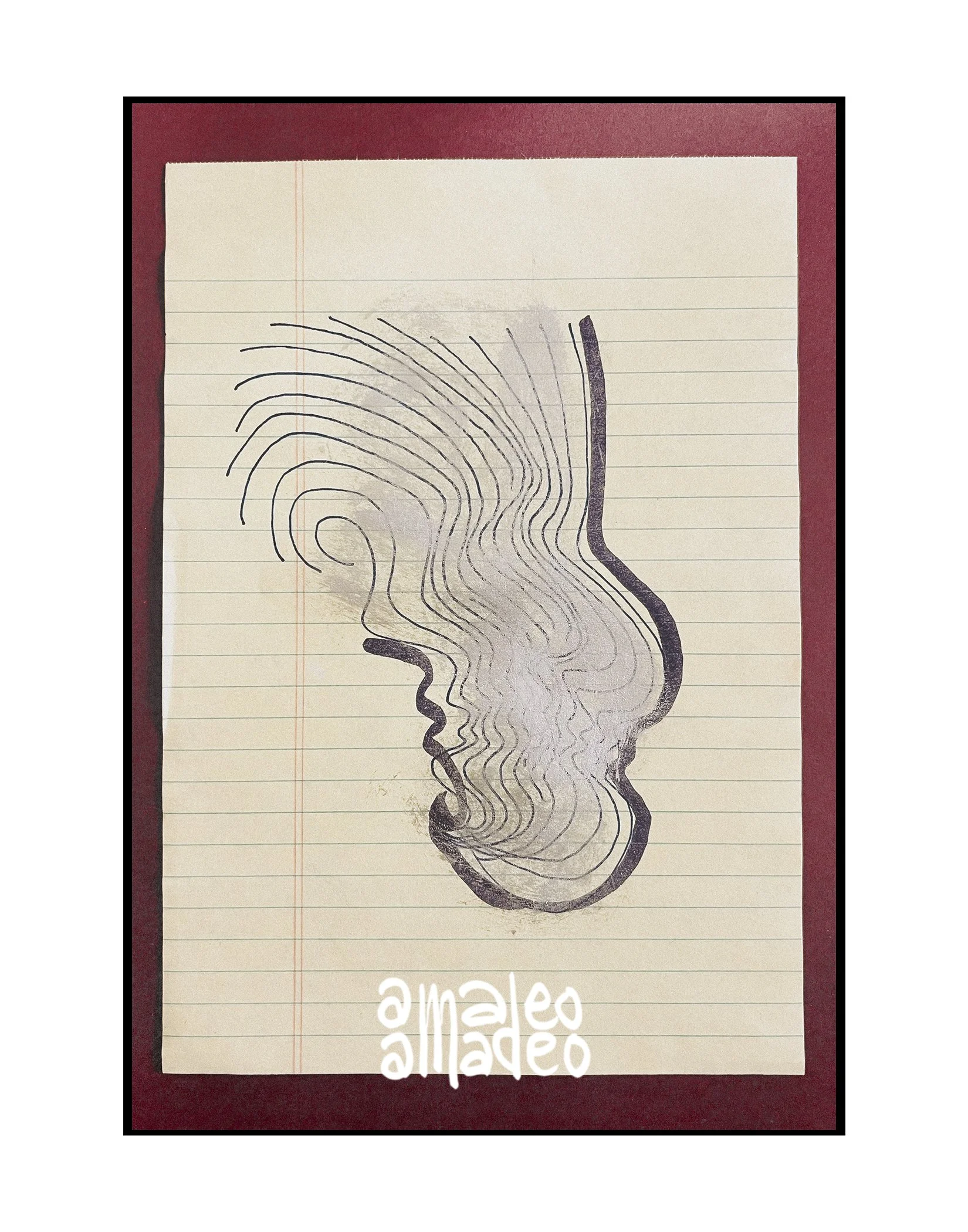
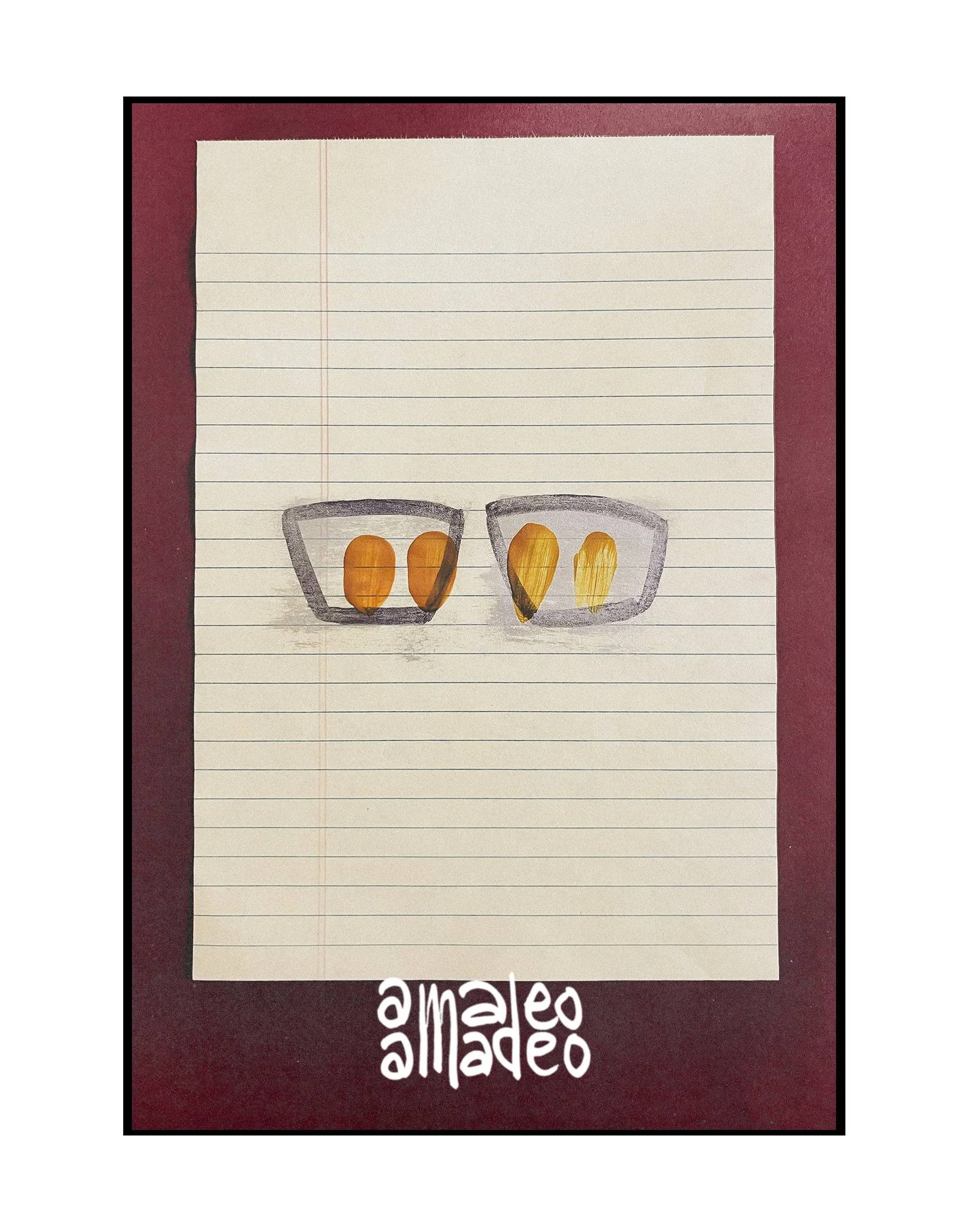
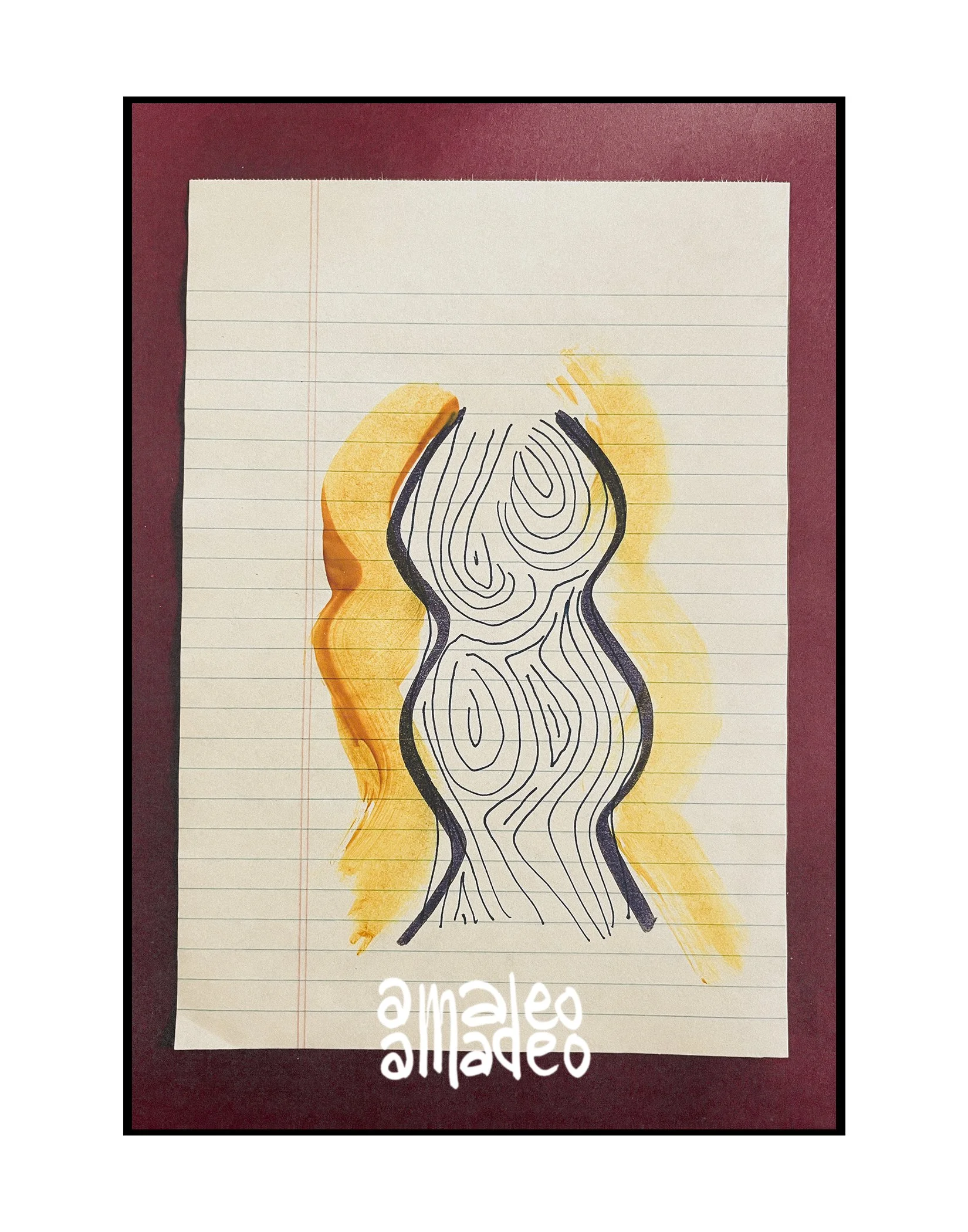
I wanted to see movement. Weight. A line through a shoulder. The shape made between an arm and a torso. Hair becoming repetition. Light against shadow. The reflection in a pair of glasses. An interruption of color. The direction an image seems to move even though nothing inside of it is moving.
I wanted to see what my eye saw before my brain had enough time to explain it.
The first gesture
Before making anything, I spent about an hour gathering materials.
Nothing was purchased for the project.
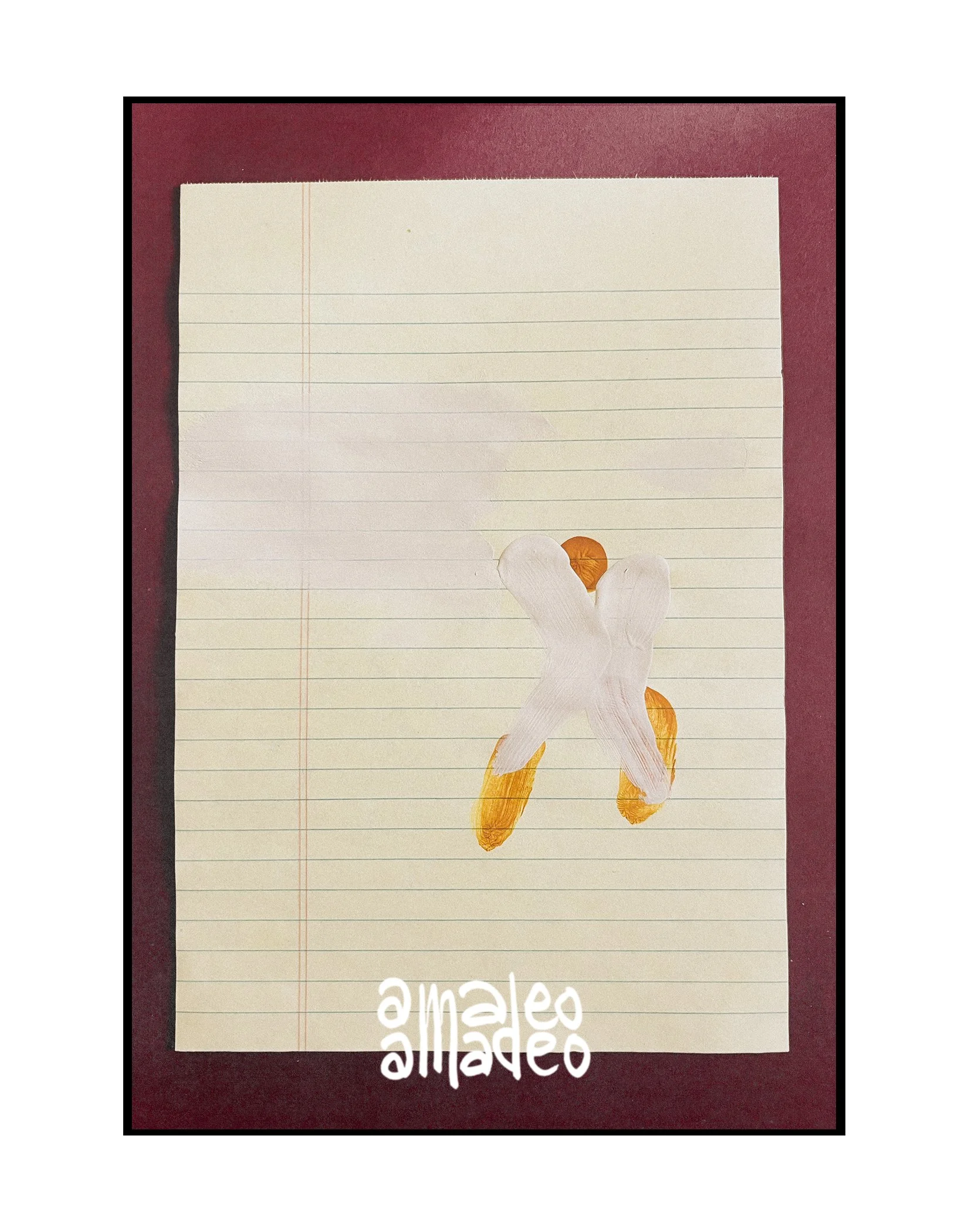
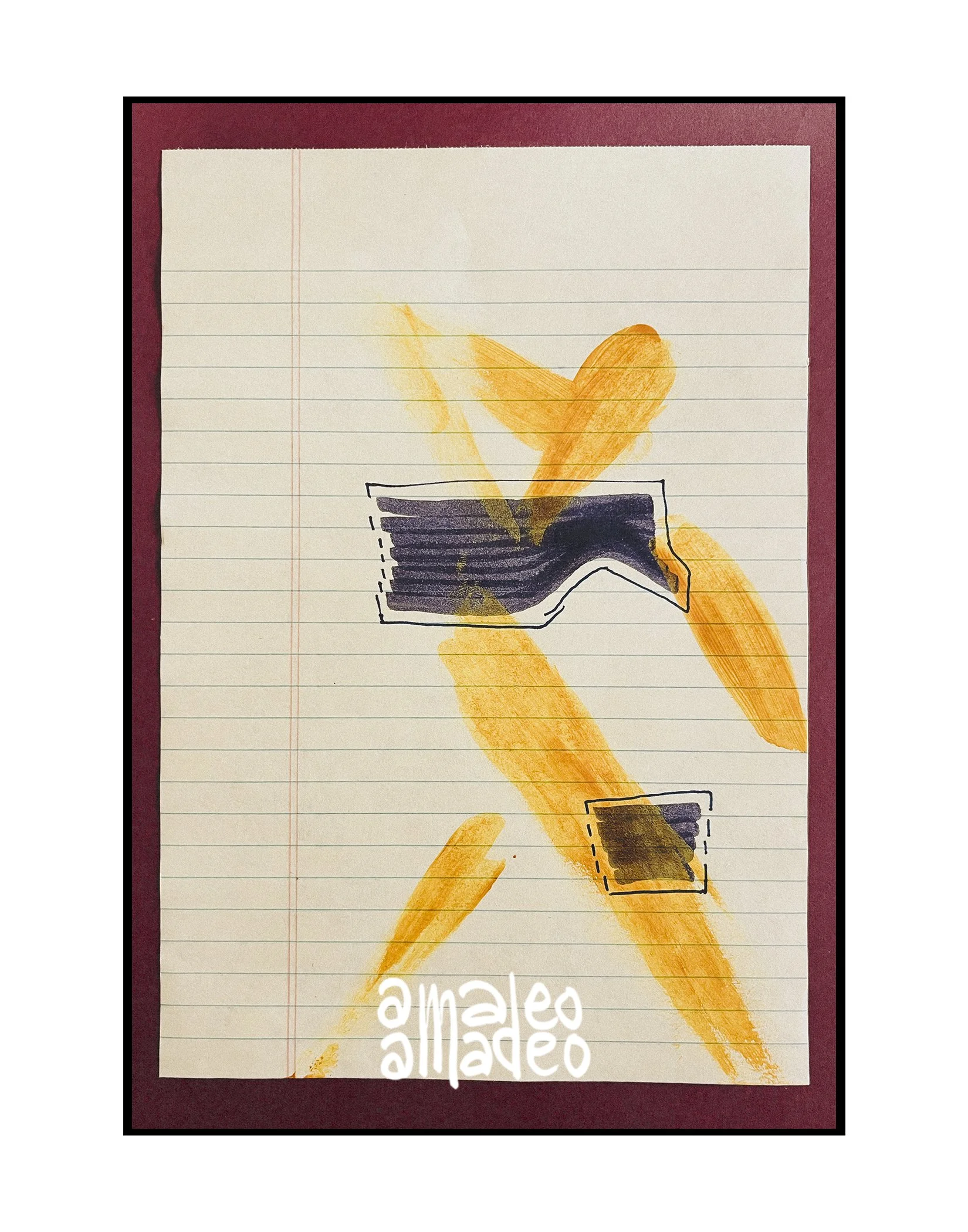
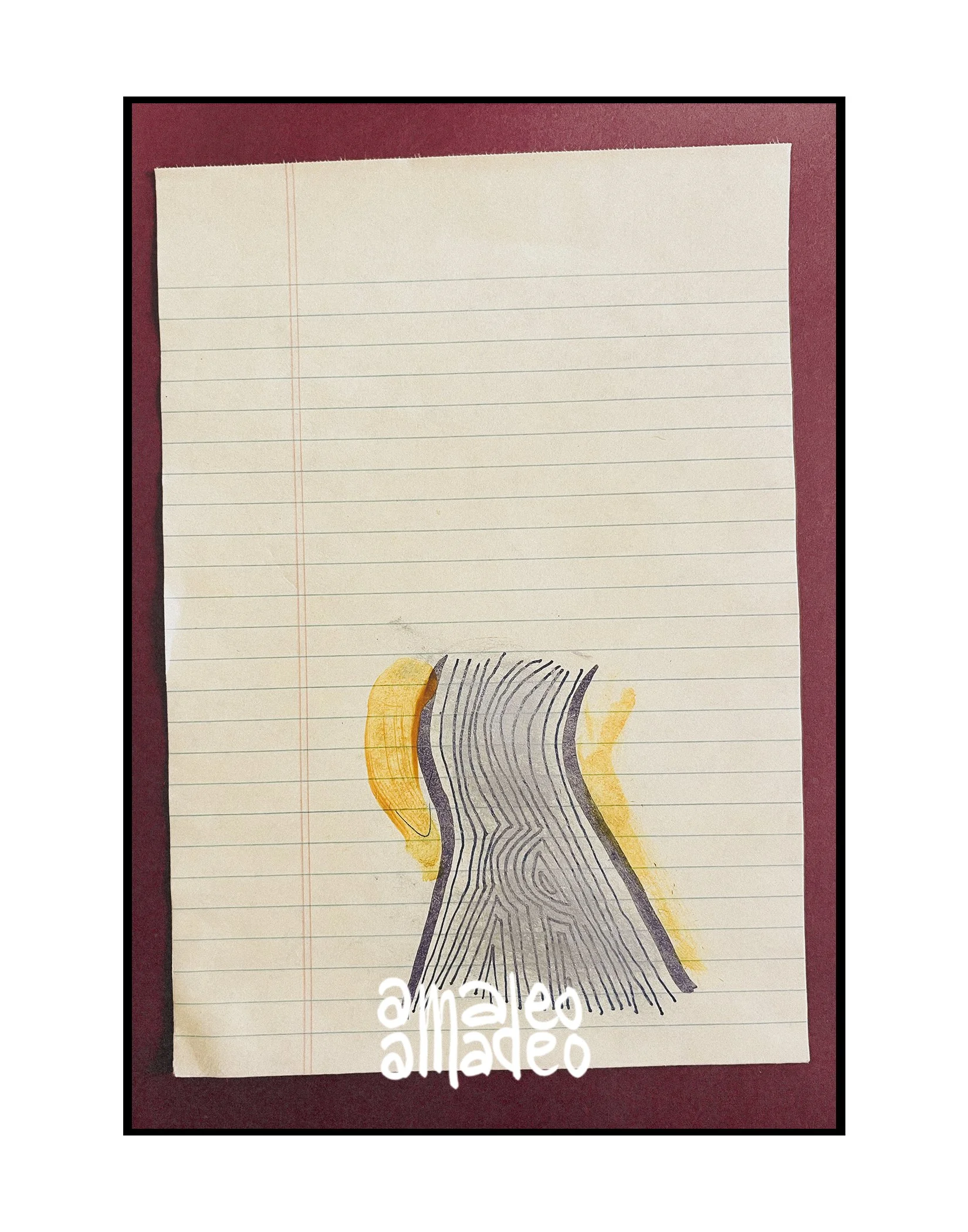
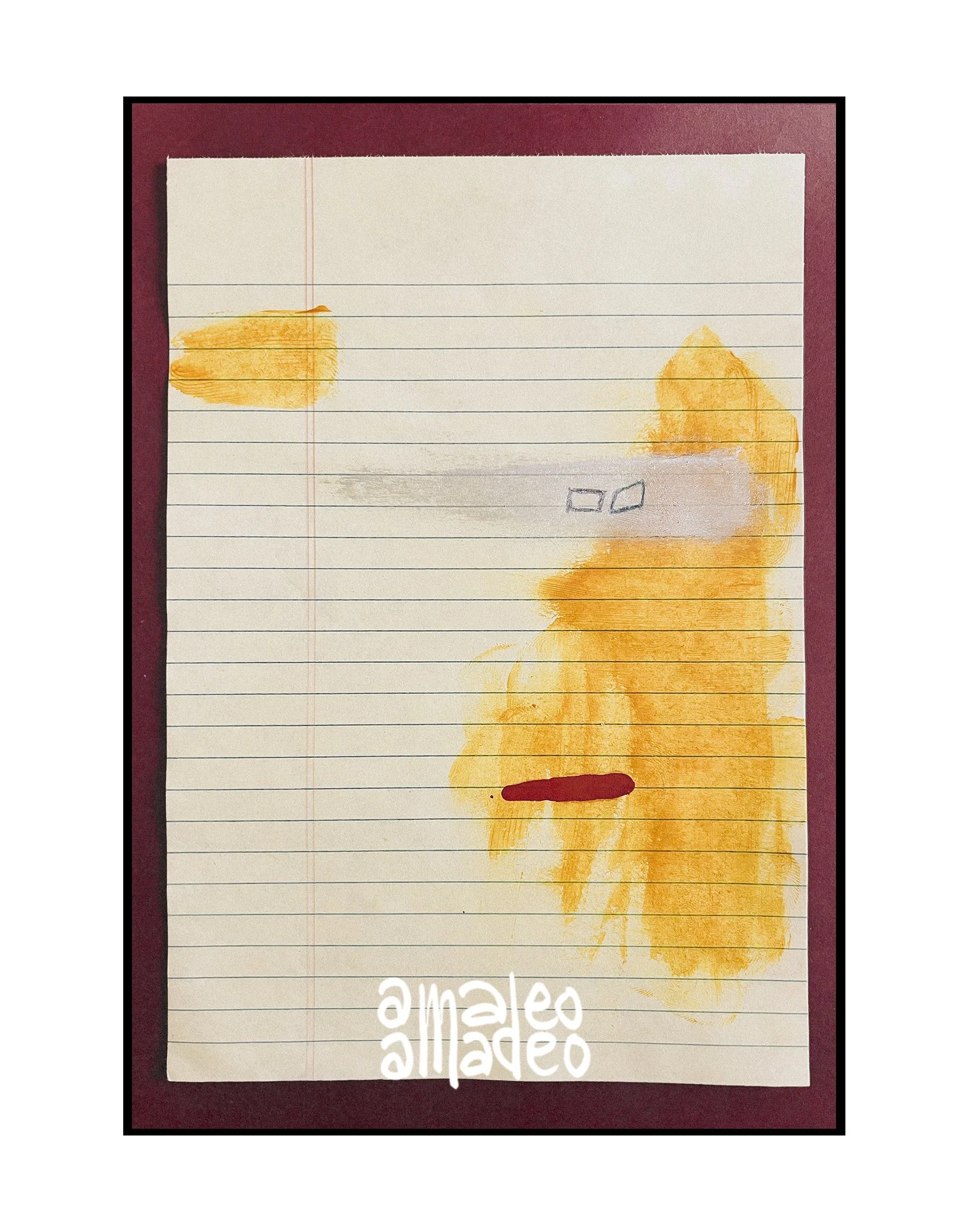
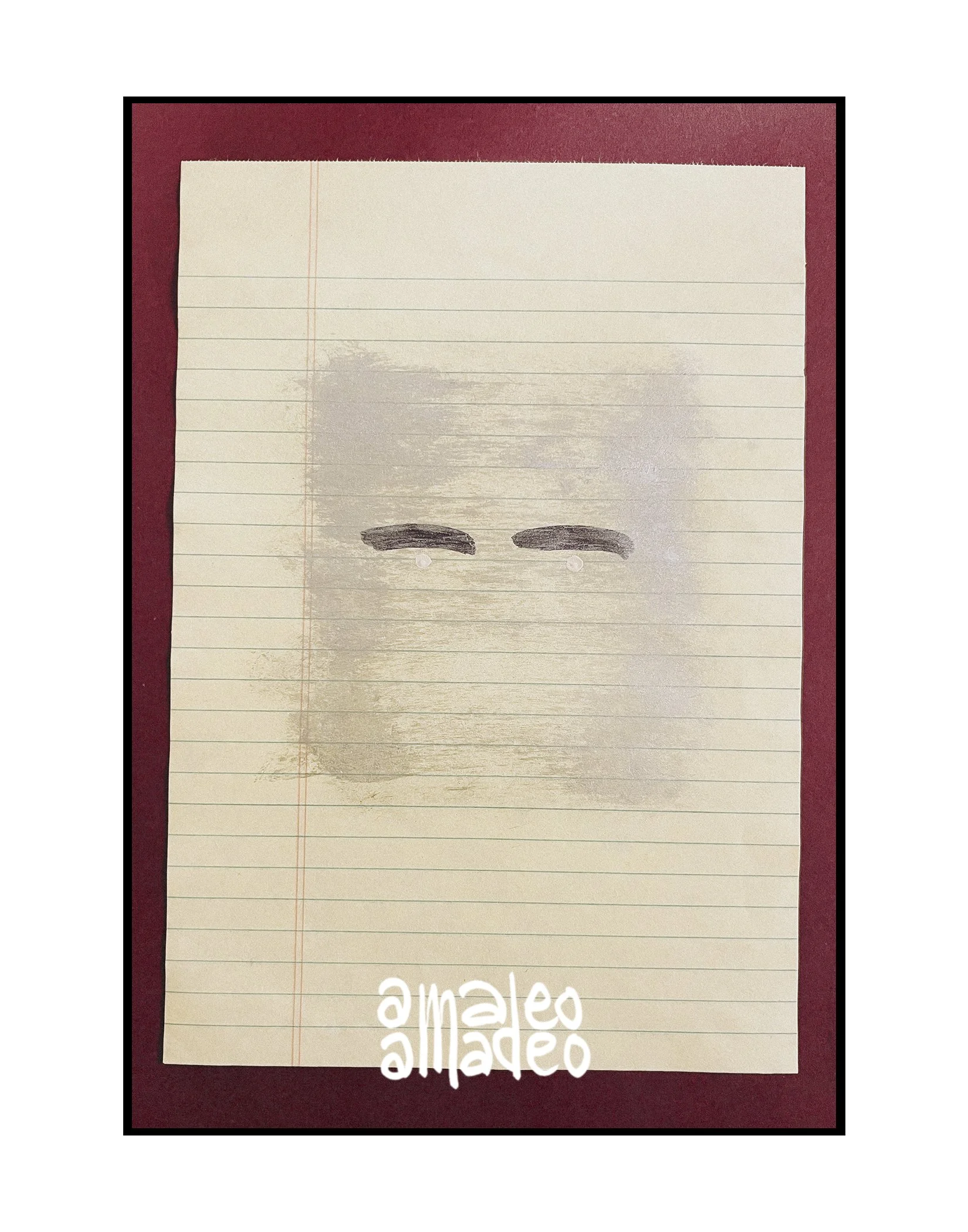
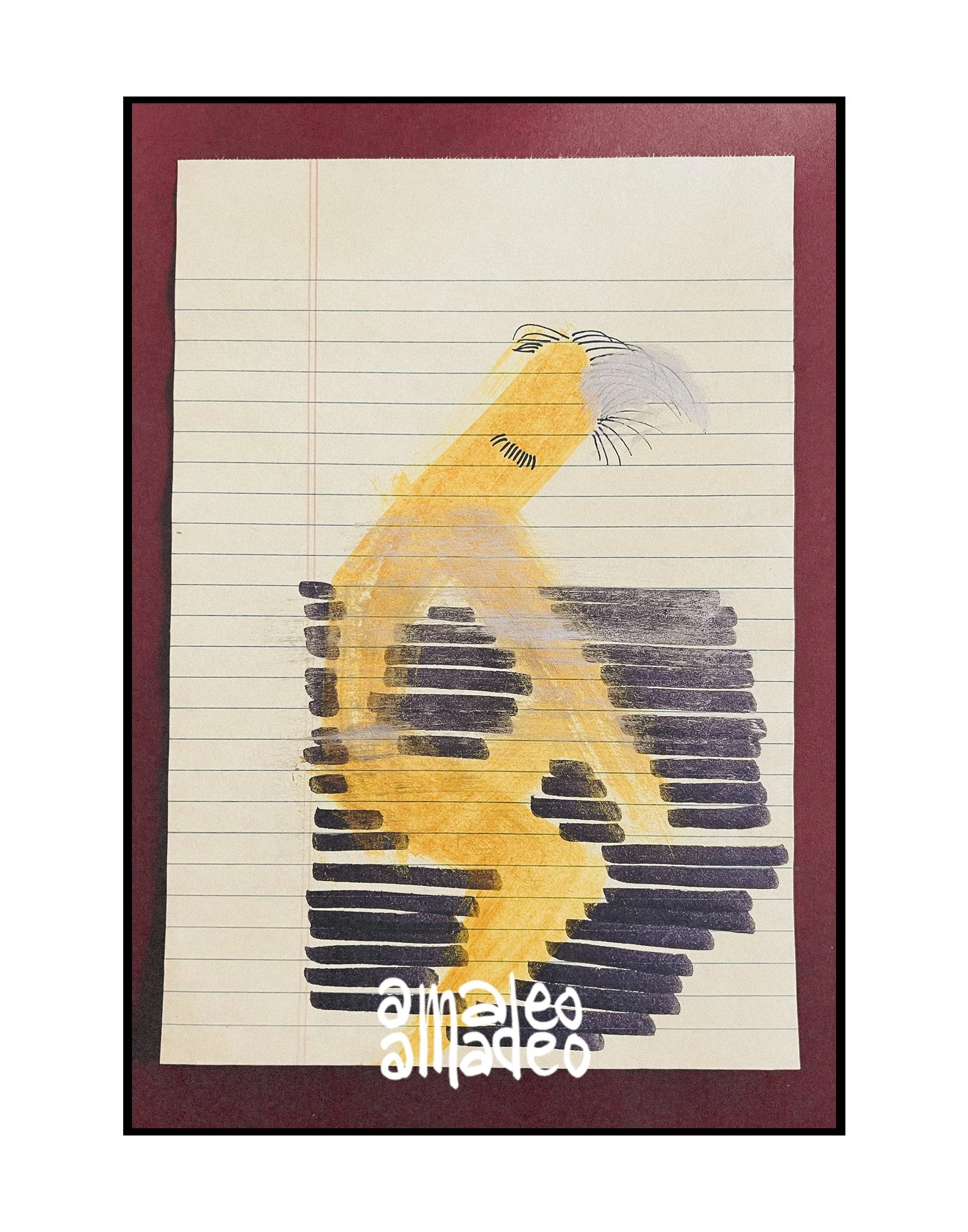
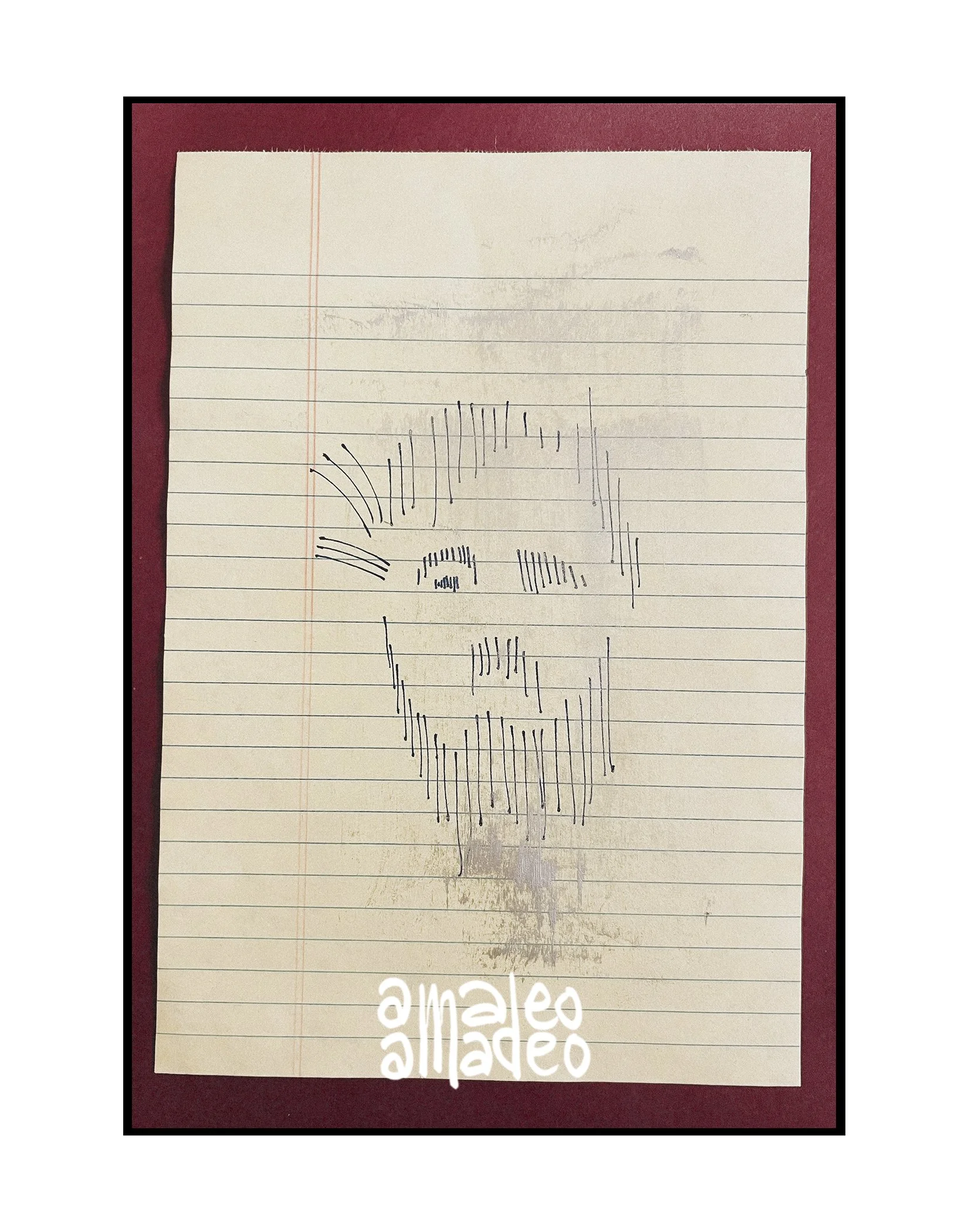
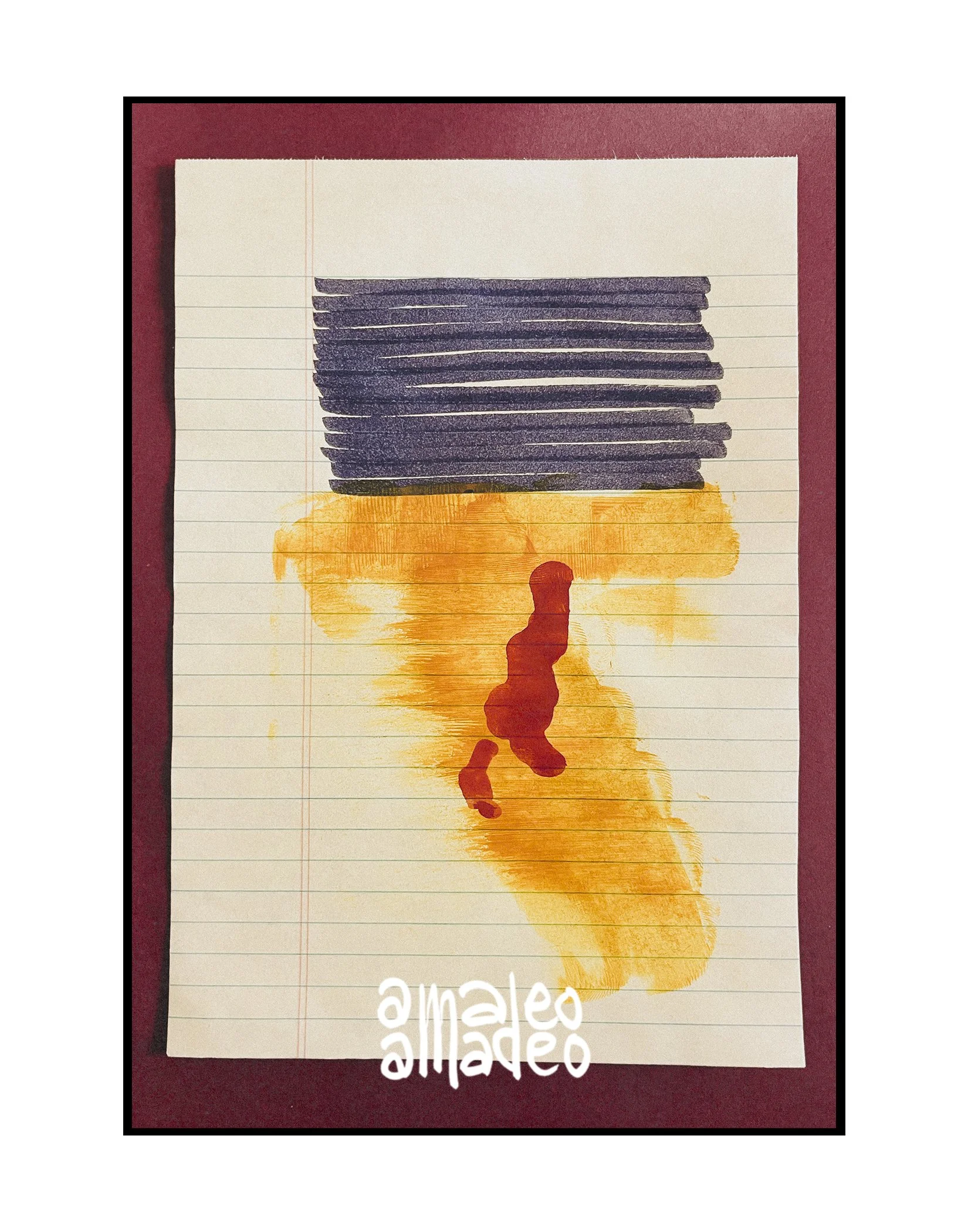
I went through what I already had in my studio: an old yellow lined pad, paint, pens, a brush marker, metallic wax. I decided on a very limited palette before beginning.
That restriction became important.
Once the color, paper and materials were decided, there were fewer decisions left to make. I didn't have to ask myself which color came next or what surface would be more interesting. Those questions had already been answered.
Now I could react.
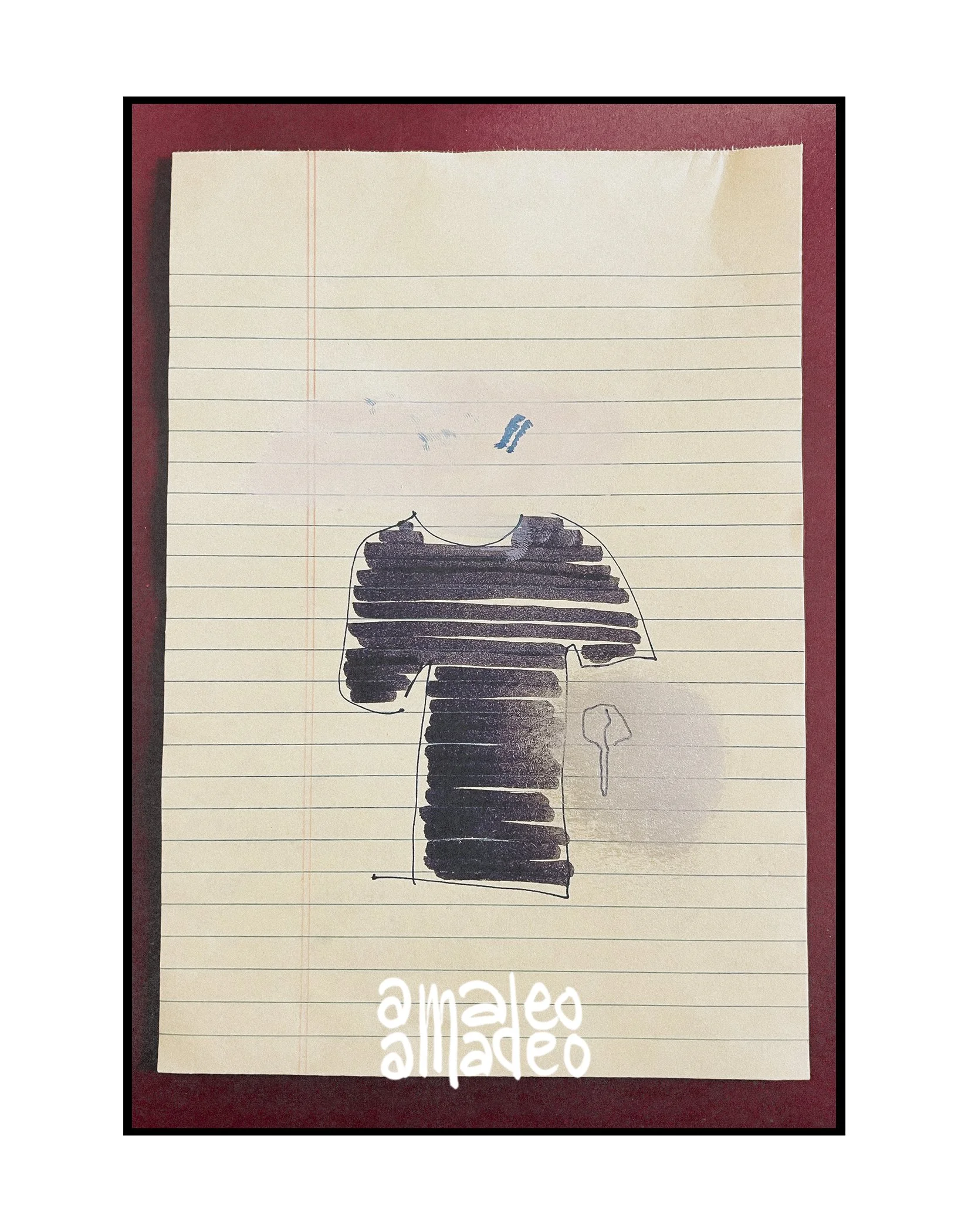
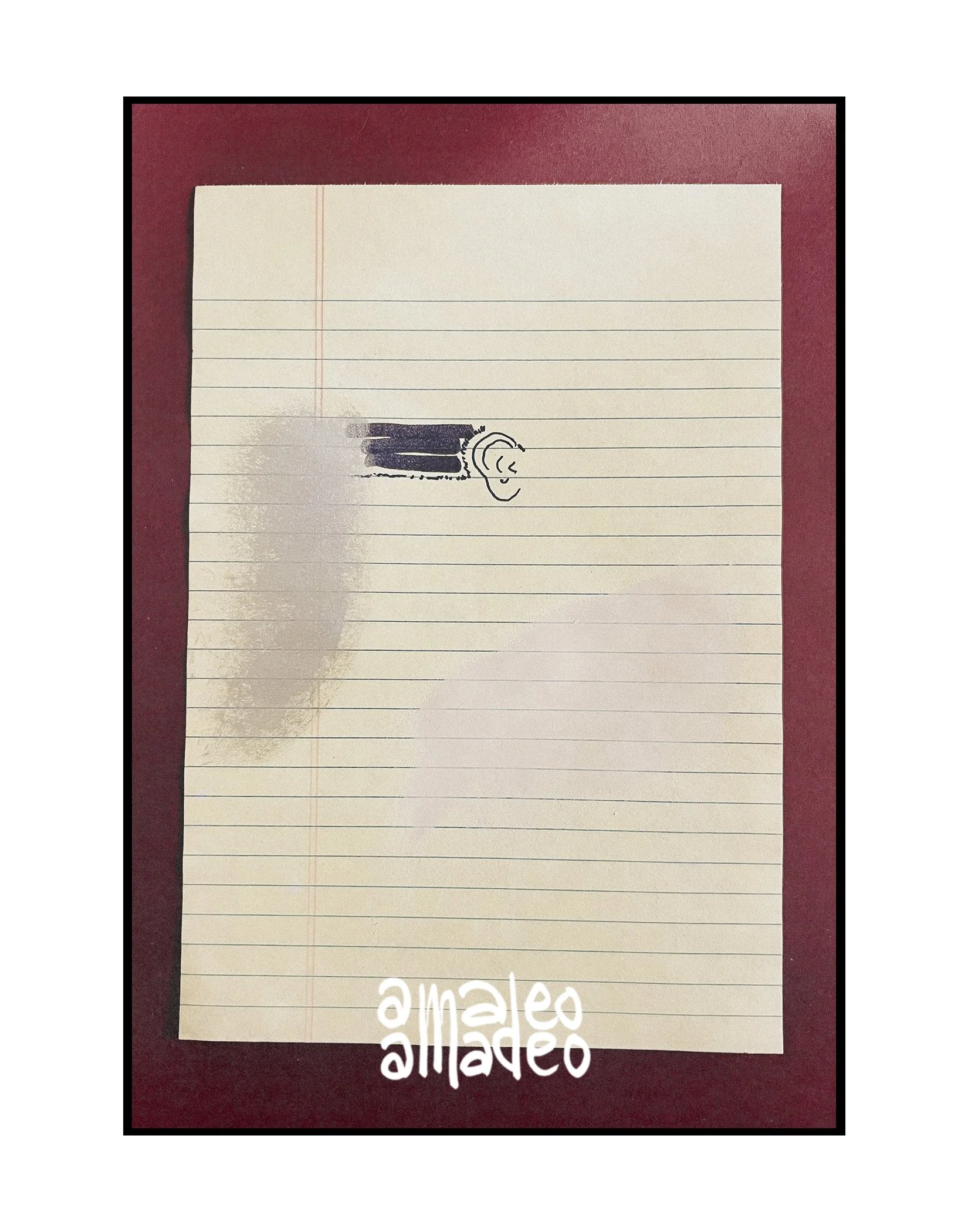
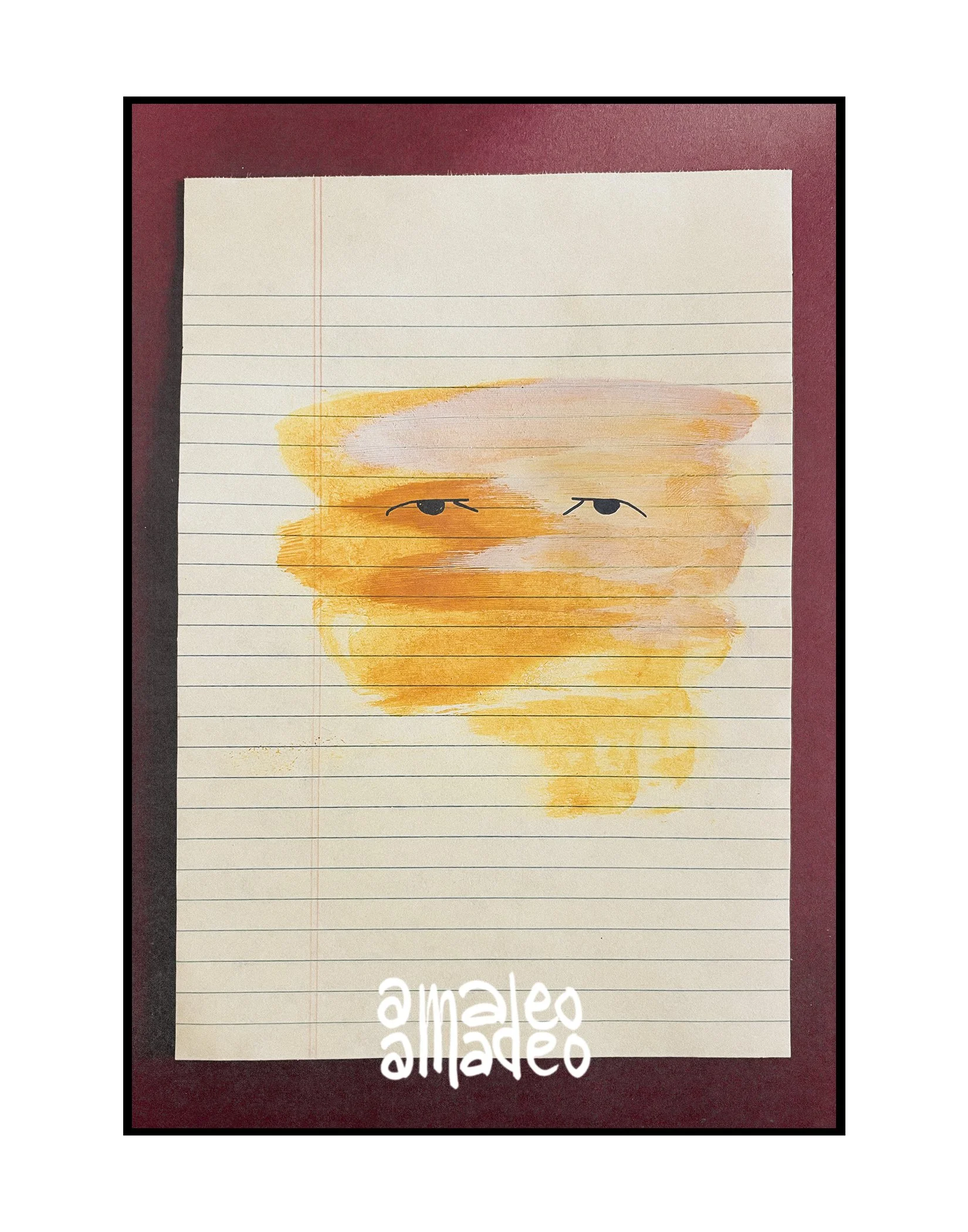
I made all 19 portraits in approximately three hours.
No redrawing.
No starting over.
No spending twenty minutes deciding whether a mark was correct.
I would look at the photograph and wait for something to announce itself. Sometimes it was a silhouette. Sometimes eyes. Sometimes a shadow. Sometimes a curve. Sometimes nothing I could name.
Then came the first gesture.
That first gesture became something like a proposition to myself.
A line.
And then I reacted to the line.
Another line might follow it. Paint might obscure part of it. A shape might oppose it. Twenty repetitions might grow from one mark. Something might suddenly need to disappear underneath silver.
At a certain point I would feel that the thought had been said.
Then I stopped.
There is no formula I can give for knowing when that happens. I know it physically.
The hand knows a lot.
I think much of my art practice is an attempt to make something physical out of something mental.
How I think. How I smell. How I listen. How I see. How something physically feels against my body. How something makes me feel emotionally.
Those things all exist somewhere inside of me before I have language for them.
The objects I make are ways of translating them.
Sometimes that translation is a photograph. Sometimes it is paint. Sometimes clothing. Sometimes scent. Sometimes collage. Sometimes I can put a vial of an old perfume on a pedestal and feel that it says exactly what I needed to say.
Is that enough?
Is that art?
Is that creativity?
I don't know that those questions need to be answered every time.
Maybe the object isn't the thought. Maybe the object is evidence that the thought happened.
That distinction matters to me.
I don't think creativity lives inside a camera, a paintbrush, a sewing machine or an expensive material. Those are instruments.
People sometimes ask me which camera I use, and I've always found the question strange. I understand why someone asks it technically, but the camera doesn't explain the photograph.
The camera did not decide what I noticed.
It did not decide where I stood.
It did not decide when something became beautiful to me.
It did not decide why I needed to photograph it.
What is a creative person?
This is where things get complicated.
I believe everyone is capable of being creative.
I don't necessarily believe everyone is a creative person.
And even writing that makes me want to argue with myself.
Technical ability and creativity aren't the same thing to me. Someone can spend years becoming extraordinary at the mechanics of painting and be capable of reproducing almost anything they see. Someone else may barely know how to hold a brush but make one strange mark that opens an entirely new way of thinking.
Which one is creative?
Maybe both.
Maybe neither.
Maybe asking who is "a creative" is already asking the wrong question.
We have become very comfortable saying, You're so creative. Or, That is so creative. Or even calling someone a creativeas though creativity were a job title that could be printed on a business card.
But what are we actually recognizing?
Production?
Originality?
Technical proficiency?
Taste?
Imagination?
Volume?
Vision?
And who exactly are we proving any of it to?
I don't think the physical evidence of art necessarily proves creativity. And I don't think someone who has tremendous creativity but little technical ability somehow possesses less of it.
For me, creativity may have more to do with translation.
Seeing one thing and allowing it to become another.
Looking at a body and finding architecture.
Hearing music and seeing a color.
Smelling something and remembering a room that hasn't existed for thirty years.
Finding an ordinary object and understanding that, under the right circumstances, it can carry an entire emotional world.
A creative person, to me, is someone who dreams in real life.
Looking and seeing
Photography has probably trained this part of my brain more than I realize.
When I'm editing photographs, sometimes I almost look through an image rather than directly at it. I can let my eyes lose focus and suddenly the photograph stops being a photograph of somebody.
It becomes shapes.
Negative space.
Darkness.
Light.
Weight.
Rhythm.
I did something similar with these portraits.
I didn't want responsibility for faithfully representing how each participant wanted to be seen. Their chosen photograph gave me their perception of themselves; my drawing would become my perception of that perception.
Two ways of seeing the same person colliding.
Maybe these portraits exist in the space between those two perceptions.
Or maybe they exist in a space that doesn't exist at all.
Because how often do we actually see the person we believe we're showing other people?
And how often are other people seeing something in us that we've never noticed ourselves?
A person can choose their favorite photograph believing they're showing confidence, while someone else might first notice the curve of their back.
They might choose an image because of their face, while I might become obsessed with a triangle of empty space beside their elbow.
One photograph contained direct eye contact and suddenly the eyes became impossible for me to ignore.
Another had no eye contact whatsoever, and the person dissolved into lines.
There is something interesting about that.
What we believe we are communicating isn't always what someone else receives.
A portrait doesn't require resemblance.
I consider all 19 works portraits.
Not abstract studies inspired by portraits.
Portraits.
They are my character illustrations of these people.
I don't need the nose to resemble their nose.
I don't need the body to remain a body.
Recognition can happen somewhere else.
It can be in posture.
Rhythm.
Scale.
Distance.
Repetition.
An interruption.
An empty space.
That is also why I don't want to publish the original photographs beside these pieces.
The moment the original appears, the exercise changes.
People begin solving a puzzle.
Oh, I see why he did that.
Or:
That doesn't look anything like the photograph.
Neither response interests me very much.
I want the work to exist without proof.
The original photograph belongs to the participant. The abstraction becomes something else.
They are the only person who gets to hold both images together.
I actually like that intimacy.
Trust
Whenever someone allows me to create freely with their image, there is trust involved.
I never take that lightly.
These people essentially handed me an image and said, Here is a version of myself that I like.
Then they allowed me to dismantle it.
I hope when I send each participant their piece they are excited, but I also hope they're curious.
I hope they look at it and wonder what I saw.
Maybe they recognize something.
Maybe they don't.
Maybe it makes them look at the original photograph differently.
Maybe it makes them think about themselves differently.
Recognition wasn't the motive.
Exploration was.
Permission from whom?
One of the fastest ways for me to lose creativity is to begin asking permission.
Permission from whom?
Social media?
An audience?
Another artist?
Someone who went to a different school?
Someone with more followers?
Someone selling more work?
An imaginary authority on what art is supposed to look like?
Perfection can kill it too.
So can comparison.
So can money.
So can having too many options.
Even time can work against creativity. Give an idea too long and sometimes you think it to death.
This series couldn't take a week.
That wasn't the thought.
The thought was happening now.
Nineteen photographs came in. I prepared the materials. I responded to them. Three hours later the thing existed.
There is a muscle involved in trusting that.
Every time I make something without asking myself whether it is correct, I strengthen it.
Not confidence that everything I make is good.
Something more useful:
Confidence that what I am making is true to the thought I am having.
Those aren't the same thing.
Look between the lines.
The yellow paper turned out to be perfect, although there wasn't a grand concept behind choosing it.
It was simply there.
I had kept it.
That is another part of my practice that I value: using things that have accumulated around me and allowing them to become useful when their moment arrives.
But now, looking at the finished works, the lines mean something to me.
Lines are supposed to organize information.
Stay between them.
Write here.
Keep things straight.
Follow the structure.
And across these 19 pages I've painted over them, followed them, fought against them, repeated them and ignored them.
Maybe that's creativity too.
Take something that already has instructions and discover another use for it.
The hand knows a lot.
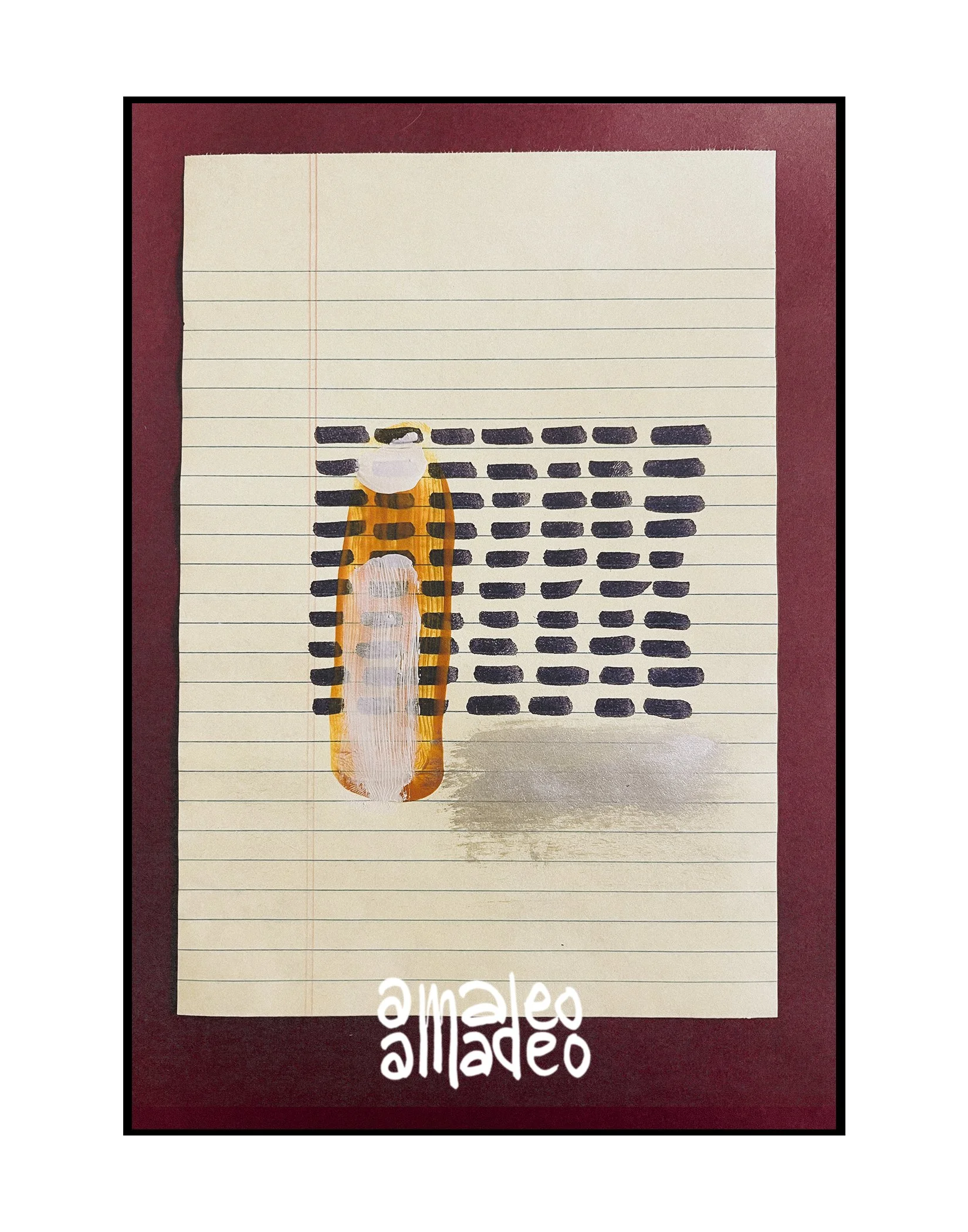
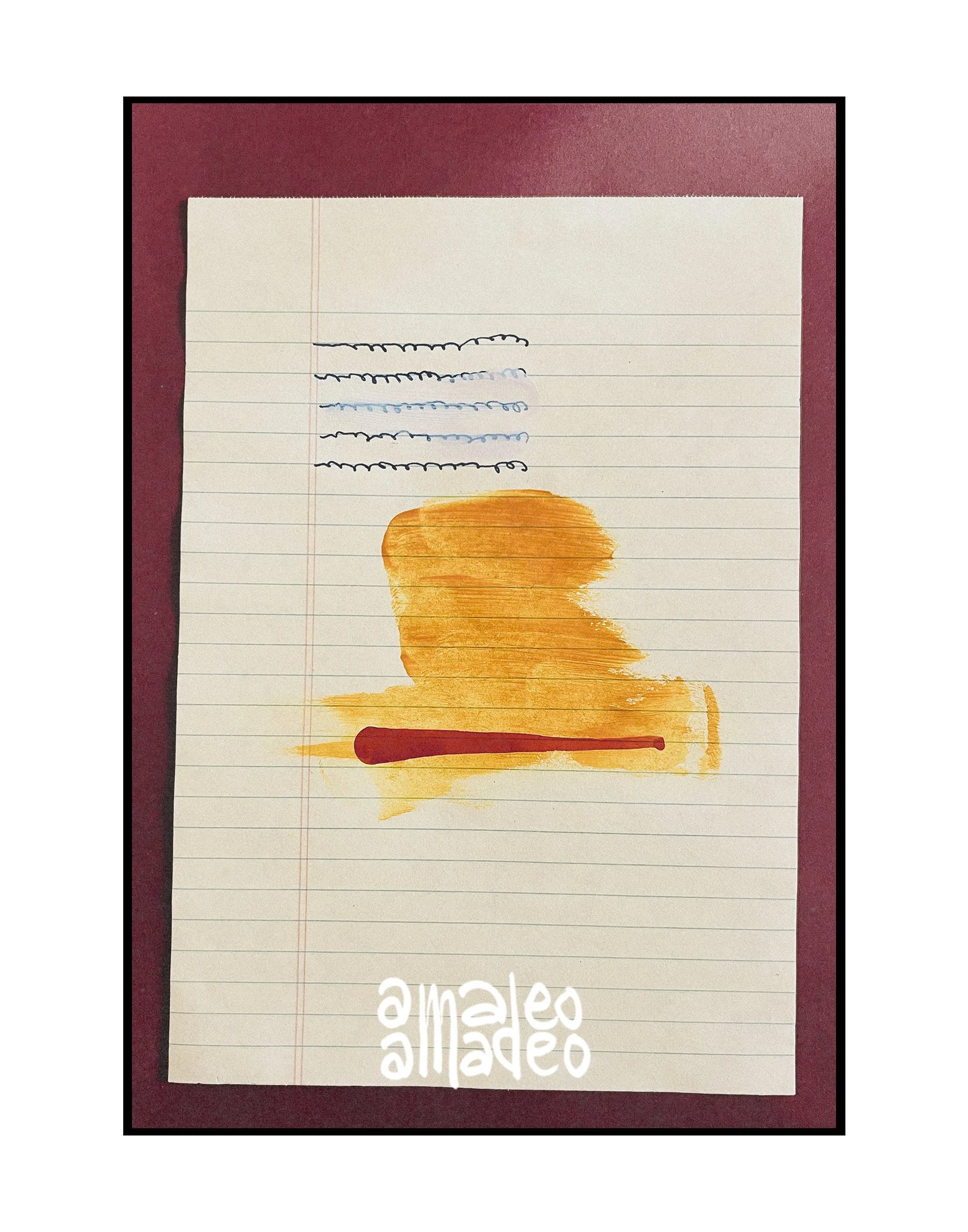
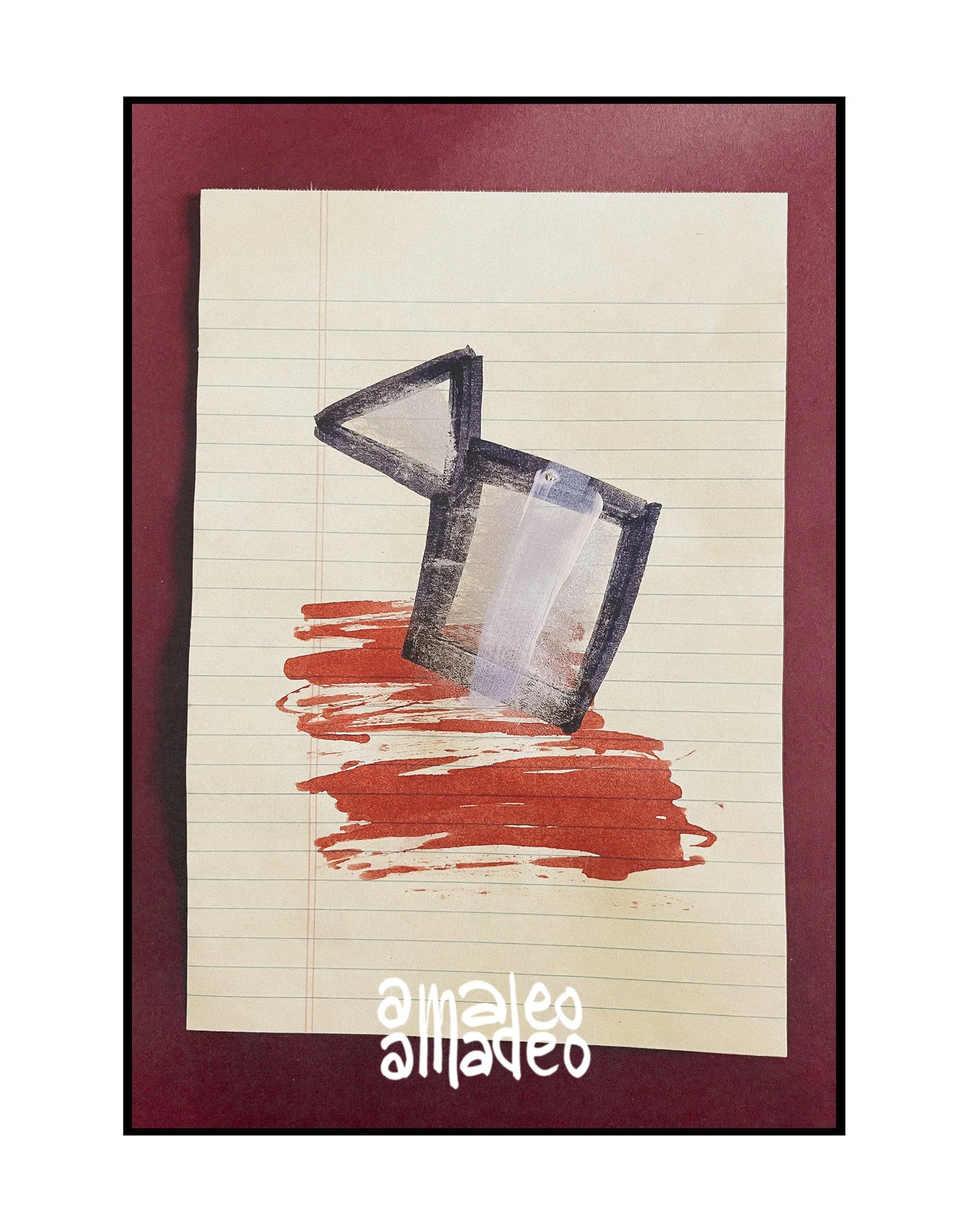
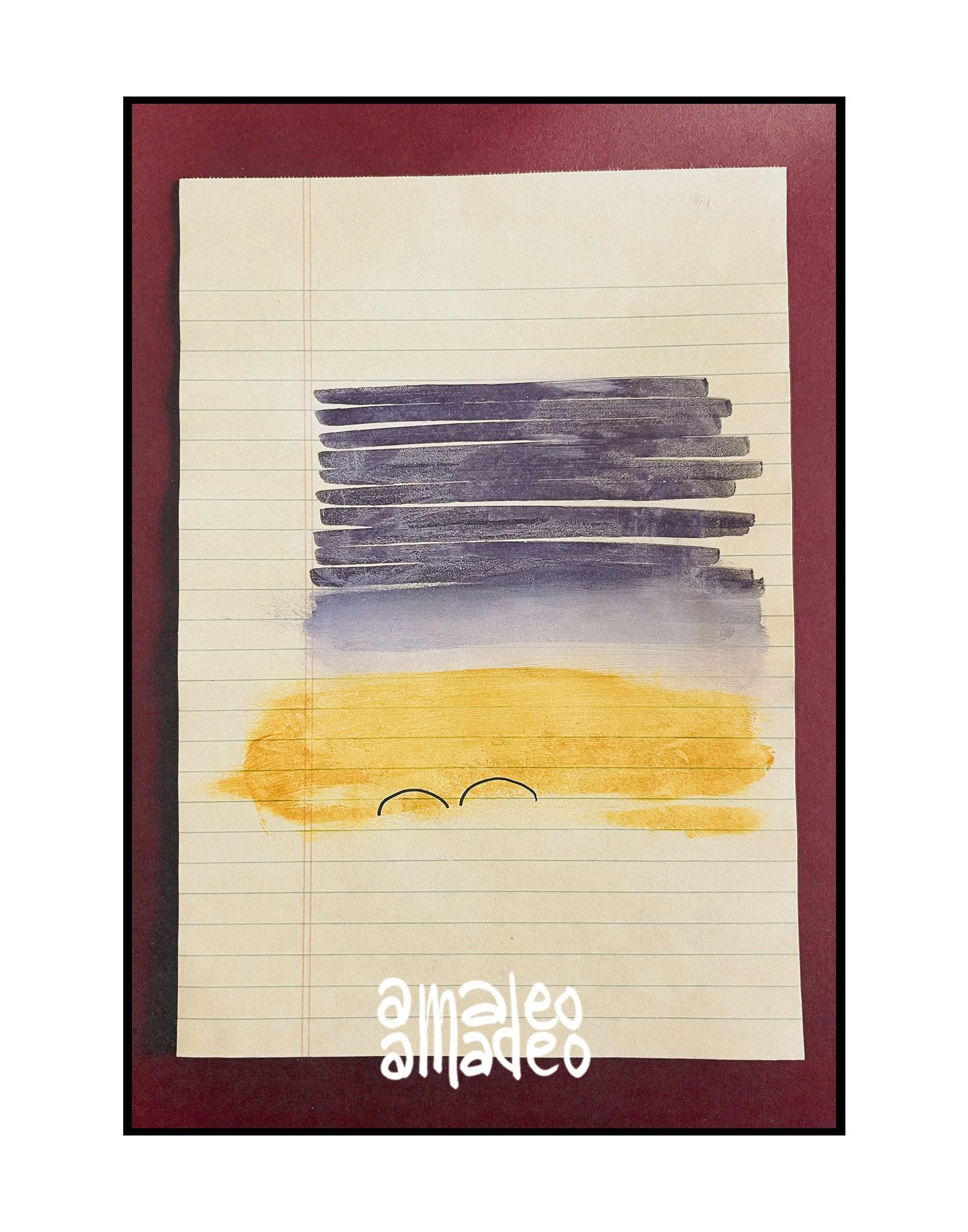
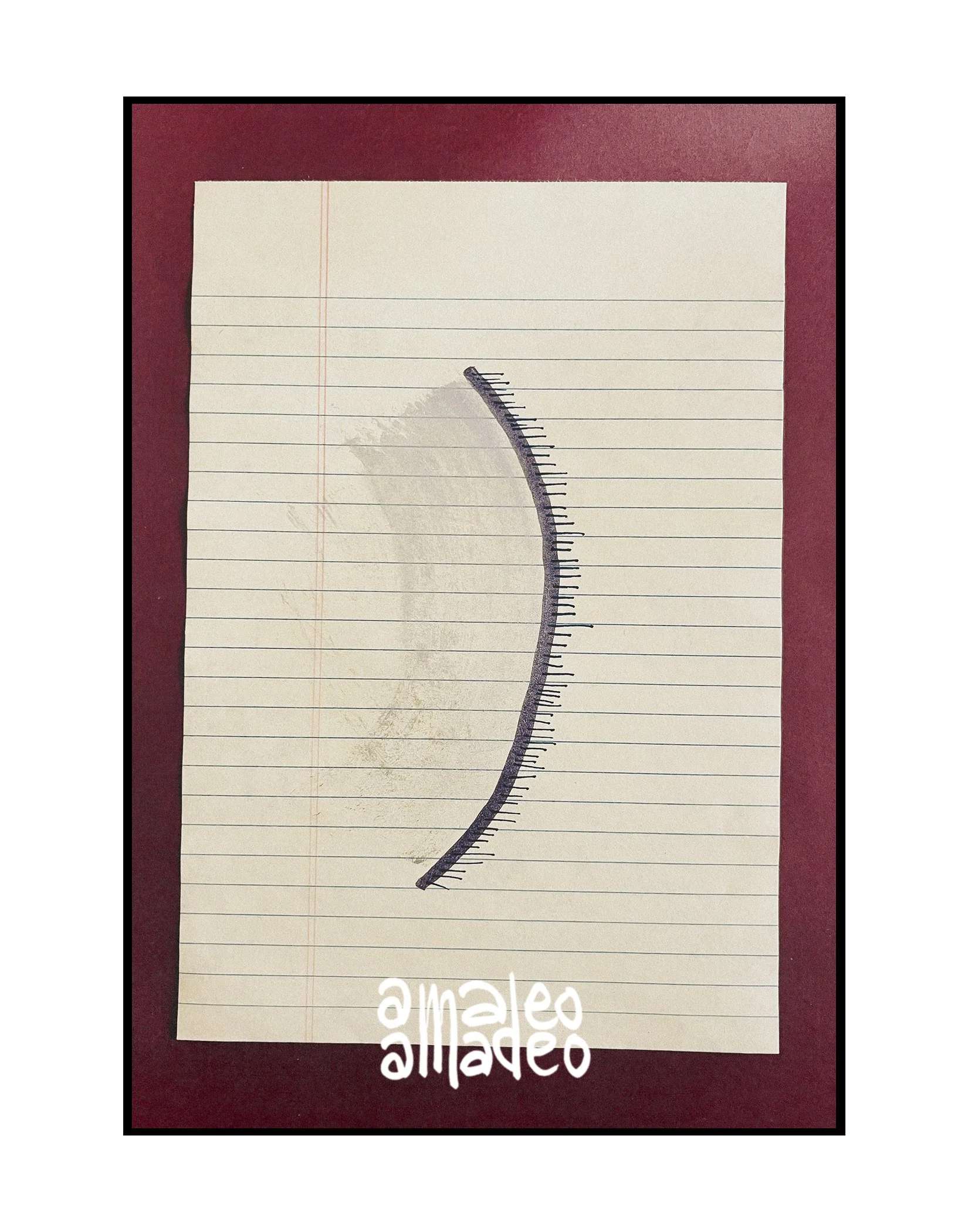
Draw a straight line twenty times, one beside another.
Try to make every one identical.
Then look.
Not only at the lines.
Look between the lines.
That's where something starts happening.