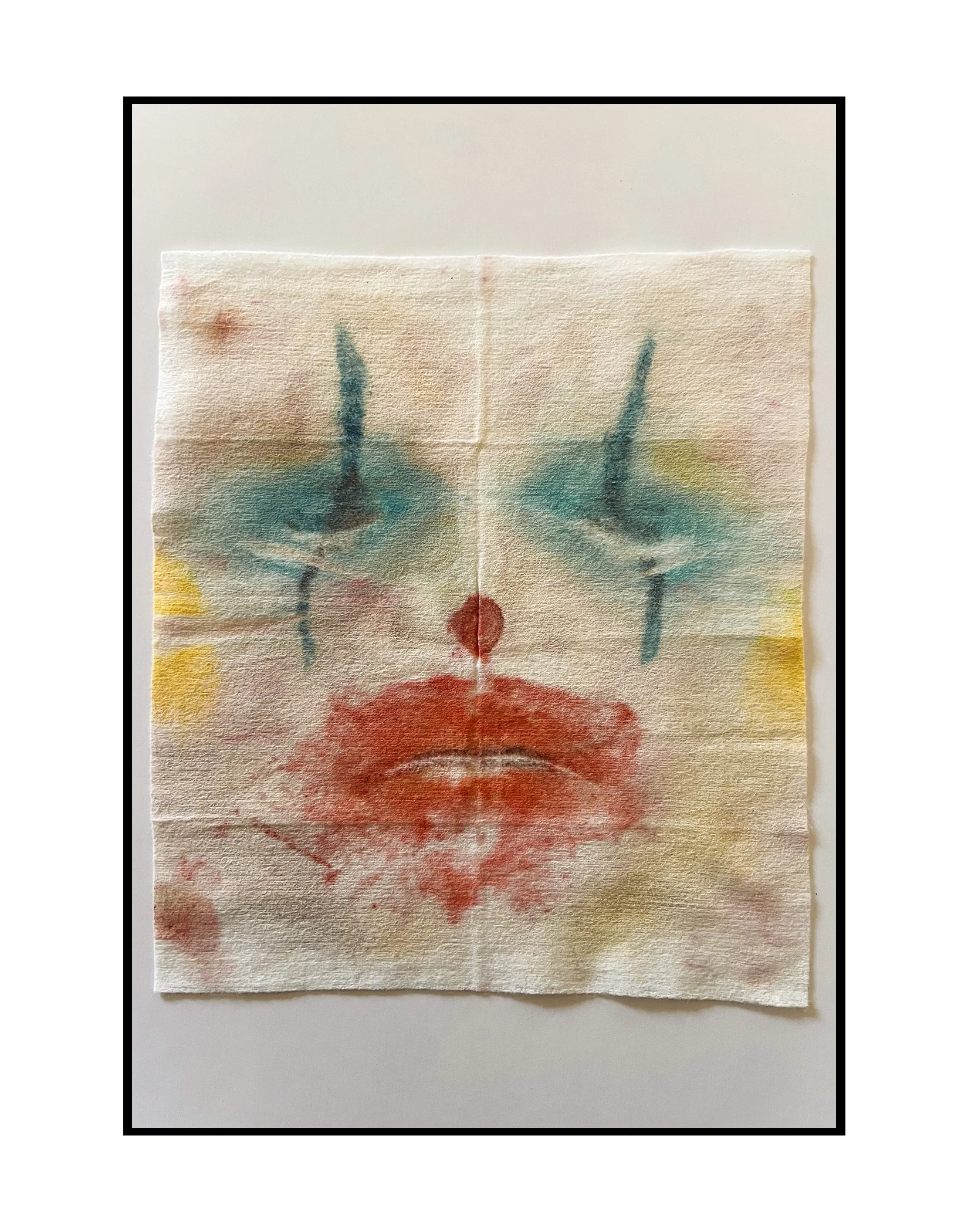
Halloween Was Over
Thirty little remains of a character who began because Halloween was over and I decided that didn’t really matter.
Well, if you haven’t heard the story of how A. Clown came to fruition, it happened on November 1, 2018, which I guess is already the wrong day to start a Halloween story.
Halloween has always been my favorite holiday. I love getting dressed. I love becoming something else. I love makeup and costumes and the permission Halloween gives everyone to be ridiculous for a night. But that year I didn’t go to a Halloween party. I didn’t dress up. I didn’t even go out.
Then November 1 came and I still wanted Halloween.
So I painted my face like a clown.
There wasn’t really a plan. I just wanted to get dressed up because I hadn’t gotten to do it the night before. I painted my face, took a self portrait and remember looking at the photograph thinking, hmm, is it weird to post this now? Halloween is over.
I posted it anyway.
People commented things like, “Halloween is over.” “I hate clowns.” “That’s weird.”
And I remember thinking how funny that was.
It was one day.
Apparently there was a very specific window in which I was allowed to paint my face like a clown and I had missed it.
So naturally I did it again the next day.
And then again.
I started painting myself as a different version of A. Clown almost every day. I would paint the face, photograph myself and post it. One clown became another clown and then another clown and eventually the question wasn’t really whether it was strange anymore. It was just something I did.
I think that became part of the game for me.
How long can you do something that people initially think you’re not supposed to do before it becomes normal?
How many times can I paint this face before A. Clown stops being a costume and starts becoming a person?
How much of an identity can I create for a character that only exists in my head?
Eventually I started painting other people as clowns too. The world got a little bigger. There were portraits and different faces and different versions of the character, but A. Clown was always somewhere inside of it.
For nearly the next 365 days I kept returning to the face.
Some days it was beautiful. Some days it was ugly. Sometimes sad. Sometimes stupid. Sometimes glamorous. Sometimes it barely looked like a clown at all.
And then at the end of the day I would take it off.
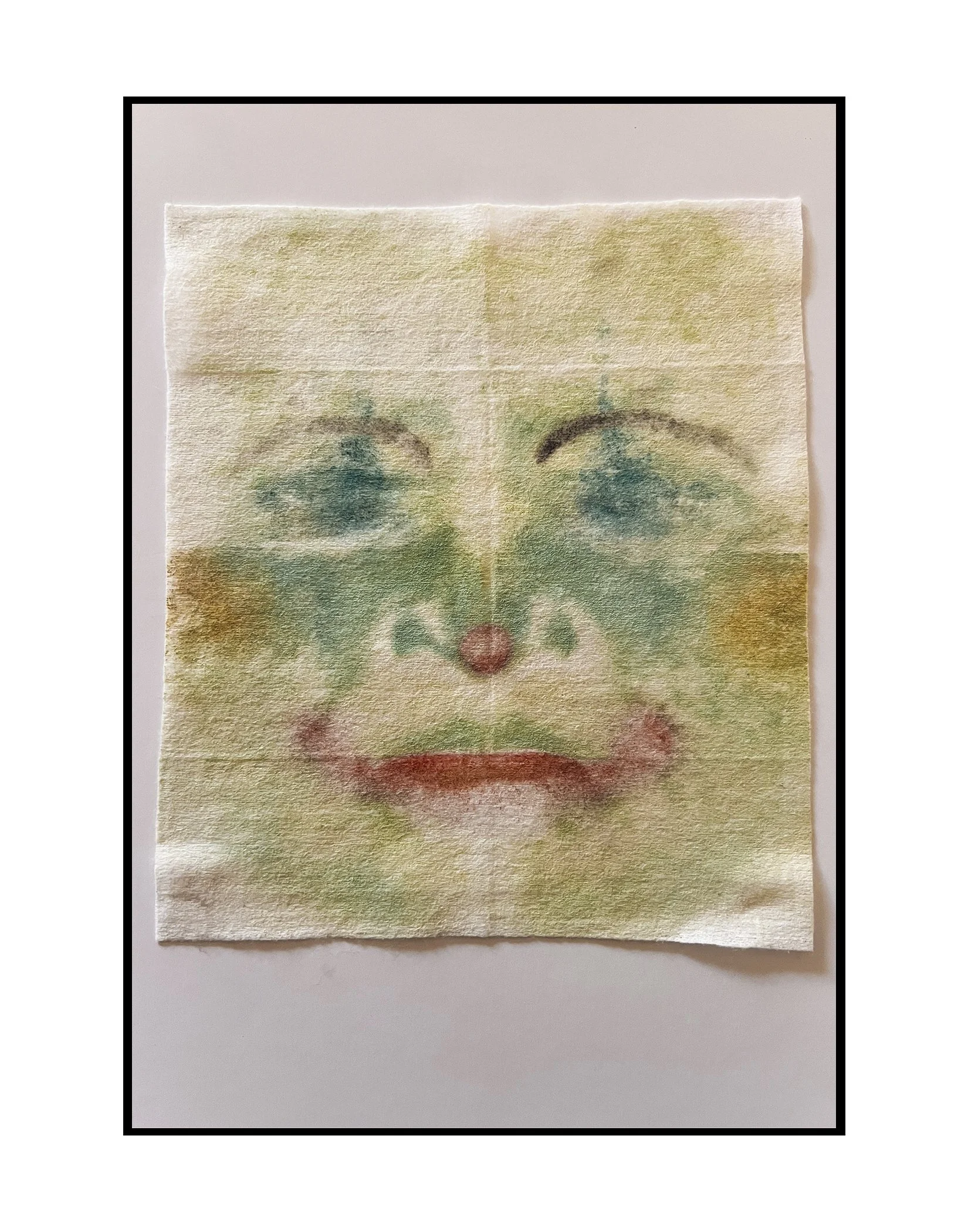
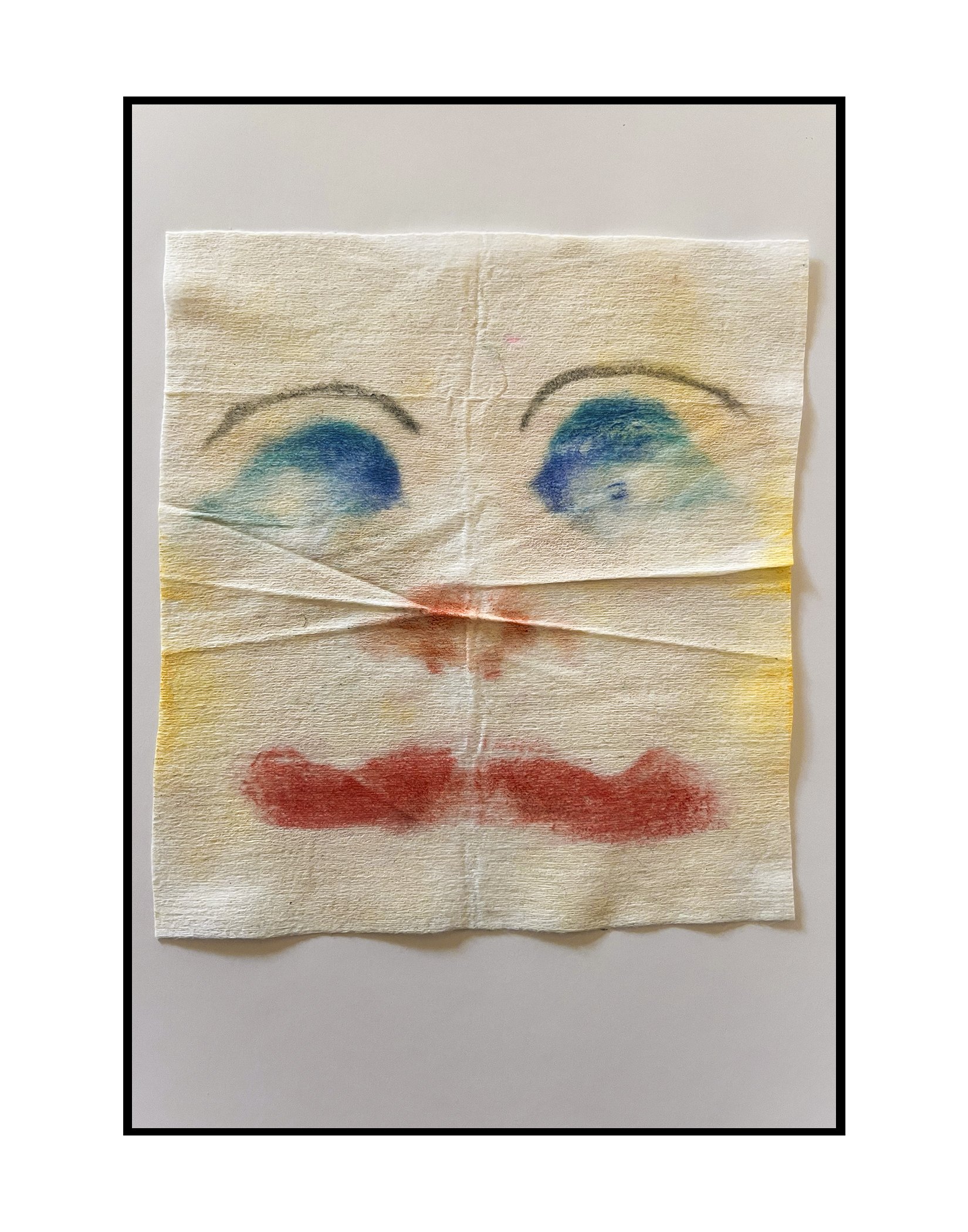
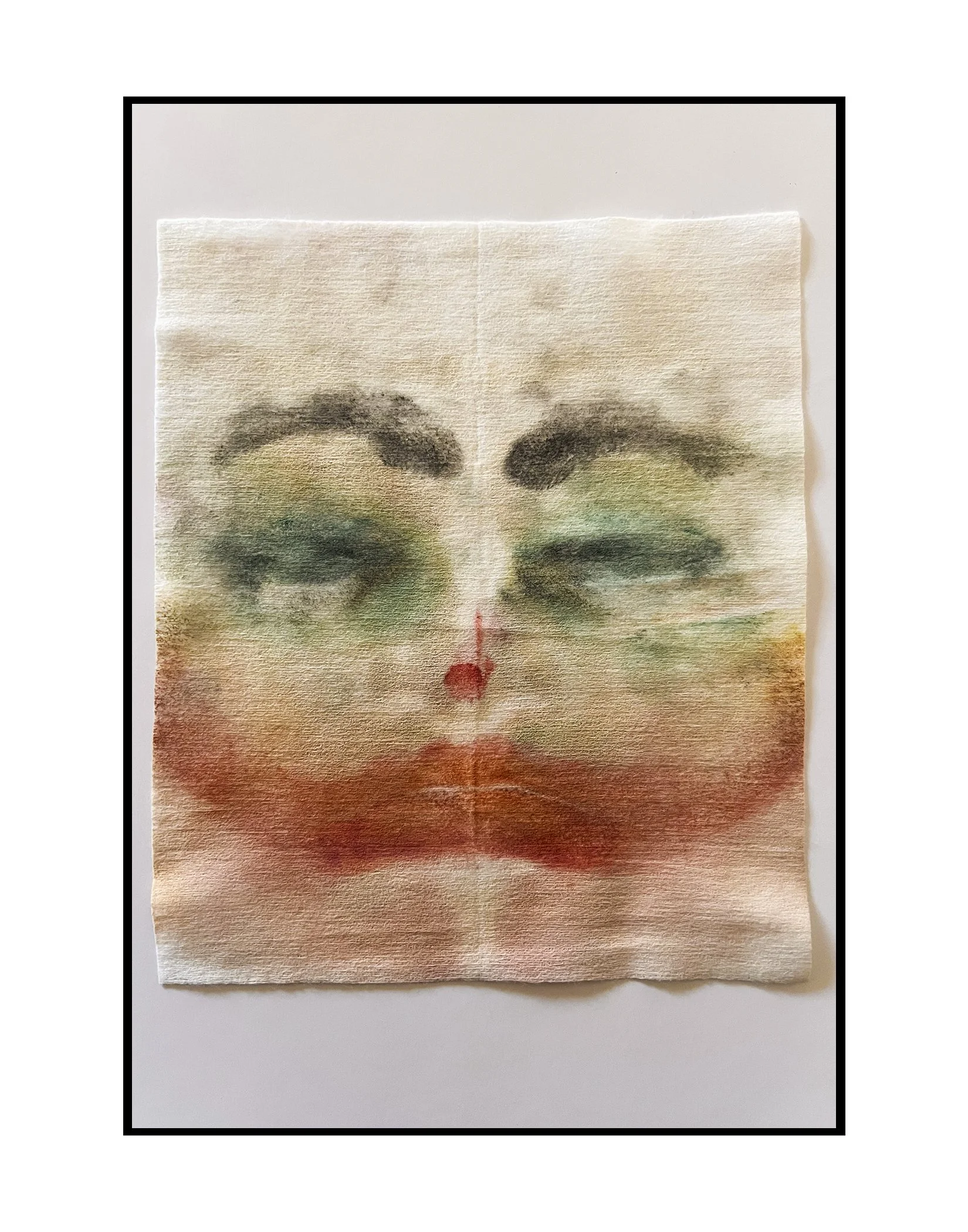
At some point I began pressing the wipes against my face instead of simply wiping the makeup away.
The face transferred.
An eye would stay behind. A mouth. Eyebrows. The little red nose. Sometimes almost the entire face appeared on the cloth and sometimes only pieces survived.
I kept them.
I don’t remember deciding that they were art. I think I just knew I didn’t want to throw them away.
Looking at them now, they feel like portraits made after the portrait was finished. A record of something disappearing. The makeup leaves my face and another face appears somewhere else.
They’re all A. Clown, but none of them are exactly A. Clown.
Some look happy. Some look exhausted. Some look frightened. Some barely have a face left at all.
There are 30 here.
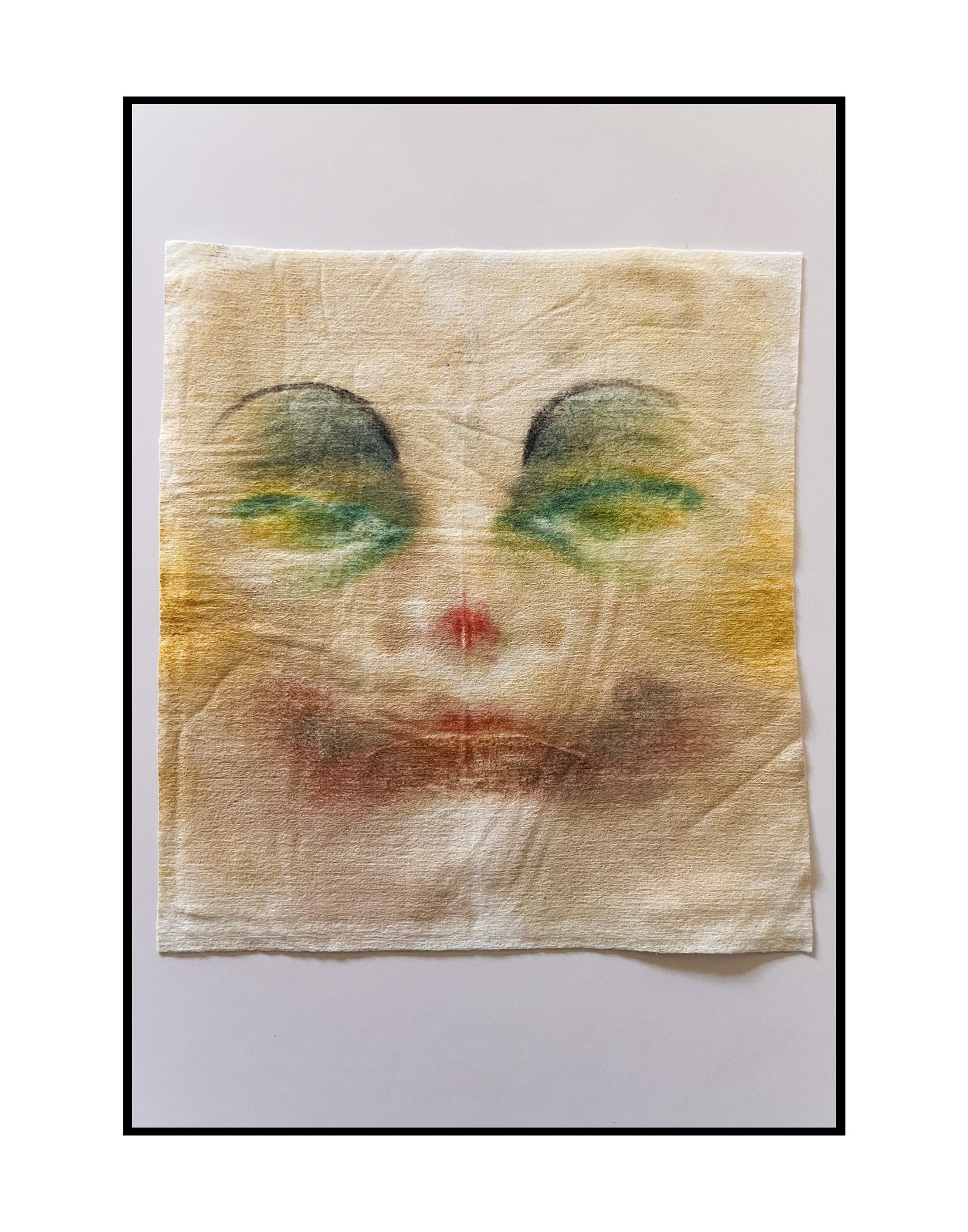
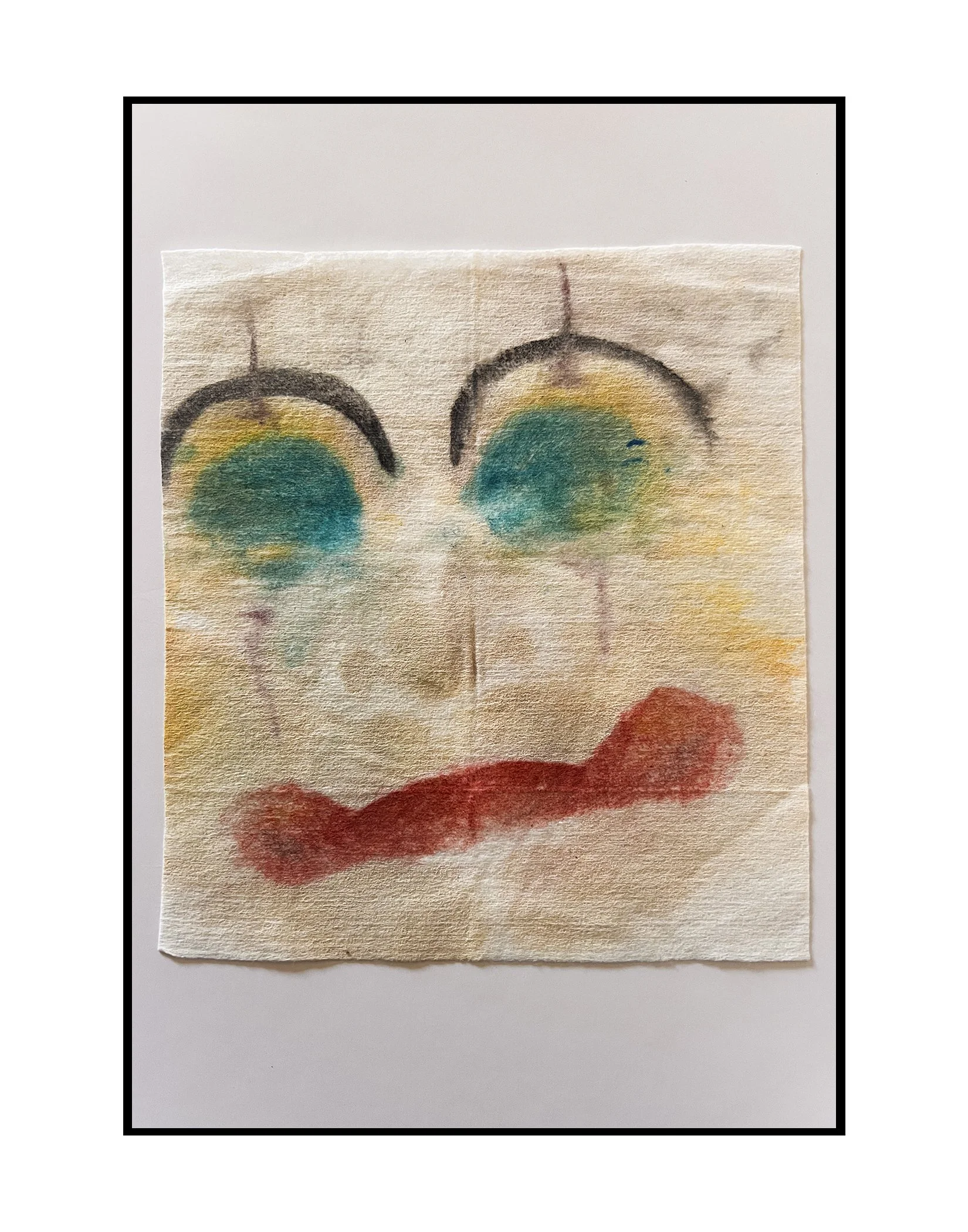
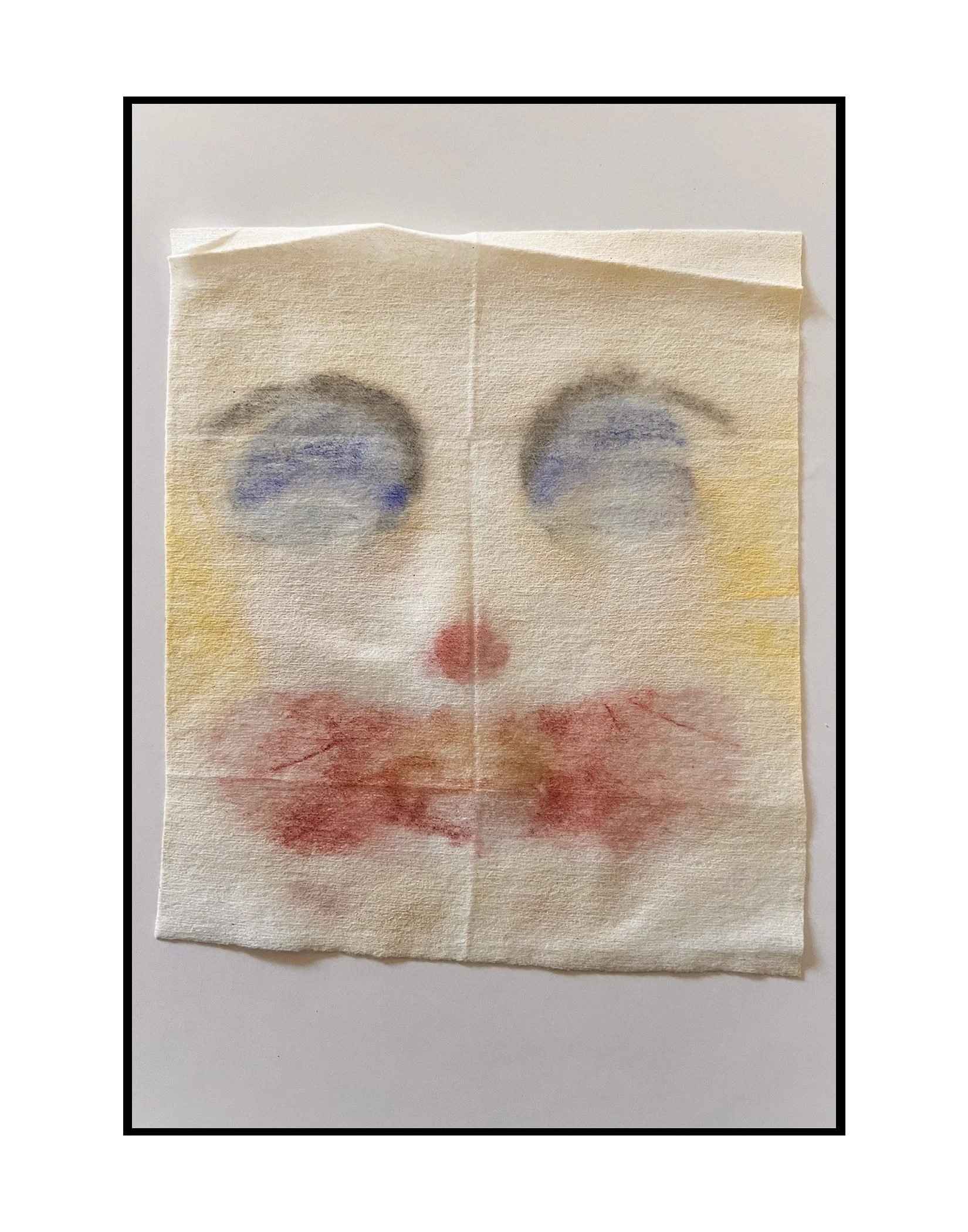
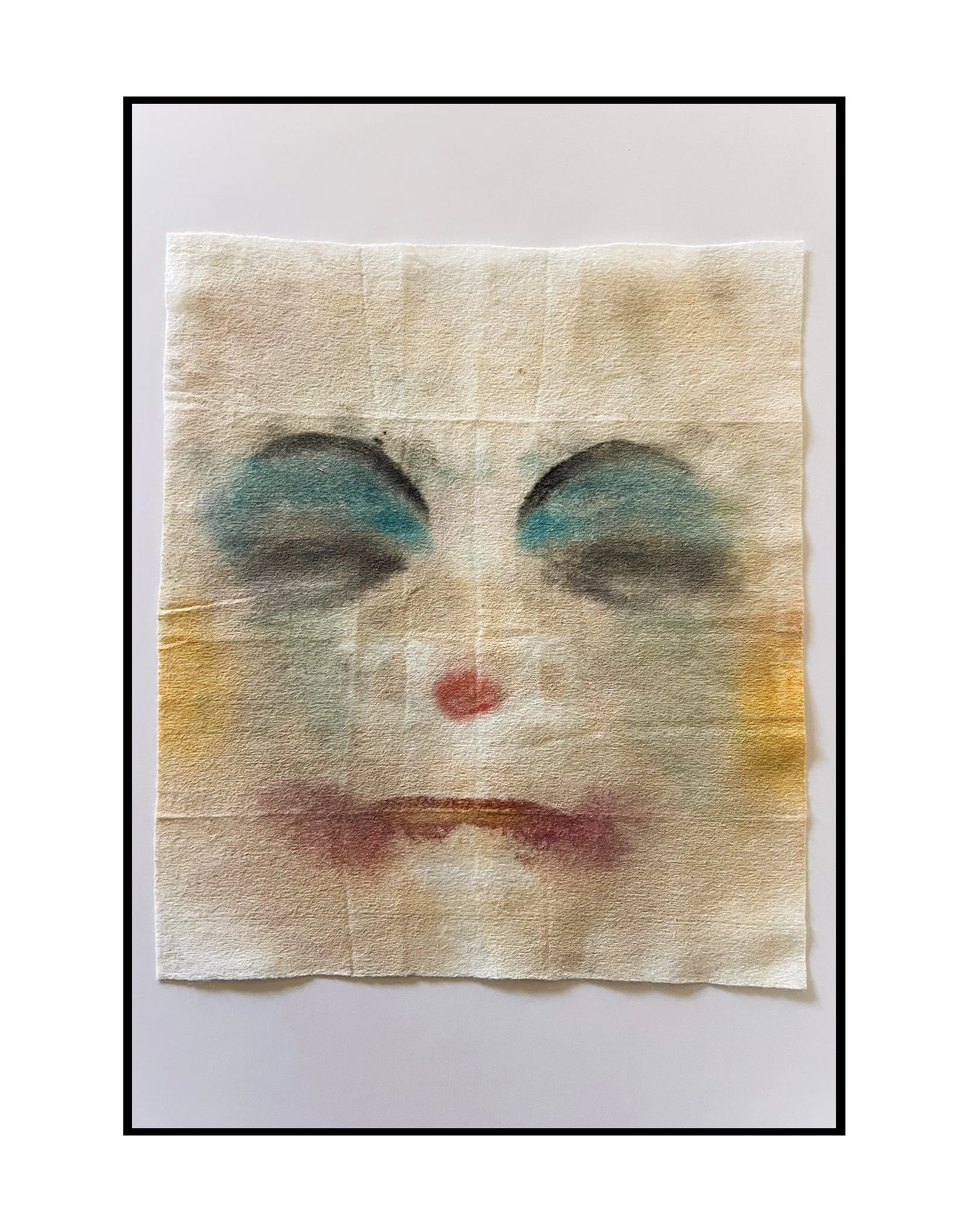
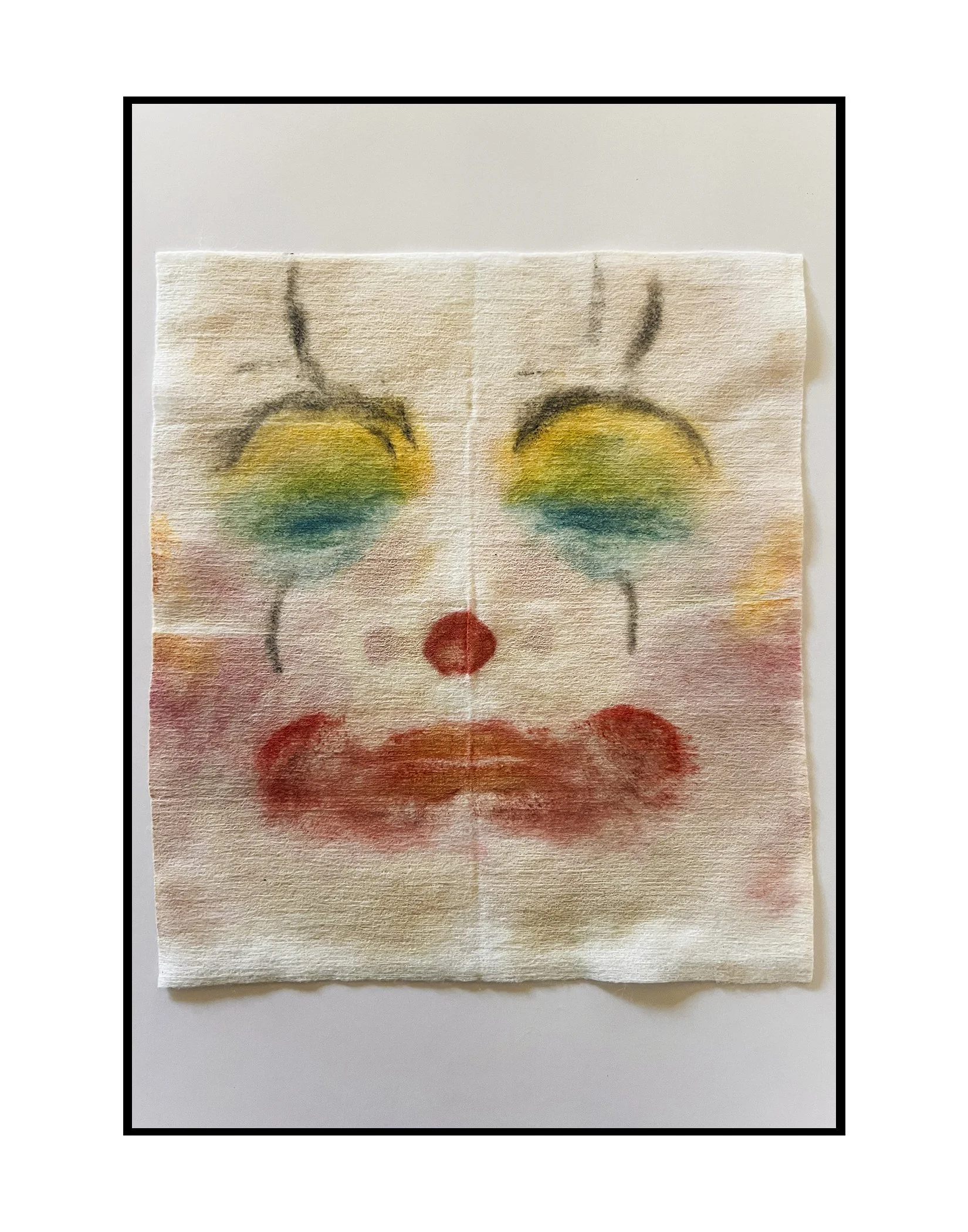
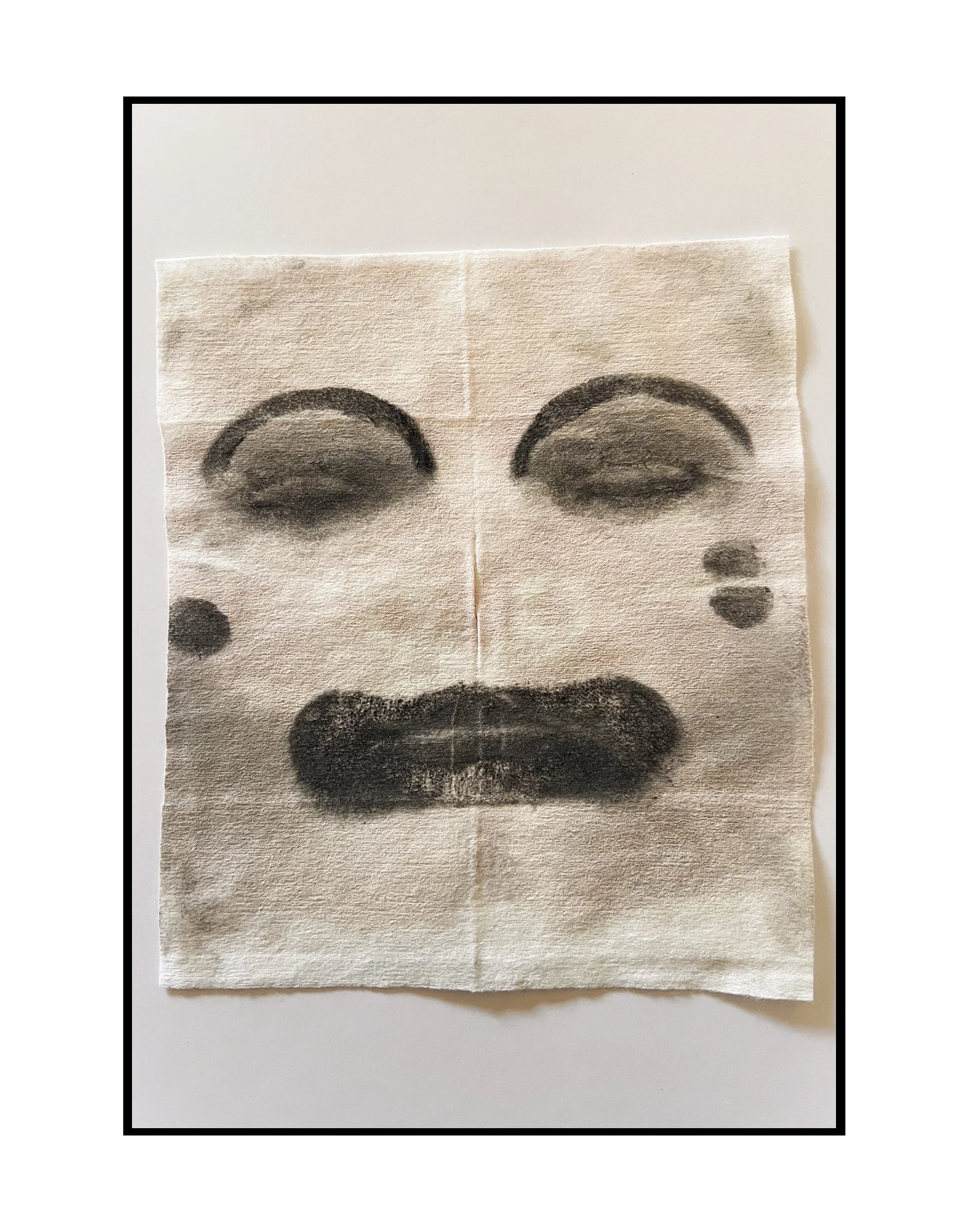
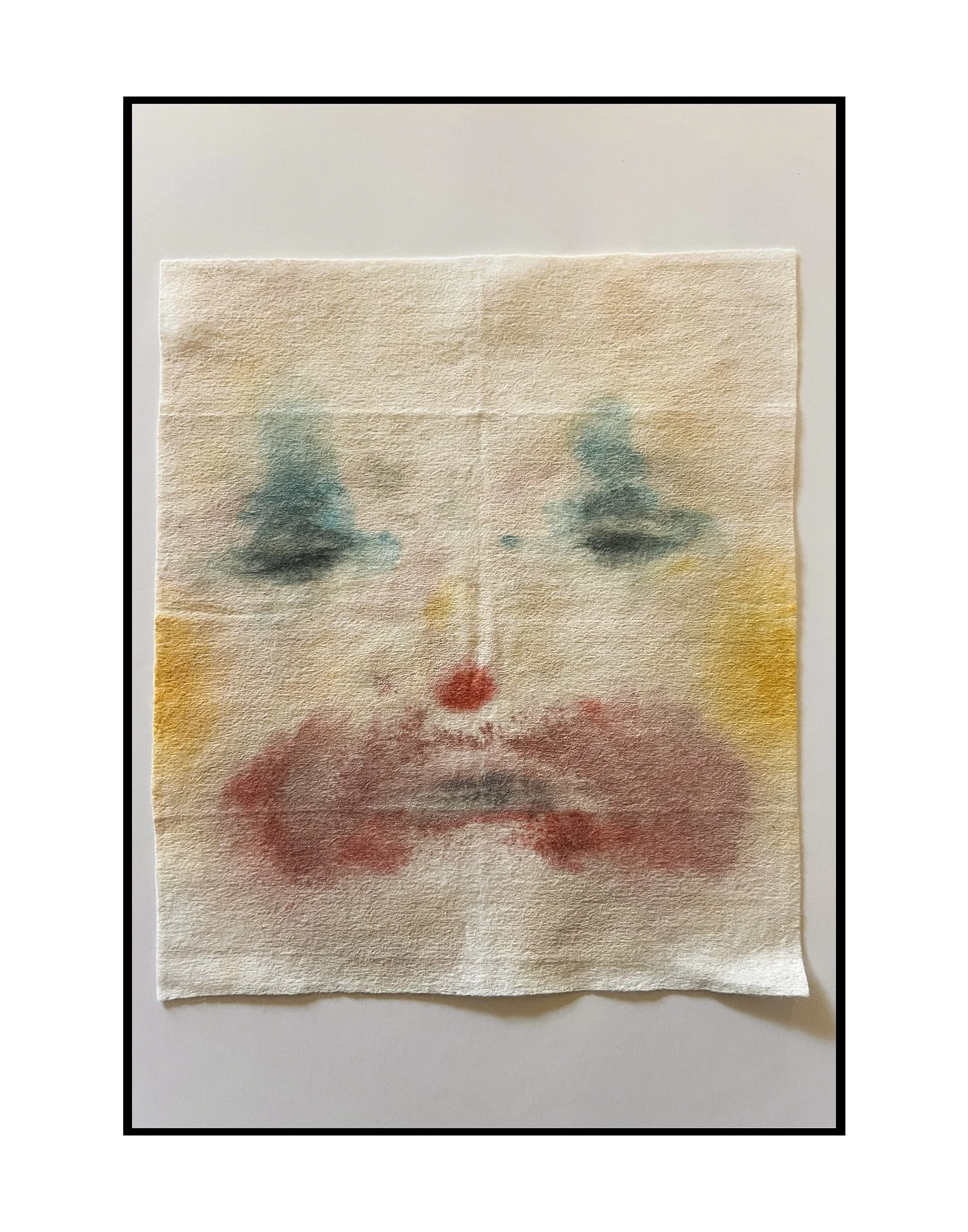
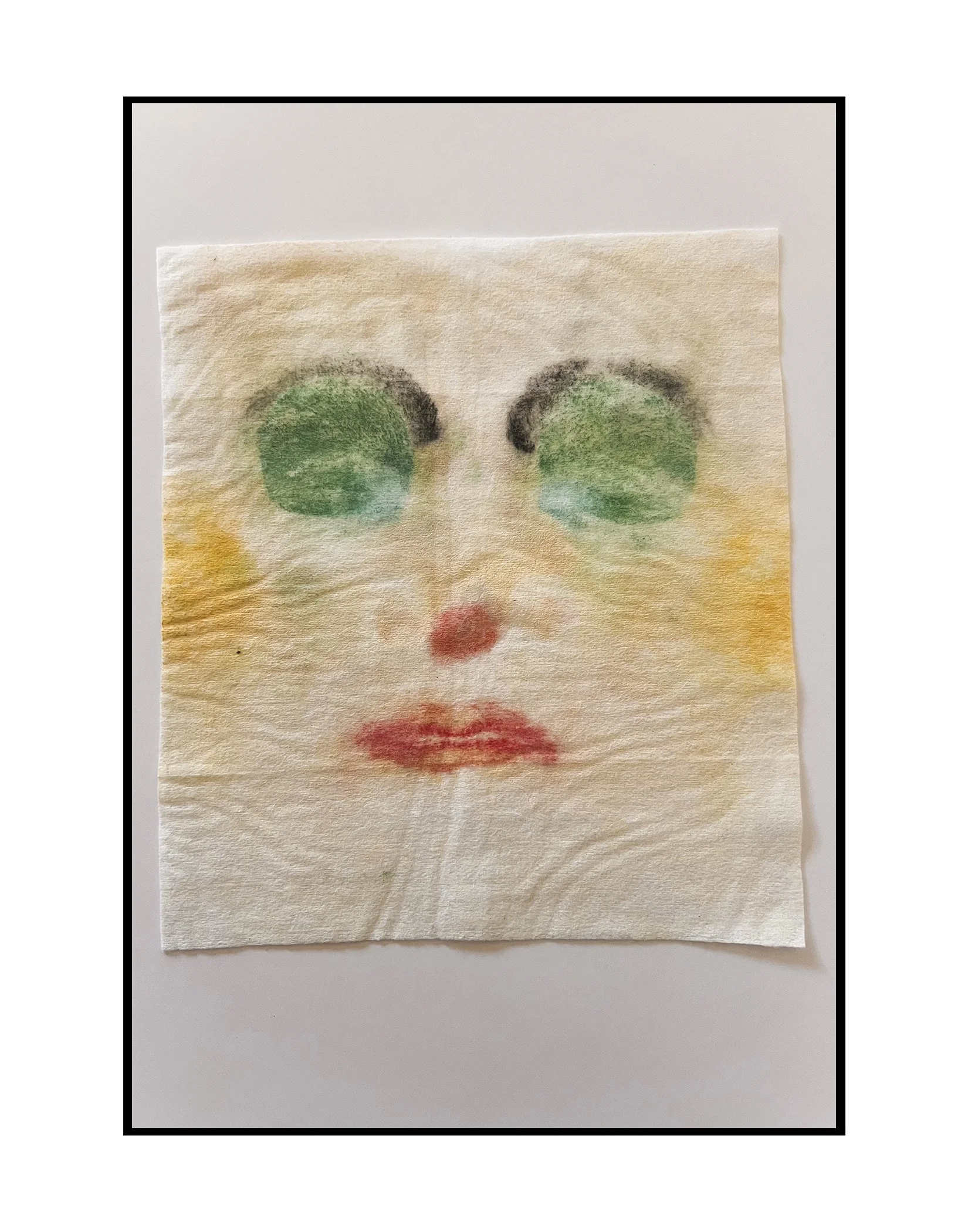
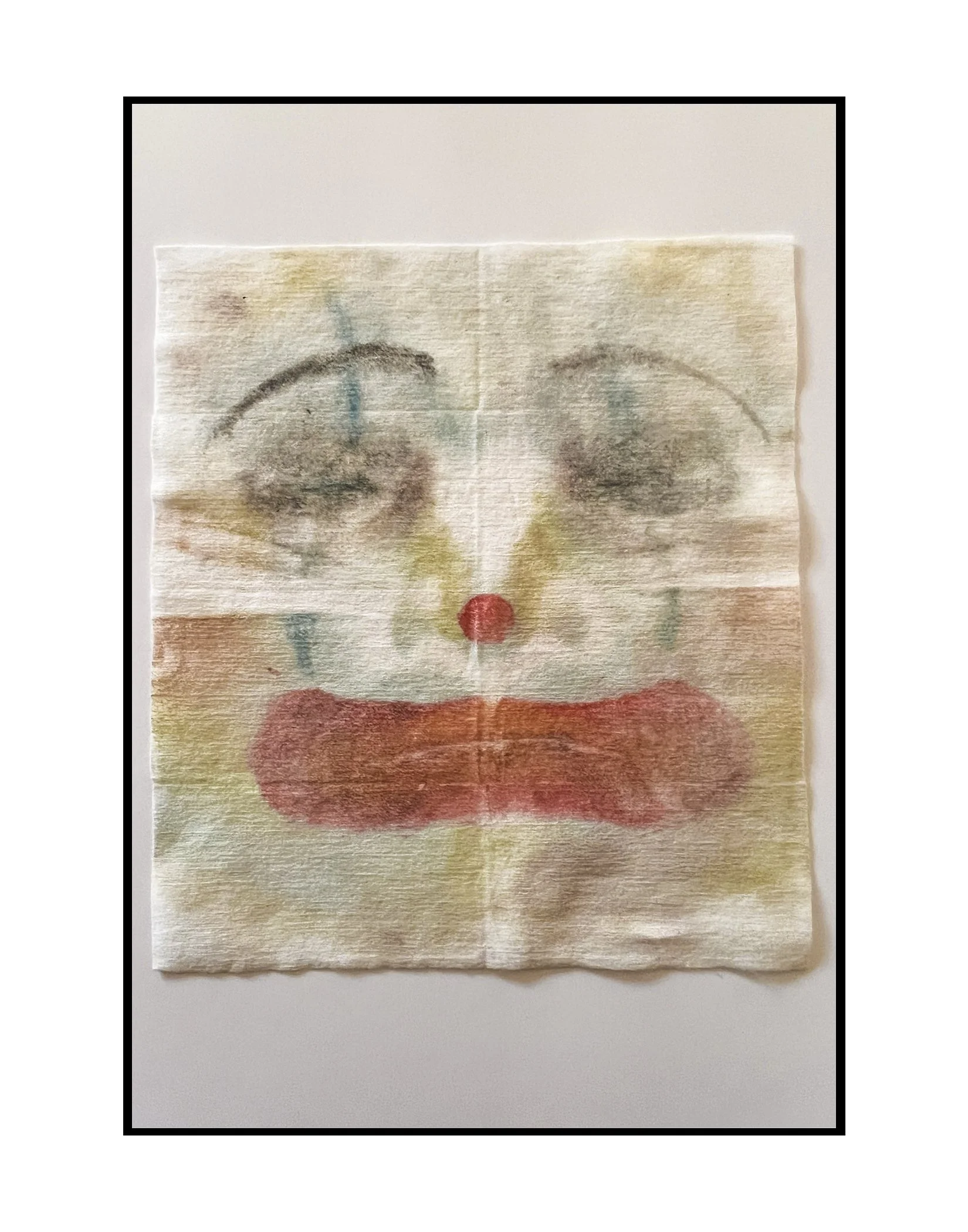
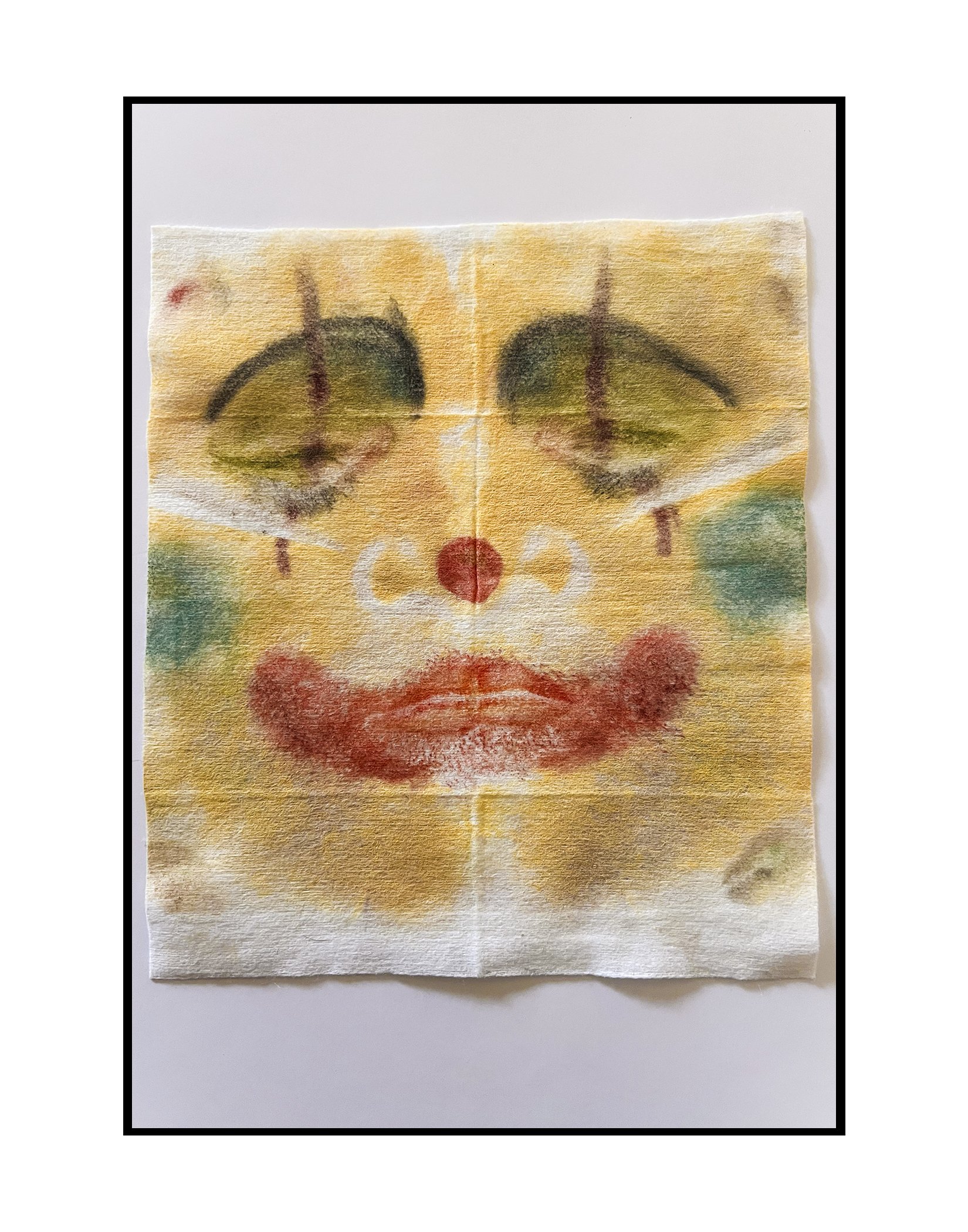
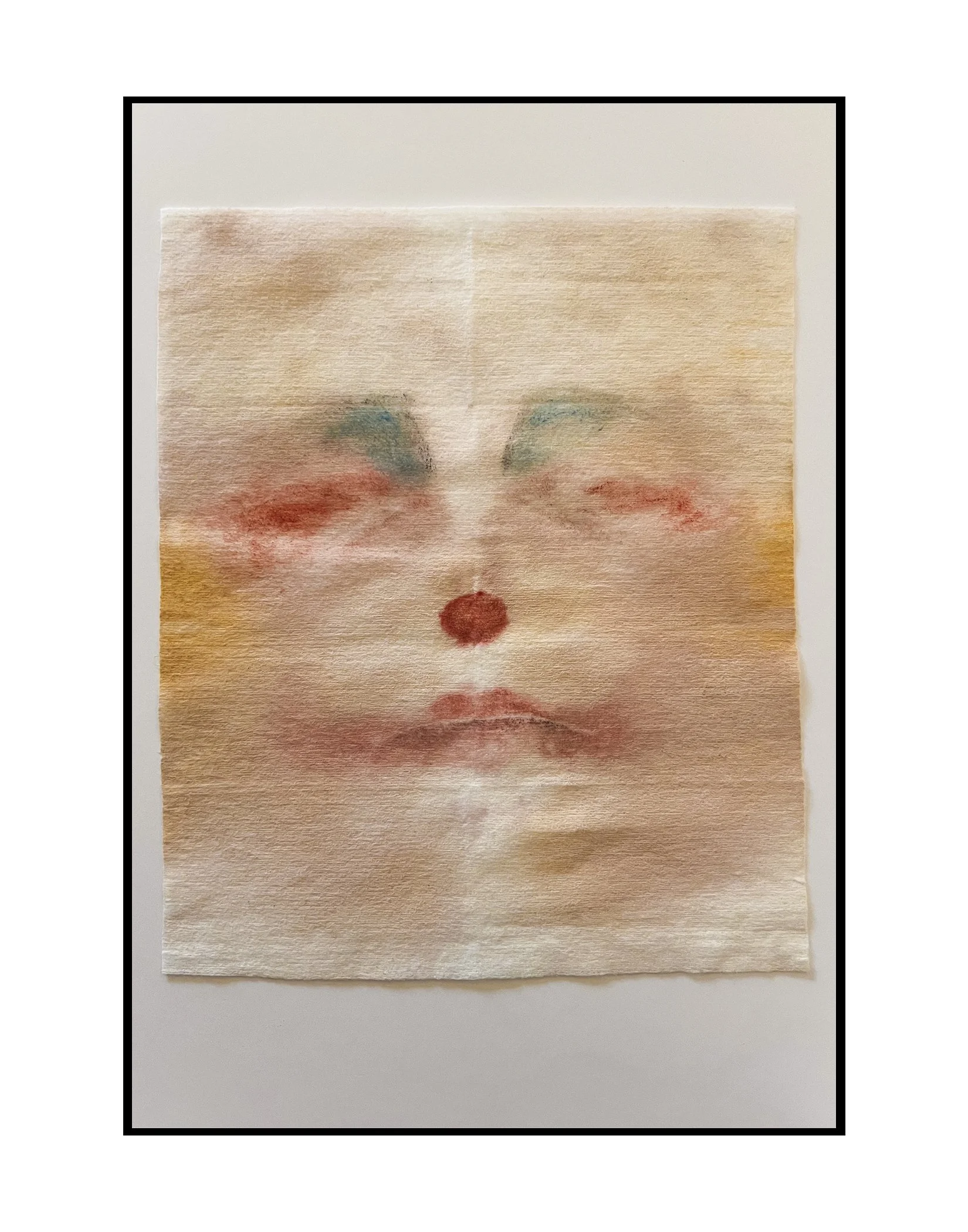
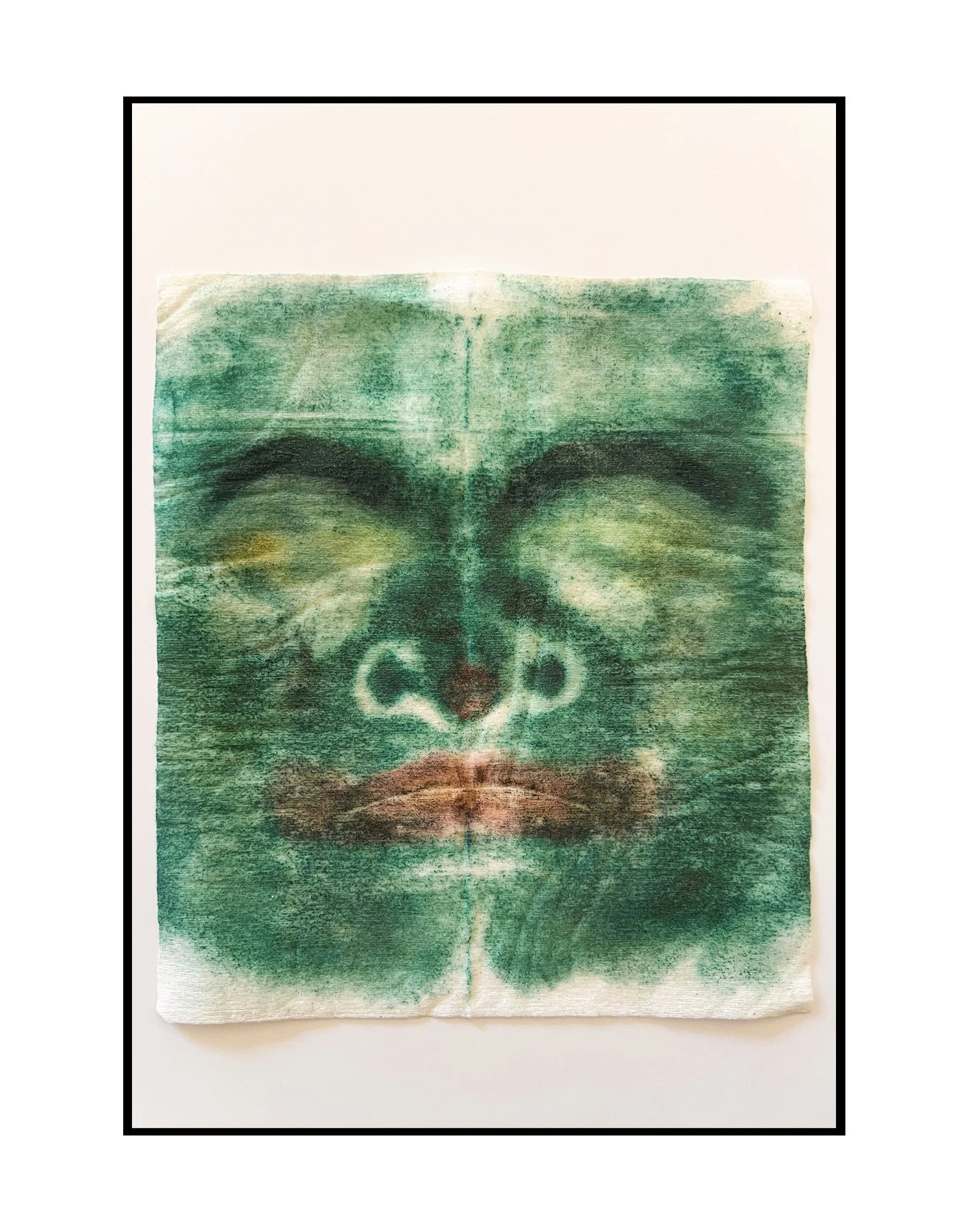
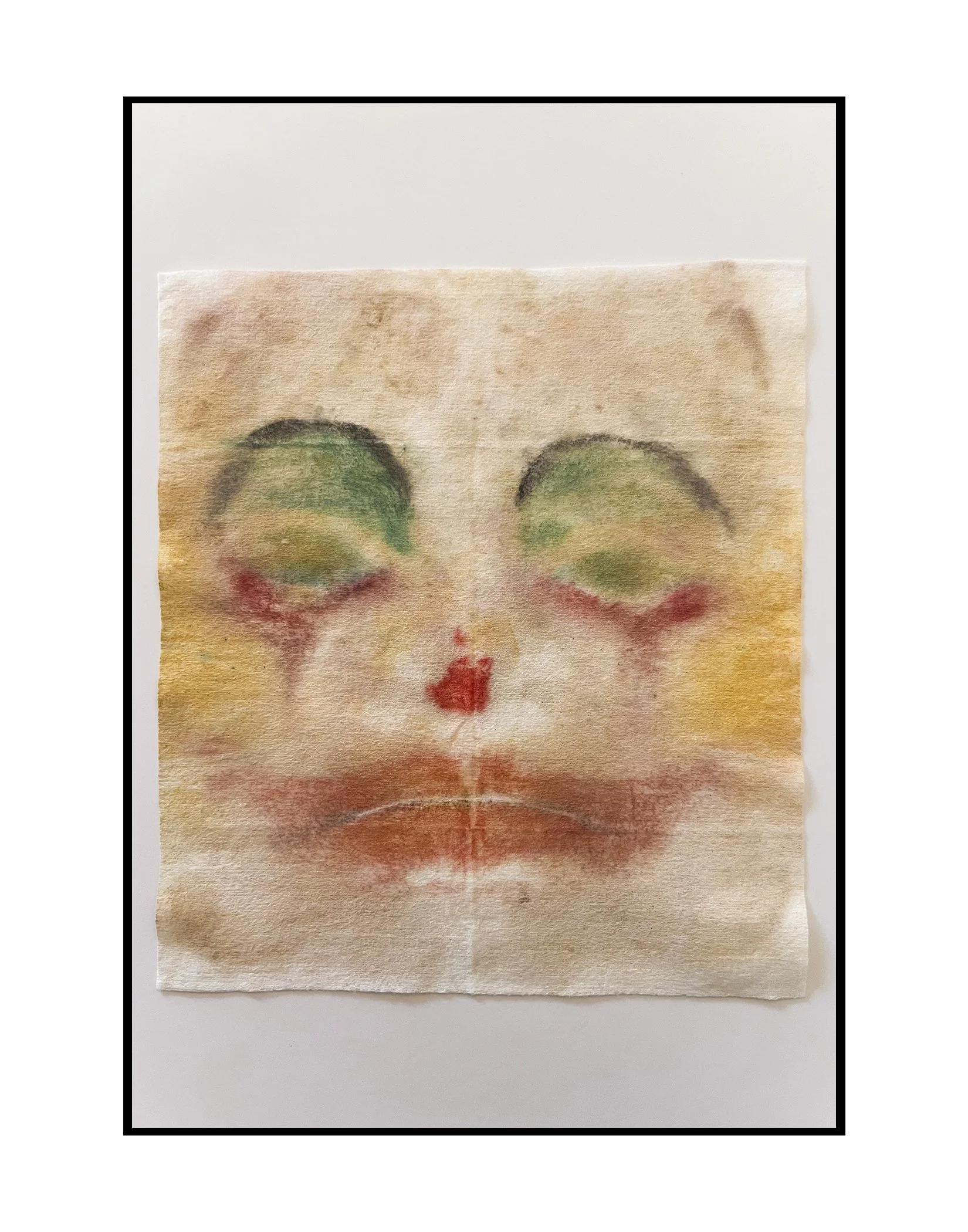
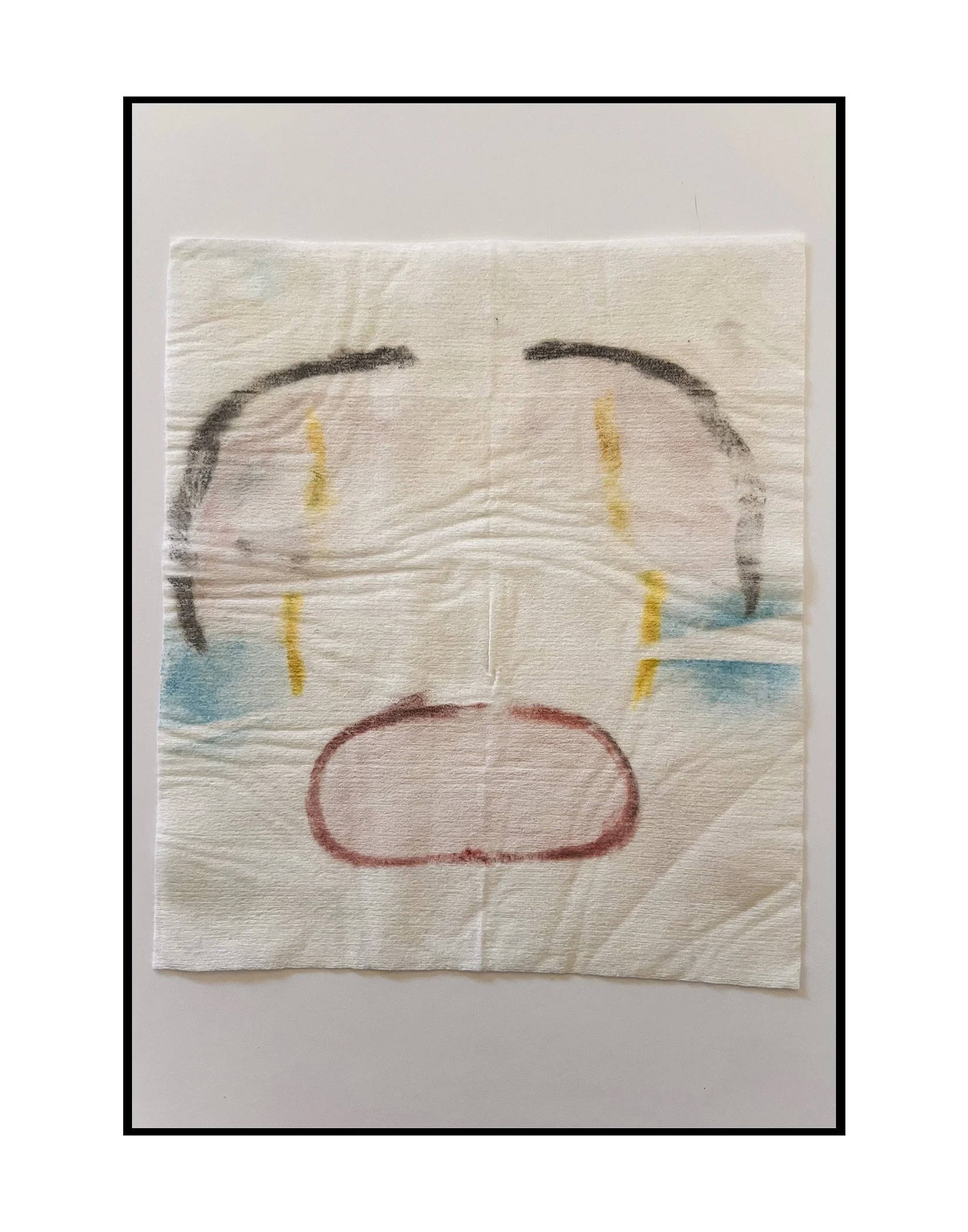
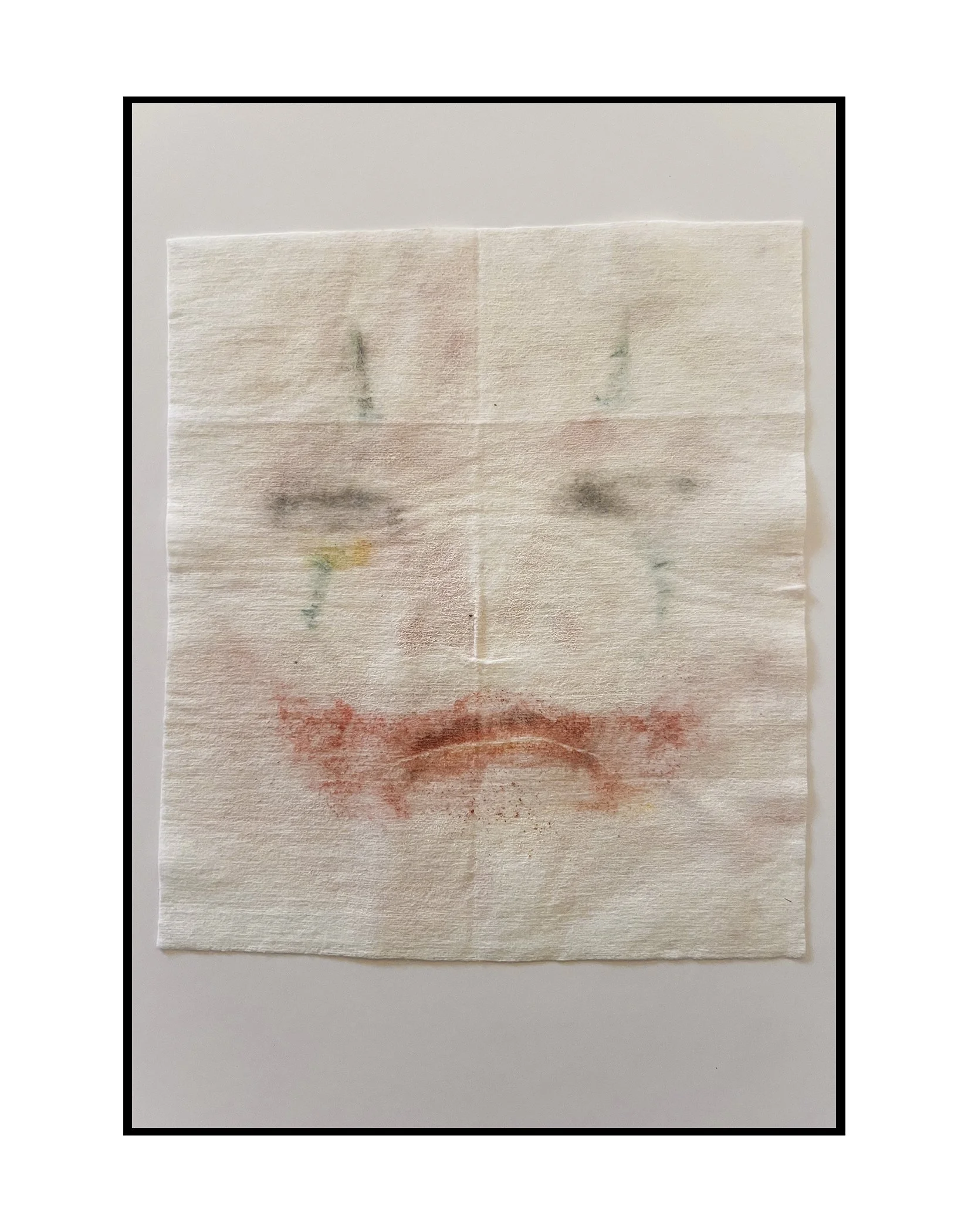
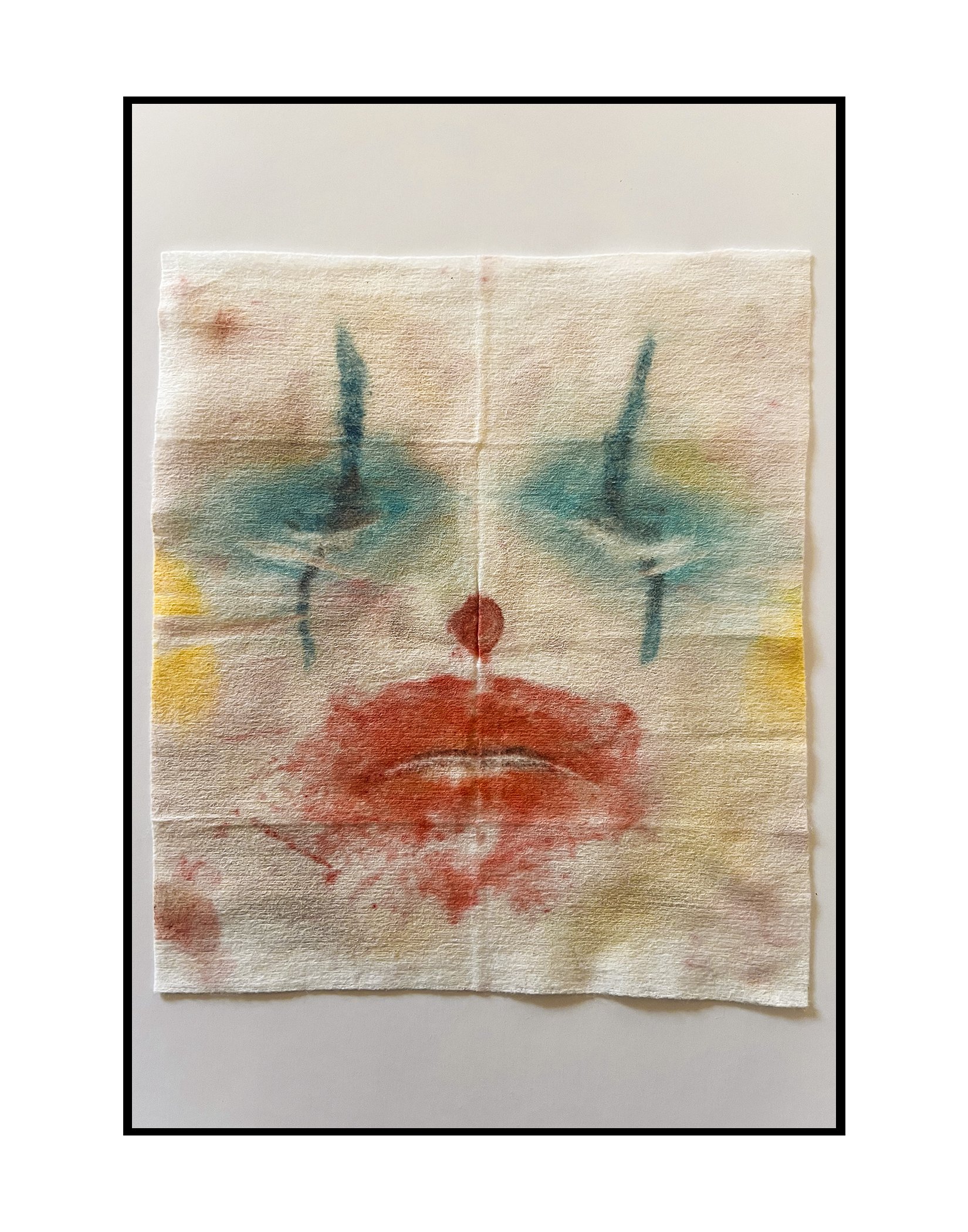
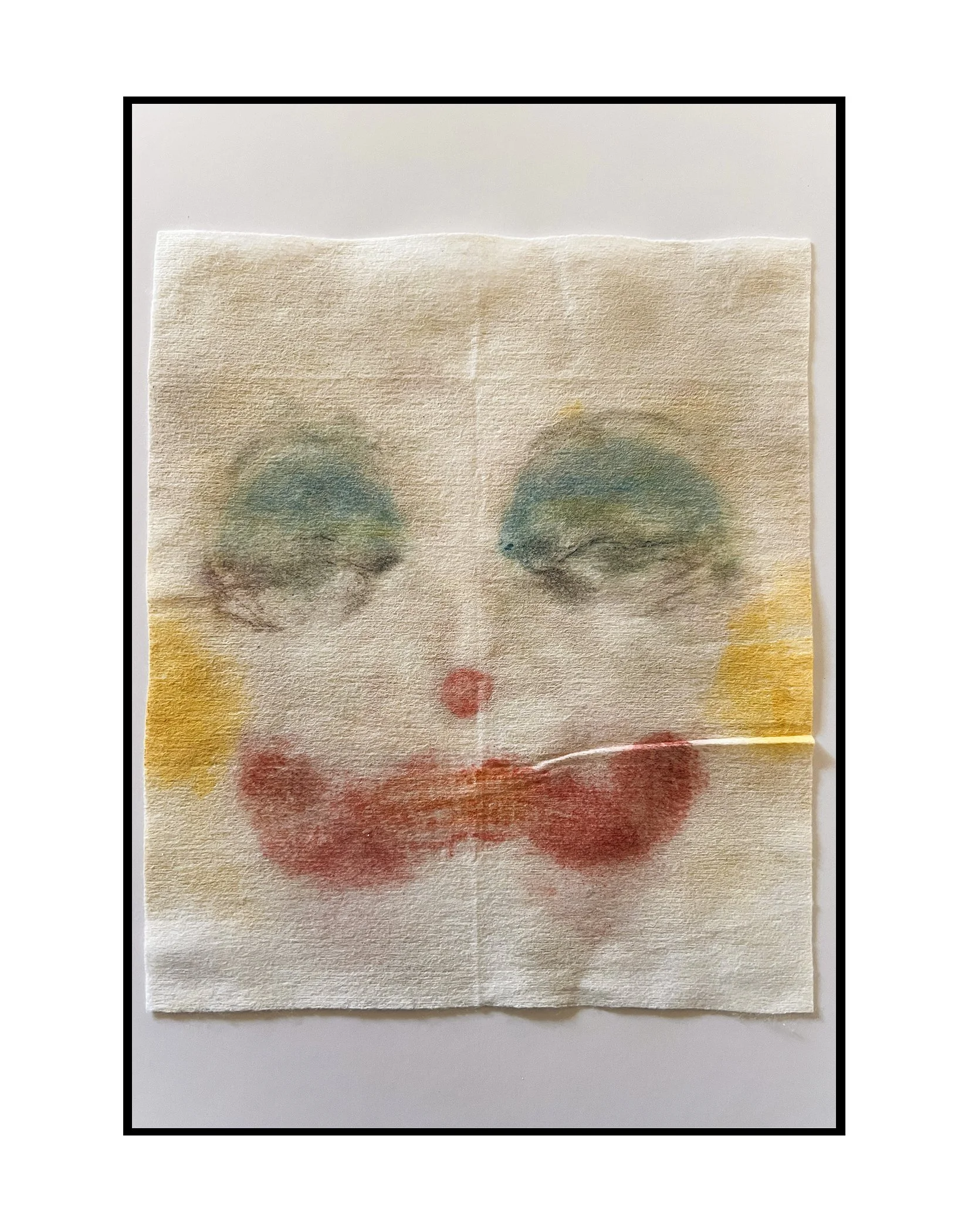
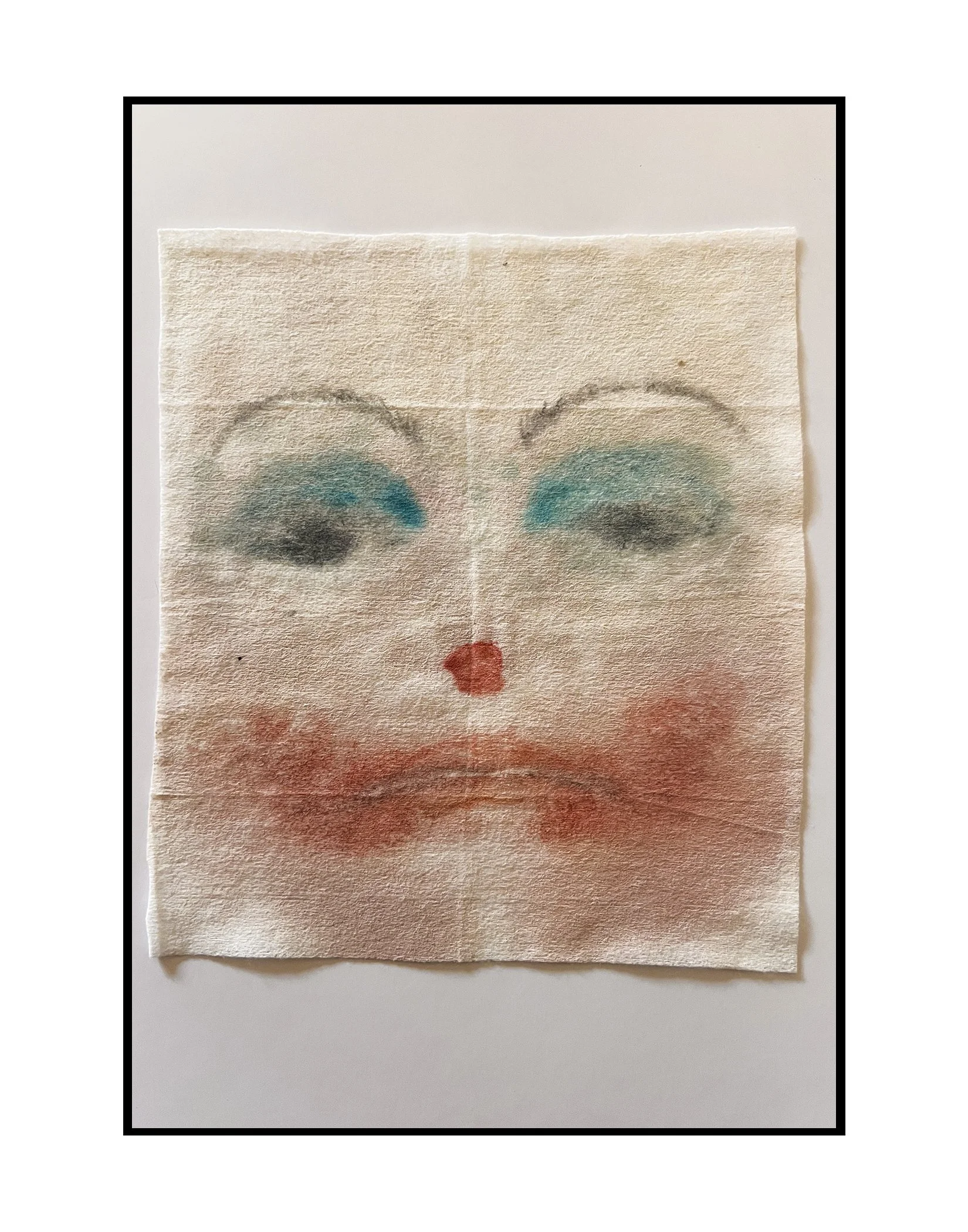
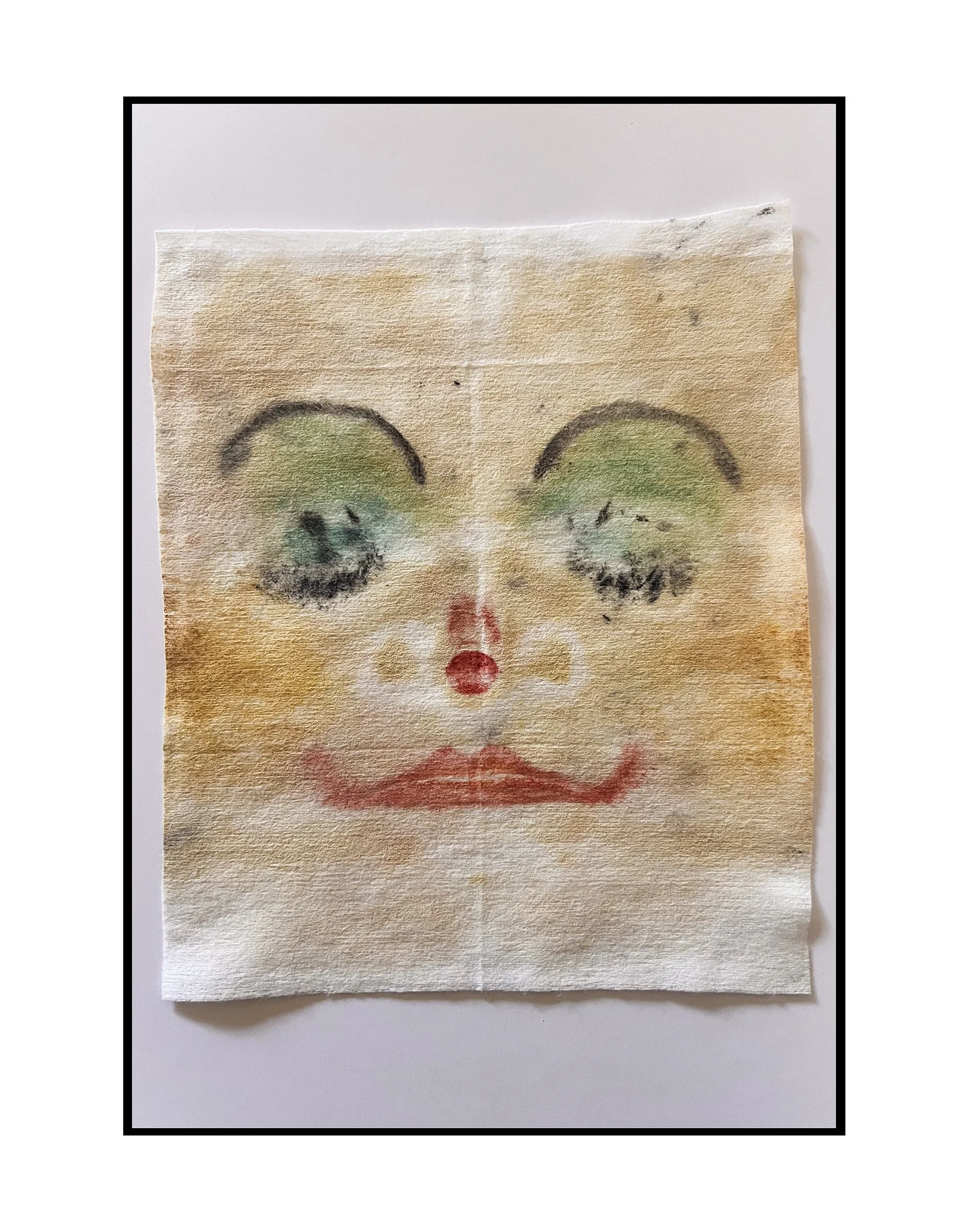
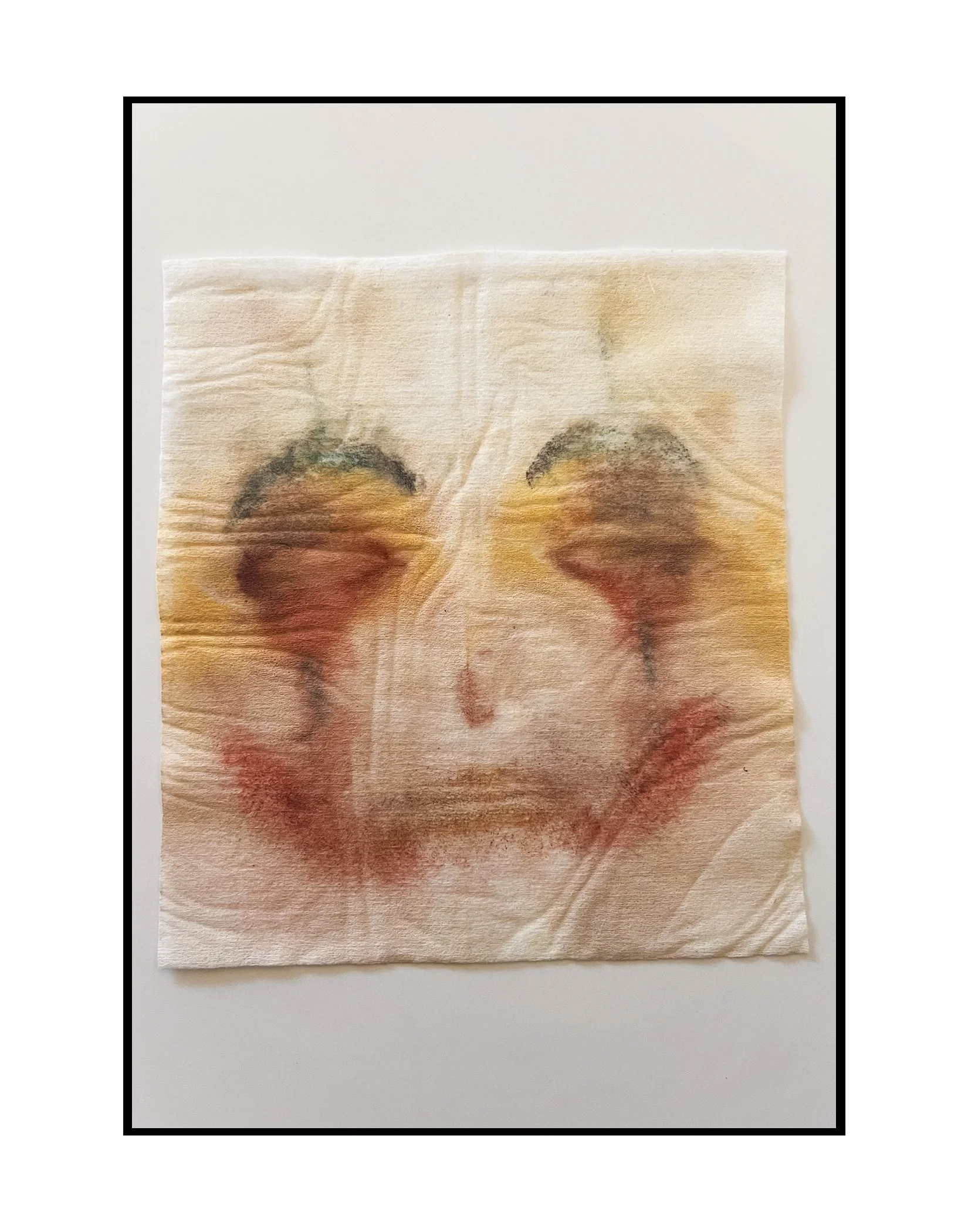
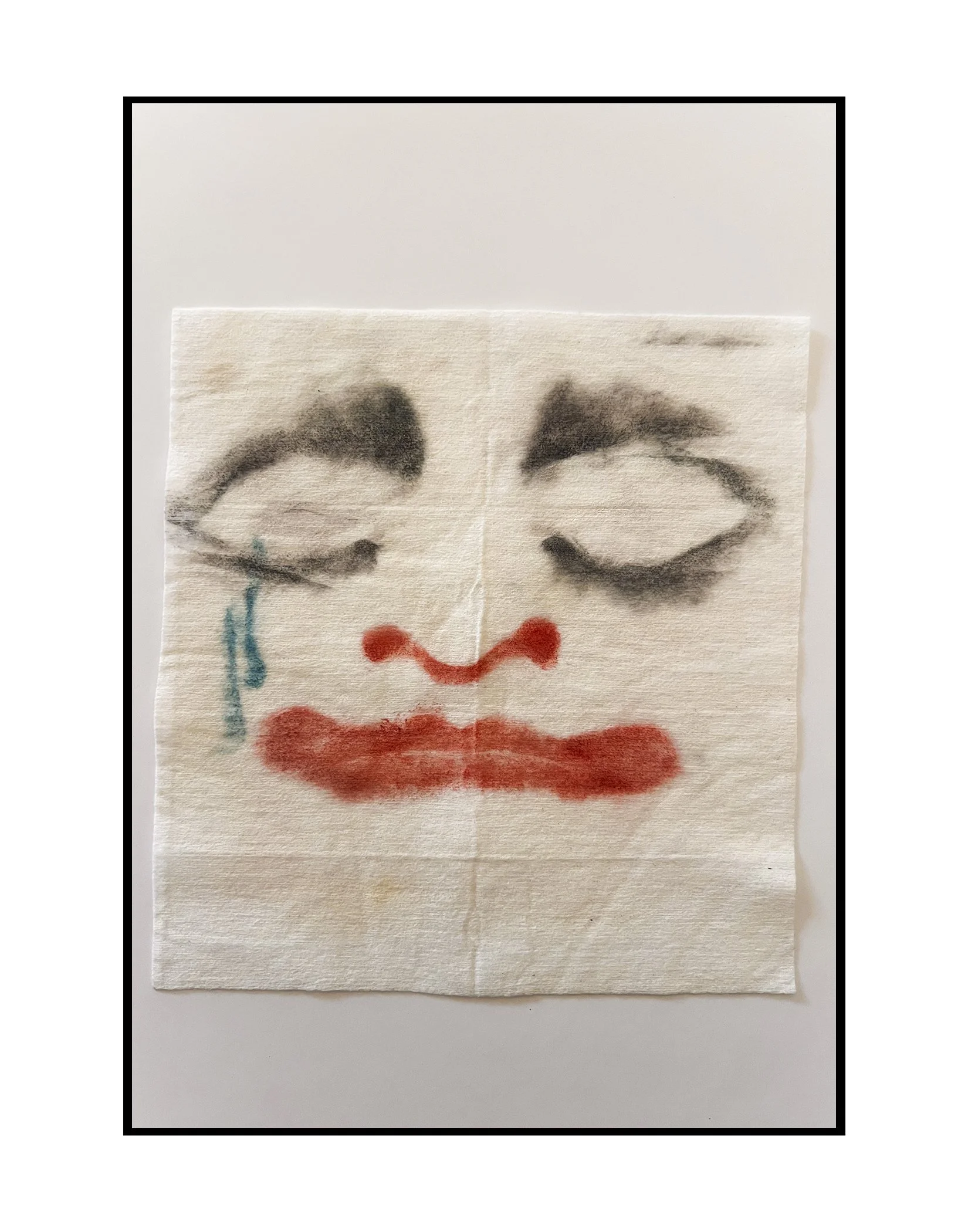
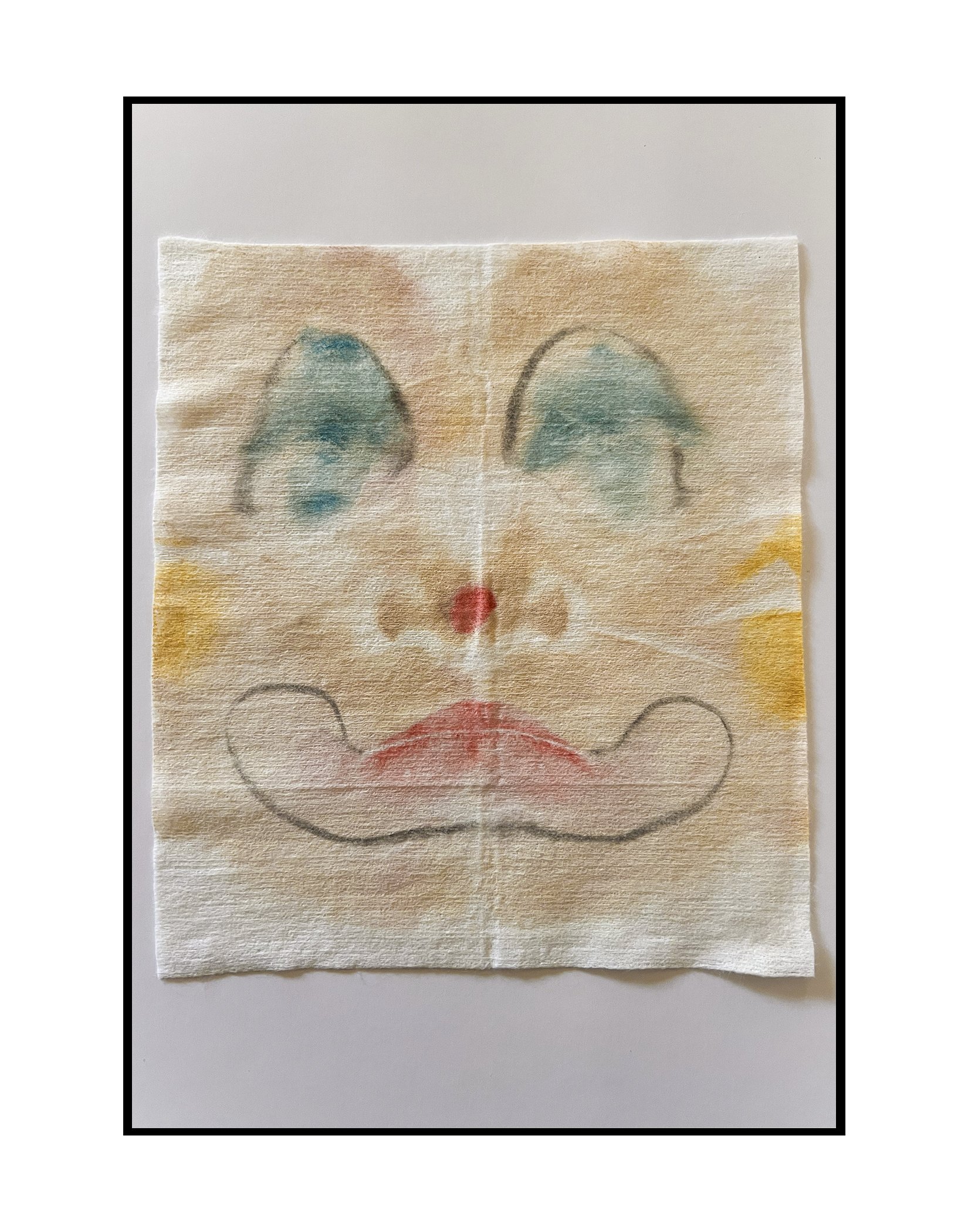
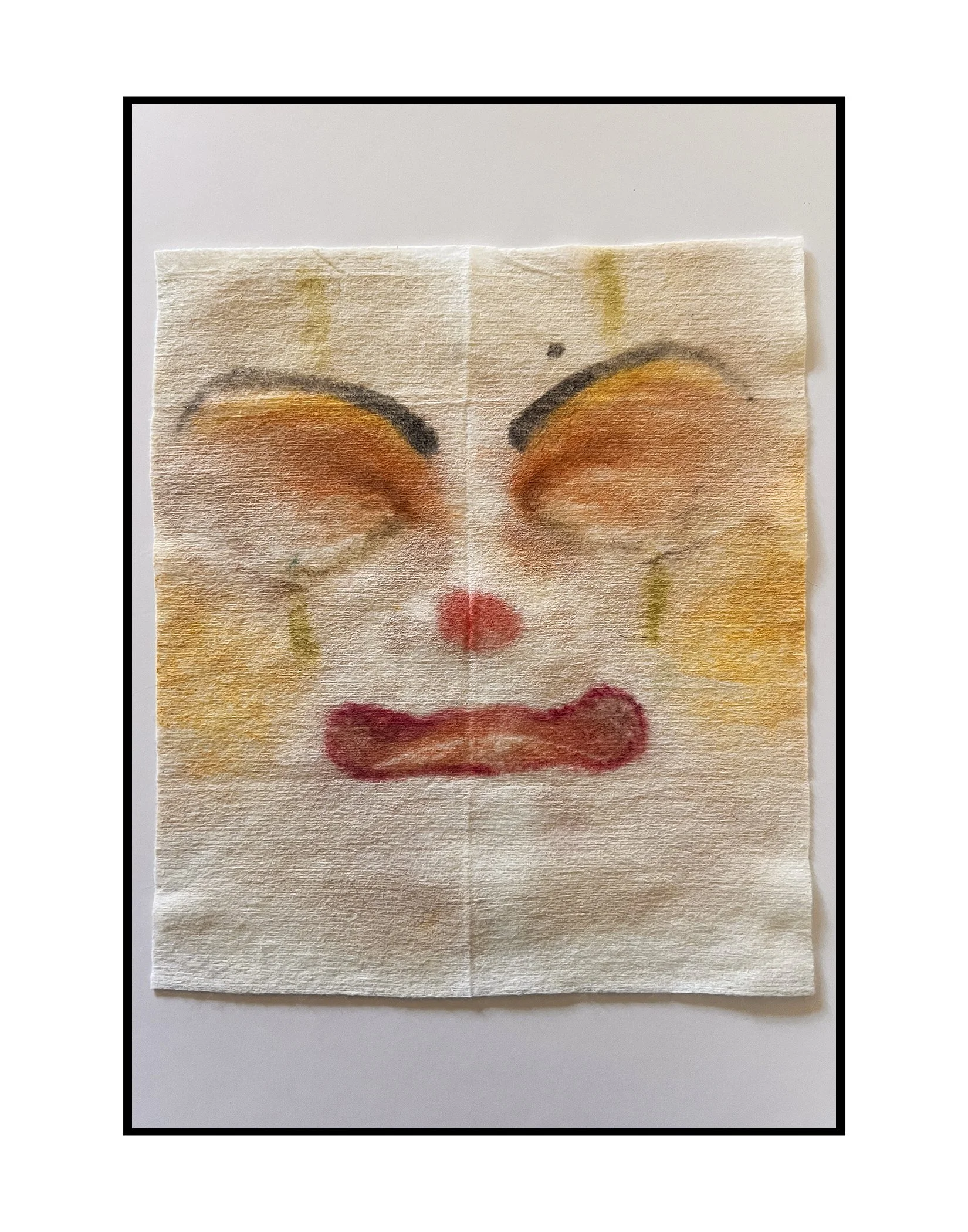
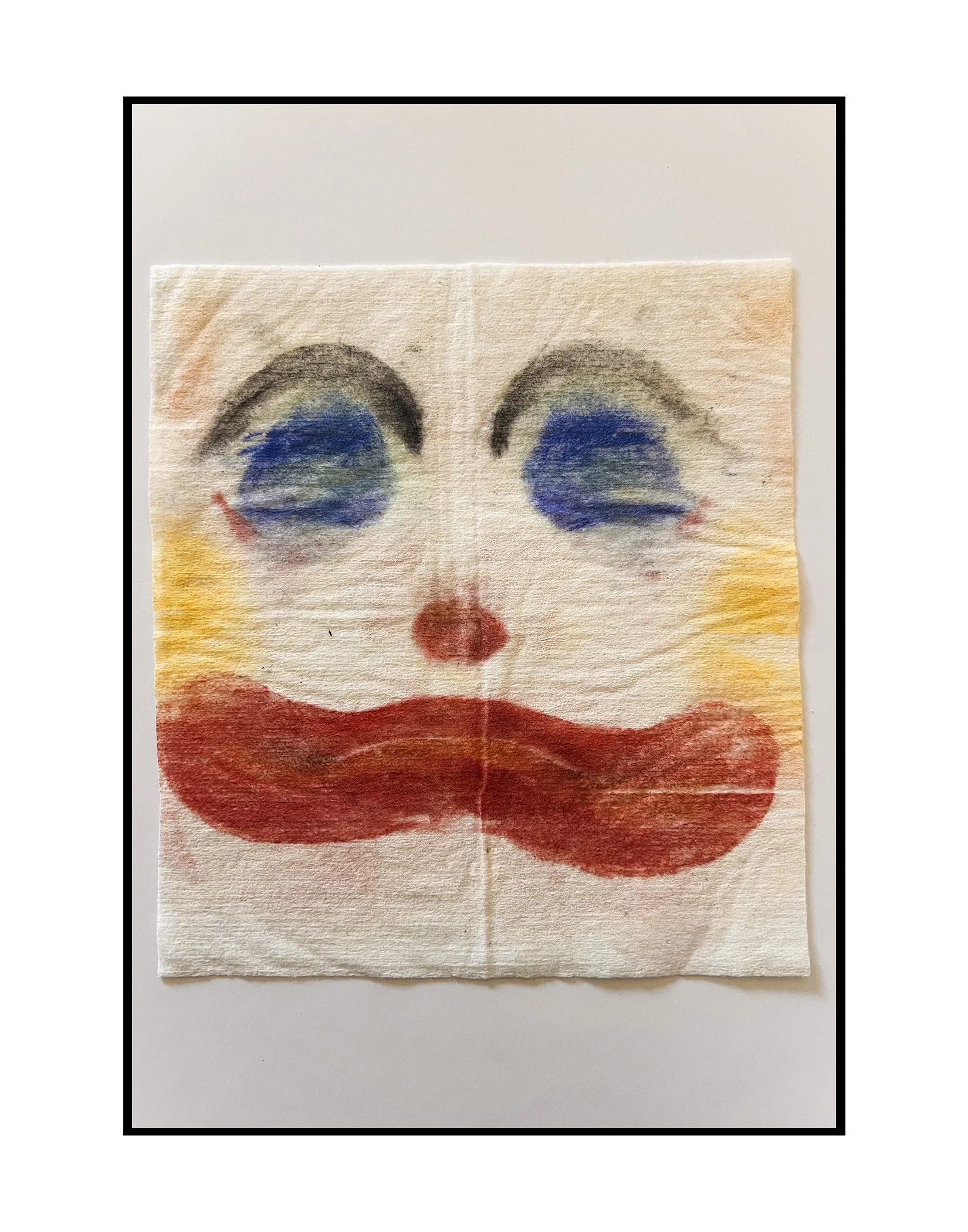
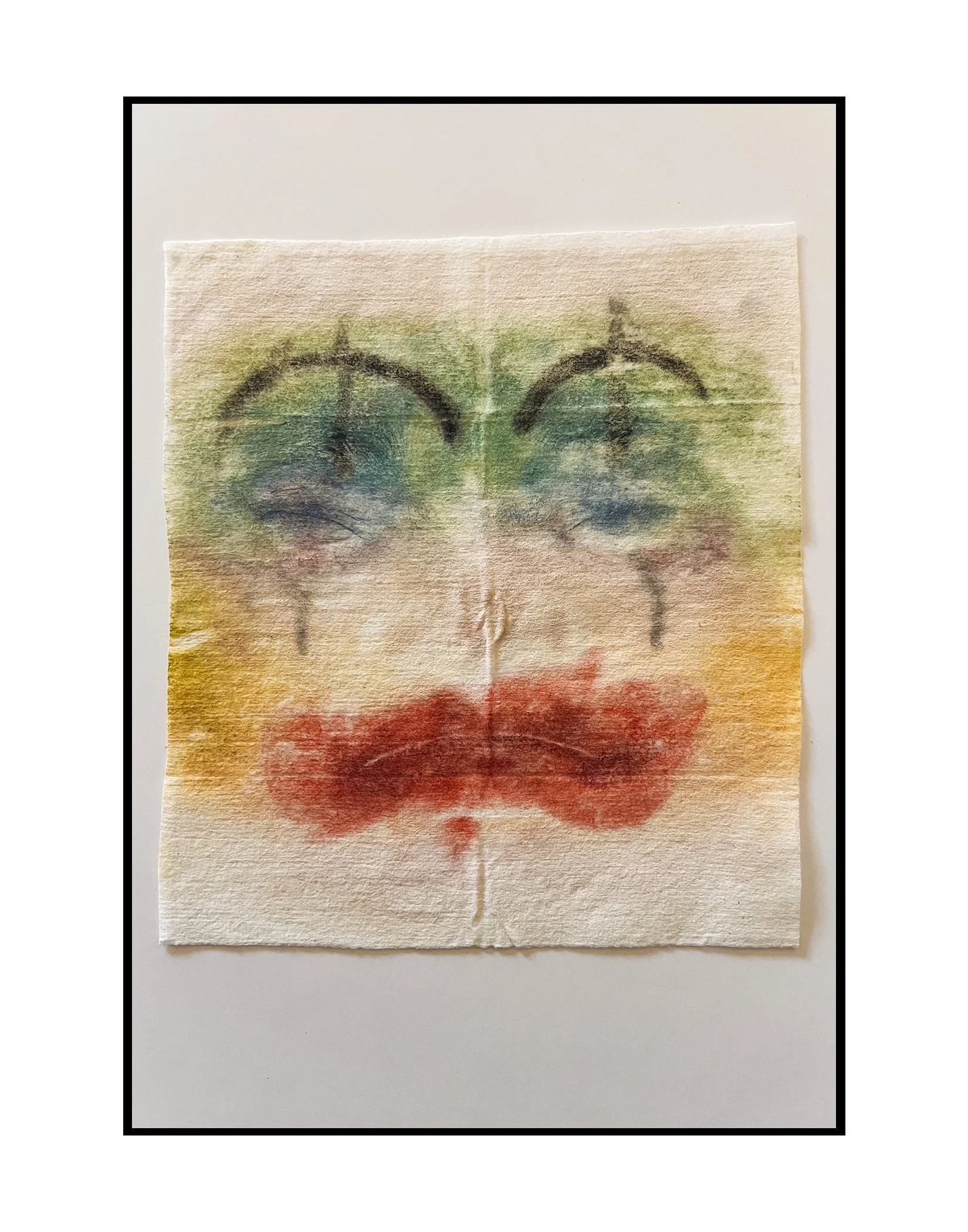
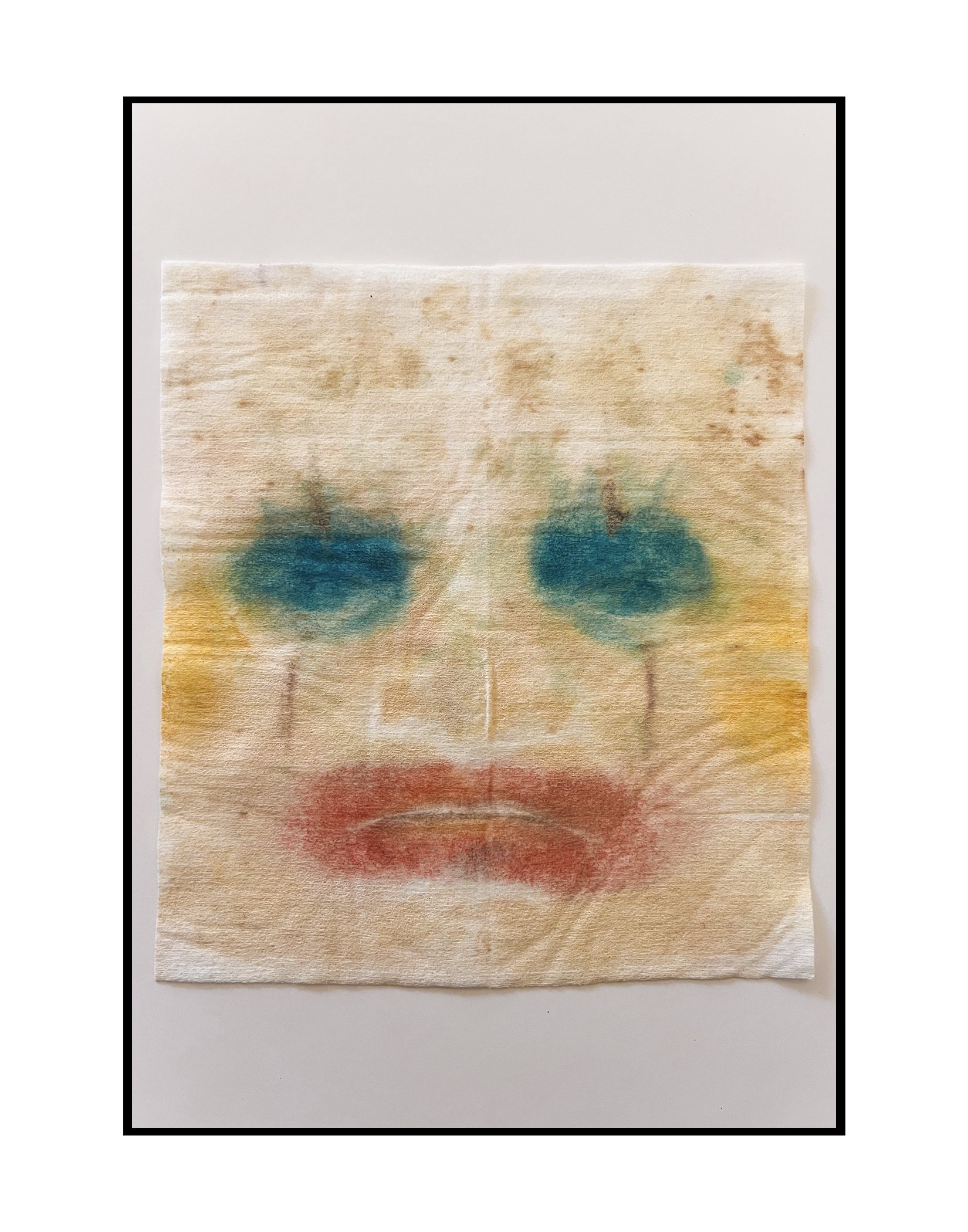
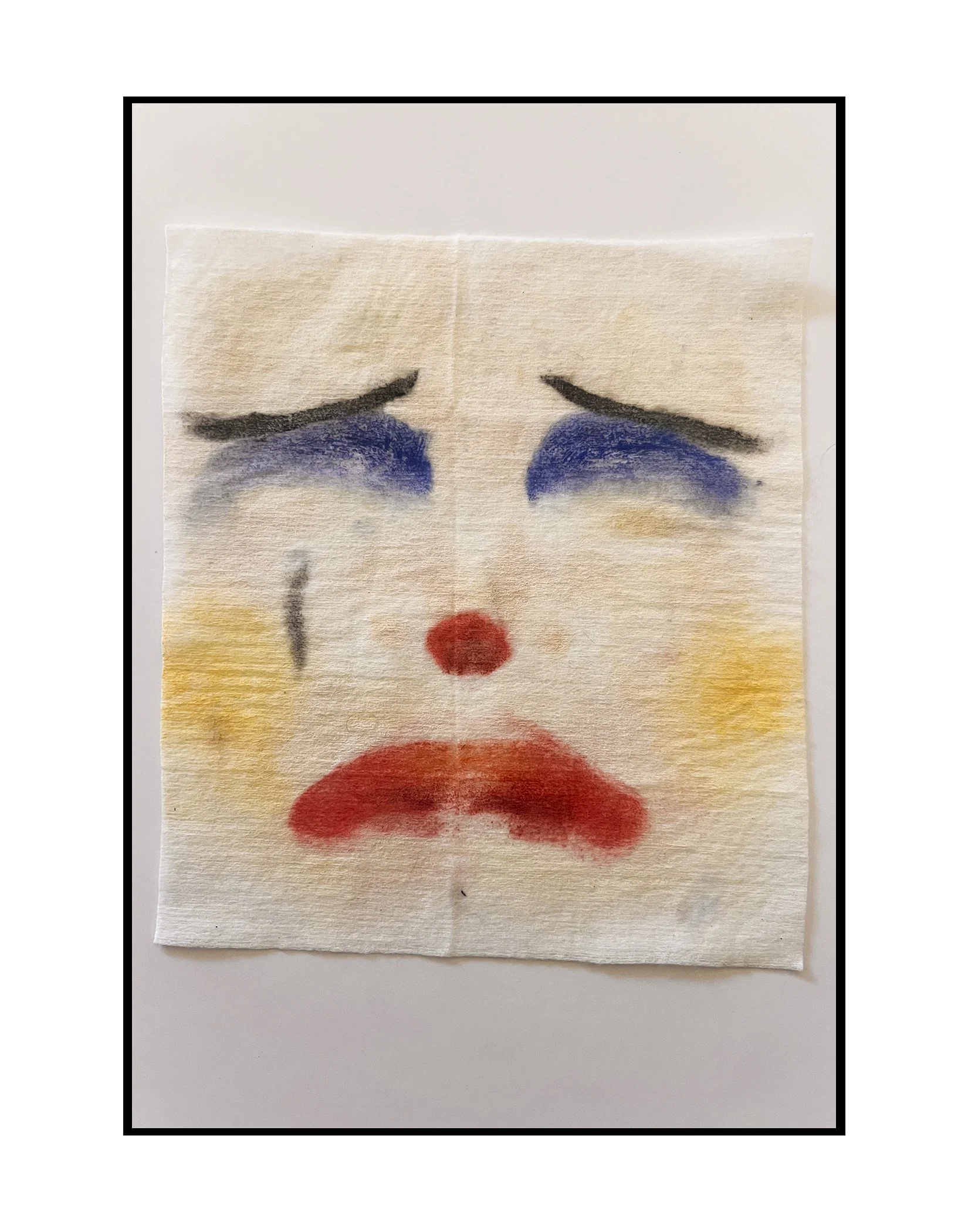
Thirty little remains of a character who began because Halloween was over and I decided that didn’t really matter.

The return of A. Clown?
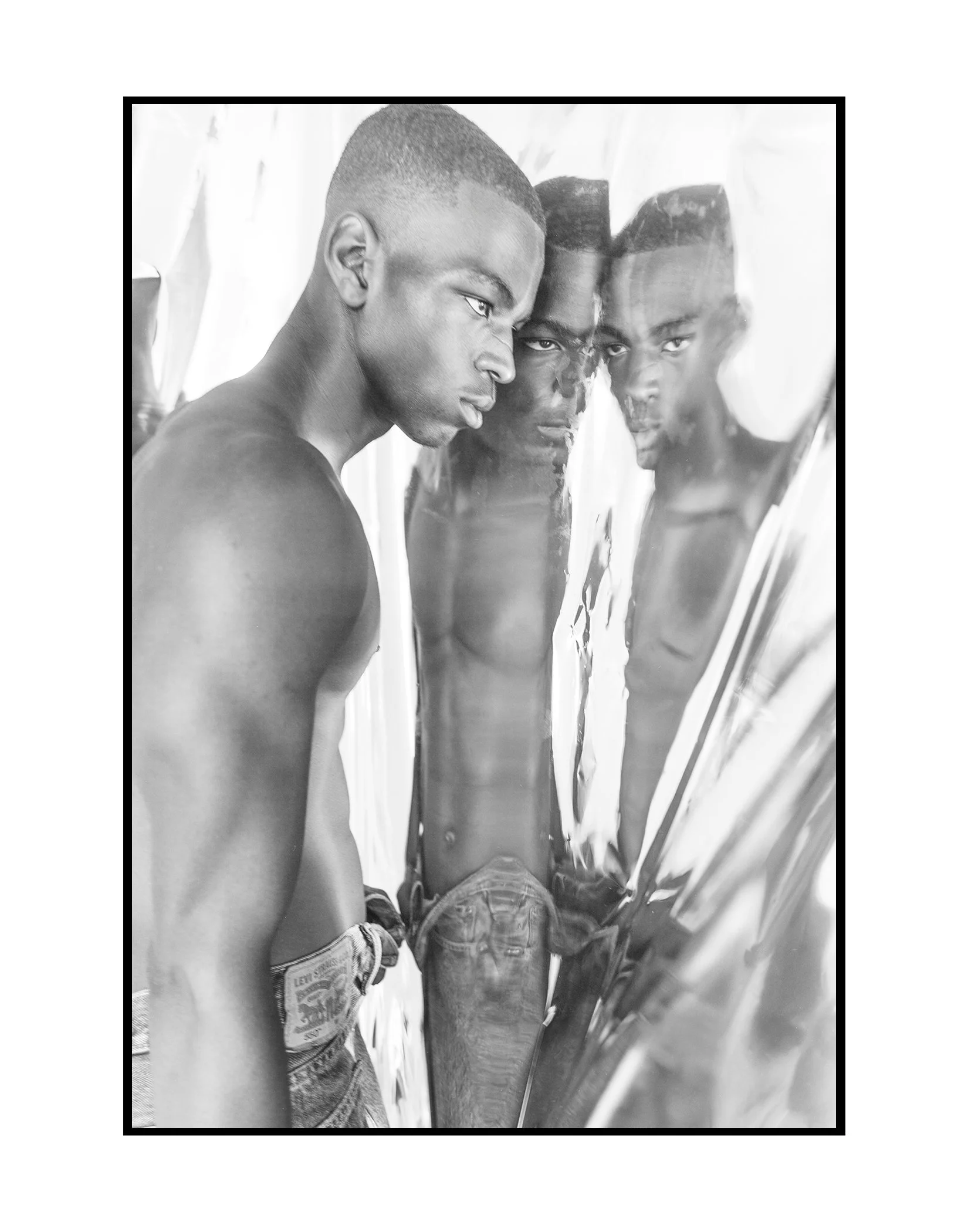
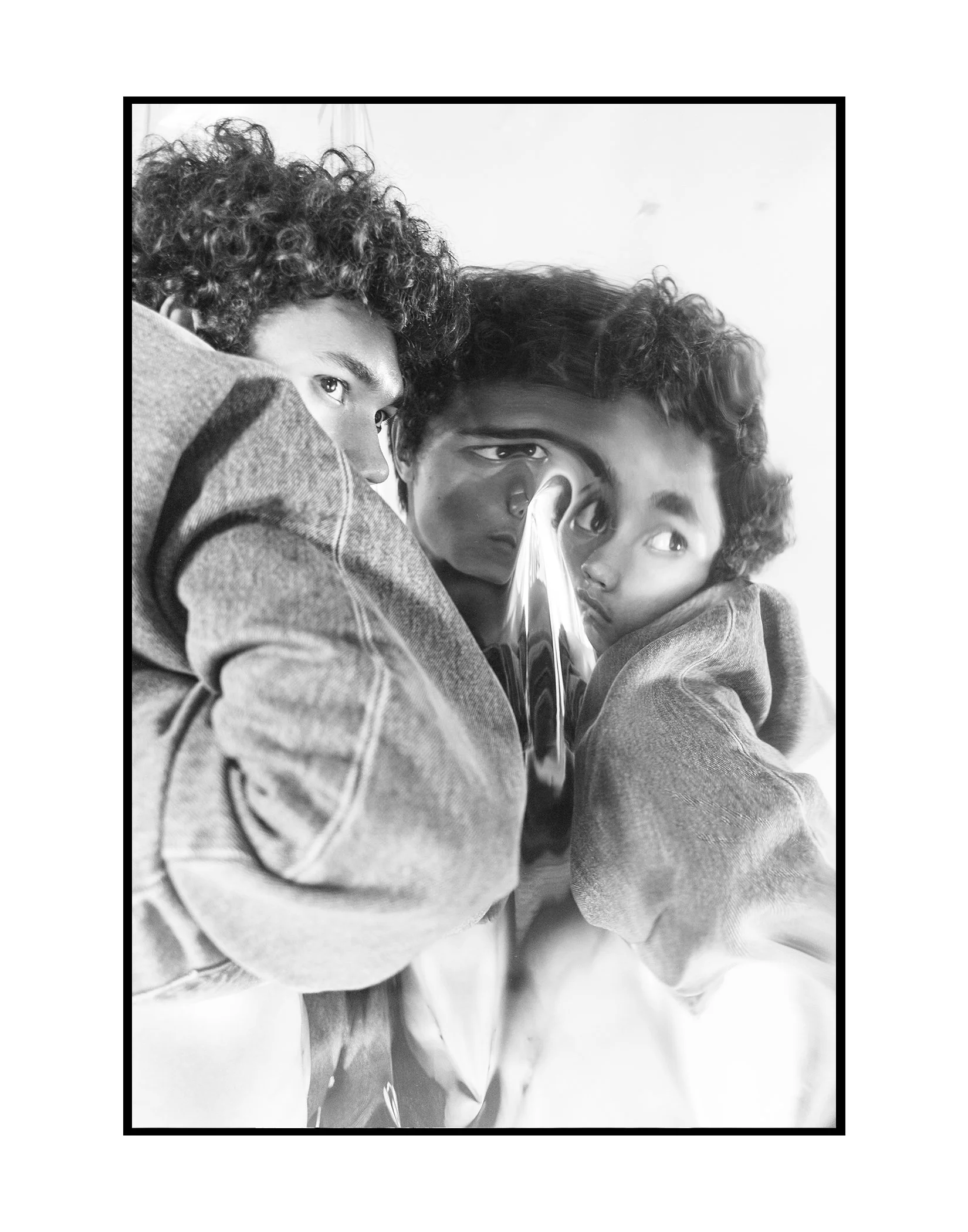
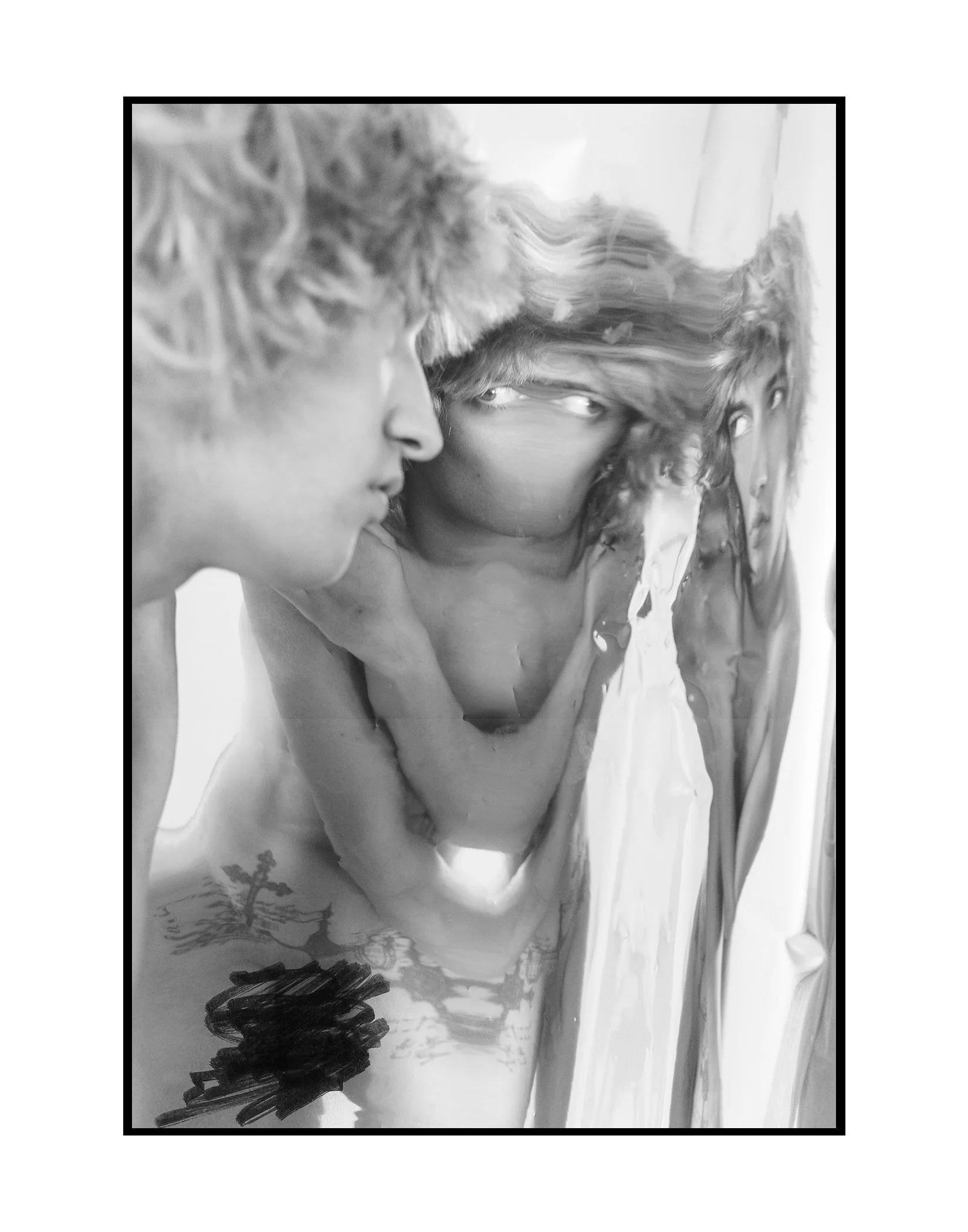
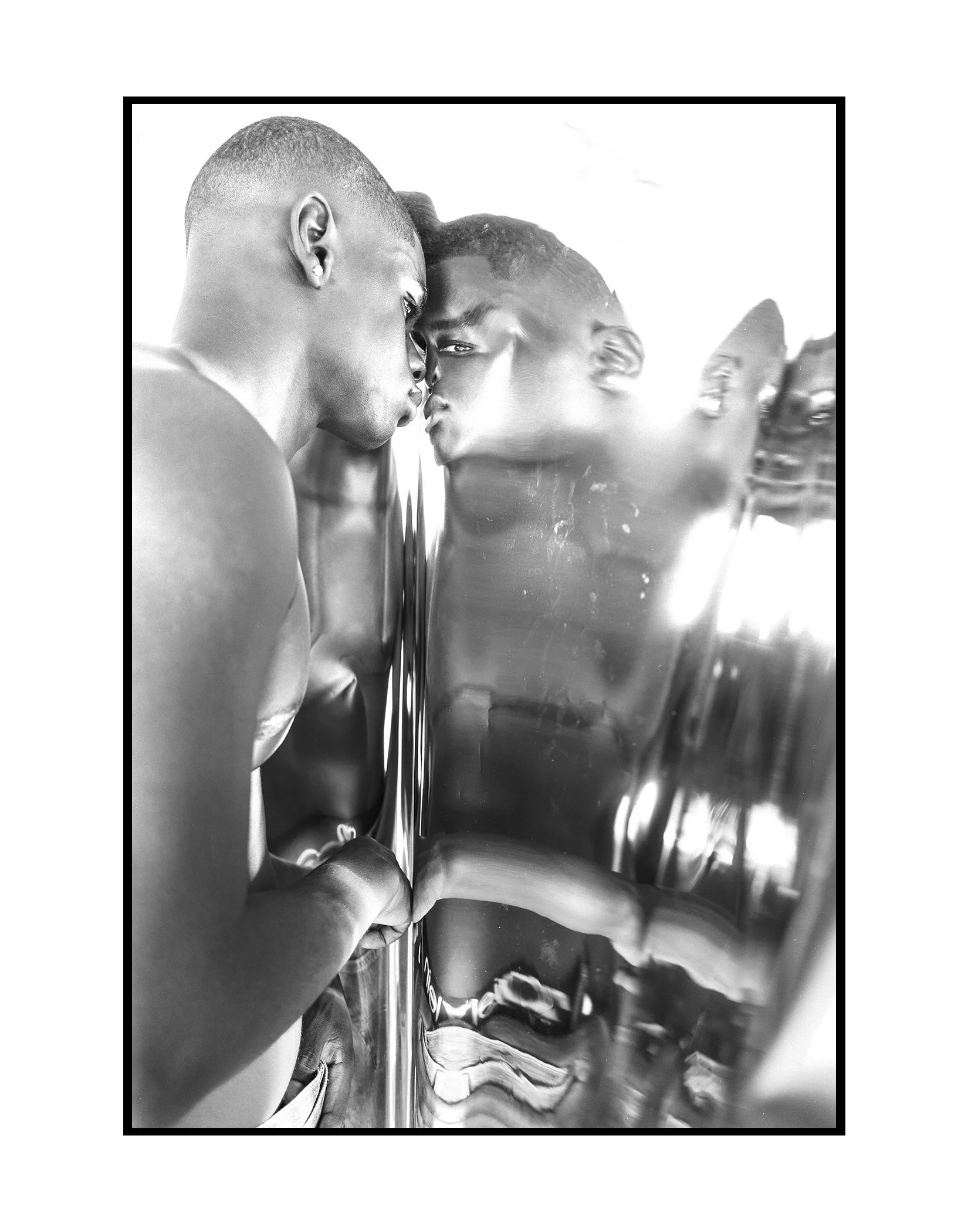
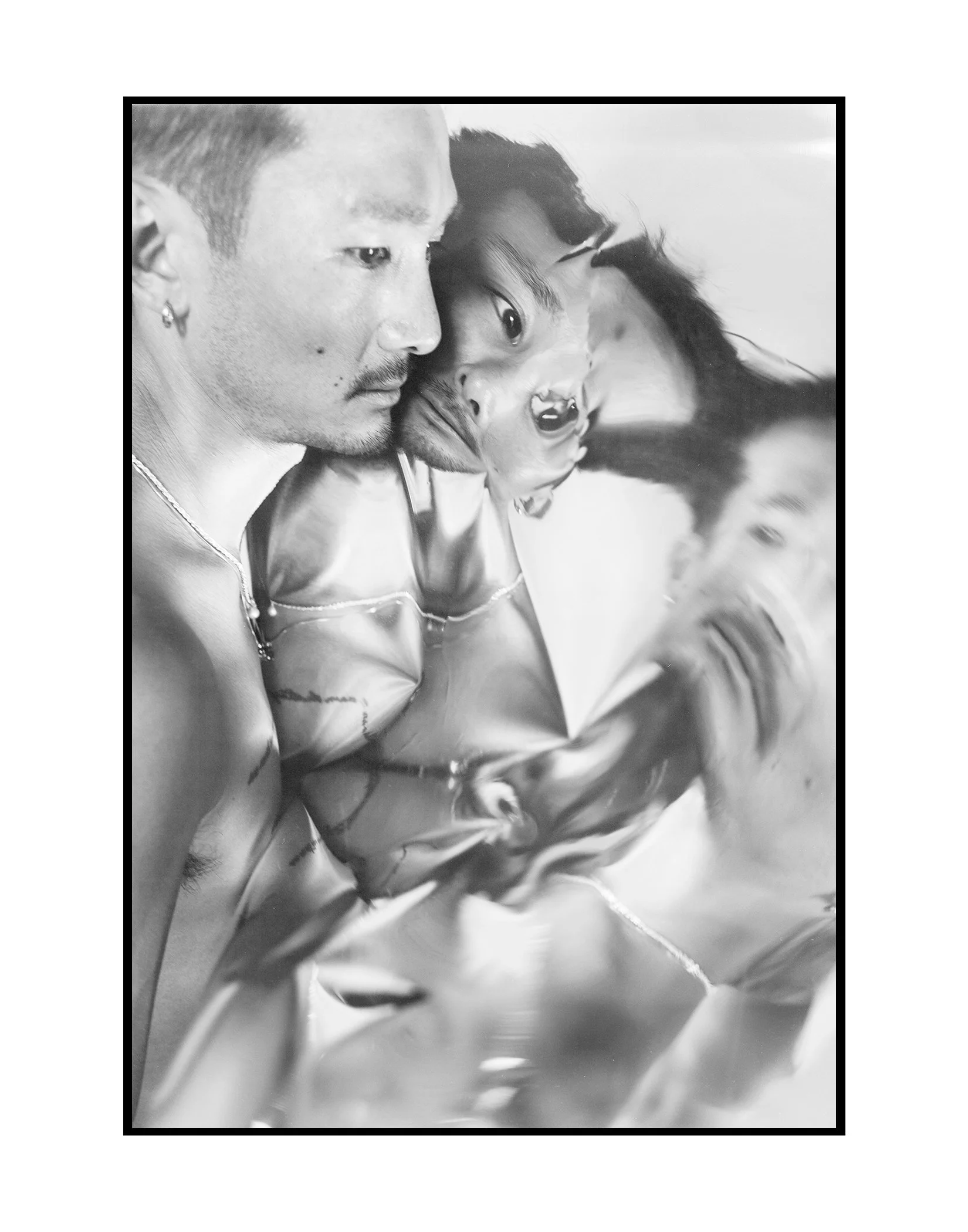
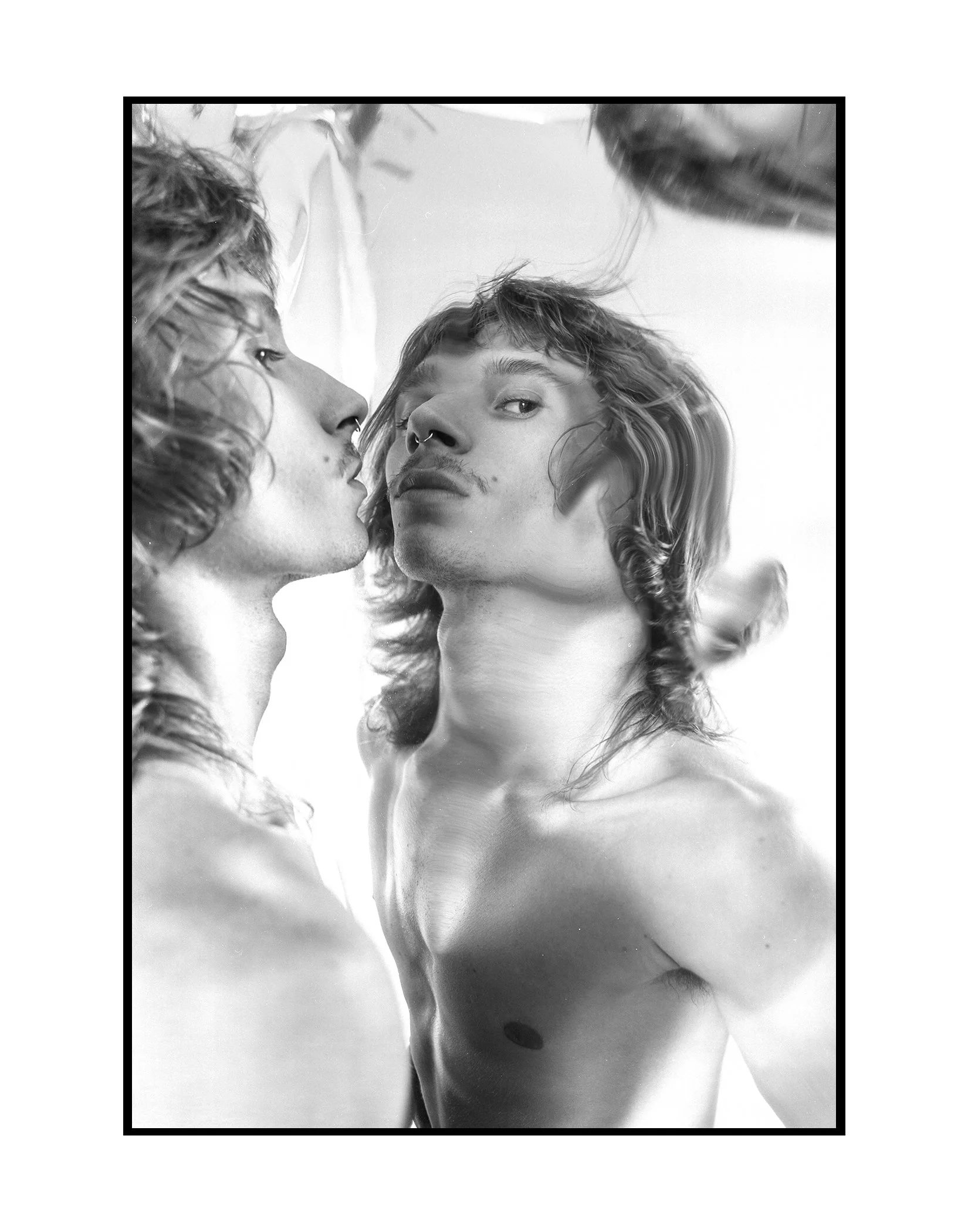
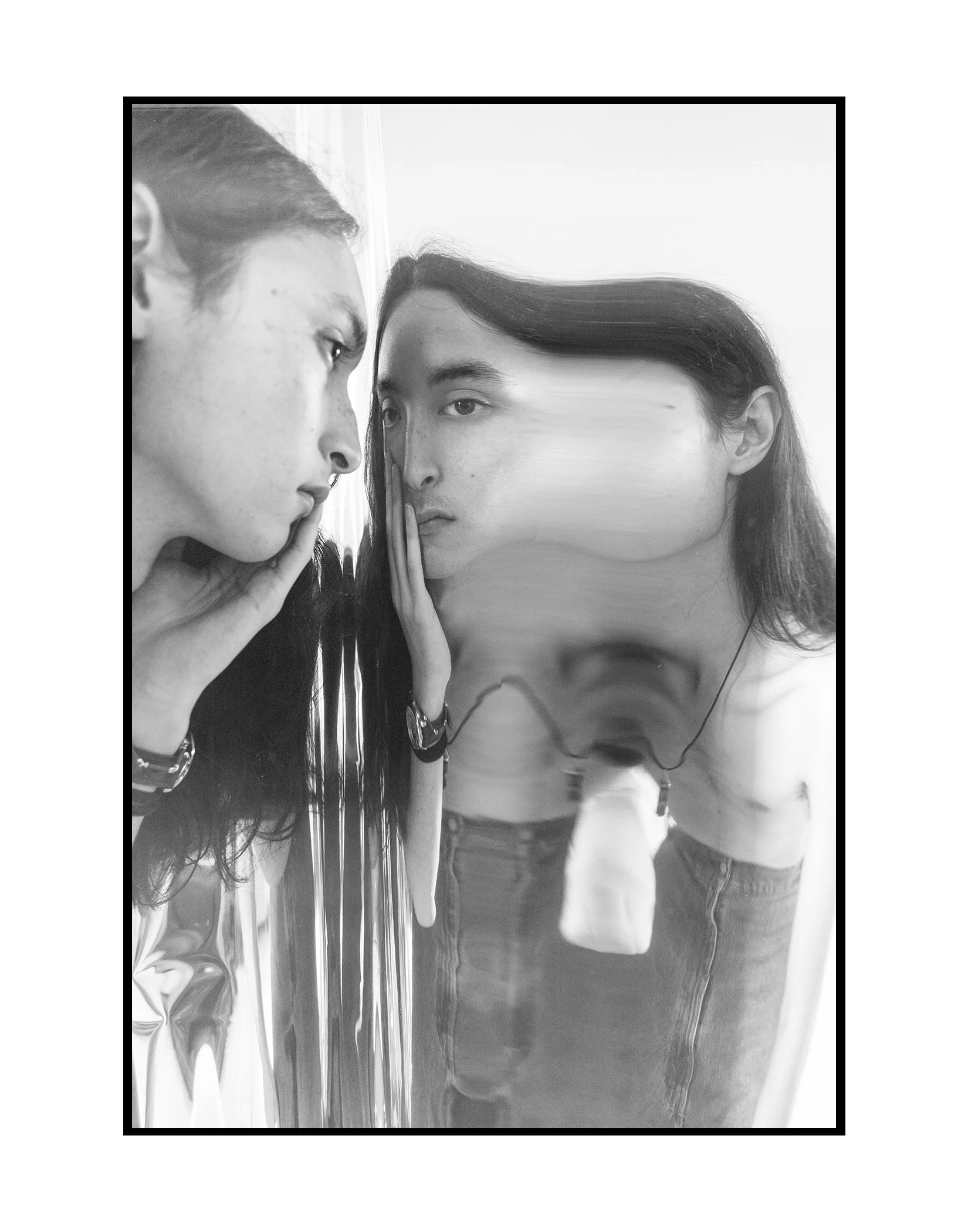
A. Clown hasn’t been seen in some time. He didn’t storm off stage, didn’t slam the door, didn’t even leave a note—he simply stepped behind the silver curtain and let the folds swallow him.
A. Clown hasn’t been seen in some time. He didn’t storm off stage, didn’t slam the door, didn’t even leave a note—he simply stepped behind the silver curtain and let the folds swallow him.
Once upon a time, I wore his face. Painted on a new mood every time. Sometimes a whisper, sometimes a scream. He lived in portraits, in paintings, in the way people’s eyes darted between fascination and discomfort. You either loved him or you couldn’t look at him. That’s the magic of a clown. That’s the danger of one, too.
But clowns aren’t built to vanish entirely. They hide in the air between you and the mirror. They hide in mylar wrinkles that turn a reflection into a puzzle. They hide in balloon animals—small, strange sculptures that carry a joke only the clown knows.
These portraits are a way to keep him close without summoning him fully back. Each face here is a flicker of him: the tilt of a head, the curve of light, the way a shadow smiles even when the lips don’t. The clown is still here. He’s just watching from behind the shimmer.
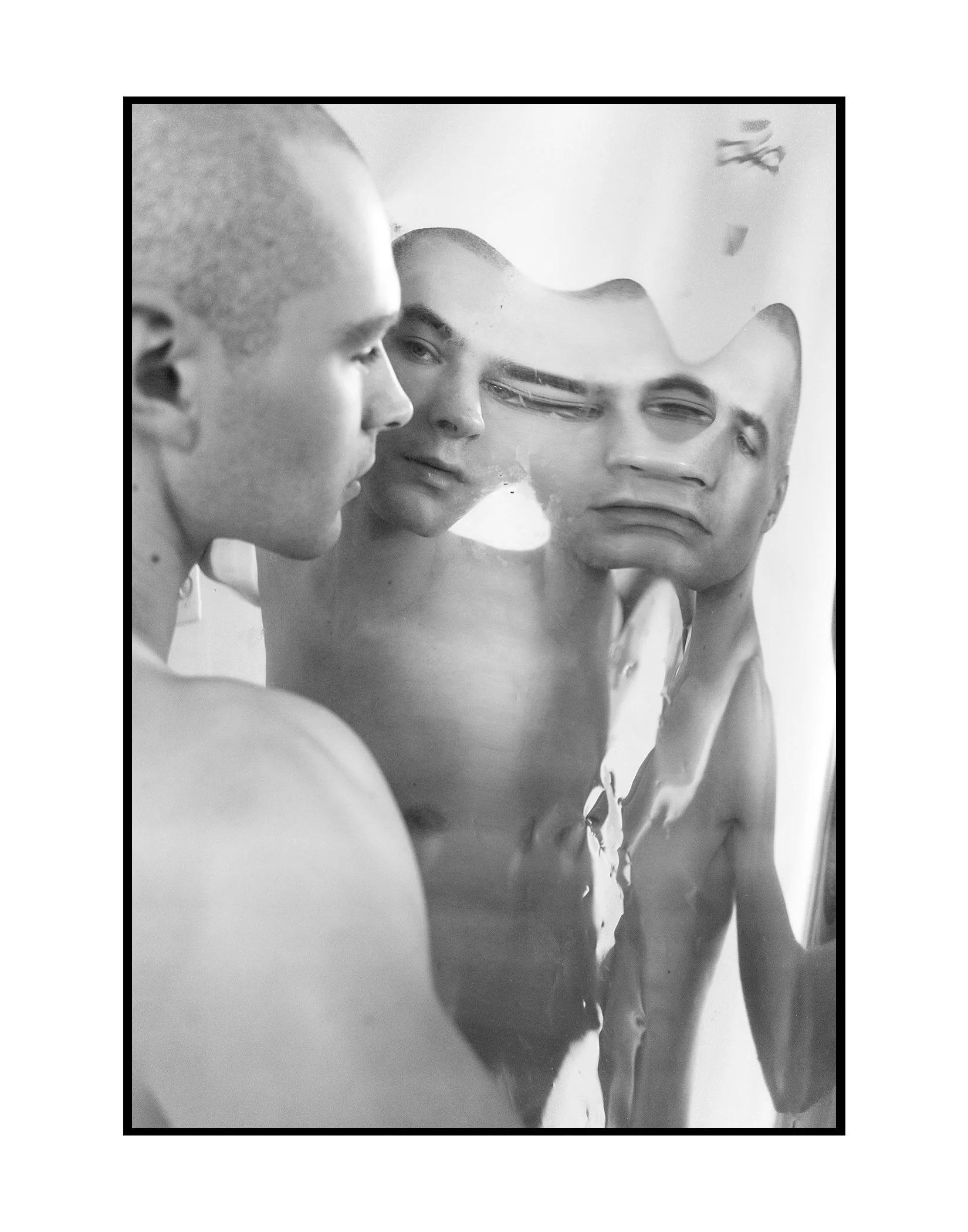


Now the question is—do you see him?