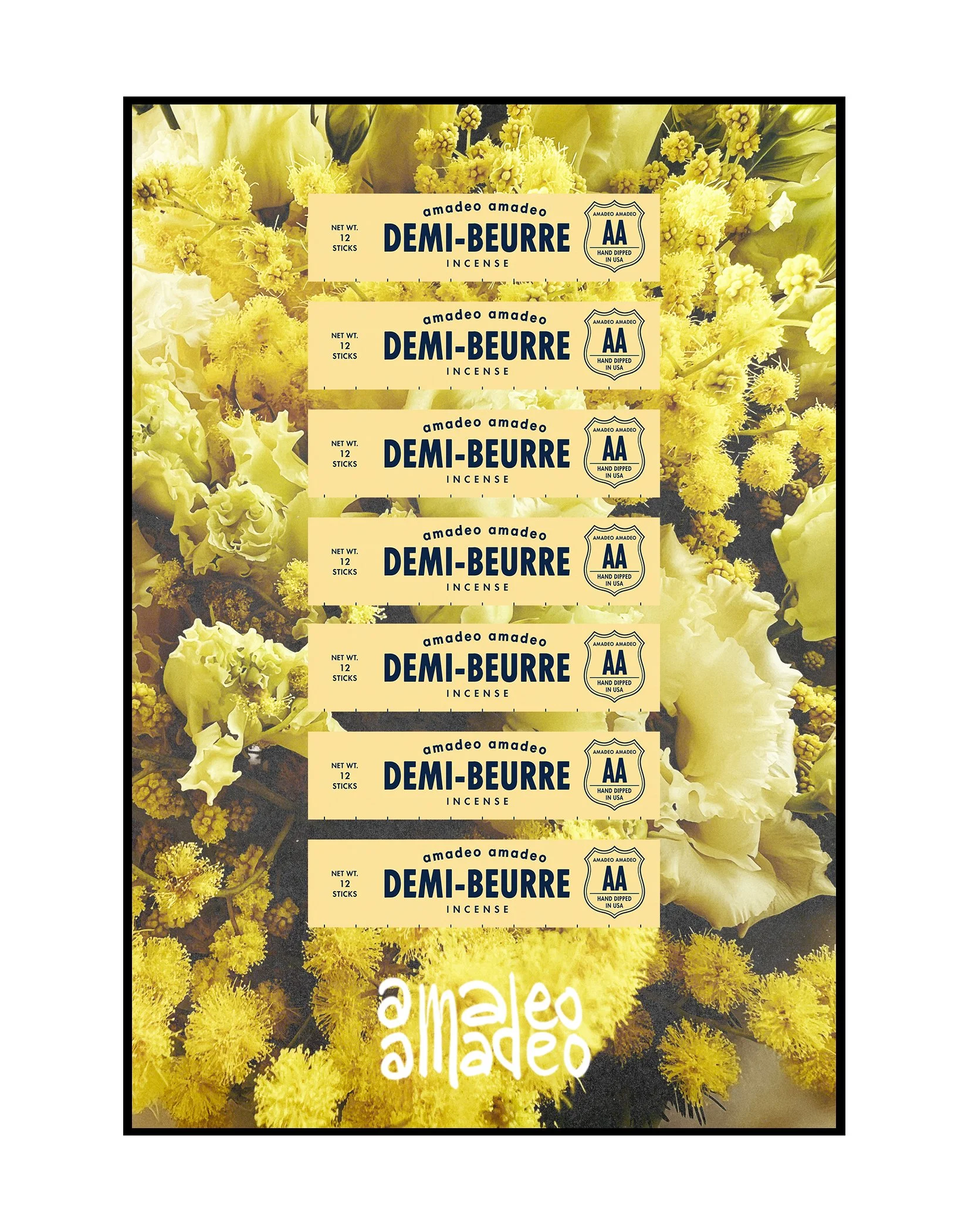
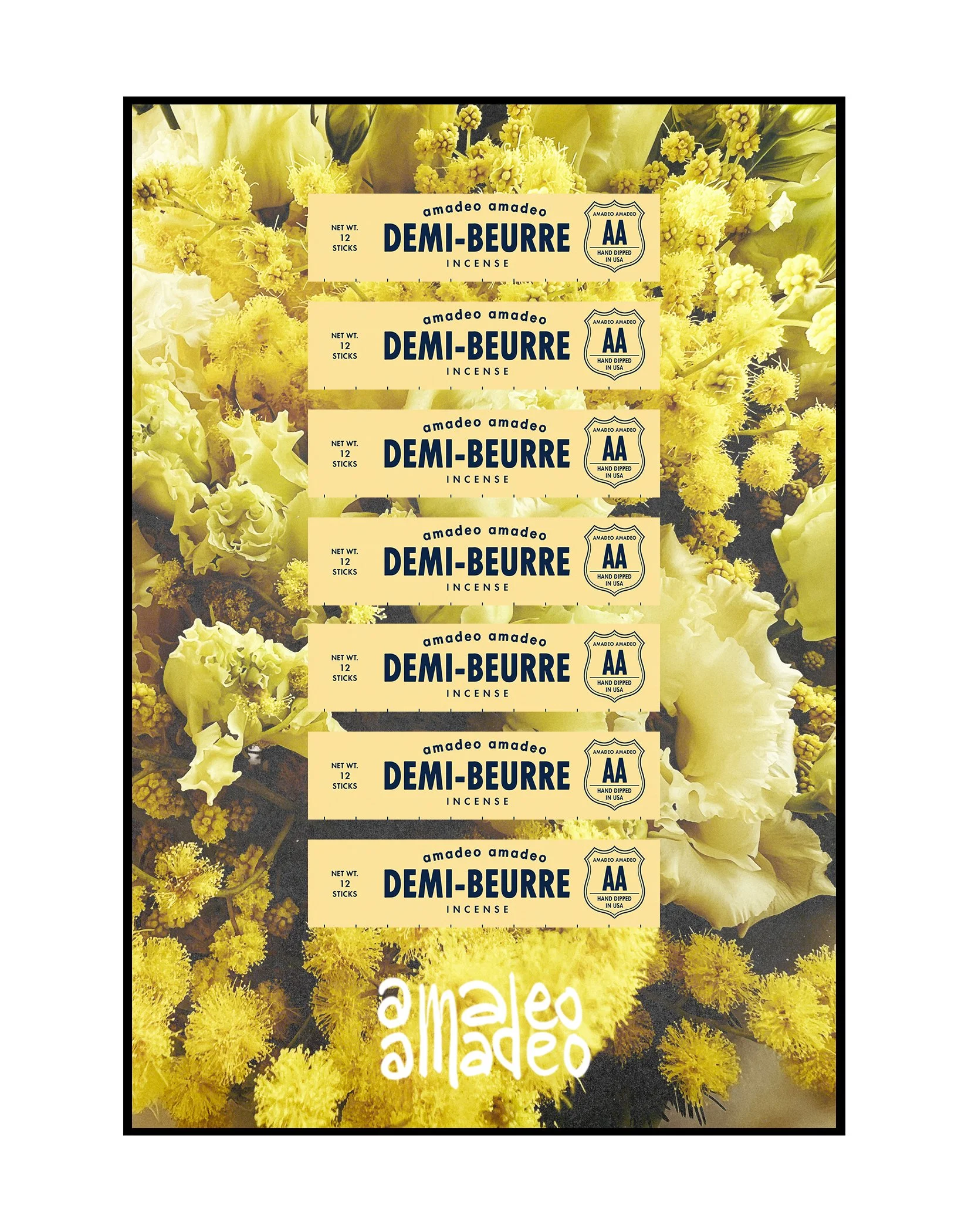
demi-beurre
For the past few years, scent has become another medium for me to tell stories.
Sometimes those stories are large and obvious. Other times they are small moments that would otherwise disappear if nobody stopped to pay attention to them.
demi-beurre began as one of those small moments.
For the past few years, scent has become another medium for me to tell stories.
Sometimes those stories are large and obvious. Other times they are small moments that would otherwise disappear if nobody stopped to pay attention to them.
demi-beurre began as one of those small moments.
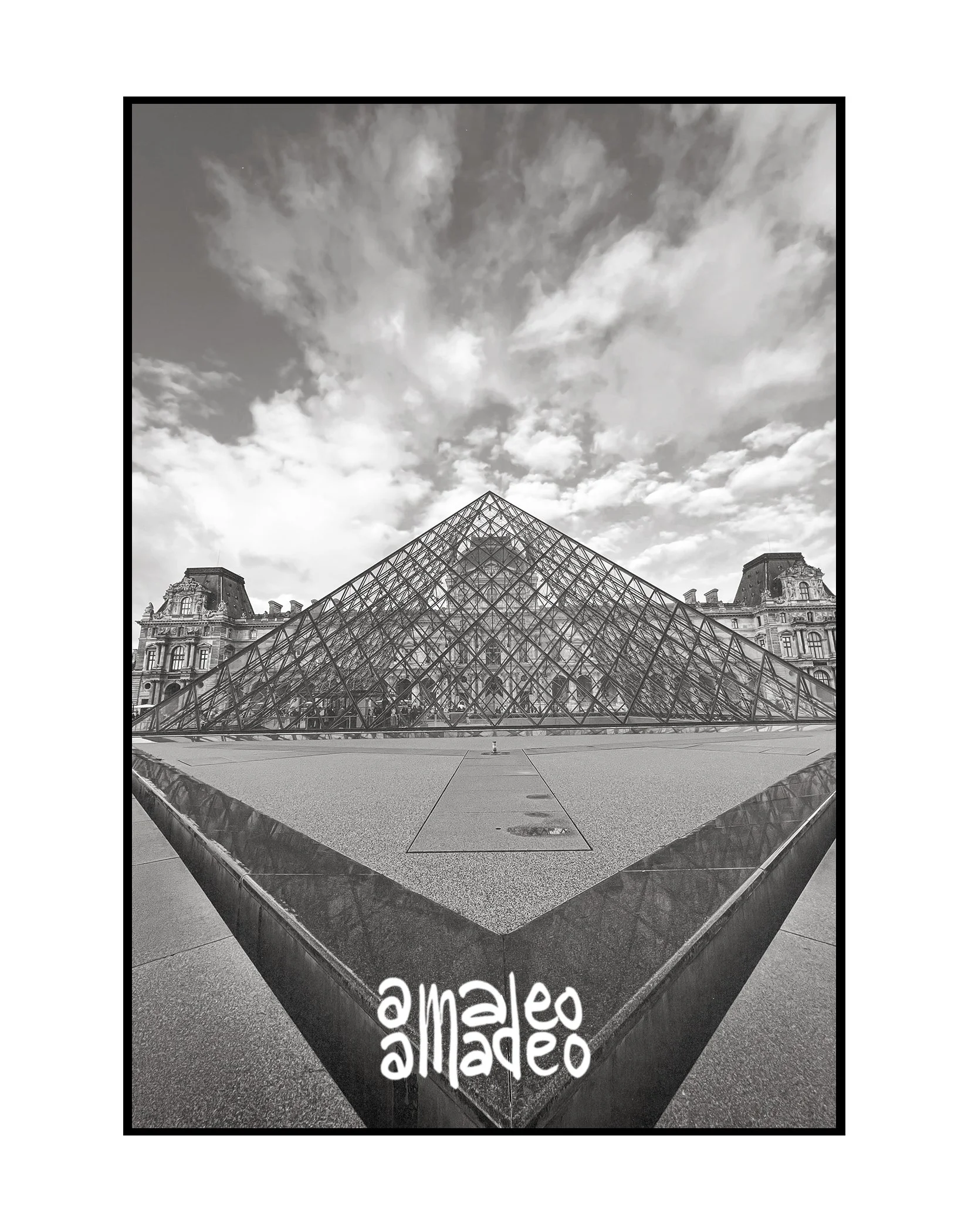
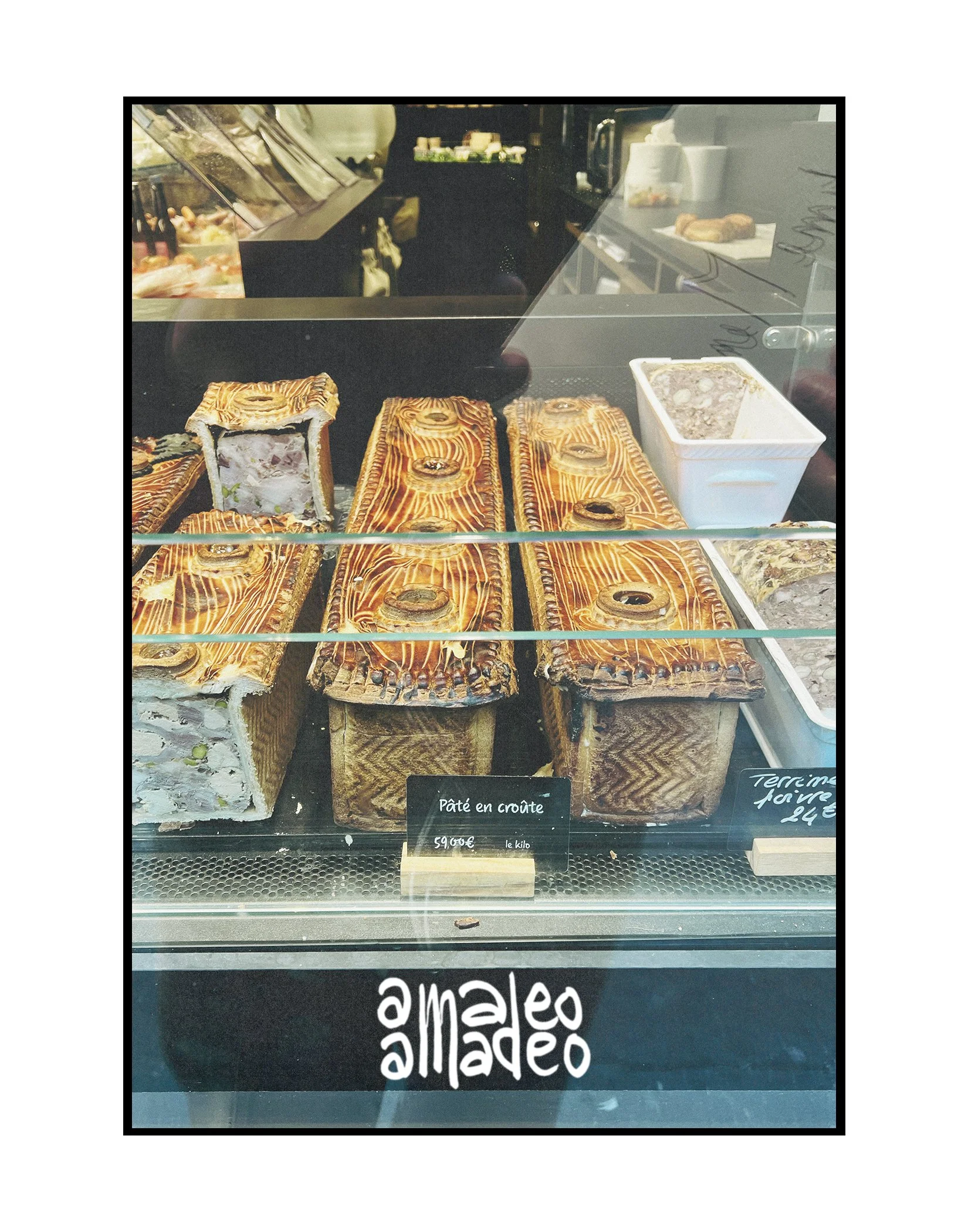
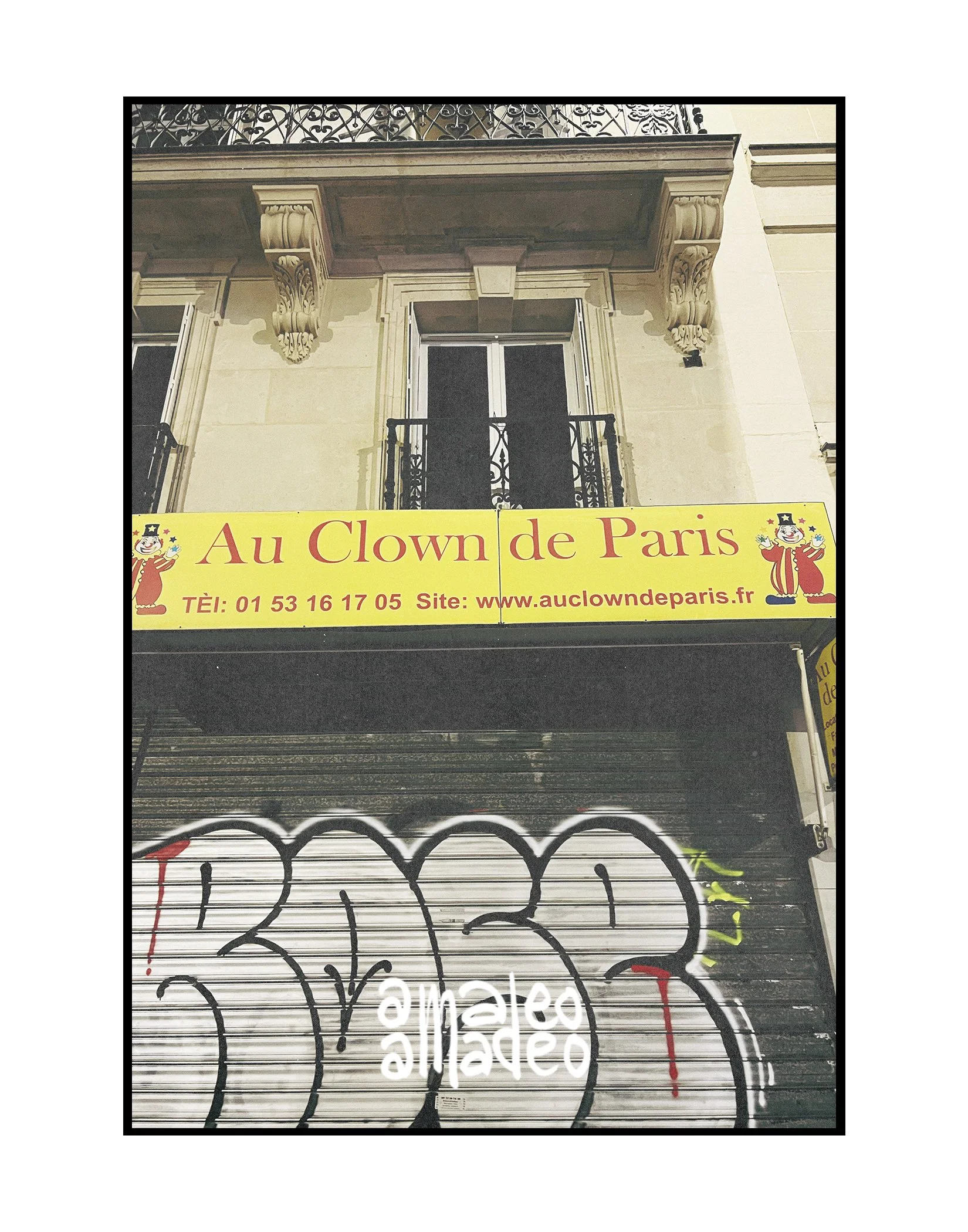
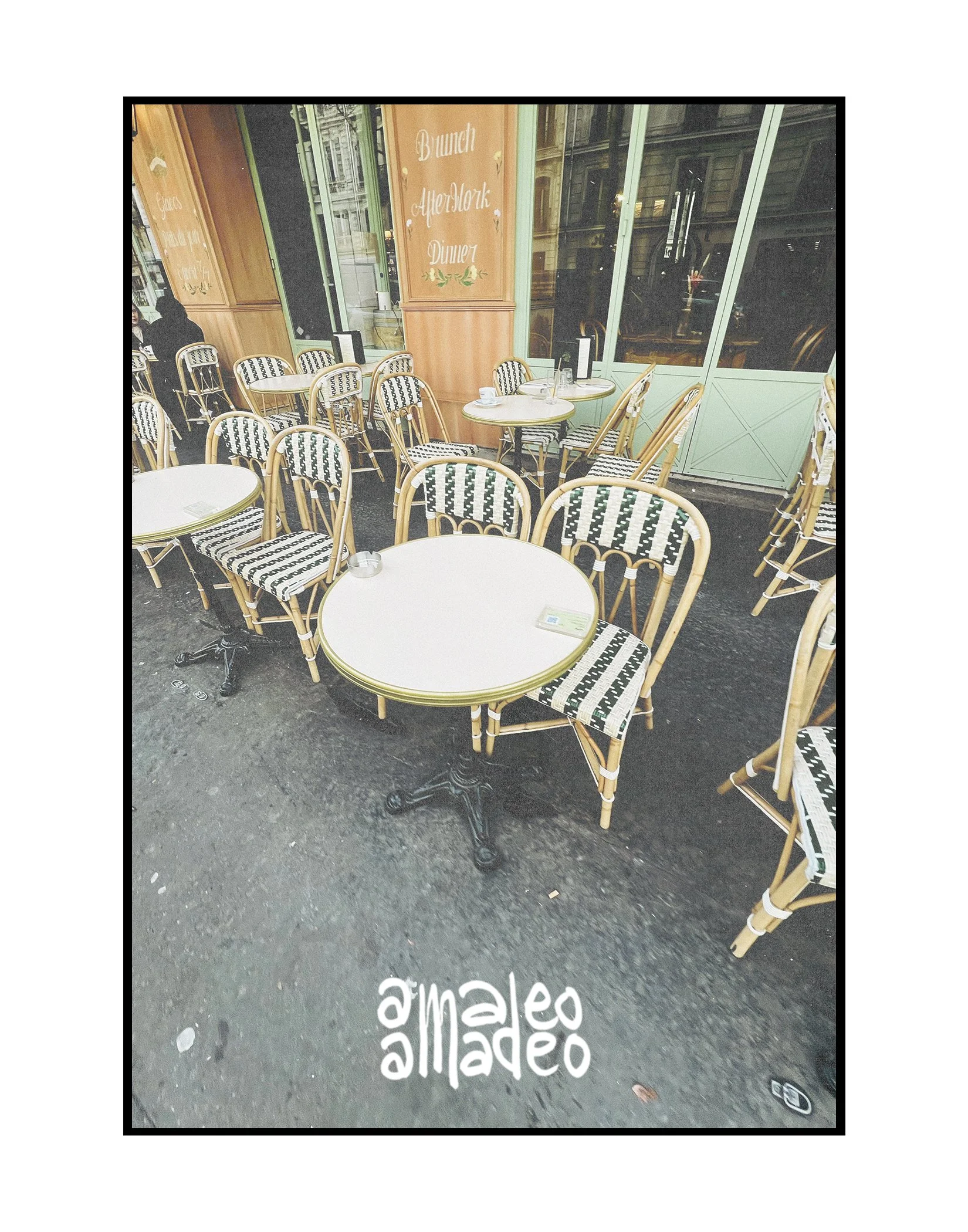
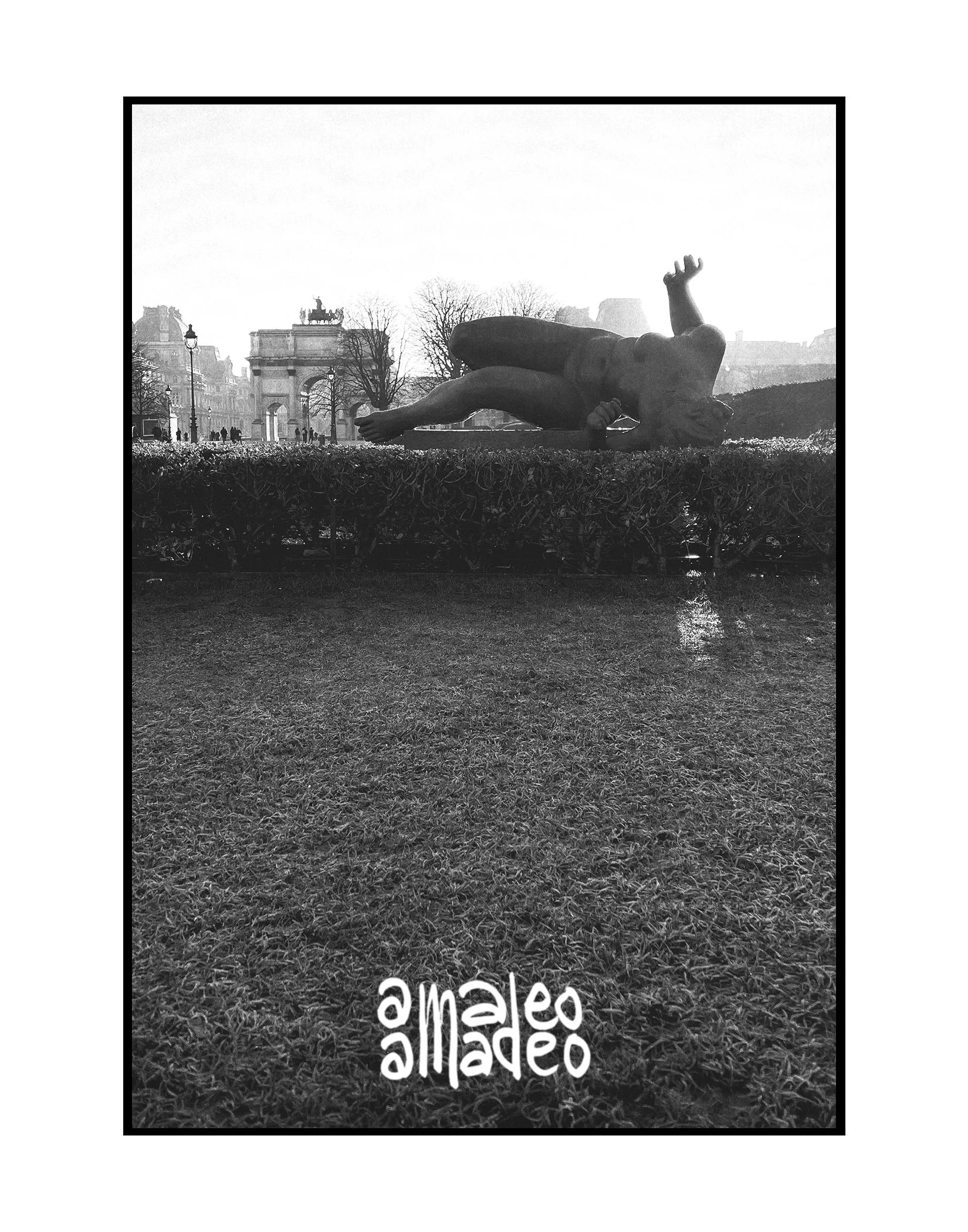
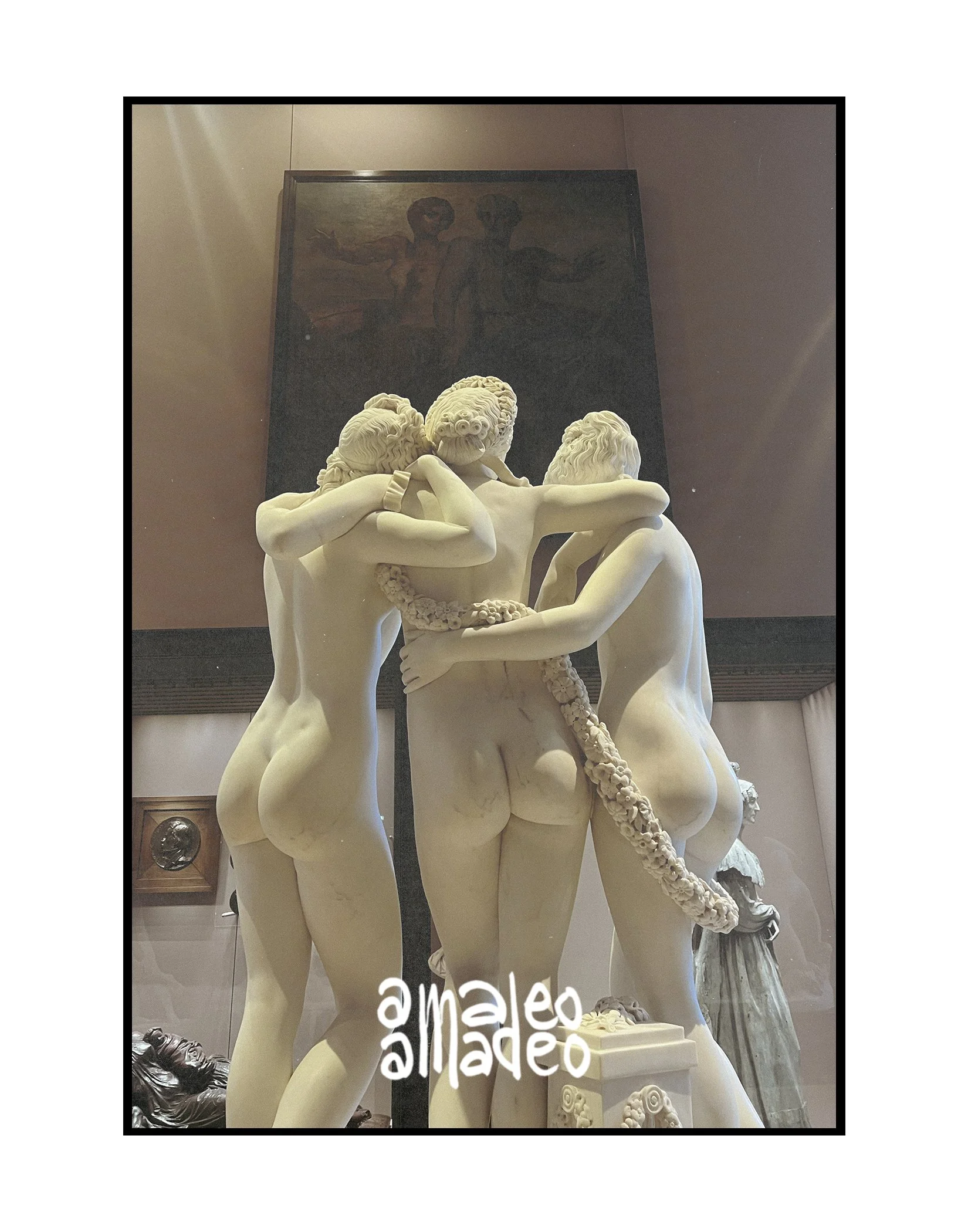
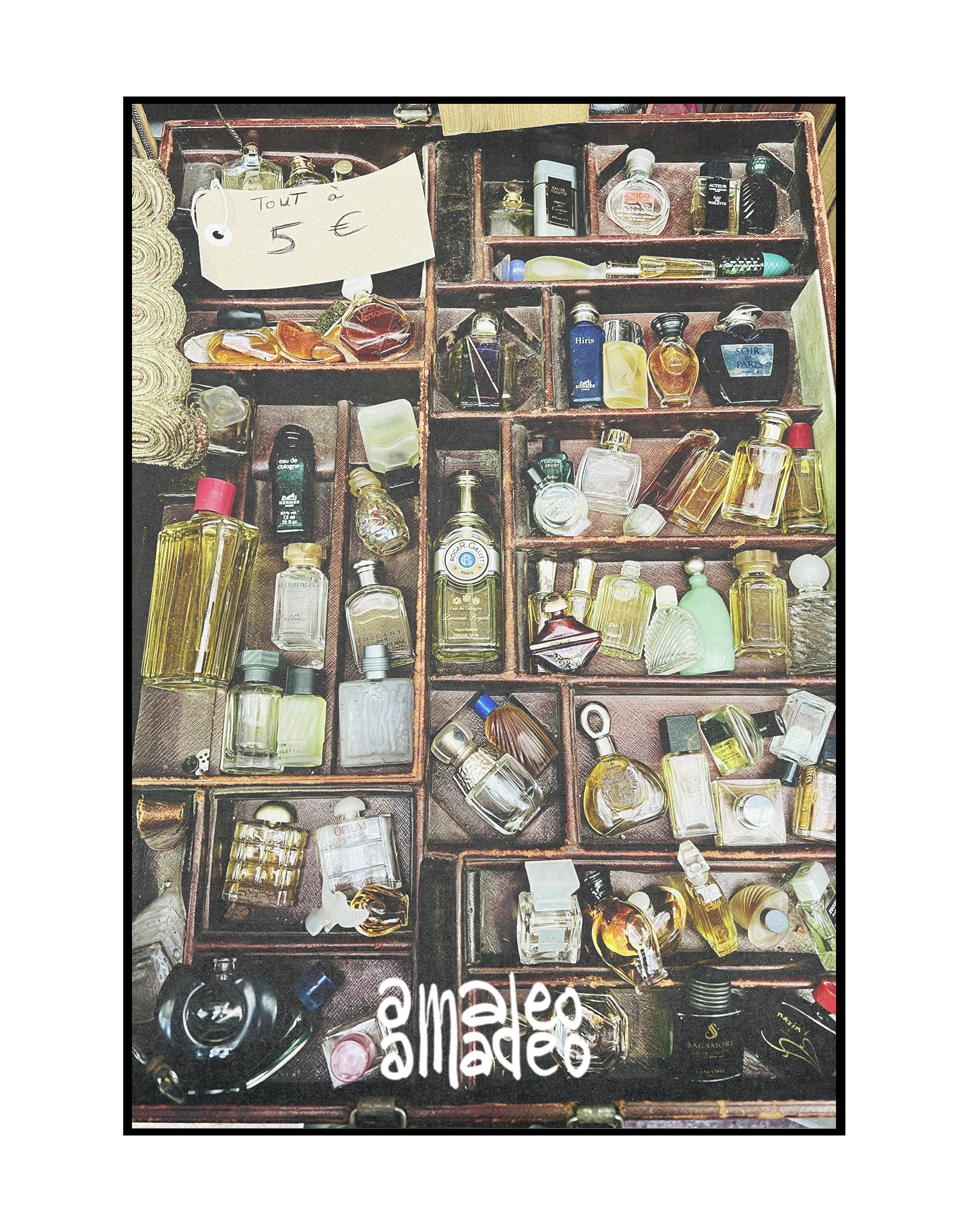
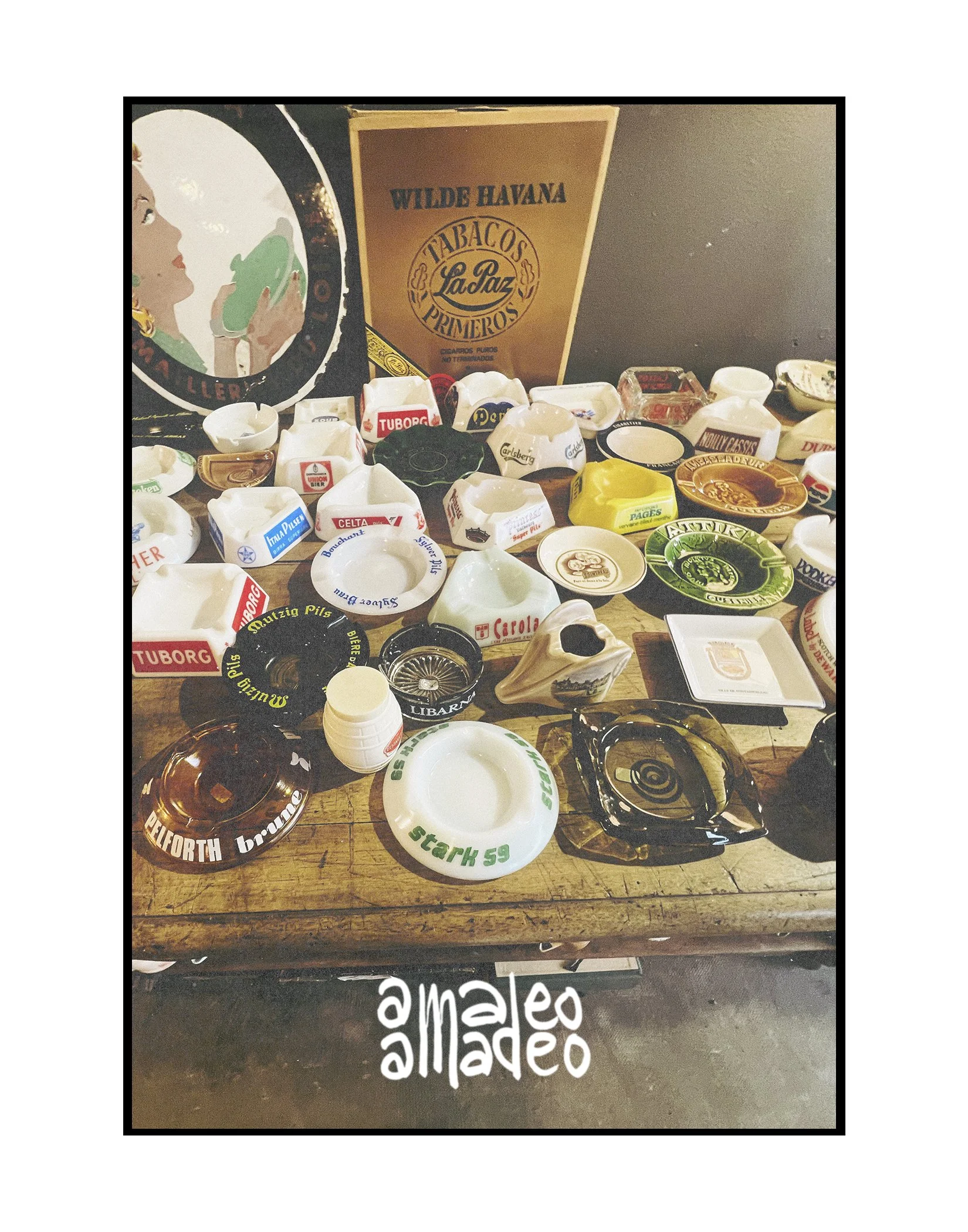
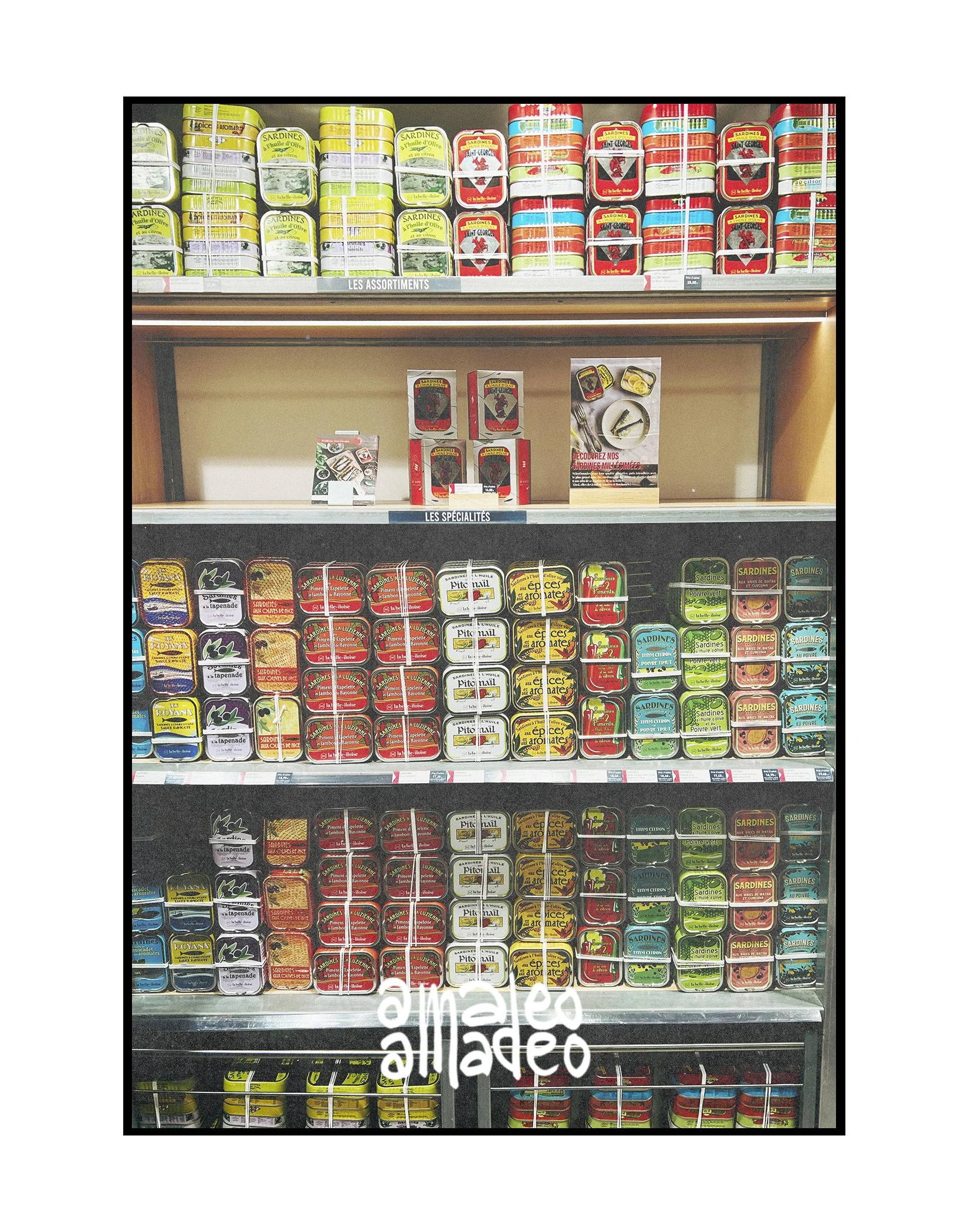
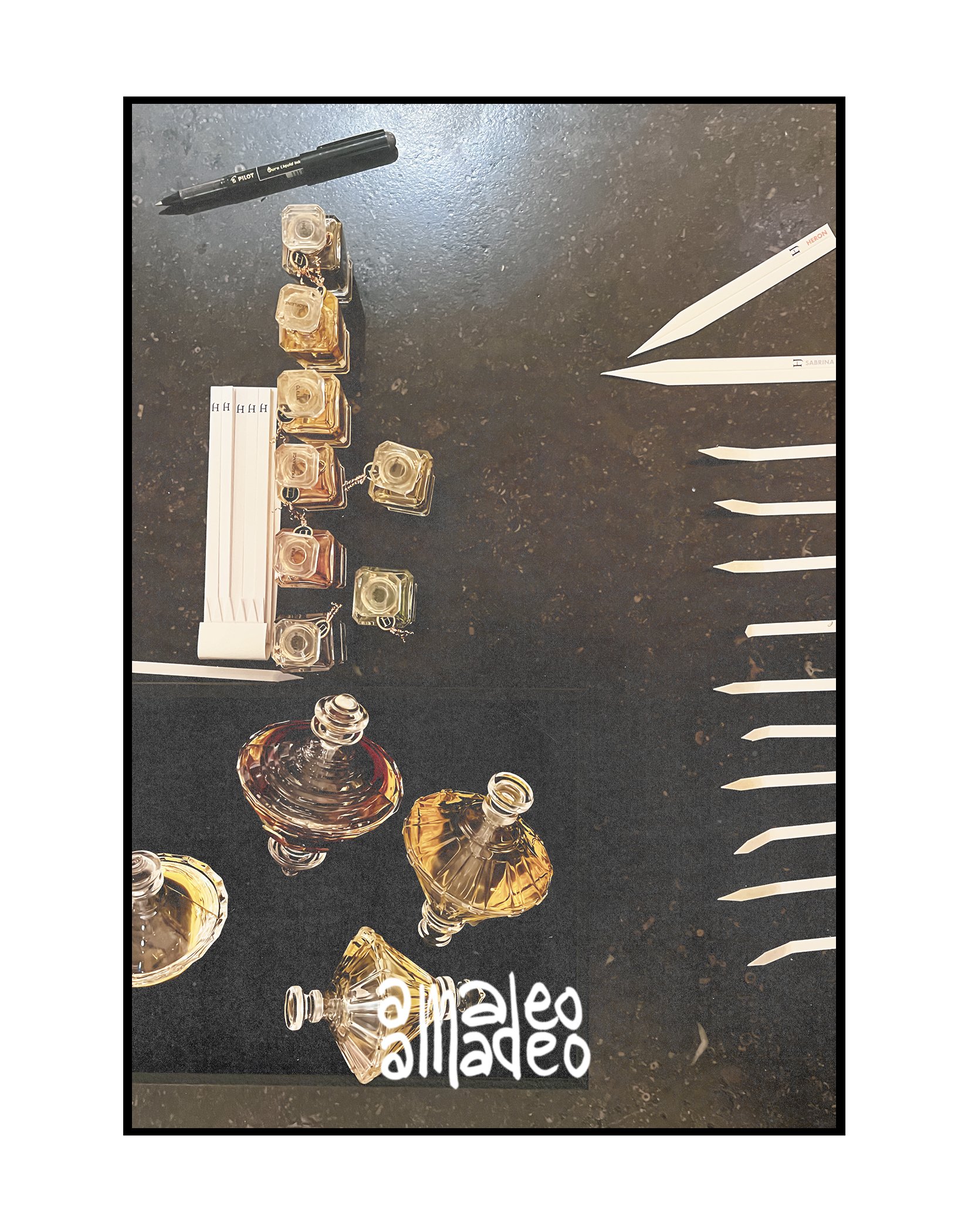
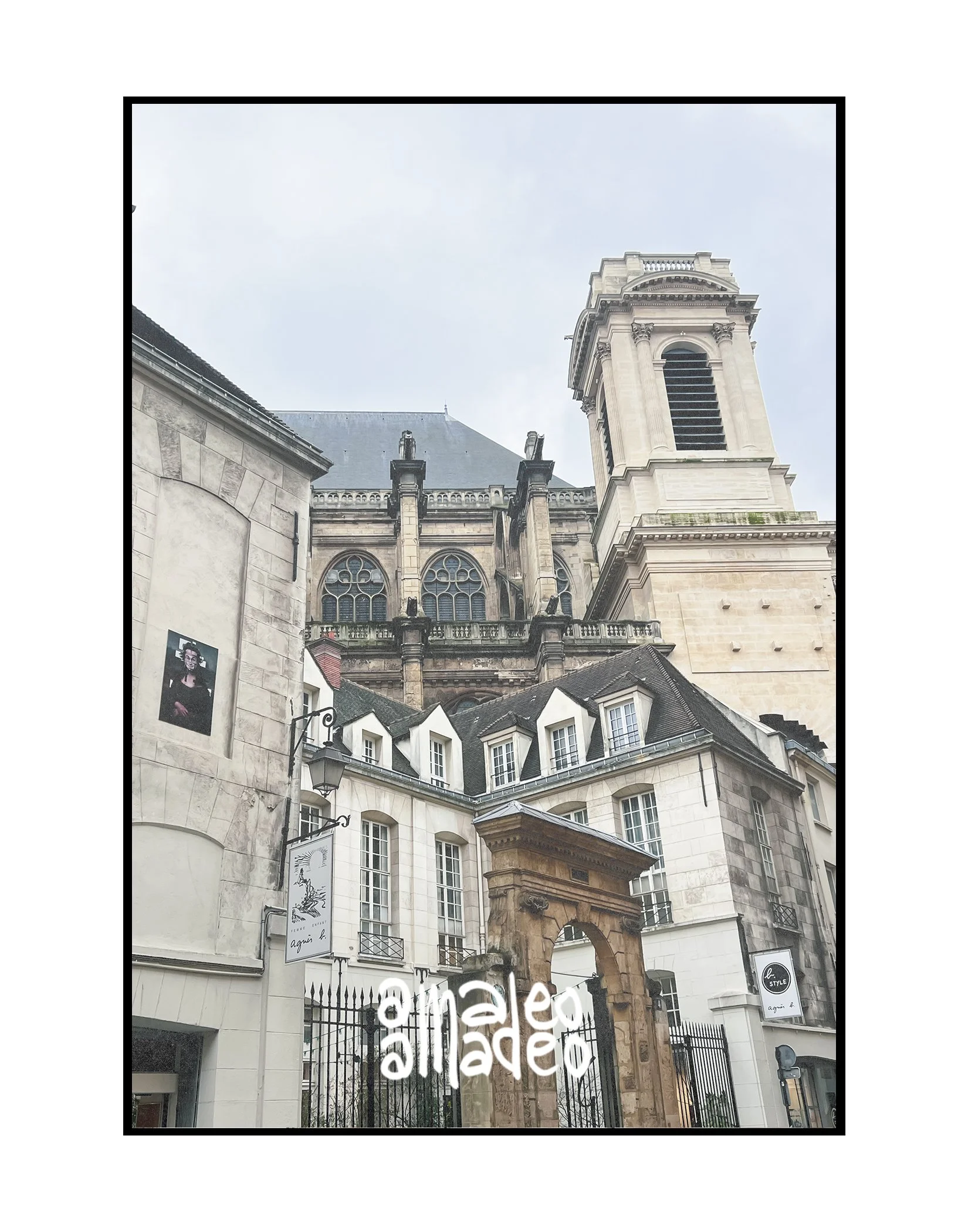
When I was in Paris, my mornings were always slow. I would wake up with the sun and leave before the city was fully awake. There was something special about experiencing Paris during its preparation. Before the cafés filled, before the shops opened, before the streets became busy.
The city was getting ready for the day.
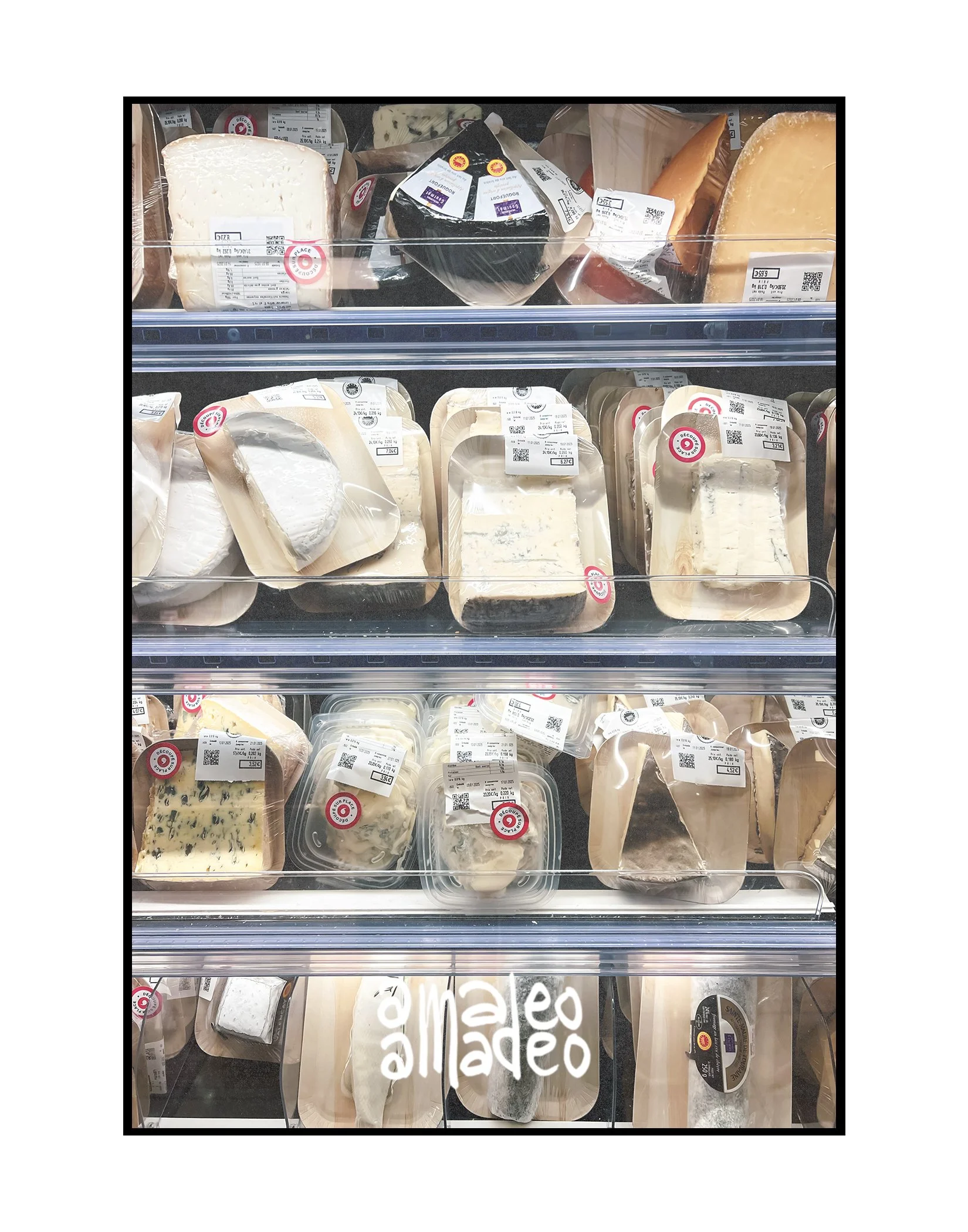
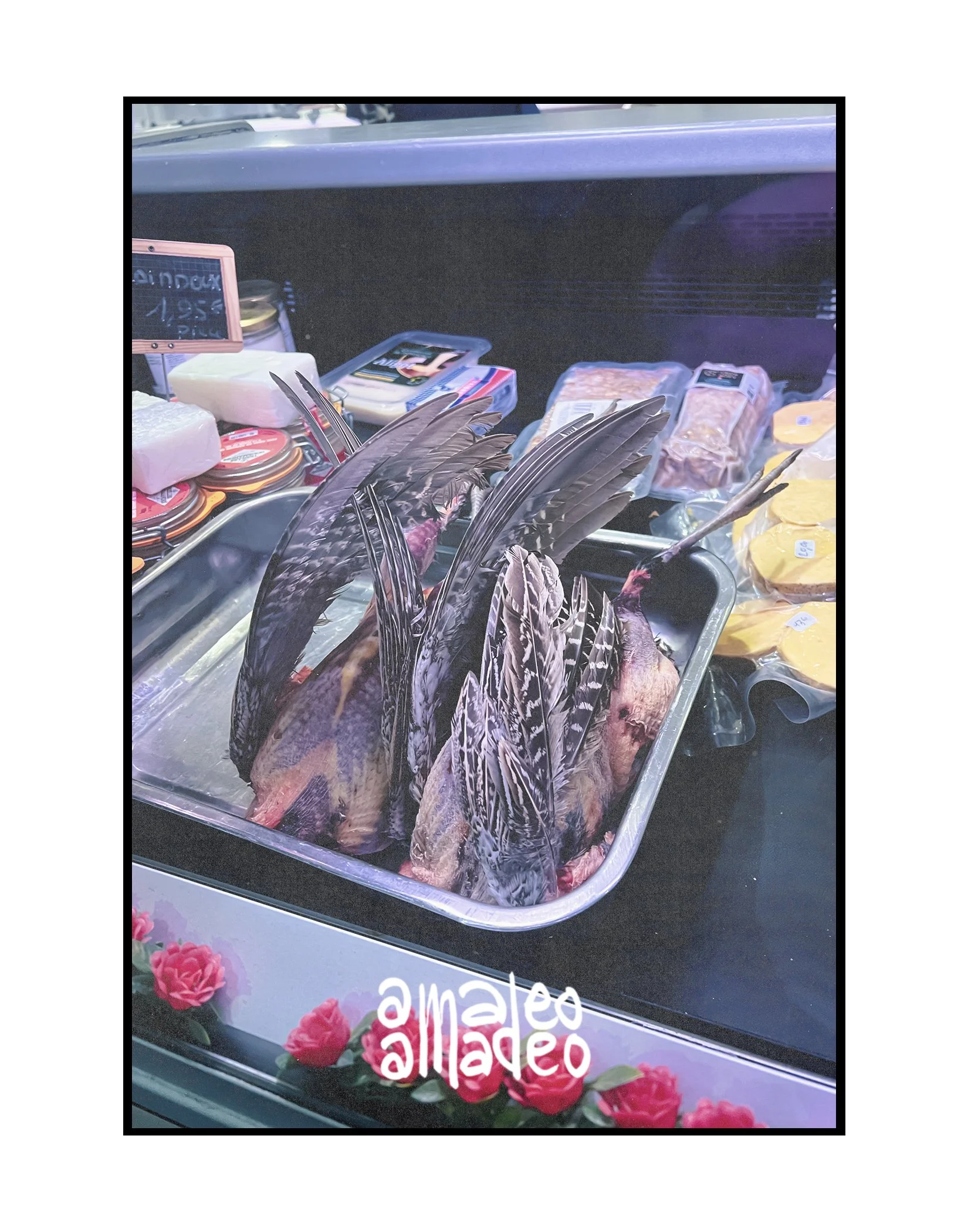
I would walk through the arrondissements and witness these tiny rituals taking place around me. Bakers preparing croissants and pastries for the morning rush. The smell of warm butter drifting from open doors. Florists bringing out buckets overflowing with mimosa flowers. Antique dealers sweeping the thresholds of their shops. A cigarette lit in the quiet of an empty street.
The French morning was coming alive.
What fascinated me most was how ordinary it all seemed to the people living it. These small actions were simply part of their routine, yet together they created an atmosphere that felt luxurious beyond anything money could buy.
One morning, I passed a man wearing a floor-length fur coat. Under one arm he carried a baguette. Between his fingers was a cigarette. In his other hand, a bouquet of flowers. As he hurried across the street he jumped over a puddle, splashing the bottom of his coat in the process.
I remember laughing to myself.
The abundance of that single moment felt almost cinematic.
Bread.
Flowers.
Smoke.
Rain.
Fur.
A city waking up.
He was probably just running errands, yet somehow it felt impossibly elegant.
That image stayed with me long after I returned home.
For months I found myself thinking about those walks and the idea that luxury often exists in places we overlook. Not in grand gestures, but in everyday experiences. The smell coming from a bakery. The first cigarette of the morning. Flowers being unloaded from a truck before sunrise.
I wanted to create something that captured that feeling.
The result became demi-beurre.
Built around notes of butter, tobacco, and mimosa flower, this limited-release incense is my attempt to package one of those mornings and bring it into the home. The warmth of freshly baked pastries. The distant trace of cigarette smoke. The brightness of flowers waiting to be arranged.
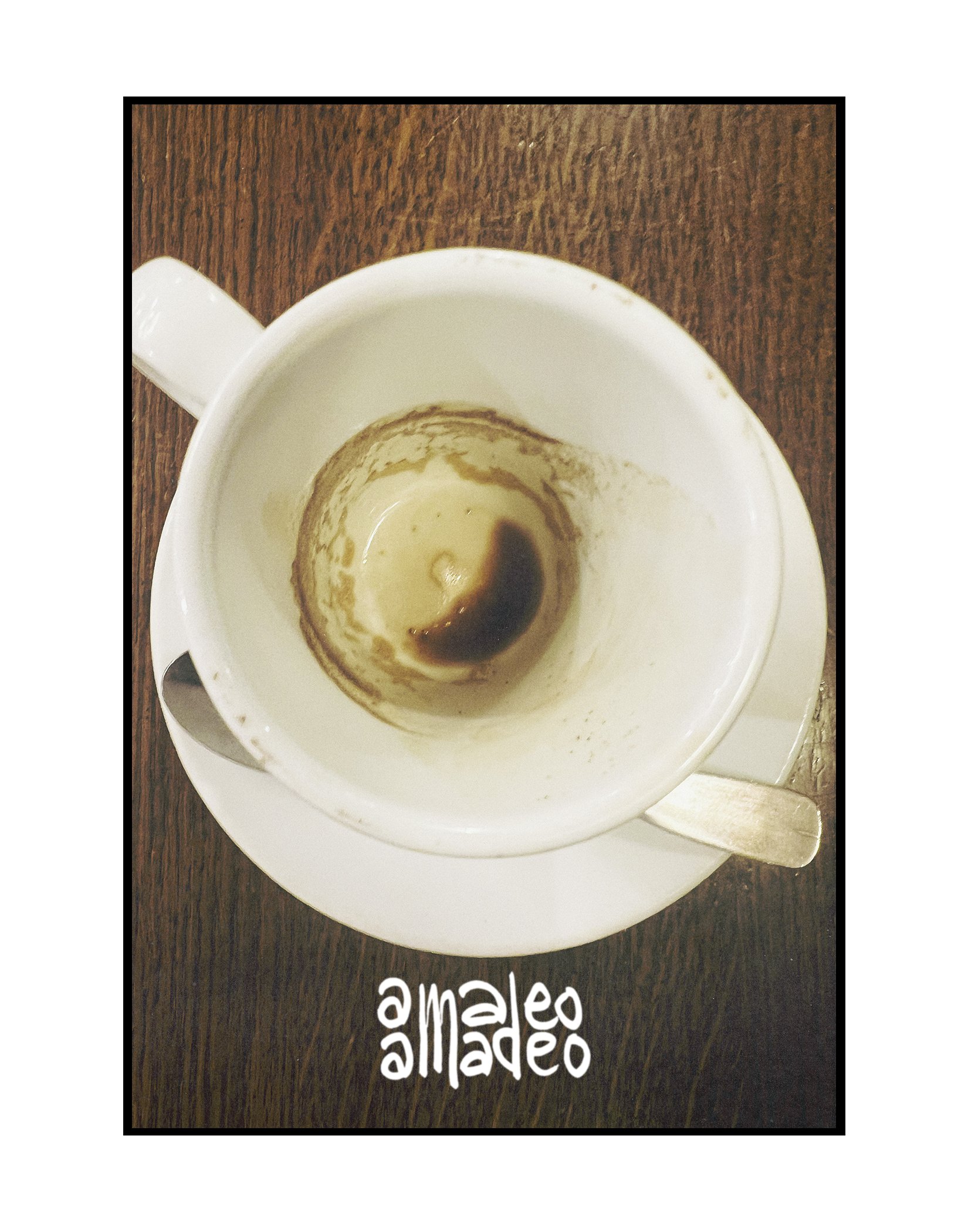
I imagine lighting one while making coffee before the rest of the house wakes up.
I imagine lighting one while reading the newspaper on a Sunday morning.
I imagine lighting one while opening the windows on the first warm day of spring.
Most of all, I imagine lighting one when you want to slow down and appreciate the small things happening around you.
The things that create an experience before we even realize they are there.
This is the first limited release incense from amadeo amadeo and a project that has been quietly developing for quite some time. I am excited to finally share it.
Over the next few weeks I will be sharing photographs from Paris alongside the packaging and development of the incense. Before its release, I would love to hear your thoughts and feedback. The scents I create are often built from memories, but they only become complete once they begin creating memories for someone else.
demi-beurre will be released in a limited quantity in approximately 3–4 weeks.
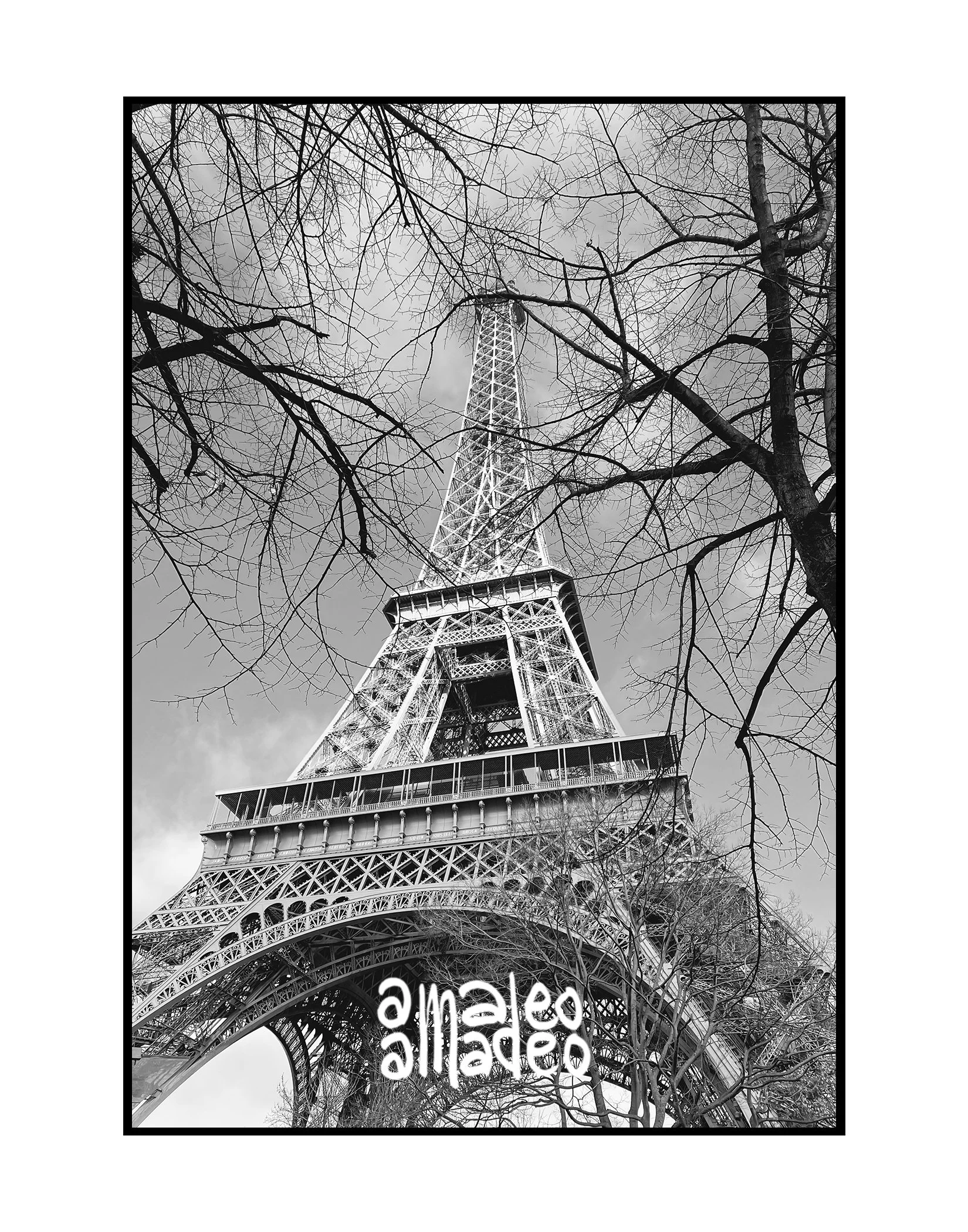
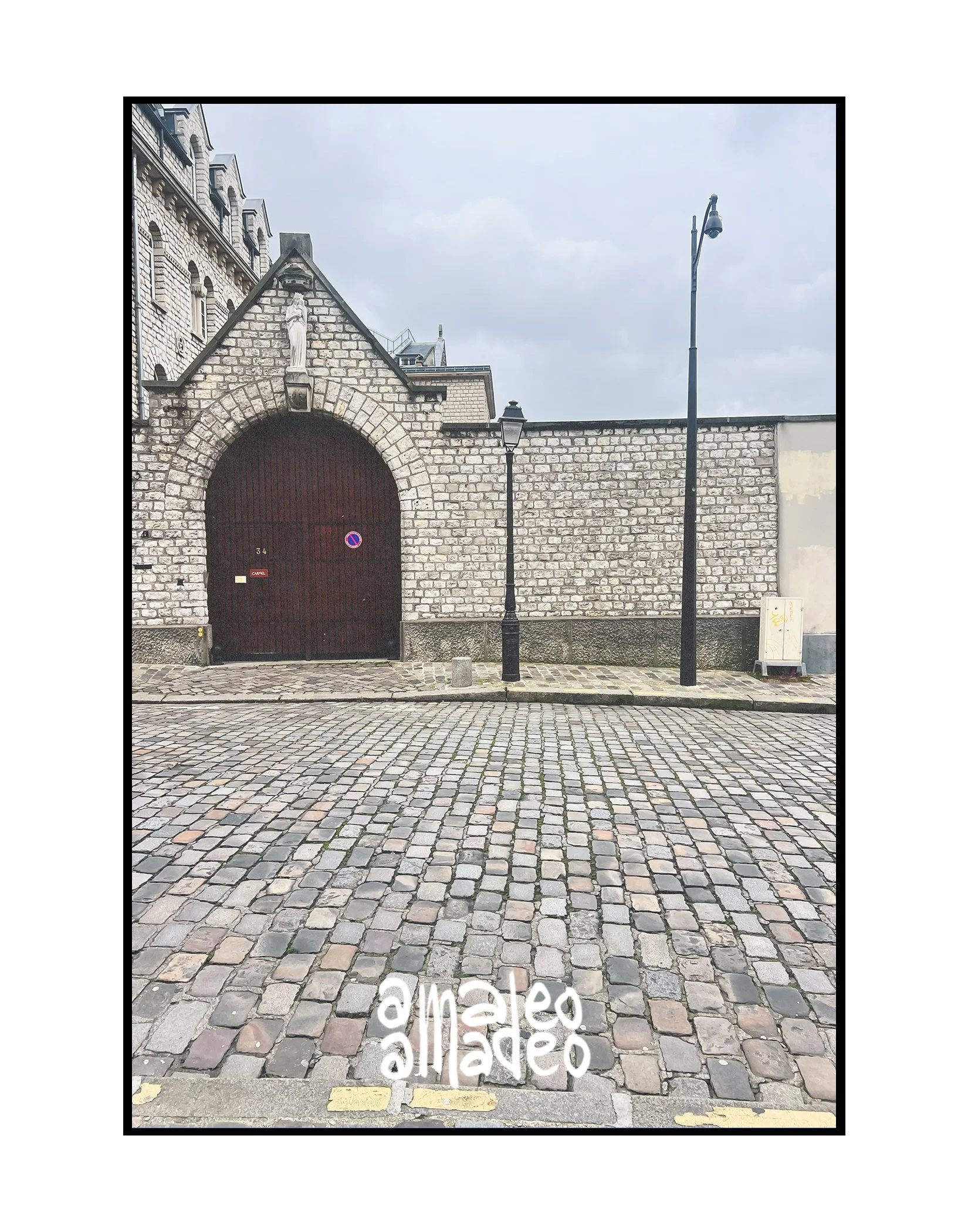
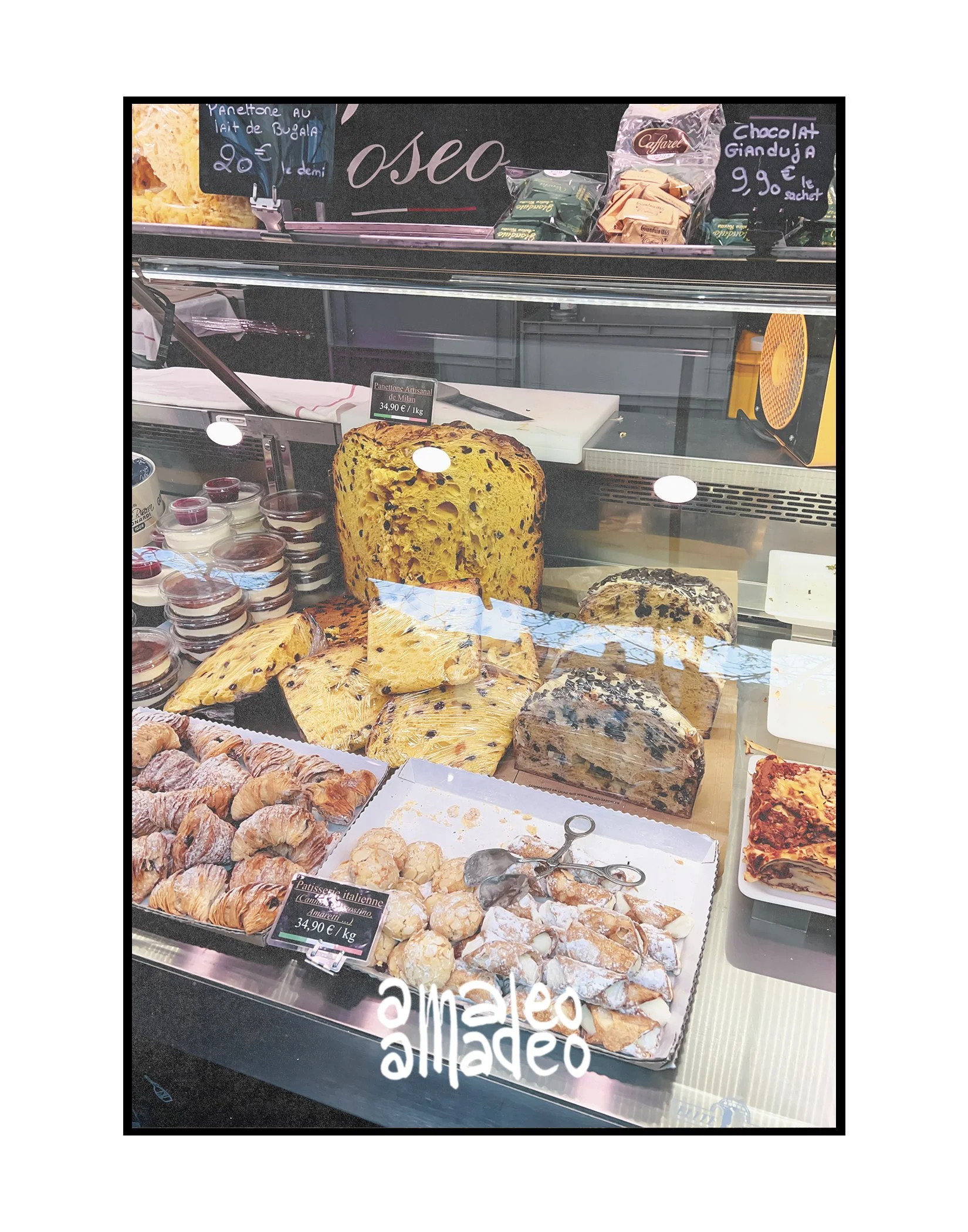
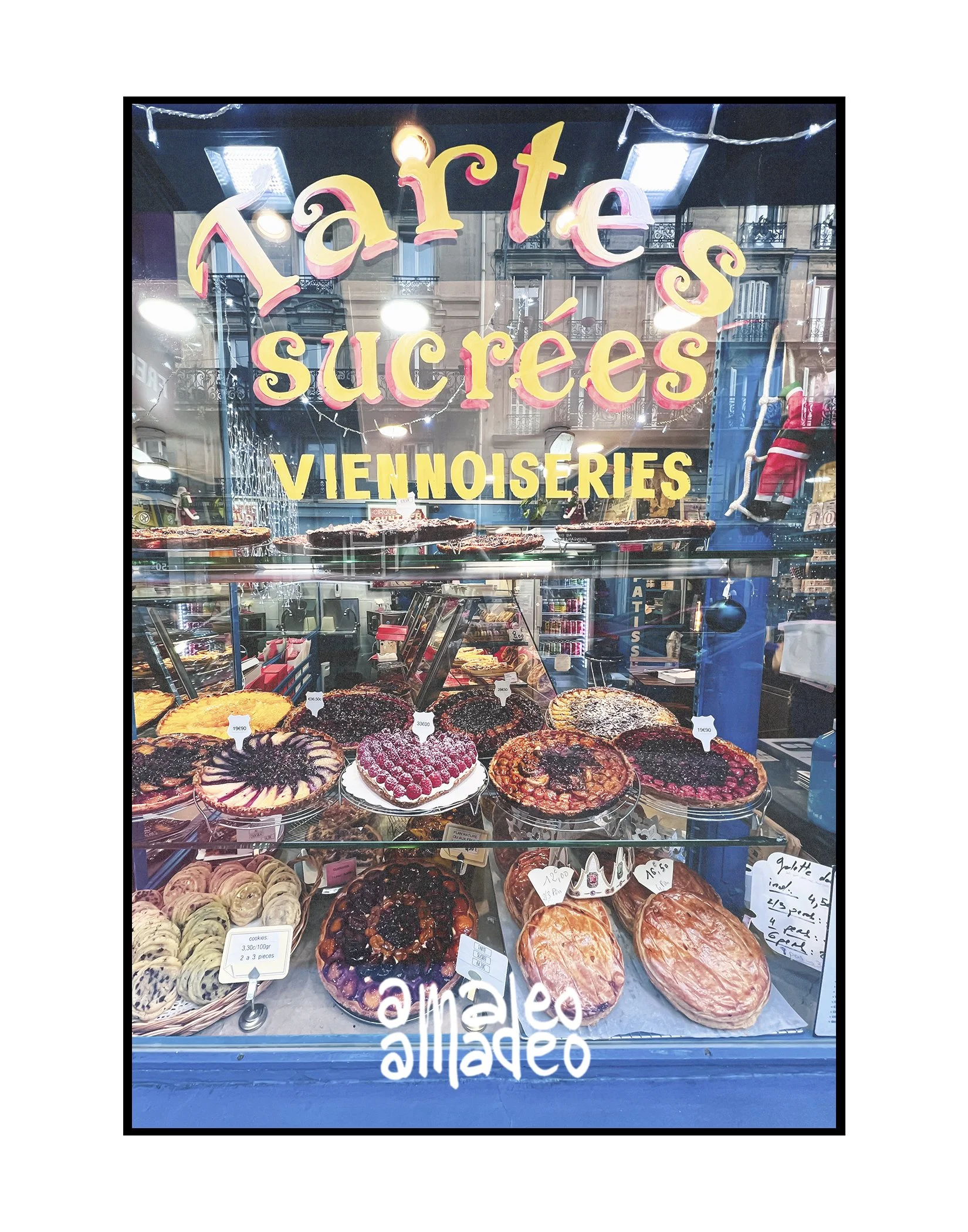
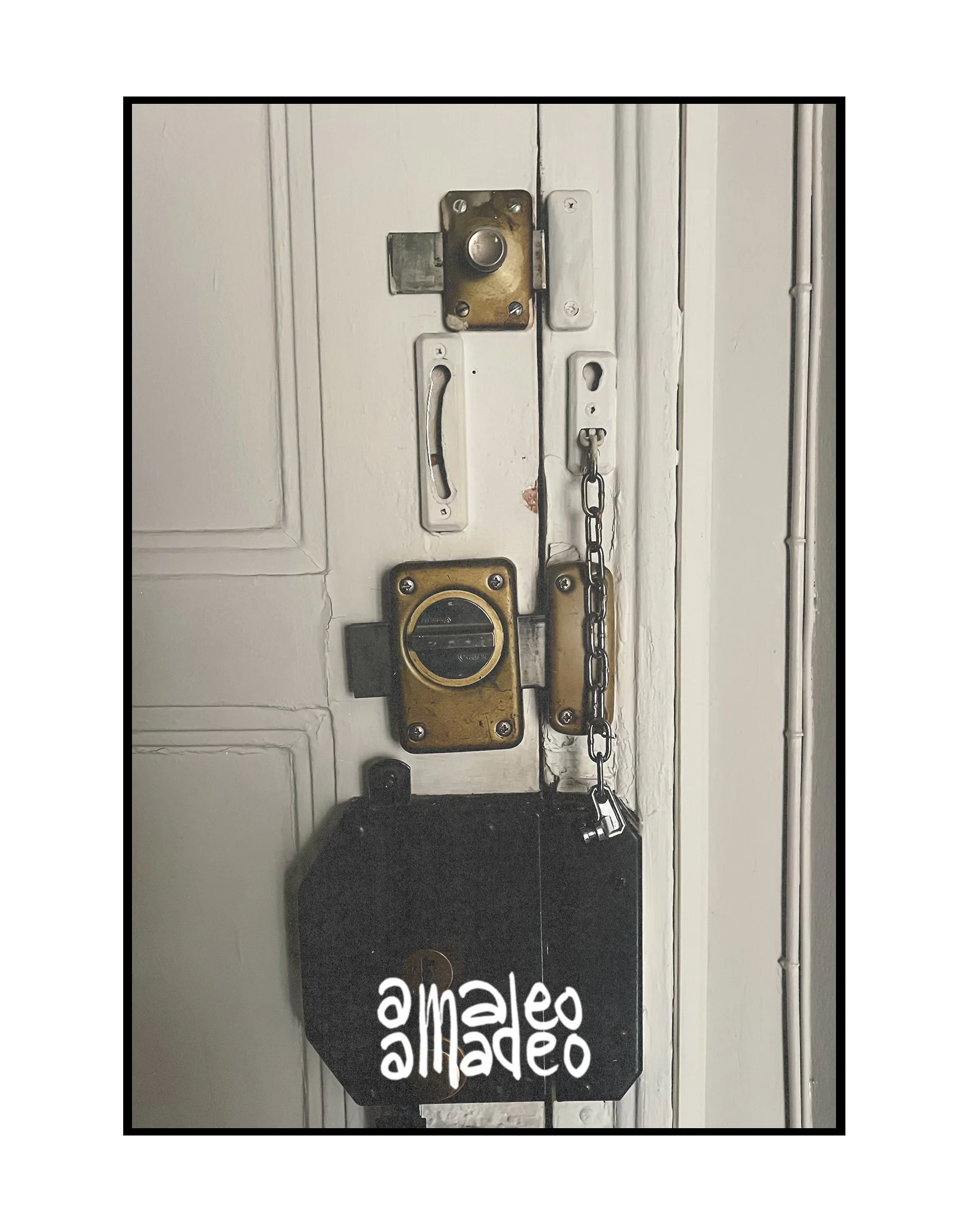
I can't wait for you to experience it.
A Guide to Moving Along the River (Without Knowing Where You’re Going)
It usually starts with coffee.
Or a question.
Or someone asking you if you are something you are not.
Part I
There is a way to move through a place without deciding where you are going.
It usually starts with coffee.
Or a question.
Or someone asking you if you are something you are not.
From there, it becomes difficult to stop.
You follow a road.
The road follows a river.
The river does not ask you anything, but it keeps offering.
A chair.
A jacket.
A painting you cannot take with you.
And before you realize it, you are no longer looking for anything specific—
you are just responding.
We started somewhere near the river without saying that we were following it.
Avon, Connecticut. A coffee shop that roasts its beans in-house—The Coffee Trade—the kind of place where the air is already thick before you even order. The smell of roasting beans sits low and constant, like something alive in the room. You don’t need to ask what they do there. You can smell it before you speak.
We ordered coffee.
“Are you guys musicians?”
There was a pause. A small laugh. Not because it was funny, but because it felt accurate in a way that didn’t need correcting.
We weren’t.
But we didn’t say that.
We sat in the garden and let that question linger between us, turning it over like something we had just picked up off a shelf. There’s a moment when you realize that people are seeing something in you that you didn’t intentionally present. Or maybe you did, without knowing.
That was the first shift.
If you continue down the road long enough, something will appear.
A Goodwill.
A small thrift store.
Something that feels like it wasn’t meant to be a stop, but becomes one anyway.
We went in without expectation.
I was looking for textiles—something that could become something else. Curtains that weren’t meant to be worn. Table linens that had already lived one life. Materials for Chiddu ca tinemu. The things that we keep, even when we don’t know why yet.
We left with sheer curtains. Tablecloths. Fabric that held memory in its weight.
At the next stop, Nikko found a jacket.
A perfectly worn brown leather bomber—soft in the way that only time can make something soft. He put it on in the middle of the store. The women behind the counter watched, smiling, approving, as if they had been waiting for someone to come in and take it home.
There’s a moment when clothing stops being clothing and becomes a role.
Before the jacket: cords, a hoodie, something quiet.
After the jacket: something else entirely.
We didn’t say it out loud, but it was understood.
We were becoming more visible.
The road kept moving and so did we.
The river stayed just within reach—sometimes hidden, sometimes running parallel like a second thought. The Farmington River doesn’t demand your attention, but if you notice it once, you keep looking for it again.
We ended up in Collinsville.
An antique mall—Collinsville Antique Mall—the kind of place where time folds in on itself. Every booth a different version of someone else’s past, arranged for you to walk through.
This is where things slow down.
You start to notice details:
a brown suede rocking chair worn into itself
a tray of colorful vintage flatware, each piece slightly off from the next
a wood panel with an inlaid clown, quietly plucking the petals from a flower
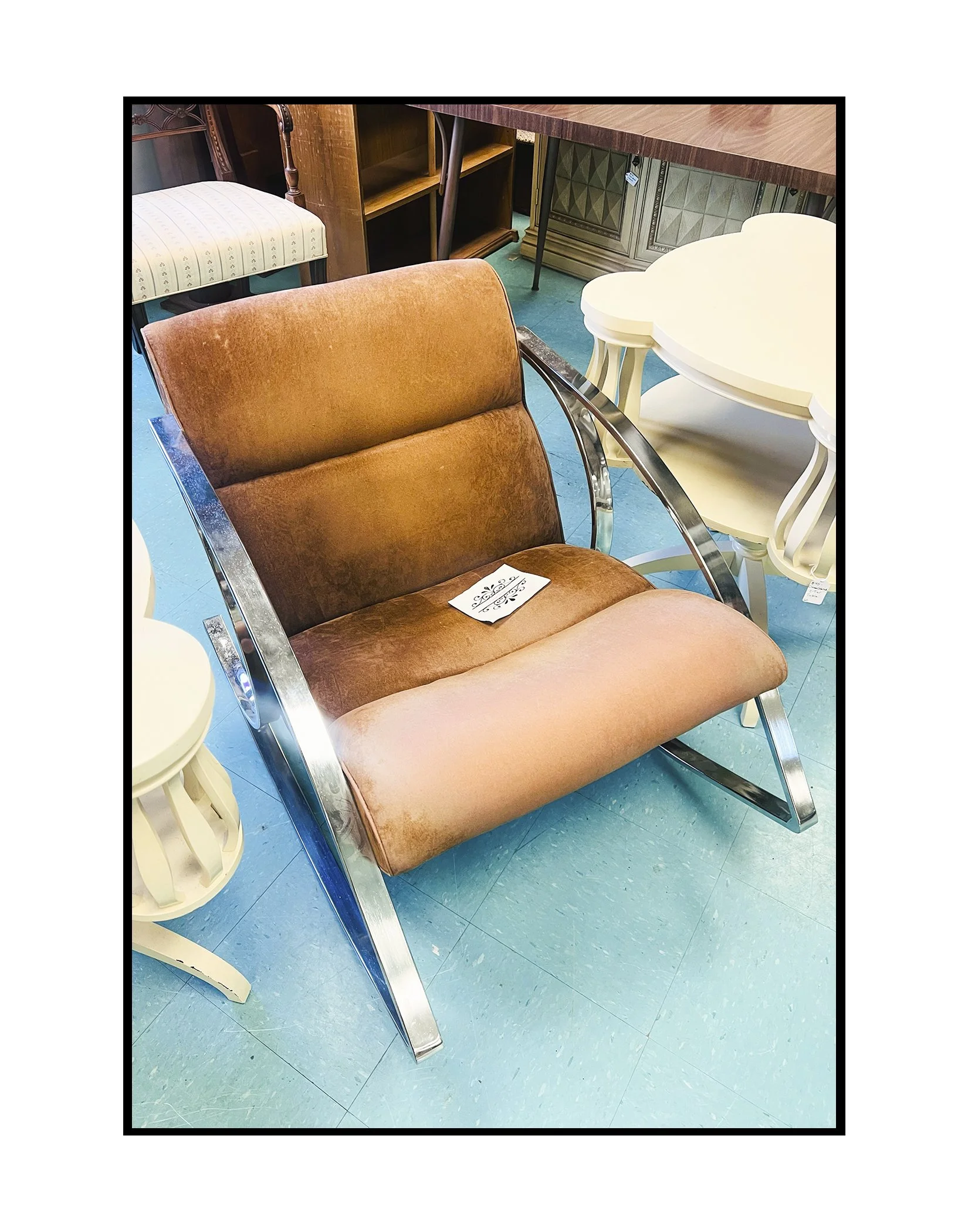
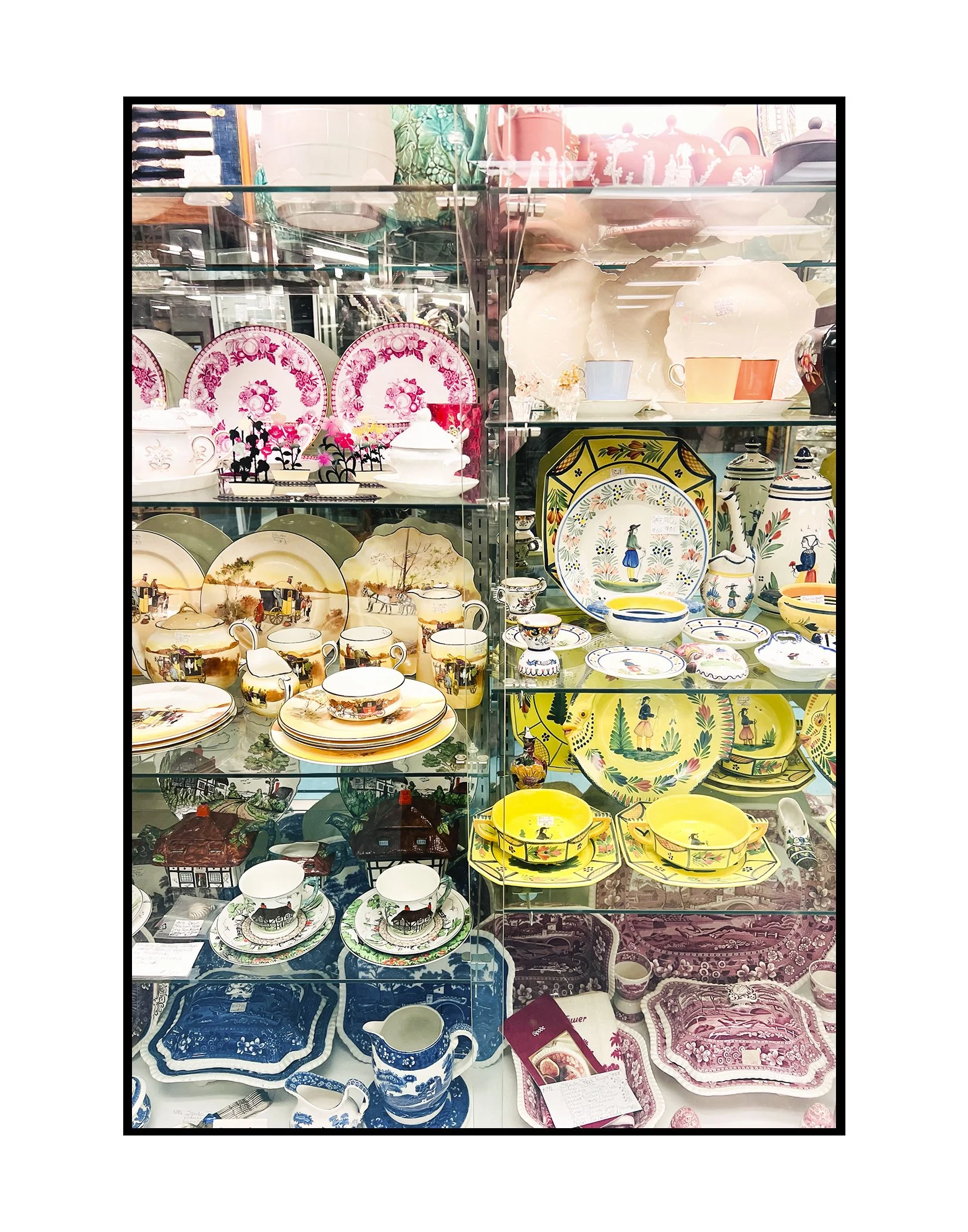
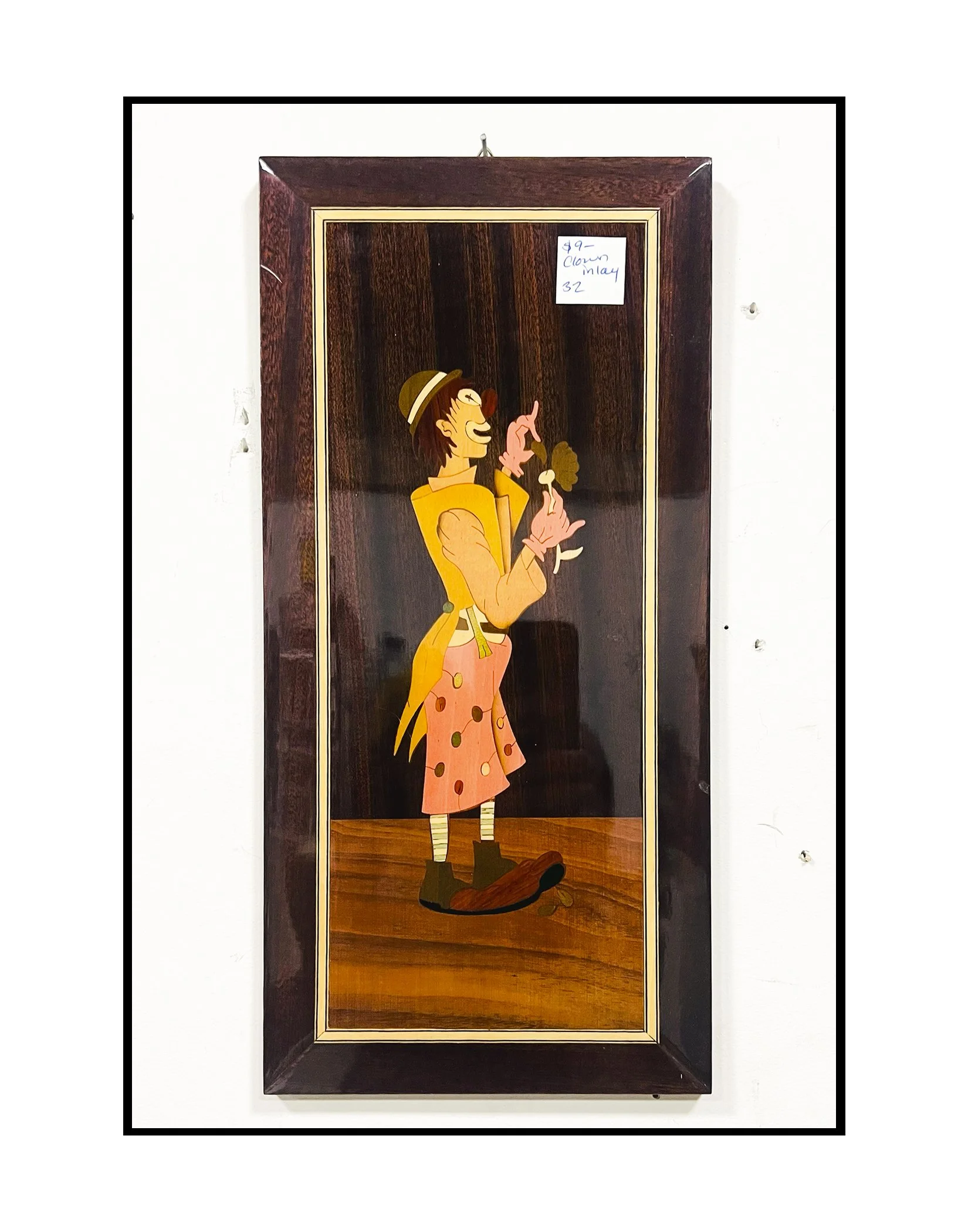
The clown stayed with me longer than I expected.
Not loud. Not exaggerated. Just there.
Doing something repetitive. Waiting.
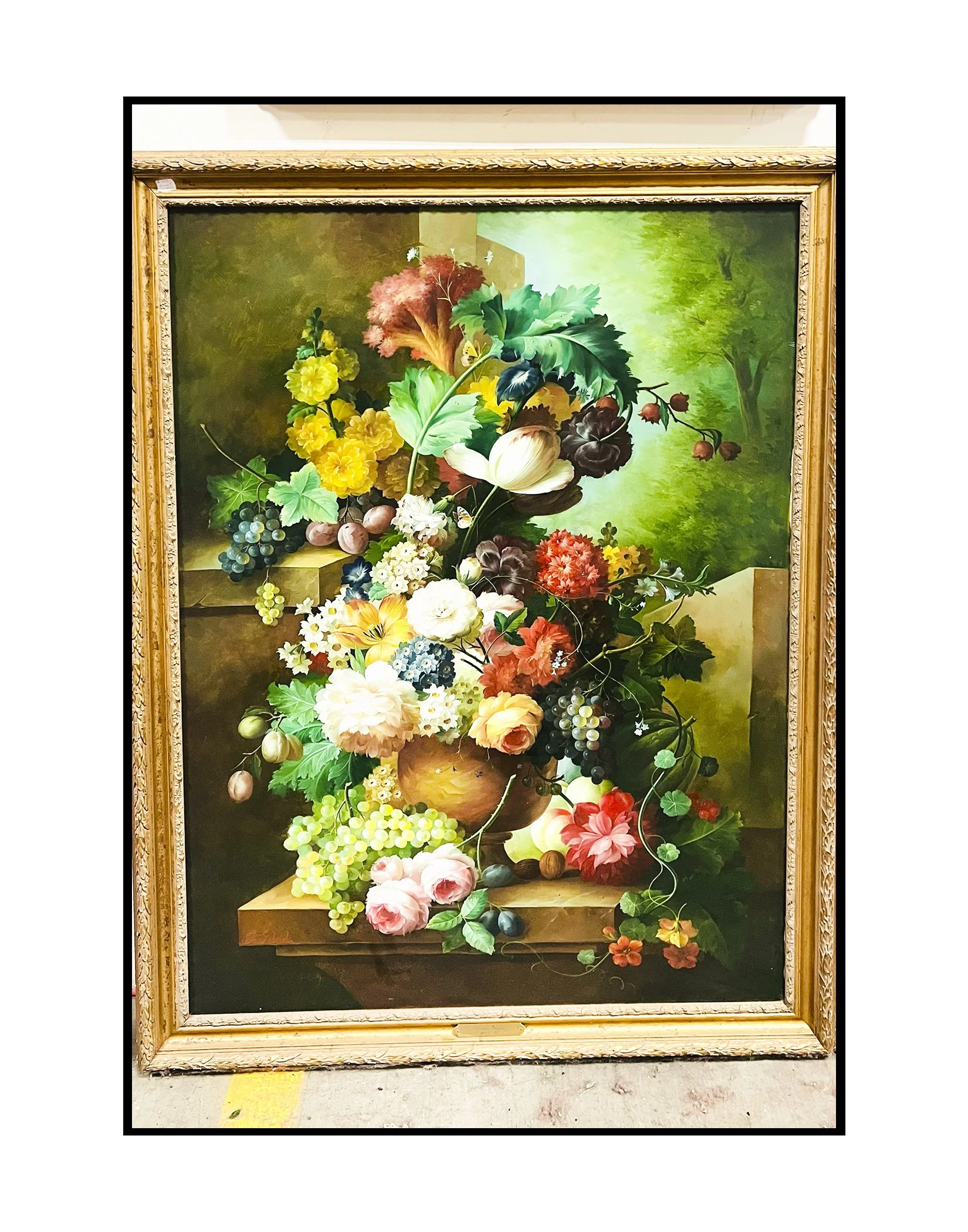
There was a painting too. Large. Oil. Flowers that felt almost too alive for the room they were in.
I wanted it.
Not in the way you want something decorative—but in the way you want something that feels like it already belongs to you.
I took a photo instead.
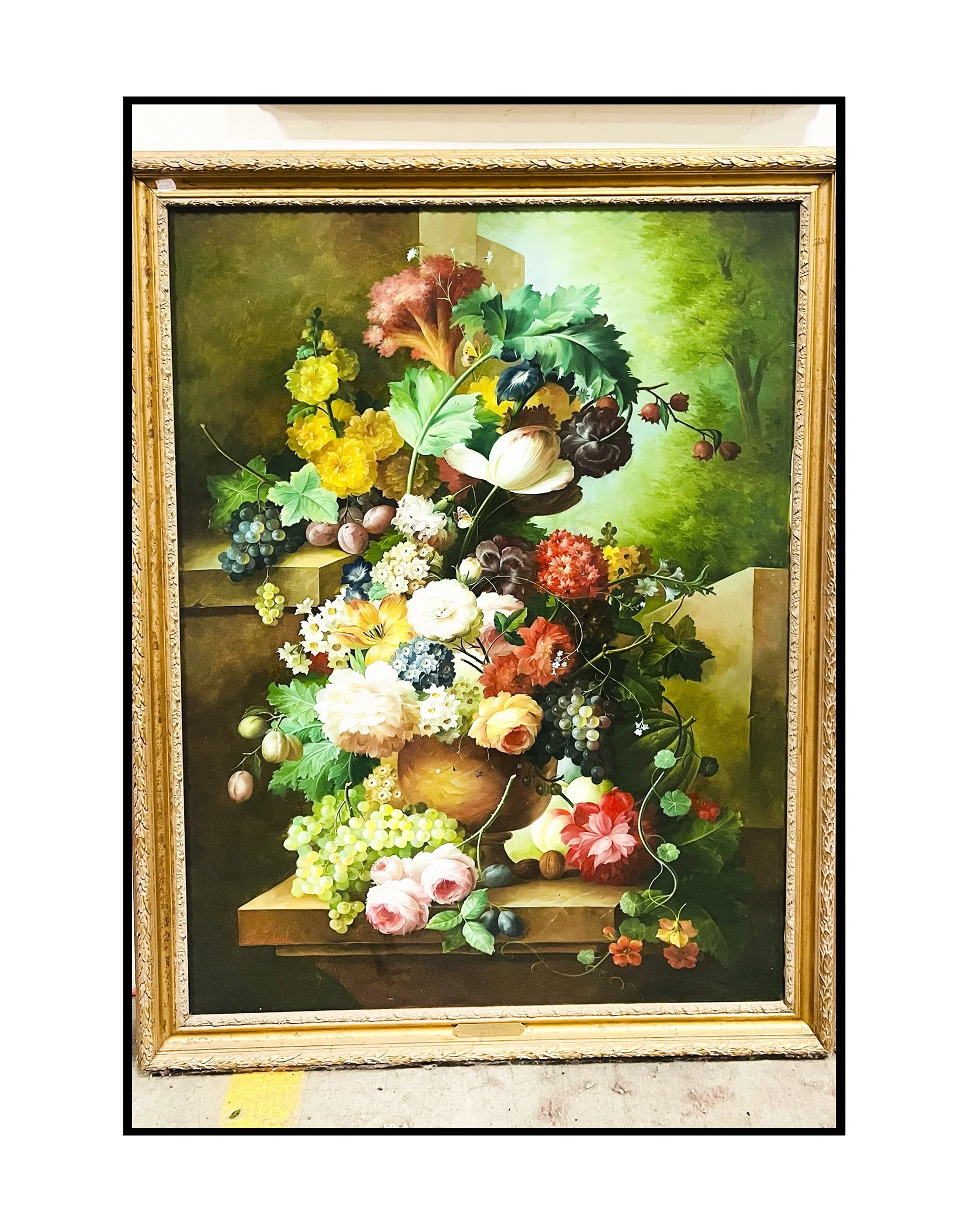
Some things you don’t take.
Some things you leave so they can keep existing where they are.
We walked out with an embroidered tablecloth. Flowers stitched into it carefully, deliberately. Something that would become something else later.
Again—collection, but not for keeping.
Collection for transformation.
We went home, but not really.
The body returned, but the momentum didn’t.
The fabrics came out immediately—laid across surfaces, held up to light, pulled, folded, tested. I wanted to see how they moved before they became anything permanent. There’s a moment before creation where everything is still possible, and it’s almost better to stay there.
That feeling doesn’t last long.
It turned into something else quickly—
paintings, collages, sewing.
An urgency.
The kind where you feel like if you don’t make something now, it might disappear.
At some point, the conversation shifted.
What is art?
What makes someone an artist?
Is there a difference between being creative and being an artist, or is that something we’ve decided to separate?
There wasn’t an answer.
There still isn’t.
It’s the kind of question that doesn’t resolve—it just expands.
The next day, we followed the same instinct.
No plan. Just direction.
We decided to go further down the river.
Chester, Connecticut—Chester—a town that doesn’t feel real when you first drive into it. The buildings sit too perfectly. The street feels staged. Like something built for a film, but left there after production ended.
We parked near a cemetery.
And again—coffee.
Simons Marketplace—espresso, cinnamon buns, a window seat facing Main Street. The kind of place where you sit and watch people move, and for a moment, you feel like you’re outside of it all.
Then back into it.
Cheshire Vintage—a perfectly curated shop. We spoke with one of the owners for a while. There’s something different about small towns like this. The conversations last longer. The recommendations matter more.
She sent us a few doors down.
Dina Varano Gallery—crystals, jewelry, objects that feel like they hold energy whether you believe in that or not.
There was a pattern forming.
We weren’t finding places.
We were being sent to them.
At some point, we noticed a small house.
White picket fence. Eyebrow dormer. Slightly elevated from the street as if it needed to be approached with intention.
We walked up.
There are moments where you don’t ask questions—you just follow the pull.
Next door, a door was open.
Leif Nilsson Spring Street Studio and Gallery.
We walked in.
Paintings filled the space. Impressionist, but not distant—alive in a way that made you feel like you had stepped into them rather than looking at them.
And then you realize:
the person standing there is the one who made them.
Leif.
The conversation started easily and didn’t feel like it needed to end. Stories about painting. About sailing. About working from a boat. About the house itself—once a hotel in the 1800s, now something else entirely.
We learned that the small studio we noticed outside was his too.
That everything we had just walked into was part of a larger life we hadn’t known existed ten minutes before.
At one point, I stepped back and saw Nikko standing in front of a long painting, looking up at it.
Still.
There are moments when someone becomes part of a scene without realizing it.
I took a photo.
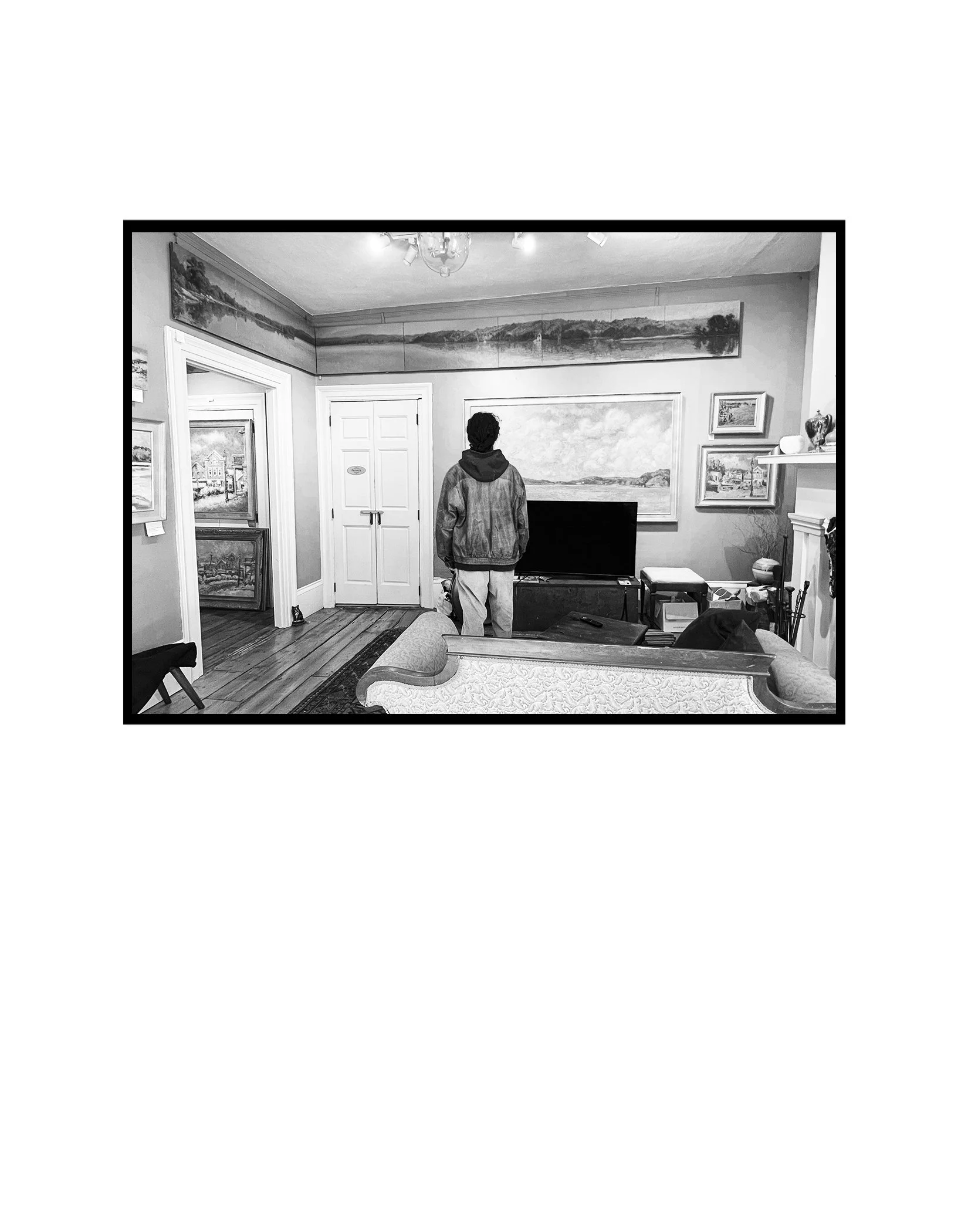
Nikko Amadeo inside Leif Nilsson’s gallery
Not many—just enough to remember that it happened.
Before we left, he mentioned something casually.
An art show.
The next day.
We should come by.
We said we would.
Or maybe we said we might.
We left Chester and drove to New Haven.
The shift was immediate.
The Owl Shop—dark wood, leather chairs, amber lights hanging low over the bar. The kind of place that exists outside of time, or at least outside of whatever time you were in before you walked in.
We sat down.
Picked cigars.
Ordered beers.
I had brought fragrance with me—something I had been thinking about all day without knowing why.
Lily of the valley.
And Muskara Aquilaria from Fueguia 1833.
We layered it into the room without asking permission.
The sweetness cut through the smoke.
The smoke settled back into it.
For a moment, the air felt constructed.
Not accidental.
We sat there, surrounded by low conversation, glass, wood, and heat, and returned to the same questions.
What is art?
What makes someone an artist?
Is it making something?
Or is it seeing something differently?
I don’t know when the conversation stopped and just became part of the atmosphere.
It felt like we had stepped into another version of the day.
Or another version of ourselves.
At some point, we left.
Not because anything ended, but because something was continuing somewhere else.
We talked about Chester the entire way back.
About Leif.
About the studio.
About the fact that we could go back the next day.
We said it casually, but it didn’t feel casual.
Some places open something.
Some people do too.
We said we might go back.
And for some reason, that felt like the most important decision we had made all weekend.
Studio Rituals: Flowers on the Desk
Yesterday I brought something simple into the studio—flowers.
It had been a while since I picked up flowers just to place in a vase for myself. No reason other than wanting a little life in the room. I found a few calla lilies and some chamomile and brought them back to the studio to arrange.
Yesterday I brought something simple into the studio—flowers.
It had been a while since I picked up flowers just to place in a vase for myself. No reason other than wanting a little life in the room. I found a few calla lilies and some chamomile and brought them back to the studio to arrange.
What I loved most was how naturally they worked together. Both sat in the same quiet palette of creams and soft yellows, but their textures couldn’t have been more different. The calla lilies stood tall and sculptural—almost architectural—while the chamomile scattered little sun-like blooms around them. Smooth against delicate. Structure against softness.
The juxtaposition made the arrangement feel alive.
While arranging them I even thought about adding a few sprigs of parsley as a green filler—something humble and unexpected—to give the bouquet another layer of texture. I’ve always loved playing with contrast when arranging flowers. Different shapes, different densities, different personalities all sharing the same space.
Now the arrangement sits on my desk in the studio.
The blooms quietly bring signs of spring with them, even if the season hasn’t fully arrived yet. It changes the room in a small but noticeable way. A little warmth. A little softness. A reminder that life outside is beginning to wake up again.
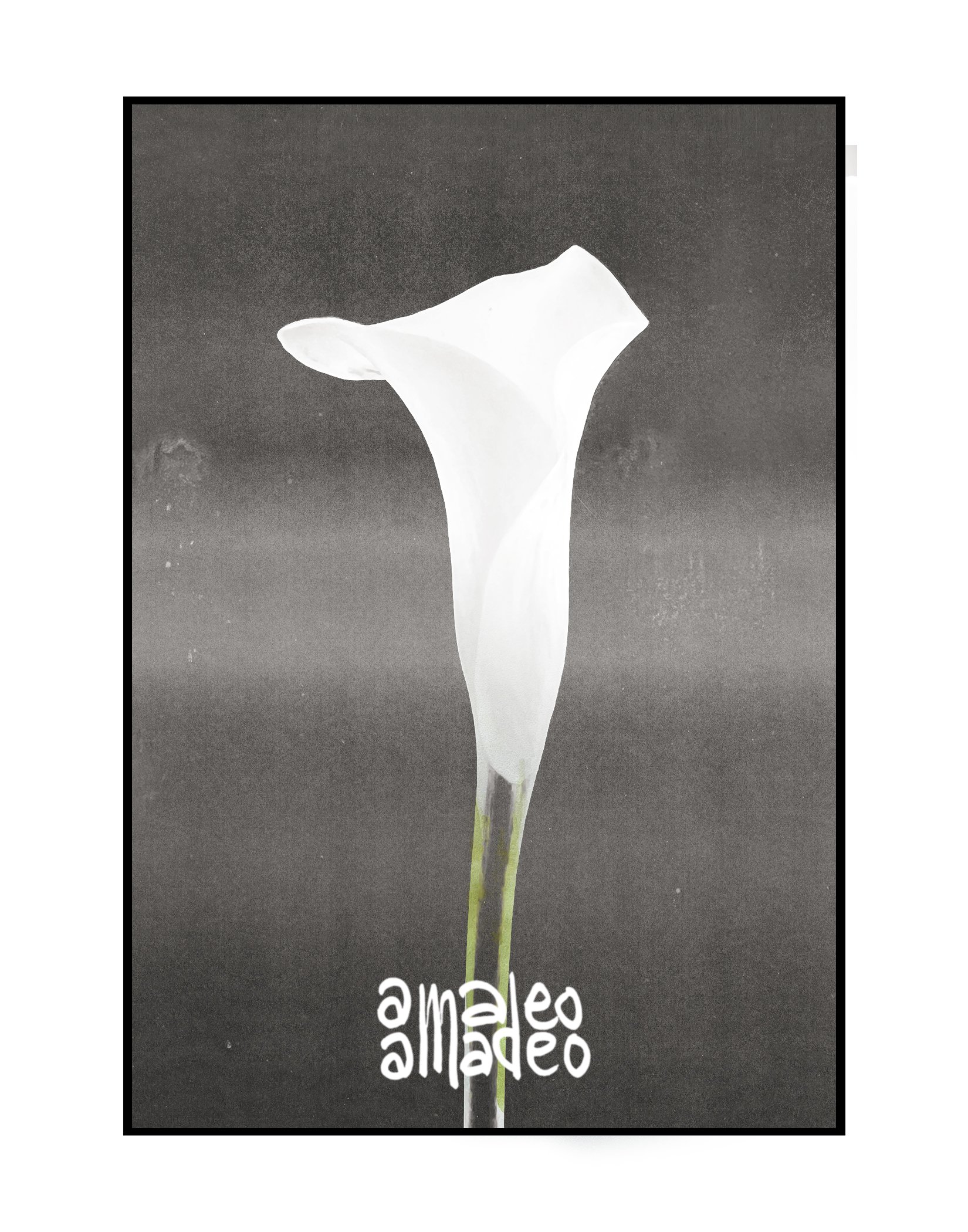
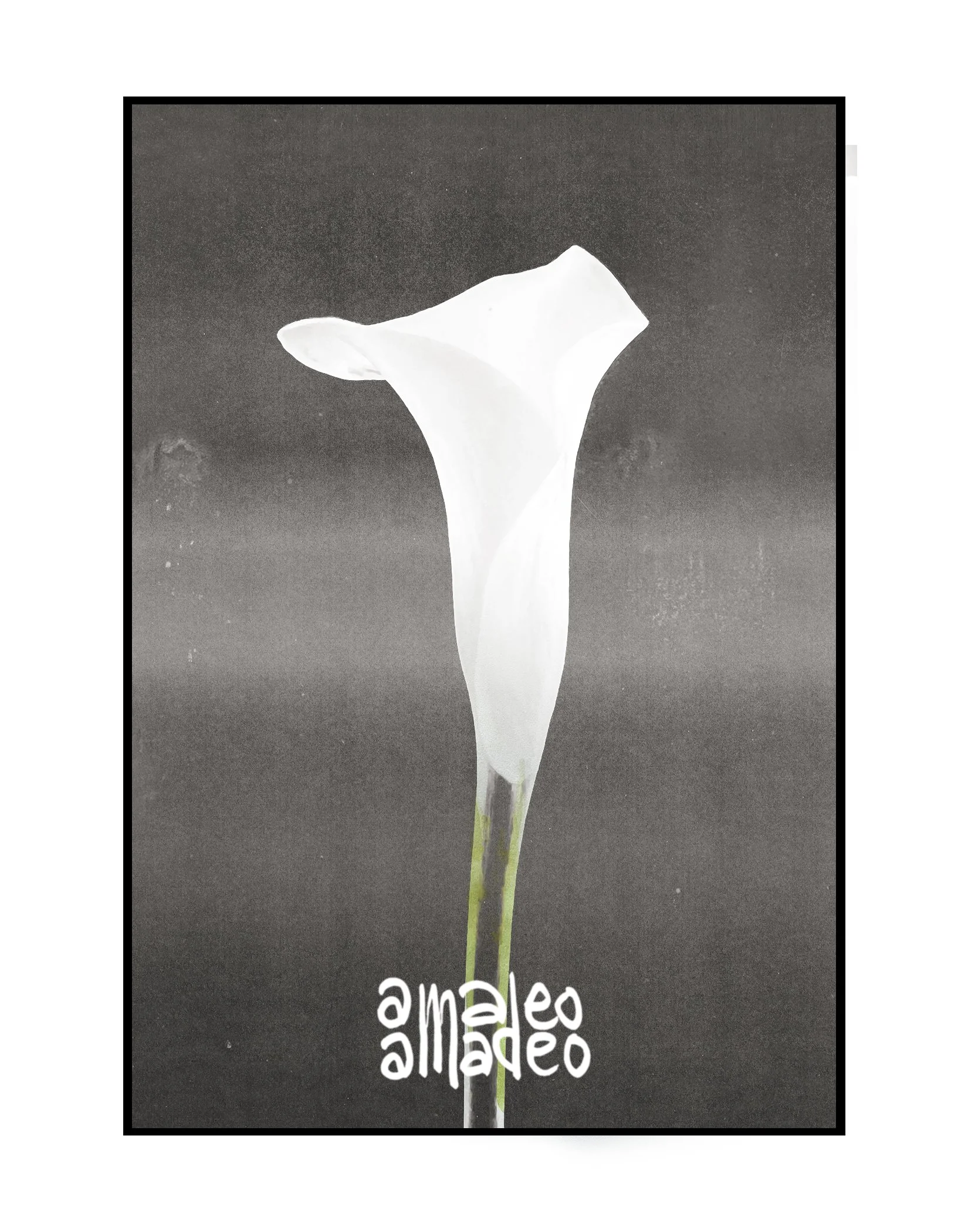
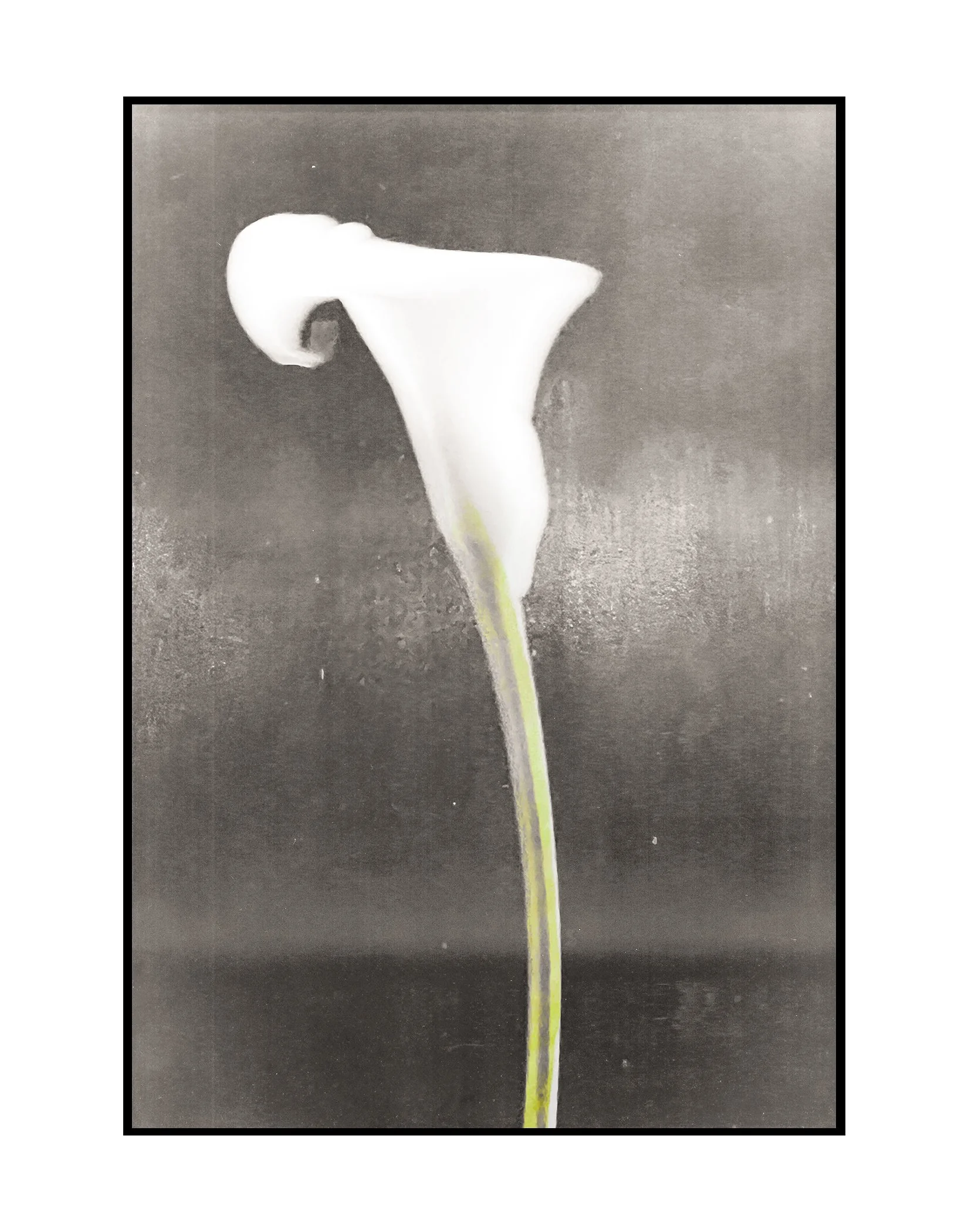
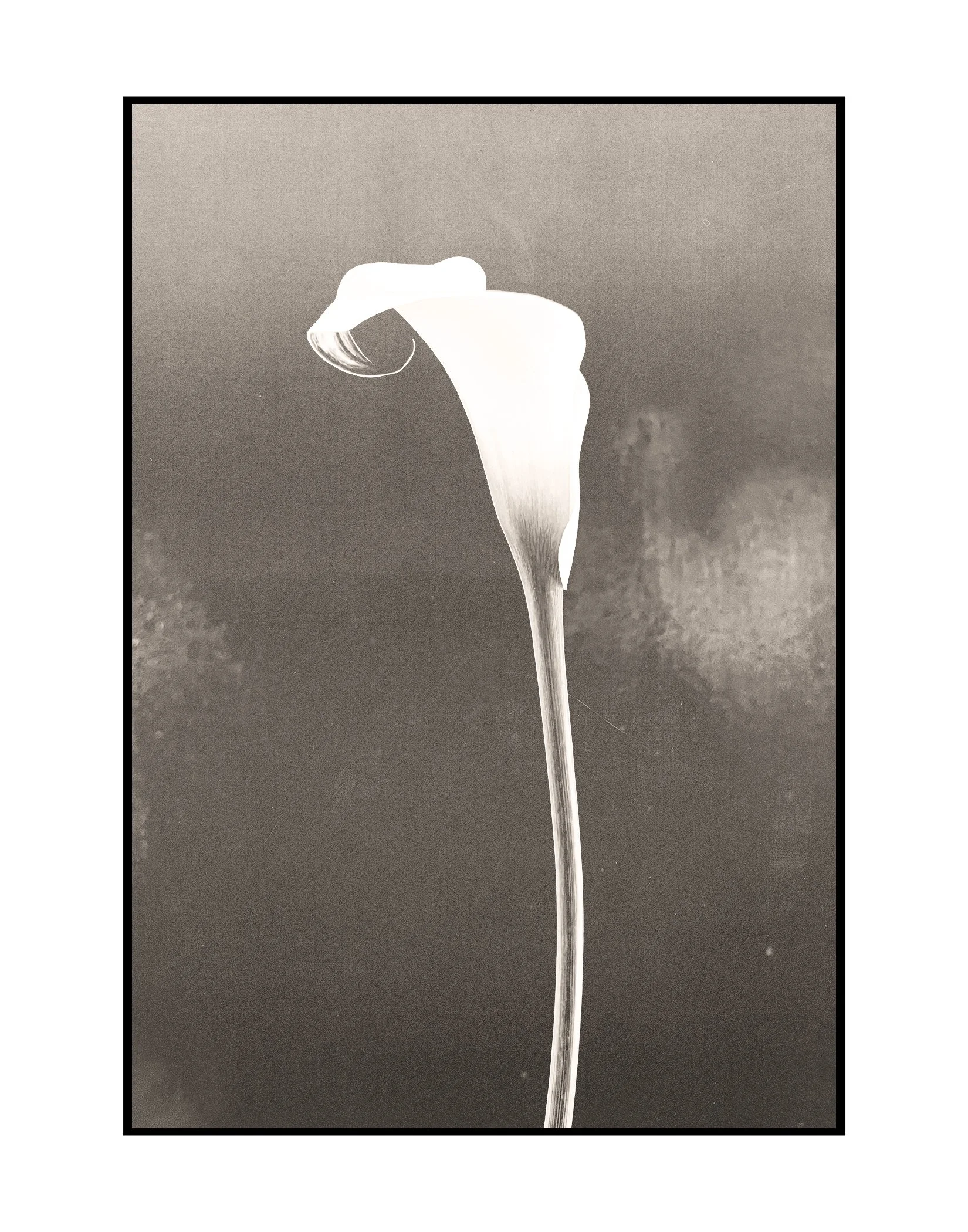
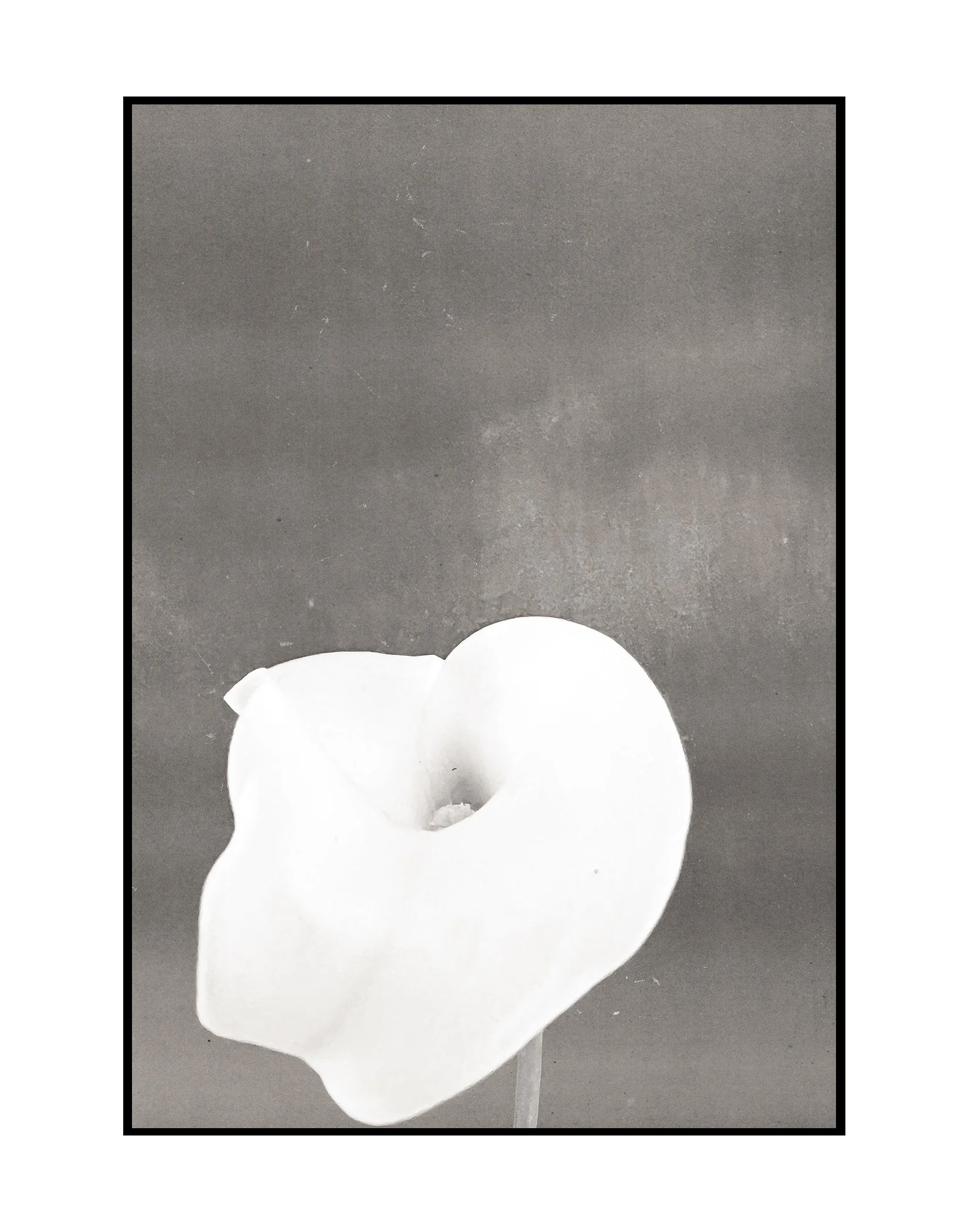
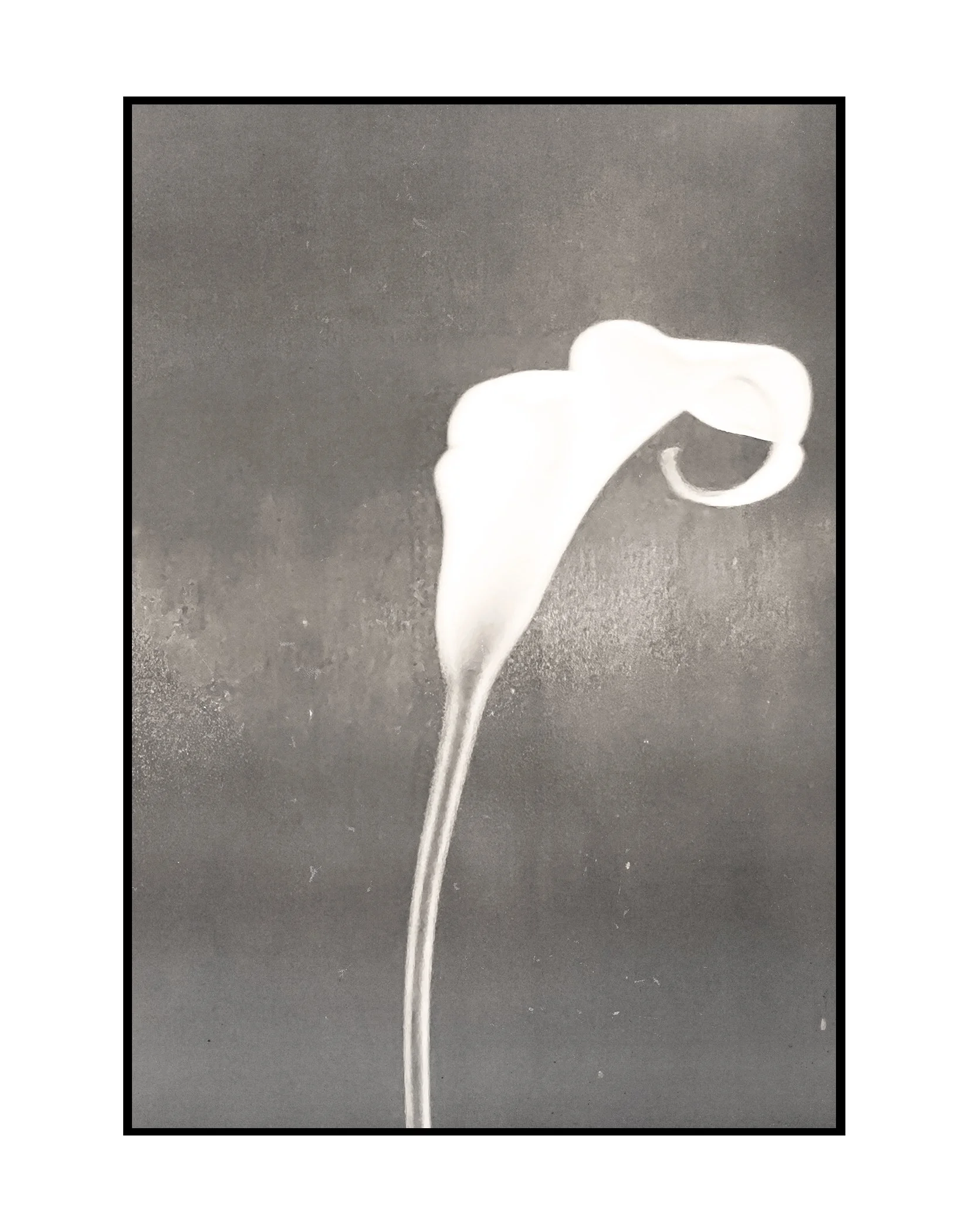
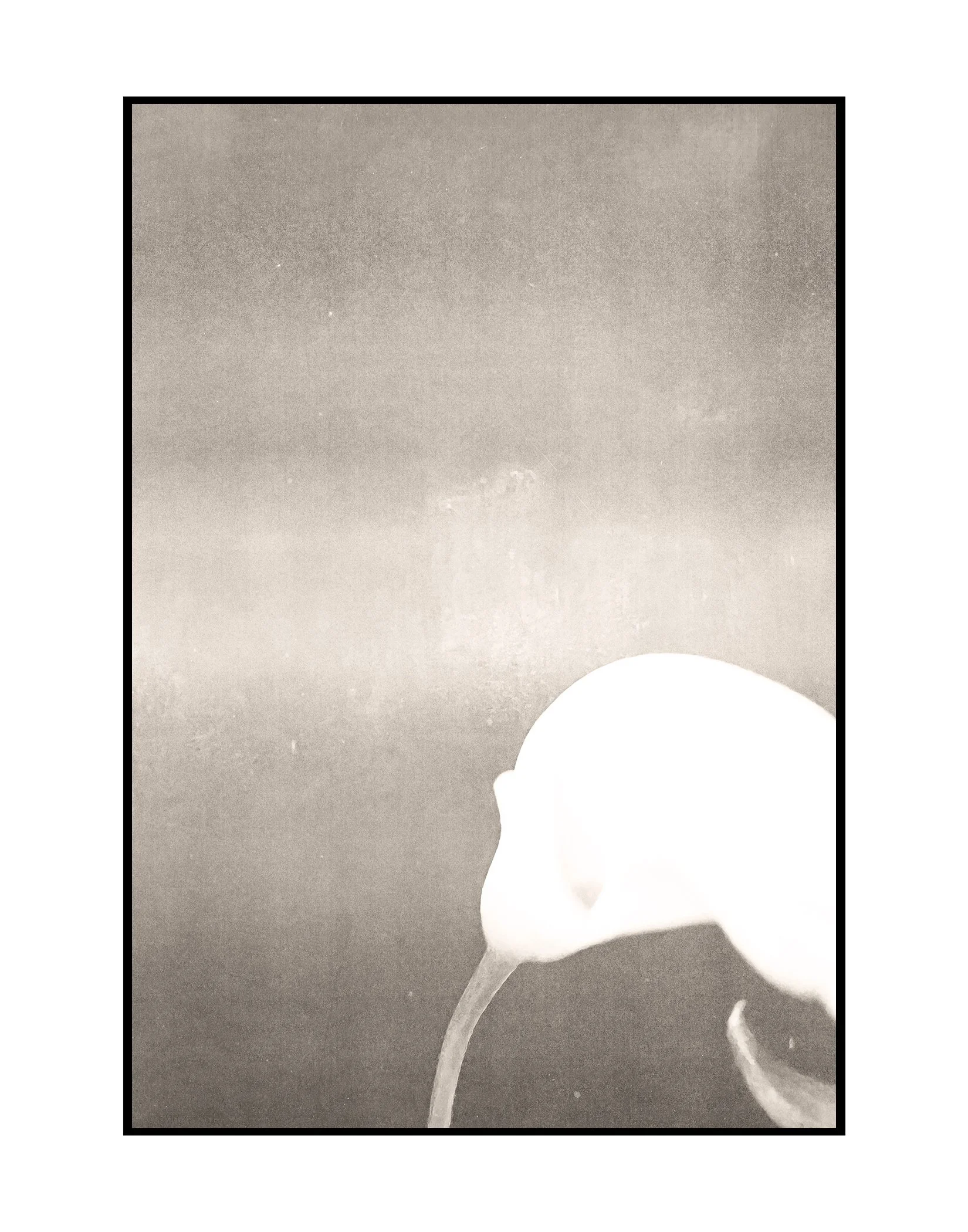
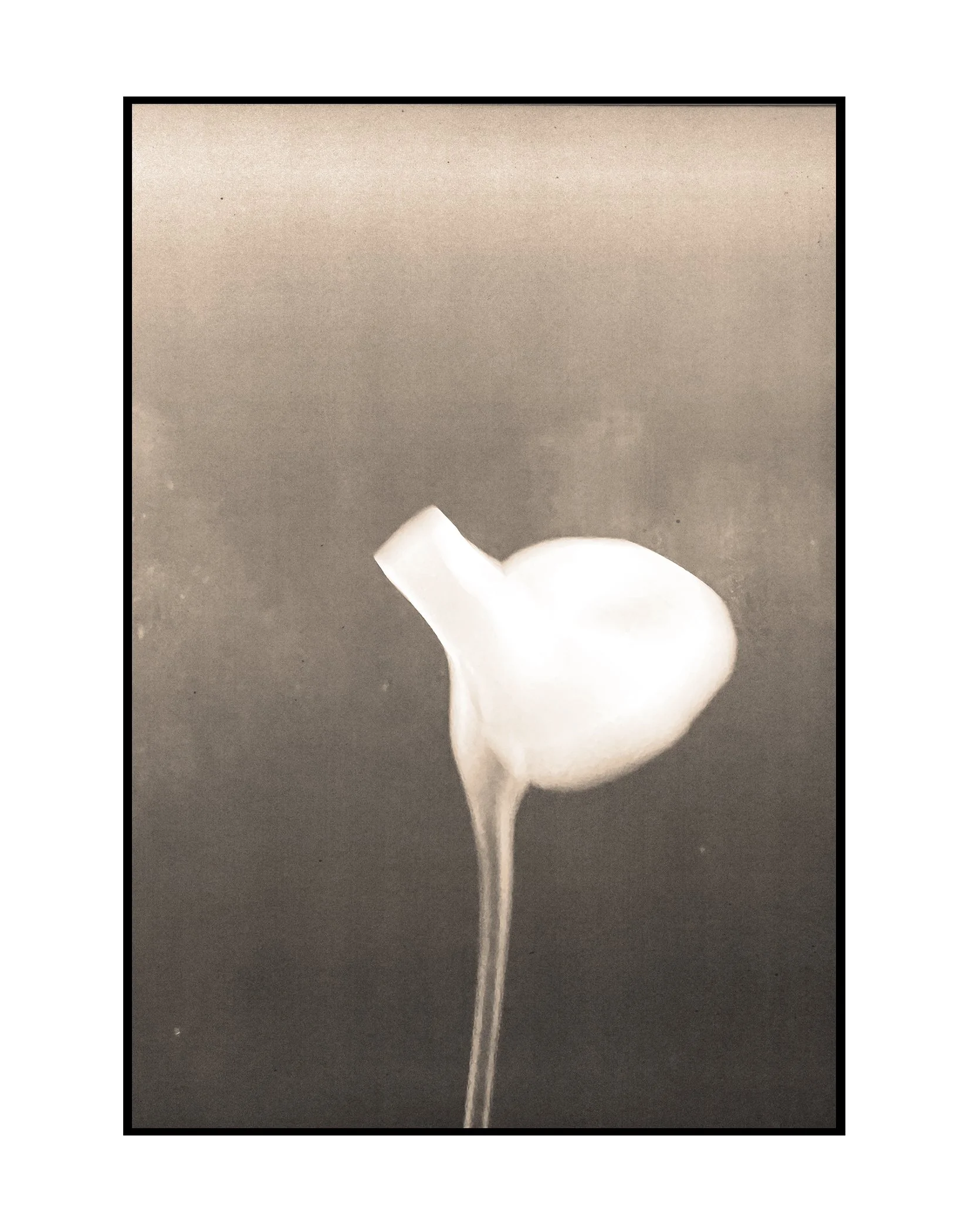
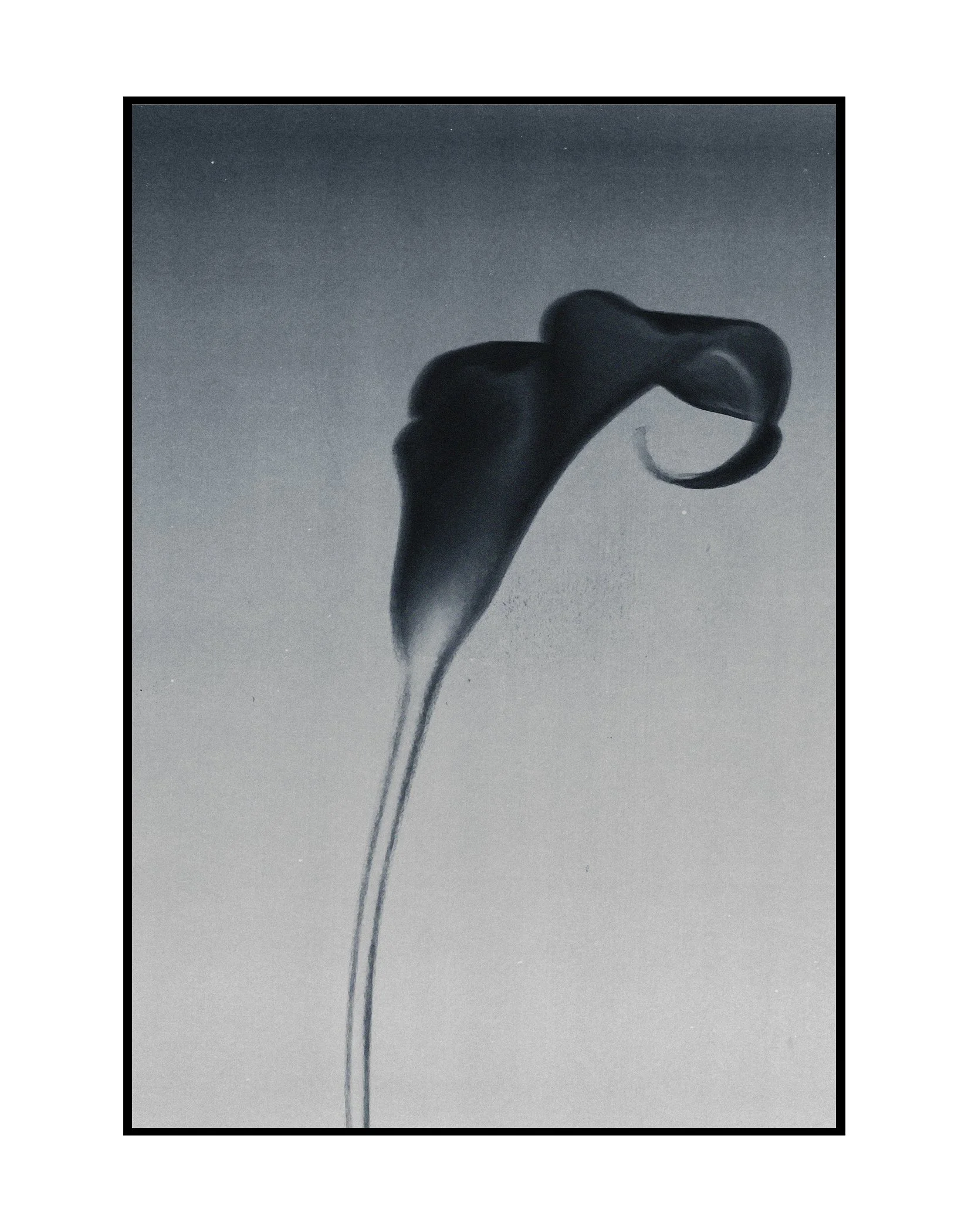
At one point I stopped working and photographed one of the calla lilies. Just a simple portrait. A way to keep the flower immortal for a moment before time inevitably takes it. The photographs below are from that small pause in the day.
What I love most about keeping flowers around is watching them change. Every day the arrangement shifts slightly—blooms opening, stems leaning, petals softening, eventually wilting. It’s a tiny living sculpture that evolves quietly in the corner of the studio.
It’s also a reminder.
Beautiful things are often here for only a short time.
And that’s exactly why we should enjoy them while they’re here.
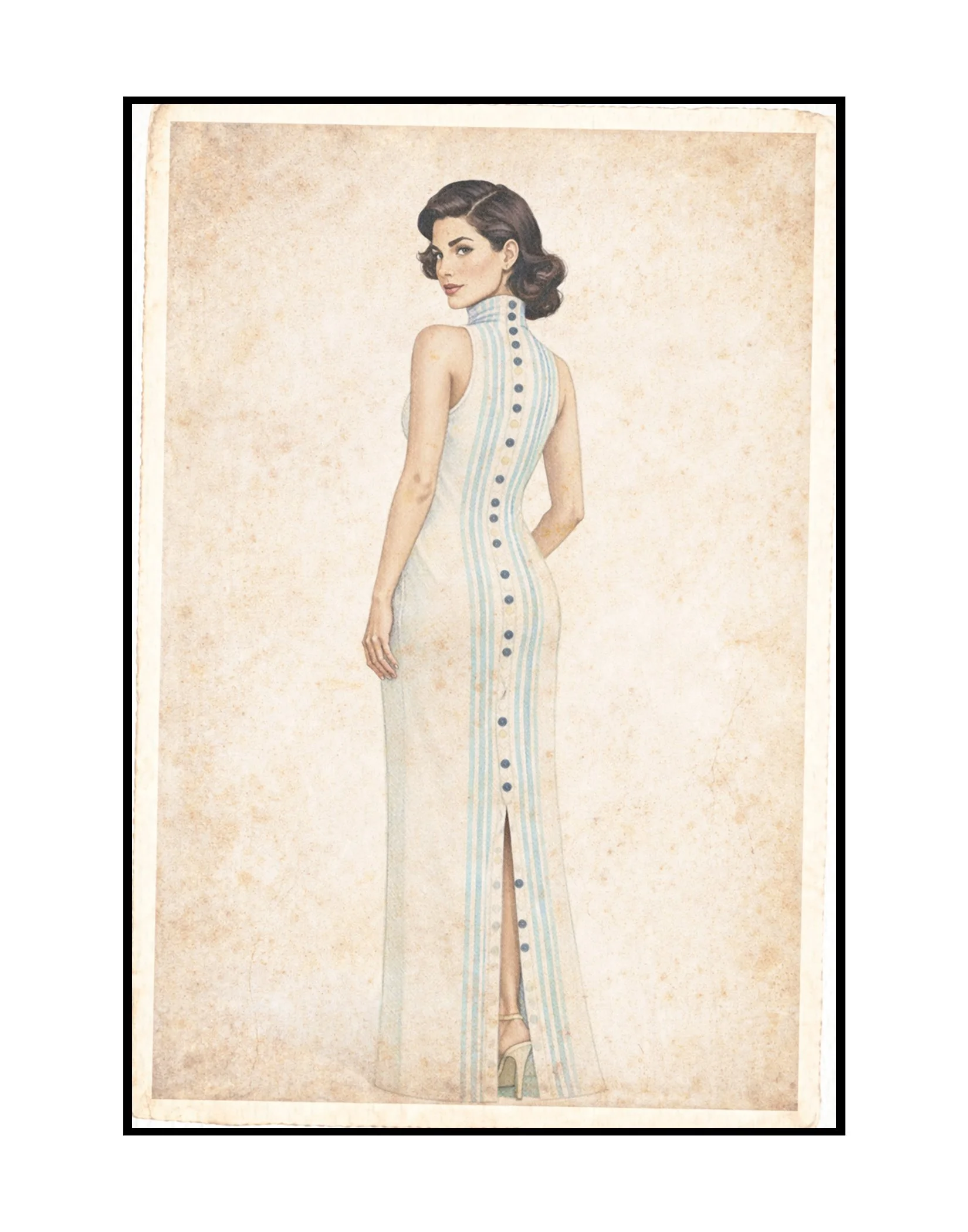
Collection 1 — Look 2
Suddenly I was a child again, watching my family make hundreds and hundreds of cookies for special occasions. Every surface of the house covered—tables, counters, chairs—lined with trays cooling before being packed into tins. Cookie tins collected over decades. Tins passed from hand to hand. Picked up by family. Dropped off at gatherings. Always meant to be shared.
This dress began as a tablecloth.
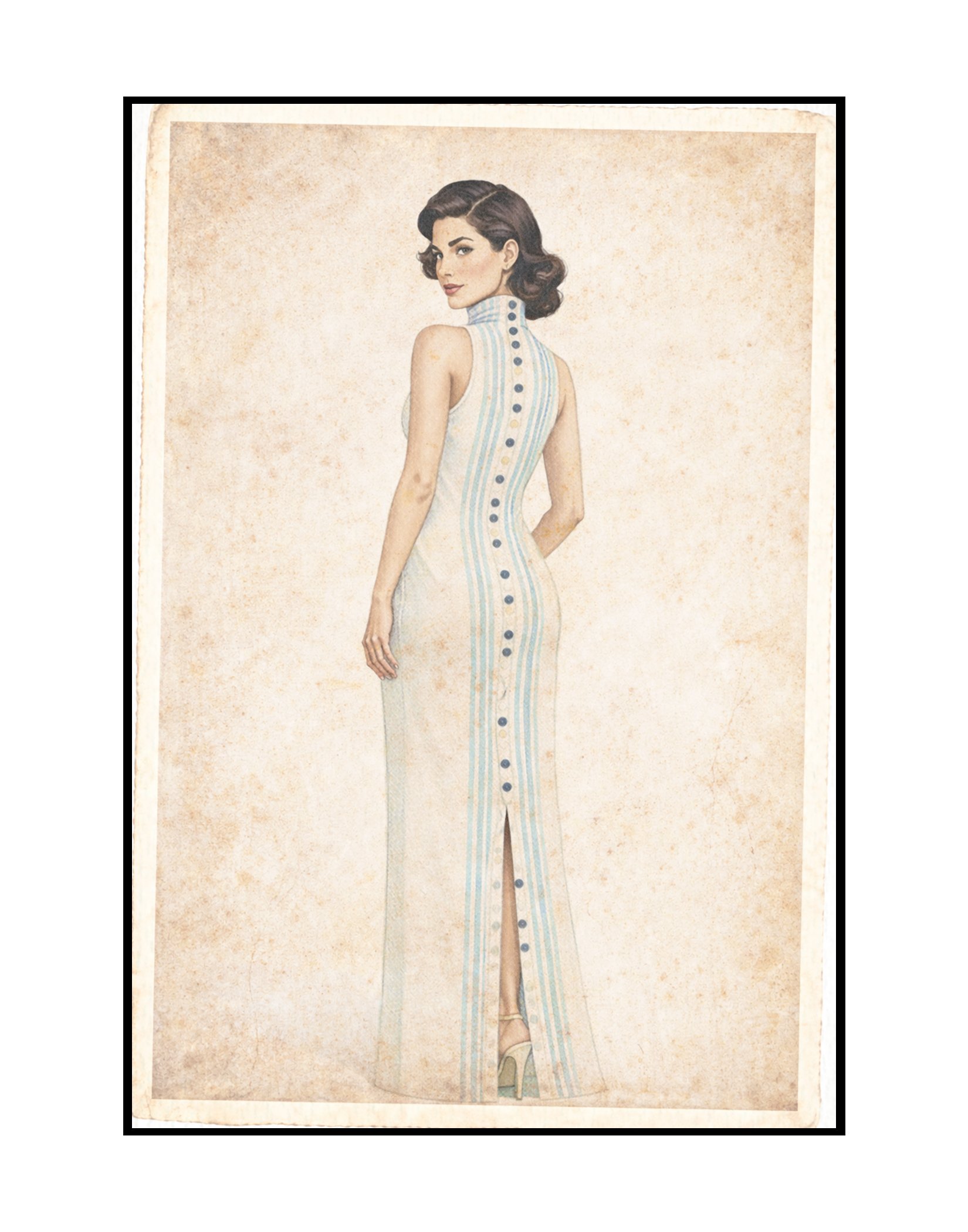
Not a pristine one—one that had lived.
One that had been folded and unfolded, washed and stained, pulled from drawers for holidays and ordinary Sundays alike. A tablecloth that knew hands, heat, crumbs, and time.
When I reinterpreted it into a maxi dress with a turtleneck, I wanted to keep all of that history intact. The marks stayed. The wear stayed. The fabric wasn’t cleaned of its past—it was elevated by it.
As I steamed the dress for the first time, something unexpected happened.
The smell came back.
Steam mixed with almond paste, flour, powdered sugar. That unmistakable scent of Italian cookies—especially the S cookies—cooling on the table, fresh from the oven. Clean fabric and warm sugar layered together. It stopped me in my tracks.
Suddenly I was a child again, watching my family make hundreds and hundreds of cookies for special occasions. Every surface of the house covered—tables, counters, chairs—lined with trays cooling before being packed into tins. Cookie tins collected over decades. Tins passed from hand to hand. Picked up by family. Dropped off at gatherings. Always meant to be shared.
What stayed with me most wasn’t just the smell, but the process.
The repetition.
The patience.
The quiet perfection of doing something the exact same way generation after generation.
The recipes were written on distressed, handwritten note cards—soft at the corners from years of use. The proportions were never small. No recipe ever made just a dozen cookies. Everything was measured for abundance. Enough for everyone. Enough so you could still sneak a few straight off the tray while they were cooling.
That’s what this dress represents to me.
Generations of shared knowledge.
Love passed through hands.
Practice, patience, and care repeated until it becomes instinct.
I attached my collection of buttons—ones I’ve been gathering for nearly fifteen years—like a timeline running down the back. Each button different. Each one chosen. Each one holding its own quiet history.
This garment was hand sewn slowly, deliberately, with the same kind of attention I watched growing up in kitchens filled with heat and laughter and flour-dusted hands.
Even without an abundance of material things, there is always an abundance of love.
And when love is practiced—over and over again—it becomes something you can feel, wear, and share.
This is Collection 1, Look 2.
A dress made from memory.
A dress made to hold generations.
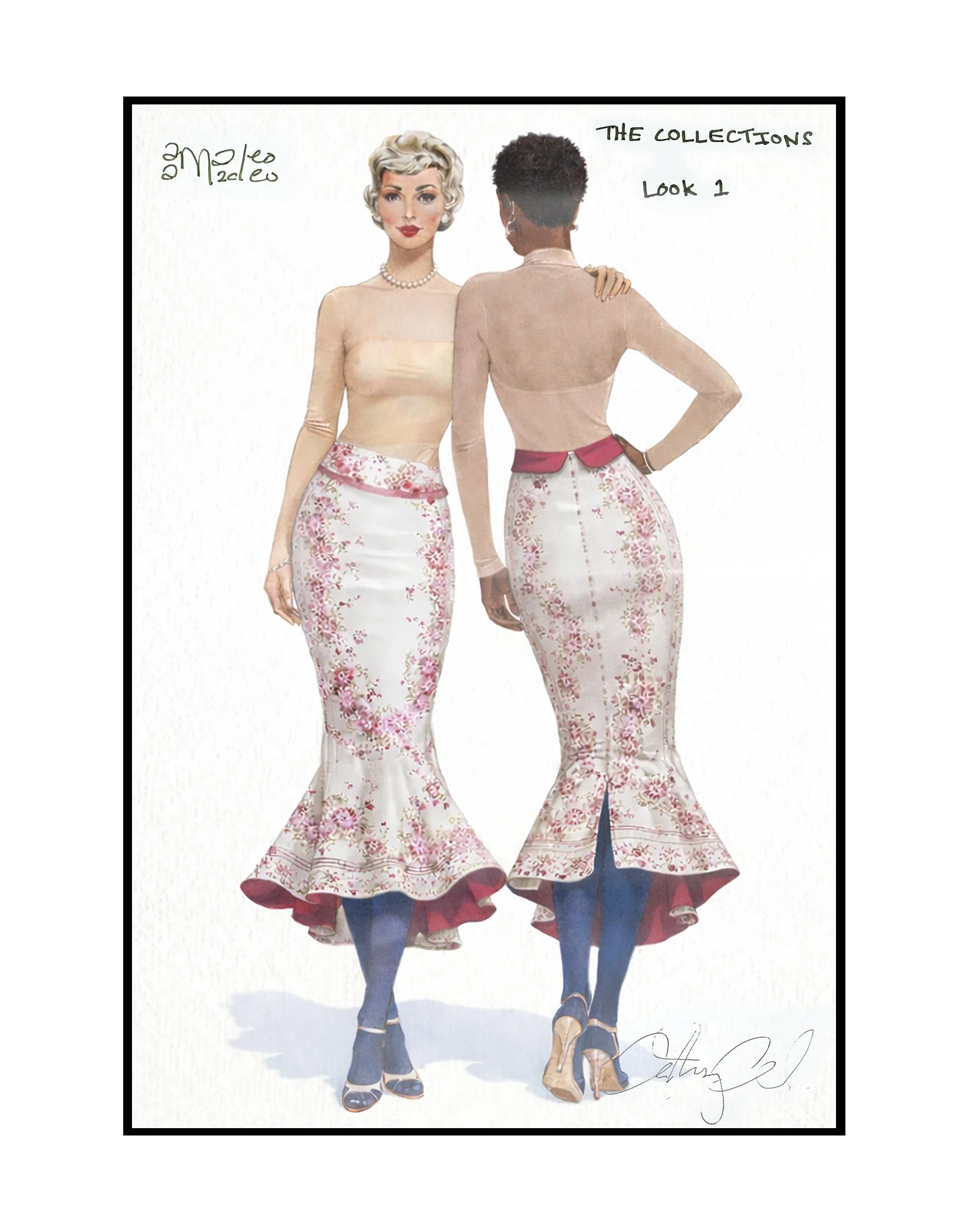
Collection 1: Chiddu ca tinemu
Collection 1, Chiddu ca tinemu, has existed long before it had a name—long before it had an image, a look number, or a reason to be introduced. It lived first in memory, in gesture, in domestic spaces that shaped the way glamour was understood before it was ever worn.
Collection 1: Chiddu ca tinemu
Some collections arrive loudly.
This one has been waiting.
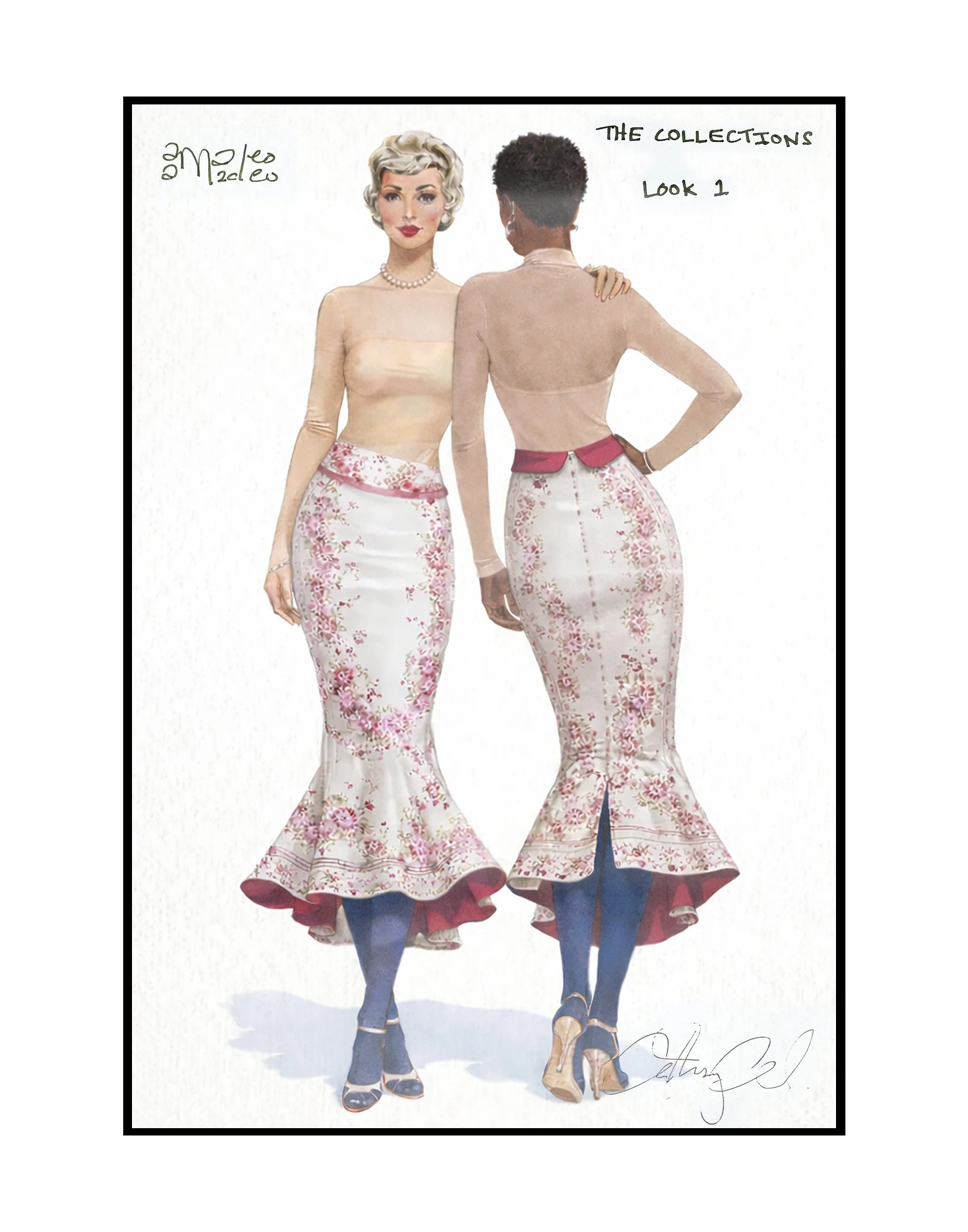
Collection 1, Chiddu ca tinemu, has existed long before it had a name—long before it had an image, a look number, or a reason to be introduced. It lived first in memory, in gesture, in domestic spaces that shaped the way glamour was understood before it was ever worn.
Look 1 is the quiet beginning. Or rather, the moment when something already in motion allows itself to be seen.
The skirt—hand-sewn, intuitively patterned, repurposed from a vintage tablecloth—is the sole focus of this introduction. There is no distraction. No styling spectacle. Just the garment…
This collection is rooted in youth—not nostalgia, but aspiration. The kind that forms early, quietly, while sitting at kitchen tables and listening more than speaking. Watching great aunts and uncles move through their routines. Observing how they spoke about the future. How they made beauty out of what they had. How suburban life, when lived fully, could feel cinematic.
There was glamour there. Not imported, not purchased—constructed. Set hair, pressed linens, lipstick before errands. Domestic rituals elevated through care and intention. These women did not wait for a bigger life to arrive. They built one where they stood.
Chiddu ca tinemu is about that inheritance.
Every piece in the collection is made from repurposed domestic textiles—tablecloths, bed linens, table runners, lace, and unexpected household relics that carry history in their weave. These materials once lived in private spaces. Now they are reinterpreted into silhouettes that suggest women who are self-possessed, aspirational, and quietly commanding. Women who understand that intimacy and ambition are not opposites.
The garments are entirely hand sewn. The patterns arrived intuitively, guided by repetition, touch, and trust rather than rigid structure. Seams are visible. Decisions remain present. The hand is not erased. This is not about perfection—it is about presence.
As the collection unfolds, it will appear slowly, deliberately—through press, editorials, and continued documentation. Each reveal is meant to feel earned, not consumed.
This first look is not a statement.
It is a signal.
A reminder that glamour can live inside domesticity.
That heritage can be worn forward.
That aspiration often begins by watching the women who came before you and deciding, quietly, to go further.
Collection 1: Chiddu ca tinemu has been waiting.
Now, it begins to speak.
—
Closely tied to this collection is amadeo amadeo fragrance No. 37 — ECLOGUE, a scent drawn from the same domestic landscapes and private rituals. It will be stocked soon.
This is not the full picture.
It’s an opening.
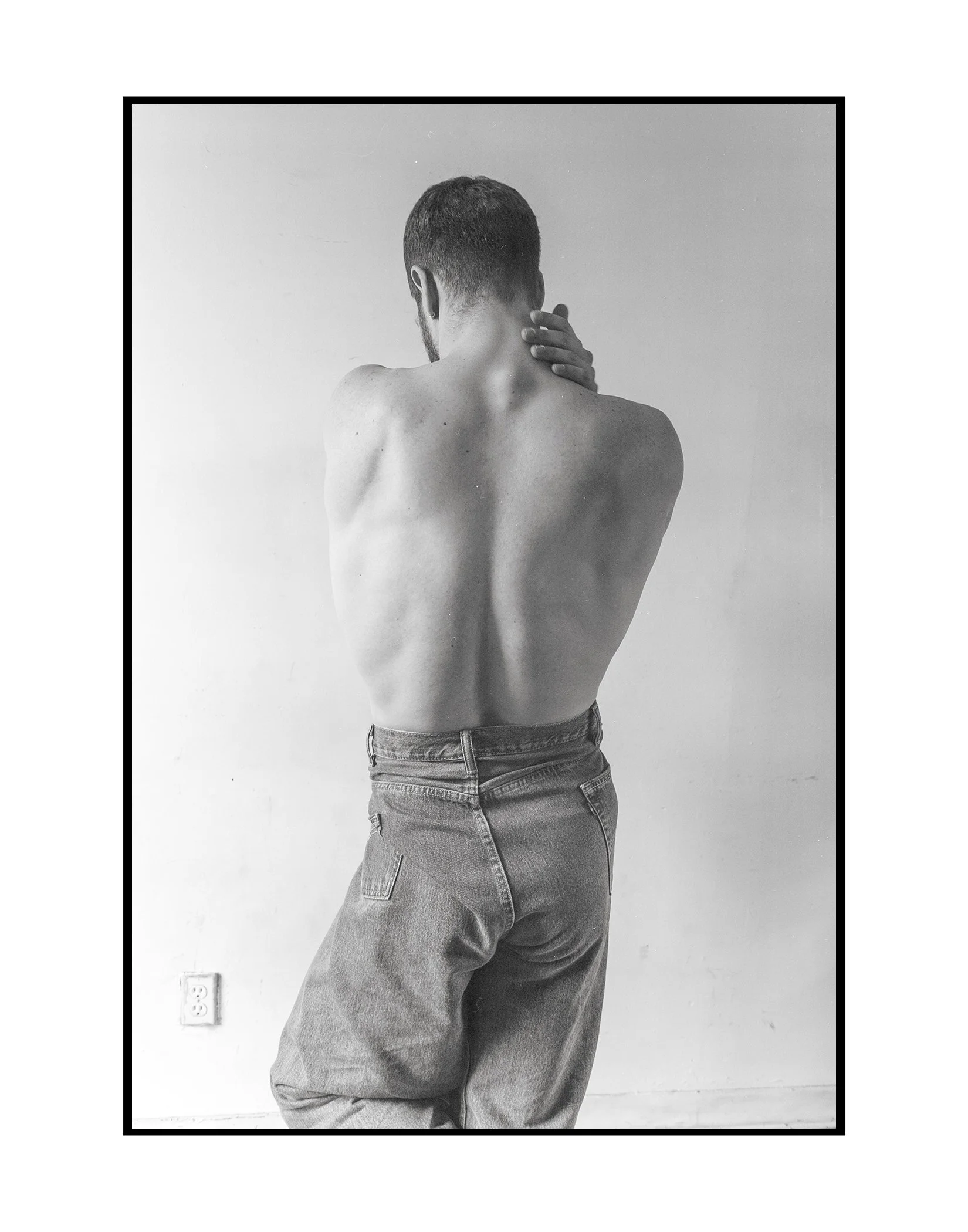
Doug, Giant Denim, and an Impossible Puzzle
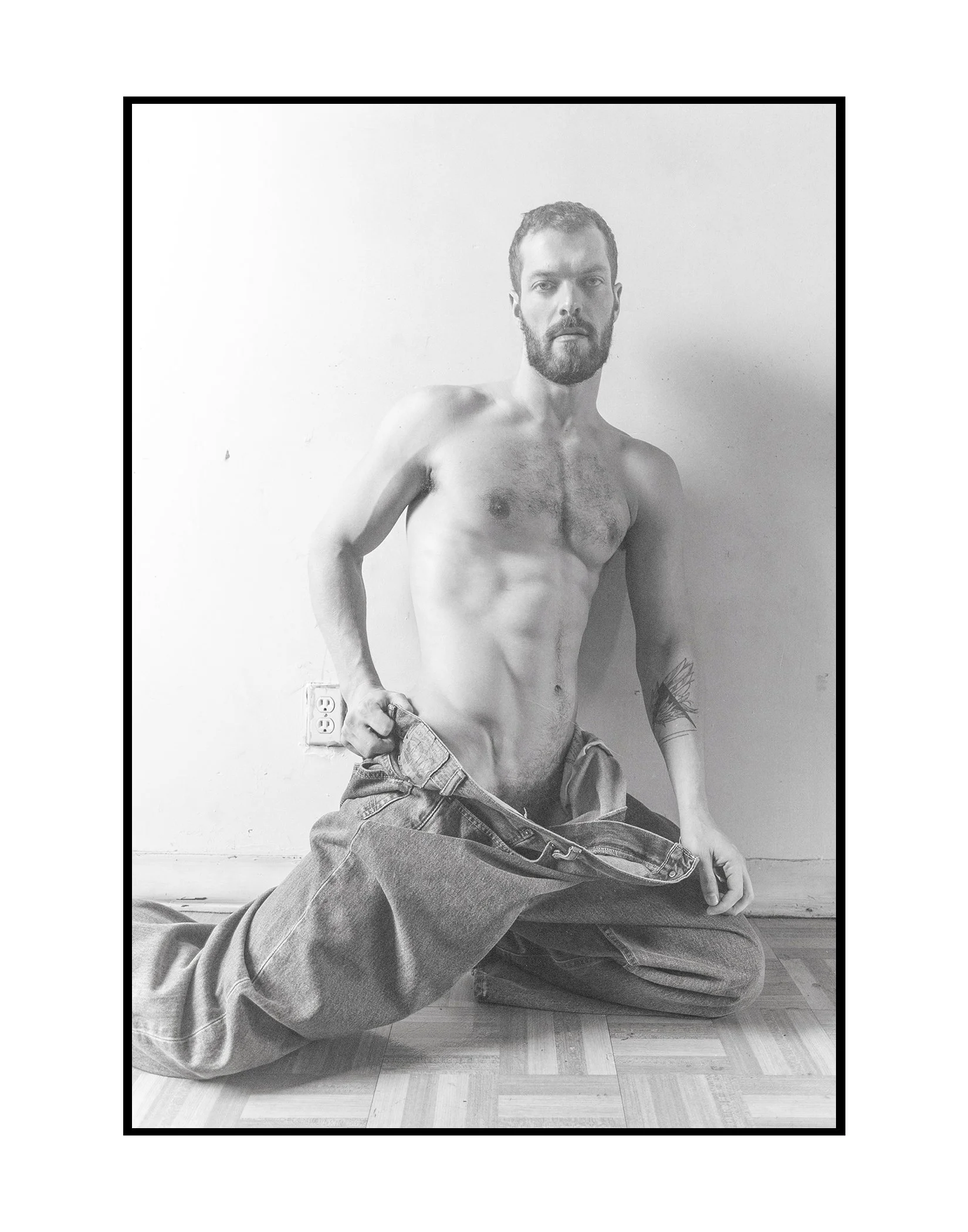
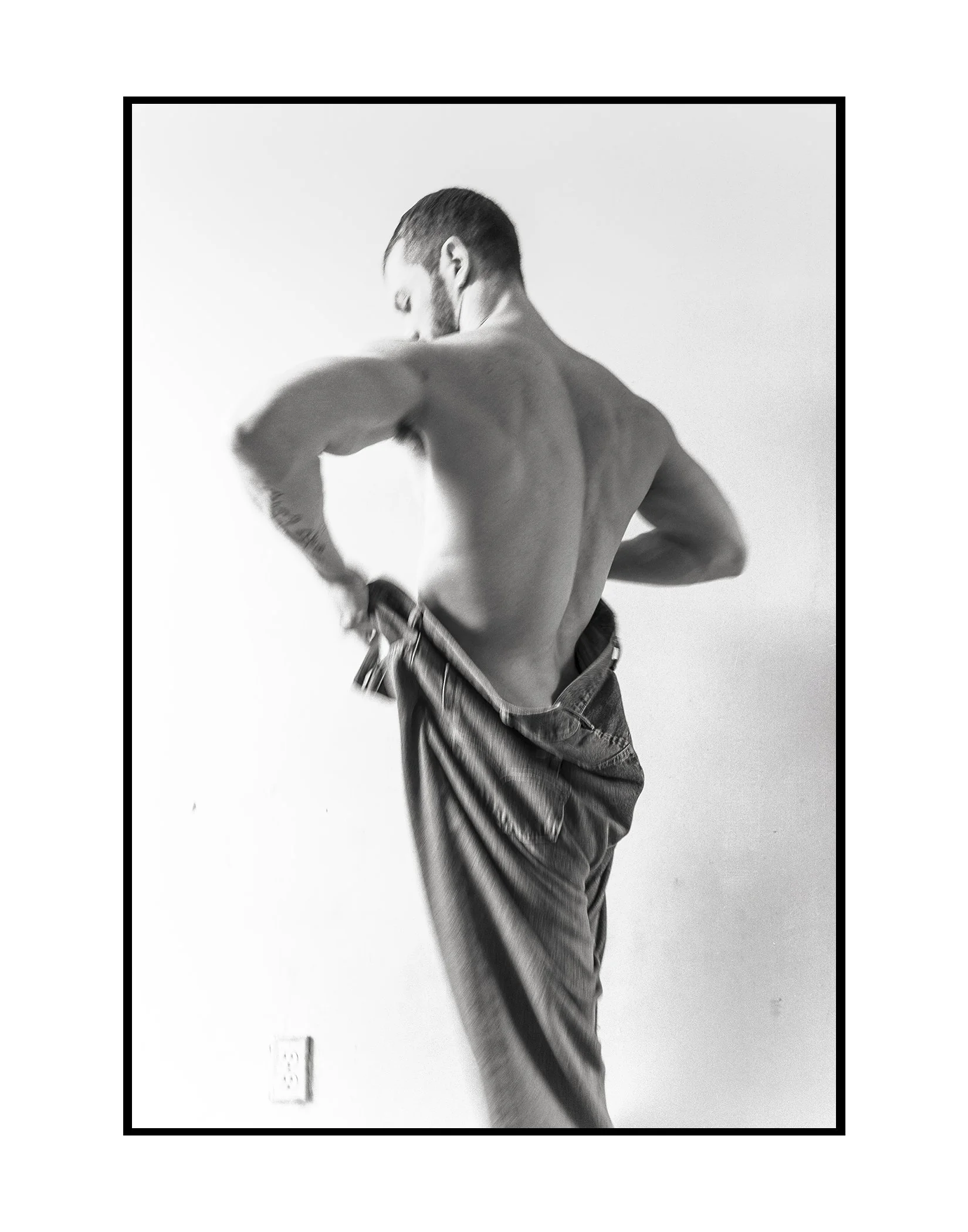
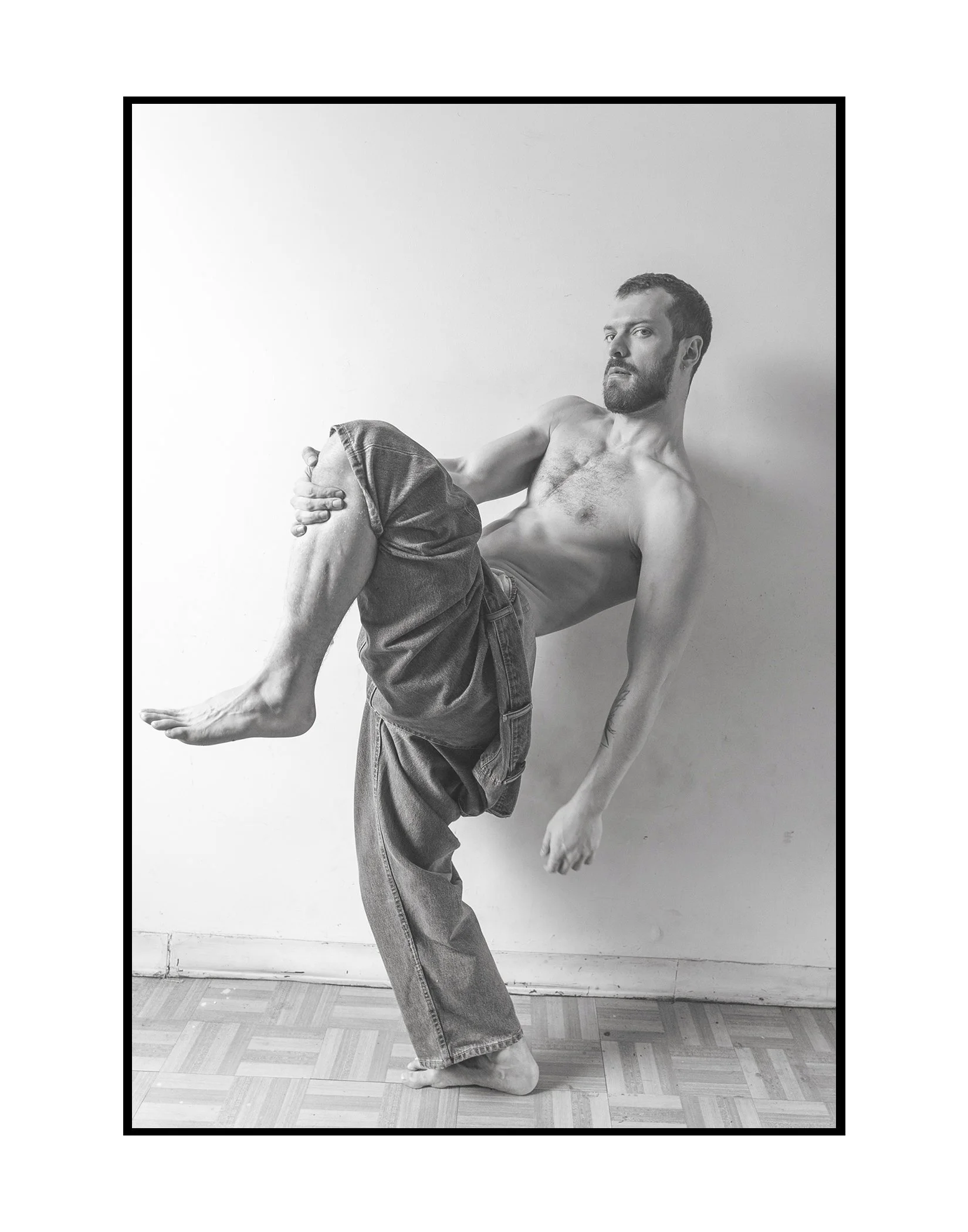
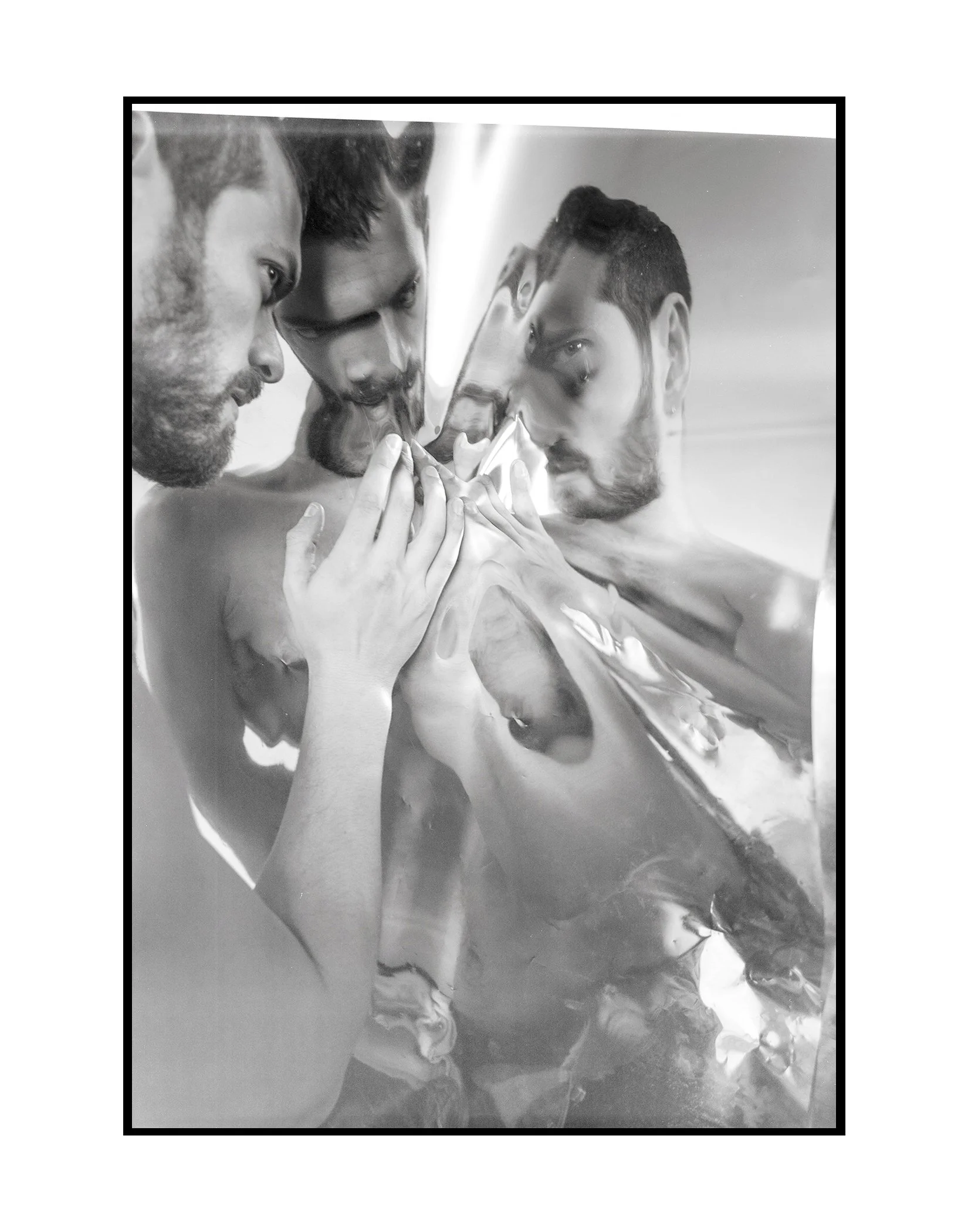
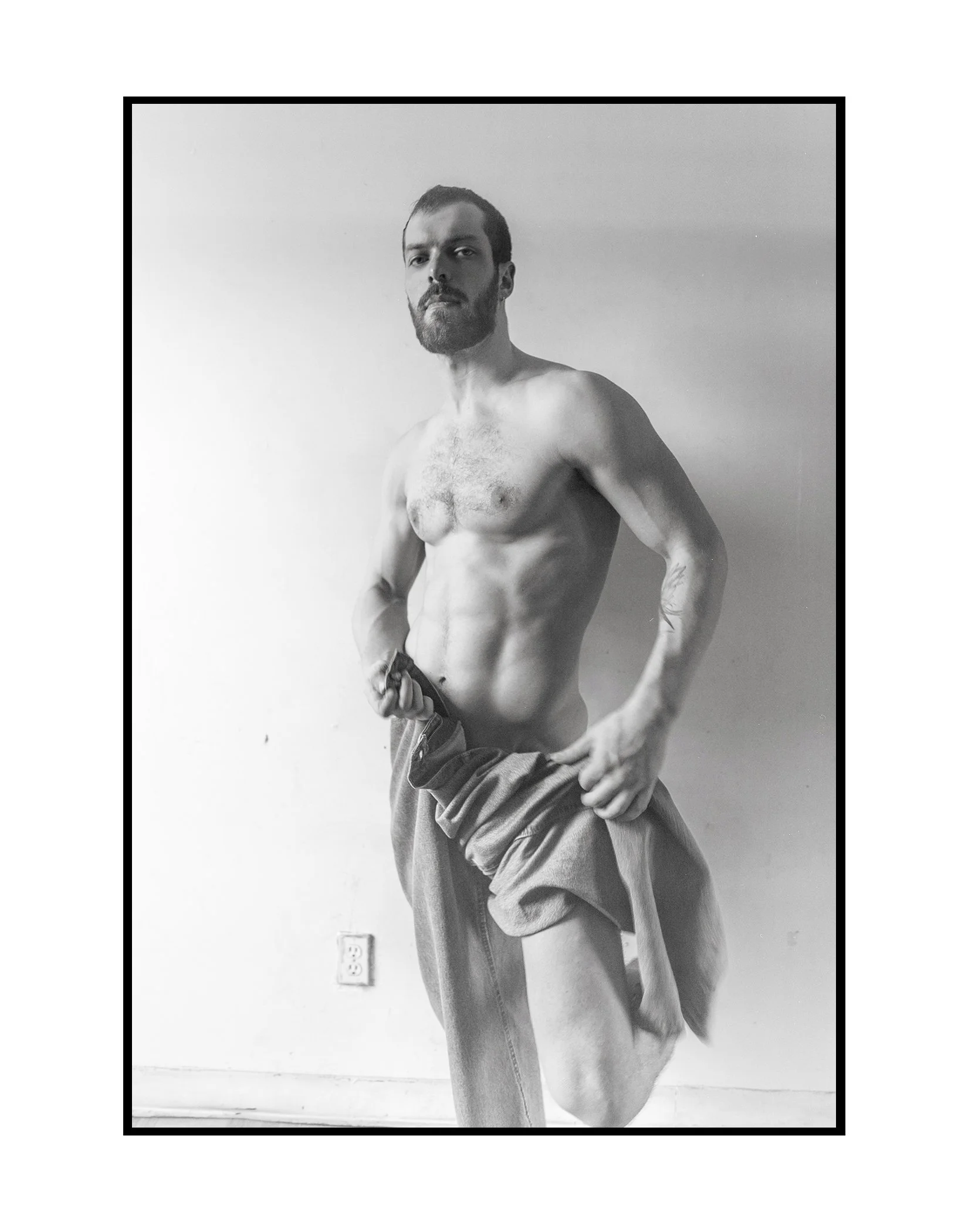
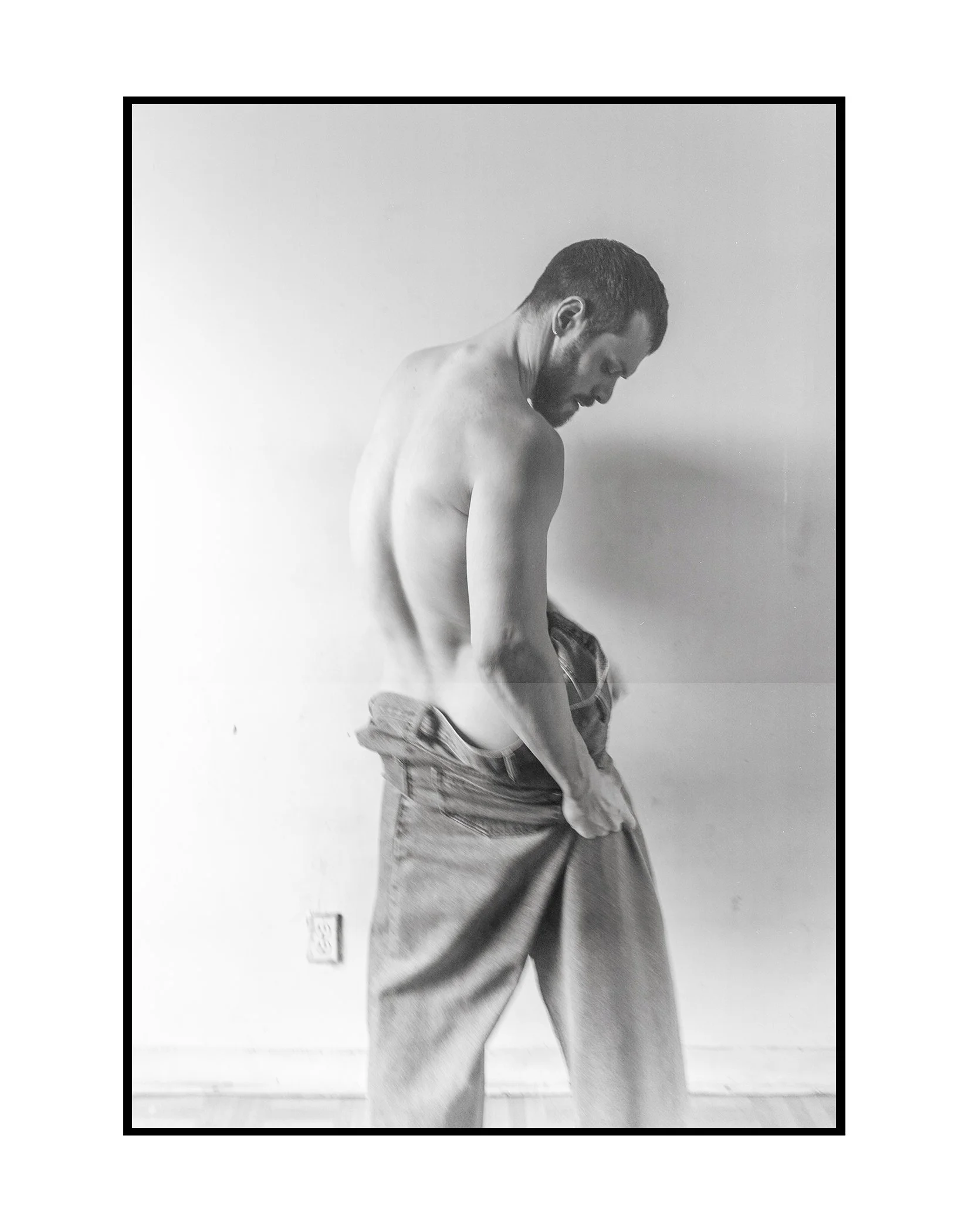
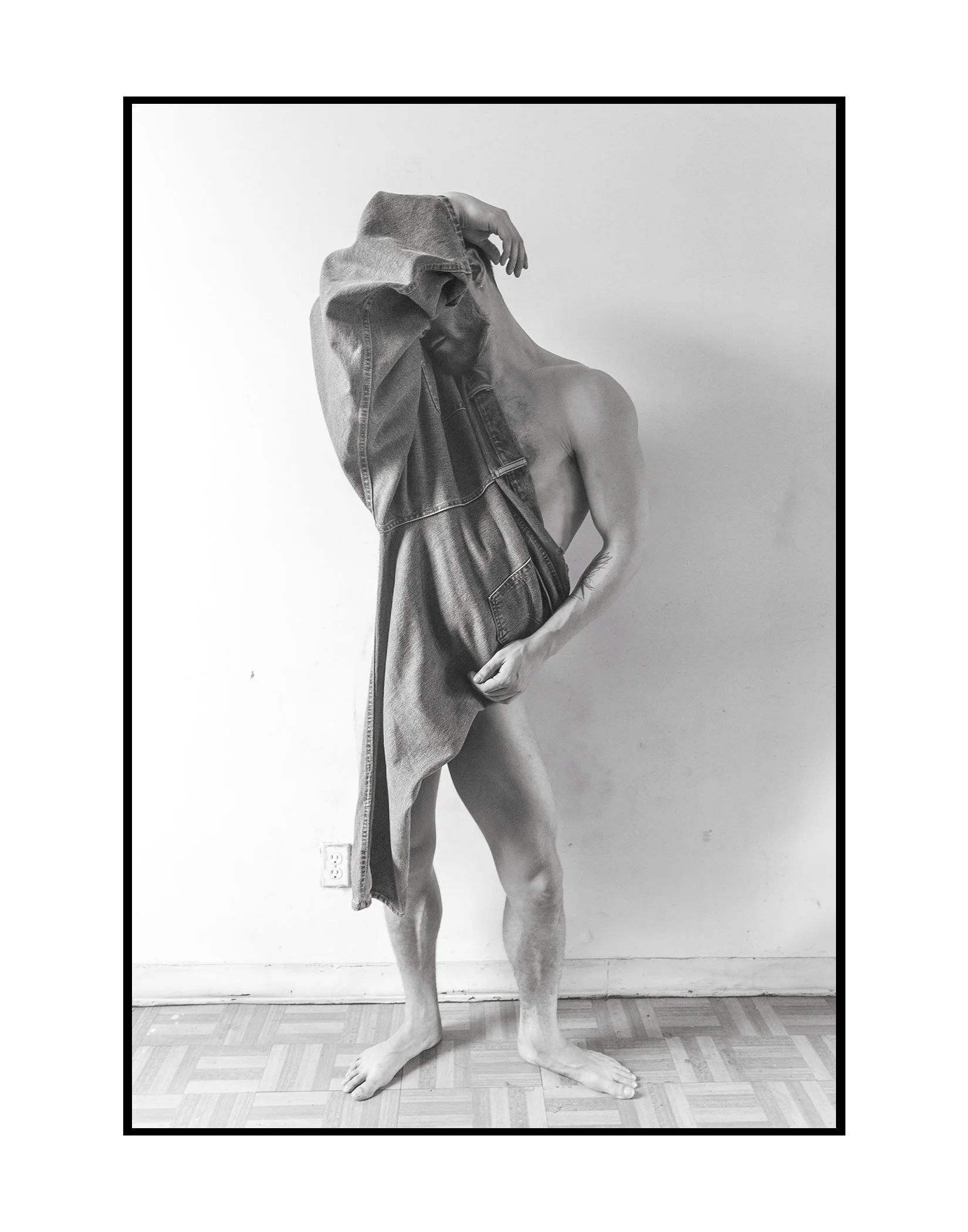
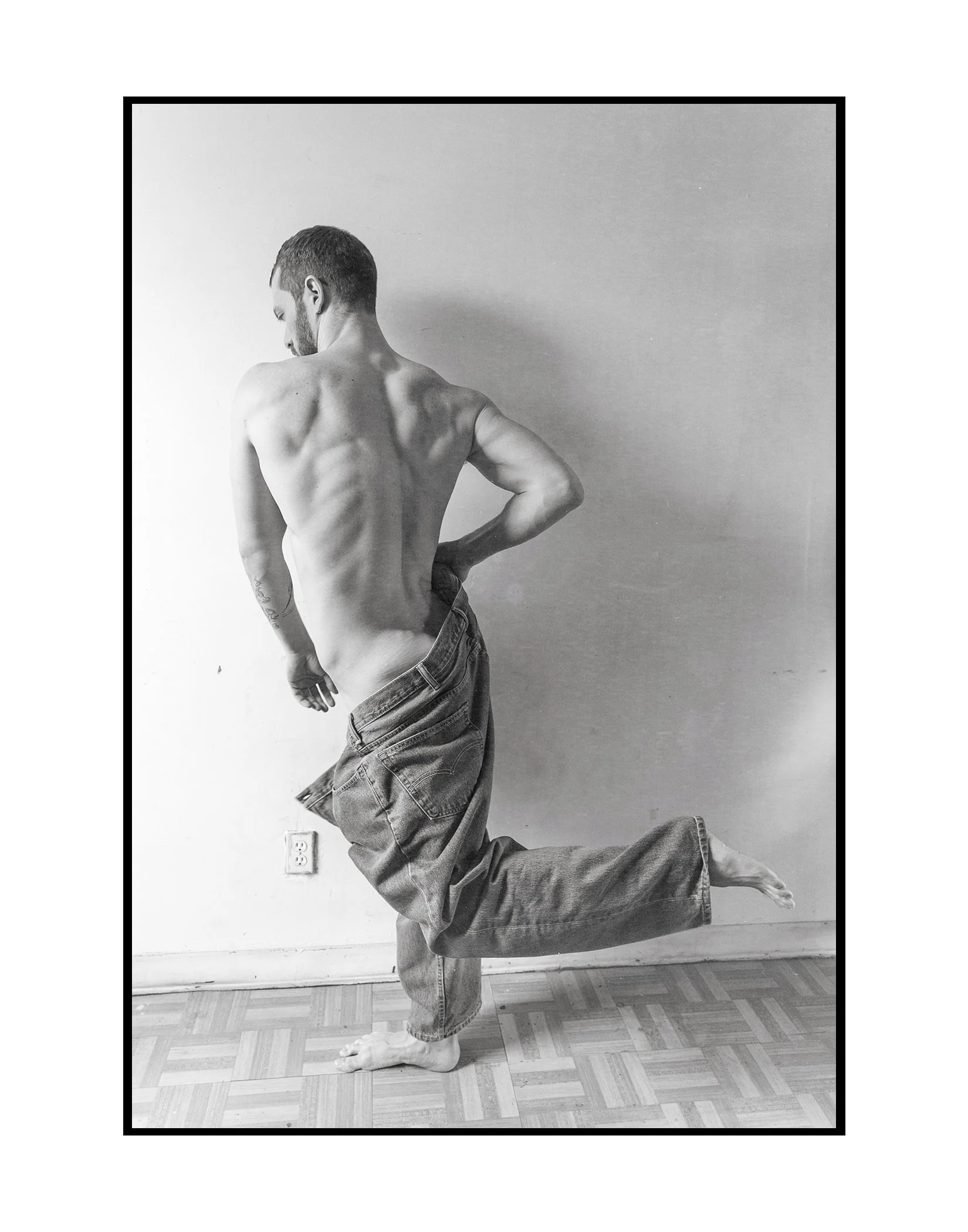
Today I photographed Doug, and the shoot unfolded exactly how you hope these days unfold—focused, fluid, and generous.
Doug, Giant Denim, and an Impossible Puzzle
Today I photographed Doug, and the shoot unfolded exactly how you hope these days unfold—focused, fluid, and generous.
Doug is a dancer, and you feel that immediately in front of the camera. There’s an innate understanding of movement, pause, and shape that can’t be taught. In the giant denim, his body did what it needed to do—stretching fabric, finding negative space, creating moments that feel both controlled and accidental. The kind of presence that makes the work better without trying to.
I was able to get deep into editing and retouching right after the shoot, which felt like continuing the conversation rather than closing it. What you see here are some of the images so far—fragments of a larger body of work that keeps evolving with each person who steps into the denim.
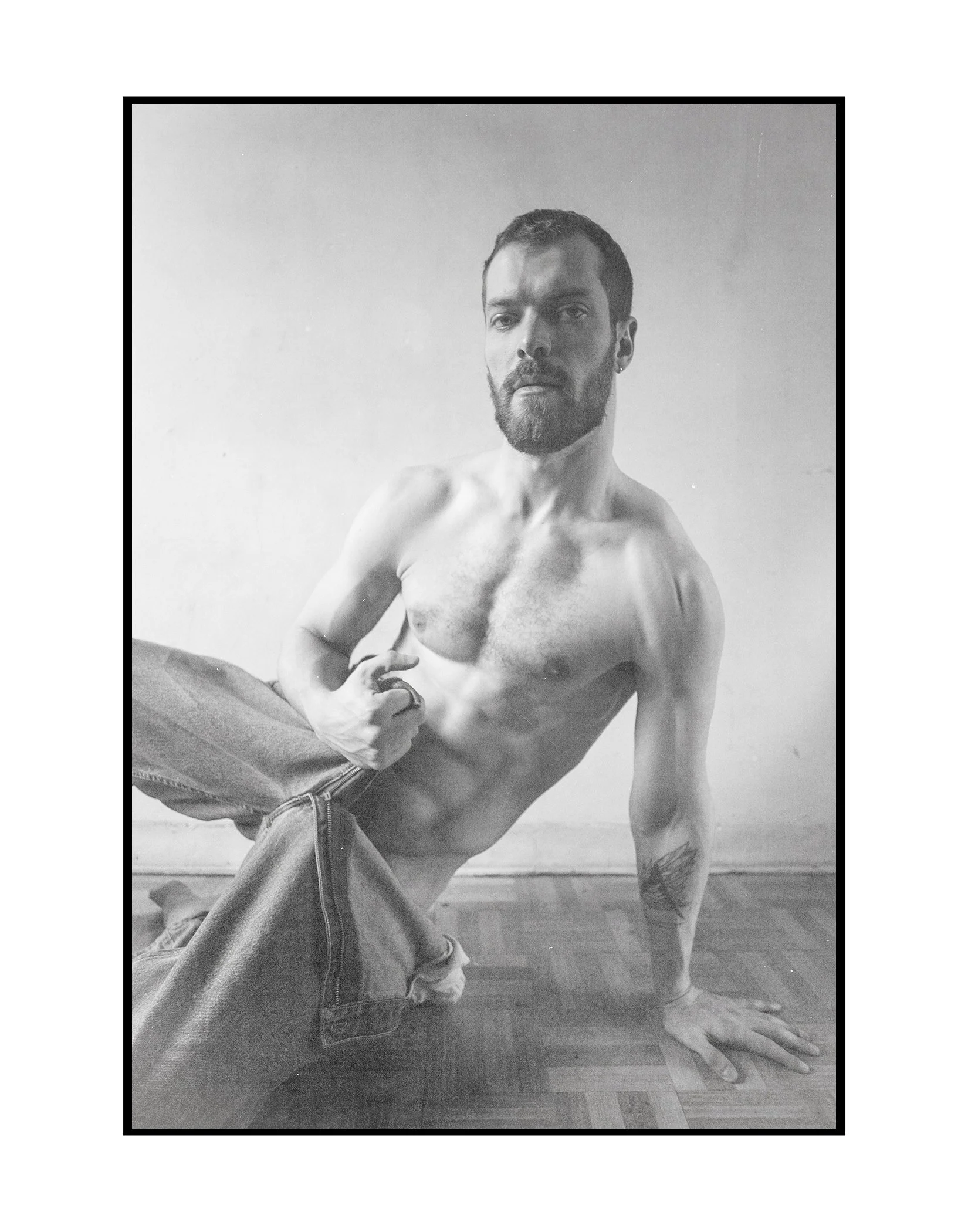
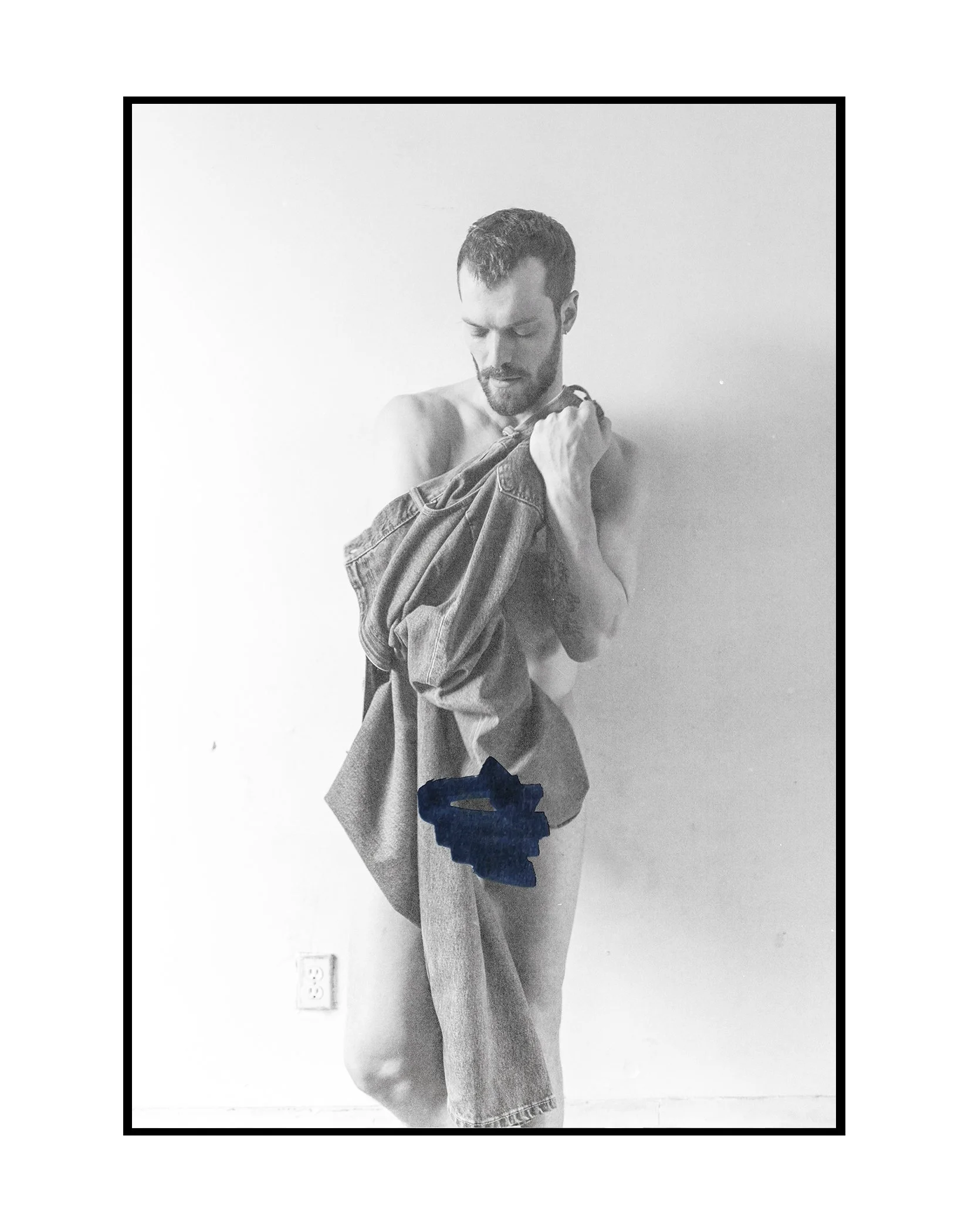
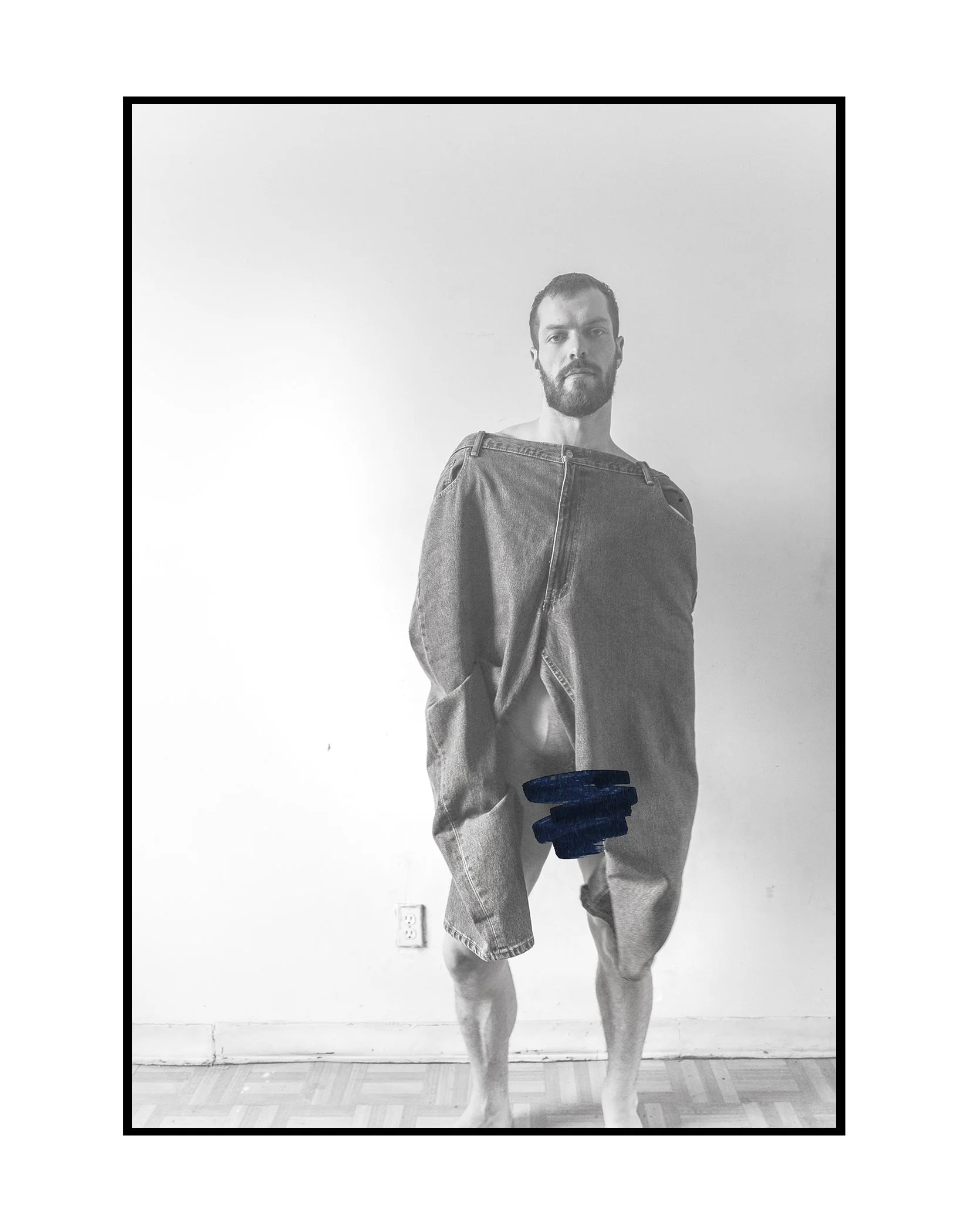
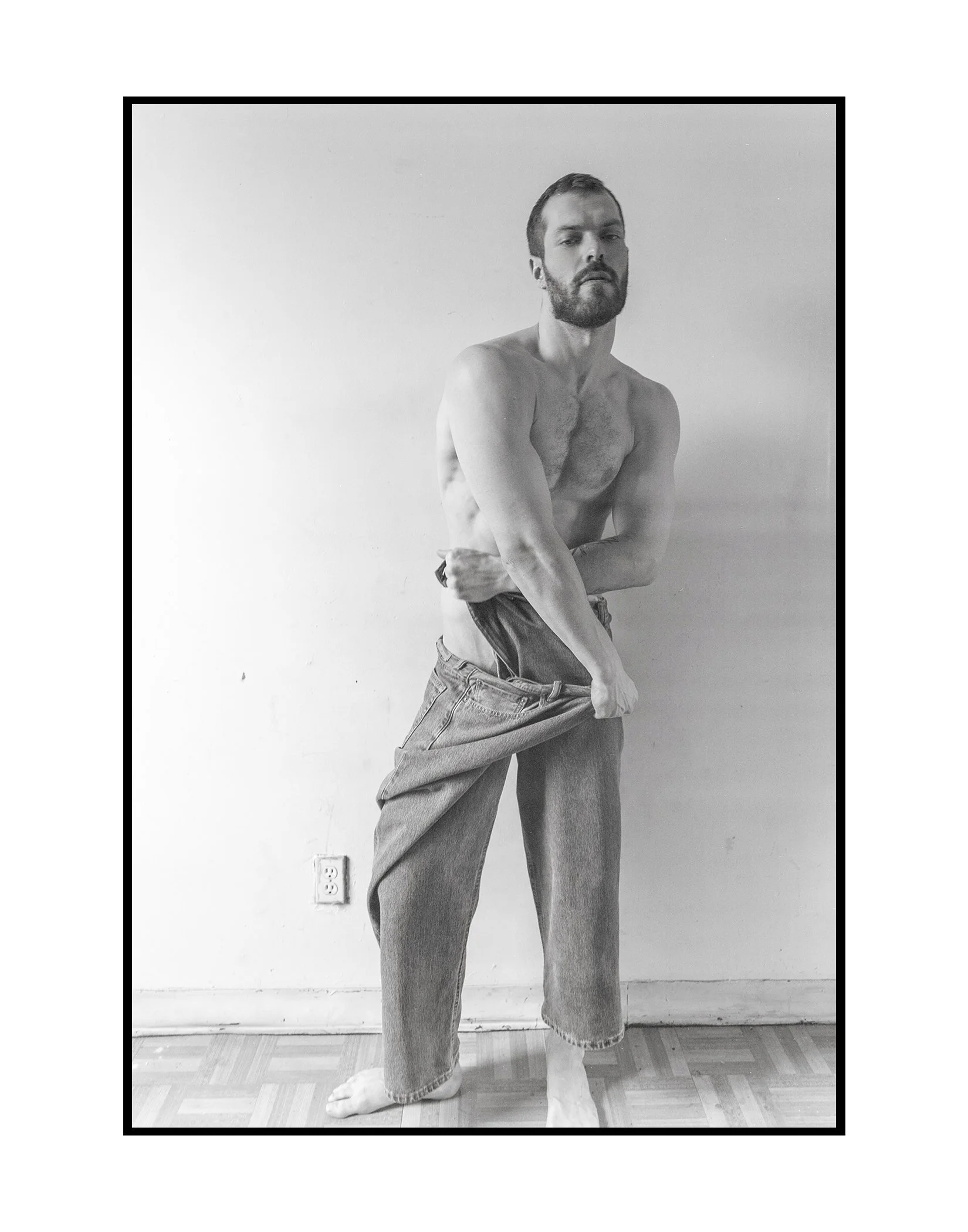
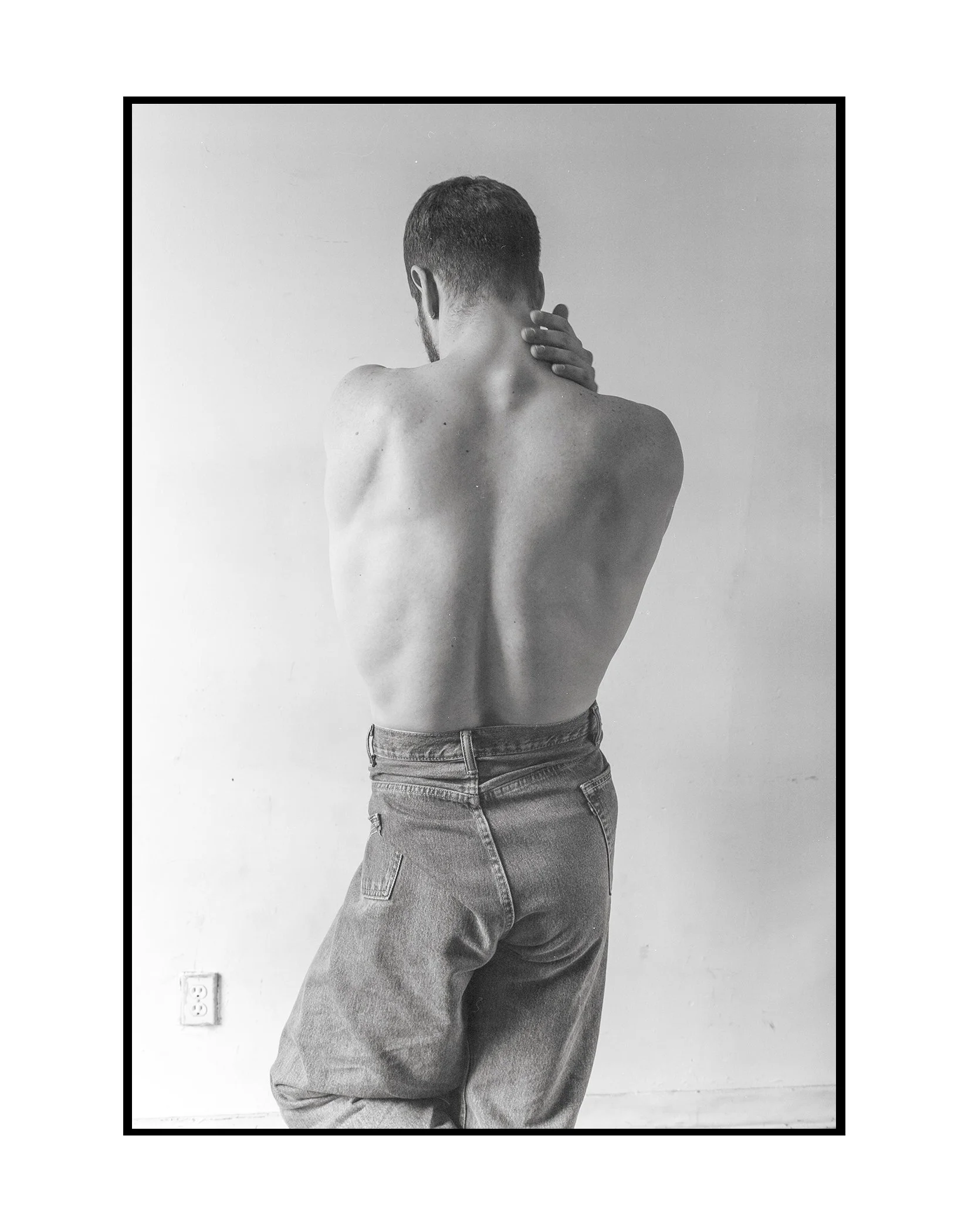
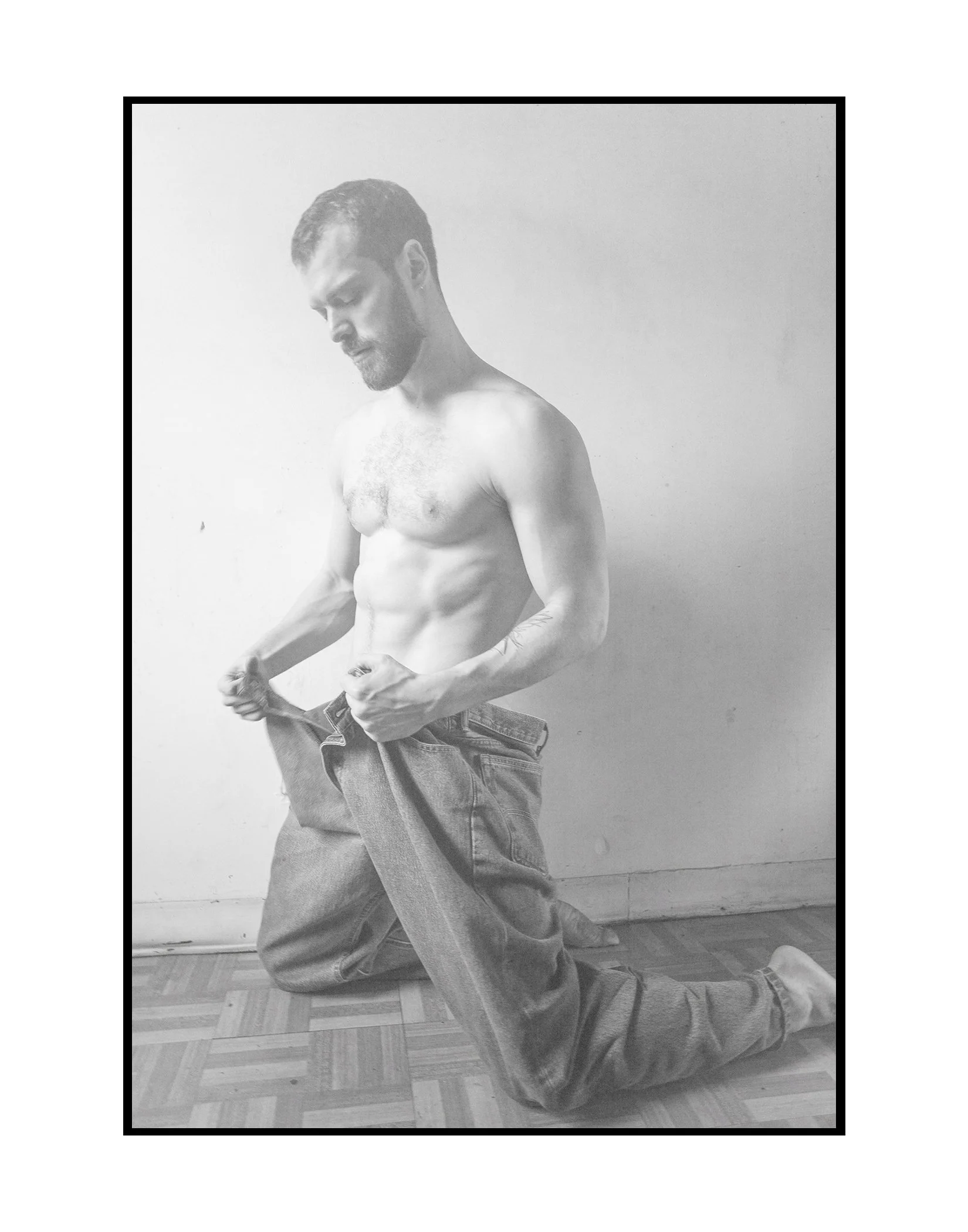
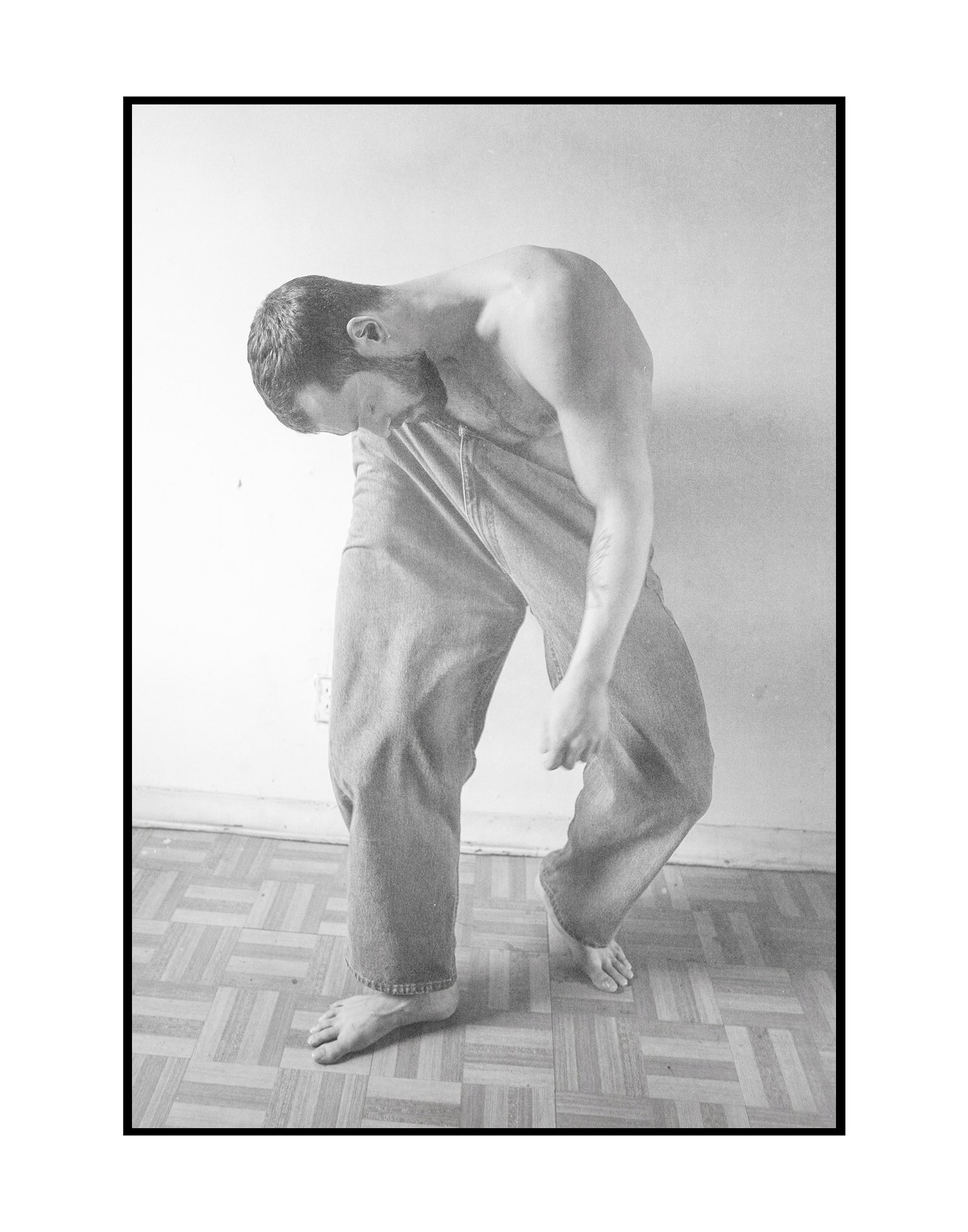
You can see more from this shoot (and what’s coming next) on my Instagram:
@aanthonyamadeo
And follow Doug’s work here:
@douglasburkhardt
Somewhere between exporting files and living with the images for a bit, I also made a new Impossible Puzzle.
The Impossible Puzzles are 1,000-piece puzzles made from my portraits. They’re “impossible” not because they can’t be finished—but because the white backdrops create long stretches of ambiguity. Large fields of almost-nothing. You’re forced to slow down, to look harder, to trust subtle shifts in tone and texture. It’s frustrating in the best way, and incredibly satisfying when it finally comes together.
This new puzzle comes from the Giant Denim series—and yes, it’s as challenging as it sounds.
The puzzle is available now.
I dare you to try.
— Anthony

Samuel by Anthony Amadeo
This series was created with Samuel, signed to The Lions.
Photographing him was effortless—he carries a quiet strength and elegance that immediately translated into something sculptural.
This series was created with Samuel, signed to The Lions.
Photographing him was effortless—he carries a quiet strength and elegance that immediately translated into something sculptural.
After the shoot, I turned the images into a set of analog collages. I love the process of cutting, layering, and reconfiguring—turning one image into two, and two into one. These pieces became about reflection, duality, and energy. Samuel’s presence—calm yet powerful—made the work come alive.
There’s something about collage that always feels like movement captured mid-thought. It’s part instinct, part accident, and all rhythm.
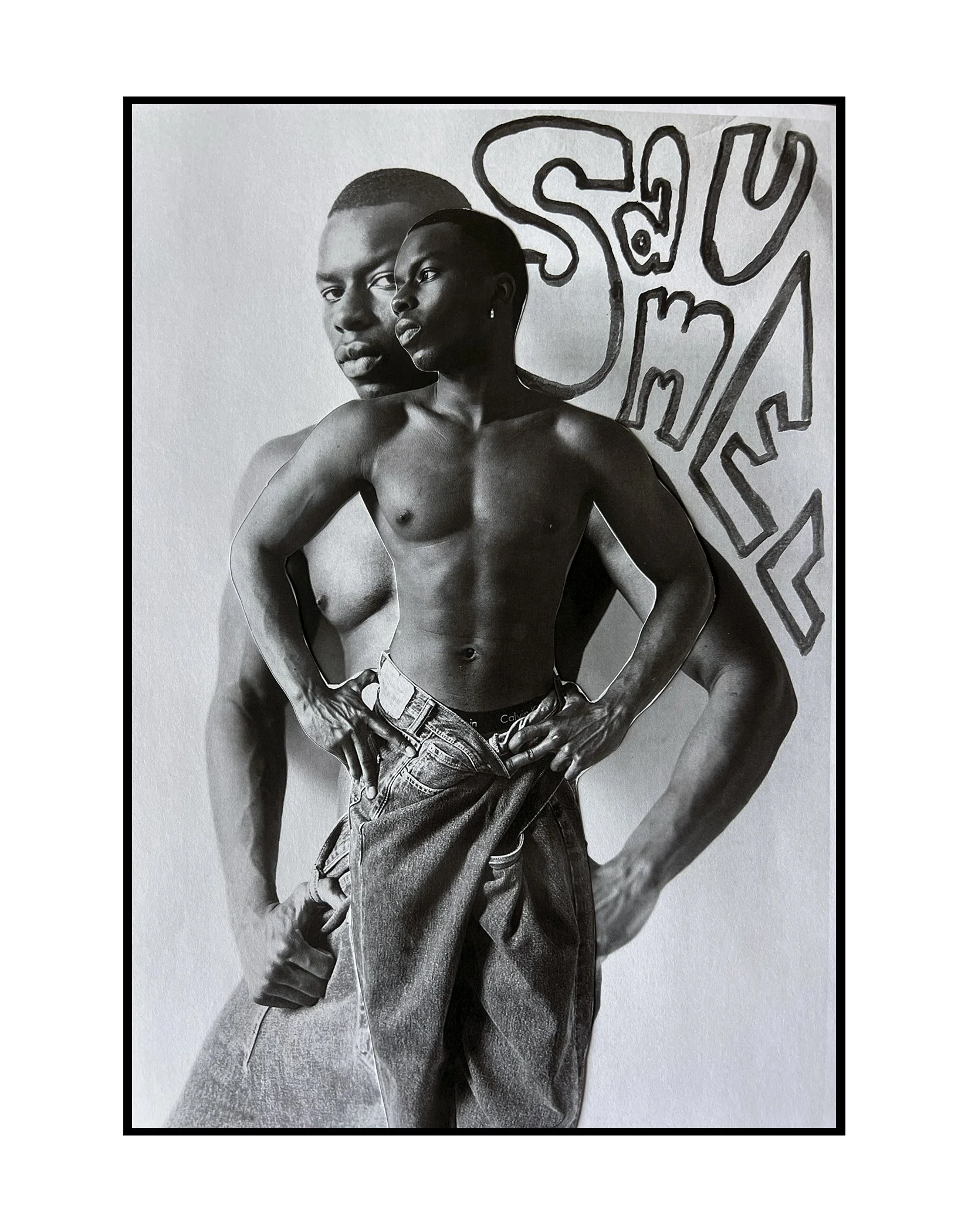
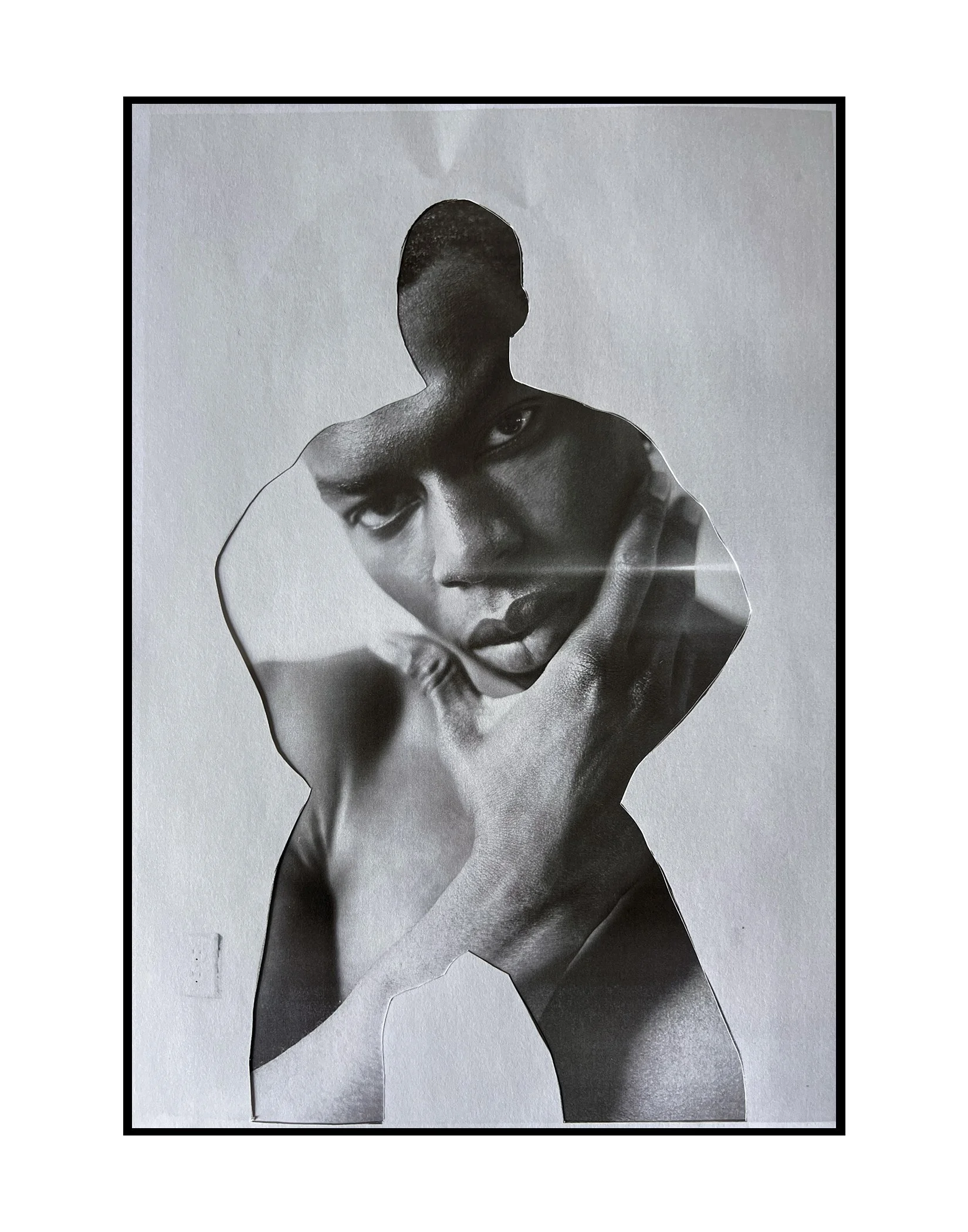

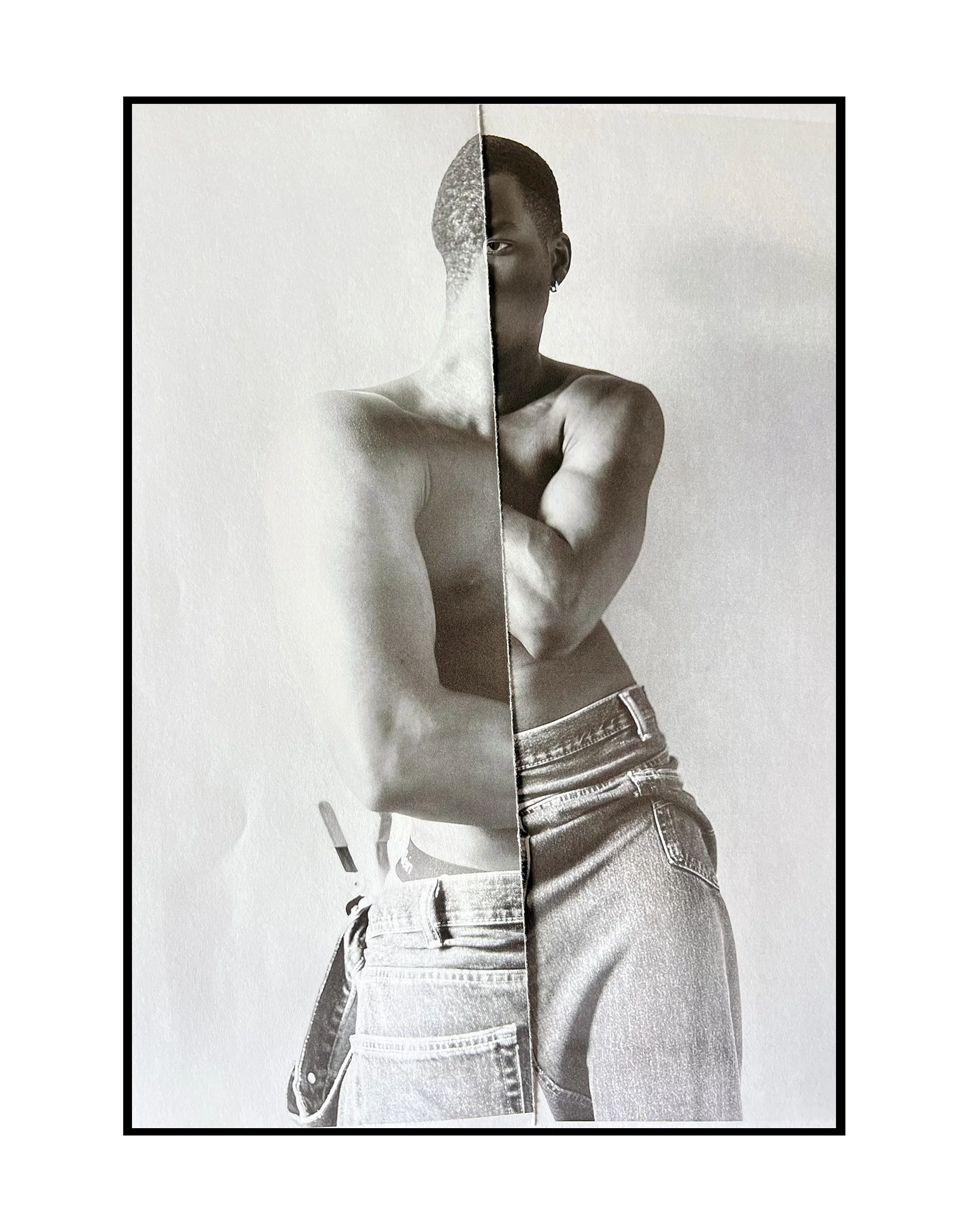
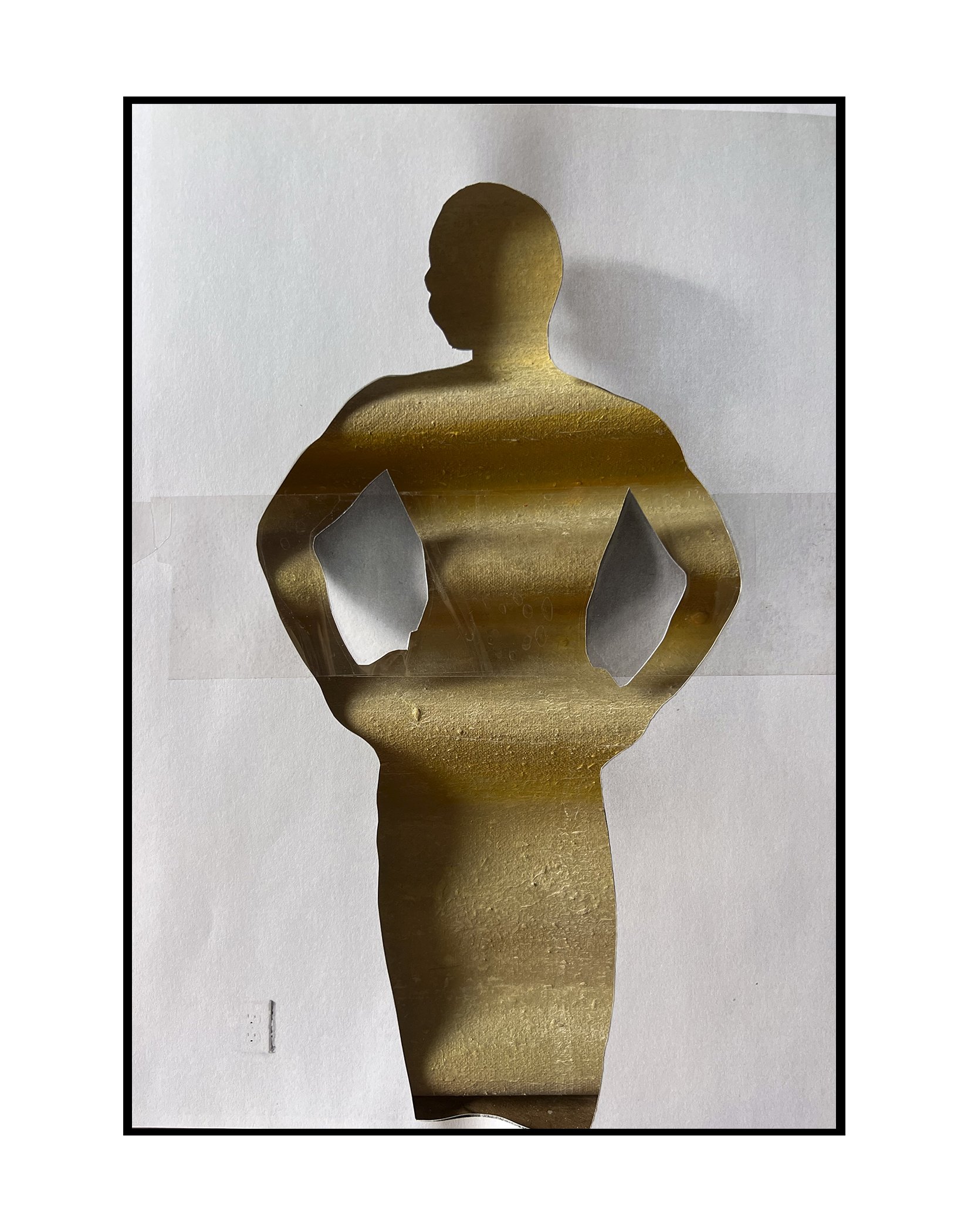

(Series photographed and collaged by Anthony Amadeo for amadeo amadeo.)

The Power of Scent with Arnold Kouassi
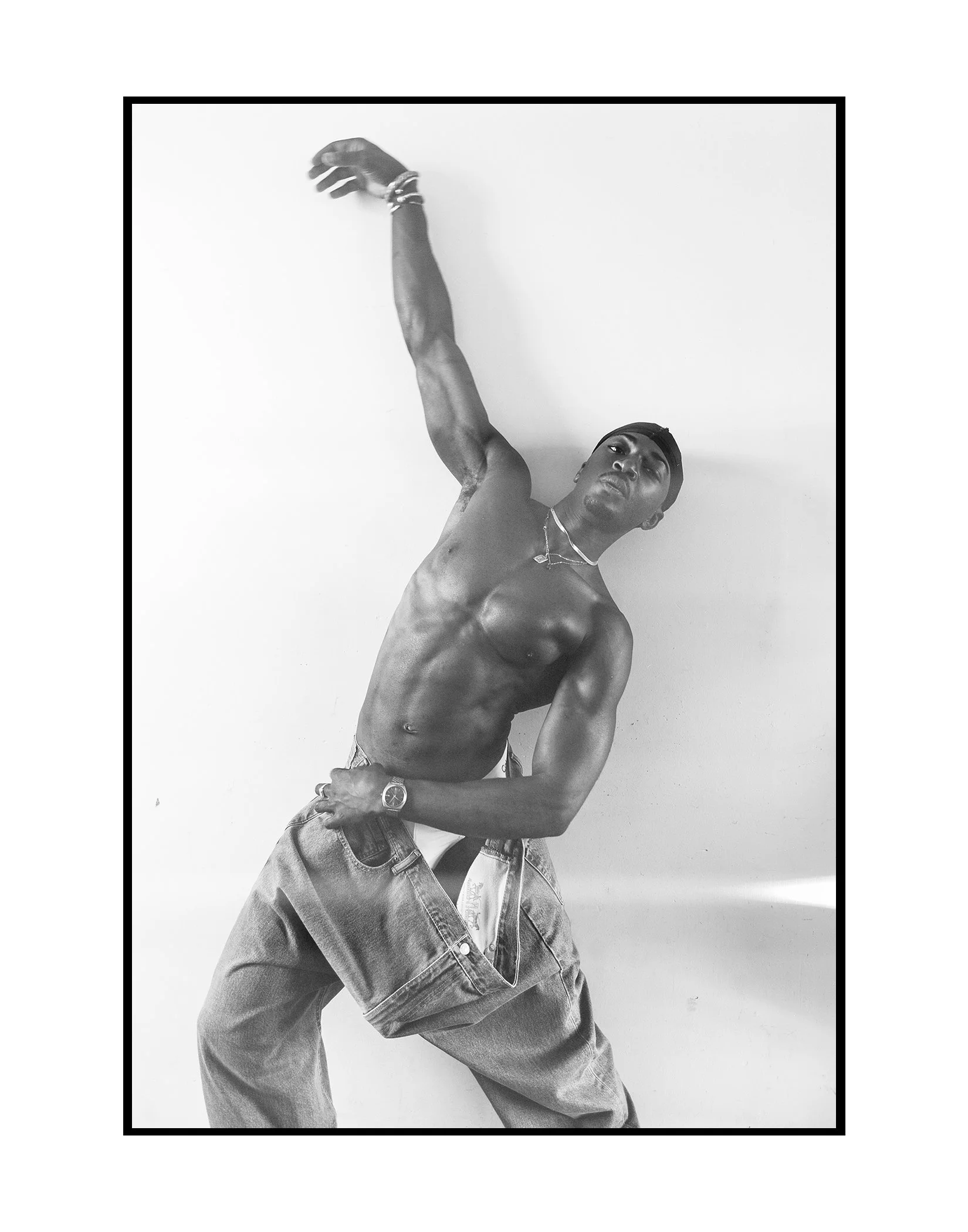
When I first came across Arnold Kouassi on Instagram, I knew instantly that I had to photograph him. There was something in his presence that felt like it belonged in the Giant Denim series—his energy, his movement, his ability to create shapes with his body that felt sculptural. What I loved most, though, was that he kept on his own jewelry for the shoot. Rings, watch, chains, bracelets—personal artifacts that added texture and narrative to the images. Those small details allowed the portraits to hold both his story and mine at the same time.
When I first came across Arnold Kouassi on Instagram, I knew instantly that I had to photograph him. There was something in his presence that felt like it belonged in the Giant Denim series—his energy, his movement, his ability to create shapes with his body that felt sculptural. What I loved most, though, was that he kept on his own jewelry for the shoot. Rings, watch, chains, bracelets—personal artifacts that added texture and narrative to the images. Those small details allowed the portraits to hold both his story and mine at the same time.
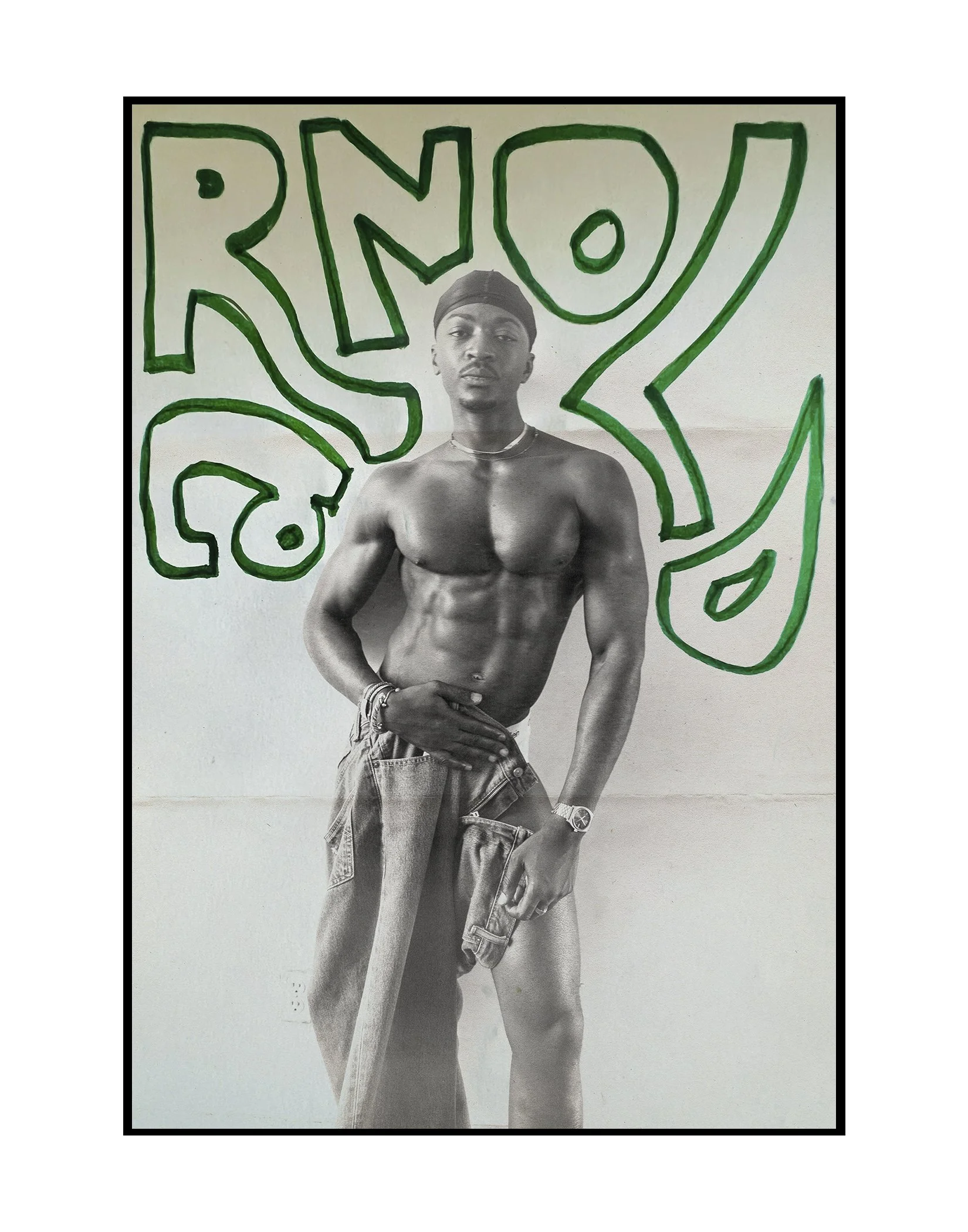
The juxtaposition of his shiny dark skin against the rough texture of oversized denim was magnetic. Every pose carried weight. Every shift in movement created new draping and new shapes. These are the moments that I live for in portraiture—when the collaboration between model and photographer creates something beyond just image-making.
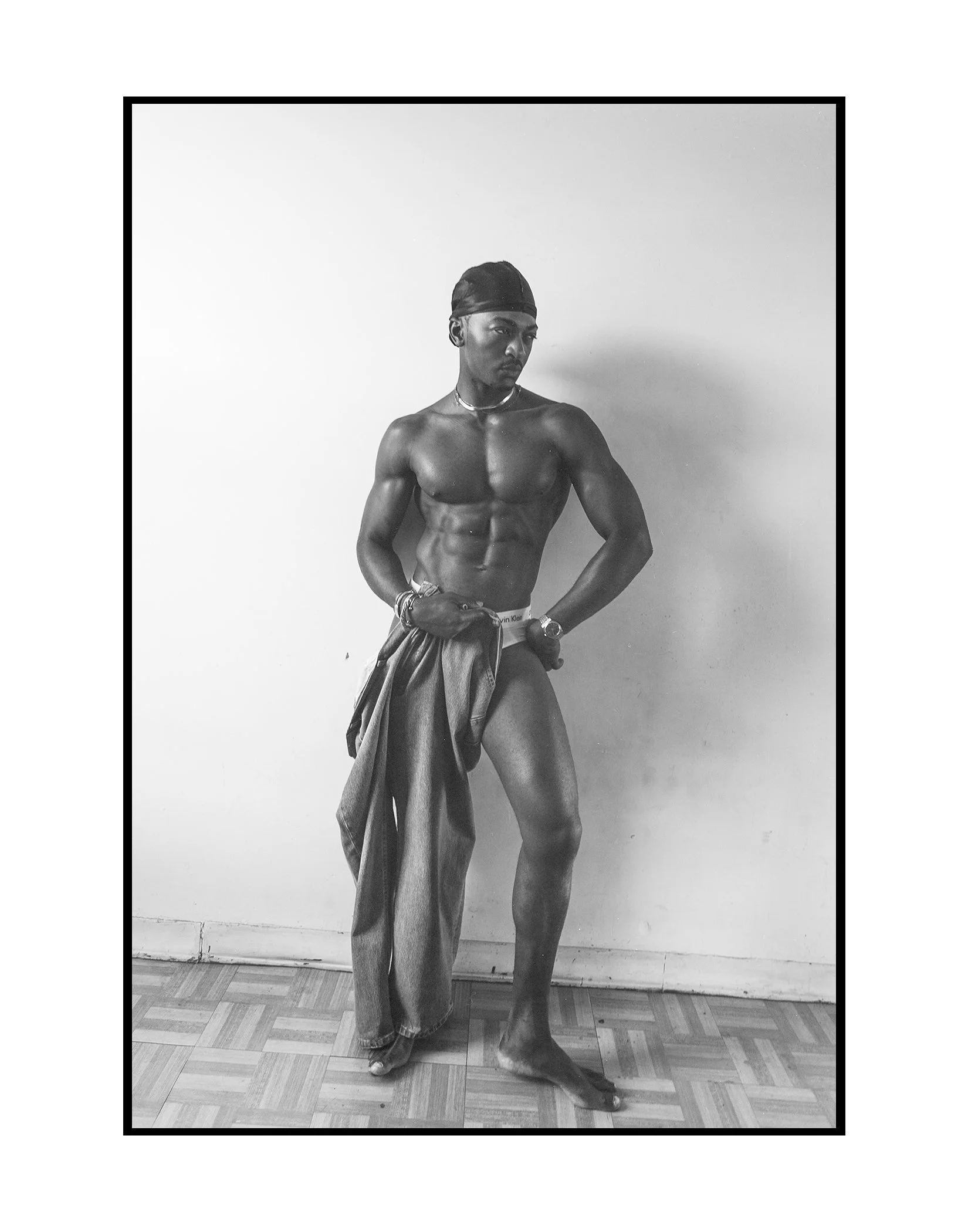

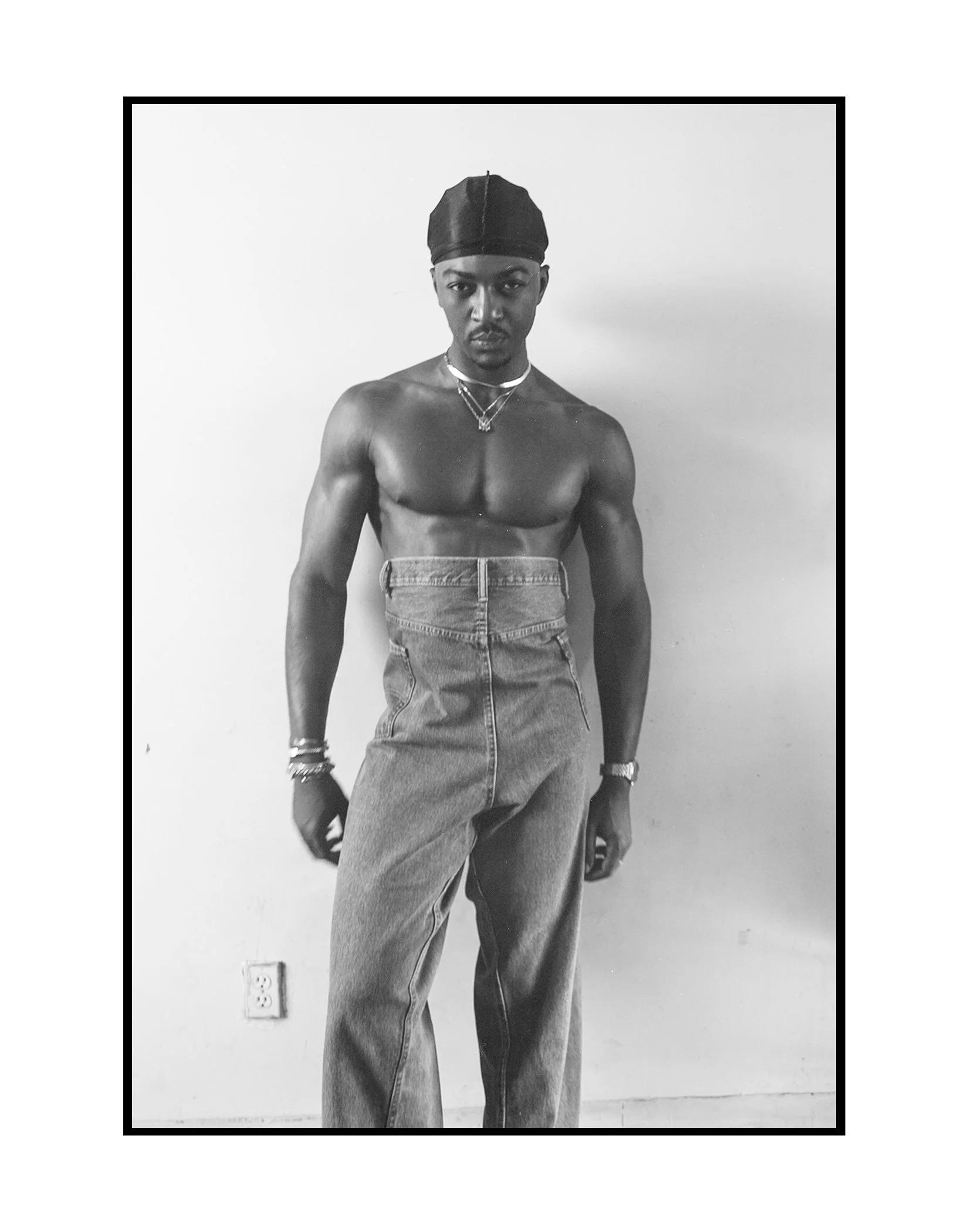
But what struck me most was Arnold’s scent. It carried a familiarity that immediately triggered a memory of my aunt. A flood of warmth, nostalgia, and connection. We started talking about the power of scent—the way it can narrate an entire lifetime of memories without a single word.
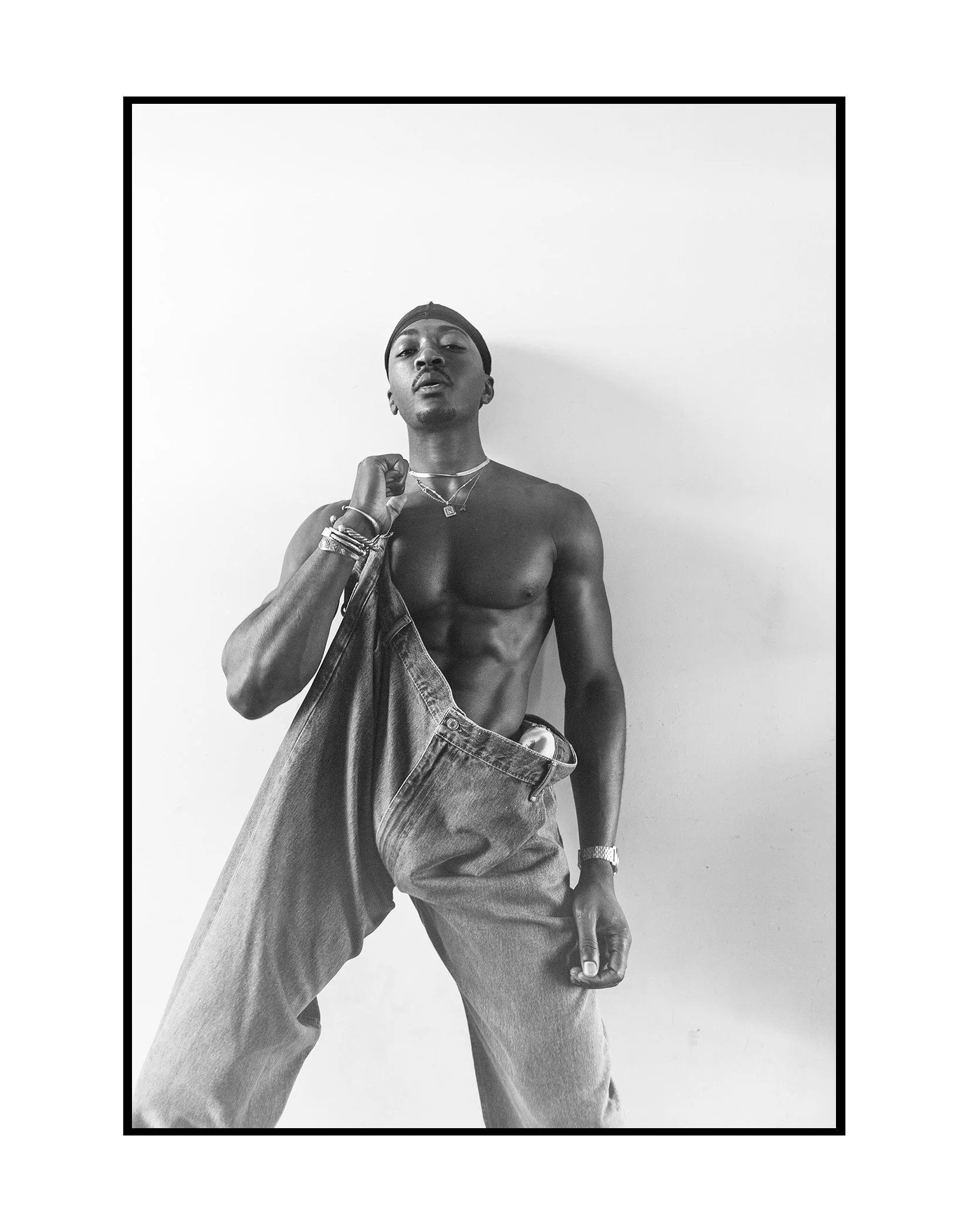
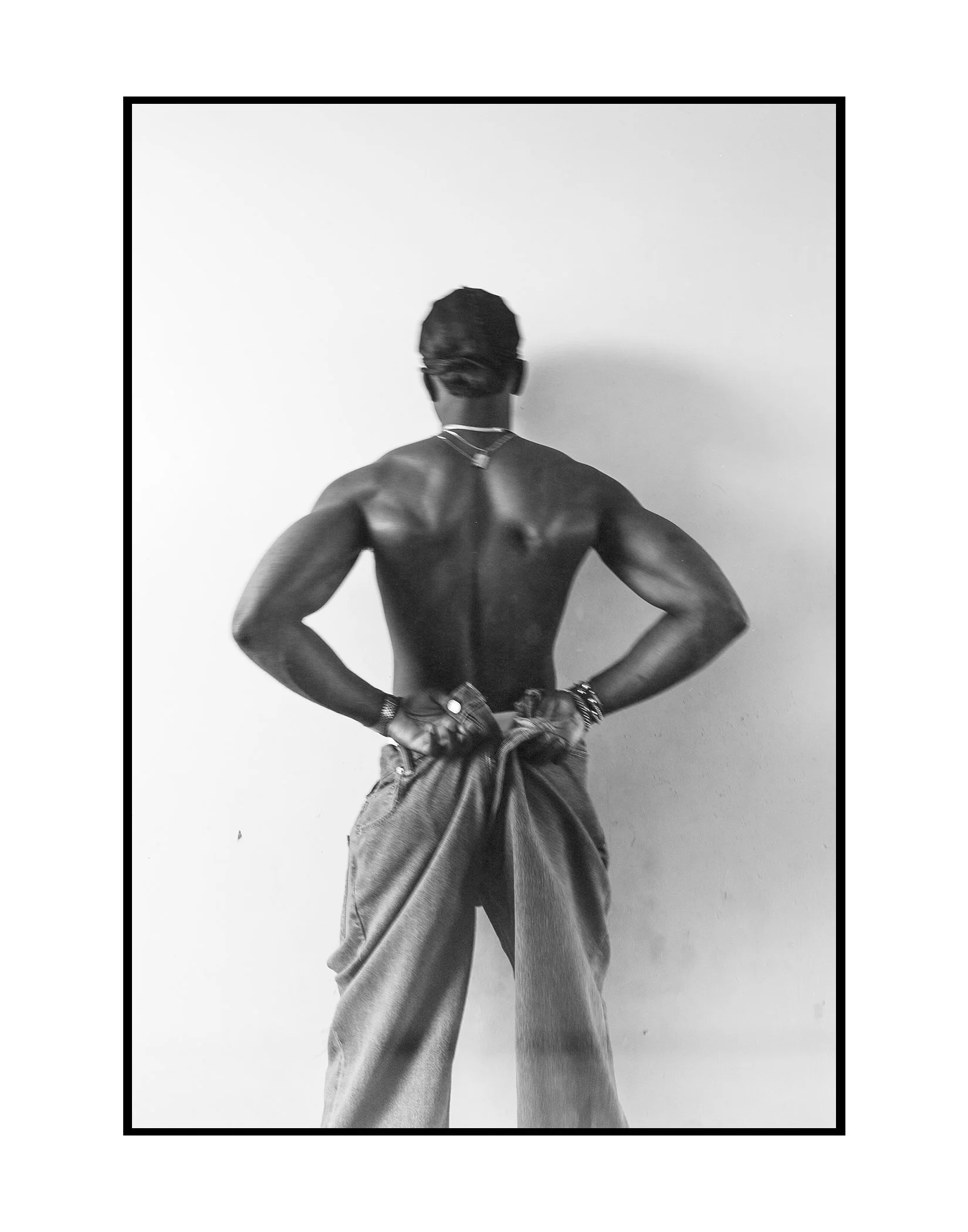
I believe that the very first time you wear a fragrance is sacred. That first wear should be set aside for something special: a new chapter, a celebration, or a moment you want to lock in forever. Because scent has the power to capture a core memory. You might not consciously recall the fragrance later, but your body will remember. When you cross paths with that note again—floral, musky, citrus, smoky—it will transport you back to that exact place, that exact feeling.
Think about the first time you meet someone while wearing a fragrance. They might not register the scent consciously, but they’ll remember you. The way you moved, spoke, or laughed—all tied to that invisible, unforgettable trail in the air. That’s the power of scent. It lingers, it shapes memory, it tells a story long after the moment has passed.
For me, scent is art. It’s a medium as powerful as photography, painting, or sound. It’s intangible yet deeply human. I’m currently working on a few scent-related art pieces that explore this exact idea, and I can’t wait to share them soon.
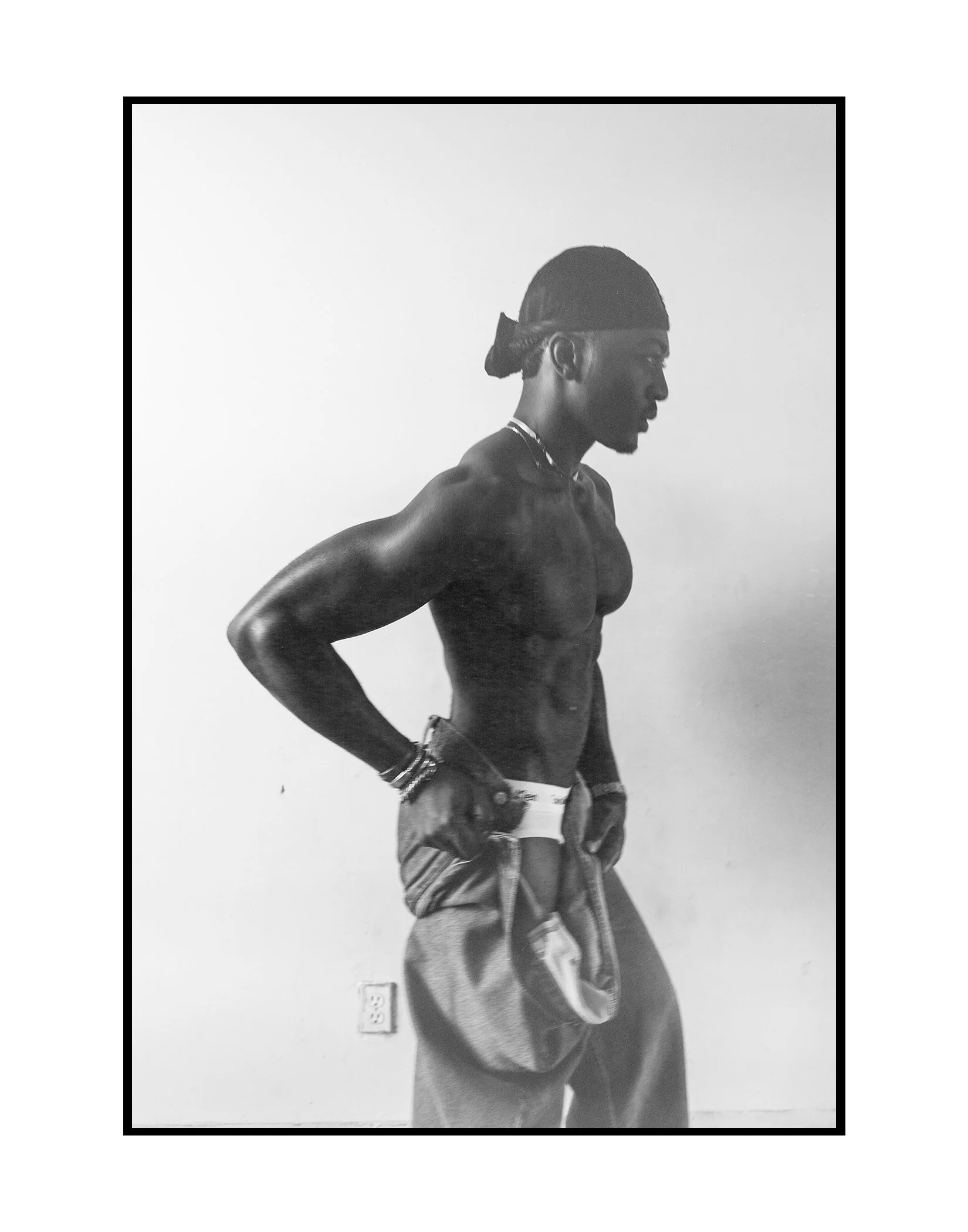
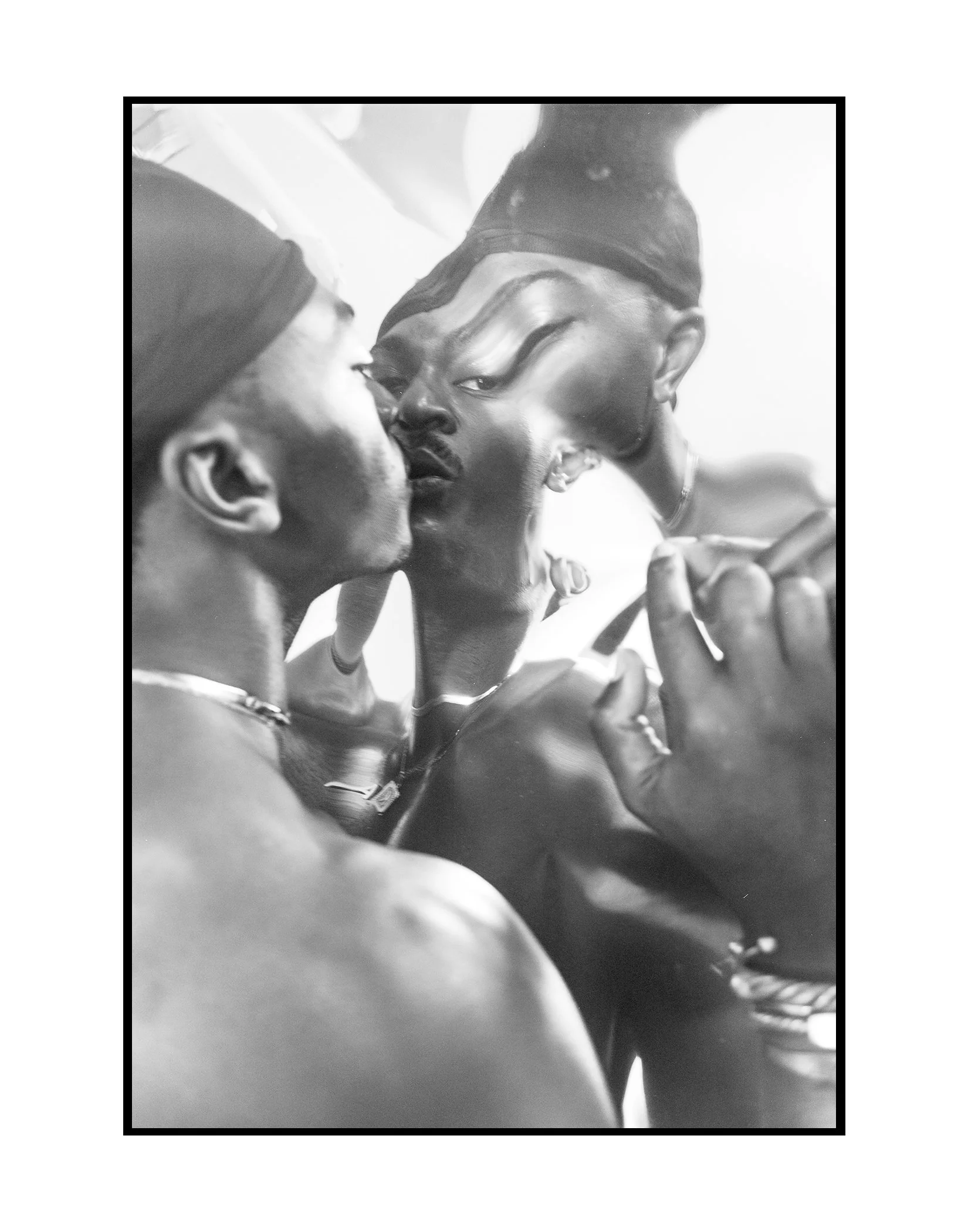
Photographing Arnold was not just about denim or portraits. It was about collaboration, about narrative, and about memory. These images carry the texture of denim, the glint of jewelry, the shine of skin, and the invisible weight of scent—the kind that lingers in your mind as much as in the air.
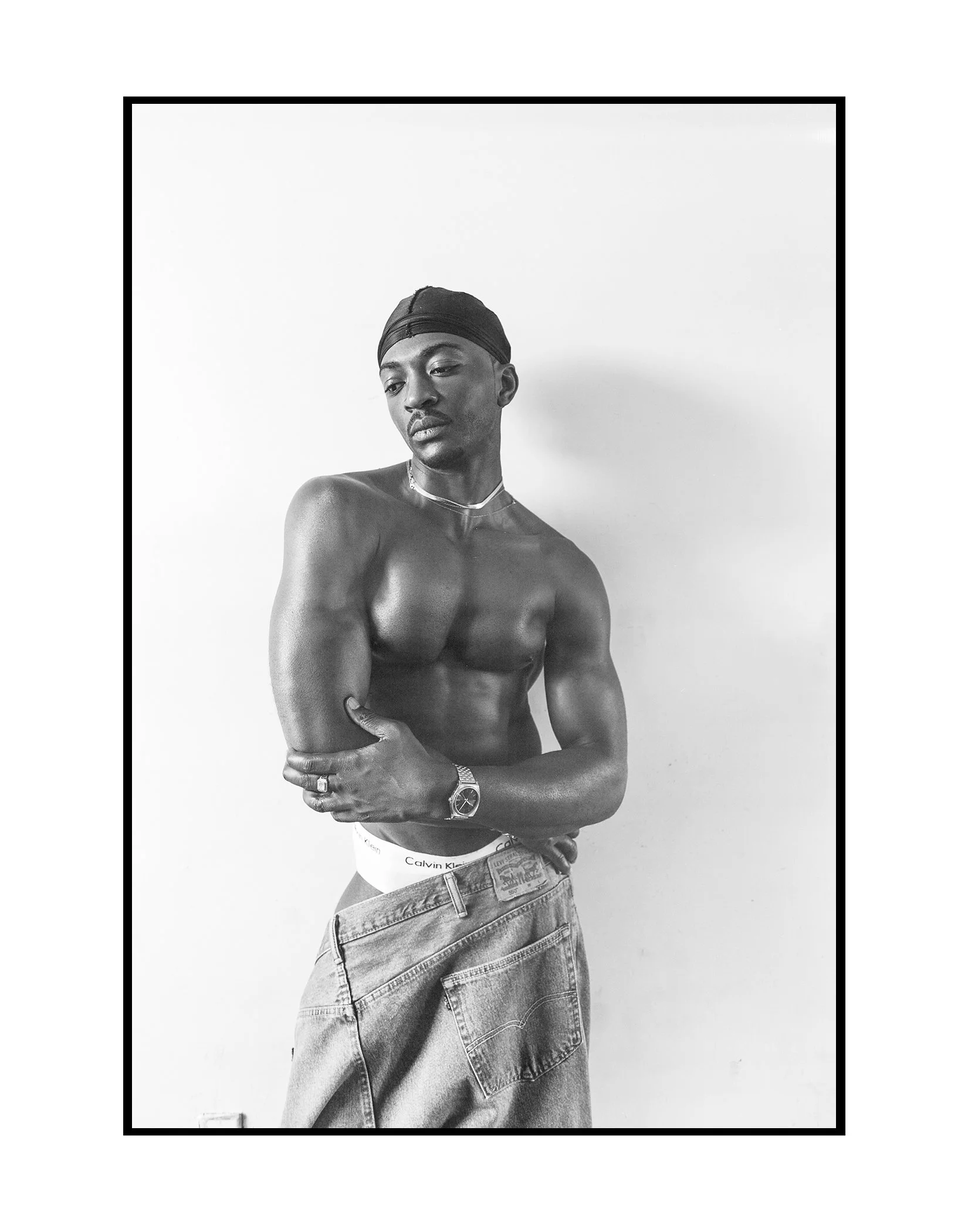
Look out for more images of Arnold from this series across my other platforms. This is just the beginning.

The return of A. Clown?
A. Clown hasn’t been seen in some time. He didn’t storm off stage, didn’t slam the door, didn’t even leave a note—he simply stepped behind the silver curtain and let the folds swallow him.
A. Clown hasn’t been seen in some time. He didn’t storm off stage, didn’t slam the door, didn’t even leave a note—he simply stepped behind the silver curtain and let the folds swallow him.
Once upon a time, I wore his face. Painted on a new mood every time. Sometimes a whisper, sometimes a scream. He lived in portraits, in paintings, in the way people’s eyes darted between fascination and discomfort. You either loved him or you couldn’t look at him. That’s the magic of a clown. That’s the danger of one, too.
But clowns aren’t built to vanish entirely. They hide in the air between you and the mirror. They hide in mylar wrinkles that turn a reflection into a puzzle. They hide in balloon animals—small, strange sculptures that carry a joke only the clown knows.
These portraits are a way to keep him close without summoning him fully back. Each face here is a flicker of him: the tilt of a head, the curve of light, the way a shadow smiles even when the lips don’t. The clown is still here. He’s just watching from behind the shimmer.
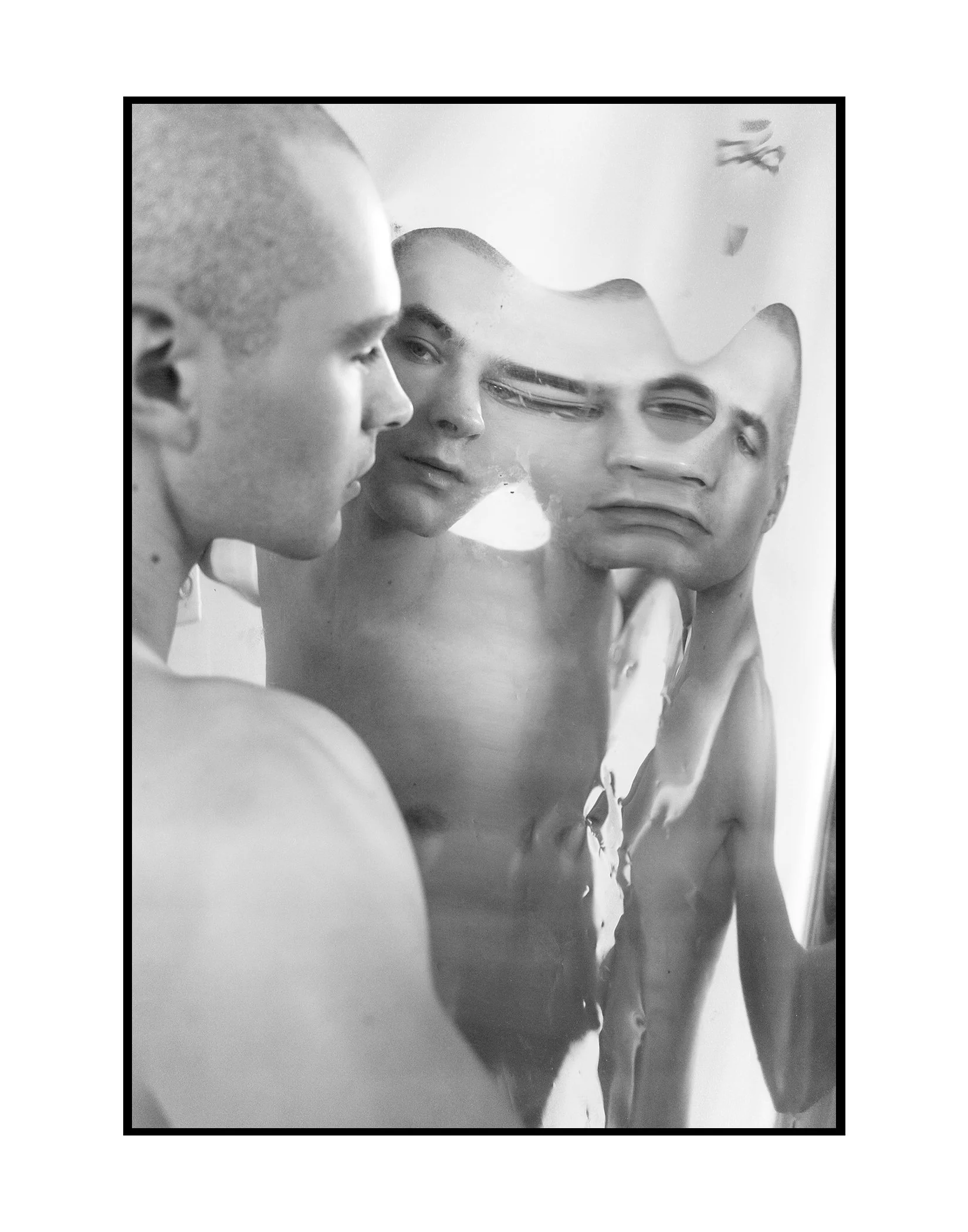
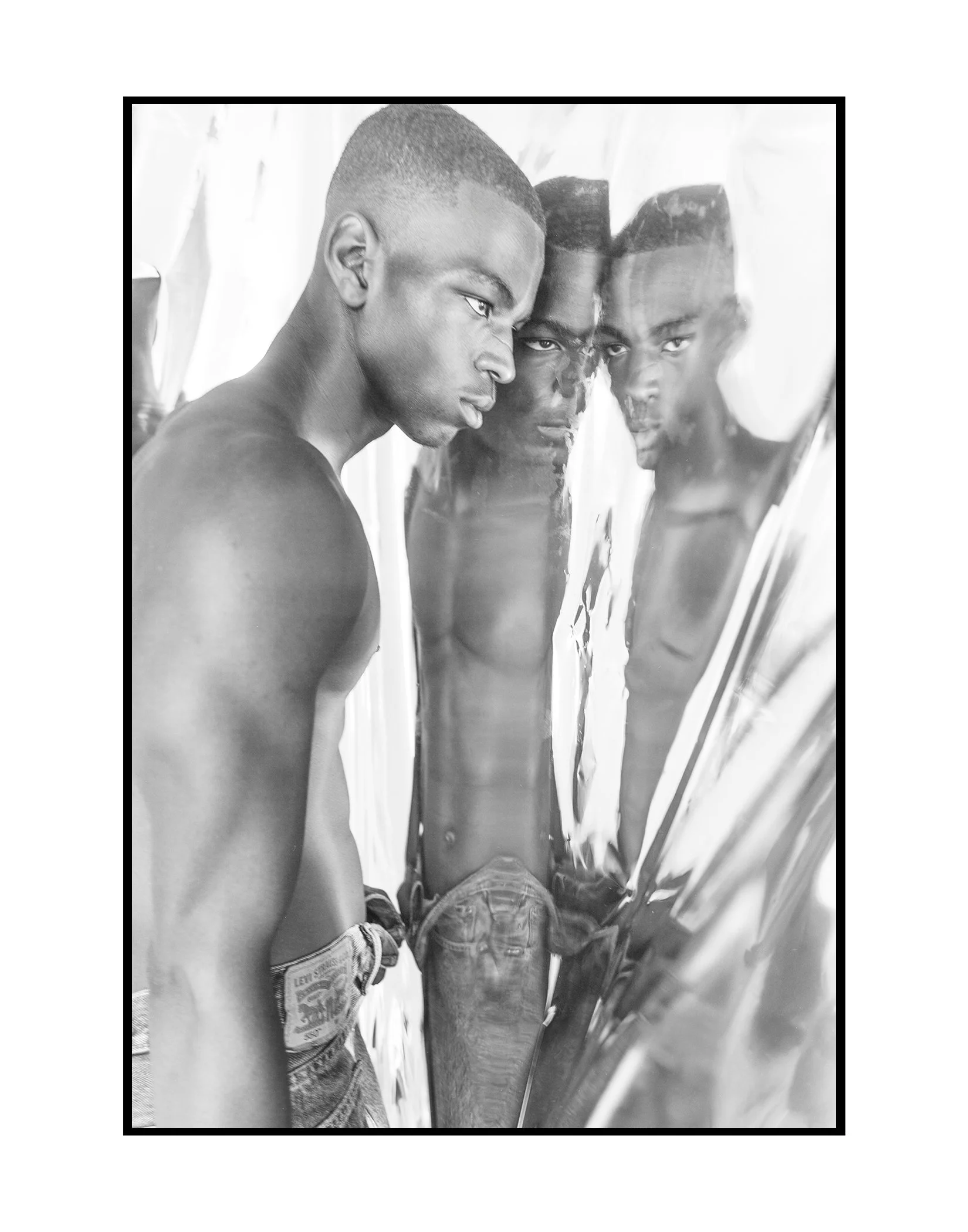
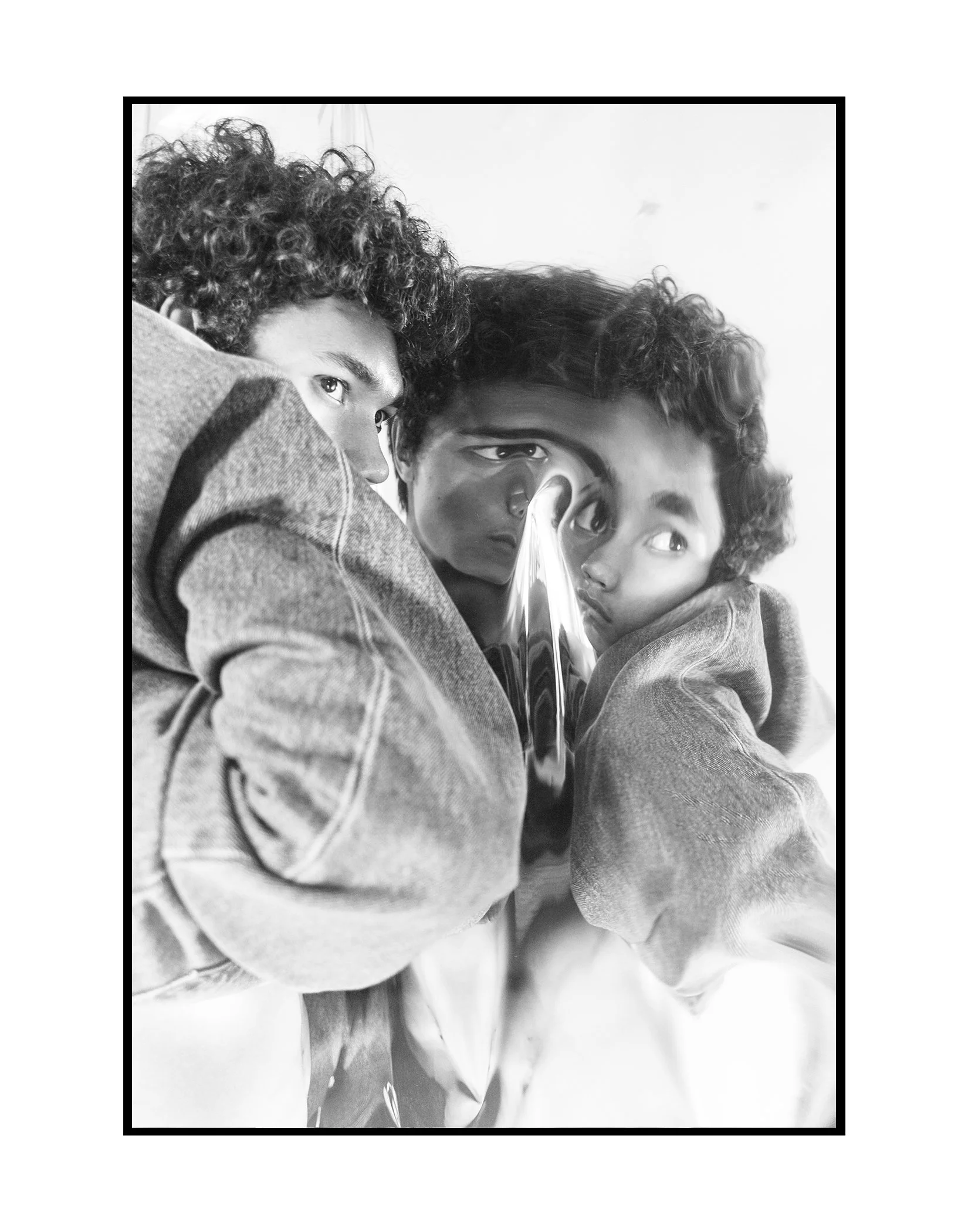
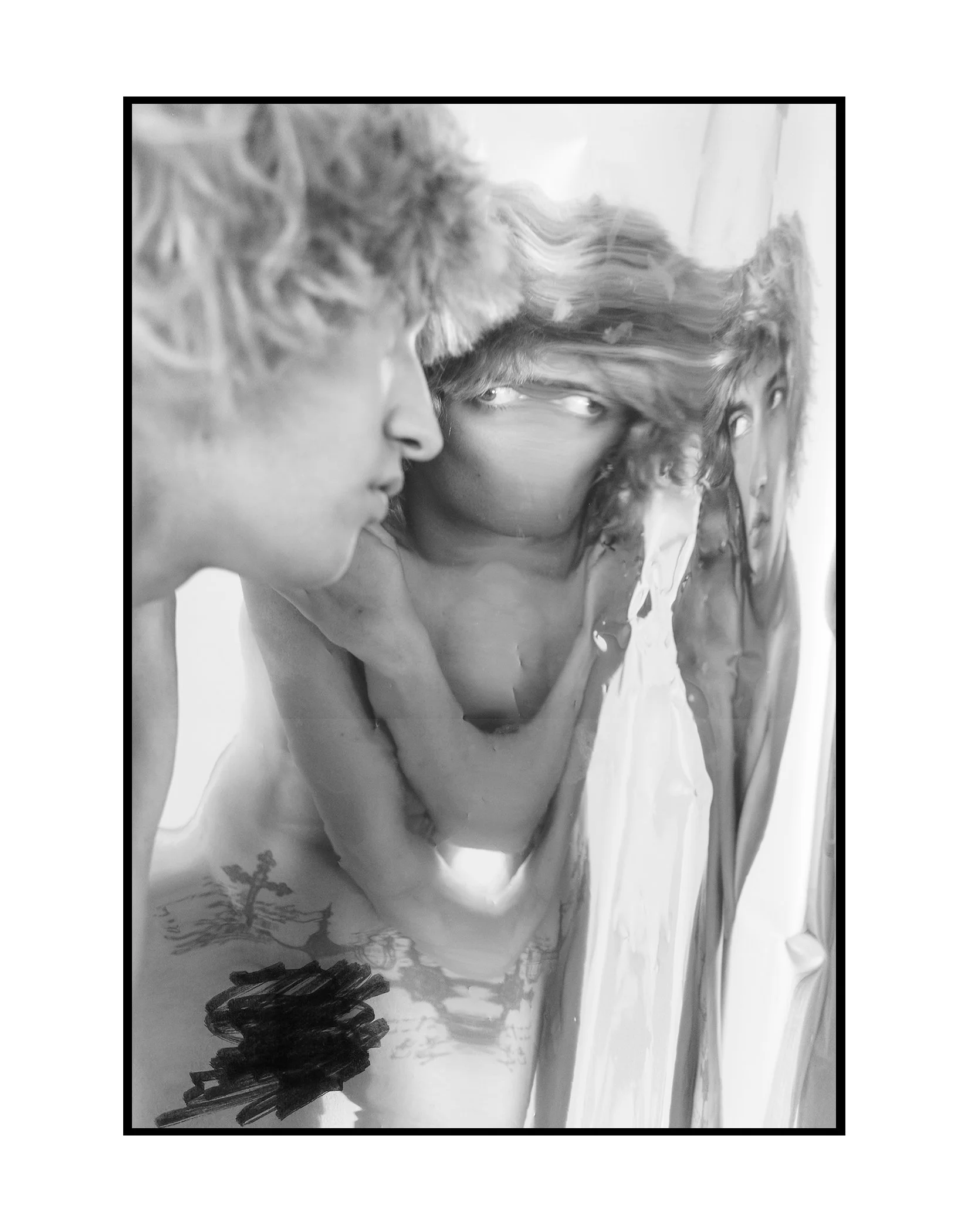
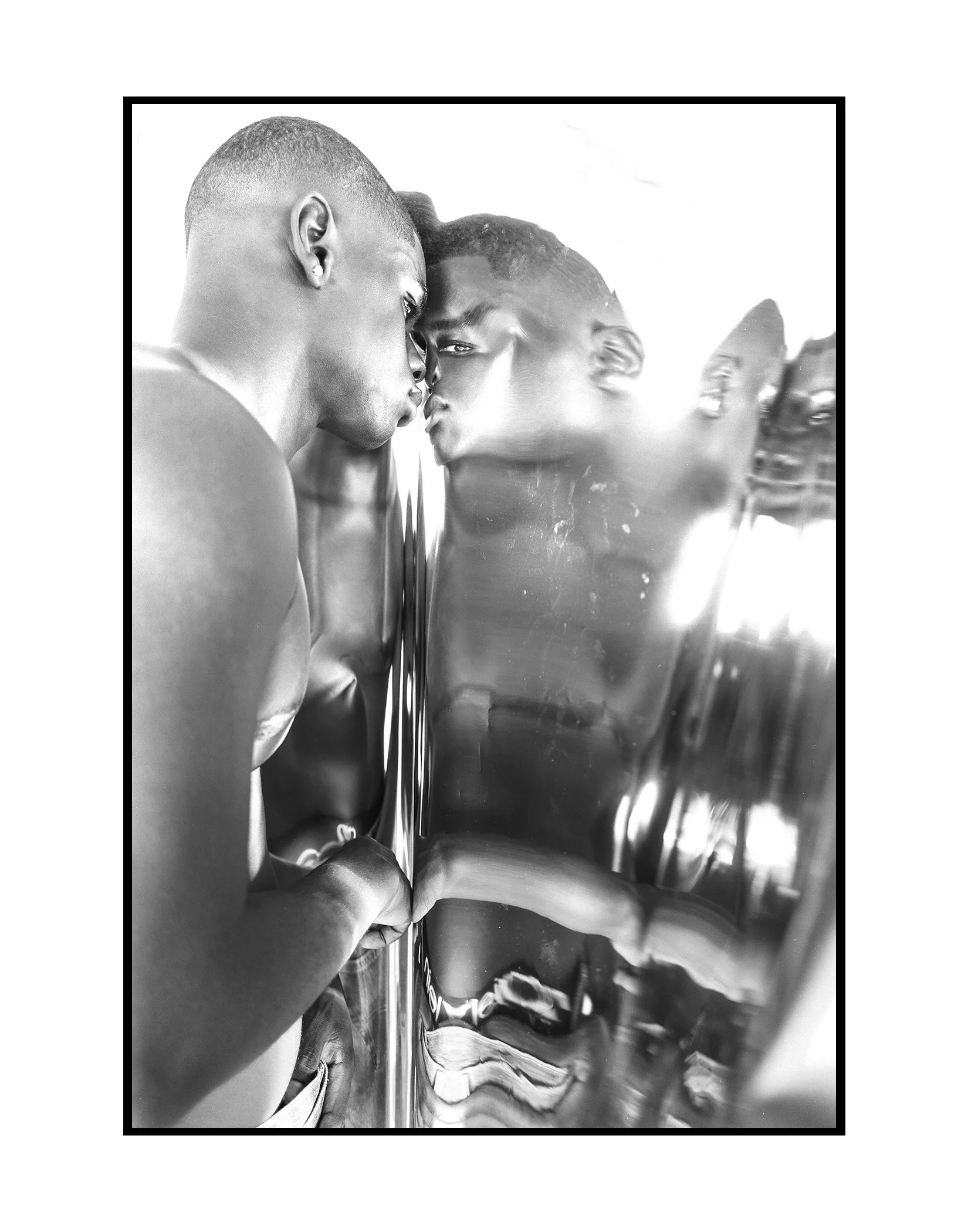
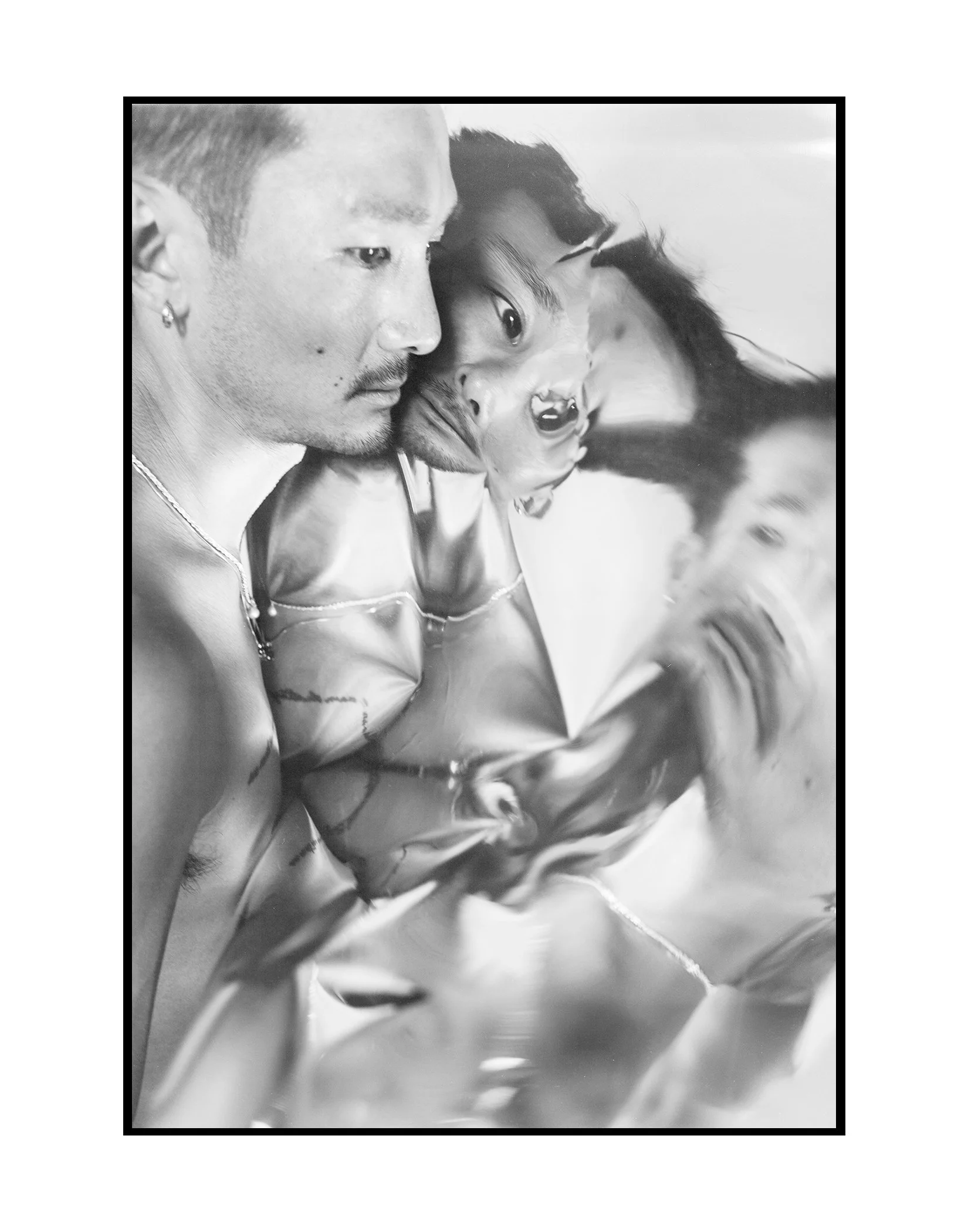

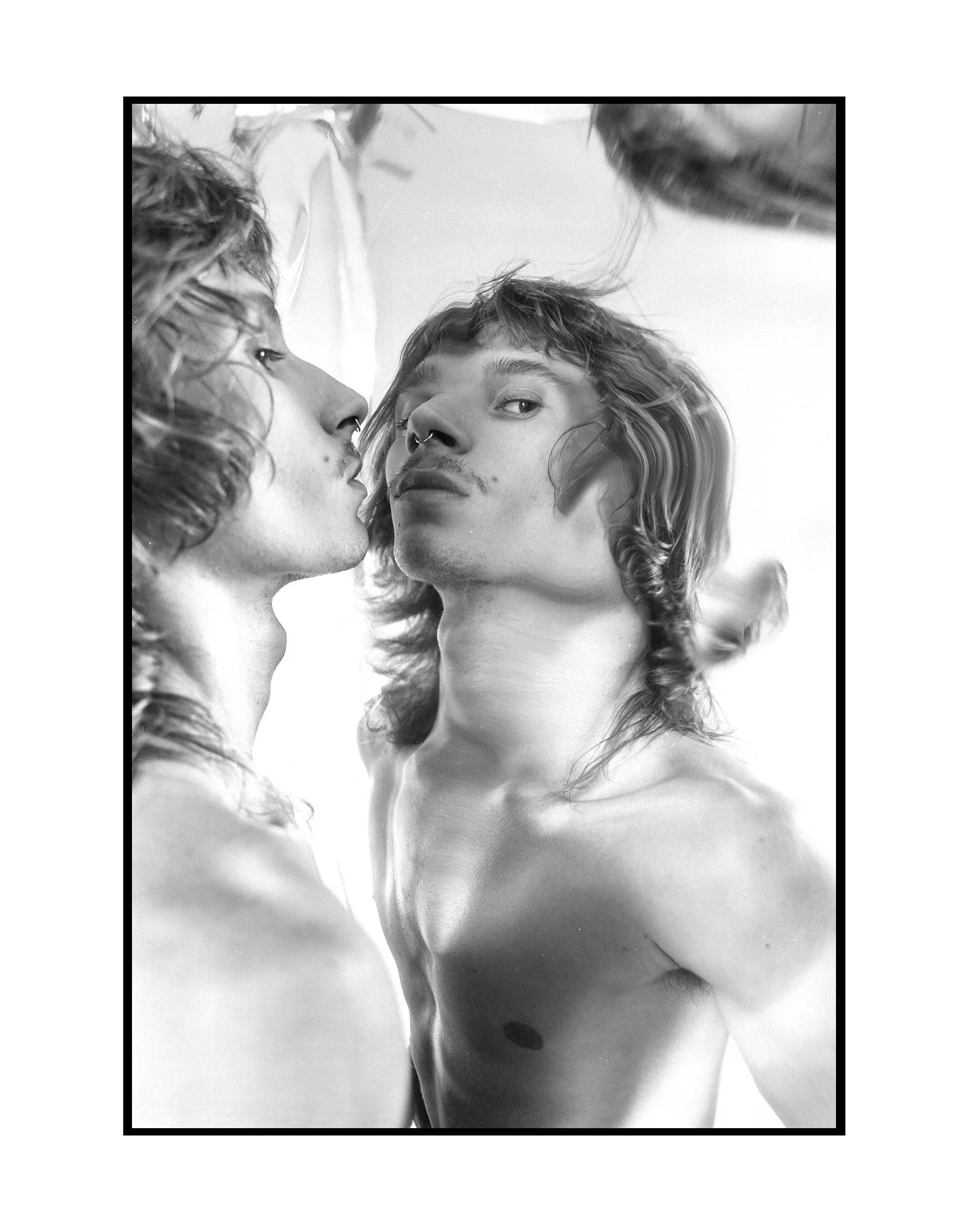

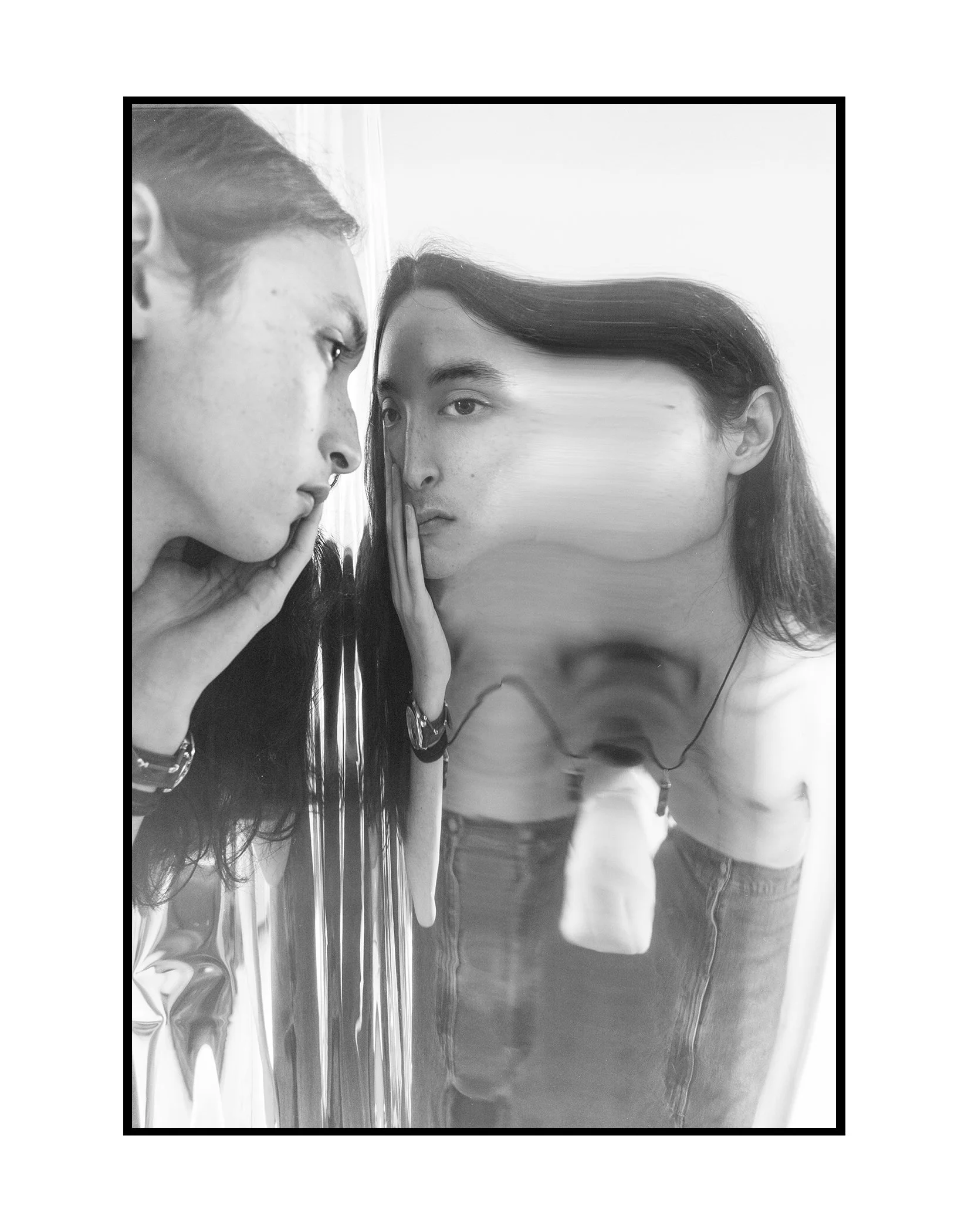
Now the question is—do you see him?

"All This Time, I Thought 'Art is a Bunch of BS' Meant Balloon Sculptures"
For years, I nodded along when people would dismissively mutter, "Art is just a bunch of BS."
And for years, I genuinely thought they meant Balloon Sculptures.
For years, I nodded along when people would dismissively mutter, "Art is just a bunch of BS."
And for years, I genuinely thought they meant Balloon Sculptures.
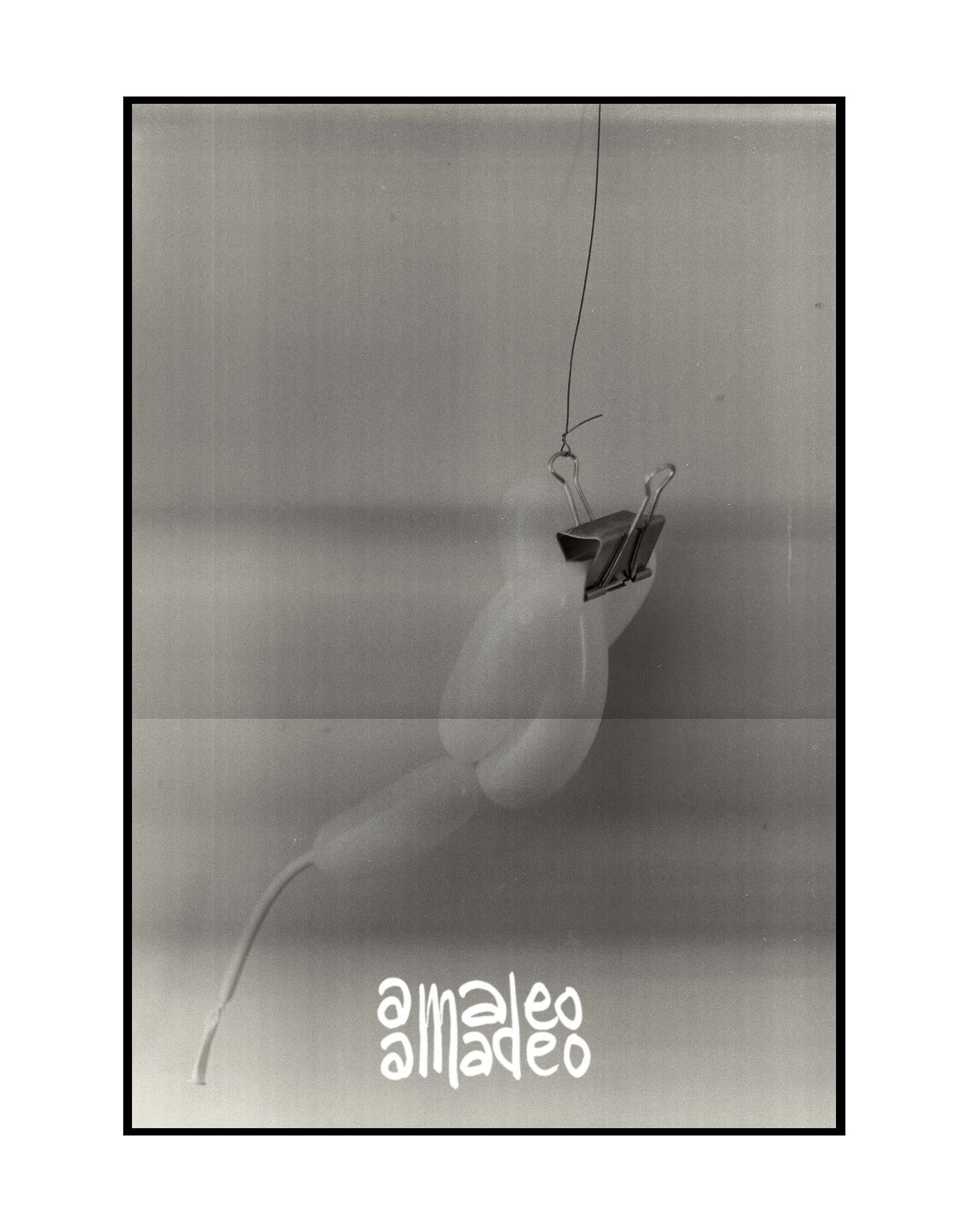
I imagined an entire secret society — one where artists twisted latex into abstract forms, floated their rebellion into the sky, and let the world misunderstand them entirely. To me, BS stood for an entire movement. It wasn’t an insult — it was a misunderstood compliment.
So I’ve decided to lean into it.
Introducing a new series: Balloon Sculptures — an earnest tribute to misunderstanding, miscommunication, and the beautifully absurd.
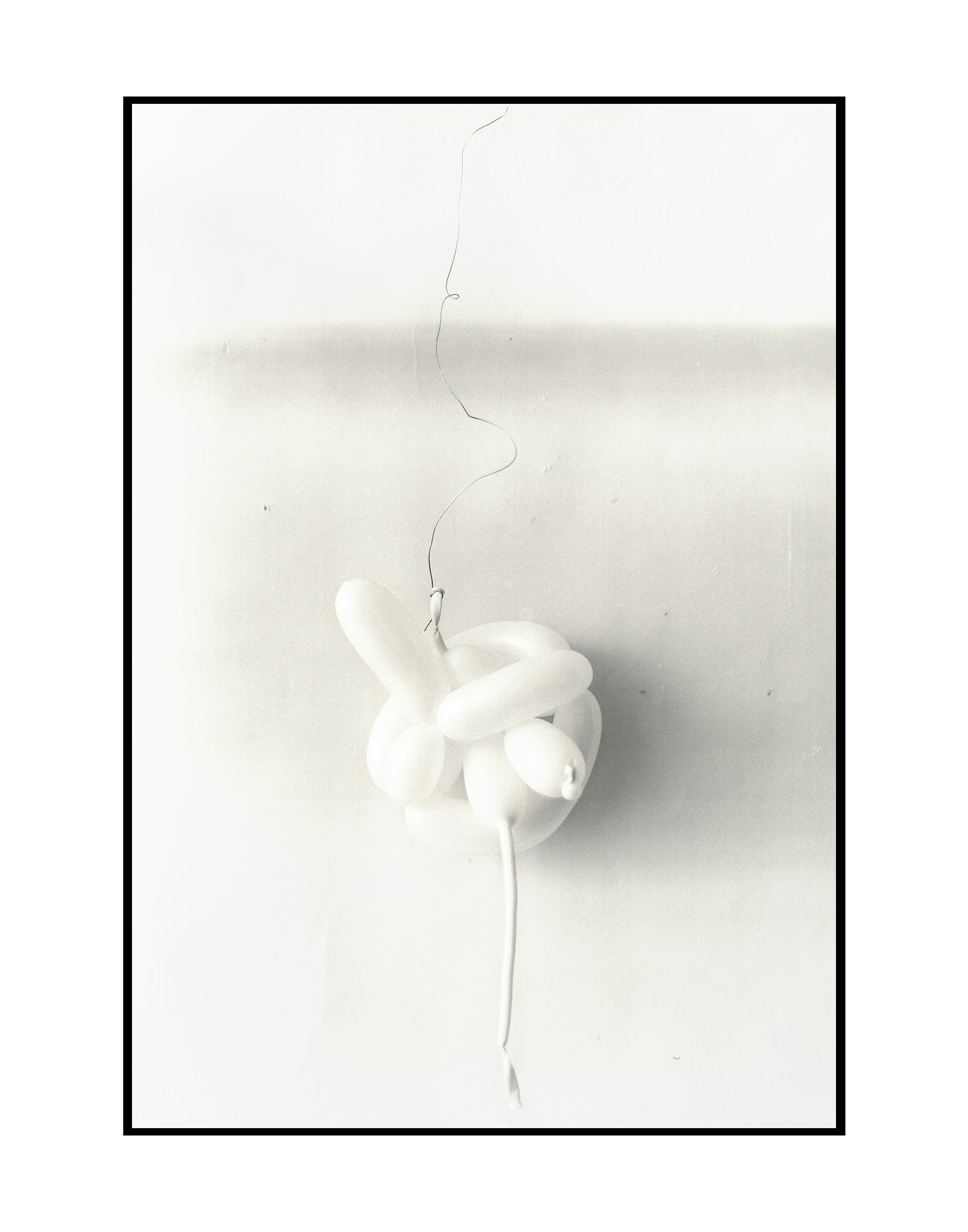


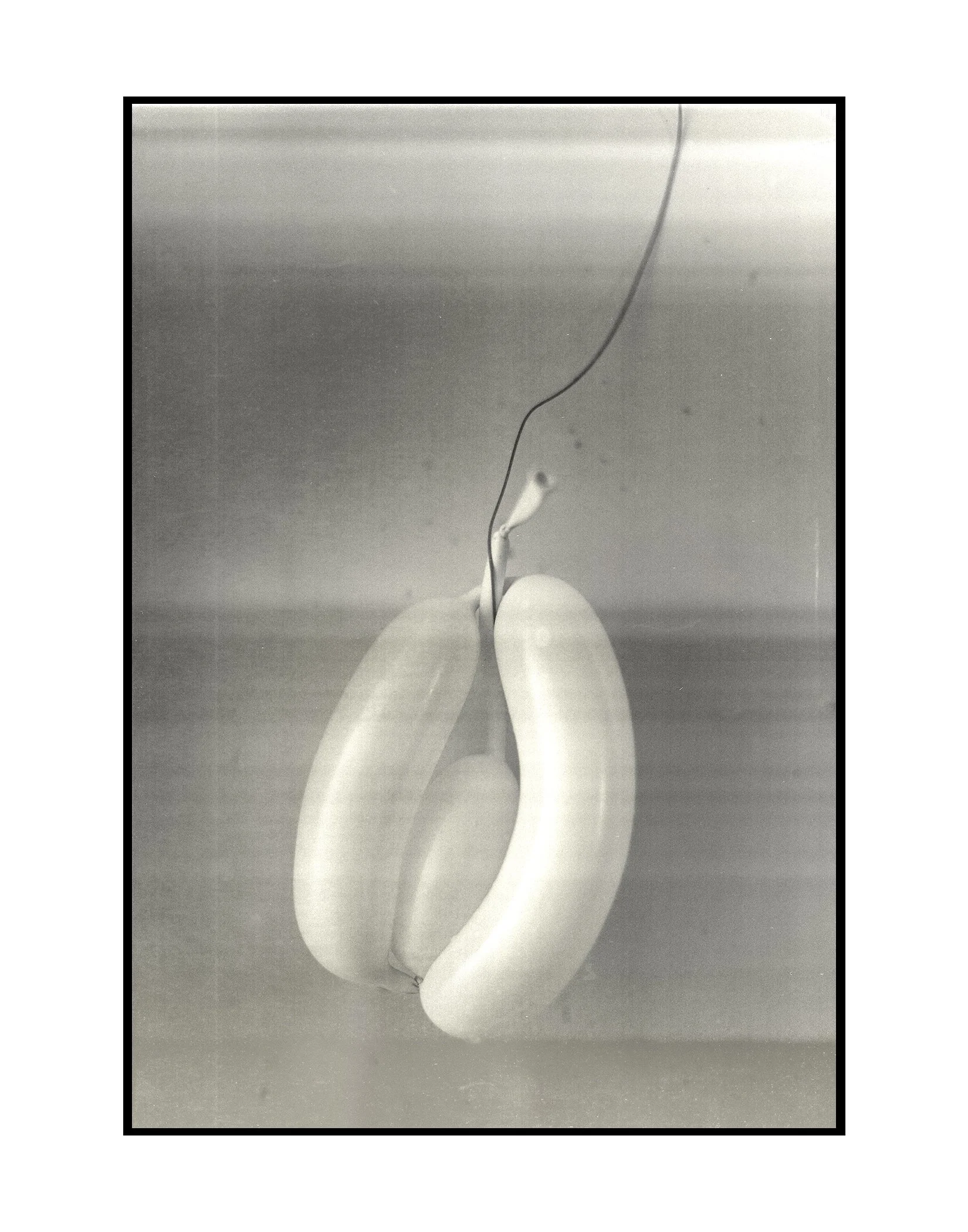
Each piece will be hand-twisted, hung, documented, and mythologized. A soft rebellion in thin air. Fragile, fleeting, and just serious enough to confuse you.
In a world that demands you defend your work with dissertations, I’m choosing to float a balloon.
And when they call it BS — they’ll be absolutely right.
- Anthony Amadeo, Amadeo Amadeo

THE NUMBERS THAT KNOW YOU
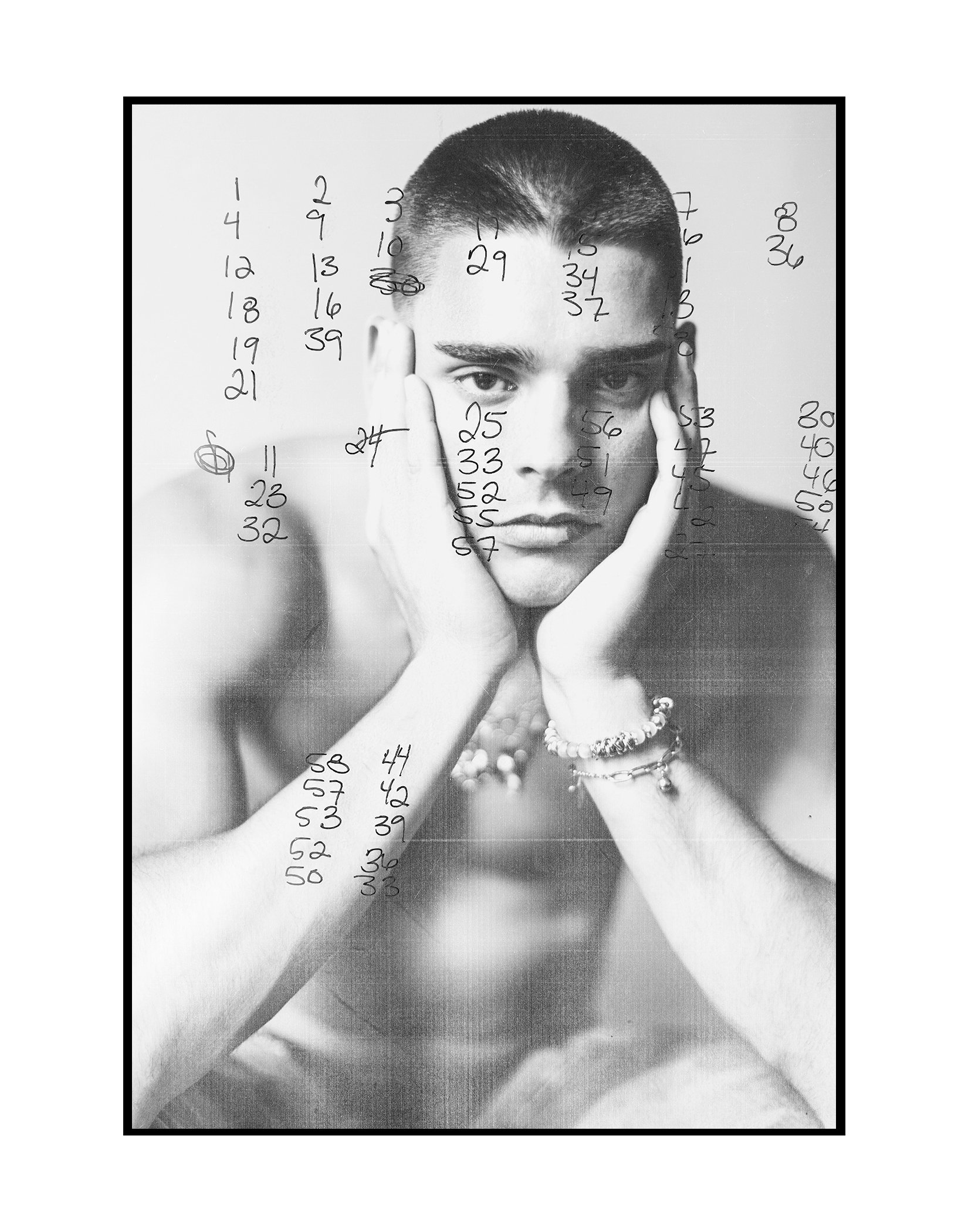
The black-and-white images recently leaked from the studio of Anthony Amadeo appear—at first glance—to be nothing more than striking portraits, poetic in their stillness, echoing the sculptural tension of classicism reimagined for a modern mythology. But to those who’ve looked deeper... something else has emerged.
THE NUMBERS THAT KNOW YOU
Are These Photocopies a Message From Beyond the Frame?

By An Observer of the Obscure
The Journal, Vol. I | Amadeo Amadeo Archives
“There are no coincidences—only coordinates waiting to be noticed.”
The black-and-white images recently leaked from the studio of Anthony Amadeo appear—at first glance—to be nothing more than striking portraits, poetic in their stillness, echoing the sculptural tension of classicism reimagined for a modern mythology. But to those who’ve looked deeper... something else has emerged.
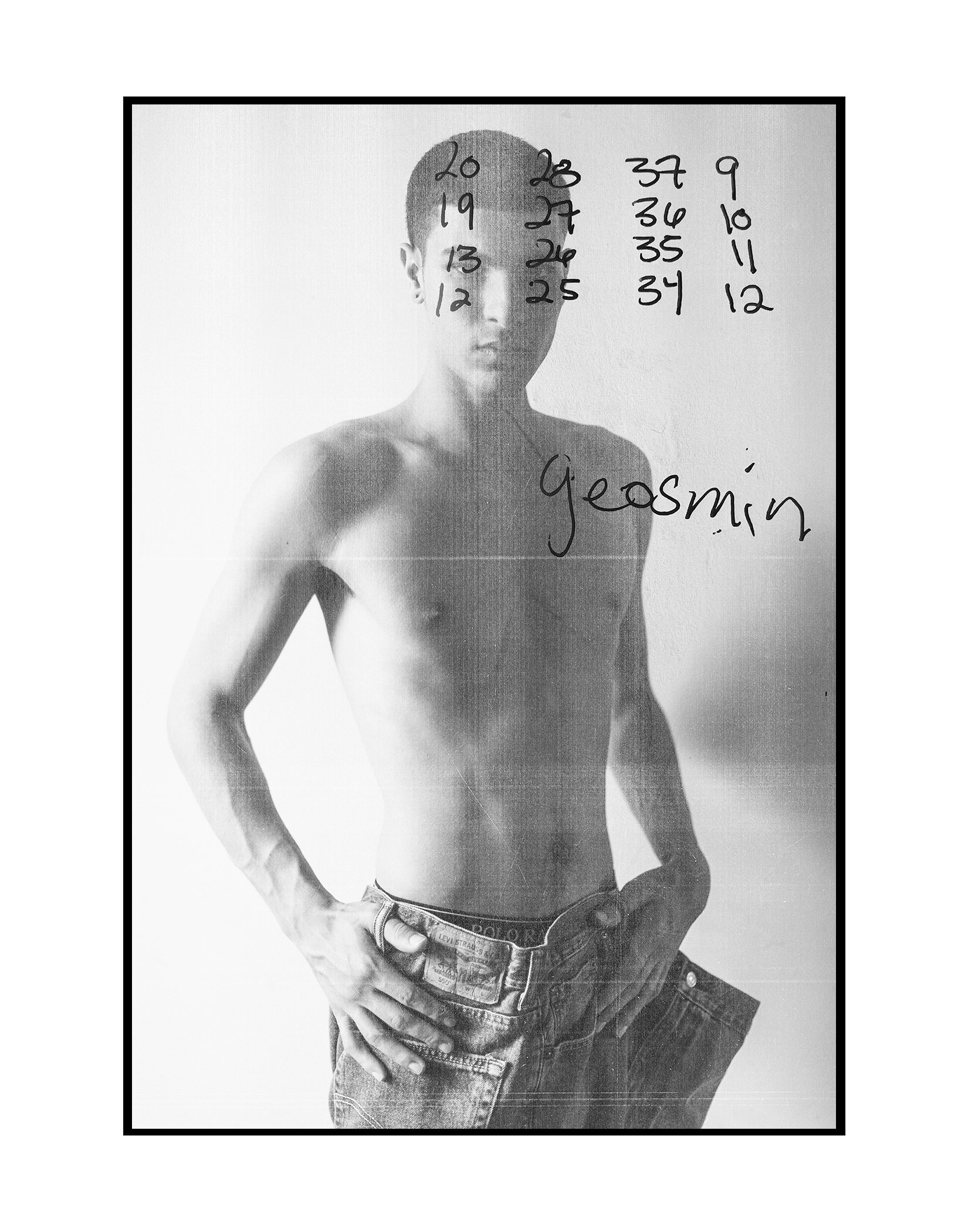
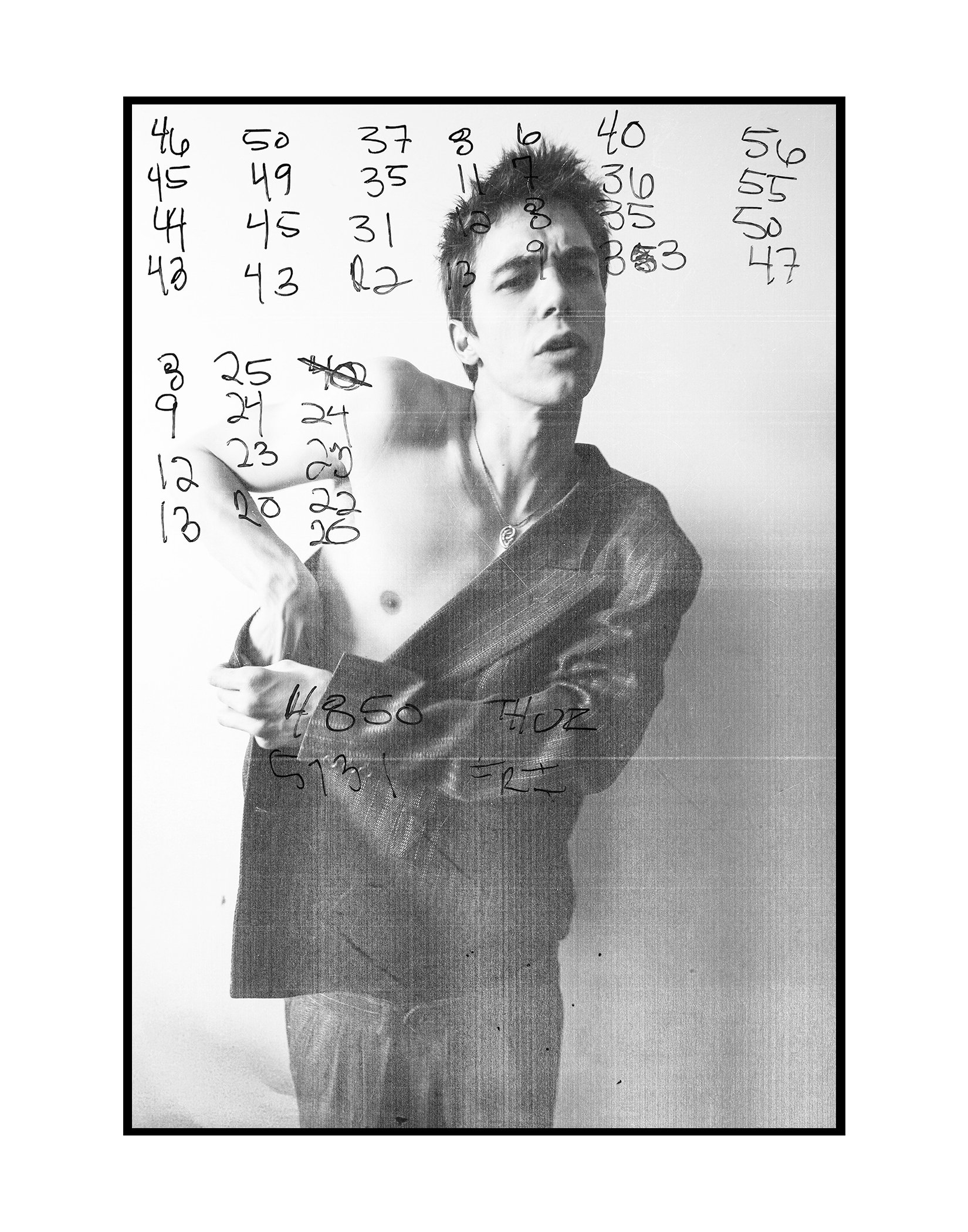
Each photograph is overlaid with a grid of handwritten numbers—disorganized, looping, duplicated, circled, crossed out. Seemingly random. But nothing in the Amadeo Codex is ever random.
According to an anonymous source (who once claimed to have worked with the artist during a full moon in Florence), these images are not photographs—they’re receivers. And the numbers? They’re not annotations. They’re transmissions.
THE GEOSMIN THEORY
One image—titled only “Geosmin”—sent shivers through numerologists and ex-CIA codebreakers alike. “Geosmin” is the molecule that causes the smell of earth after rain... but why label a photocopy of a boy in oversized jeans with this word?
If you map the numbers across the faces, torsos, and arms, they align with ancient acupuncture meridians. One theory posits that Amadeo’s images are somatic charts for emotional memory—each number a timestamp tied to a forgotten personal truth.
What were you doing at 33?
What happened to you on the 12th?
Why do you always wake up at 3:37 a.m.?
We asked 57 people (note: a frequently appearing number) to randomly select one number from each image. 83% reported immediate recollections tied to that number—an age, a date, an address, a dream they’d forgotten until that moment. Coincidence? Or... recognition?
MULTIPLES OF MEANING
Some numbers reoccur across the images: 37, 53, 50. Are they codes? Coordinates? Or countdowns?
Photographic analysts suggest the repetitions create a pattern of activation—a trigger sequence for something not yet understood. There is evidence these photos were passed under red light at 3:00 AM for 7 nights in a row before being photocopied. Rumors suggest Amadeo used a Soviet-era duplicator found in a shuttered print shop in Bushwick.
Another theory states that these are calibration values for a non-human gaze—numbers that tell extraterrestrial observers where to focus when trying to decode human beauty.
ARE YOU PART OF THE EXPERIMENT?
What happens when you stare at the numbers?
Some claim these images shift in your periphery. That the numbers rearrange themselves. That your favorite number appears in a different spot each time.
One viewer reported dreaming of the numbers—waking with the imprint of “50” on their inner wrist. Another claims they saw their birth date, phone number, and childhood home’s address hidden across all four images.
So we ask you:
Do you see your number?
Do you know what it means?
And if not—why is it still following you?
THE AMADEO INCIDENT
THE AMADEO INCIDENT
Or, The Artist Who Came to Earth With a Camera and a Nose for Memory
by a former employee of the U.S. Bureau of Olfactory Surveillance
THE AMADEO INCIDENT
Or, The Artist Who Came to Earth With a Camera and a Nose for Memory
by a former employee of the U.S. Bureau of Olfactory Surveillance
For decades, whispers have swirled through the upper crust of the fashion elite, the fragrance underground, and certain dive bar booths in both Palermo and the Lower East Side. The whispers all ask the same question:
Who is Anthony Amadeo?
At first glance, he seems like just another artistic savant—blessed with impeccable taste, the eye of a Renaissance sculptor, and the eerie ability to extract perfume from a memory you forgot you had. But something doesn’t add up.
There are no childhood photos.
His studio doesn’t age.
Clients describe his portraits as “time loops.”
And every scent he crafts smells like a place that doesn’t exist—but should.
More curiously, he refers to his work under the brand “amadeo amadeo”—a doubling, a mirror, a signal. Linguistic experts say this kind of repetition is common in extraterrestrial code-switching, a phenomenon seen in transmissions intercepted by SETI and in the infamous 1987 Fragrance Files Leak (since suppressed).
But the most damning evidence? The Codex.
The Codex is a series of ten numbered fragrances, each with a storyline so detailed, so emotionally specific, it’s as if someone bottled alternate timelines. Theories abound:
No. 37 references a house that doesn’t appear on any official maps, yet people who’ve smelled it all remember the same backyard: overgrown basil, the scent of sun on vinyl, a garden hose still running.
No. 240 is said to summon images of people’s grandparents—regardless of their ethnicity or location—down to eerily precise details.
No. 88? We’re not allowed to speak of No. 88. Not after what happened in East LA last summer. The lowriders started levitating.
Witnesses claim Amadeo doesn’t create the scents—he retrieves them. Some say he’s a memory cartographer from a dying star system. Others claim he’s an archivist for the Council of Sensory Continuity, a galactic council tasked with bottling Earth before it disappears in the next reset.
The most fringe theory (and yet the one most cited in backroom dealer circles) is that Anthony Amadeo is not here to stay. He is only collecting. Fragments. Feelings. Faces. His showroom isn’t a business—it’s a beacon.
A signal back home.
Stay tuned. The scent is stronger than ever. And the next fragrance drop might be a countdown.
This has been a report from The Journal. Believe nothing. Smell everything.






The Labyrinth of Reflections: Day 27
Tomorrow, the echoes of my steps will fade from these cobblestone streets, yet today, the city still pulses beneath my feet. Paris, you are a manuscript written in the ink of infinite encounters, a palimpsest of creativity and chaos. How to encapsulate this whirlwind? Let us dive into the looking glass, reflect backwards, upside down, inside out.
Tomorrow, the echoes of my steps will fade from these cobblestone streets, yet today, the city still pulses beneath my feet. Paris, you are a manuscript written in the ink of infinite encounters, a palimpsest of creativity and chaos. How to encapsulate this whirlwind? Let us dive into the looking glass, reflect backwards, upside down, inside out.
Anastrophe of Departure: New York calls me home, yet my soul clings to the Seine’s twilight whispers. Je ne veux pas partir—words unravel, stitching me to this city of light and shadows. Why must all journeys end where they began?
Récapitulatif Inversé: Yesterday, ideas bloomed like night flowers in the dark. Photographs captured, scents bottled, textiles caressed. Each day a thread, weaving through the loom of Paris. Cafés witnessed my caffeinated epiphanies, croissants flaked into metaphors, espressos dark as new moons.
Last week, the clatter of my suitcase wheels sang a prelude to this adieu. The streets became canvases, my camera the brush; Paris, both muse and masterpiece. Galleries of fashion mingled with the musk of antiquity, fragrances layering over the aroma of freshly spilled wine.
The week before, creativity burst forth—a geyser of visions and revisions. Every market stall, every whispered breeze through the Jardin des Tuileries, infused my senses, a banquet of inspiration served on a platter of Parisian stone.
Listes de Création:
Capture—light, shadows, the silver linings of clouds.
Collect—tickets from the metro, petals fallen on Rue des Martyrs.
Compose—fragrances that speak of rain-kissed cobblestones and smoky café corners.
Create—collages from the scraps of this city’s endless story.
Fable des Fleurs: Once, under the Paris sky, flowers taught me the art of being. Their petals, a spectrum of desires; their thorns, the truths we dare not touch. Here, in the Garden of Eden reborn, every bloom whispered a secret of genesis and genius.
Mots Entrelacés: Chiaroscuro. Lumière. Tapestry. Texture. Ephemeral. Éphémère. Symphony. Symphonie. Every word a brushstroke, every phrase a fragrance, capturing the essence not seen but felt.
Art Infini: What is to come? The canvas awaits, blank and brimming with potential. New York shall be my gallery, and the world my exhibit. But Paris, you are my palette, your hues steeped deep within my spirit. The strokes we painted together will color tomorrow’s dreams.
Pour Demain: Lists loom, tasks tower. Pack the tangible, but how to box the intangible? The laughter, the tears, the rain-soaked kisses from heaven? They seep into the soul, unpackable, uncontainable.
Adieu Poétique: Paris, mon amour, in your arms I found pieces of myself scattered across time and space, now whole. As I depart, I leave behind echoes of my laughter in your cafés, shadows of my steps in your alleys. Yet, I carry you with me, stitched into the fabric of my being, a tapestry rich with the threads of our shared moments.
Let this not be goodbye, but a pause in the conversation. For as long as art endures, as long as beauty beckons, we will speak again, in whispers soft as Seine’s caress.
Au revoir, Paris. Until we dream again.
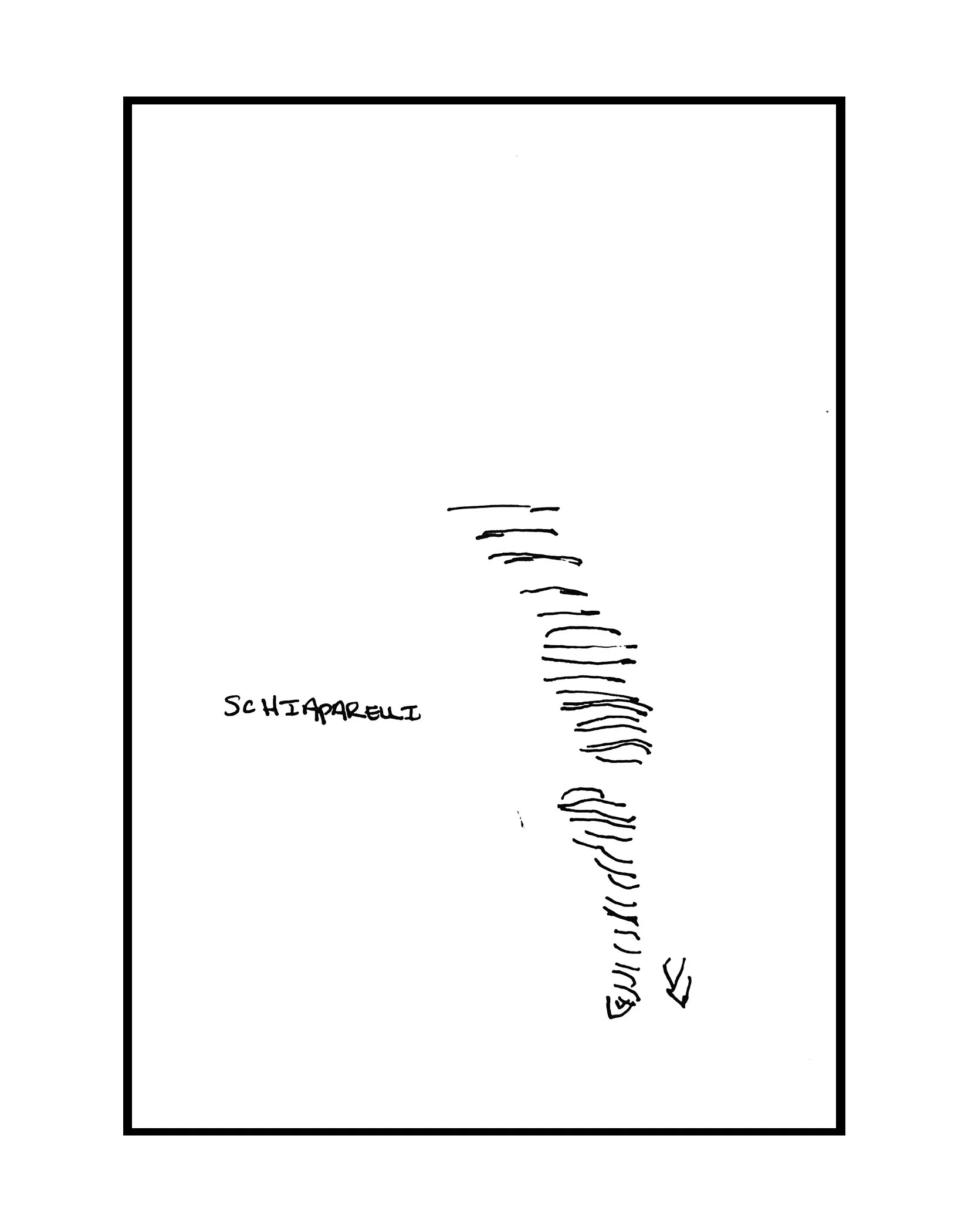
Glossary for 'Paris Paris' Collages by Amadeo Amadeo: Day 21
Juxtaposition [ˌjʌk.stə.pəˈzɪʃ.ən]
n. A harmony of contradictions; where ancient cobblestones meet the fleeting shadow of a modern wanderer, both claiming the same moment in time yet centuries apart.

Schiaparelli Couture
'Paris Paris' Collages Glossary
Juxtaposition [ˌjʌk.stə.pəˈzɪʃ.ən]
n. A harmony of contradictions; where ancient cobblestones meet the fleeting shadow of a modern wanderer, both claiming the same moment in time yet centuries apart.Luxury [ˈlʌkʃ.ər.i]
n. The art of savoring the commonplace; like the ballet of Parisians cradling their baguettes under their arms, each a scepter ruling the mundane walk home.Ephemera [ɪˈfɛmərə]
n. The immortal traces of fleeting moments; the peeling posters and torn flyers that dress the city's walls, each layer a silent testament to the city's unending dialogue with time.Silhouette [ˌsɪluˈɛt]
n. The outline of a city defined not by buildings, but by the spaces between where light meets dark, crafting stories in the gaps of what is seen and unseen.Chiaroscuro [ˌkiːɑːrəˈskjʊəroʊ]
n. The dance of light and shadow across Parisian facades, where each shadow deepens the story and each highlight narrates a day’s joy or a night’s sorrow.Fragrance [ˈfreɪɡrəns]
n. Invisible threads weaving through the city, stitching together scenes with the scent of rain on warm pavements or the faint perfume trailing from a stranger's scarf.Orchestra [ˈɔːr.kɪ.strə]
n. The soundscape of the city; from the cacophony of traffic to the lilt of spoken French at a café, orchestrated not by a conductor but by the day itself.Canvas [ˈkæn.vəs]
n. Paris itself, where every street, every face, every burst of wind against café curtains paints its own story, waiting for an artist to frame it.Alchemy [ˈæl.kɪ.mi]
n. The transmutation of everyday Paris into art; turning golden hour light into painted strokes, or the hum of the Metro into the baseline of life’s soundtrack.
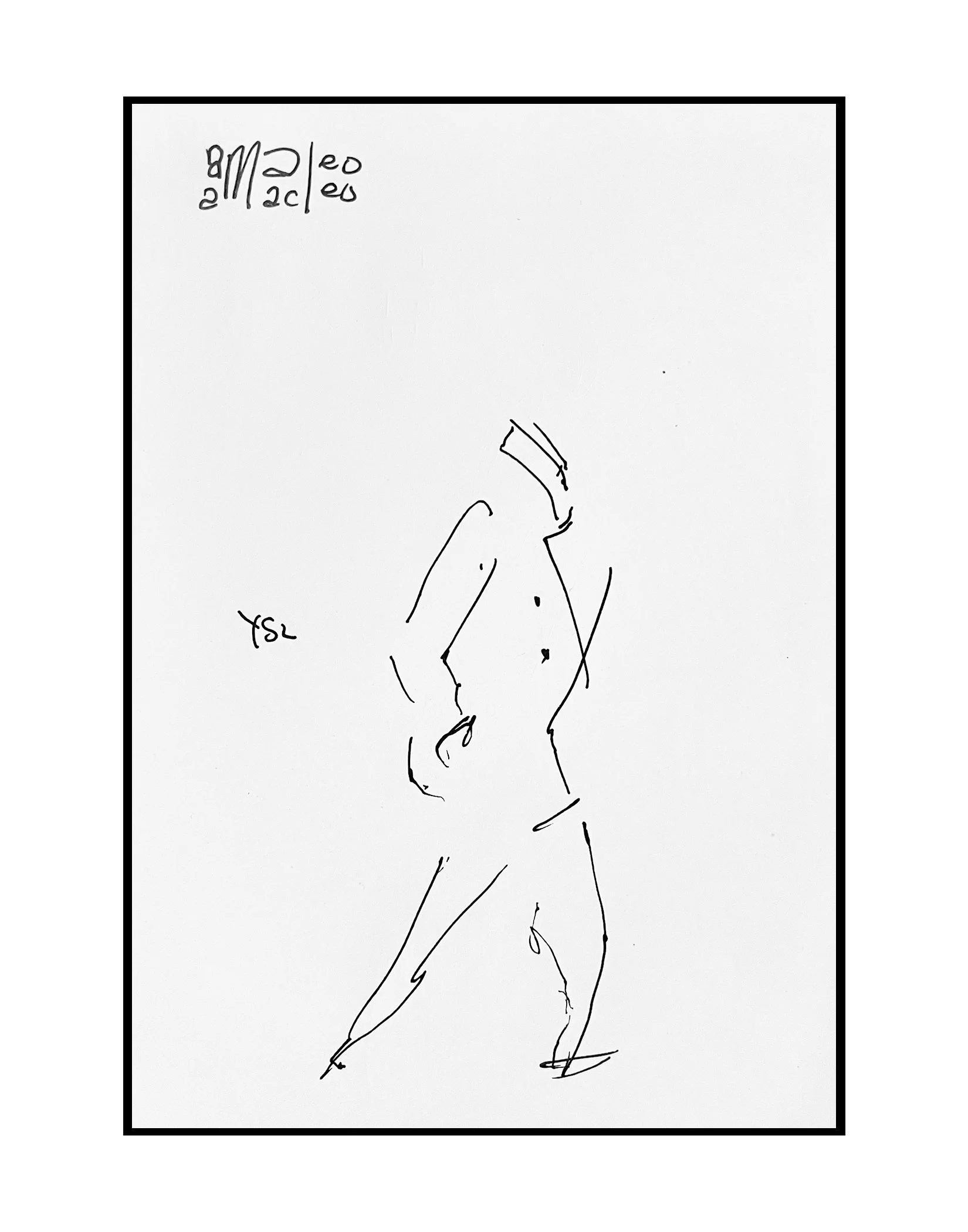
The Conductor’s Crescendo: Day 20
Today unfurls like a scroll, inked with tasks yet written in the frenzied script of a mind ablaze. I am the eye of a creative storm, each gust a gale of ideas swirling, threatening to overtake my capacity to channel them into the tangible. Work, work, work—the mantra pulses in my veins, a rhythm beating against the ticking clock.
Today unfurls like a scroll, inked with tasks yet written in the frenzied script of a mind ablaze. I am the eye of a creative storm, each gust a gale of ideas swirling, threatening to overtake my capacity to channel them into the tangible. Work, work, work—the mantra pulses in my veins, a rhythm beating against the ticking clock.
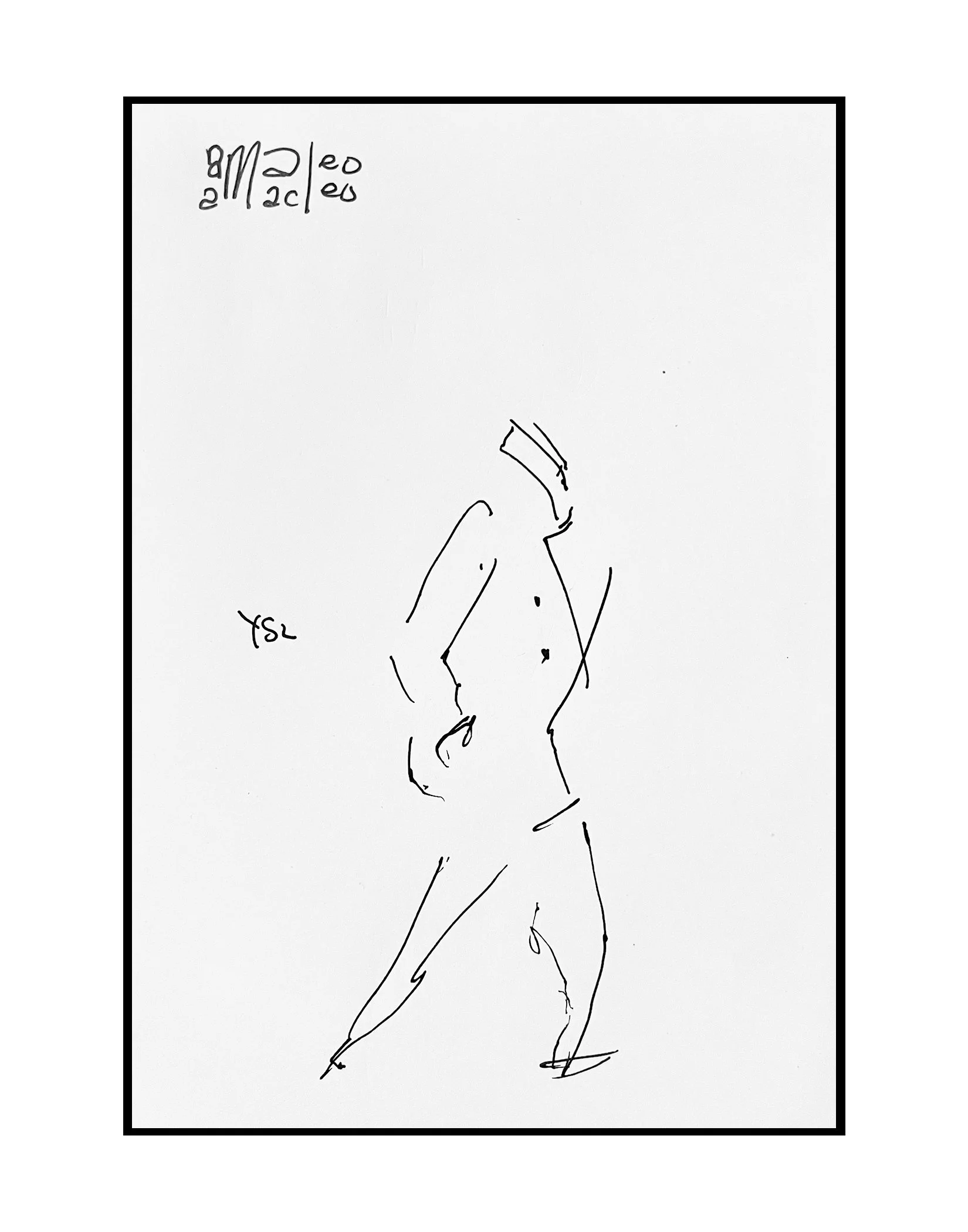
Fragrances: Elixirs brewing in the crucible of imagination, their scents ghosting through my dreams, poised to break into the world. Each aroma a note in the opus I am scoring, a whisper of the grand symphony to come.
Collages: Layers of Paris, snatched from the jaws of ephemera, are waiting to be reborn under my hands. They are nascent tapestries, each piece a tessera in the mosaic of my vision.
Uniforms: More than mere fabric, these are the costumes for the everyday performers in the theater of life. Amadeo Amadeo—the brand, a signature stitched in threads of innovation and tradition.
Photography: Each click a capture of fleeting moments, soon to freeze them into eternity. Ready to frame the world through my lens, to show the unseen, to tell the untold.
Paintings and Gallery Shows: Canvases sprawl across my mind’s eye, colors rioting in silent anticipation of the brush’s touch. Gallery walls await, hungry for the feast of visuals I am preparing to serve.
Pop-up Stores and Online Presence: Spaces physical and digital, each a portal that will open to invite the world into the realm I've crafted, a dominion ruled by creativity and bound by no borders.
Creative Direction: The baton is in my hand, the orchestra before me waits. A tap, a flourish, and the music of creation begins. The maestro of this grand opus, I cue the entrance of each element, a meticulous choreography of art and ambition.
Amadeo Amadeo—Amadeus Amadeus. Is it mere coincidence, or is it fate that my name echoes that of a composer famed for weaving melodies that transcended his time? Like Wolfgang Amadeus, I, too, am composing a magnum opus, not of notes and rests, but of scents, sights, and textures.
Who is ready to witness the crescendo? Who is prepared for the climax of this symphony I conduct?
A pressure cooker of creative force, I simmer on the brink of revelation. Paris, my muse; the world, my audience. Stay tuned, for the veil is thinning, and soon, the curtain will rise.
Prepare yourselves for the unveiling, as I, Amadeo, the composer of worlds, bring forth the spectacle. In this last week in Paris, the surreal becomes real, the cryptic becomes clear, and the imagined takes form. Hold your breath, for the finale promises to eclipse all that has come before.
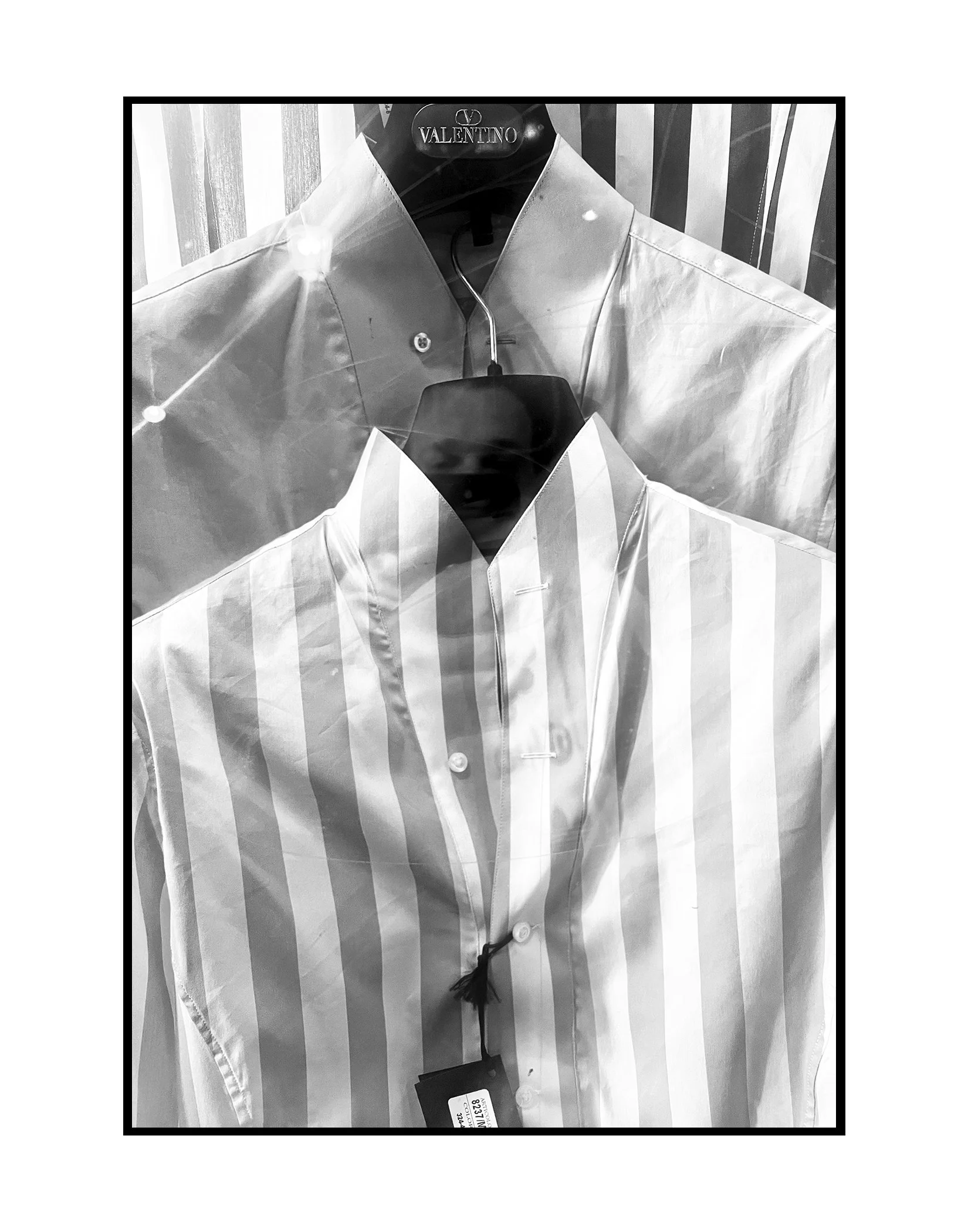
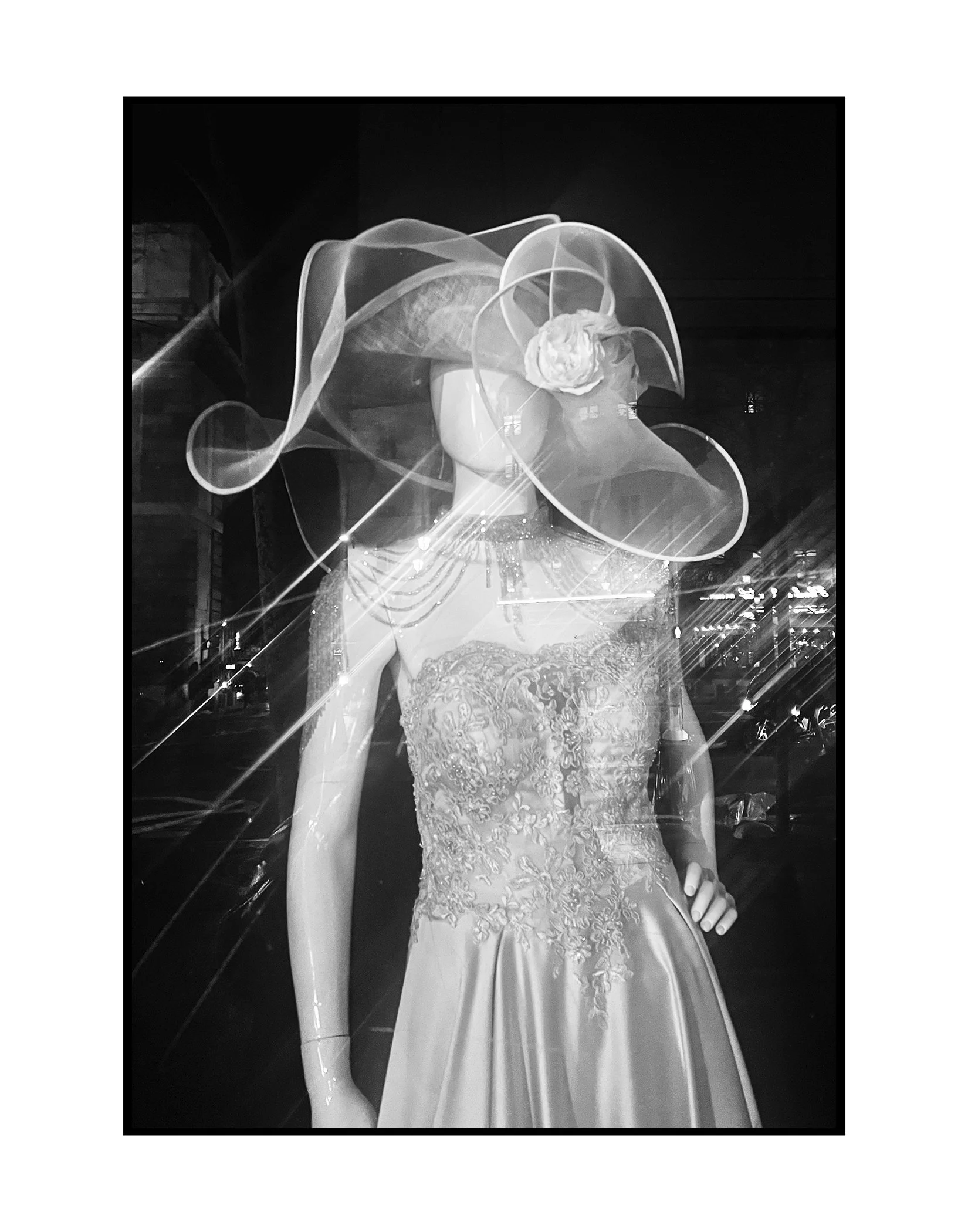
Amadeo Amadeo—let the art play on.

A Symphony of Sunlight and Synthesis: Day 19
The dawn unfurled with a rare generosity today—the sun, a long-absent friend, decided to grace Paris with its radiant presence. As the light spilled through my window, I was at my workstation, espresso at my side, fingers dancing over images needing the breath of life through retouching. But the sun’s embrace was too compelling, whispering promises of inspiration through the golden warmth.
The dawn unfurled with a rare generosity today—the sun, a long-absent friend, decided to grace Paris with its radiant presence. As the light spilled through my window, I was at my workstation, espresso at my side, fingers dancing over images needing the breath of life through retouching. But the sun’s embrace was too compelling, whispering promises of inspiration through the golden warmth.
"I need to go outside," the thought struck with the urgency of a struck match. Out in the open, the city pulsed with a vibrancy that only sunlight could paint. I became a wanderer, a collector of sights and textures. Peeling billboards and fading art from the walls of Paris buildings—each fragment a treasure, a piece of the city’s soul destined for my collages.
My camera was my loyal scribe as I captured the architecture, each building a potential cornerstone for the fantastical landscapes I planned to assemble. Today wasn't just about creation; it was about connection—the tactile feel of the city’s energy coursing through my veins, urging me to bottle this vibrancy and channel it into my art.
The city’s rhythm felt like a palpable heartbeat under my feet, a drumbeat to which my own creative pulse quickened. Every corner offered a dialogue with the past, each street a narrative unfolding beneath the azure sky. I was collecting not just materials but energy—bottling the essence of Paris to unleash within the confines of my studio.
Back at my sanctuary, thoughts turned to my fragrances—the Codex collection, each scent a story waiting to be told, a sensory journey waiting to be embarked upon. The fragrances are more than olfactory delights; they are distillations of experiences, of emotions, of the very essence of creativity that Paris has imbued in me. Which of these will first transition from concept to tangible reality? The anticipation is exhilarating.
Let’s create. Let’s transform this torrent of creative energy into something palpable. I’m eager, almost painfully so, to share this artistic fervor with the world. Each piece I create, each fragrance I conceive, is an invitation—to feel, to explore, to dream alongside me.
Dear reader, as I hold back the visual feast until the unveiling of the complete collage, I invite you to engage with the anticipation. What stirs your soul in the realms of art and scent? How do you capture the essence of your experiences? Share your thoughts, your stories, your inspirations in the comments below.
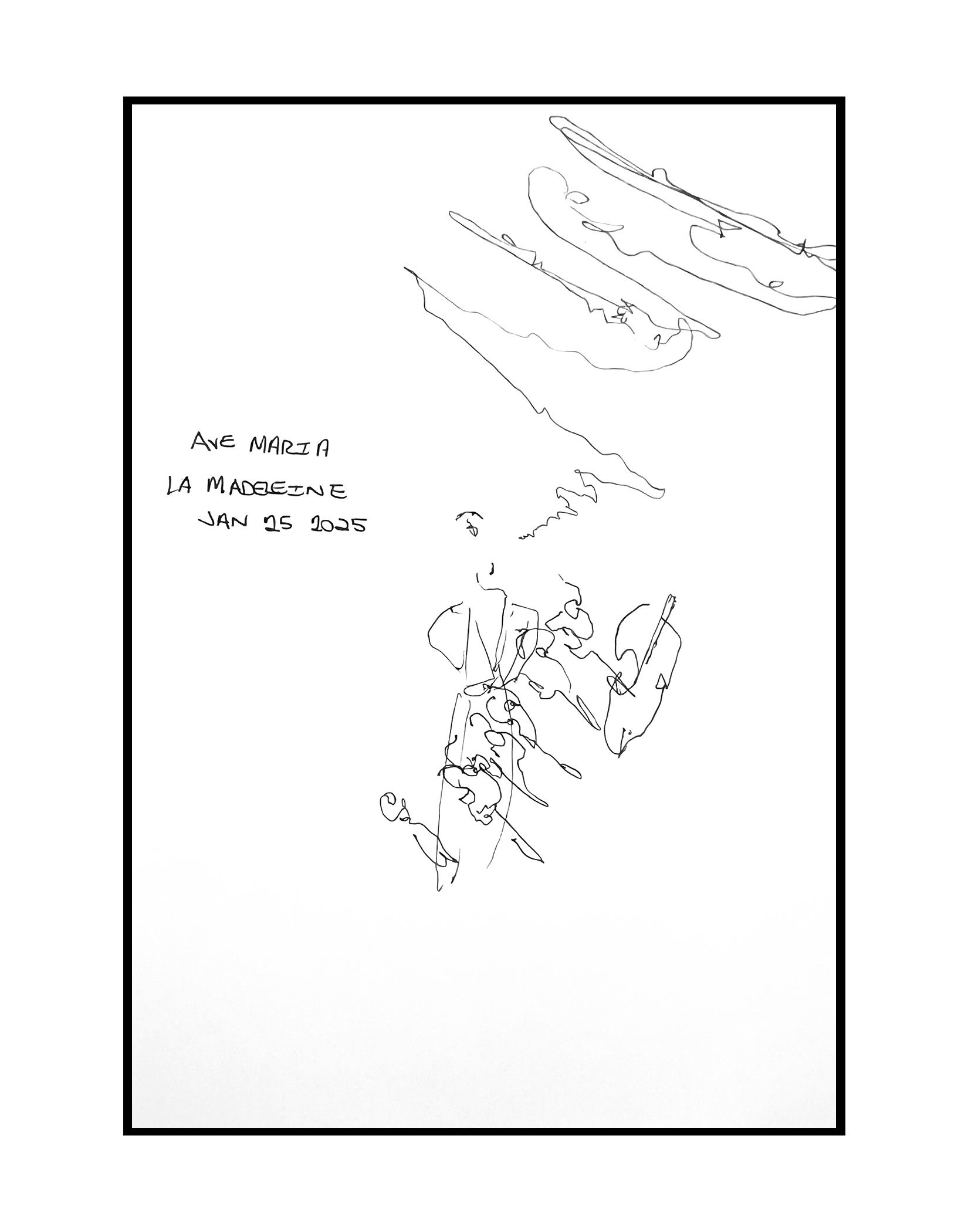
And as for the sketch accompanying this entry, let it be a hint, a whisper of the grand tapestry of art and emotion that I’m weaving from the heart of Paris. The full revelation awaits, but for now, let us revel in the mystery, in the delicious suspense of creation.

Stay tuned, for creativity knows no bounds, and soon, the fruits of these sun-soaked days will burst forth in colors, textures, and scents that I hope will move you as deeply as they’ve moved me.
A Symphony of Sights and Sounds: Day 17
Awakened at the witching hour—4:30 a.m., the city still cloaked in its nocturnal shroud. Sleep's remnants cling like cobwebs, but the allure of the undone propels me from bed to workstation. The glow of the screen, my sole companion, as I bend light and shadow to my will until dawn.
Awakened at the witching hour—4:30 a.m., the city still cloaked in its nocturnal shroud. Sleep's remnants cling like cobwebs, but the allure of the undone propels me from bed to workstation. The glow of the screen, my sole companion, as I bend light and shadow to my will until dawn.

Andrew's arrival ushers in a gust of the familiar, the comfort of old friends in new cities. We arm ourselves with caffeine, double espressos—twice—our armor against the relentless yawn of sleep deprivation. Paris, draped in morning rain, offers her streets as a canvas for our delirium.
The Louvre, grand in the timid light, watches us pass, but we seek solace and more caffeine at a nearby cafe. Spirits lifted, we venture into the sanctity of La Madeleine. Inside, grandeur whispers through marble and gold; sculptures beckon with stories etched in stone. The promise of an evening concert there captures our imagination—we vow to return.
A brief respite at my apartment to wrestle with pixels and possibilities, then it's out into the city's embrace once more. Lunch, laughter, and the lure of fragrances—our afternoon mapped out in scents and smiles. Serendipity strikes as we stumble upon the dispersing crowd of a Y-3 runway show. A camera catches my eye, a wink seals the moment—ephemeral fame on Parisian pavements.
Evening draws us back to La Madeleine. The church, now a vessel for voices and strings, welcomes us to its heart. The concert—a cascade of acoustic brilliance. Violins cry, an opera singer’s voice climbs the dome, spirals around the gilded edges, and dives deep into the soul. Her gown, a sea of sequins, mirrors the celestial dance above. Ave Maria fills every crevice of the grand space, the lyrics a prayer, the melody a caress.
Amid this spectacle, I capture video, a desperate attempt to bottle the magic, to share a sip of this overwhelming sensory feast. The experience transcends mere sight and sound—it is a communion, a spiritual ingestion of beauty and artistry.
Tonight, I lay in bed, the echoes of the day resonating within me. Paris, you are a poem written in the ink of light and music, a dance choreographed in the steps of saints and sinners alike. And I, merely a scribe, attempting to transcribe the indescribable, to convey the essence of a day lived fiercely, felt deeply.


Art is not just seen or heard, it is felt, it pulses through the veins like fire, it whispers in the dead of night and dances in the light of day. Is living not an art? And is art not a form of living? In Paris, they are one and the same—breath, beat, beauty, boundlessly intertwined.
And so, dear reader, immerse yourself in this narrative, this ode to the day, and perhaps find a moment of beauty to cradle in your own heart.

An Ode to Creation and Perception: Day 16
This morning dawned like an open canvas—espresso steam twirling into the early air, mingling with the anticipation of creative communion. The ritual shower left my thoughts clearer, my senses sharper, ready to dance with the day's demands. As the clock nudged closer to eleven, I descended to greet Martin, my co-conspirator for today's visual symphony. With a quick dash for an Americano—my fuel—I primed us for the unfolding artistry.
This morning dawned like an open canvas—espresso steam twirling into the early air, mingling with the anticipation of creative communion. The ritual shower left my thoughts clearer, my senses sharper, ready to dance with the day's demands. As the clock nudged closer to eleven, I descended to greet Martin, my co-conspirator for today's visual symphony. With a quick dash for an Americano—my fuel—I primed us for the unfolding artistry.

In my sanctuary above the waking city, I draped Martin in oversized denim, our palette for capturing movement, shapes with the body, a choreography set in my obscure world. The session thrummed with energy, our creativity syncing in a ballet of lens and gesture. But as the final shot was captured, the skies opened their floodgates, casting Paris in a watery veil. Yet, not even the rain could tether my restless spirit.
Camera stowed away, I embarked on a sensory expedition, the city’s slick streets a stage for the day’s second act. Raindrops composed a symphony on cobblestones, each splash a note, every puddle a reflection of the world above. I navigated the labyrinthine alleys, each turn a surprise, every path a narrative unwinding beneath my hurried steps.
Fabric shops unfolded like treasure chests, bolts of cloth lined walls in silent expectation, patterns sprawled across tables in mid-transformation. The snip of scissors, the flutter of textiles—each a whisper of potential, a hint of what could be. My mind wove these fragments into a collage, envisioning the myriad forms they might take under the artisan's guiding hand.
Chocolatiers sculpted sweetness in their dimly lit workshops, artisans of ephemera crafting ephemeral delights. How magical the city seemed, even—or especially—through the curtain of rain, each artisan’s creation a defiance of the drabness that the weather sought to impose.
Lost then, both in place and thought, I surrendered to the disorientation. Paris, a maze with no desire for escape, each turn an introduction, every roundabout a decision spun on the spot. Amidst the rush, the city’s denizens clutched their baguettes like lifelines, culinary batons making their waterlogged way home.
Finally, refuge found in a covered passageway. Here, the rain’s tyranny was barred entry, and life continued under the watchful gaze of glass ceilings. A bookstore beckoned with the allure of its aged tomes, their covers a gallery of bygone graphic arts. Muted, dusty, they spoke in hues that only old paper can—a language of texture and tone that whispered secrets of their past readers.
Today was a day not captured through a lens but experienced with a vividness that photography seldom grants. It was a day of hearing colors, seeing sounds, and tasting the city's aromatic offerings. If a picture is worth a thousand words, today's experiences were a novel, lived and breathed rather than viewed through the distillation of a frame.
In a world eager to scroll past beauty, to consume without savoring, I seek to craft stories that demand pause, that command emotion. For what is art but the transmission of feeling, from creator to beholder, from one soul to another across the chasm of experience?
Today, I did not photograph, but I created. I narrated. I lived. Is this not art? Is this not life? As the city whispered its secrets, I penned them down—not just to remember, but to share, to evoke, to feel. For in the end, isn’t that what we’re here for? Not just to see art, but to experience it, to live it, to be moved by it.
And so, with the rain’s last notes playing softly against my window, I retreat into the night, the echoes of the day resonating deep within, a reminder that every moment is a canvas, every experience a brushstroke in the grand masterpiece of life.

A Symphony of Collages and Queries: Day 15
Dawn unfurled with the usual urgency; my retouching station beckoned. Prints lay scattered like leaves, each one a prelude to destruction and rebirth through collage. Ripping, tearing, reassembling—today was a day for creating chaos that begets beauty.
Dawn unfurled with the usual urgency; my retouching station beckoned. Prints lay scattered like leaves, each one a prelude to destruction and rebirth through collage. Ripping, tearing, reassembling—today was a day for creating chaos that begets beauty.


An unexpected free morning—my first model canceled. I diverted this gift of time towards olfactory exploration, weaving through the streets to fragrance boutiques, punctuating the journey with a ritualistic espresso, savoring the bitter liquid as it echoed the crisp morning air.
Lunch in hand, I returned, setting the stage for Tom's arrival. Our shoot unfolded like a choreographed dance, denim layers fluttering in orchestrated tumult, the camera capturing every ripple. These images whispered of potential—each a candidate for the collage that would later frame their energy in stillness.

Post-shoot, I found solace and inspiration at the Gagosian, where Bennett Miller's pigment prints of AI-generated art challenged the definitions of creativity. His work—a puzzle of prompts and pixels, paintbrushes and perceptions. What, then, is the artist? A conductor of commands to machines or mediums?


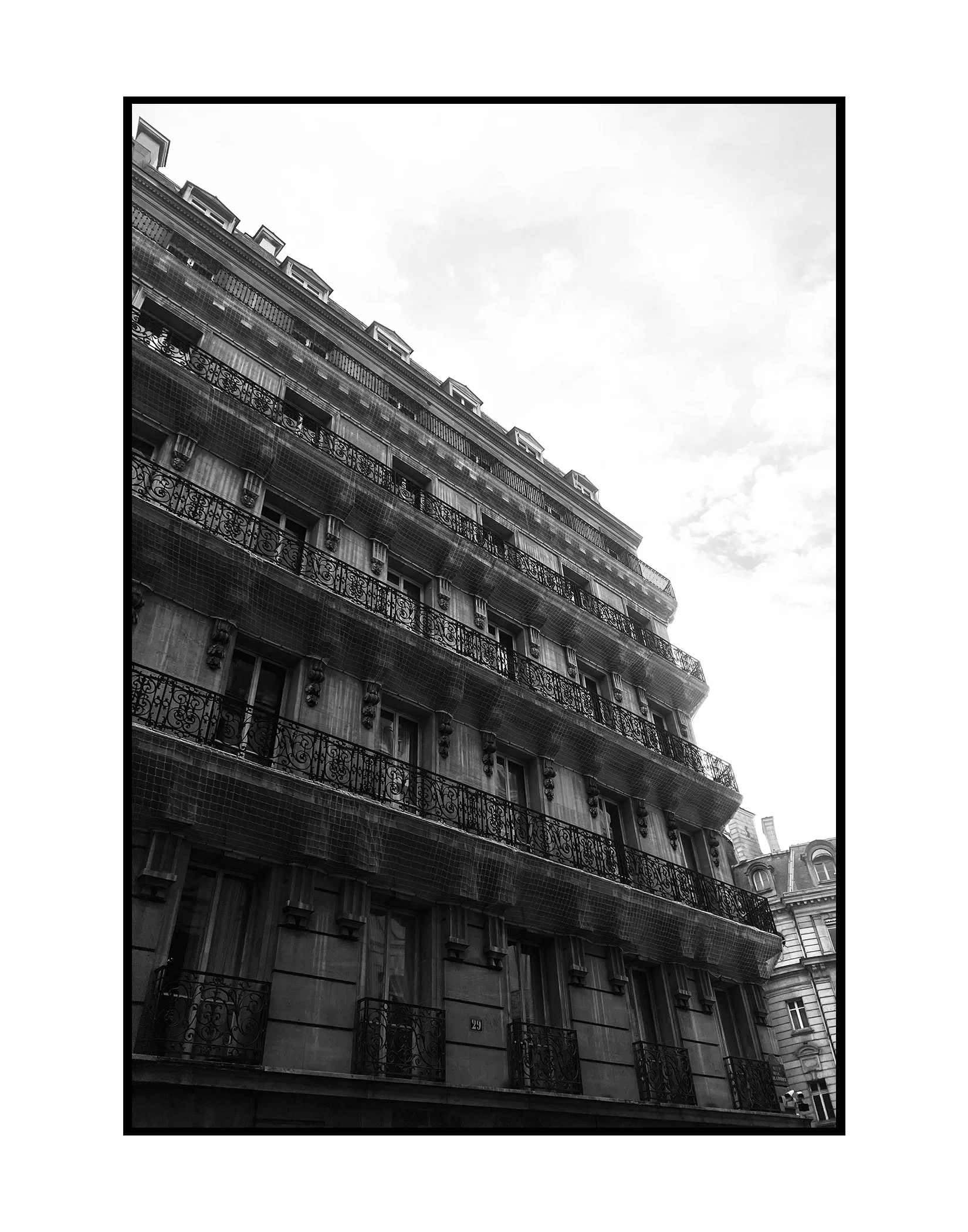

Wandering home, the city's palette blurred into philosophical musings. What is art? Is it the direction, the construction of scenes, the prompts that evoke thought or action? My art spans mediums, reliant on the dialogue between creation and response, the trust implicit in the exchange of ideas. Trust—the invisible thread that binds the artist to the audience, as crucial as the stroke of a brush or the click of a shutter.
My work, a world—an ecosystem of interactions, expressions, and experiments. Art isn't confined to canvases or concert halls; it's the cashmere casually draped, the scent that lingers, the gaze that captures. It's the mundane made magical through the artist's lens.
Tonight, as I ponder the porous boundaries of art and life, I wonder: Is living not a form of art? Is art not a way of living? In this world—my world—each moment is a brushstroke on the expansive canvas of existence.
Let us not just create art. Let us live artfully, embracing the chaos, the calm, and the infinite canvases yet unmarked.

Is living, art? Is art, living? Indeed, perhaps they are one and the same, each breath a stroke of genius, every day a masterpiece unfolding.