A Guide to Moving Along the River (Without Knowing Where You’re Going)
Part I
There is a way to move through a place without deciding where you are going.
It usually starts with coffee.
Or a question.
Or someone asking you if you are something you are not.
From there, it becomes difficult to stop.
You follow a road.
The road follows a river.
The river does not ask you anything, but it keeps offering.
A chair.
A jacket.
A painting you cannot take with you.
And before you realize it, you are no longer looking for anything specific—
you are just responding.
We started somewhere near the river without saying that we were following it.
Avon, Connecticut. A coffee shop that roasts its beans in-house—The Coffee Trade—the kind of place where the air is already thick before you even order. The smell of roasting beans sits low and constant, like something alive in the room. You don’t need to ask what they do there. You can smell it before you speak.
We ordered coffee.
“Are you guys musicians?”
There was a pause. A small laugh. Not because it was funny, but because it felt accurate in a way that didn’t need correcting.
We weren’t.
But we didn’t say that.
We sat in the garden and let that question linger between us, turning it over like something we had just picked up off a shelf. There’s a moment when you realize that people are seeing something in you that you didn’t intentionally present. Or maybe you did, without knowing.
That was the first shift.
If you continue down the road long enough, something will appear.
A Goodwill.
A small thrift store.
Something that feels like it wasn’t meant to be a stop, but becomes one anyway.
We went in without expectation.
I was looking for textiles—something that could become something else. Curtains that weren’t meant to be worn. Table linens that had already lived one life. Materials for Chiddu ca tinemu. The things that we keep, even when we don’t know why yet.
We left with sheer curtains. Tablecloths. Fabric that held memory in its weight.
At the next stop, Nikko found a jacket.
A perfectly worn brown leather bomber—soft in the way that only time can make something soft. He put it on in the middle of the store. The women behind the counter watched, smiling, approving, as if they had been waiting for someone to come in and take it home.
There’s a moment when clothing stops being clothing and becomes a role.
Before the jacket: cords, a hoodie, something quiet.
After the jacket: something else entirely.
We didn’t say it out loud, but it was understood.
We were becoming more visible.
The road kept moving and so did we.
The river stayed just within reach—sometimes hidden, sometimes running parallel like a second thought. The Farmington River doesn’t demand your attention, but if you notice it once, you keep looking for it again.
We ended up in Collinsville.
An antique mall—Collinsville Antique Mall—the kind of place where time folds in on itself. Every booth a different version of someone else’s past, arranged for you to walk through.
This is where things slow down.
You start to notice details:
a brown suede rocking chair worn into itself
a tray of colorful vintage flatware, each piece slightly off from the next
a wood panel with an inlaid clown, quietly plucking the petals from a flower
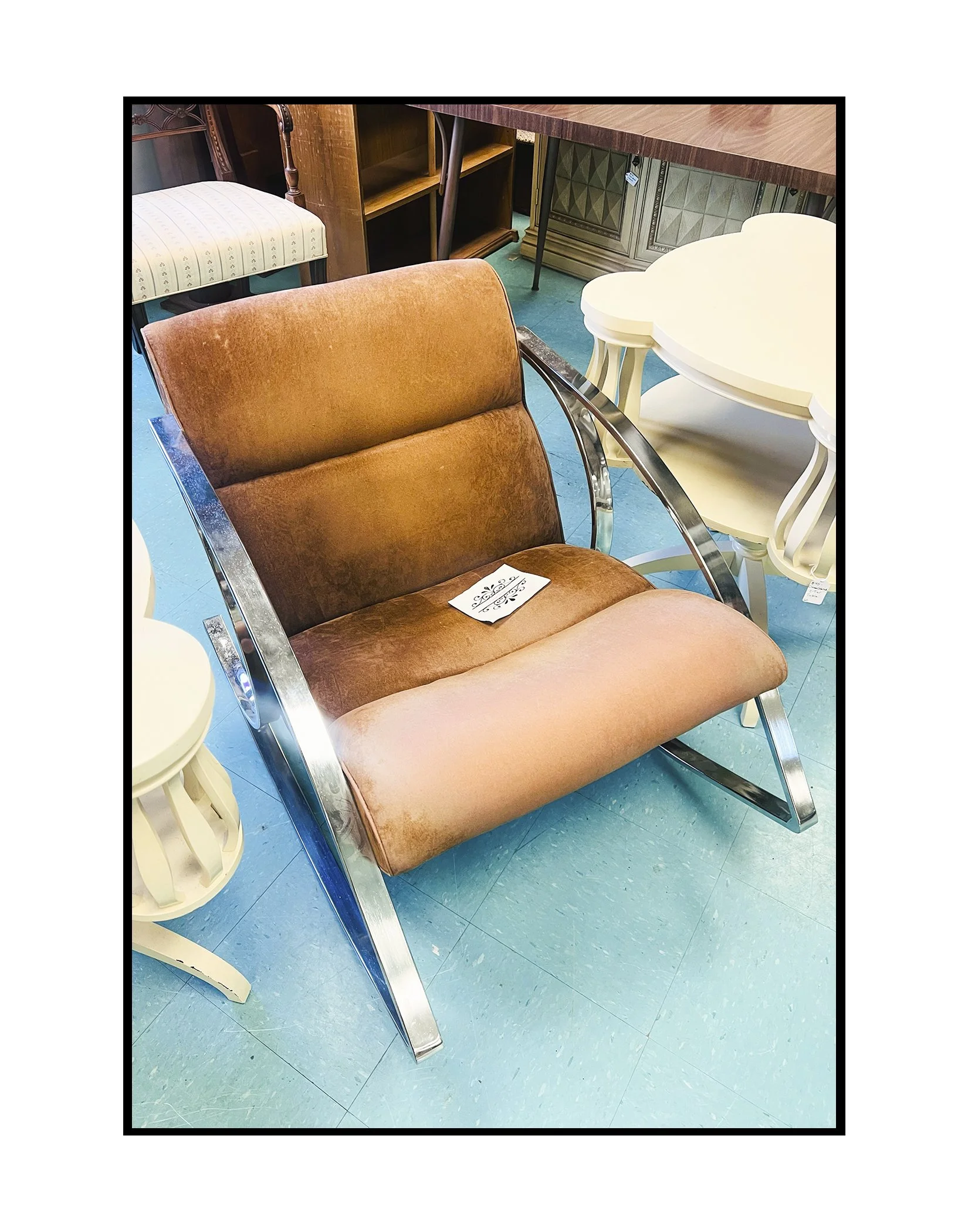
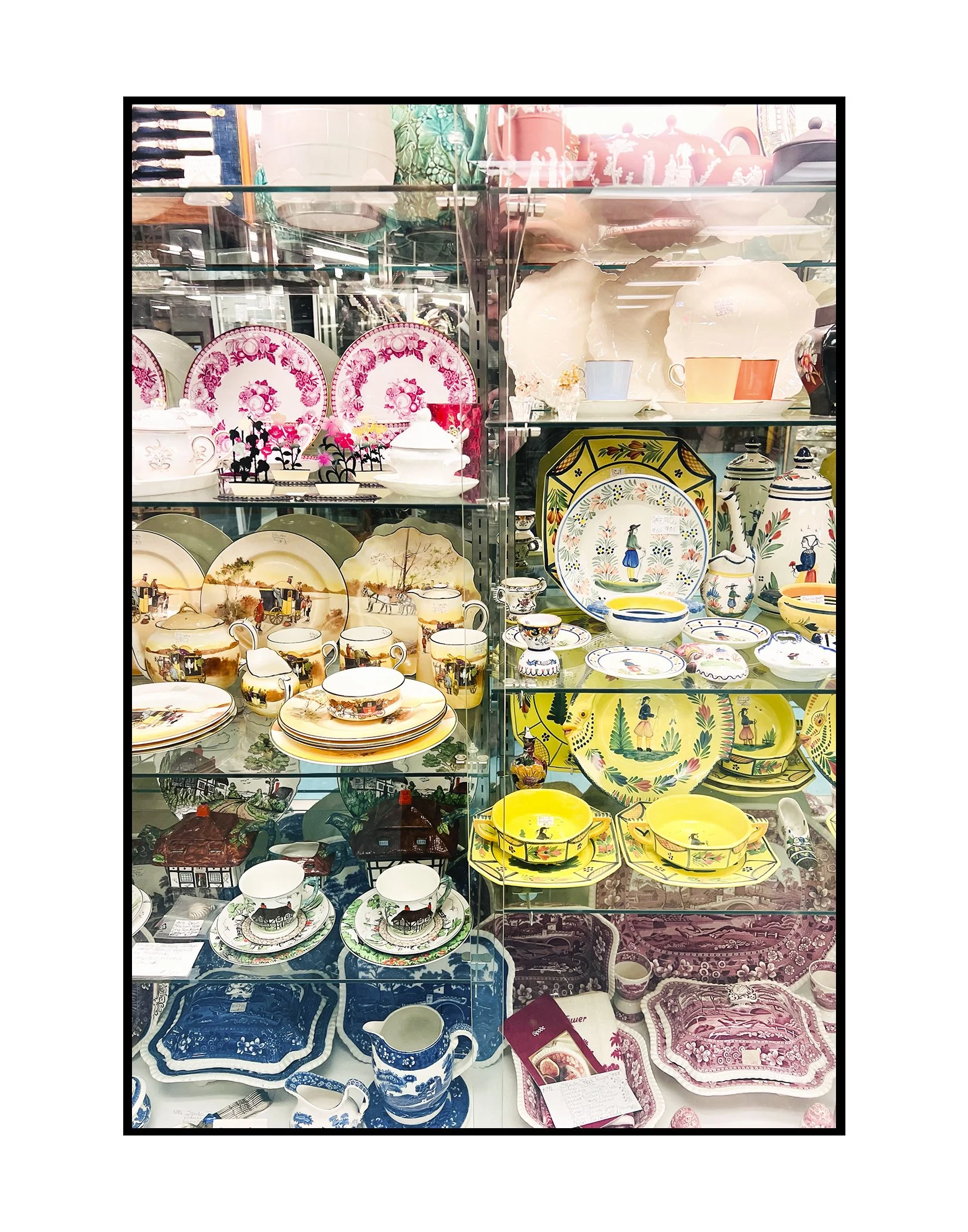
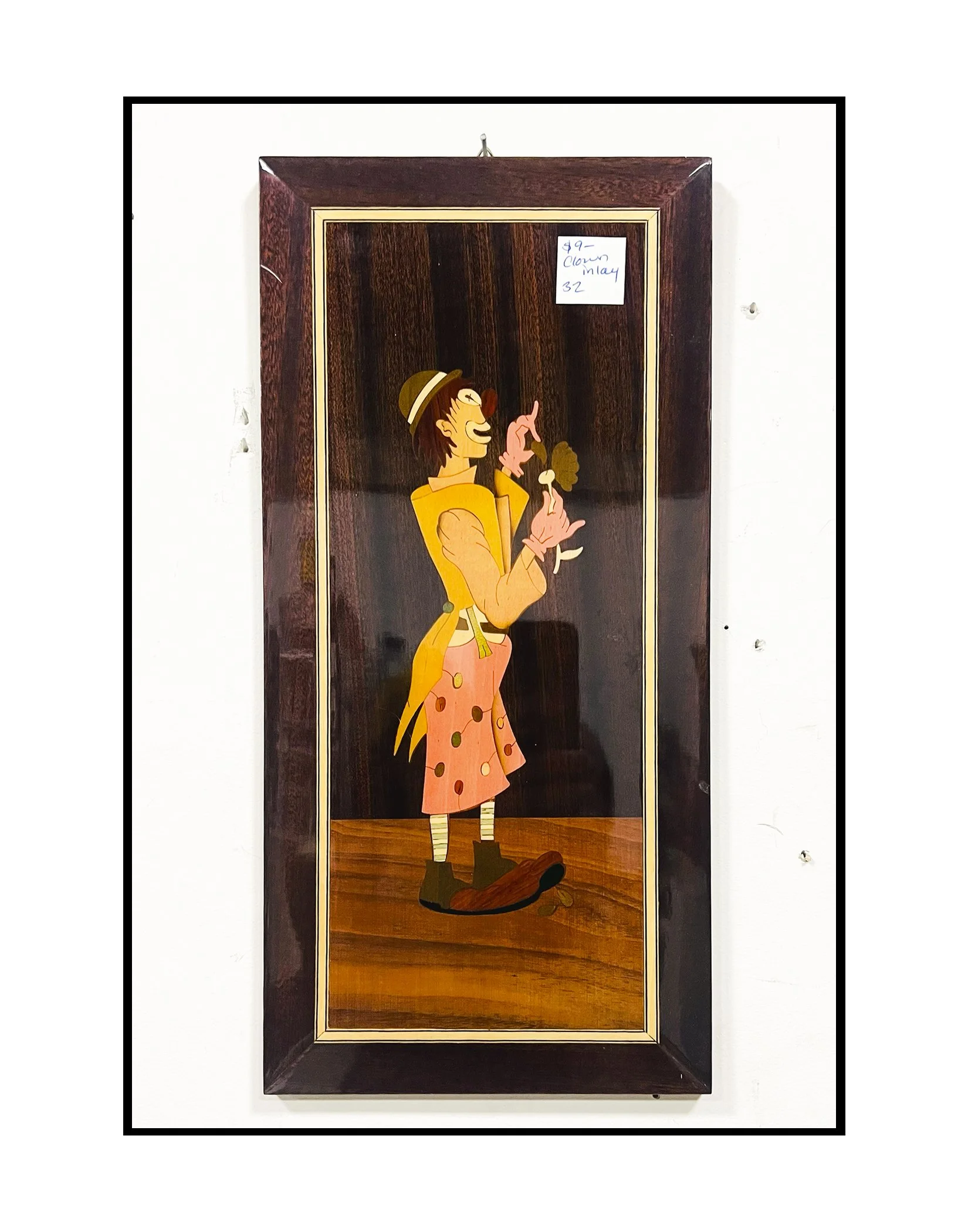
The clown stayed with me longer than I expected.
Not loud. Not exaggerated. Just there.
Doing something repetitive. Waiting.
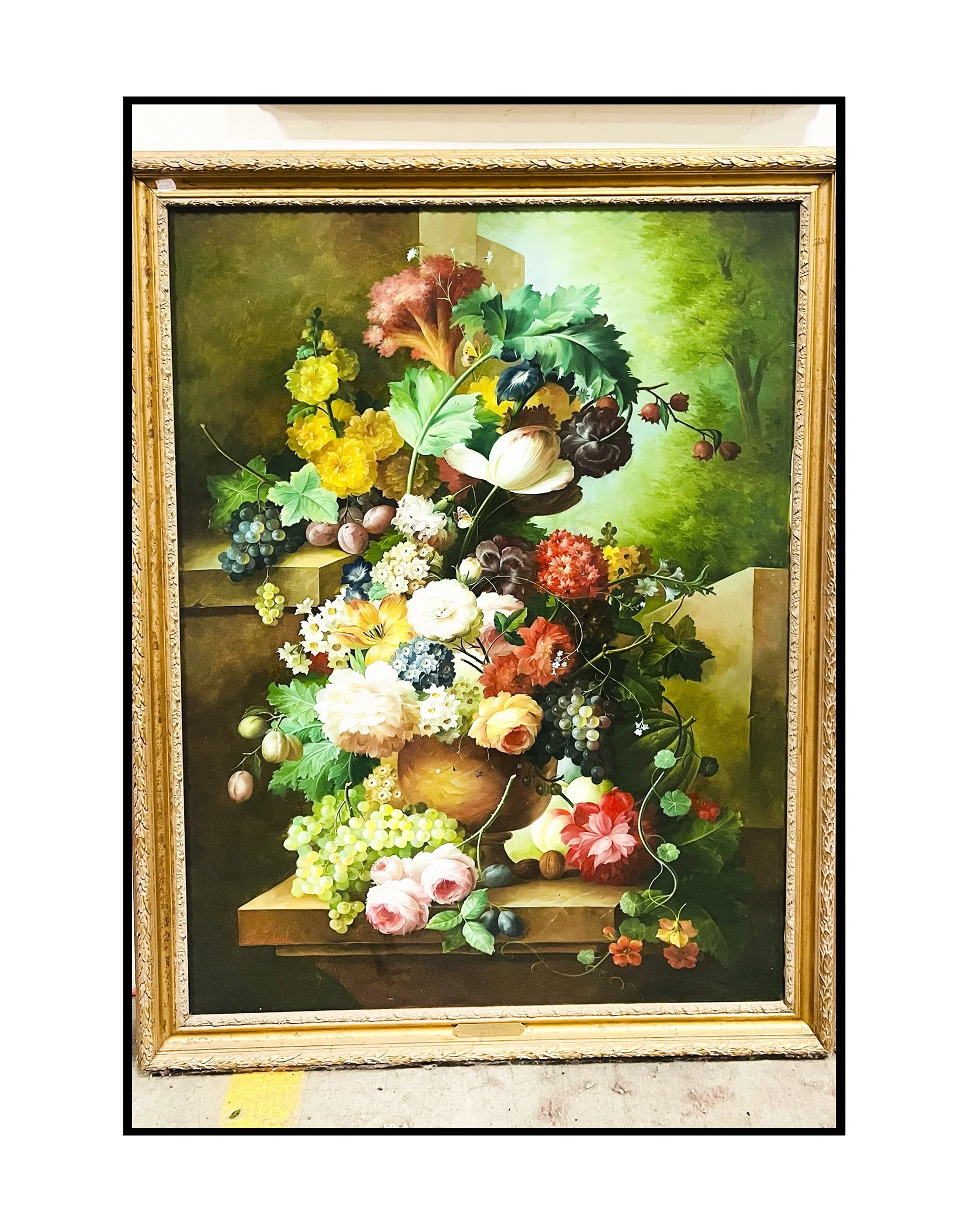
There was a painting too. Large. Oil. Flowers that felt almost too alive for the room they were in.
I wanted it.
Not in the way you want something decorative—but in the way you want something that feels like it already belongs to you.
I took a photo instead.
Some things you don’t take.
Some things you leave so they can keep existing where they are.
We walked out with an embroidered tablecloth. Flowers stitched into it carefully, deliberately. Something that would become something else later.
Again—collection, but not for keeping.
Collection for transformation.
We went home, but not really.
The body returned, but the momentum didn’t.
The fabrics came out immediately—laid across surfaces, held up to light, pulled, folded, tested. I wanted to see how they moved before they became anything permanent. There’s a moment before creation where everything is still possible, and it’s almost better to stay there.
That feeling doesn’t last long.
It turned into something else quickly—
paintings, collages, sewing.
An urgency.
The kind where you feel like if you don’t make something now, it might disappear.
At some point, the conversation shifted.
What is art?
What makes someone an artist?
Is there a difference between being creative and being an artist, or is that something we’ve decided to separate?
There wasn’t an answer.
There still isn’t.
It’s the kind of question that doesn’t resolve—it just expands.
The next day, we followed the same instinct.
No plan. Just direction.
We decided to go further down the river.
Chester, Connecticut—Chester—a town that doesn’t feel real when you first drive into it. The buildings sit too perfectly. The street feels staged. Like something built for a film, but left there after production ended.
We parked near a cemetery.
And again—coffee.
Simons Marketplace—espresso, cinnamon buns, a window seat facing Main Street. The kind of place where you sit and watch people move, and for a moment, you feel like you’re outside of it all.
Then back into it.
Cheshire Vintage—a perfectly curated shop. We spoke with one of the owners for a while. There’s something different about small towns like this. The conversations last longer. The recommendations matter more.
She sent us a few doors down.
Dina Varano Gallery—crystals, jewelry, objects that feel like they hold energy whether you believe in that or not.
There was a pattern forming.
We weren’t finding places.
We were being sent to them.
At some point, we noticed a small house.
White picket fence. Eyebrow dormer. Slightly elevated from the street as if it needed to be approached with intention.
We walked up.
There are moments where you don’t ask questions—you just follow the pull.
Next door, a door was open.
Leif Nilsson Spring Street Studio and Gallery.
We walked in.
Paintings filled the space. Impressionist, but not distant—alive in a way that made you feel like you had stepped into them rather than looking at them.
And then you realize:
the person standing there is the one who made them.
Leif.
The conversation started easily and didn’t feel like it needed to end. Stories about painting. About sailing. About working from a boat. About the house itself—once a hotel in the 1800s, now something else entirely.
We learned that the small studio we noticed outside was his too.
That everything we had just walked into was part of a larger life we hadn’t known existed ten minutes before.
At one point, I stepped back and saw Nikko standing in front of a long painting, looking up at it.
Still.
There are moments when someone becomes part of a scene without realizing it.
I took a photo.
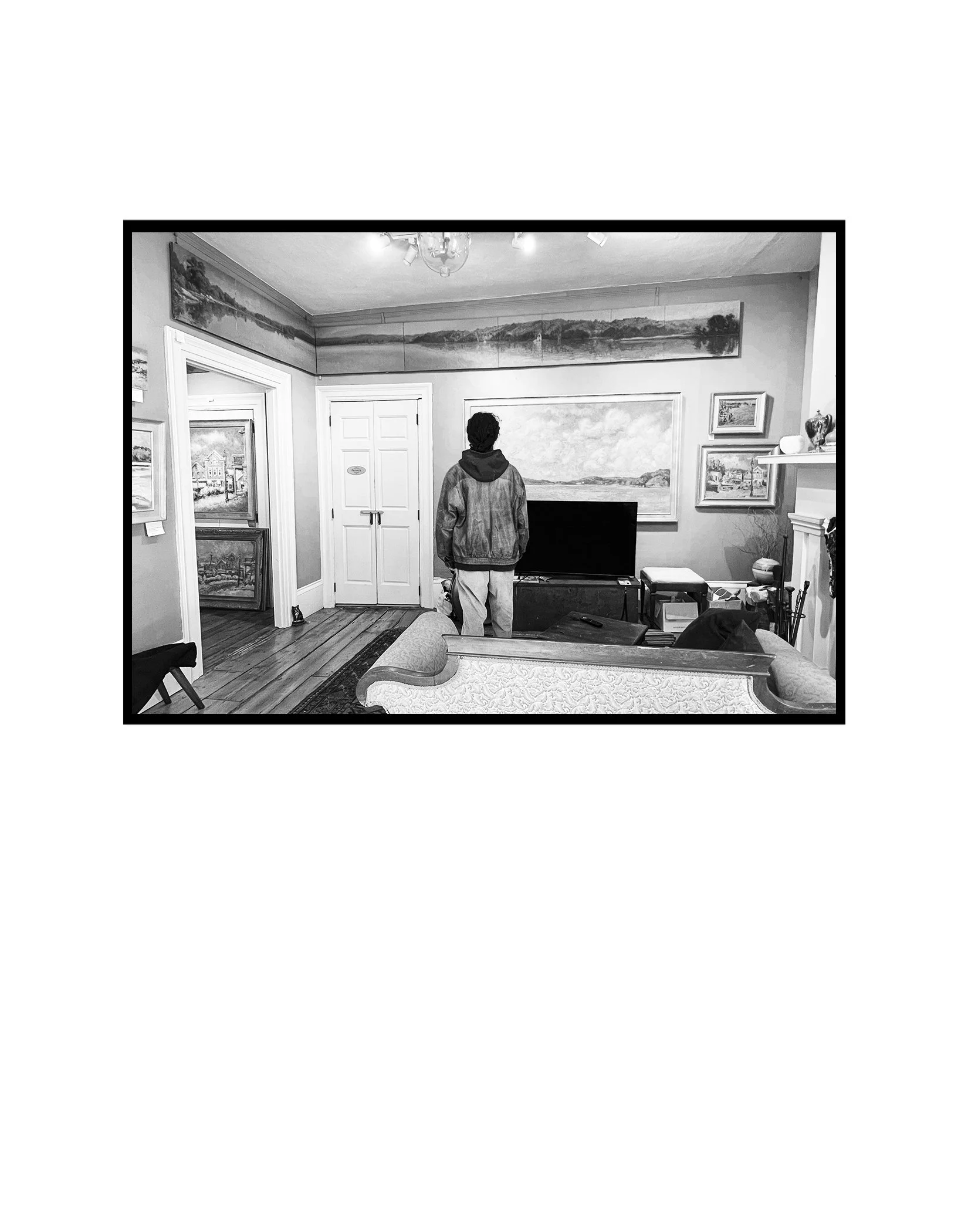
Nikko Amadeo inside Leif Nilsson’s gallery
Not many—just enough to remember that it happened.
Before we left, he mentioned something casually.
An art show.
The next day.
We should come by.
We said we would.
Or maybe we said we might.
We left Chester and drove to New Haven.
The shift was immediate.
The Owl Shop—dark wood, leather chairs, amber lights hanging low over the bar. The kind of place that exists outside of time, or at least outside of whatever time you were in before you walked in.
We sat down.
Picked cigars.
Ordered beers.
I had brought fragrance with me—something I had been thinking about all day without knowing why.
Lily of the valley.
And Muskara Aquilaria from Fueguia 1833.
We layered it into the room without asking permission.
The sweetness cut through the smoke.
The smoke settled back into it.
For a moment, the air felt constructed.
Not accidental.
We sat there, surrounded by low conversation, glass, wood, and heat, and returned to the same questions.
What is art?
What makes someone an artist?
Is it making something?
Or is it seeing something differently?
I don’t know when the conversation stopped and just became part of the atmosphere.
It felt like we had stepped into another version of the day.
Or another version of ourselves.
At some point, we left.
Not because anything ended, but because something was continuing somewhere else.
We talked about Chester the entire way back.
About Leif.
About the studio.
About the fact that we could go back the next day.
We said it casually, but it didn’t feel casual.
Some places open something.
Some people do too.
We said we might go back.
And for some reason, that felt like the most important decision we had made all weekend.