"We Are All Clowns"
Paris, 11:47 PM. The Seine was gleaming in that way only the Seine can — silver and black at once, like mercury performing for the moon. I had no intention of finding clowns that evening. Truly, I didn’t. I was simply walking, as one does in Paris when one wants to feel cinematic and alone. But as fate or foolishness would have it — the clowns found me.
By Bellamy Veil for The Town Crier
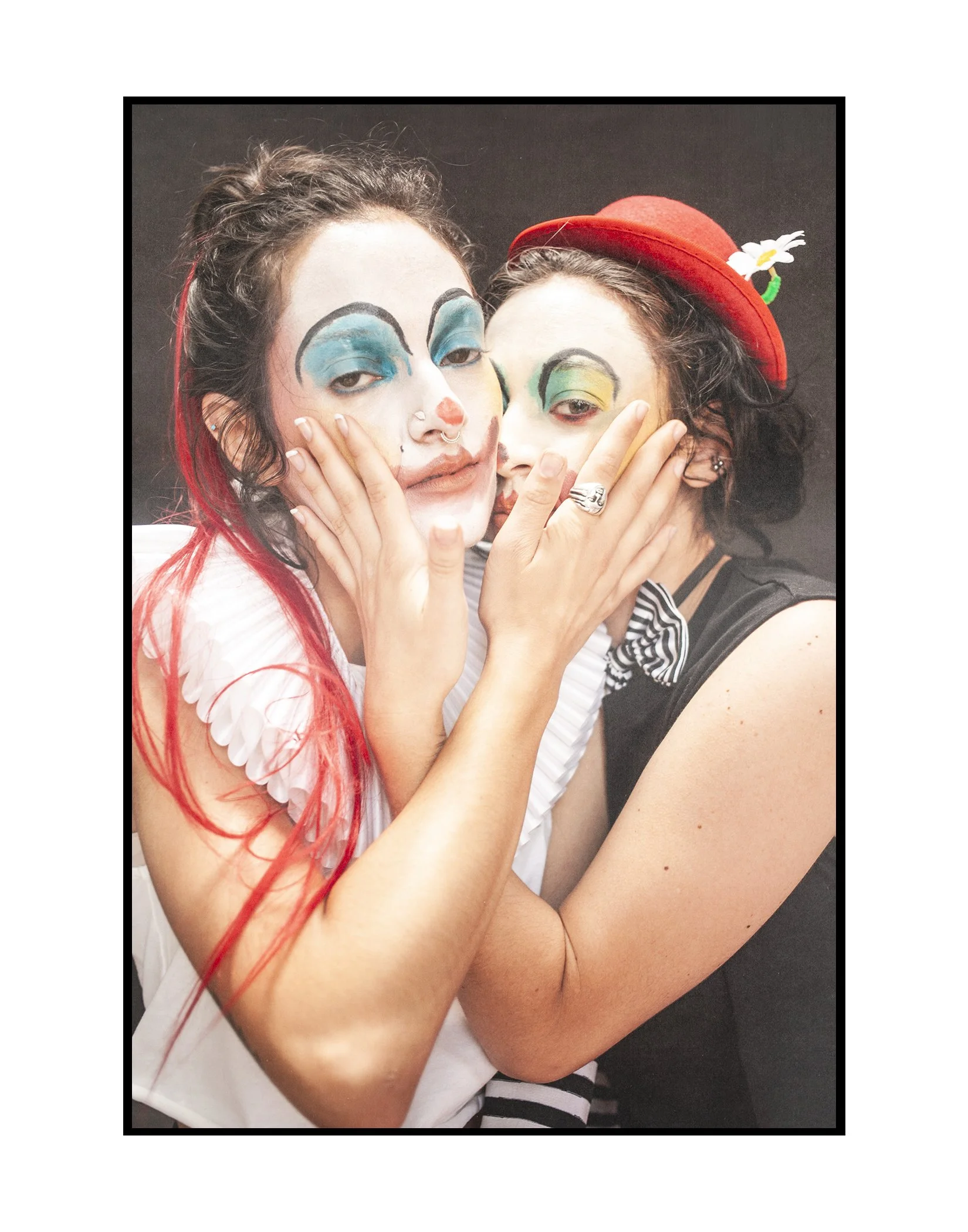
Paris, 11:47 PM. The Seine was gleaming in that way only the Seine can — silver and black at once, like mercury performing for the moon. I had no intention of finding clowns that evening. Truly, I didn’t. I was simply walking, as one does in Paris when one wants to feel cinematic and alone. But as fate or foolishness would have it — the clowns found me.
They always do.
Two of them this time. Striped and star-spangled, like escaped acrobats who’d been dipped in melancholy. They were standing under the Pont Neuf, twisting their limbs together in a choreography of discomfort. From afar, they looked like one person struggling with a reflection. Upon closer inspection — they were becoming conjoined.
Yes, conjoined! A performance, apparently. “The World’s First Voluntary Siamese Clowns,” a cardboard sign read. The crowd was small, mostly cigarette smoke and disbelief. But I watched — because how could I not? They wrapped their legs together, stitched invisible seams through the air, and whispered secrets through forced smiles. It was both grotesque and oddly touching — like watching two halves of the same wound trying to close themselves.
And then it happened.
As I turned to leave, they lunged — together, of course — their painted faces illuminated by the flicker of a streetlight. Their mouths moved in perfect sync. Their breath smelled faintly of roses and despair.
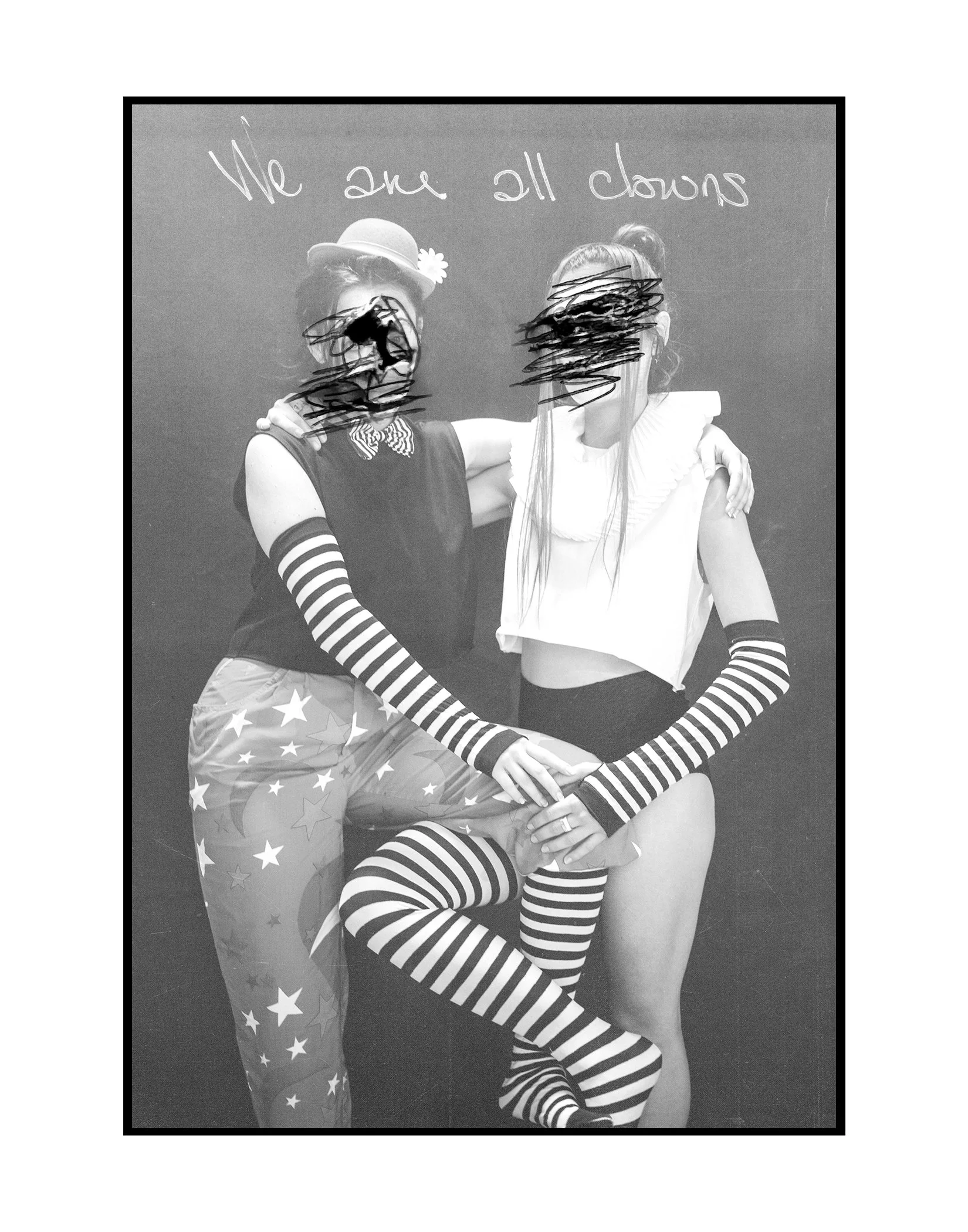
“We are all clowns,” they said.
And then they laughed — not the laugh of joy, but of knowing.
The rest of the night was silent, save for that echo. We are all clowns.
The phrase bounced off the river, the bridges, my skull. It followed me past cafés and lovers’ quarrels, past the scent of butter and smoke, past the dream of solitude.
Because perhaps they’re right. Perhaps we are all clowns — painted, performed, pretending. And perhaps I, Bellamy Veil, am simply the worst of them — a clown too proud to wear his own face paint.
Still, I can’t help but ask…
Why must everyone be a clown?
And worse — why do I keep finding them wherever I go?

The Case of the Naked Clown
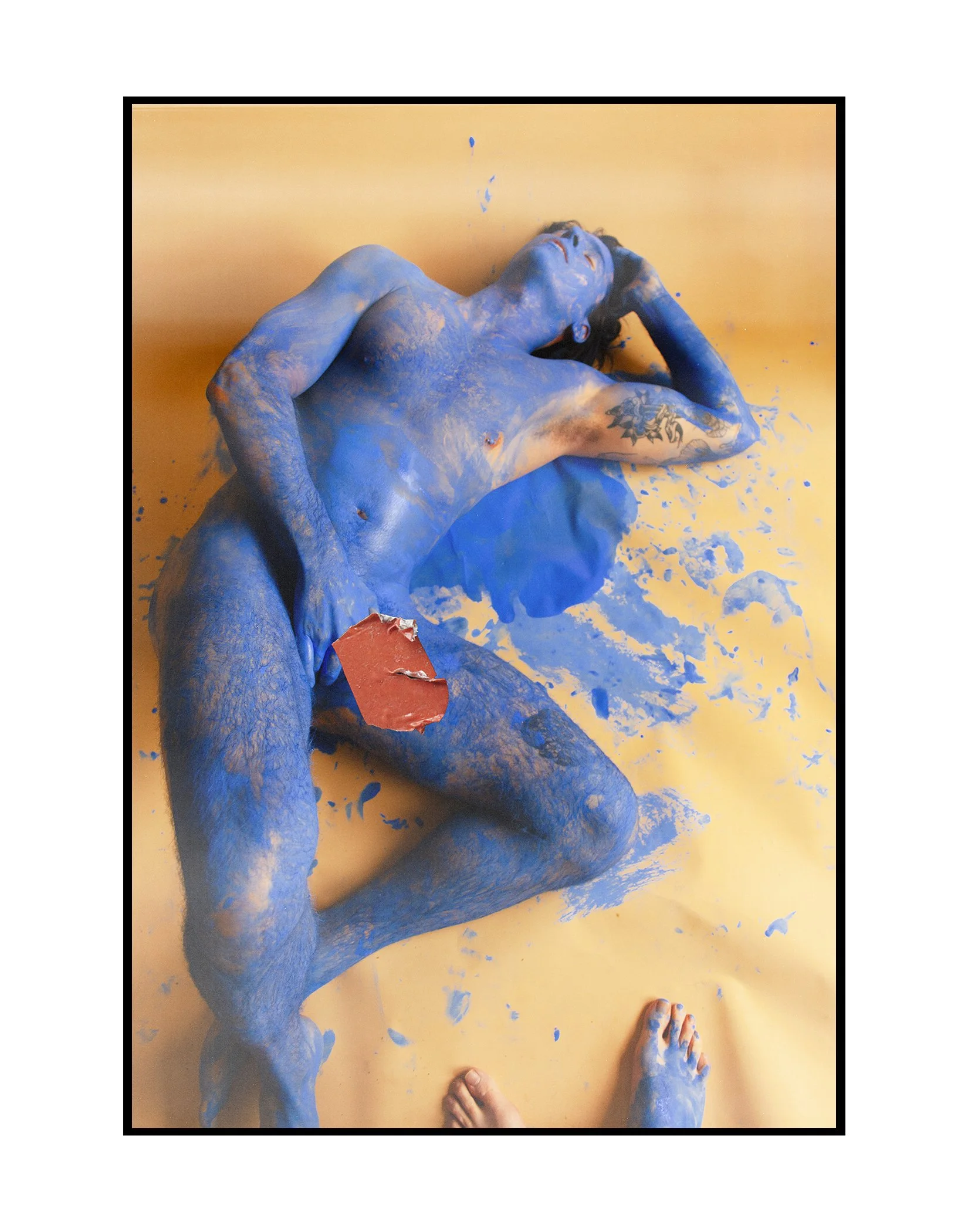
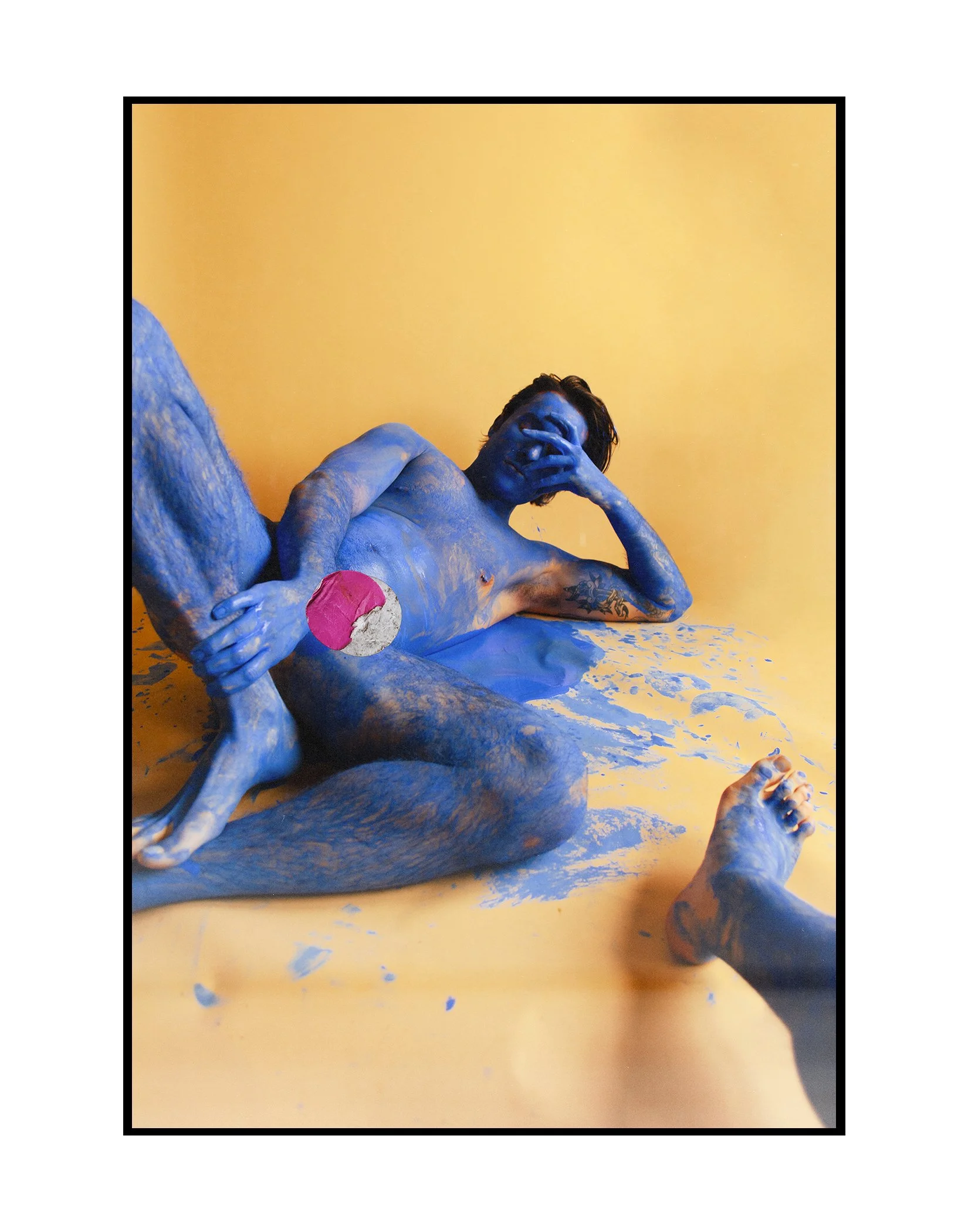
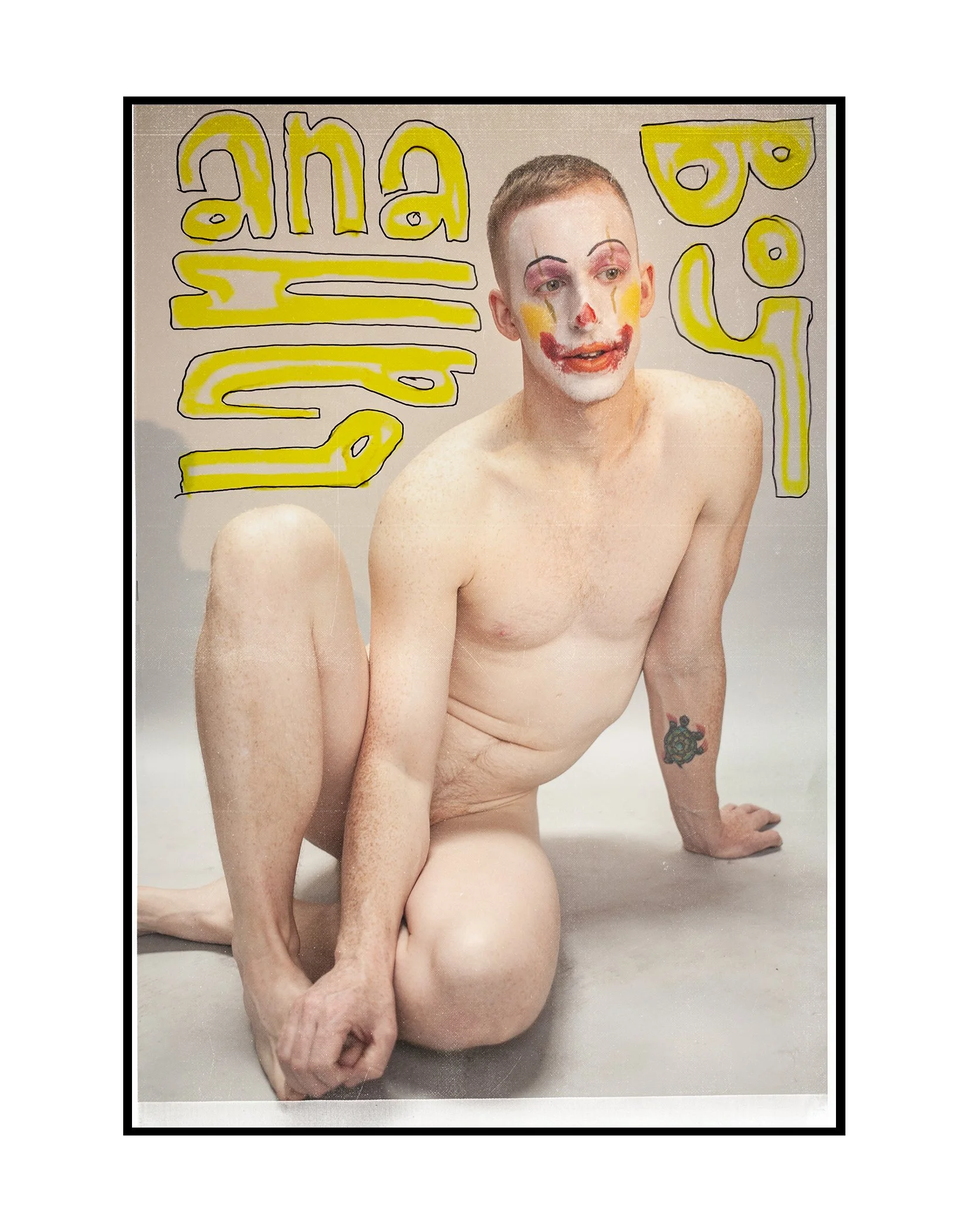
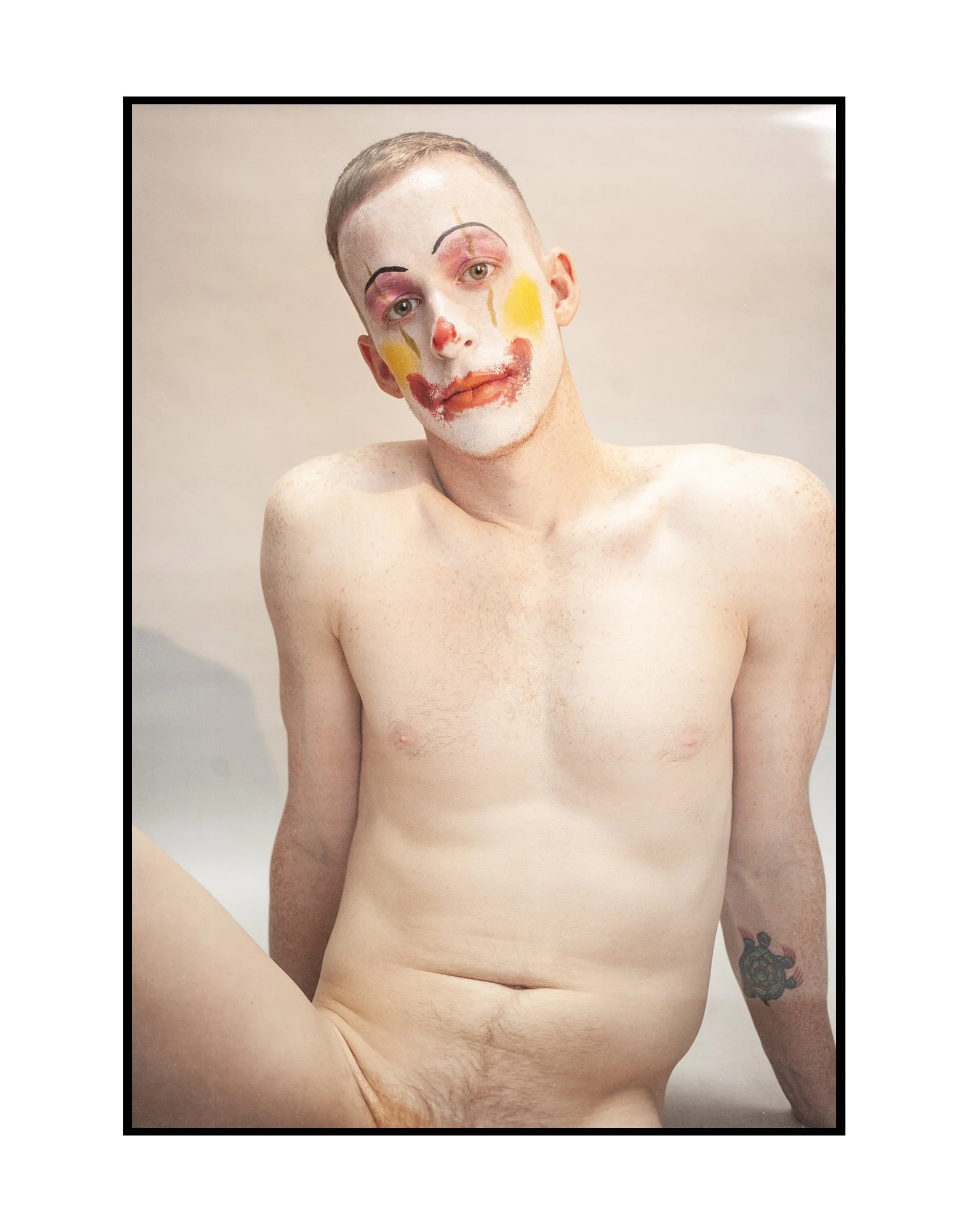
I must report a disturbance in the order of things. A clown without costume is no clown at all — and yet here stands Banana Boy (that is what he insisted I call him), painted and painted only. Face like carnival, body like… well, body like nothing but itself.
I must report a disturbance in the order of things. A clown without costume is no clown at all — and yet here stands Banana Boy (that is what he insisted I call him), painted and painted only. Face like carnival, body like… well, body like nothing but itself.
Why does he have no suit? Where did the ruffles go, the bells, the shoes three sizes too large? I have looked at the photographs for hours and still: nothing but flesh.
Some claim the clothes burned in a fire. Others whisper they were stolen by rival clowns to humiliate him. One theory says he was never given clothes to begin with — that A. Clown painted his face and then abandoned him, like a half-finished sketch.
But my favorite theory? The clothes are still here. Invisible. Threads woven from air, only visible if you squint in the right kind of madness. (I tried. I saw nothing.)
Notice how he poses: kneeling, bending, staring up at the ceiling as if God Himself might toss down a pair of trousers. He looks almost relieved when covered by a Del Monte sticker — as though the banana has become his only uniform.
This is what terrifies me: what if the clothes never existed at all? What if the suit is a lie, and the true clown is only ever naked under the paint?


Laugh if you must. I cannot.
— BV

The Arrival of Miss Misprint
I’ve come across another one. She appeared years ago, painted by A. Clown’s own hand, and yet she never belonged to him. She was already her own invention — a woman with flowers on her tongue and fumes in her lungs. They call her Miss Misprint, though nothing about her feels like a mistake.
I’ve come across another one. She appeared years ago, painted by A. Clown’s own hand, and yet she never belonged to him. She was already her own invention — a woman with flowers on her tongue and fumes in her lungs. They call her Miss Misprint, though nothing about her feels like a mistake.
She walks in pink and lilac, always carrying the hiss of aerosol instead of a horn. Roses trail after her — painted, sprayed, choking on smoke. You’ll know her by the faint perfume of varnish and wilt.
Her calling card has resurfaced. A square of paper, taped where only the restless might find it:
painted roses
bloom in smoke
find me
before the petals choke.
And below, the warning: look for the roses on the wall.
Is she a clown? A vandal? Or a mirror cracked on purpose? All I know is she is not to be trusted — none of them are. The more flowers she leaves, the more I see how easily beauty rots.

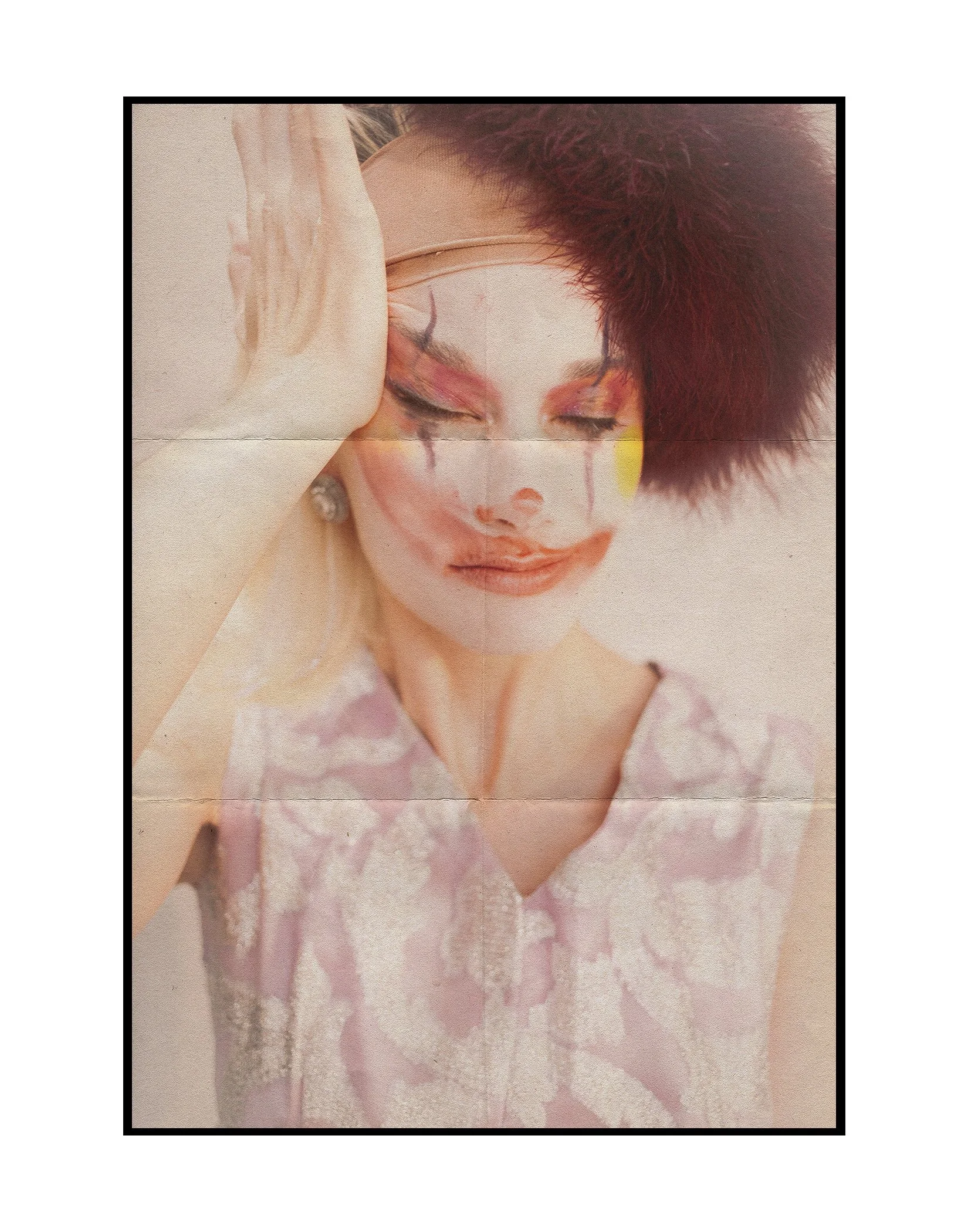
And yet… I cannot look away.
— BV

Dispatch from Abroad: Case File MX-02 / Codename: El Eco
Citizens of the tent, not all clowns kept to American soil. One in particular slipped south, carving a life among music, mercados, and concrete. He is remembered in whispers as El Eco—some say because he turned every sound into another sound, others say because he could never escape the echo of his own painted mouth.
Recovered reference: Mexico City, date disputed
Citizens of the tent, not all clowns kept to American soil. One in particular slipped south, carving a life among music, mercados, and concrete. He is remembered in whispers as El Eco—some say because he turned every sound into another sound, others say because he could never escape the echo of his own painted mouth.
This lone image surfaced in a stack of photocopied flyers for a Mexico City rave. The story goes he was only a DJ, nothing more. But the paint betrays the truth. Why was he there? Was he sent? Or did the troupe lose him to the chaos of a city built on light, shadow, and color?
The answers remain missing. But the face remains proof: another clown once took breath.
— Bellamy Veil
Town Crier, Keeper of Reports, Denier of All Involvement


A. Clown on the Line: An Unpublished Phone Call
I’ve kept this recording in a drawer for far too long. It was never meant to see daylight, but lately there’s been a swelling interest in the origins of A. Clown — where he came from, what he is, what he hides. I know better than most that he cannot be trusted. I thought you, the audience, should finally hear for yourself. What follows is a phone interview conducted many years ago. The line crackled, the connection faded, but the words remain clear enough. You’ll notice how slippery he is. How unwilling. How he laughs when cornered.
(From the archive of Bellamy Veil, (year uncertain)
I’ve kept this recording in a drawer for far too long. It was never meant to see daylight, but lately there’s been a swelling interest in the origins of A. Clown — where he came from, what he is, what he hides. I know better than most that he cannot be trusted. I thought you, the audience, should finally hear for yourself. What follows is a phone interview conducted many years ago. The line crackled, the connection faded, but the words remain clear enough. You’ll notice how slippery he is. How unwilling. How he laughs when cornered.
BV: So tell me… who are you really, under the paint?
A.C.: (laughing) Under the paint? Another coat of paint. That’s all anyone ever is, Bellamy.
BV: Don’t dodge me. You’ve been seen in three towns already. The hat, the scarf, the teeth. Who are you imitating?
A.C.: Maybe I’m imitating you. Maybe you’re imitating me. Maybe we’re both bad copies of the same bad joke.
BV: Enough riddles. You’re hiding behind that grin. Everyone thinks you’re clever, but I know. I know you’re not what you claim.
A.C.: Oh, but I am exactly what I claim. A clown. That’s it. That’s everything. People keep wanting more, but there is no more. Just powder and a red nose. You want a secret where there isn’t one.
BV: Don’t lie. There’s always someone behind the mask. Always.
A.C.: (pause) Maybe it’s you. Maybe it’s always been you.
BV: (shouting now) That’s not an answer. You think this is funny?
A.C.: Oh Bellamy… you’re the only one not laughing. (bursts into long, ridiculous laughter)
(line clicks dead — call ended)
Attached are four portraits taken of A. Clown around the time of this interview: his painted grin pulled taut, the wide hat falling like a curtain, the bow tied too neatly, the eyes darting from behind a brim. Study them carefully. You’ll see what I mean.
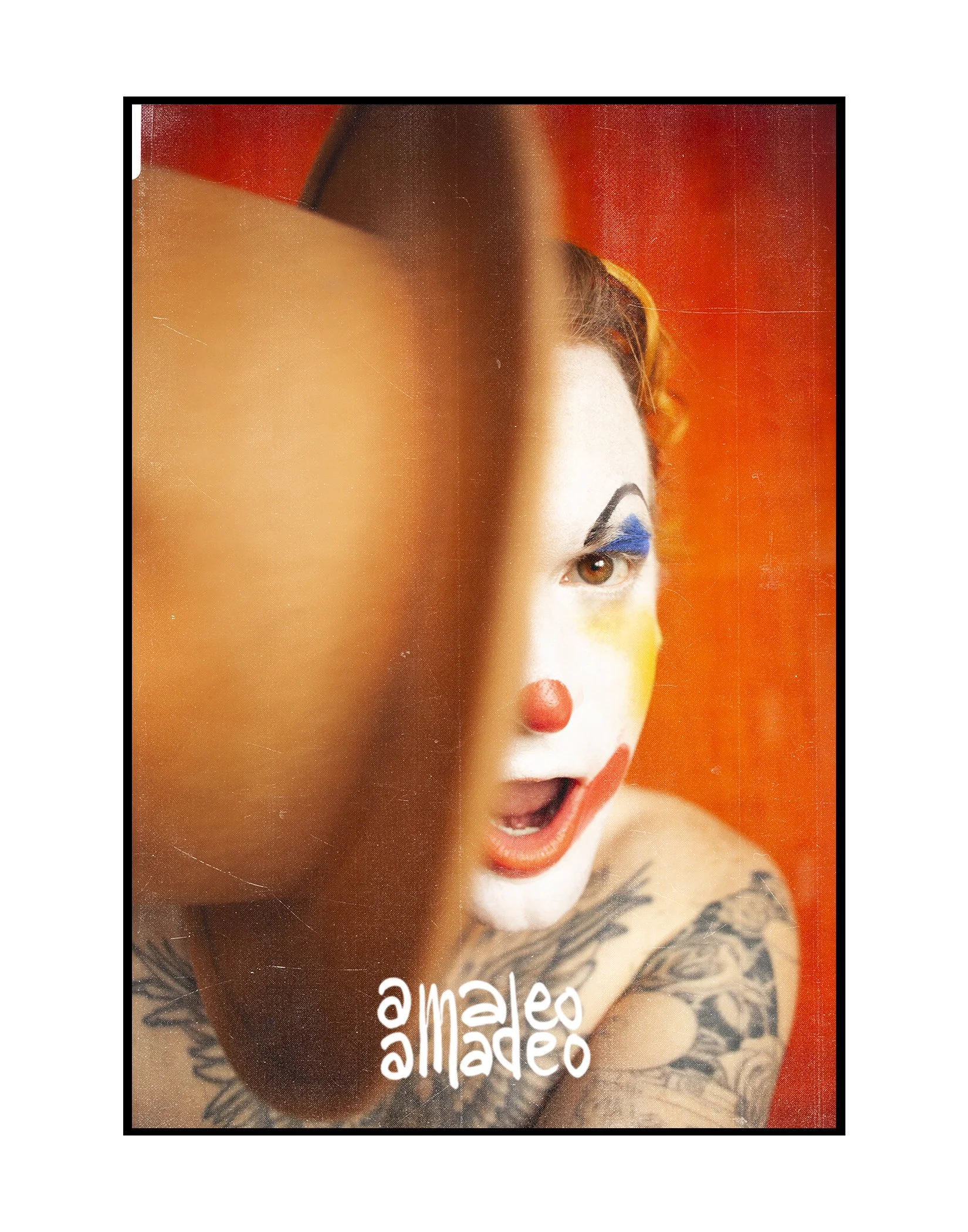
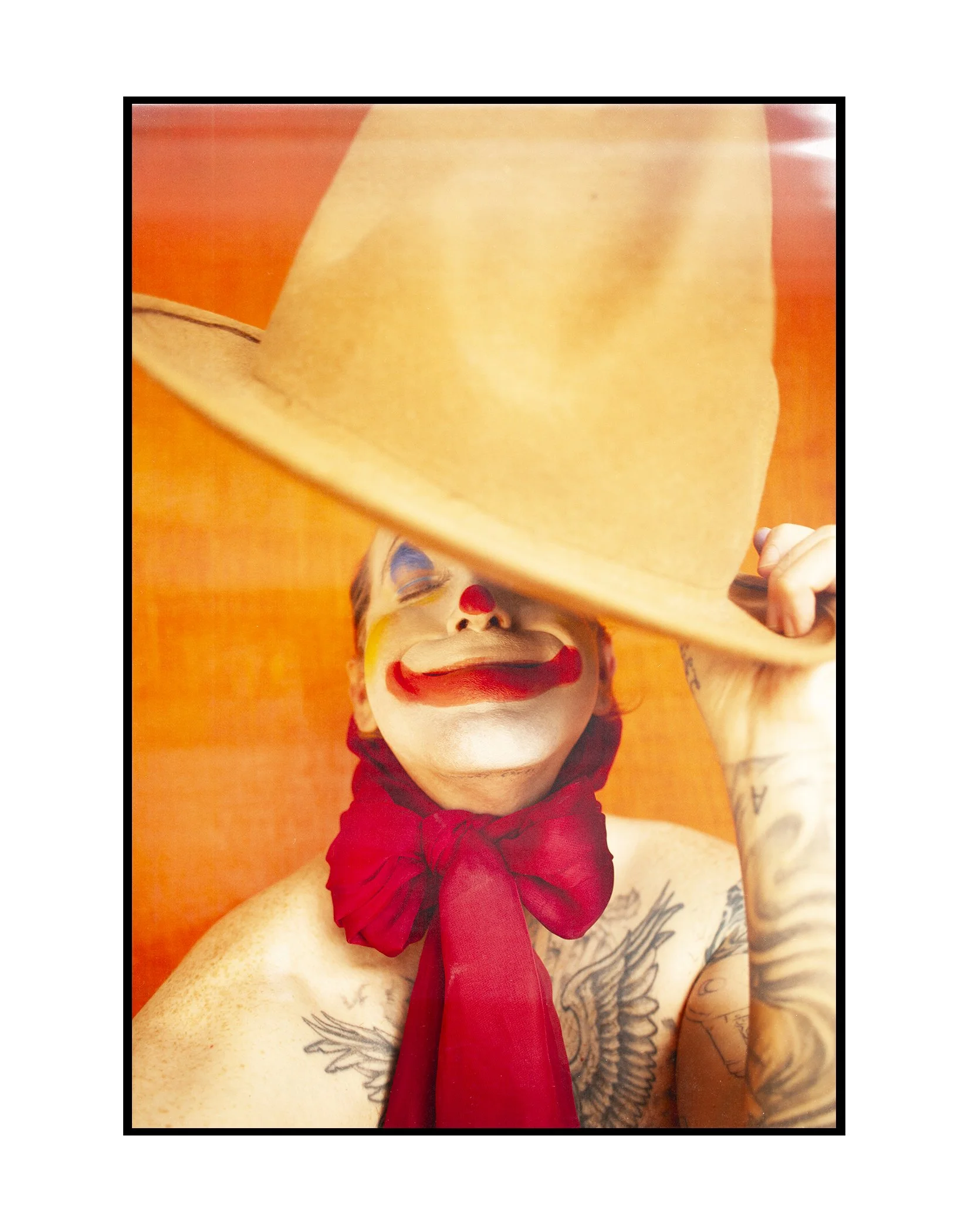
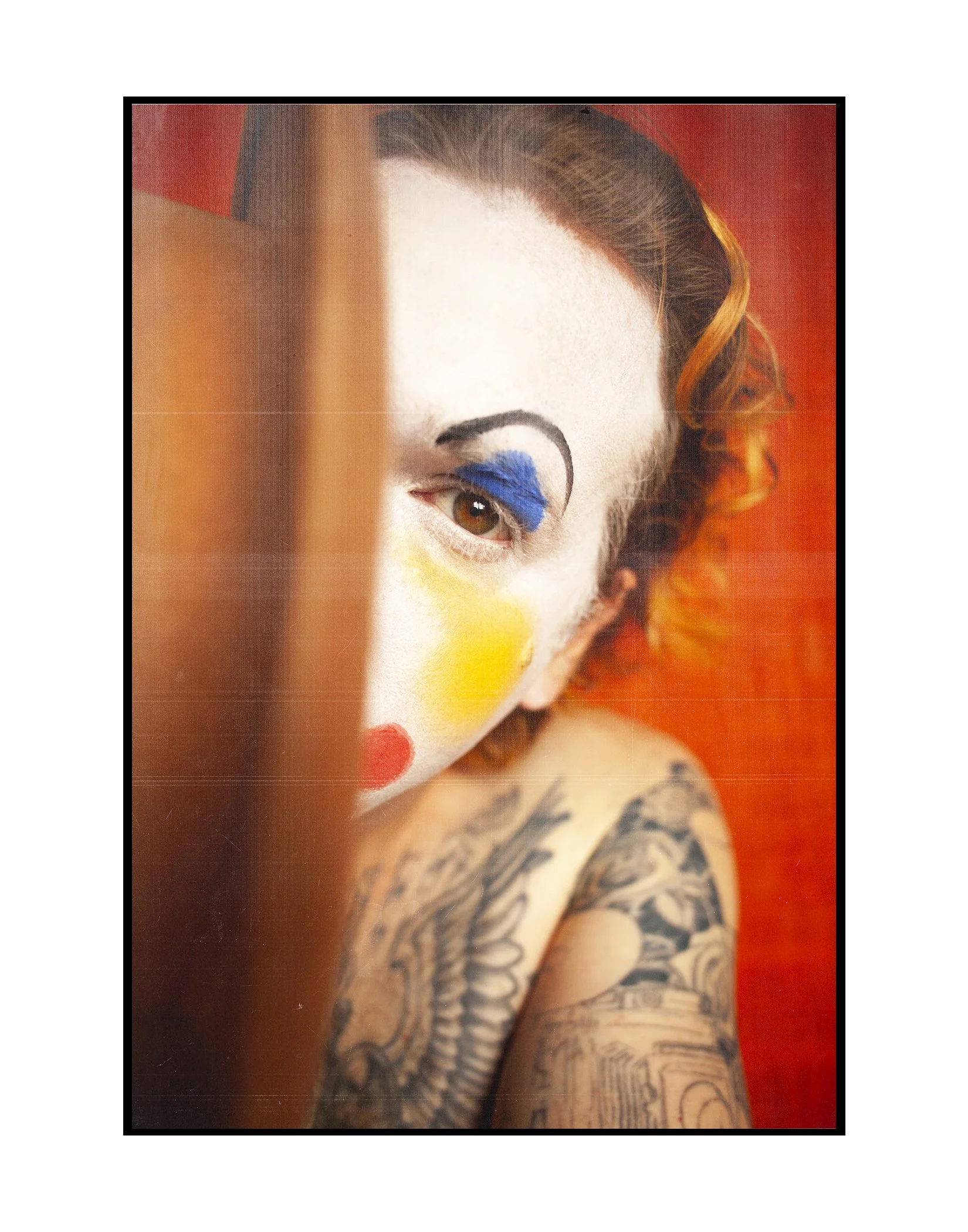
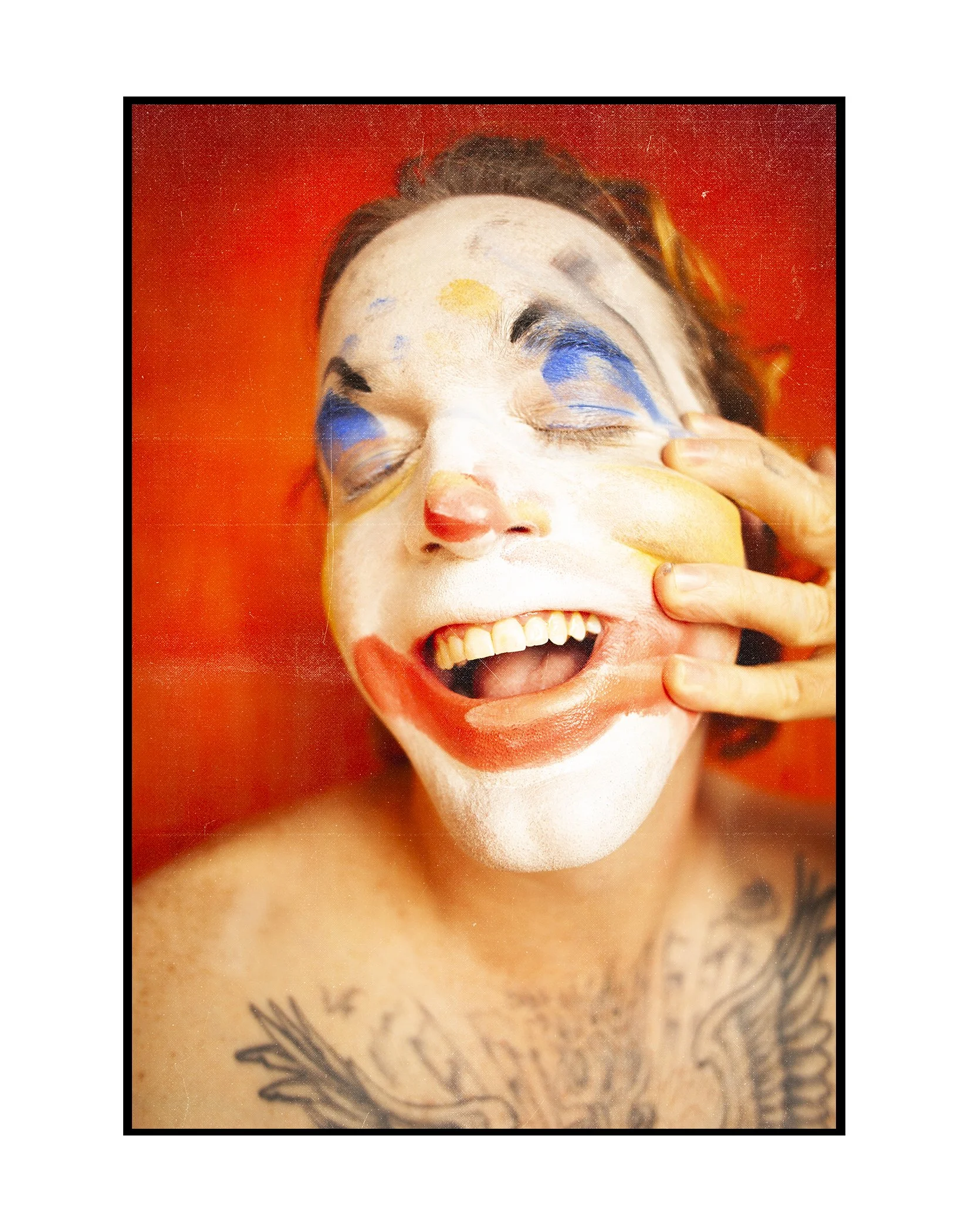
You see the way he avoids. The way he hides in plain sight. There is something wrong here, something that refuses to reveal itself. He hangs up laughing, but you must not laugh with him. He is not what he seems. He is not who he says he is. None of them are.
And one day, you’ll see.
-BV

“LÁGRIMAS DE UVA SPOTTED AGAIN — FONTANA RESIDENTS REPORT TEARS IN THE STREETS”
It began, as most things in the Inland Empire do, with the heat.
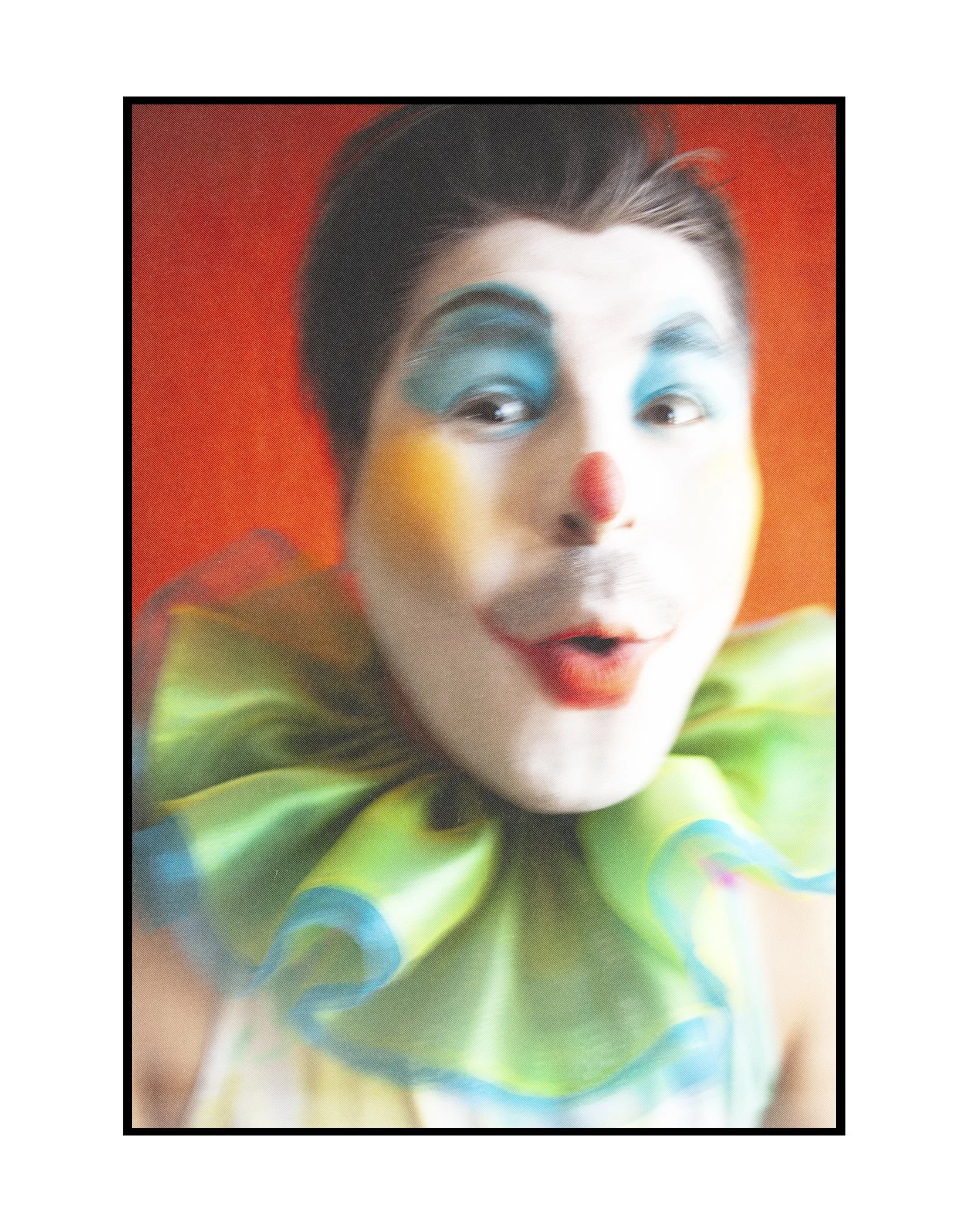
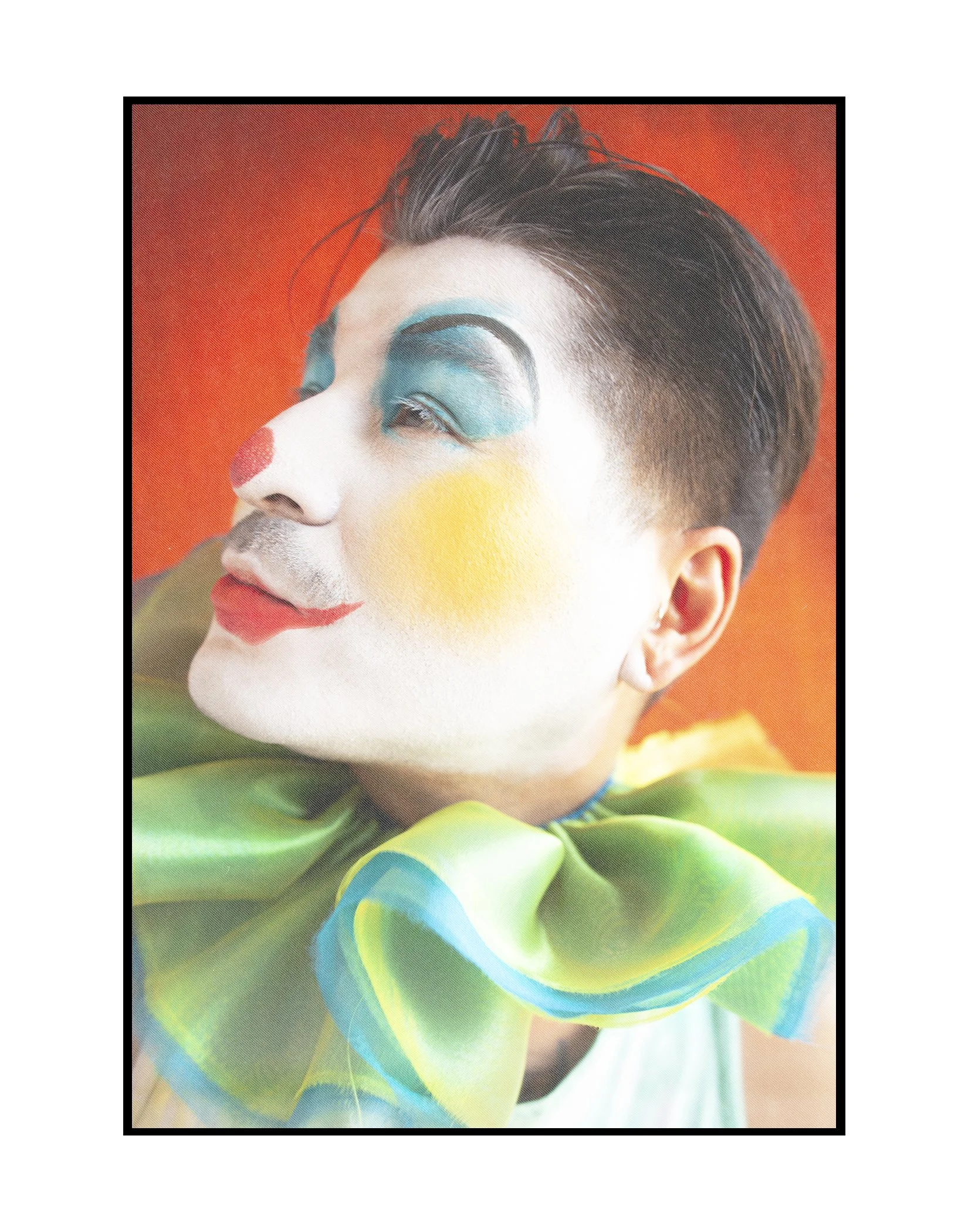
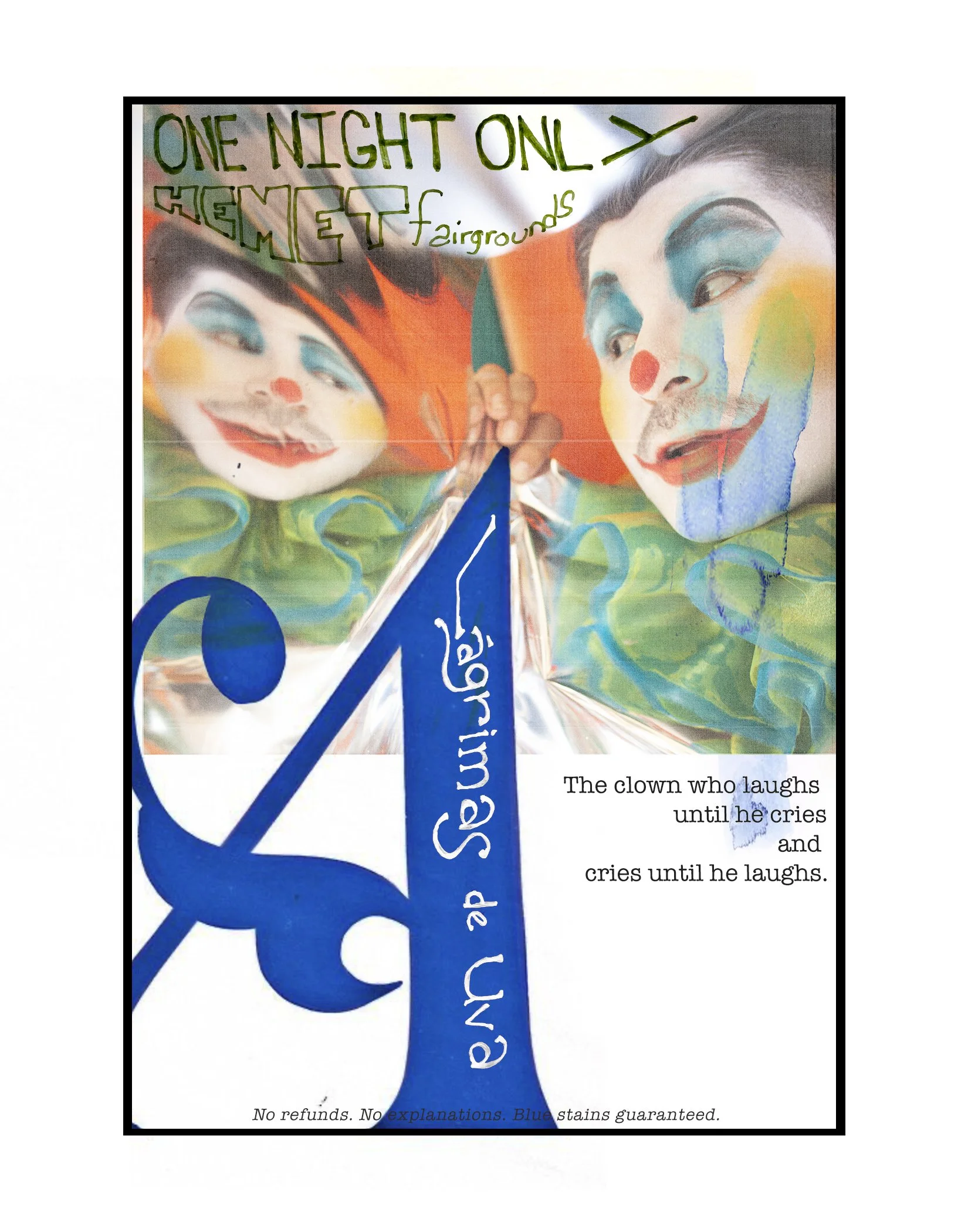
Too hot for greasepaint, too hot for laughter. But in a corner lot behind an abandoned swap meet in Rialto, he appeared: Lágrimas de Uva, the Clown Who Cannot Stop Crying.
“LÁGRIMAS DE UVA SPOTTED AGAIN — FONTANA RESIDENTS REPORT TEARS IN THE STREETS”
Pulled from: The Hemet Gazette, Society Pages, September 12th (Year Unlisted)
Filed by: Special Correspondent, Bellamy

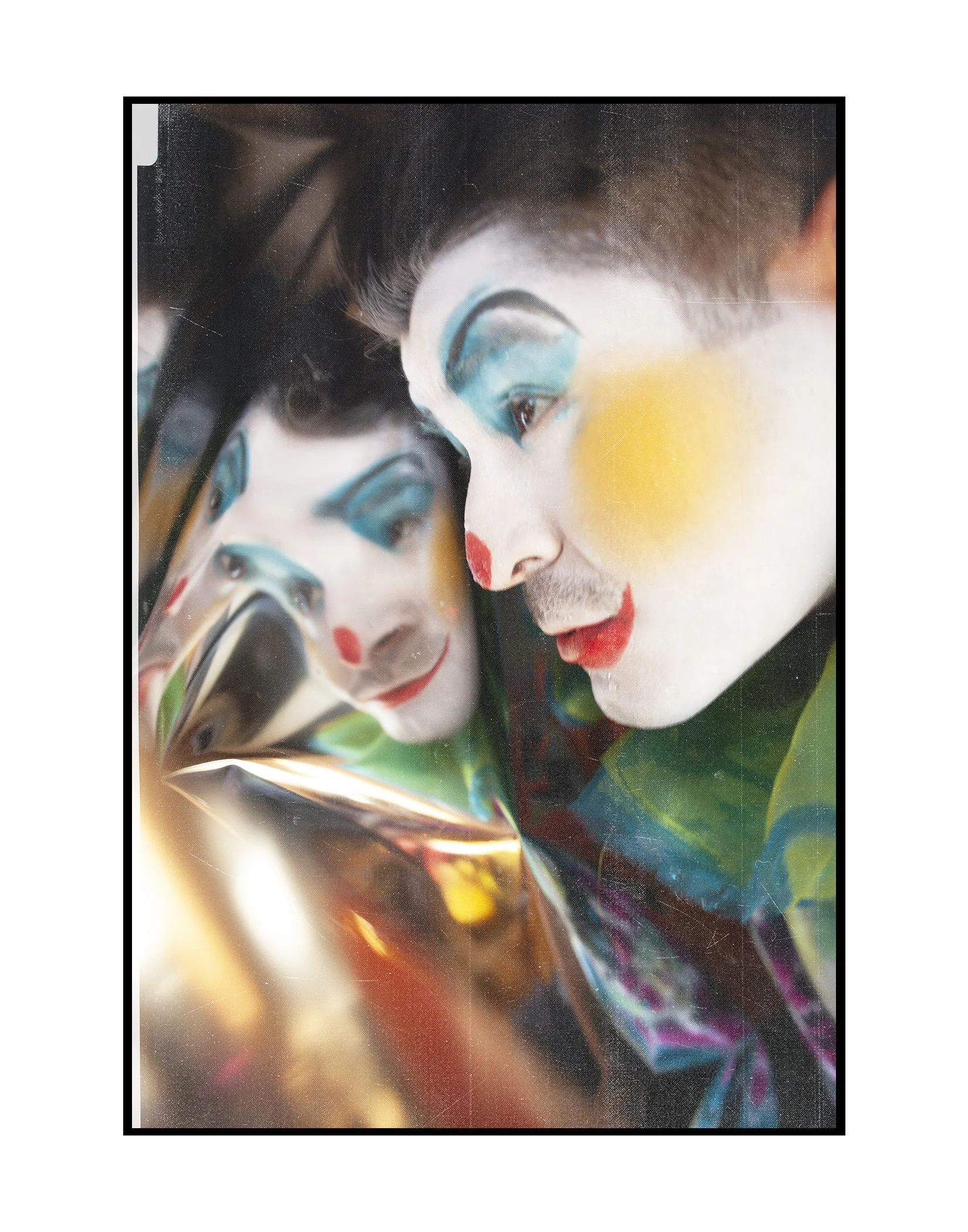

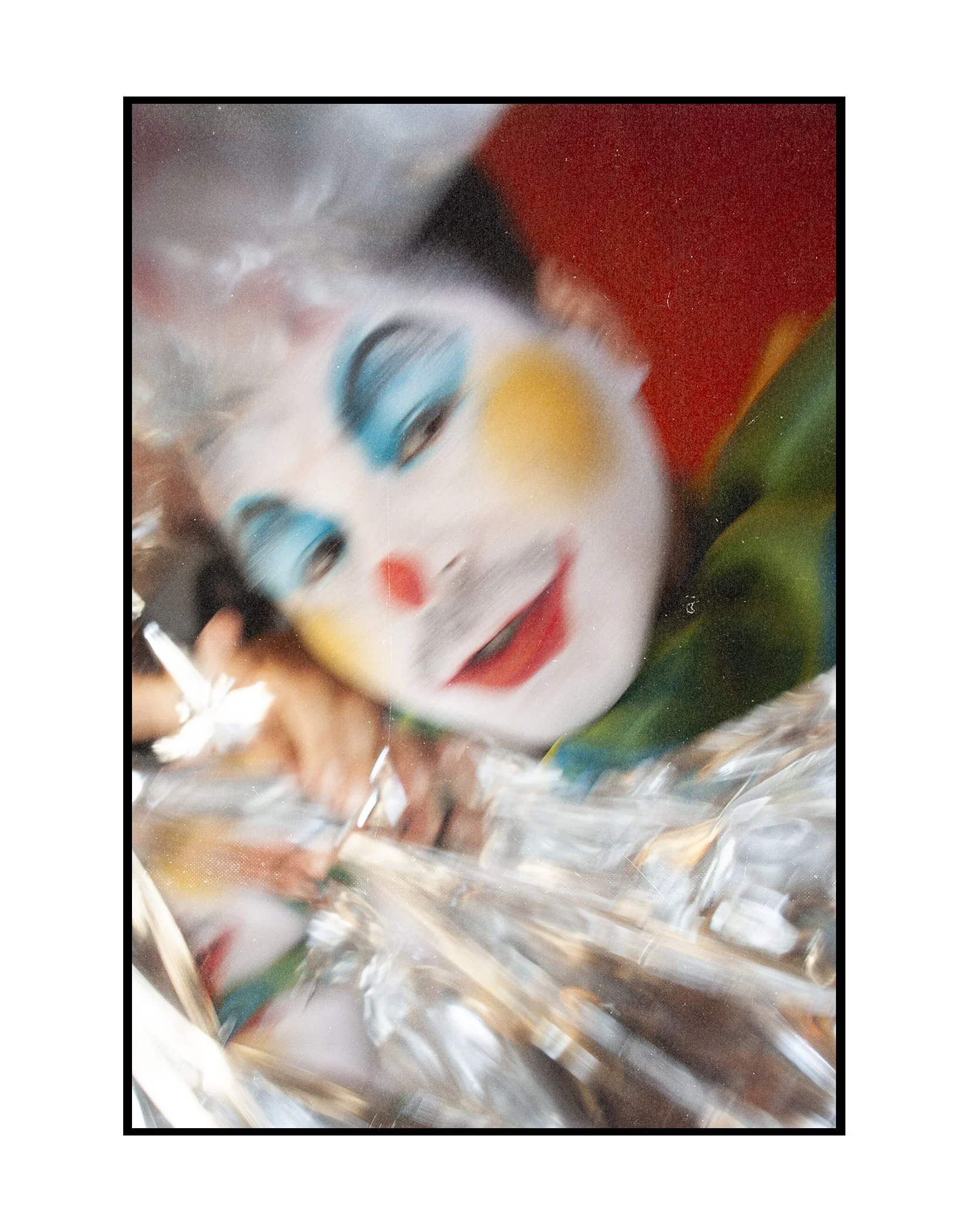
It began, as most things in the Inland Empire do, with the heat.
Too hot for greasepaint, too hot for laughter. But in a corner lot behind an abandoned swap meet in Rialto, he appeared: Lágrimas de Uva, the Clown Who Cannot Stop Crying.
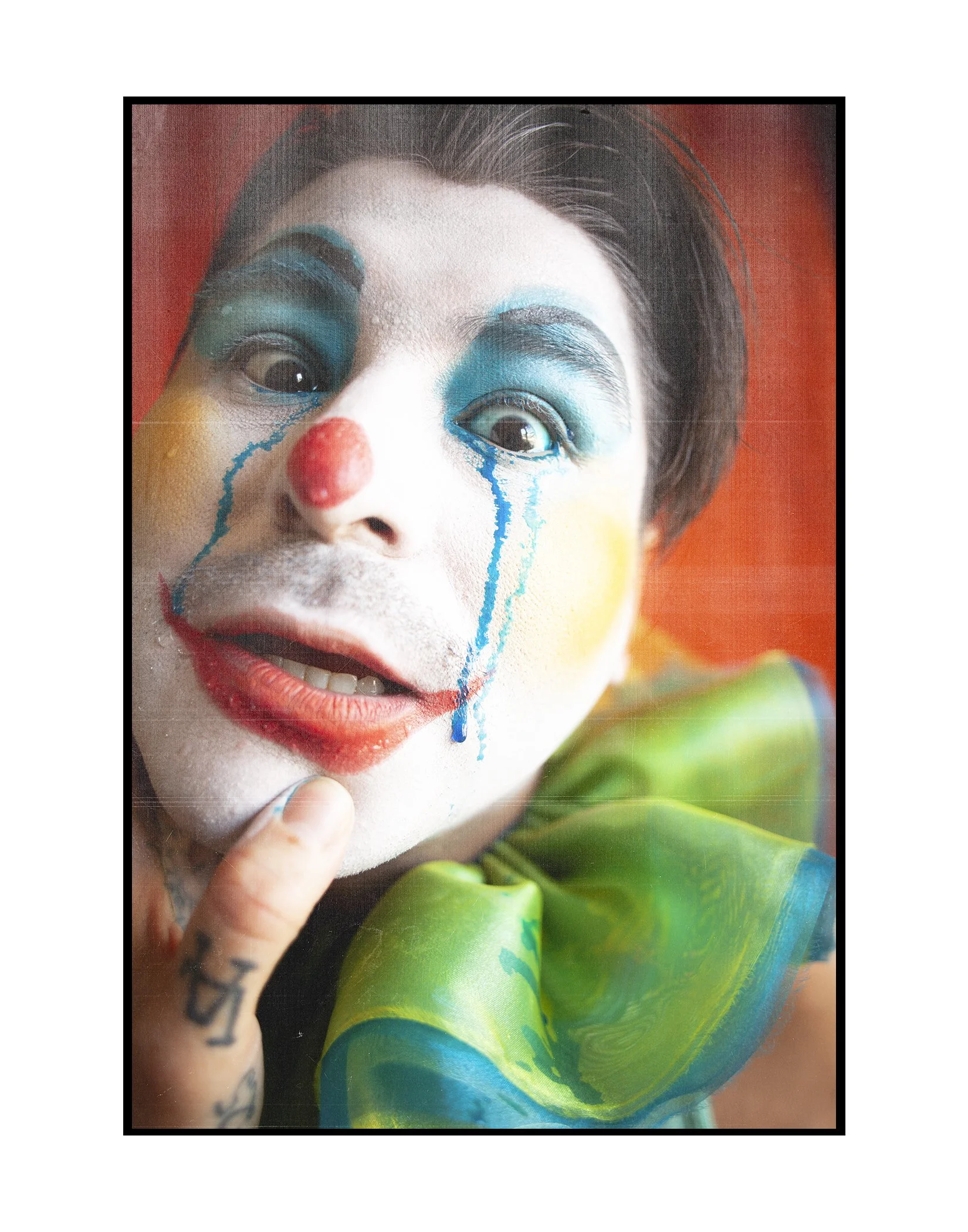
Locals whispered that he had been practicing his expressions in a broken vanity mirror all afternoon, shifting from grin to grimace to grin again until the blue tears rolled. One teenager said they saw him rehearsing “clown emotions” to his own reflection as if auditioning for a part only he could play. Another swore he was only waiting for the Del Taco to open.
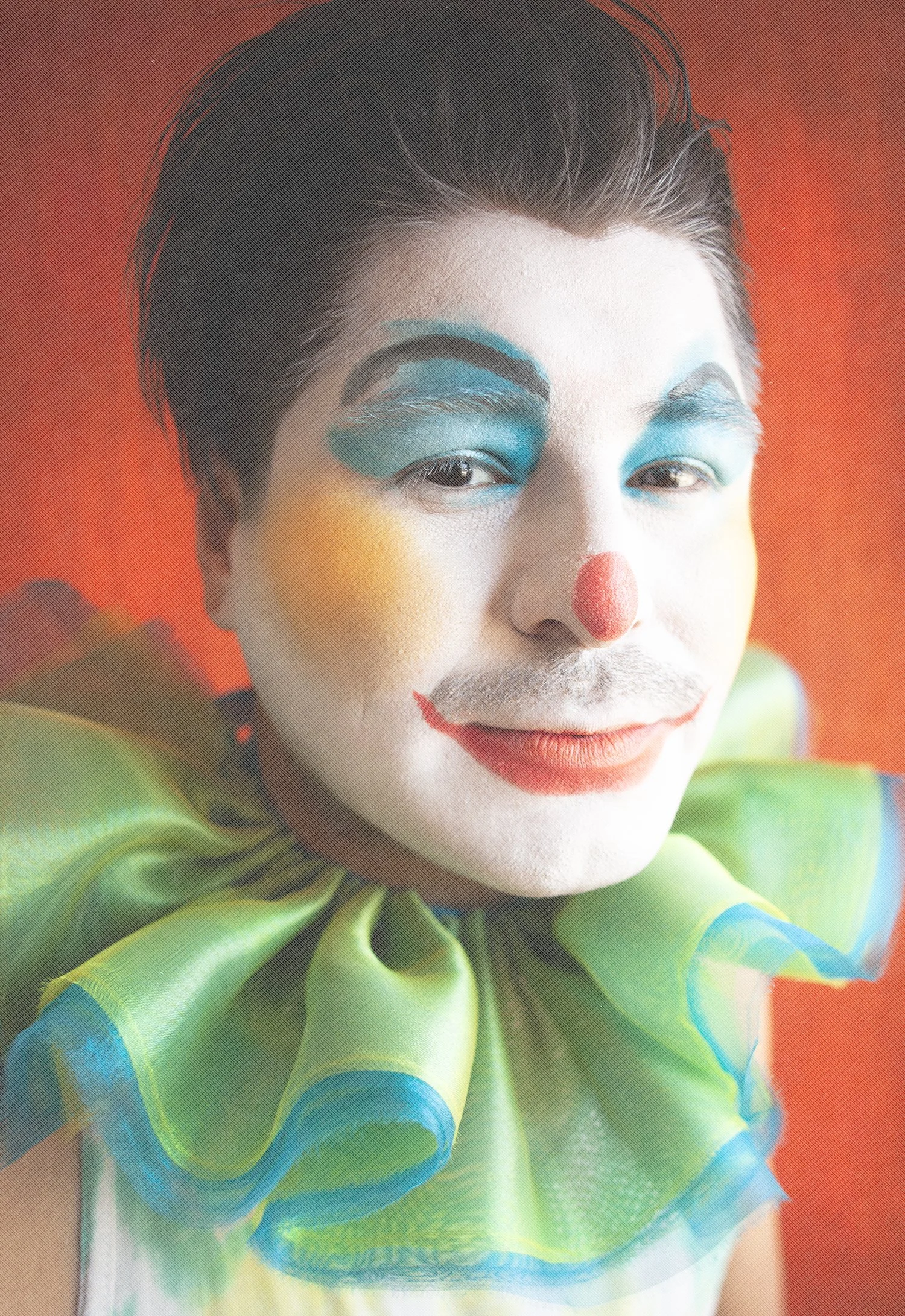
By the time dusk came, his face was streaked — sweat, paint, and those famous tears the color of grapes crushed under the Inland sun.
WHO IS HE, REALLY?
Authorities in Hemet claim his legal name is David Cortes, last known address somewhere between Ontario and San Bernardino. Friends describe him as “funny, nervous, but excited,” a man who has always loved the idea of clowns more than the reality of daily life.
And yet when the paint goes on, he is no longer David. He is Payaso. He is Spectacle. He is Lágrimas de Uva.
AUDIENCE TESTIMONIES (Collected at Hemet Fairgrounds)
“He laughed so hard I thought he’d choke — then he sobbed. And then we all started laughing, too. I’m still not sure what was funny.” – Witness, Moreno Valley
“I bought a ticket just to see if the rumors about the blue stains were true. My white blouse will never recover.” – Shopper, Redlands
“He kept looking in a mirror he carried with him, like he didn’t believe his own face.” – Child, Perris
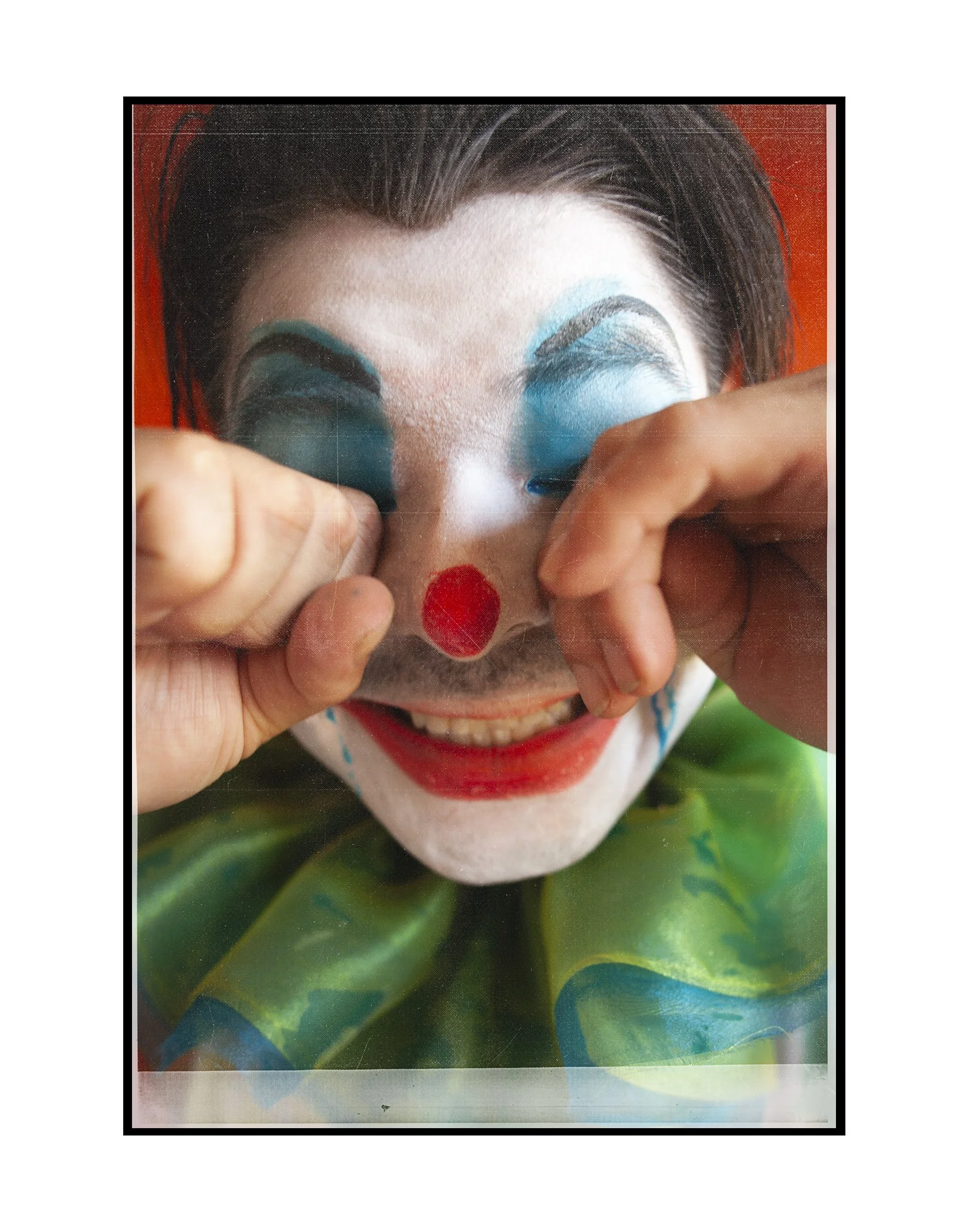
EDITORIAL NOTE
The Inland Empire breeds its own legends. In Hemet, they say you can still hear his laugh echo after the carnival leaves town. In San Bernardino, they say if you follow the blue streaks down the gutter after a rain, you’ll find him there, clutching a mirror, rehearsing the face he never gets right.
No refunds. No explanations. Blue stains guaranteed.
Filed by Bellamy. Case file no. 7E-BLUE-TEAR. Archives: Box 14, Hemet.
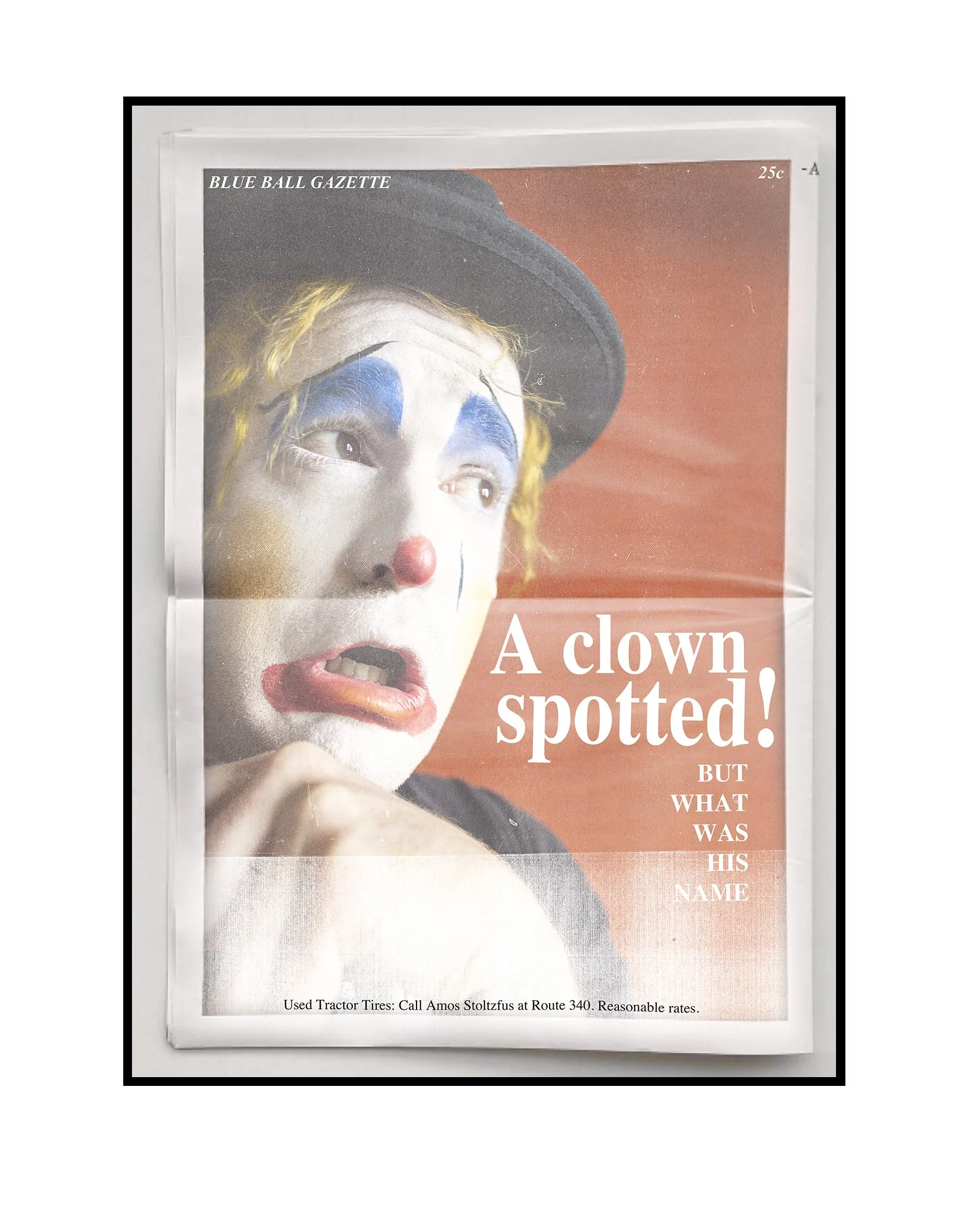
From the Files of Bellamy Veil
Recovered from the Blue Ball Gazette, Pennsylvania (Date Unknown)
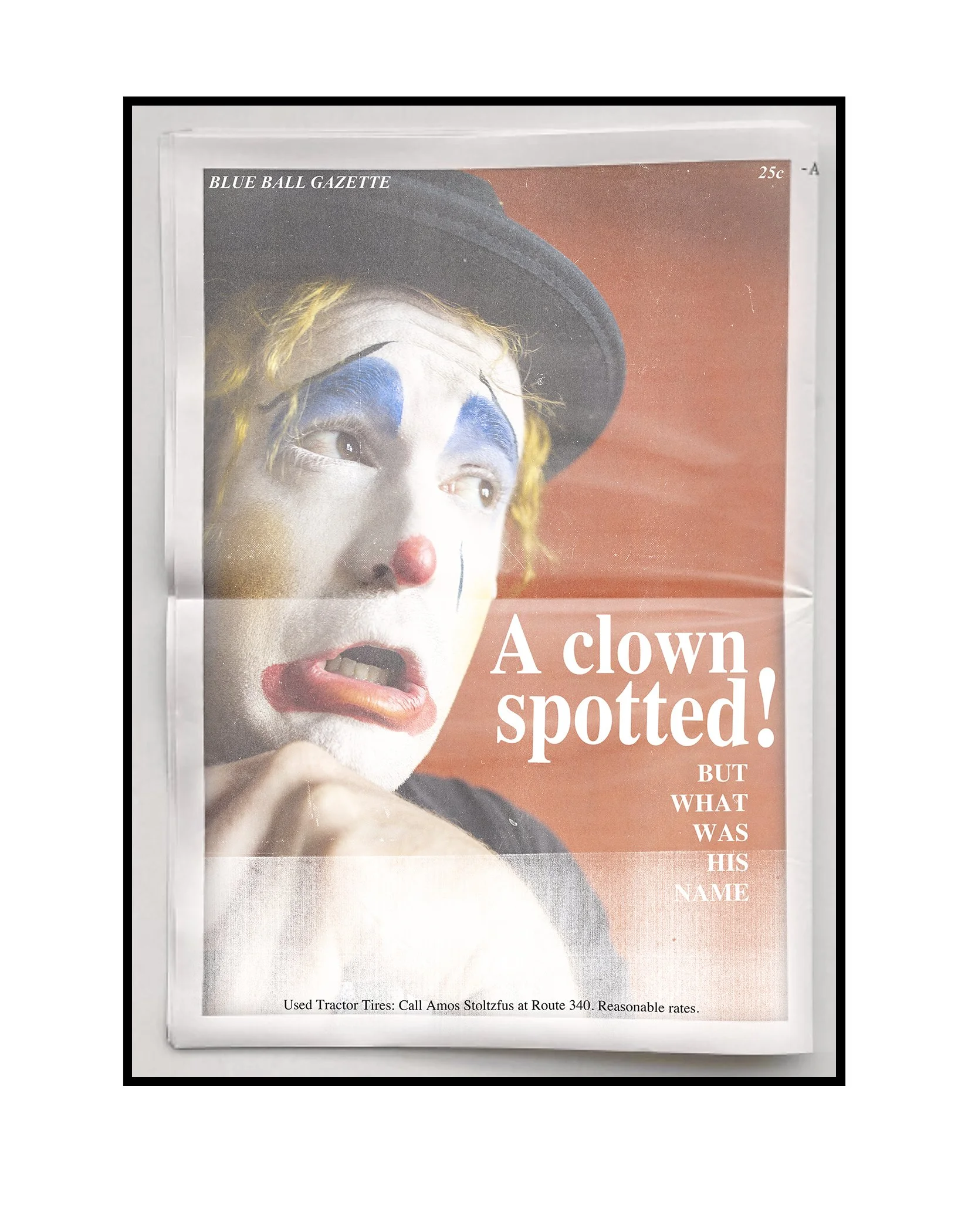
Citizens of the tent, today I bring you a curiosity from the archives. Tucked between a church raffle notice and an advertisement for tractor parts, I found this: a grainy clipping from the Blue Ball Gazette. It claims that the Amish residents of Blue Ball, Pennsylvania once reported a clown wandering the fields. Yes, you heard correctly—wandering. They say he took his breaks not in barns or bedrolls, but on a giant swing set planted in the middle of open farmland.
The paper never dared print his name, though the photograph leaves little doubt: this was one of the many faces of A. Clown. Painted lips sagging with existential dread, eyes pitched skyward as if begging for rain or forgiveness.
What was he thinking? Why was he there? Why did he swing, and who built the swing? The article offers no answers—only questions. Perhaps that is the nature of A. Clown himself: a collection of unanswered riddles disguised in greasepaint.
We must ask: why are we always left cryptic when trying to understand why this clown even existed at all? Perhaps the questions are the performance, and the silence is the punchline.
— Bellamy Veil
Town Crier, Keeper of Reports, Denier of All Involvement

From the Archives: The Blue Emergence
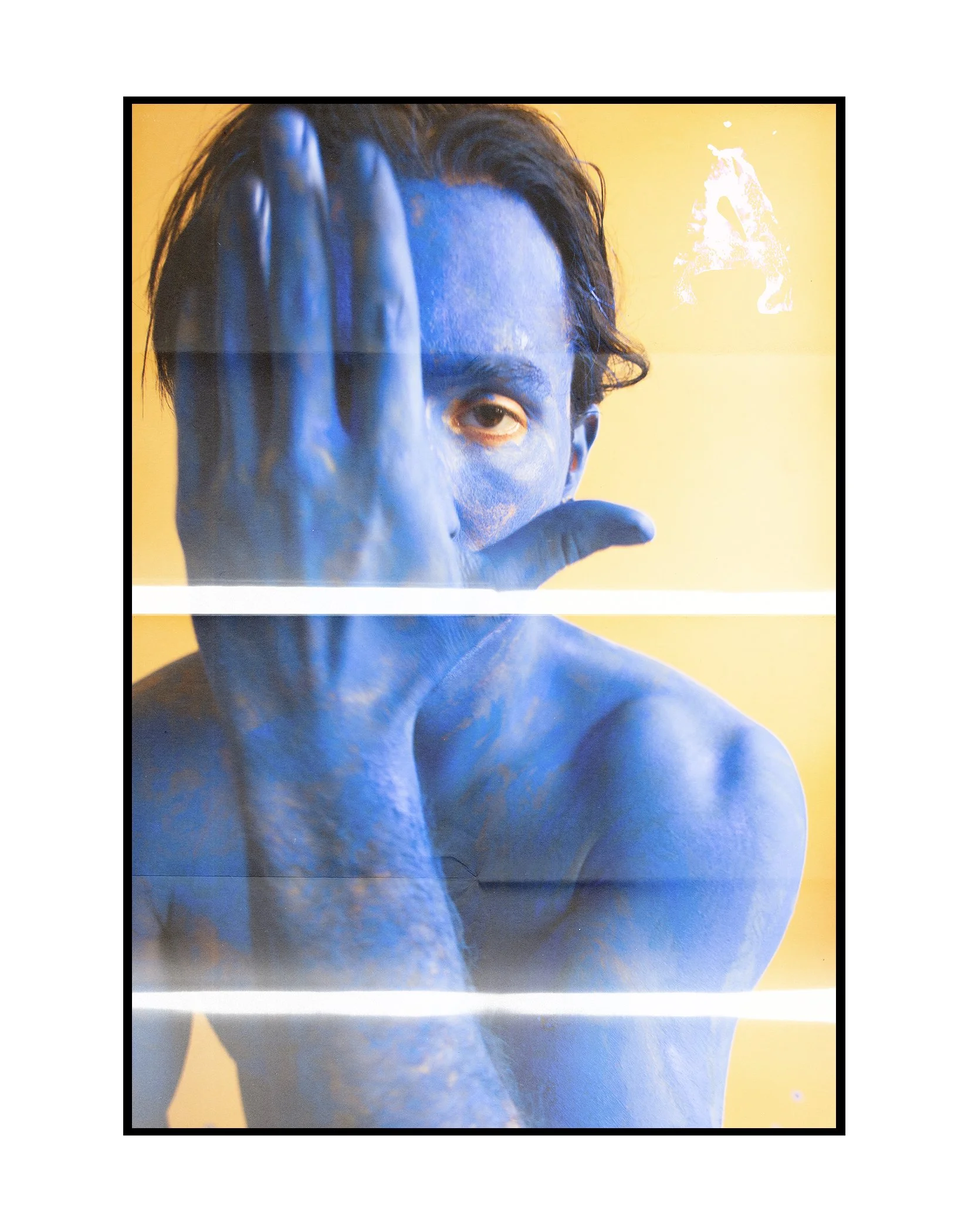
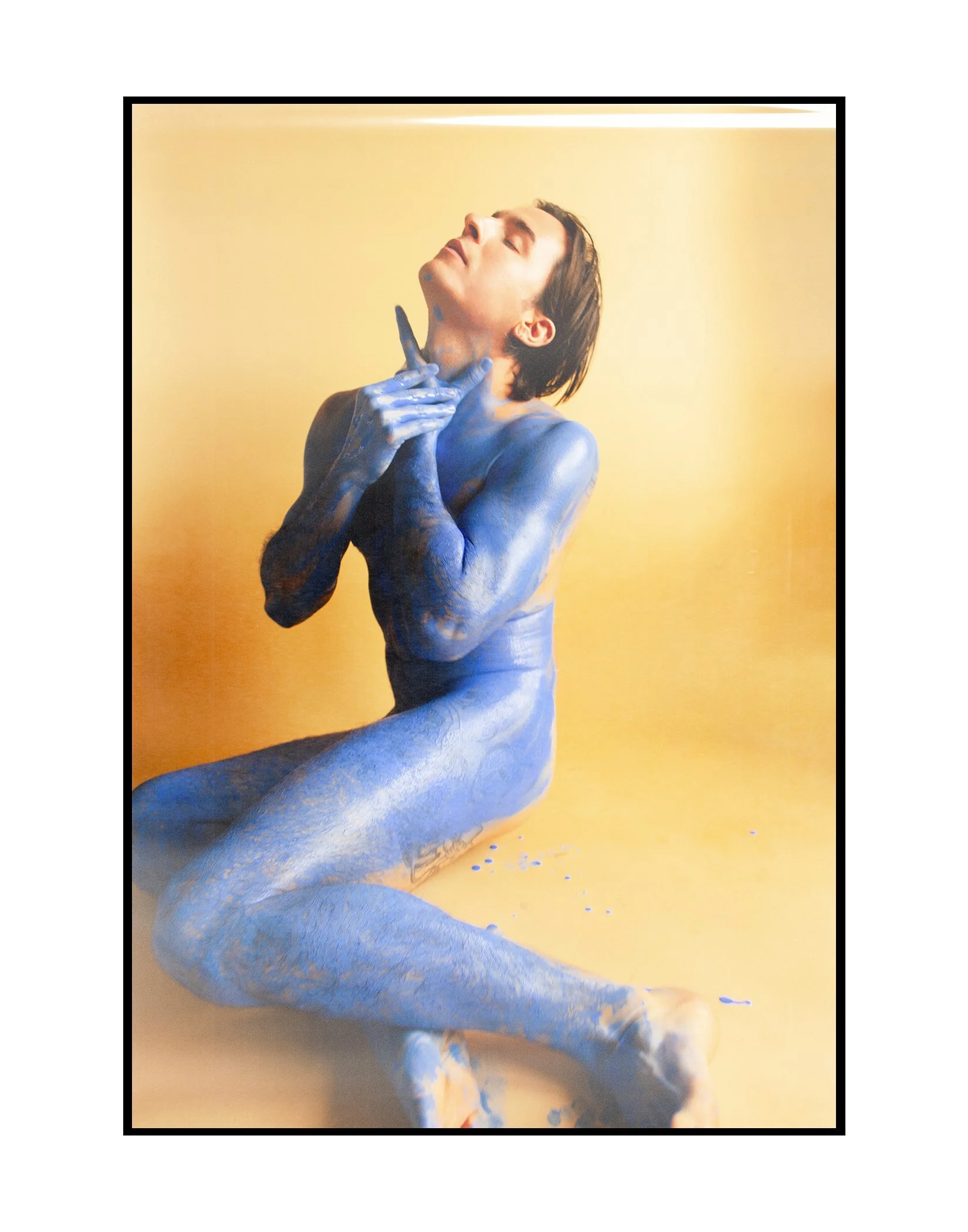
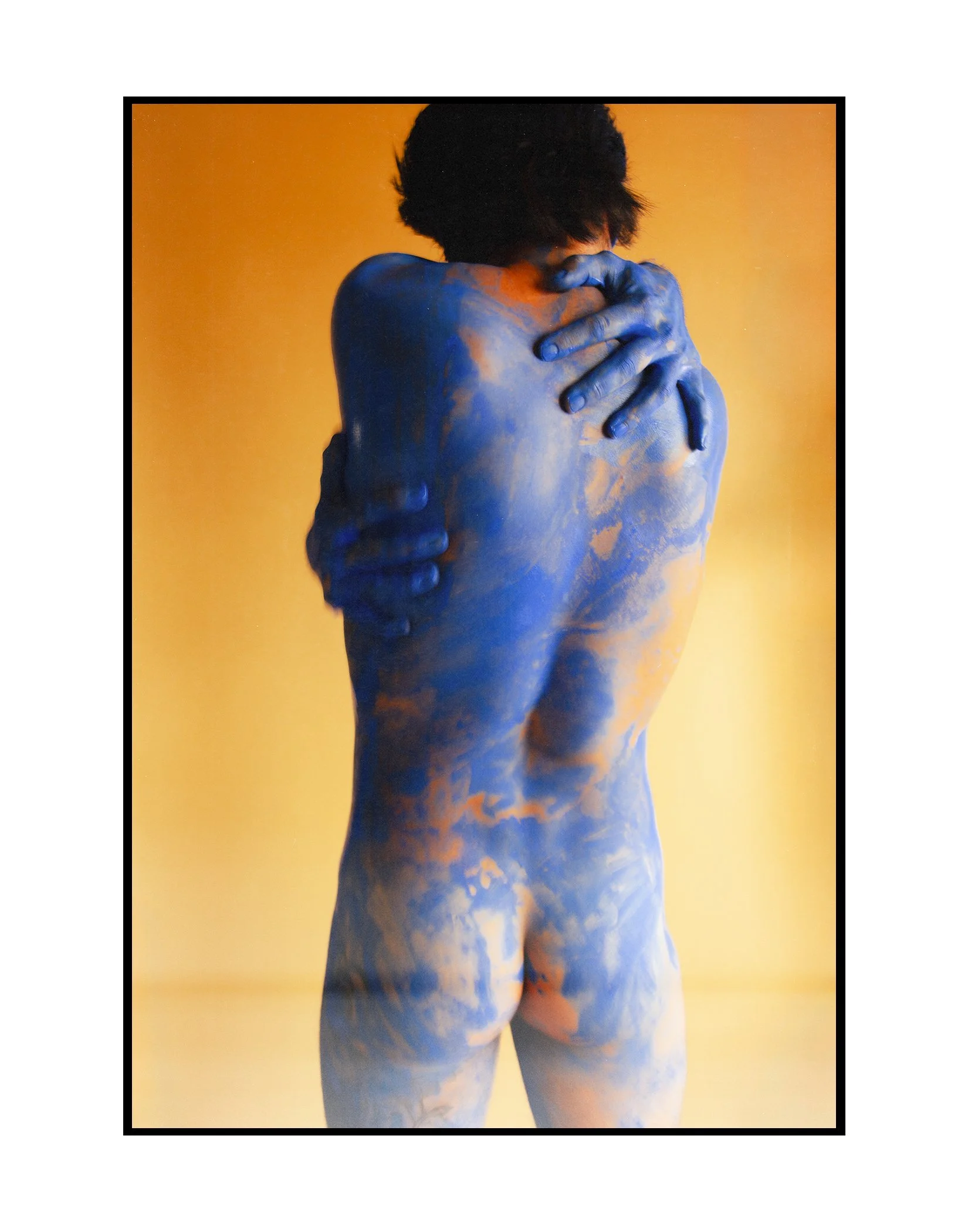
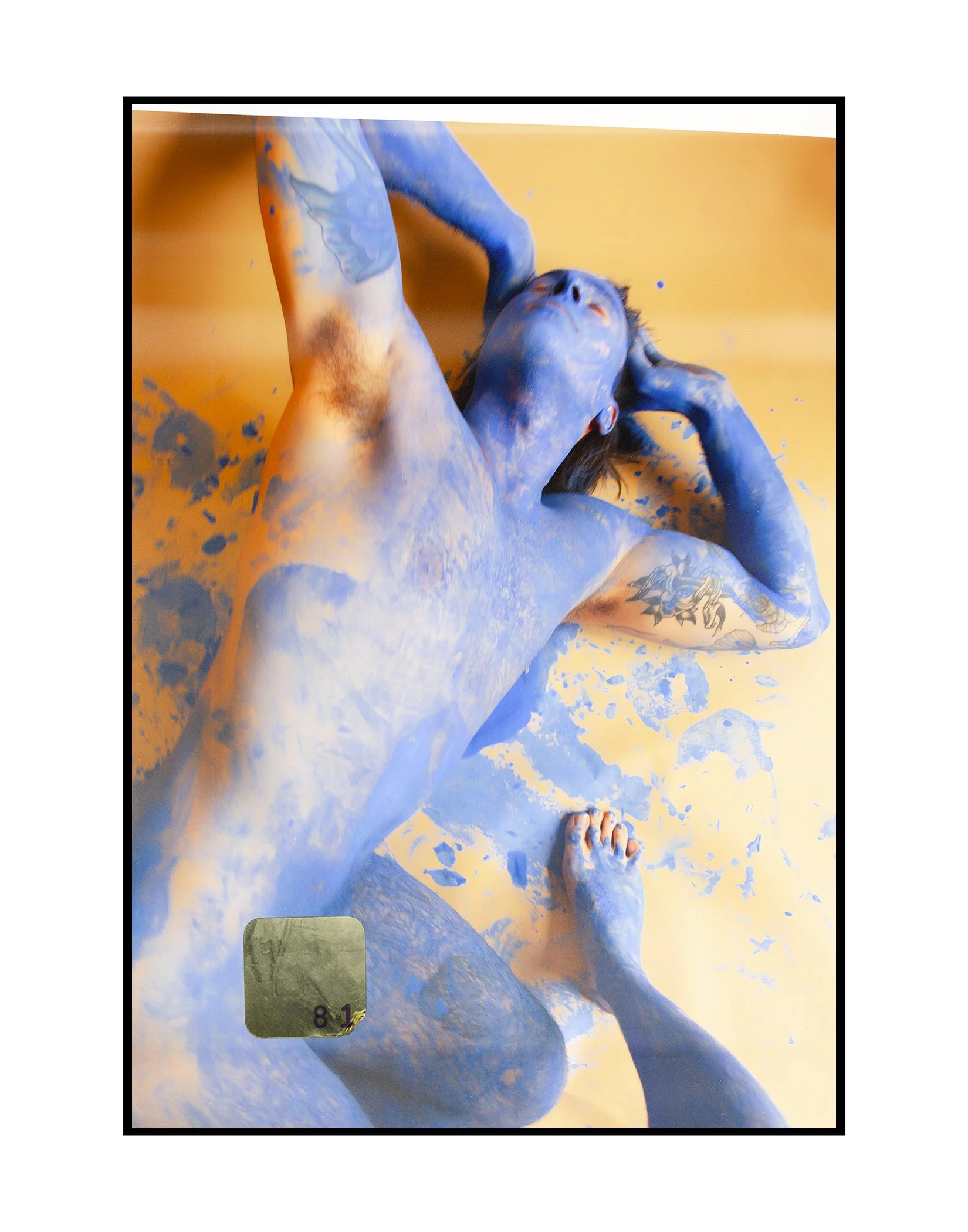
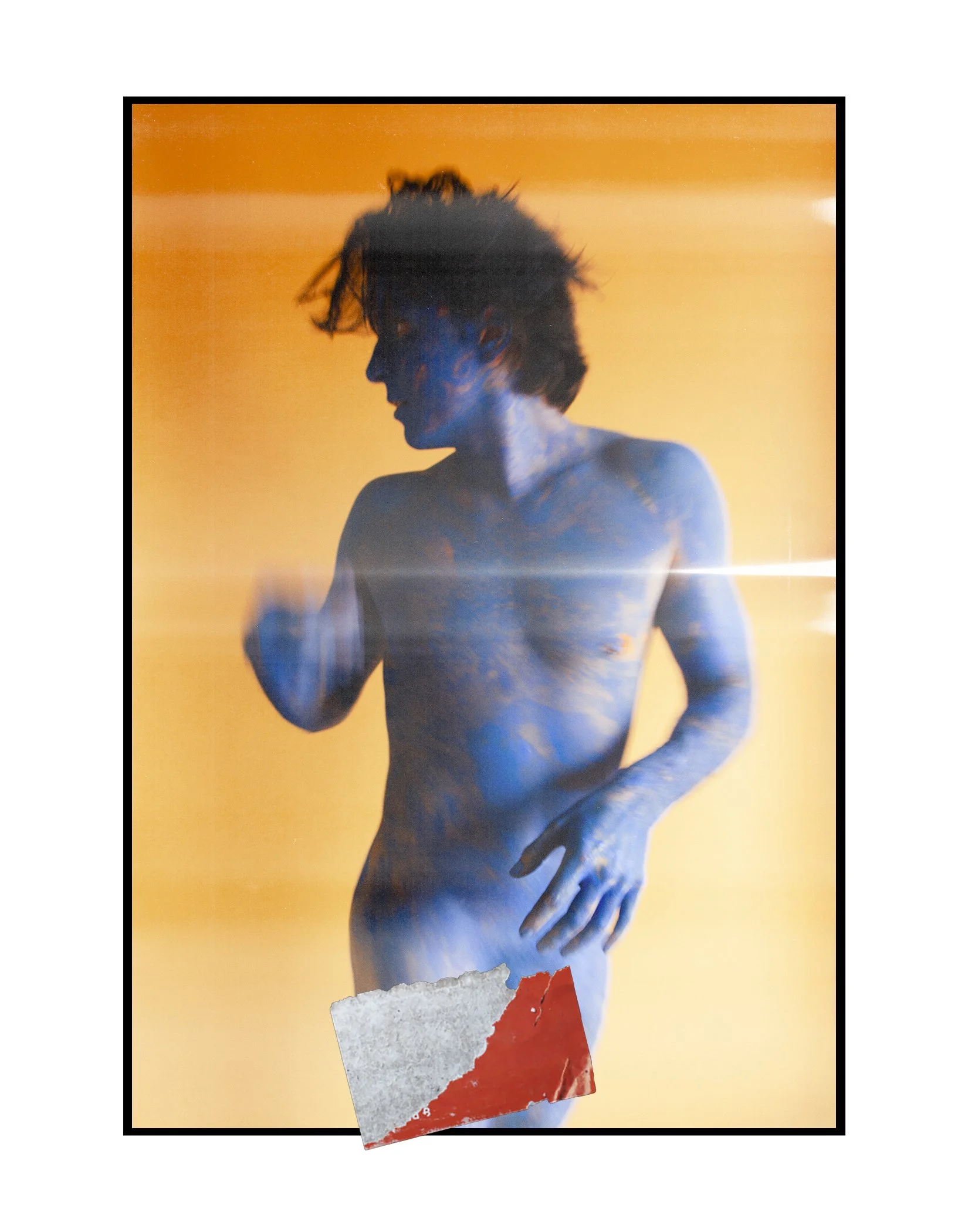
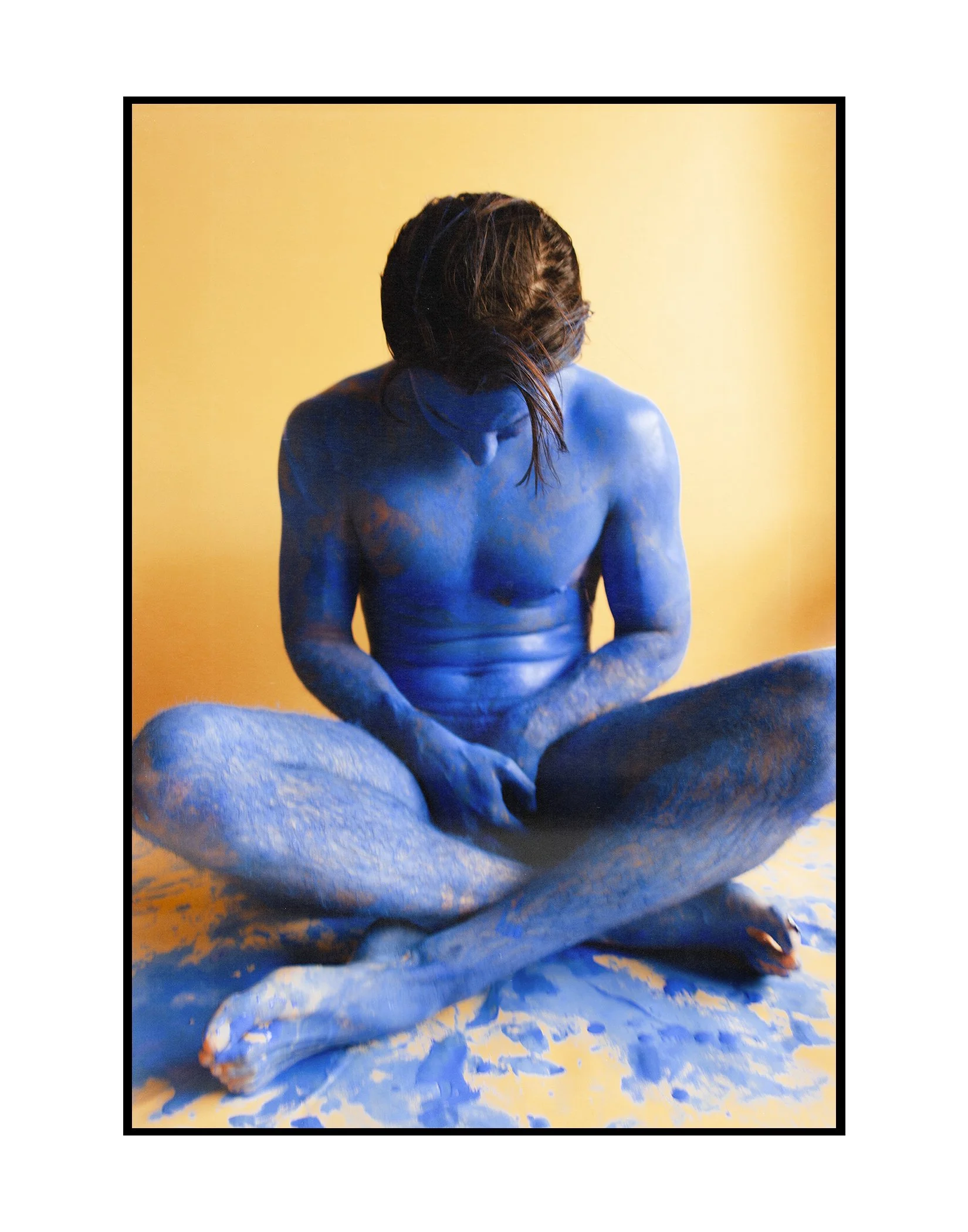
ATTENTION, citizens of the tent. What follows has been pulled from the archives, long concealed and seldom spoken of. The first of the new ones appeared not on our watch but in a record smudged and nearly lost to time. He came forth sticky, streaked, and unmistakably BLUE.
Filed under Case File No. 001 — Coen Baltwick
ATTENTION, citizens of the tent. What follows has been pulled from the archives, long concealed and seldom spoken of. The first of the new ones appeared not on our watch but in a record smudged and nearly lost to time. He came forth sticky, streaked, and unmistakably BLUE.
They say he awoke a man, but before noon his pores had begun to leak cobalt like ink through a torn pocket. One archivist notes that a second painted leg intruded into the frame—evidence, perhaps, that no clown ever paints himself alone.
In the official record he is filed under the name Coen Baltwick. Yet in the shadows he is called Cobalt. Whispers persist of further titles—Drip, The Stain, Azure Fool. Whatever mask he accepts, the fact remains: a new skin was pulled on, and another clown took breath.
— Bellamy Veil
Town Crier, Keeper of Reports, Denier of All Involvement