A Guide to Moving Along the River (Without Knowing Where You’re Going)
It usually starts with coffee.
Or a question.
Or someone asking you if you are something you are not.
Part I
There is a way to move through a place without deciding where you are going.
It usually starts with coffee.
Or a question.
Or someone asking you if you are something you are not.
From there, it becomes difficult to stop.
You follow a road.
The road follows a river.
The river does not ask you anything, but it keeps offering.
A chair.
A jacket.
A painting you cannot take with you.
And before you realize it, you are no longer looking for anything specific—
you are just responding.
We started somewhere near the river without saying that we were following it.
Avon, Connecticut. A coffee shop that roasts its beans in-house—The Coffee Trade—the kind of place where the air is already thick before you even order. The smell of roasting beans sits low and constant, like something alive in the room. You don’t need to ask what they do there. You can smell it before you speak.
We ordered coffee.
“Are you guys musicians?”
There was a pause. A small laugh. Not because it was funny, but because it felt accurate in a way that didn’t need correcting.
We weren’t.
But we didn’t say that.
We sat in the garden and let that question linger between us, turning it over like something we had just picked up off a shelf. There’s a moment when you realize that people are seeing something in you that you didn’t intentionally present. Or maybe you did, without knowing.
That was the first shift.
If you continue down the road long enough, something will appear.
A Goodwill.
A small thrift store.
Something that feels like it wasn’t meant to be a stop, but becomes one anyway.
We went in without expectation.
I was looking for textiles—something that could become something else. Curtains that weren’t meant to be worn. Table linens that had already lived one life. Materials for Chiddu ca tinemu. The things that we keep, even when we don’t know why yet.
We left with sheer curtains. Tablecloths. Fabric that held memory in its weight.
At the next stop, Nikko found a jacket.
A perfectly worn brown leather bomber—soft in the way that only time can make something soft. He put it on in the middle of the store. The women behind the counter watched, smiling, approving, as if they had been waiting for someone to come in and take it home.
There’s a moment when clothing stops being clothing and becomes a role.
Before the jacket: cords, a hoodie, something quiet.
After the jacket: something else entirely.
We didn’t say it out loud, but it was understood.
We were becoming more visible.
The road kept moving and so did we.
The river stayed just within reach—sometimes hidden, sometimes running parallel like a second thought. The Farmington River doesn’t demand your attention, but if you notice it once, you keep looking for it again.
We ended up in Collinsville.
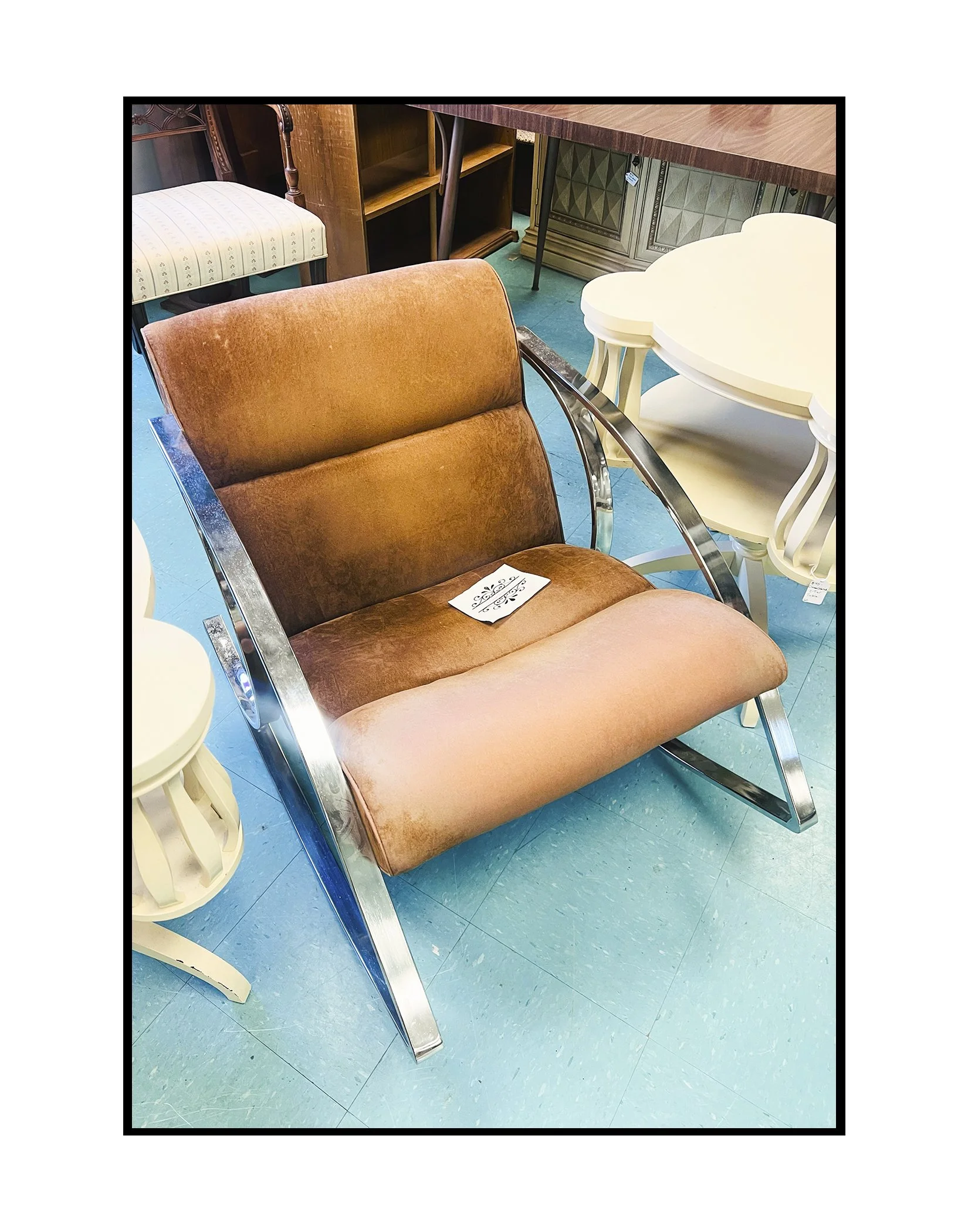
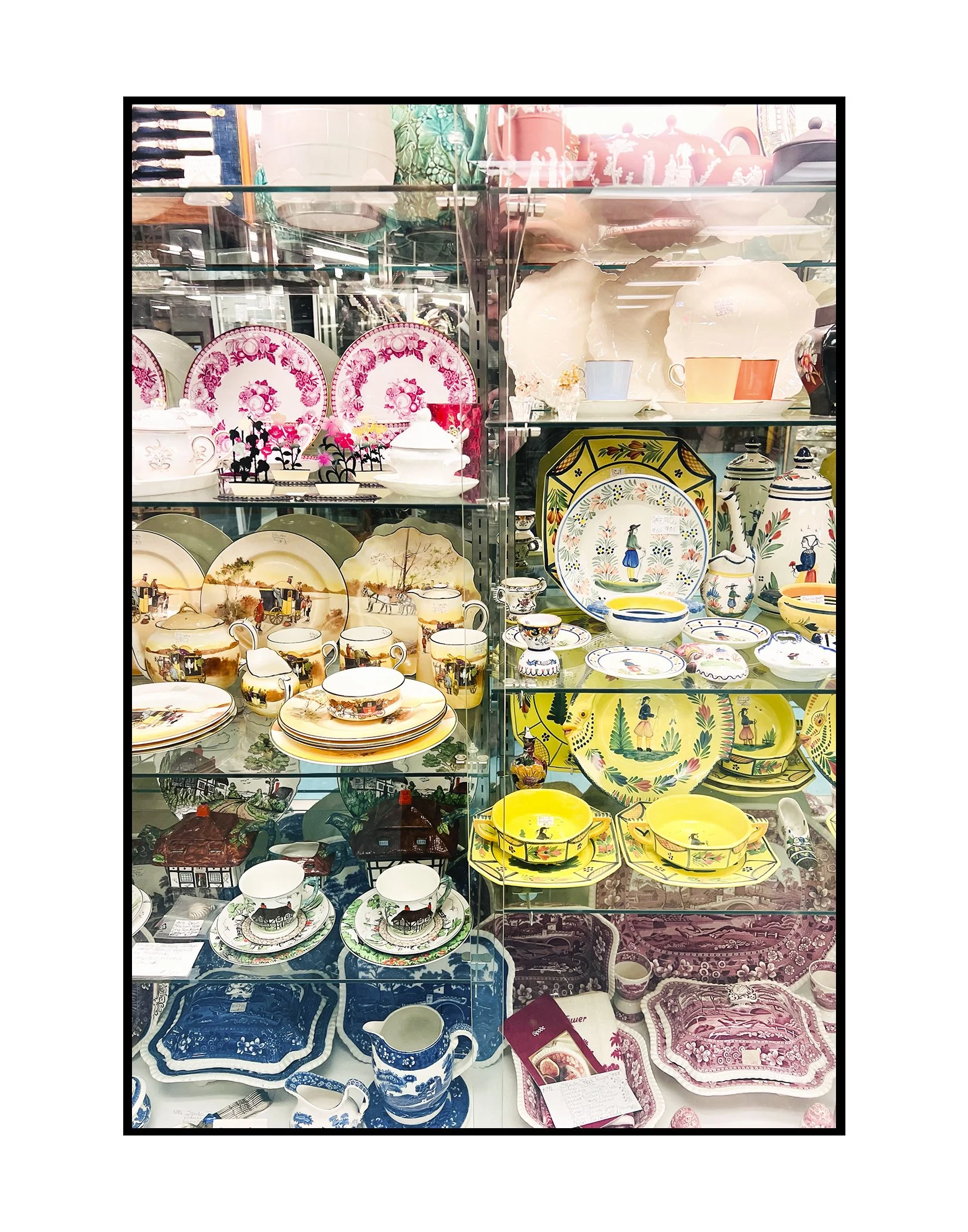
An antique mall—Collinsville Antique Mall—the kind of place where time folds in on itself. Every booth a different version of someone else’s past, arranged for you to walk through.
This is where things slow down.
You start to notice details:
a brown suede rocking chair worn into itself
a tray of colorful vintage flatware, each piece slightly off from the next
a wood panel with an inlaid clown, quietly plucking the petals from a flower
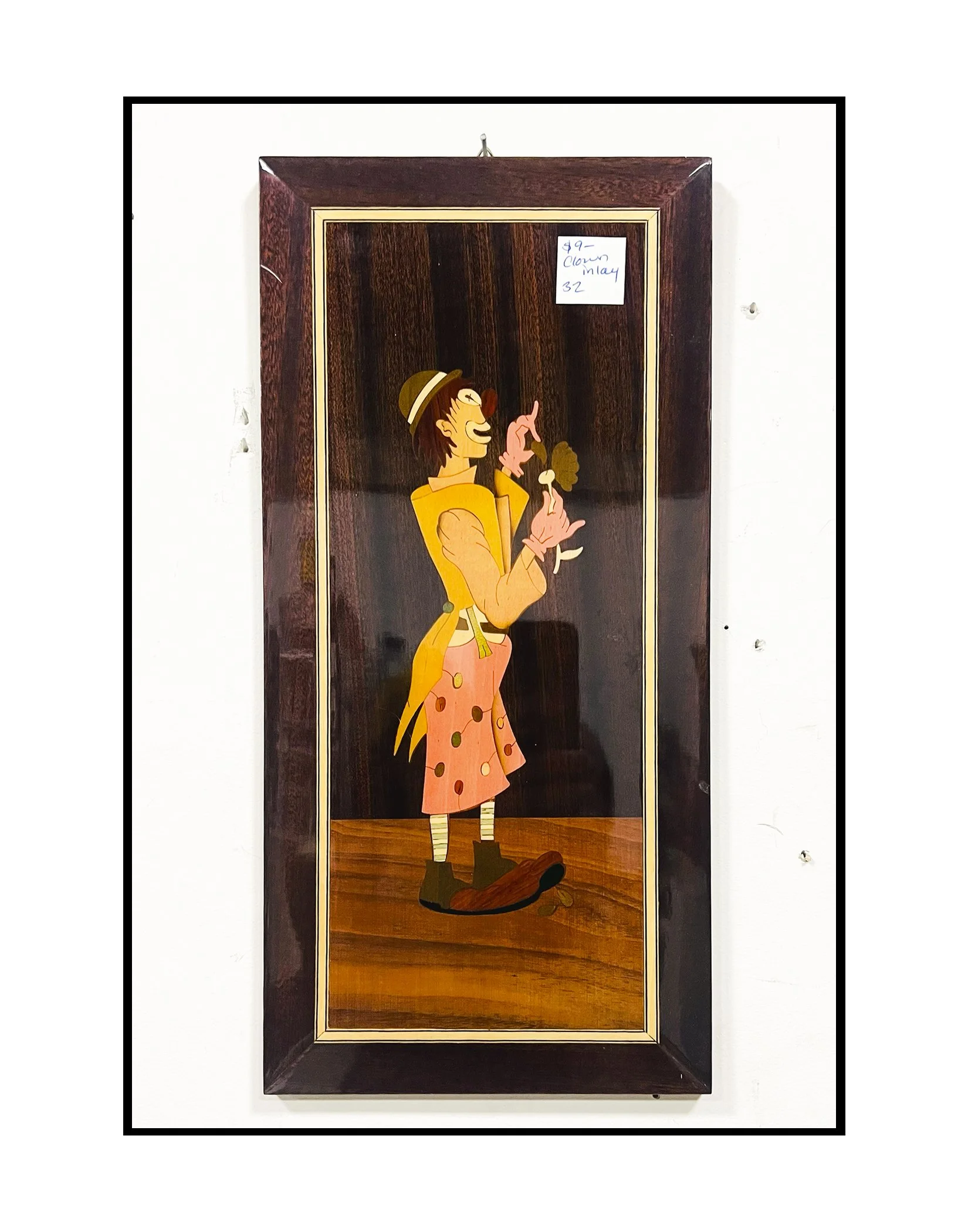
The clown stayed with me longer than I expected.
Not loud. Not exaggerated. Just there.
Doing something repetitive. Waiting.
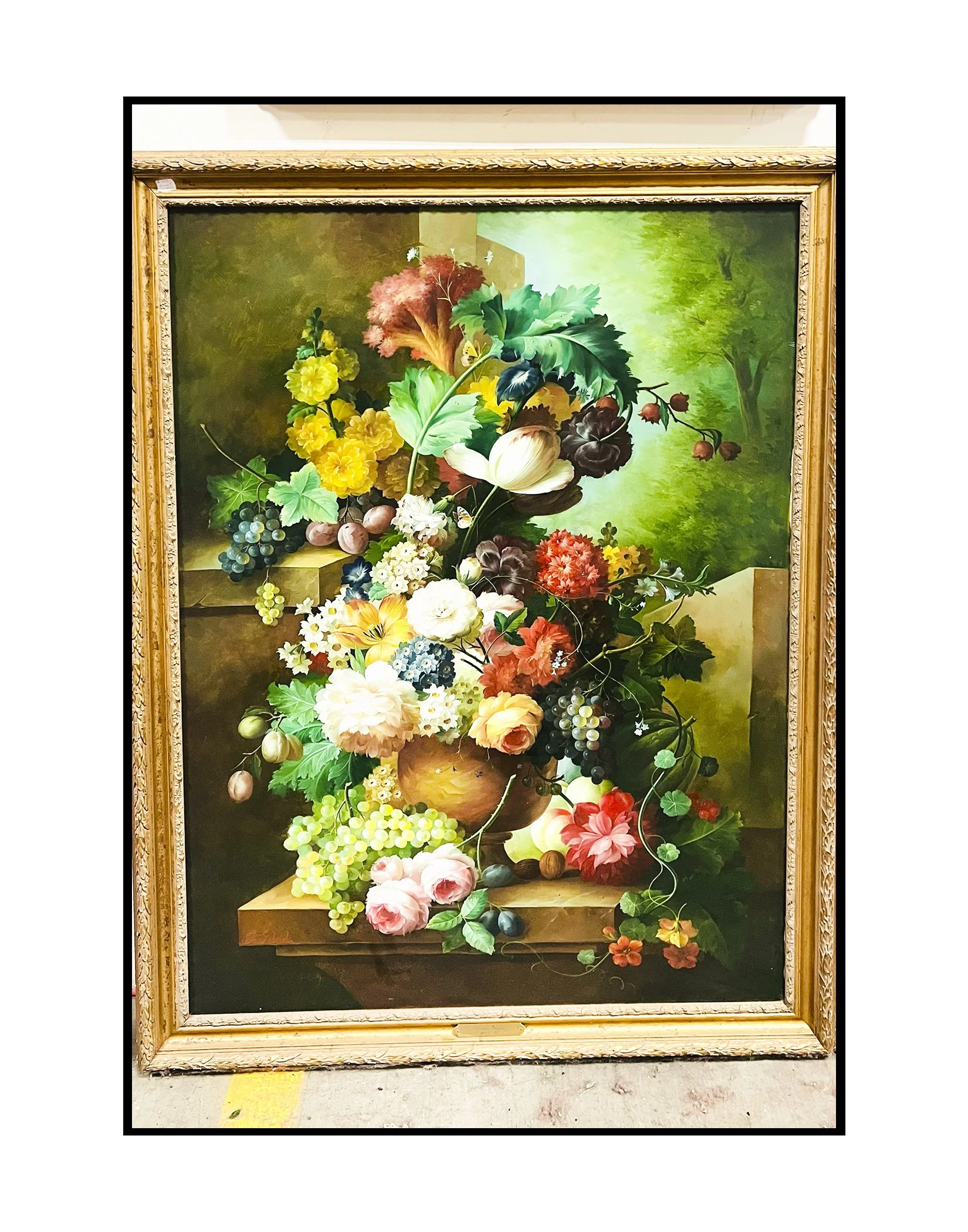
There was a painting too. Large. Oil. Flowers that felt almost too alive for the room they were in.
I wanted it.
Not in the way you want something decorative—but in the way you want something that feels like it already belongs to you.
I took a photo instead.
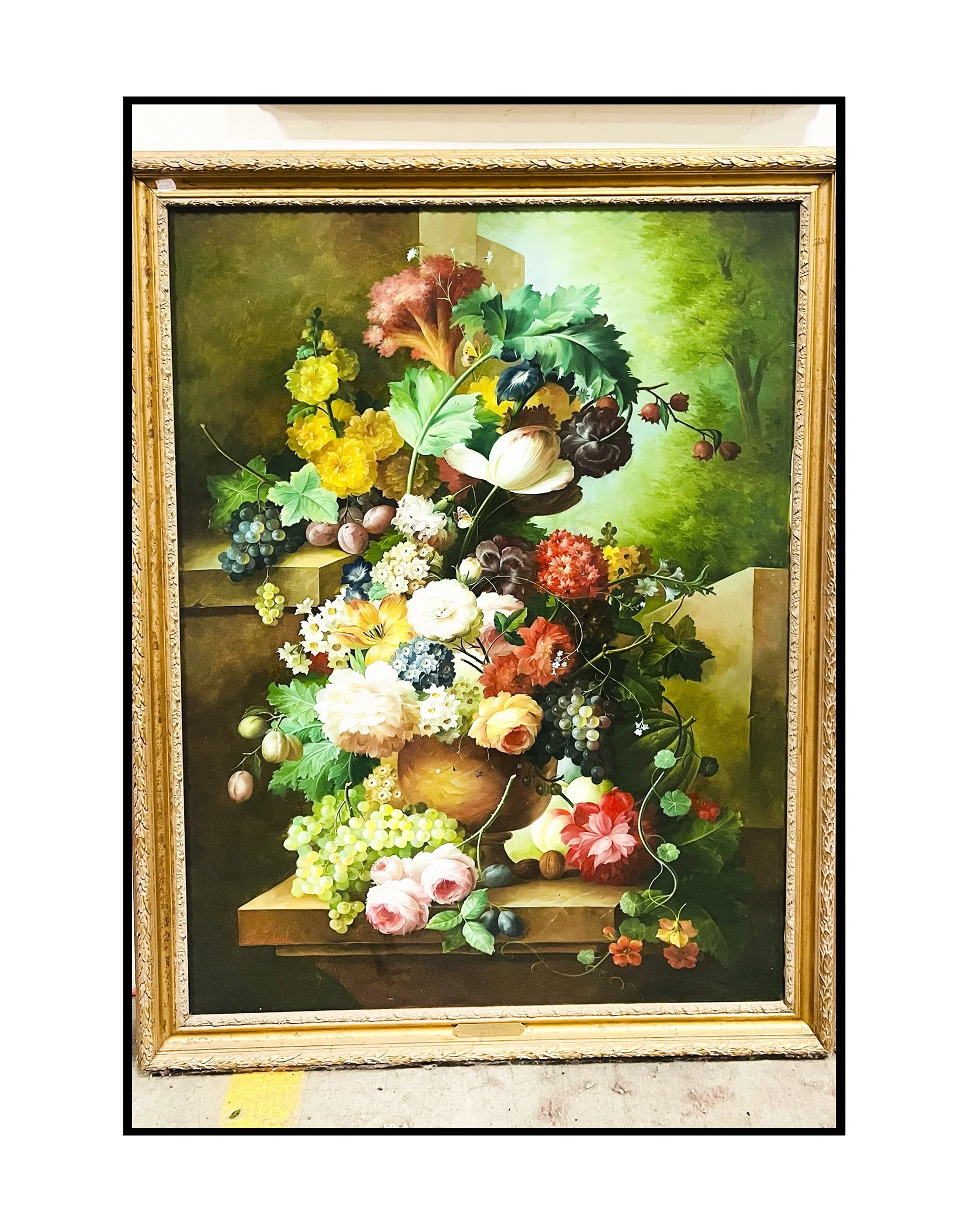
Some things you don’t take.
Some things you leave so they can keep existing where they are.
We walked out with an embroidered tablecloth. Flowers stitched into it carefully, deliberately. Something that would become something else later.
Again—collection, but not for keeping.
Collection for transformation.
We went home, but not really.
The body returned, but the momentum didn’t.
The fabrics came out immediately—laid across surfaces, held up to light, pulled, folded, tested. I wanted to see how they moved before they became anything permanent. There’s a moment before creation where everything is still possible, and it’s almost better to stay there.
That feeling doesn’t last long.
It turned into something else quickly—
paintings, collages, sewing.
An urgency.
The kind where you feel like if you don’t make something now, it might disappear.
At some point, the conversation shifted.
What is art?
What makes someone an artist?
Is there a difference between being creative and being an artist, or is that something we’ve decided to separate?
There wasn’t an answer.
There still isn’t.
It’s the kind of question that doesn’t resolve—it just expands.
The next day, we followed the same instinct.
No plan. Just direction.
We decided to go further down the river.
Chester, Connecticut—Chester—a town that doesn’t feel real when you first drive into it. The buildings sit too perfectly. The street feels staged. Like something built for a film, but left there after production ended.
We parked near a cemetery.
And again—coffee.
Simons Marketplace—espresso, cinnamon buns, a window seat facing Main Street. The kind of place where you sit and watch people move, and for a moment, you feel like you’re outside of it all.
Then back into it.
Cheshire Vintage—a perfectly curated shop. We spoke with one of the owners for a while. There’s something different about small towns like this. The conversations last longer. The recommendations matter more.
She sent us a few doors down.
Dina Varano Gallery—crystals, jewelry, objects that feel like they hold energy whether you believe in that or not.
There was a pattern forming.
We weren’t finding places.
We were being sent to them.
At some point, we noticed a small house.
White picket fence. Eyebrow dormer. Slightly elevated from the street as if it needed to be approached with intention.
We walked up.
There are moments where you don’t ask questions—you just follow the pull.
Next door, a door was open.
Leif Nilsson Spring Street Studio and Gallery.
We walked in.
Paintings filled the space. Impressionist, but not distant—alive in a way that made you feel like you had stepped into them rather than looking at them.
And then you realize:
the person standing there is the one who made them.
Leif.
The conversation started easily and didn’t feel like it needed to end. Stories about painting. About sailing. About working from a boat. About the house itself—once a hotel in the 1800s, now something else entirely.
We learned that the small studio we noticed outside was his too.
That everything we had just walked into was part of a larger life we hadn’t known existed ten minutes before.
At one point, I stepped back and saw Nikko standing in front of a long painting, looking up at it.
Still.
There are moments when someone becomes part of a scene without realizing it.
I took a photo.
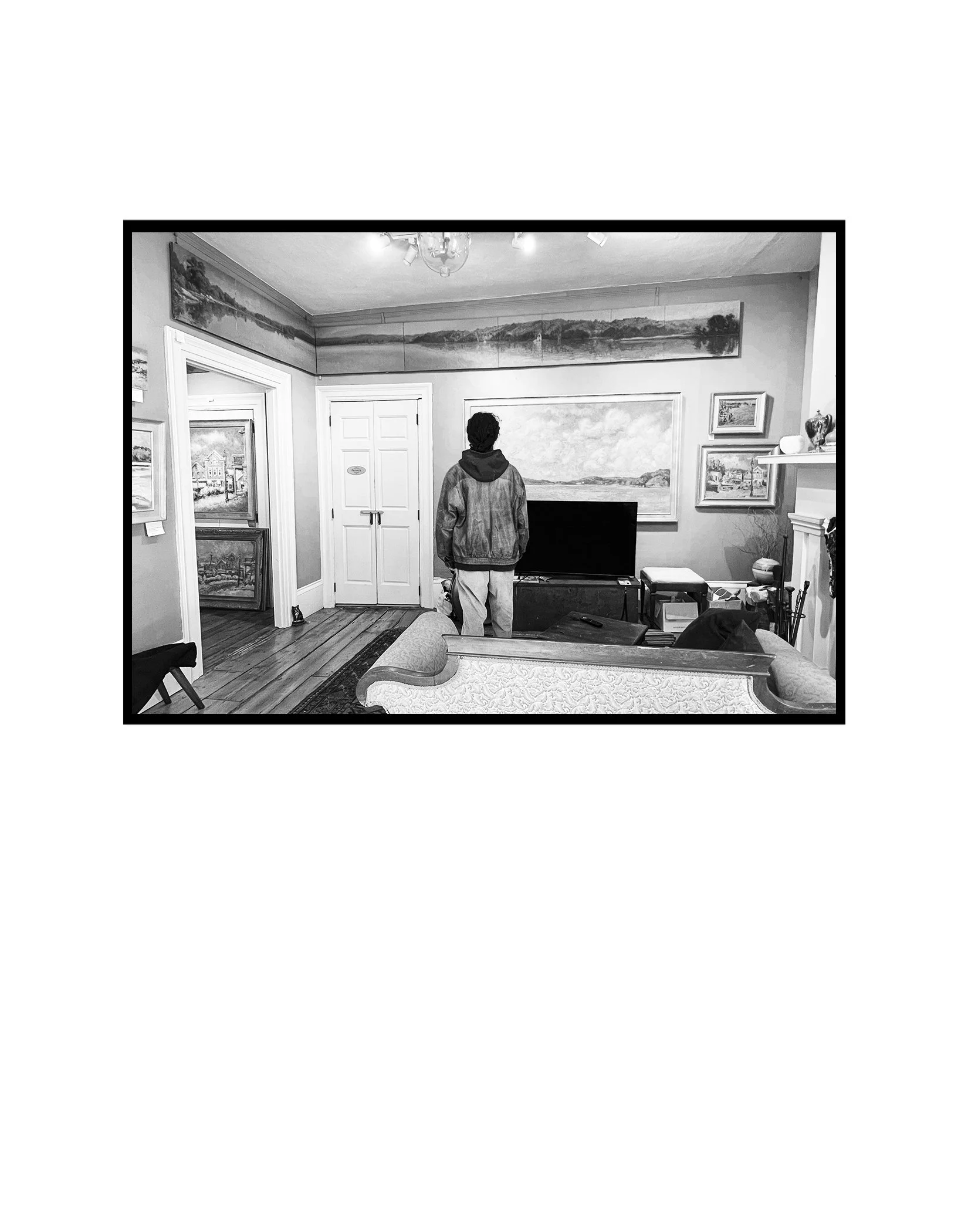
Nikko Amadeo inside Leif Nilsson’s gallery
Not many—just enough to remember that it happened.
Before we left, he mentioned something casually.
An art show.
The next day.
We should come by.
We said we would.
Or maybe we said we might.
We left Chester and drove to New Haven.
The shift was immediate.
The Owl Shop—dark wood, leather chairs, amber lights hanging low over the bar. The kind of place that exists outside of time, or at least outside of whatever time you were in before you walked in.
We sat down.
Picked cigars.
Ordered beers.
I had brought fragrance with me—something I had been thinking about all day without knowing why.
Lily of the valley.
And Muskara Aquilaria from Fueguia 1833.
We layered it into the room without asking permission.
The sweetness cut through the smoke.
The smoke settled back into it.
For a moment, the air felt constructed.
Not accidental.
We sat there, surrounded by low conversation, glass, wood, and heat, and returned to the same questions.
What is art?
What makes someone an artist?
Is it making something?
Or is it seeing something differently?
I don’t know when the conversation stopped and just became part of the atmosphere.
It felt like we had stepped into another version of the day.
Or another version of ourselves.
At some point, we left.
Not because anything ended, but because something was continuing somewhere else.
We talked about Chester the entire way back.
About Leif.
About the studio.
About the fact that we could go back the next day.
We said it casually, but it didn’t feel casual.
Some places open something.
Some people do too.
We said we might go back.
And for some reason, that felt like the most important decision we had made all weekend.
Red, Mirrors, and Watermelon
Not dramatic. Not catastrophic. Just a shedding that happens quietly while you’re still going about your days. I’ve been walking through this one with heightened senses — as if everything is slightly louder, brighter, more symbolic than usual.
Pain can do that. It sharpens color.
Some weeks feel like molting.
Not dramatic. Not catastrophic. Just a shedding that happens quietly while you’re still going about your days. I’ve been walking through this one with heightened senses — as if everything is slightly louder, brighter, more symbolic than usual.
Pain can do that. It sharpens color.
Red Everywhere
Lunar New Year unfolded in Chinatown like a fever dream in the best way.
Red poured down the streets. Gold flashed from storefronts. Drums pounded so hard it felt like the pavement had a heartbeat. Lion dancers — often called dragons, but technically lions — went door to door blessing businesses for the year ahead. They bowed. They blinked. They snapped their jaws open and shut, playful and fierce at once.
The ritual is ancient. It calls in prosperity. It wards off bad spirits. It invites luck in through the front door.
Children carried tanghulu — fruit skewered on sticks and dipped in melted sugar, hardened into glass. The fruit glowed like jewels. Hawthorn berries sealed in sweetness. Sticky and shining.
Confetti stuck to the bottoms of shoes. Cymbals clashed. The dragon undulated down the street — long, embroidered, shimmering — powered by many bodies moving as one.
It felt like collective optimism.
I stood there thinking: yes. Let’s try that. Let’s try optimism again.
Entering the Void (On Purpose)
I saw Anish Kapoor at Lisson Gallery and walked straight into a mirror that swallowed me.
His surfaces bend reality until your sense of proportion dissolves. One piece curved inward with a severity that almost nodded to Richard Serra — heavy, minimal — but Kapoor’s mirrored voids do something stranger. They erase edges. They destabilize your footing.
You step closer and your reflection stretches, fragments, disappears.
It felt like entering a dimension without friction. A quiet void. A pause in the noise.
There is something deeply comforting about distortion. It reminds you that perception is flexible. That what feels fixed might not be.
I stayed in that calm for a long time.
The Moka Pot and Repetition
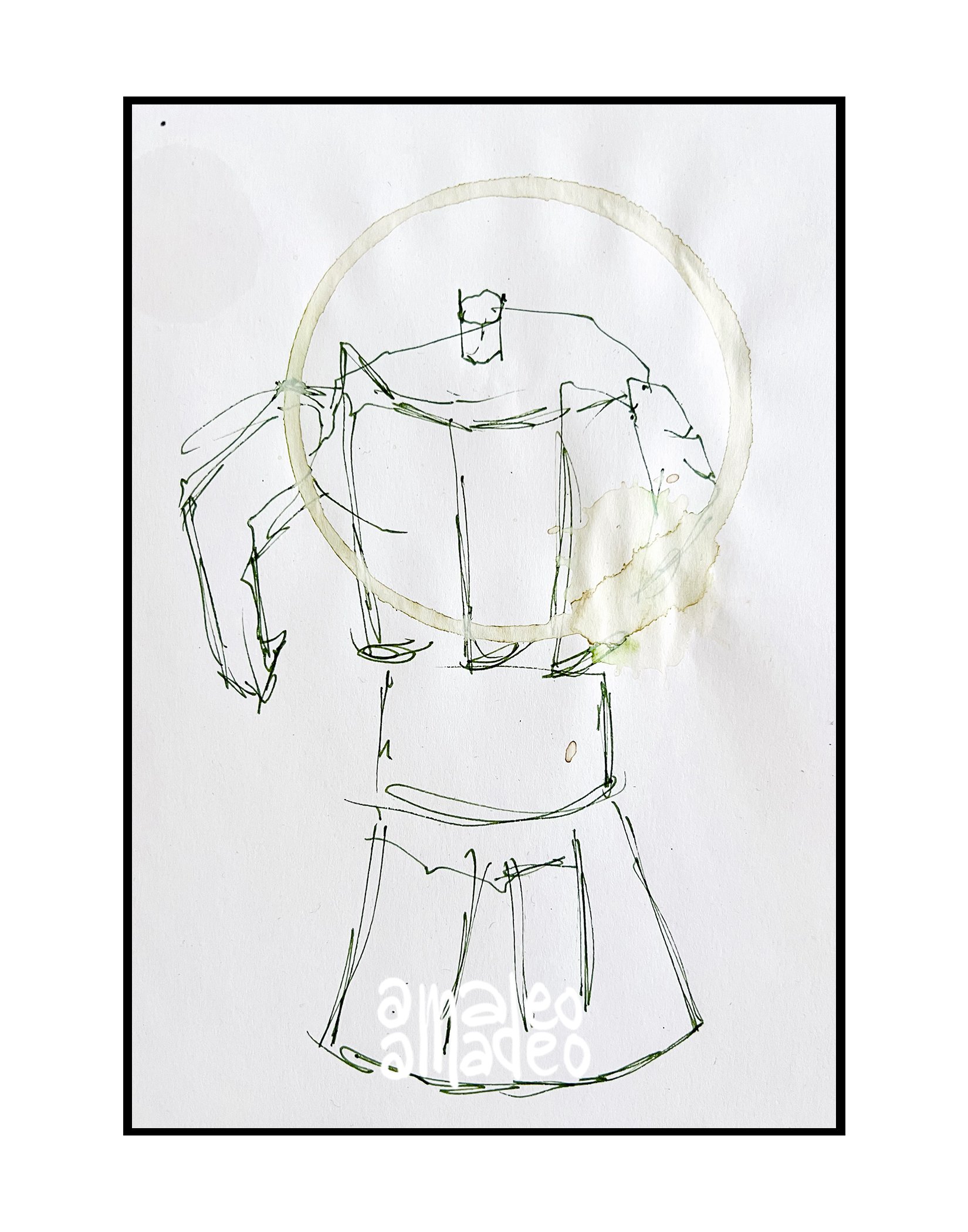
Back home, I’ve been drawing my moka pot over and over again.
Line. Line. Line.
No erasing. No fixing. Just repetition.
The moka pot is all pressure and release. Water heated. Steam forced upward. Something bitter turned warm.
Drawing it feels like holding something steady while everything else rearranges itself. The repetition quiets the static. It’s almost funny how something so small can anchor a day.
If you draw something enough times, it starts to feel like prayer.
Watching From the Periphery
Fashion Week unfolded like theater from a slight distance.
Khaite still understands tension.
Diotima feels intentional and exact.
Ralph Lauren remains cinematic — a master of atmosphere.
Marc Jacobs plays with proportion like it’s a joke only he understands.
And Tory Burch — something fresh there. A subtle shift over the last few seasons. Cleaner. Sharper. Less eager.
It’s interesting to watch from a different vantage point. Less frenzy. More observation.
Watermelon, Metal, Oud
I finally stopped into Naked Ghosts — a perfumery that feels less like retail and more like conversation.
We talked about scent as sculpture. As distortion. As memory.
One fragrance — Strinking by Rich Mess — opened with shockingly ripe watermelon. Wet. Metallic. Almost too bright. It lingered longer than expected, then melted into something ambery and woody, still whispering fruit.
I keep imagining layering it over something dark. Dirty oud underneath bright sugar-water fruit.
Sweet over smoke. Youth over age. Fresh over ancient.
Juxtaposition again.
Blossoms in Dirty Snow
This week has felt like blossoms pushing through snow that hasn’t fully melted yet.
Things are rough. My body and mind are not entirely aligned. Healing feels slow. But there have been flashes — red confetti, mirrored voids, sugar fruit, coffee steam — that remind me how alive things still are.
You can feel unwell and grateful at the same time.
You can hurt and still notice beauty.
You can reset without announcing it.
For now, I am drawing small objects. Watching lions bless storefronts. Standing inside mirrors. Plotting the year quietly. Sending applications into the distance. Letting sweetness sit over something darker.
Molting.
Let’s see what emerges.
-Anthony Amadeo

A Canvas of Couture and Contrasts: Day 18
Today dawned prematurely, at 5:30 a.m., with the restless energy of creation pulsing through the pre-dawn silence. Espresso in hand, steaming like the city's cobblestone under morning mist, I dove into a sea of images awaiting transformation—edits, collages, an alchemy of artistry.
Today dawned prematurely, at 5:30 a.m., with the restless energy of creation pulsing through the pre-dawn silence. Espresso in hand, steaming like the city's cobblestone under morning mist, I dove into a sea of images awaiting transformation—edits, collages, an alchemy of artistry.

By eight, the day had taken shape; I arrived at Andrews hotel, weary yet eager. Together, we infused ourselves with double shots of espresso, the elixir of the sleep-deprived artist, and set forth into the drizzling embrace of Paris. Our pilgrimage led us through verdant whispers of the jardin, statues gazing solemnly as we passed, to the architectural enigma that is the Louvre.
Inside, amidst the sanctity of art and antiquity, we ventured first to the enigmatic smile of the Mona Lisa, flanked by the dramatic chiaroscuro of Caravaggio and the grand narratives of Jacques-Louis David.
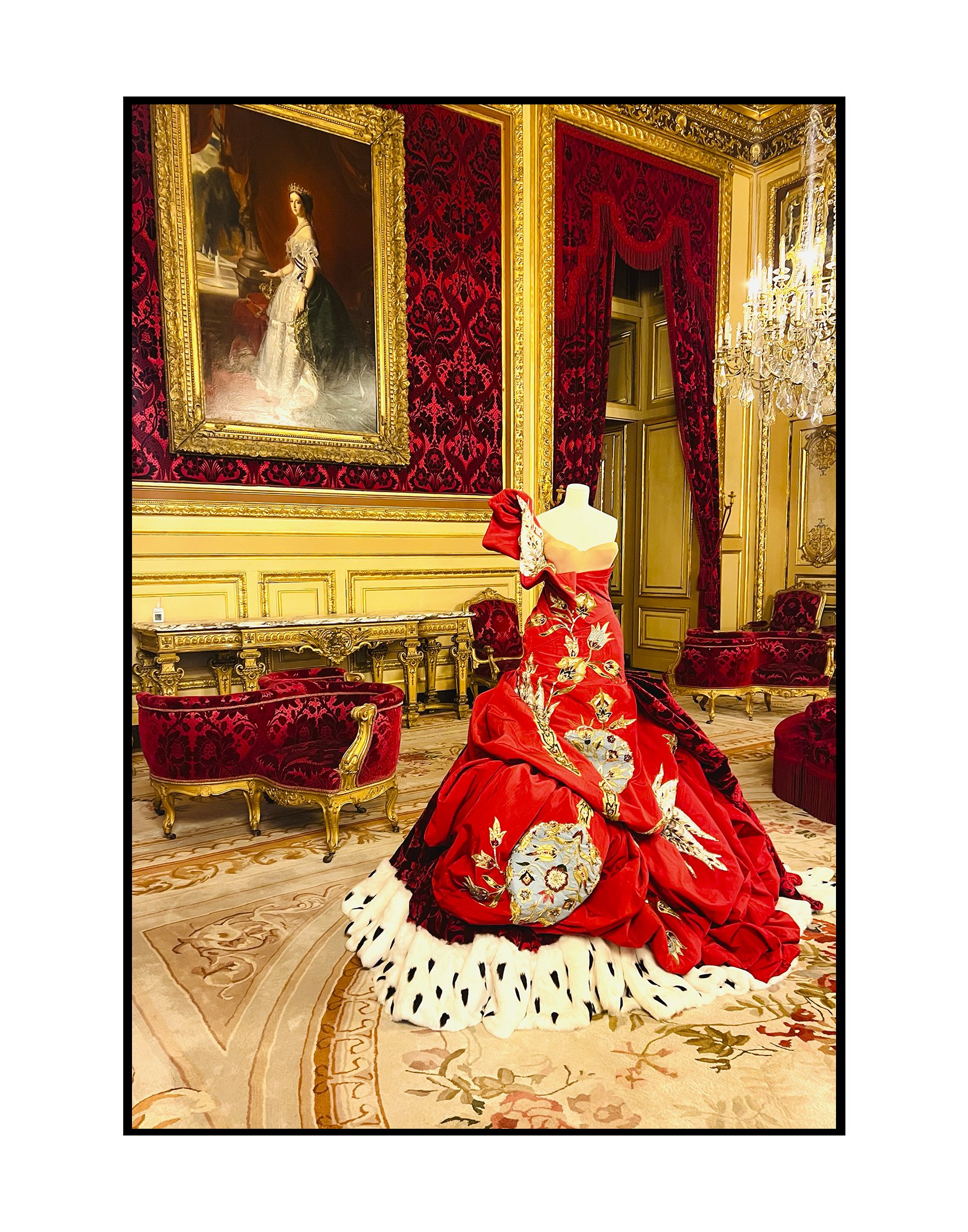
The heart of the day was devoted to an exploration not of past masterpieces but of their dialogue with the contemporary: LOUVRE COUTURE: Art and fashion: statement pieces. This labyrinthine exhibition, sprawling nearly 9,000 square meters, wove a narrative connecting the ornate threads of historical fashion with the opulent artistry of the Louvre's own collections. It was a dance of decorative styles, a visual symphony played out in textiles and threads.
Here, the ghosts of couture's past—Lee McQueen's dress for Givenchy, Demna's 3D-printed marvel for Balenciaga—mingled with the echoes of history. Karl Lagerfeld’s creations for Chanel conversed silently with Galliano's reinventions for Margiela, each piece a footnote in the grand story of fashion. But none so poignant as the sight of a Balenciaga gown set against the backdrop of Napoléon III’s State Dining Room; a velvet whisper against the gilded shouts of history.
This intermingling of eras crafted a surreal tableau, blurring lines between what was worn and what was witnessed. Each piece not merely displayed but deeply integrated into the museum's fabric, suggesting a history that might have been, a past reimagined through the lens of haute couture.




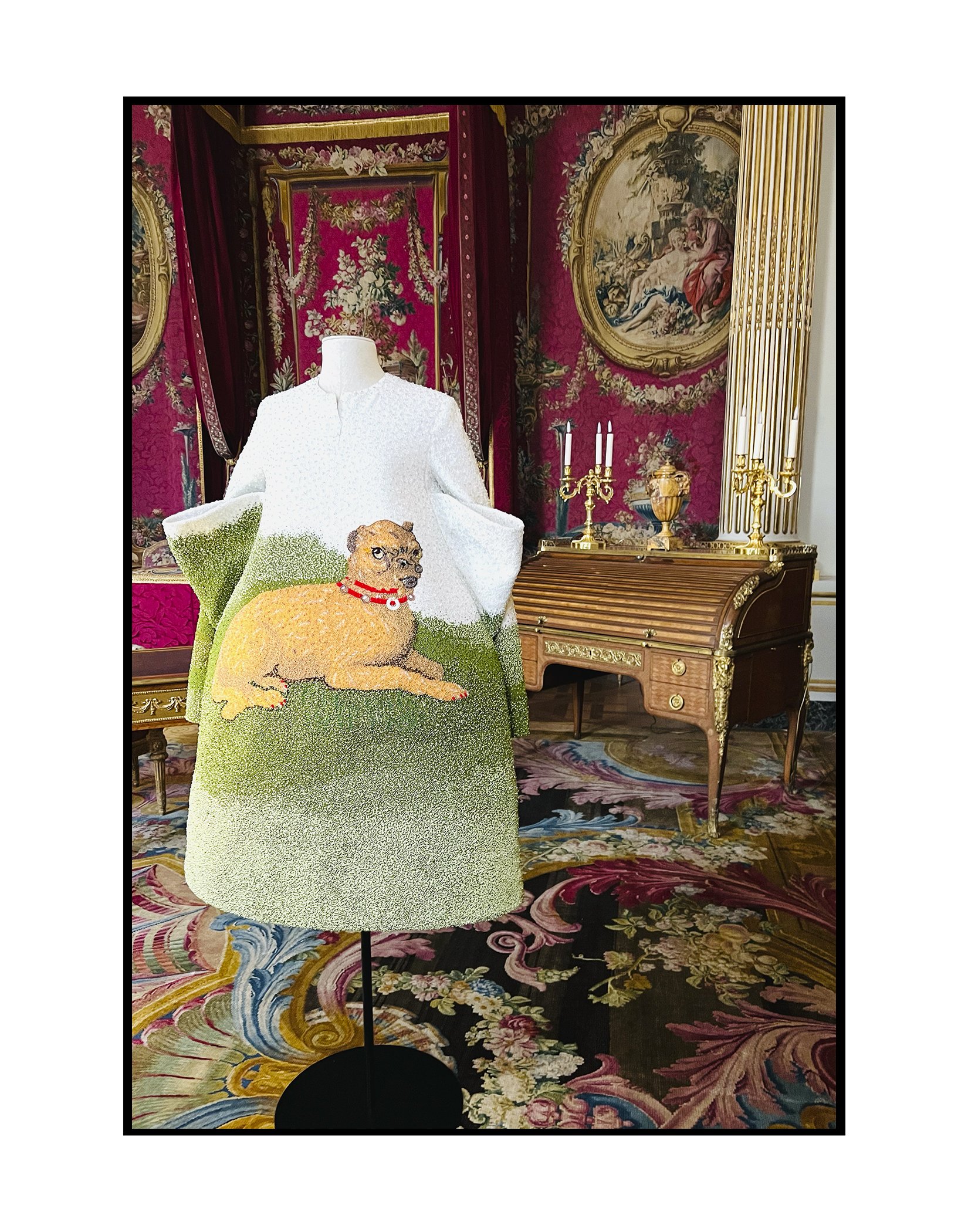


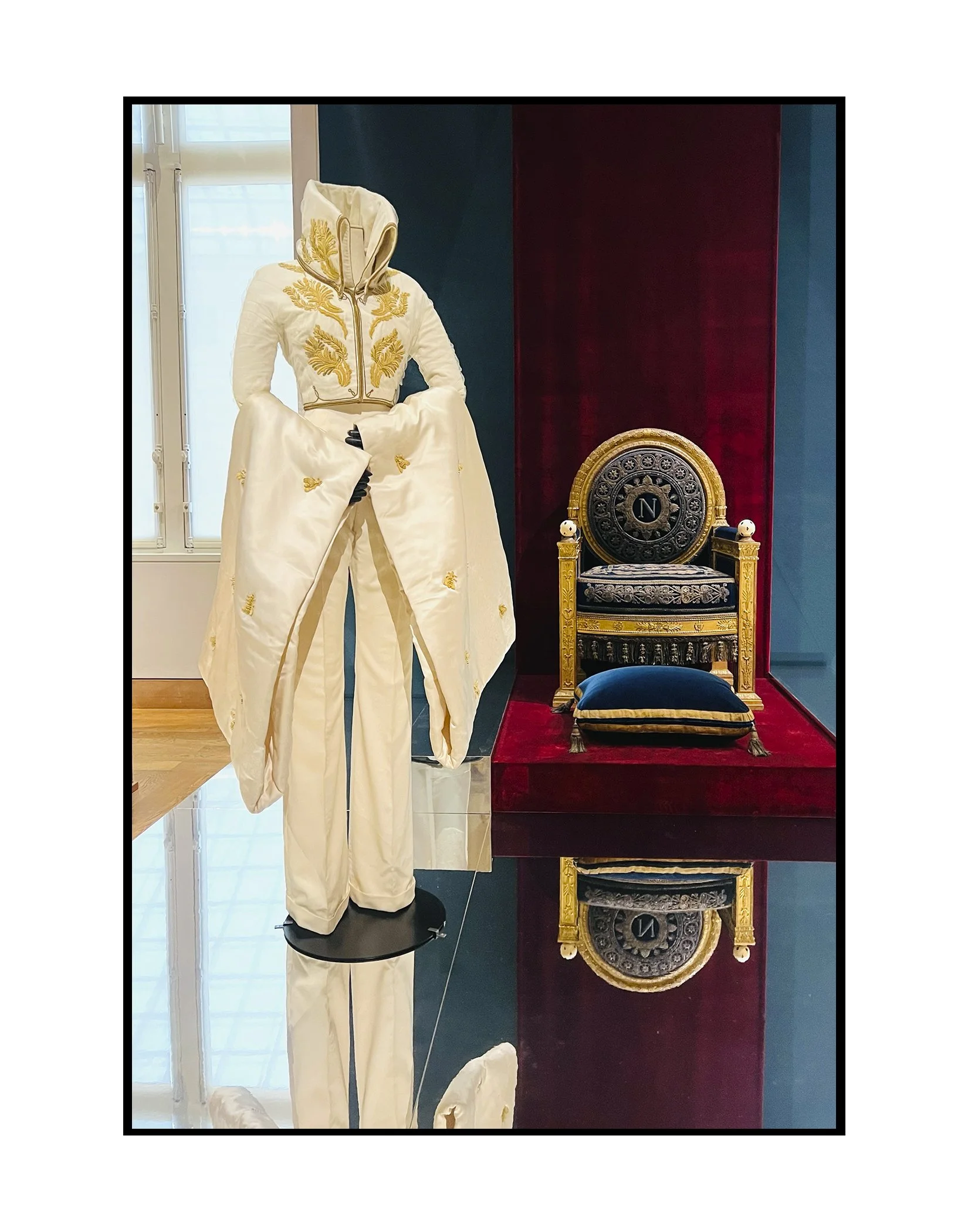


Exhausted yet exhilarated, we retreated from the Louvre's embrace, our minds saturated with the day’s visual and historical feast. As we dined, the conversation turned to the upcoming visit this evening to the Foundation Louis Vuitton, where "Pop Forever, Tom Wesselmann &..." promised to continue the dialogue between historical heft and pop art levity.
Today was not merely a day lived but a day woven into the larger tapestry of Paris itself—each moment a stitch in the vibrant quilt of art and history. Here, fashion is not just worn; it is lived, breathed, and dialogued with in whispers and exclamations, set against the backdrop of a city that itself wears its history with effortless grace.
To be continued... as the narrative of art and artifice, of fabric and fabrication, unfolds in the coming days.

Irving Penn: Kinship
Another standout was his collaboration with Issey Miyake in the late 1980s—a dream partnership blending Miyake’s sharp pleats and bold shapes with Penn’s stark black-and-white photography. The graphic nature of these images is timeless, an artistic conversation between two visionaries. I’ve long wanted the Irving Penn x Issey Miyake book for my collection, and seeing these photographs in person only deepened my admiration for their artistry.
Walking into Pace Gallery to see Irving Penn: Kinship felt like revisiting an old friend. Curated by Hank Willis Thomas, the exhibition showcases Penn’s ability to unify diverse subjects—from couture fashion to cultural portraits—with a grace that transcends time.

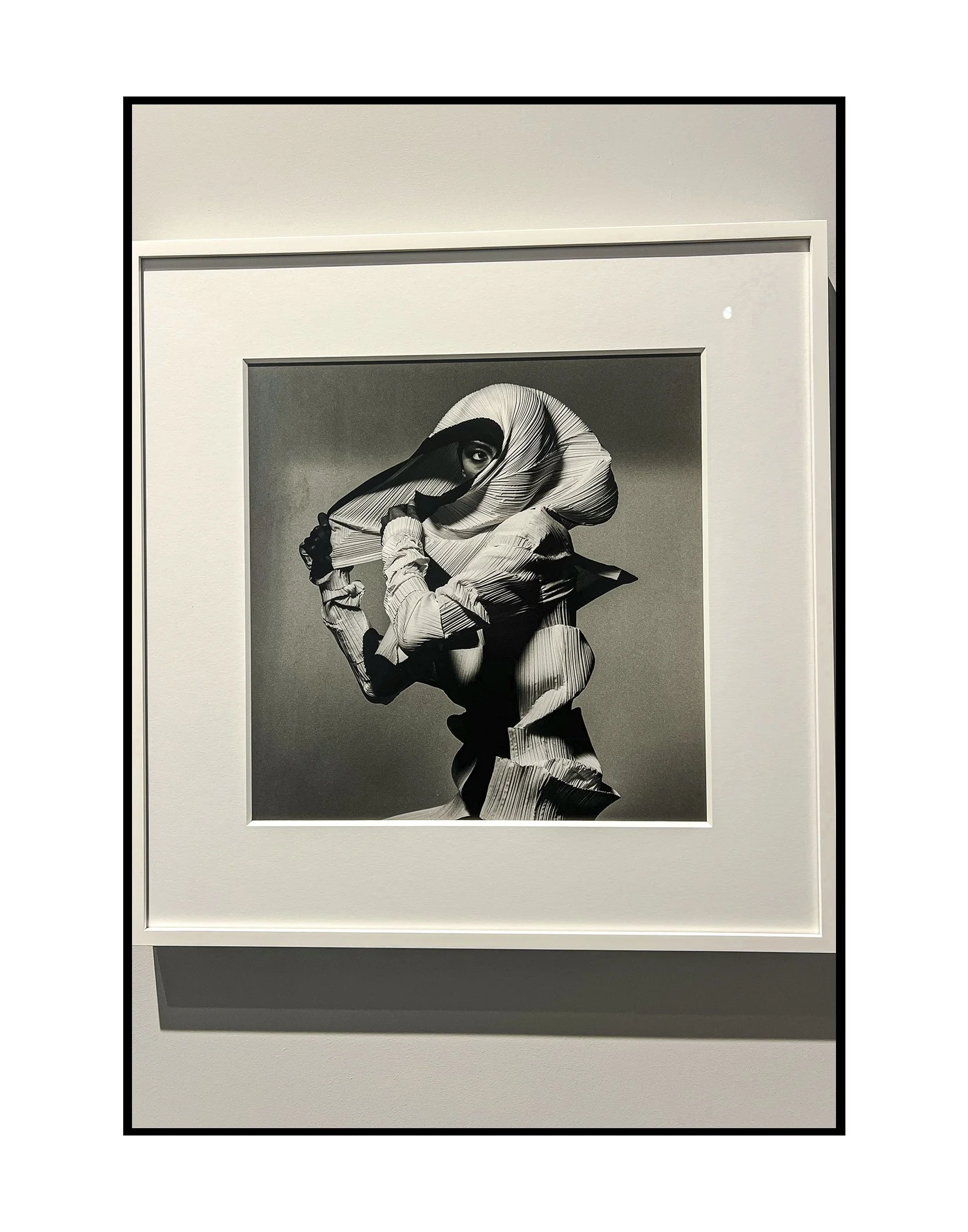


Hank Willis Thomas’s curation is a masterstroke, pairing images like a couture photograph alongside a dandelion or a biker gang next to the New Guinea Mudmen. These juxtapositions reveal the fluidity and consistency of Penn’s vision, making the contrasts both striking and deeply connected.
Some highlights for me included works from Penn’s Cigarettes series, first shown in 1977. There’s a raw intimacy to these images, as if each discarded cigarette carries the stories of the people who smoked them. I found myself captivated, imagining who they might have been and what moments led to those final smoldering drags. There’s a print from this series at the Met that I’ve stared at countless times, but seeing another in this exhibition brought the same sense of wonder and storytelling.
Another standout was his collaboration with Issey Miyake in the late 1980s—a dream partnership blending Miyake’s sharp pleats and bold shapes with Penn’s stark black-and-white photography. The graphic nature of these images is timeless, an artistic conversation between two visionaries. I’ve long wanted the Irving Penn x Issey Miyake book for my collection, and seeing these photographs in person only deepened my admiration for their artistry.

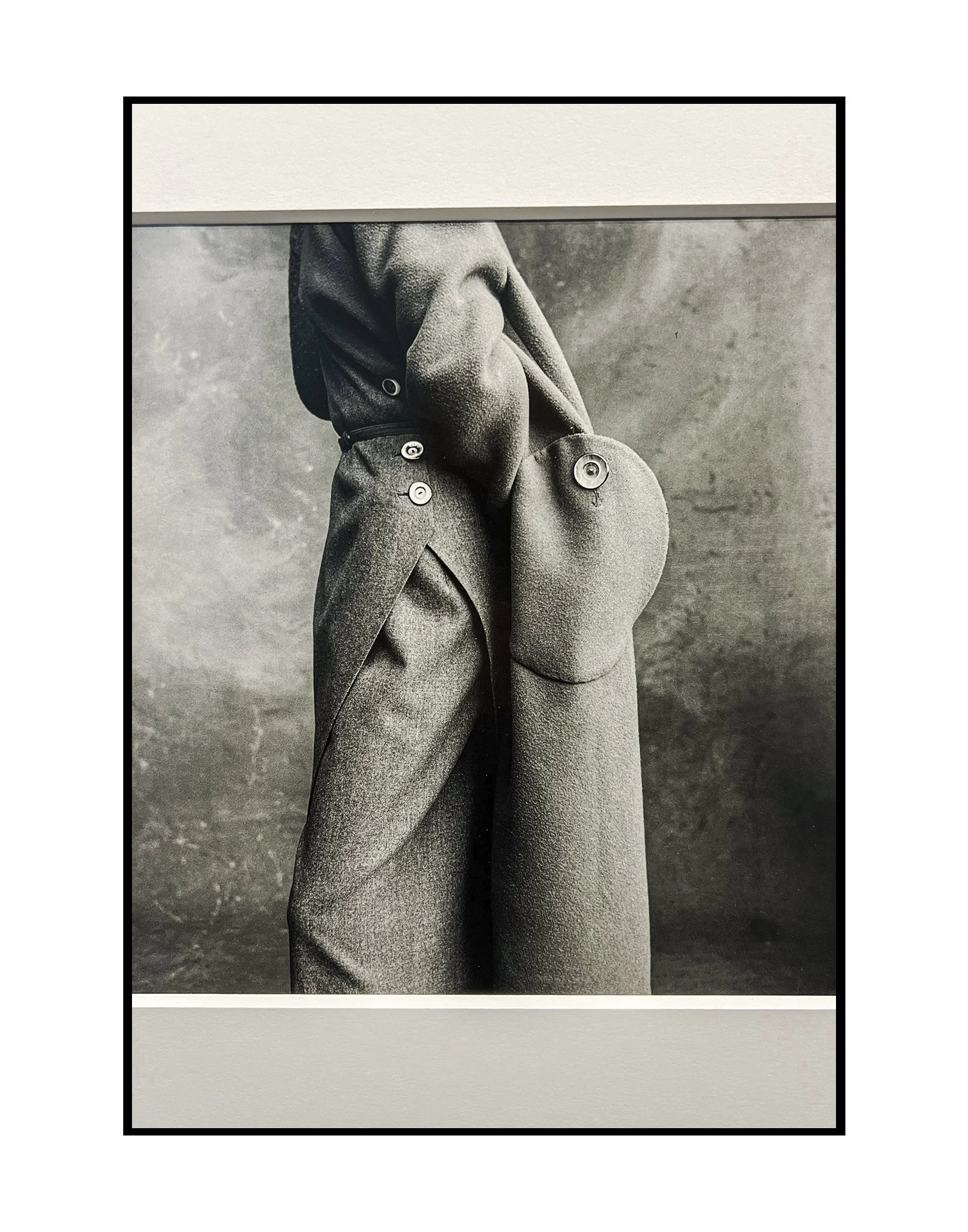


If you’re in New York City, don’t miss Irving Penn: Kinship. It’s an unforgettable showcase of one of photography’s greats, curated to perfection. The exhibition runs until February 22, 2025, at Pace Gallery.