Doug, Giant Denim, and an Impossible Puzzle
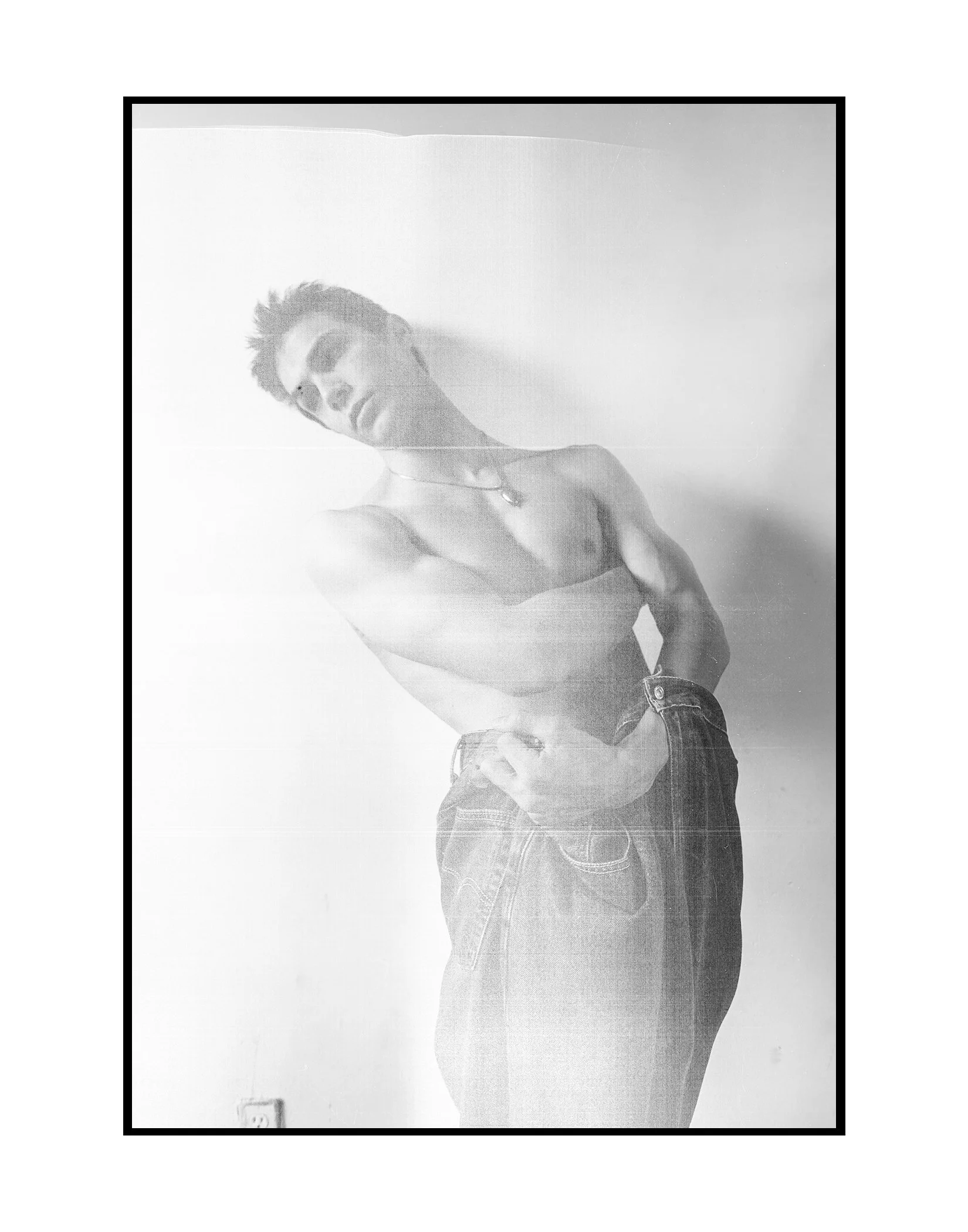
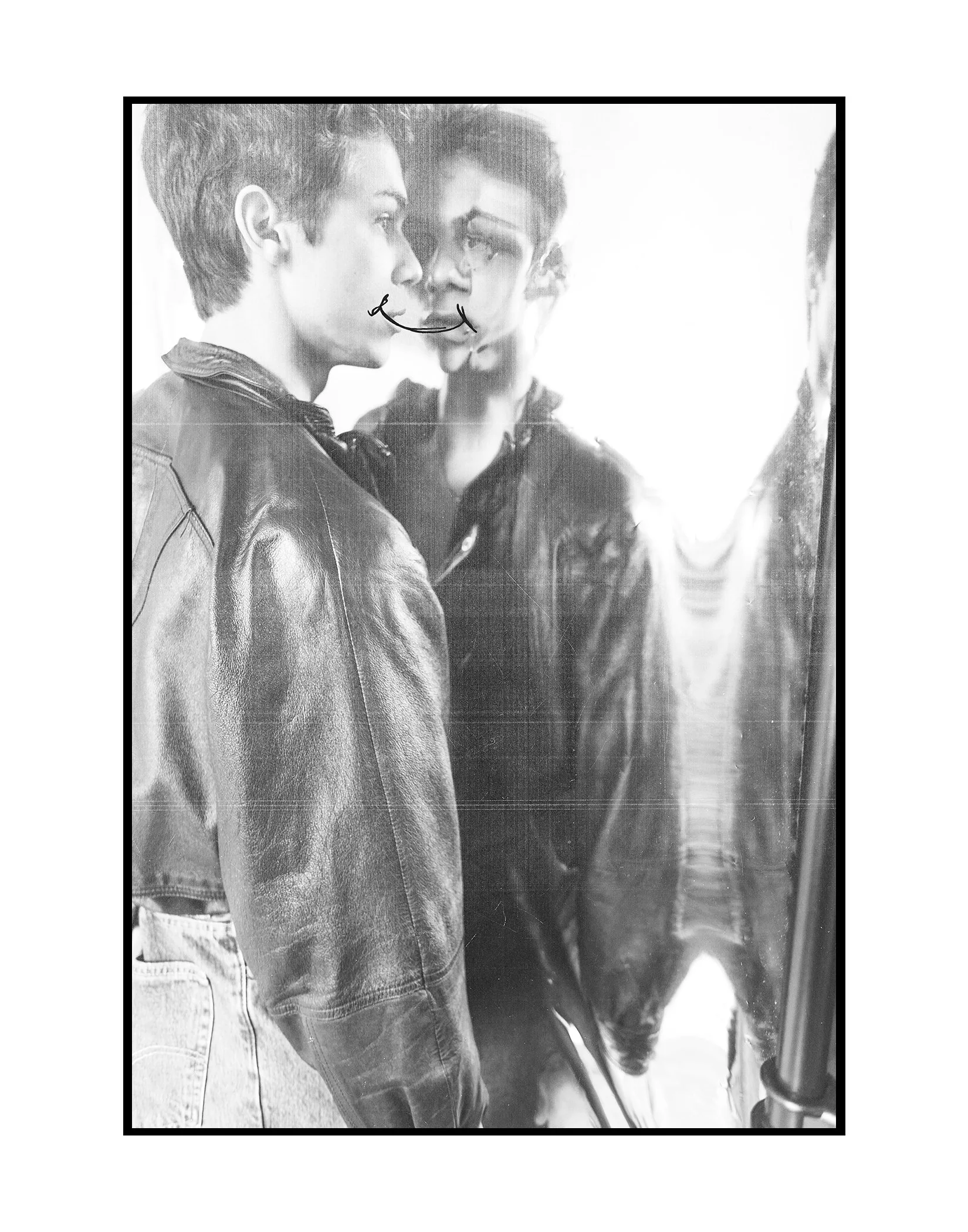
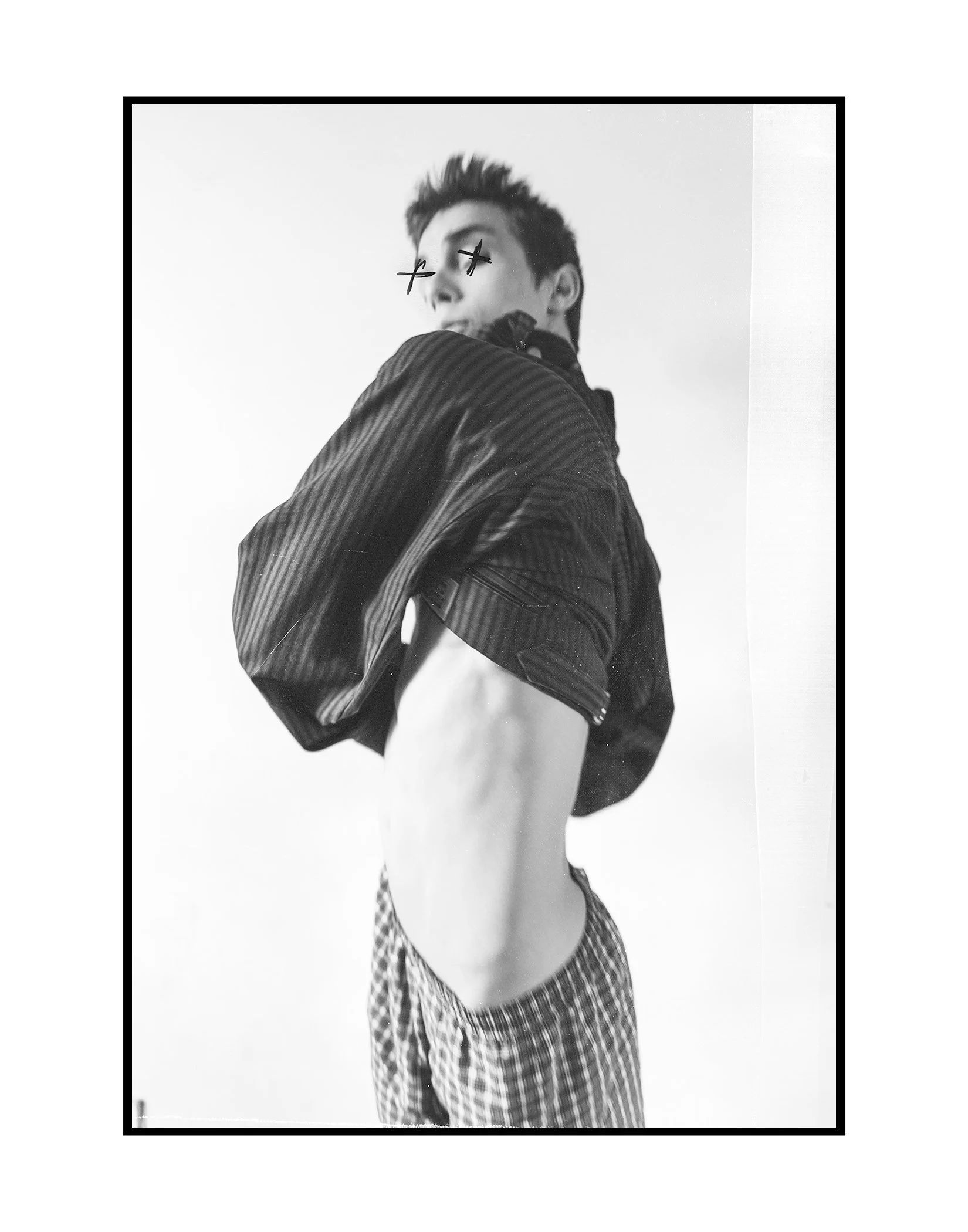
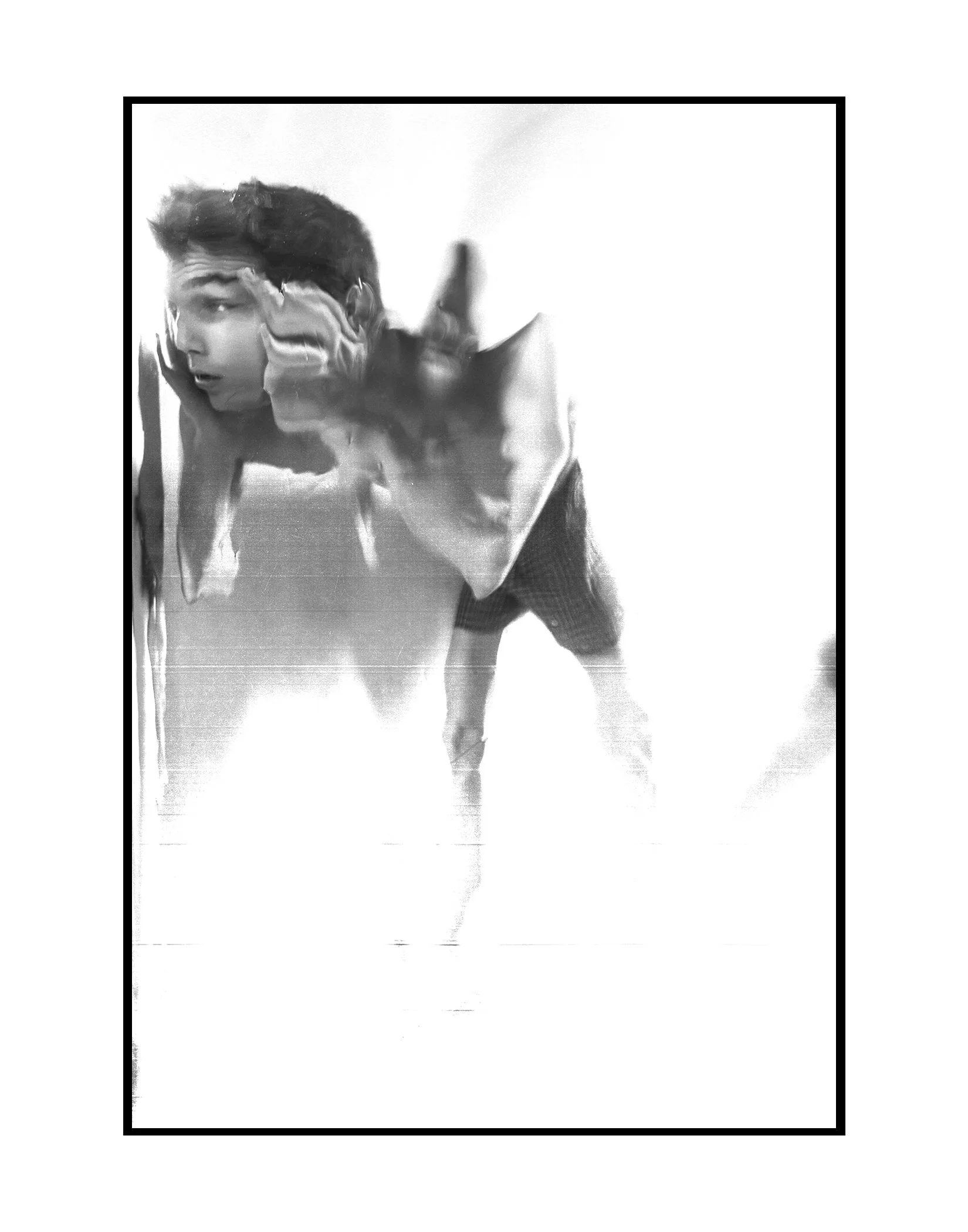
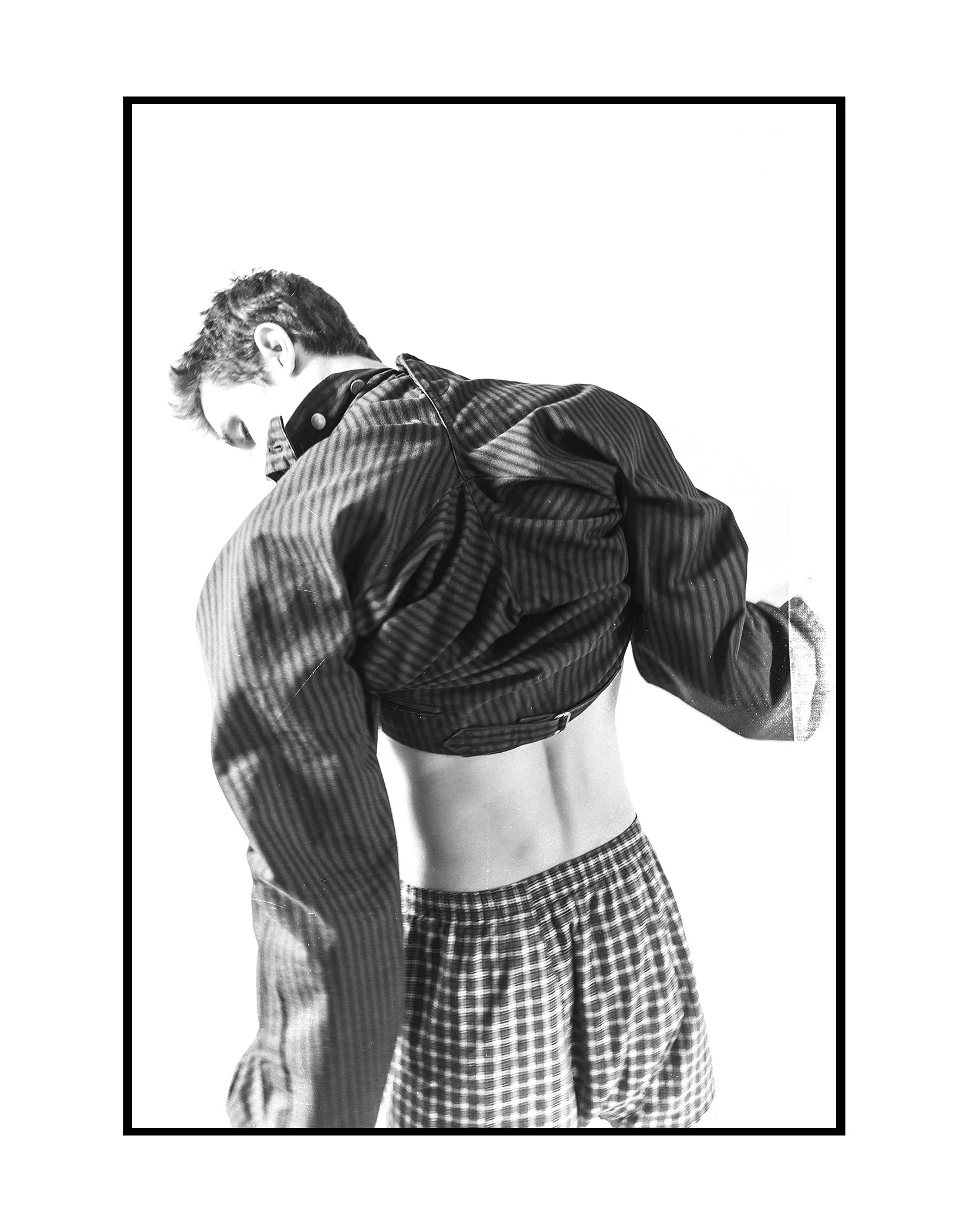
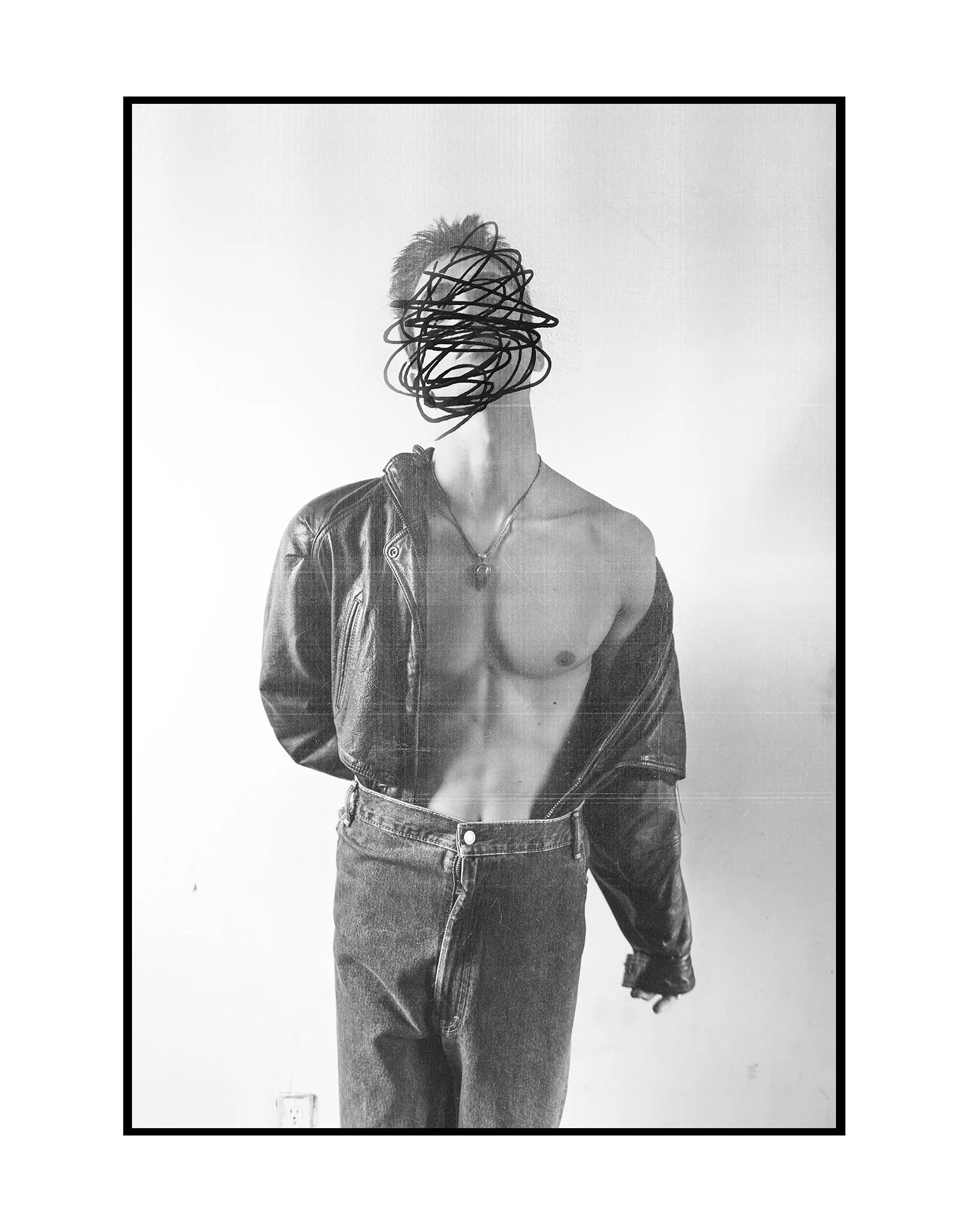
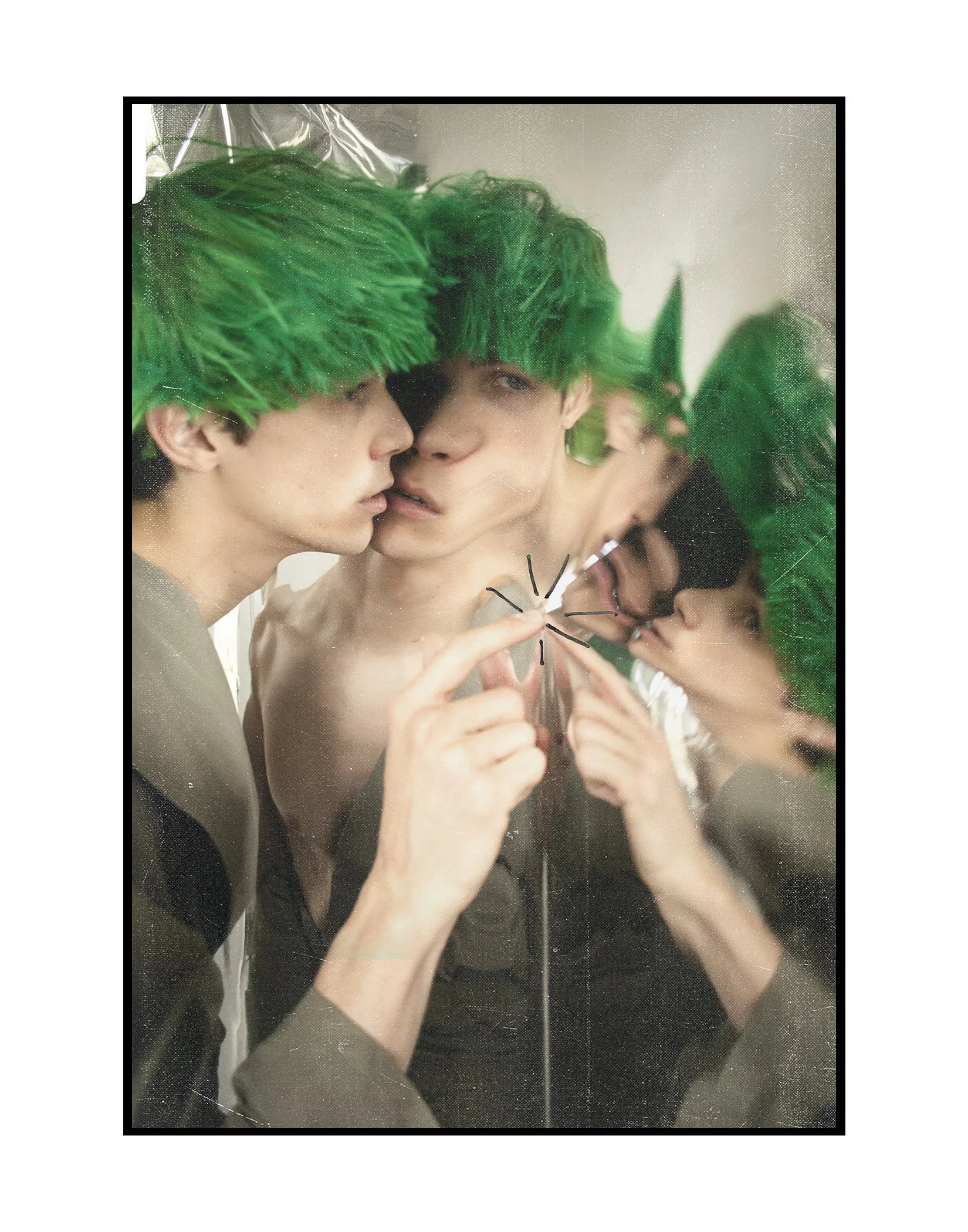
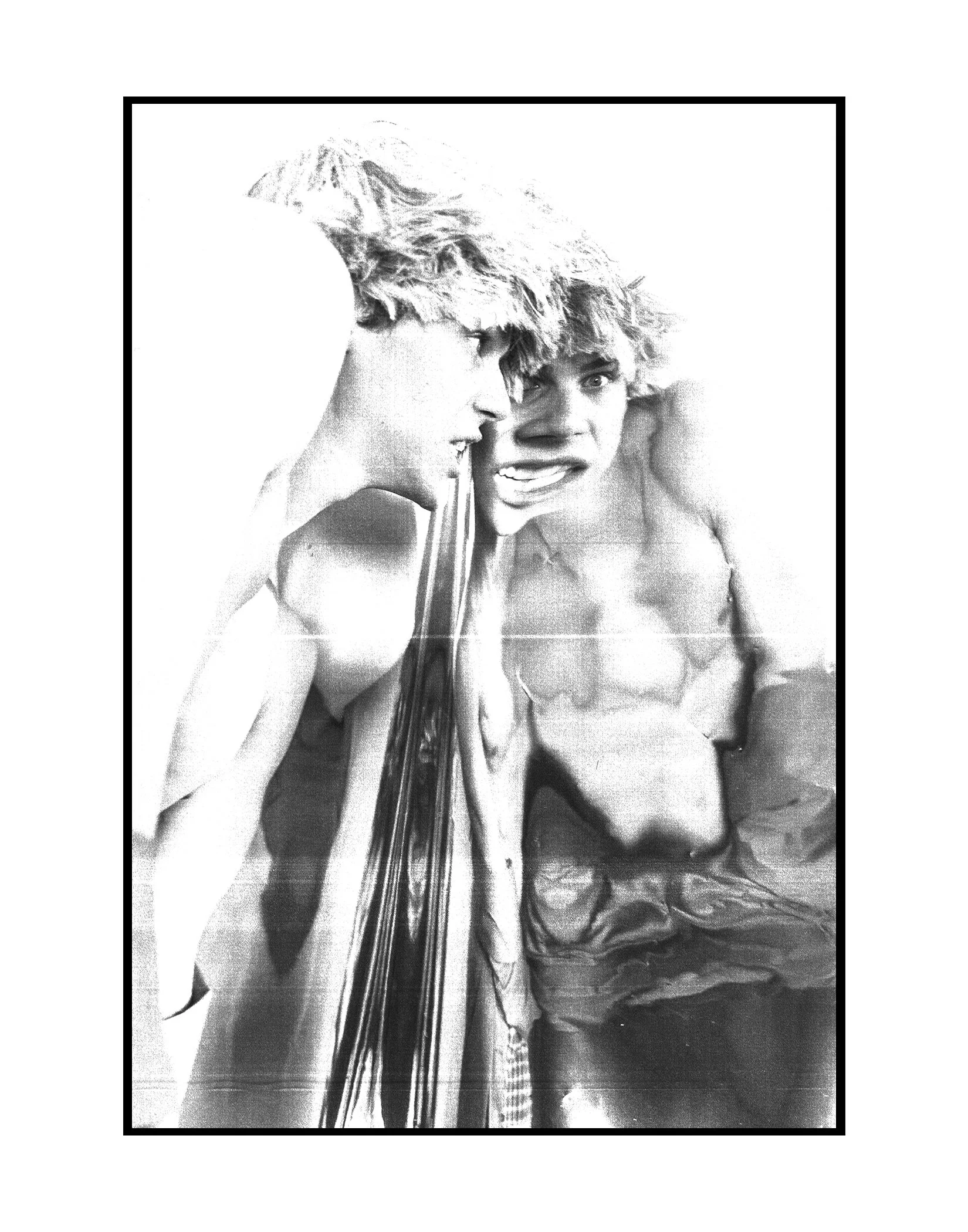
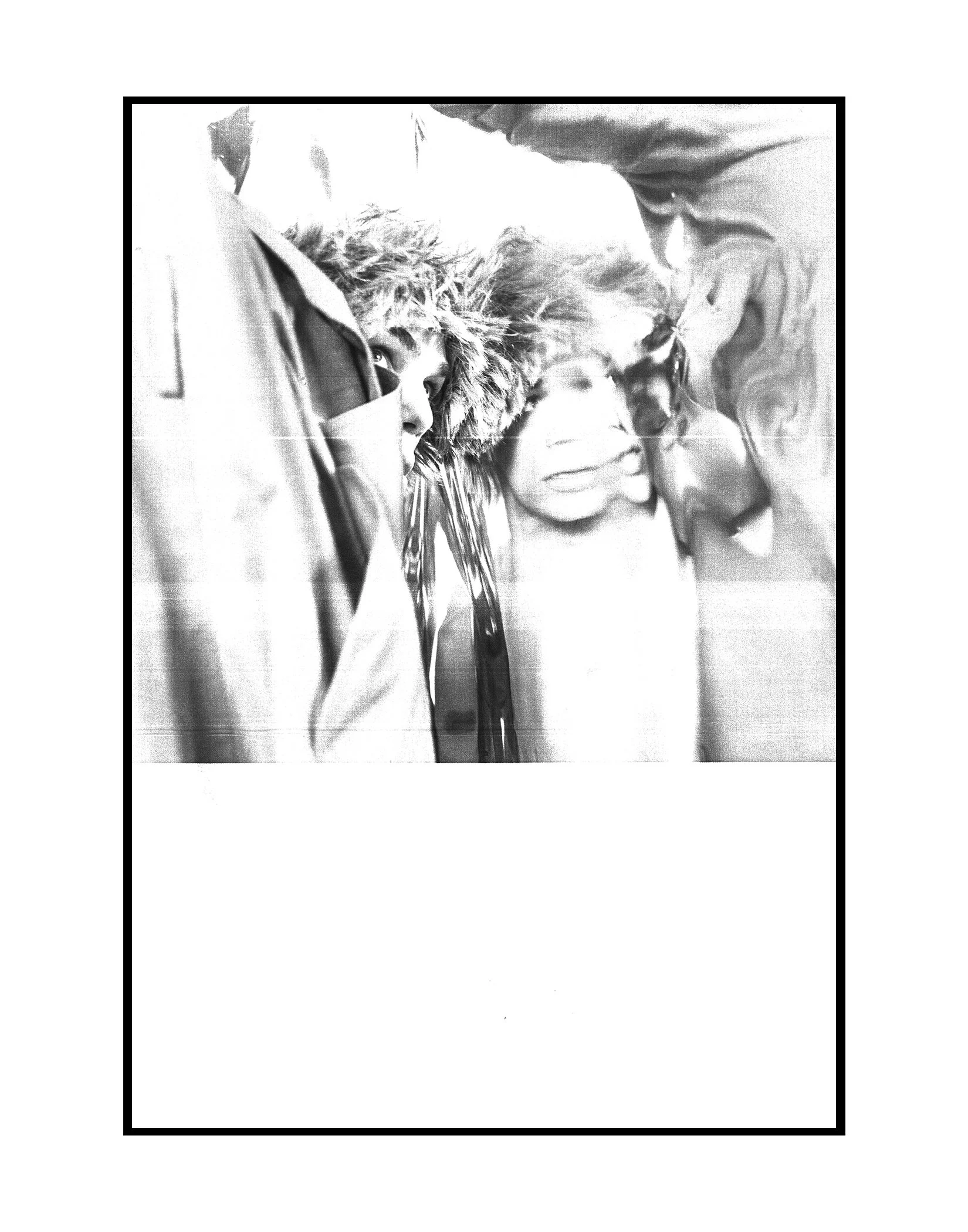
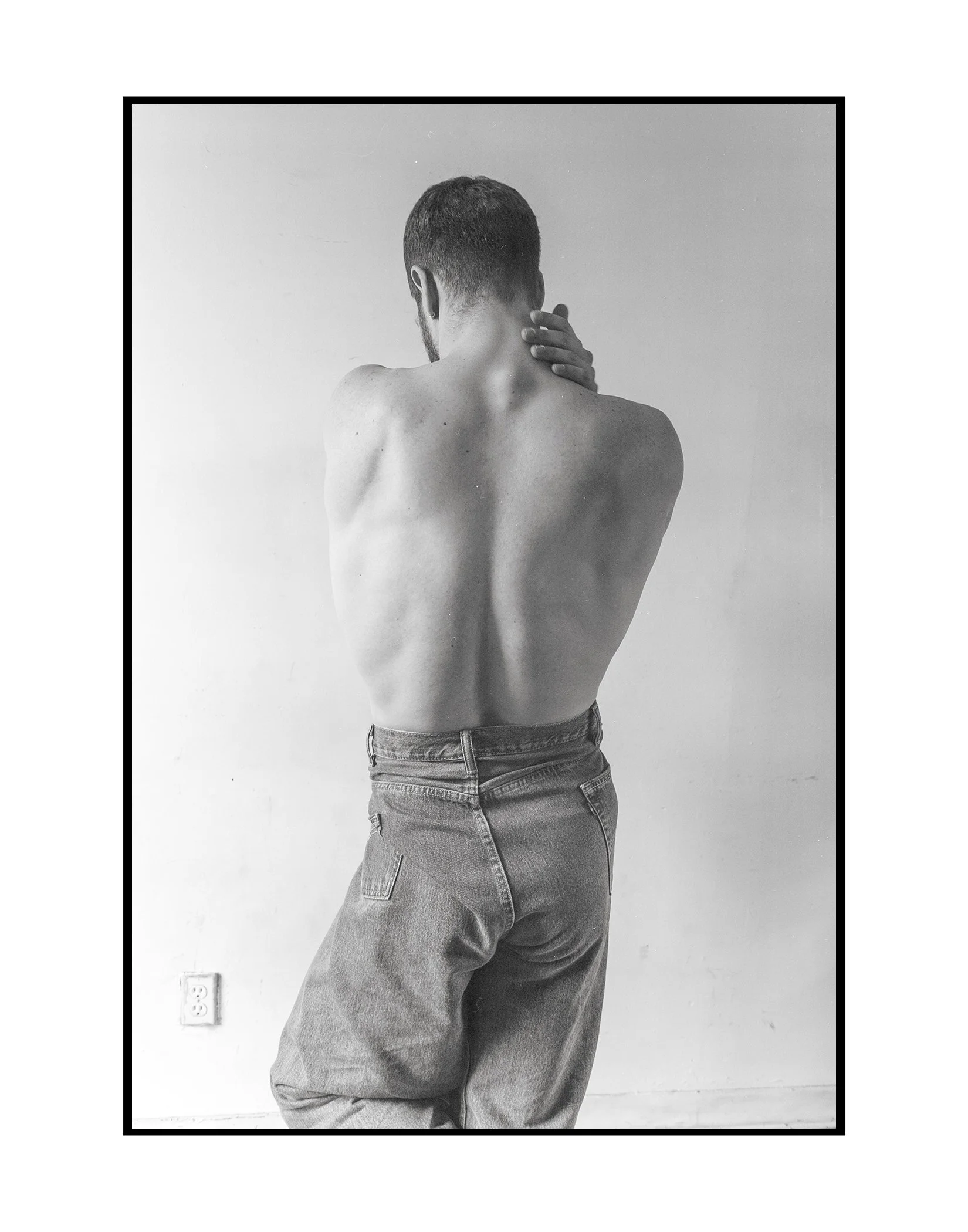
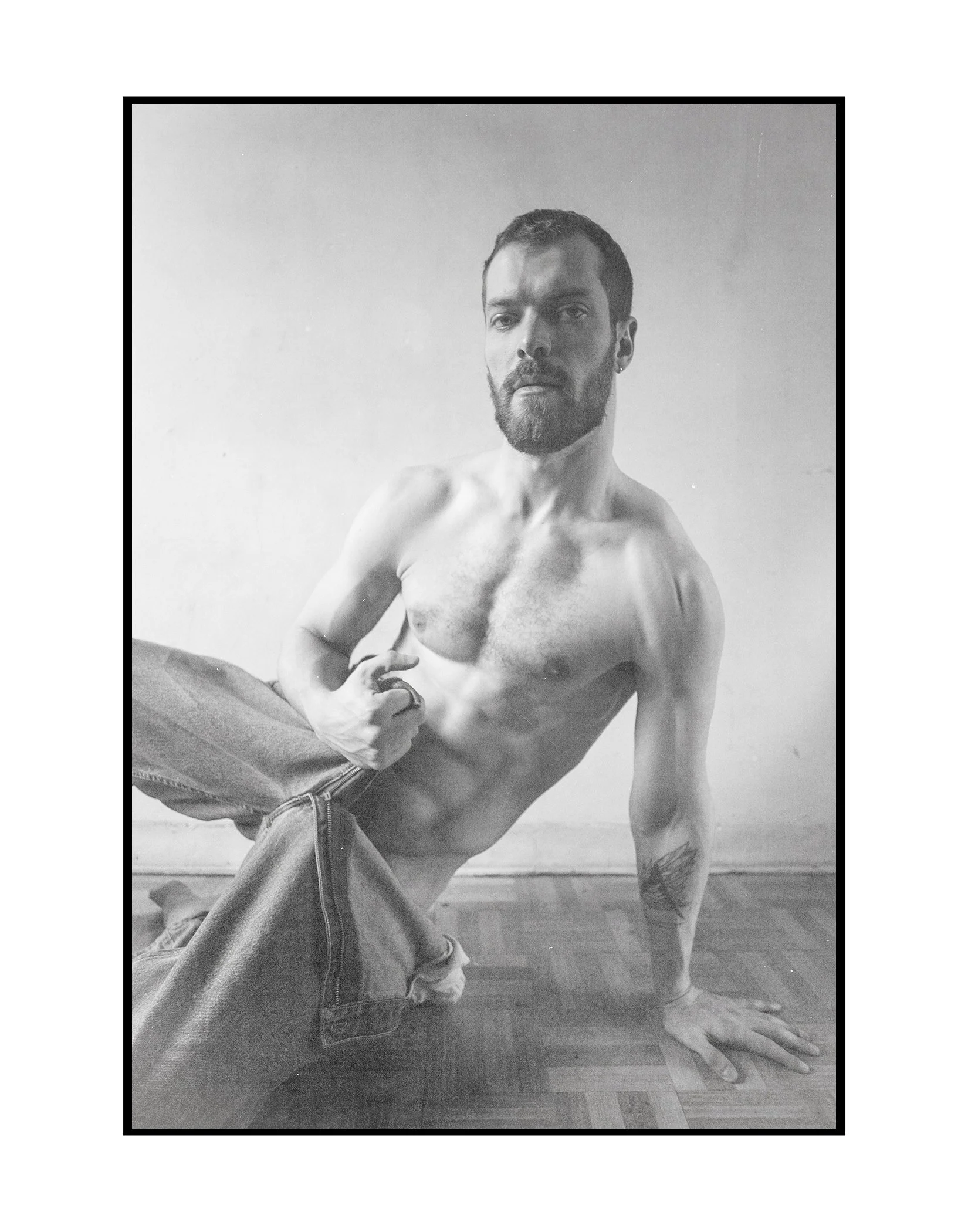
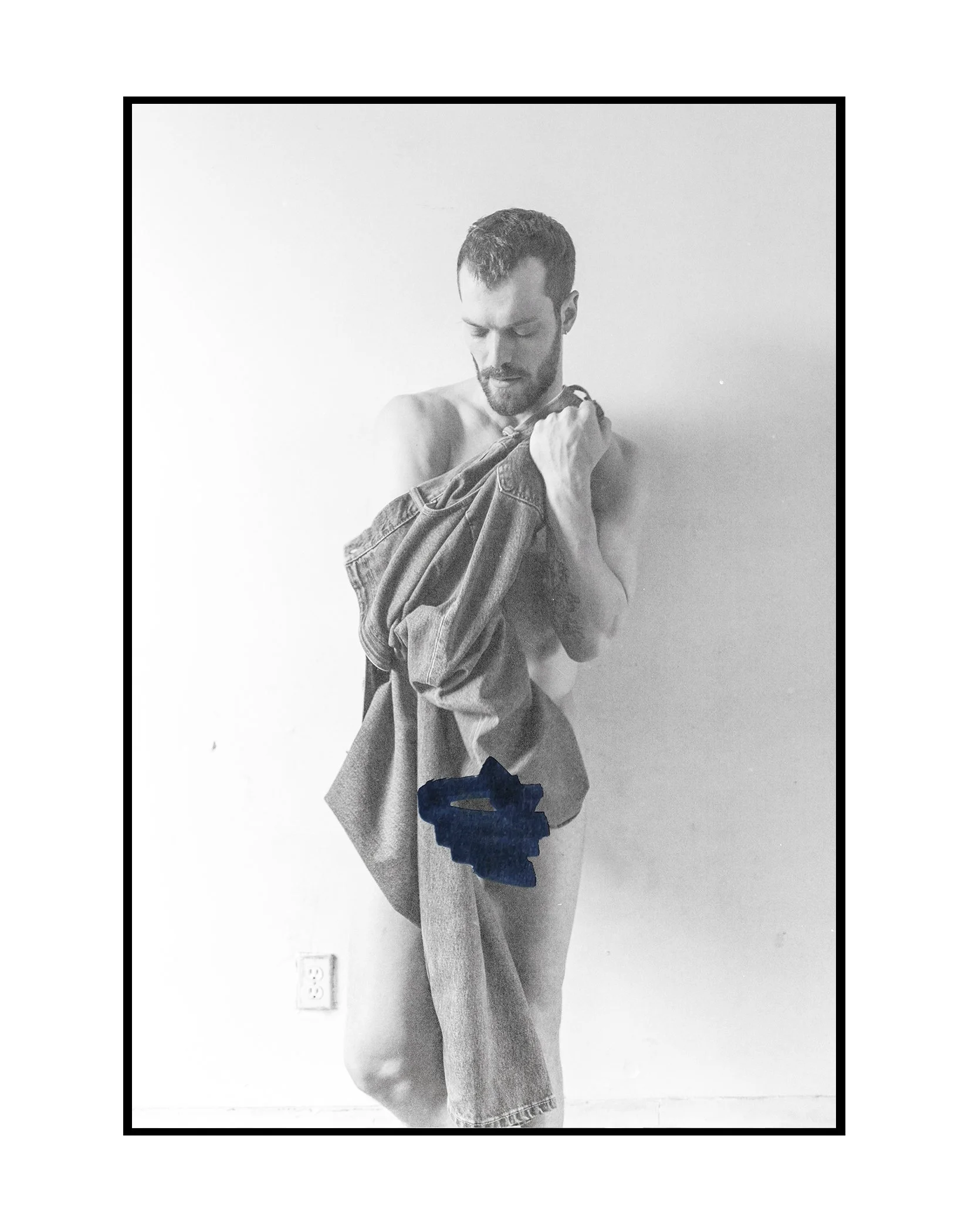
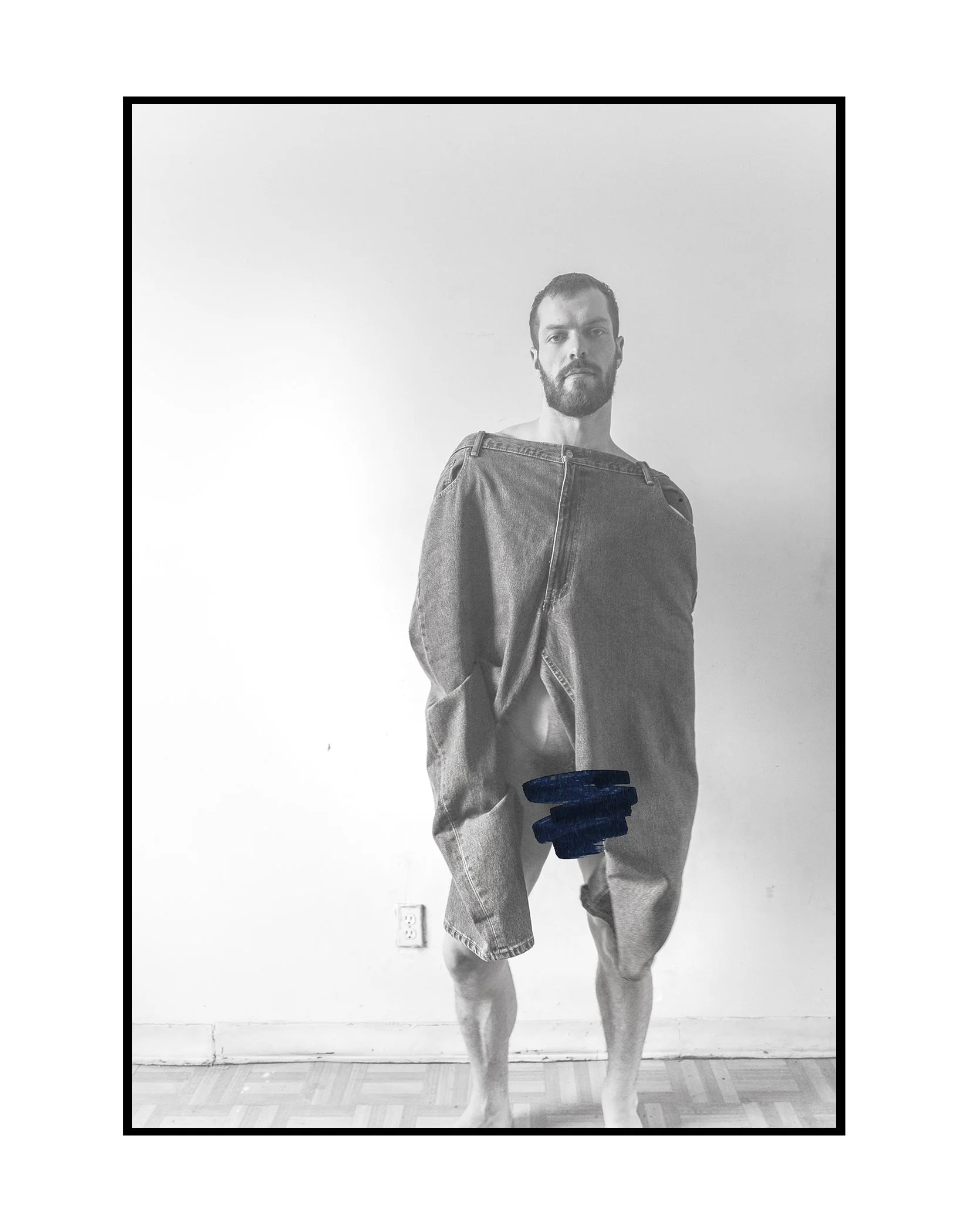
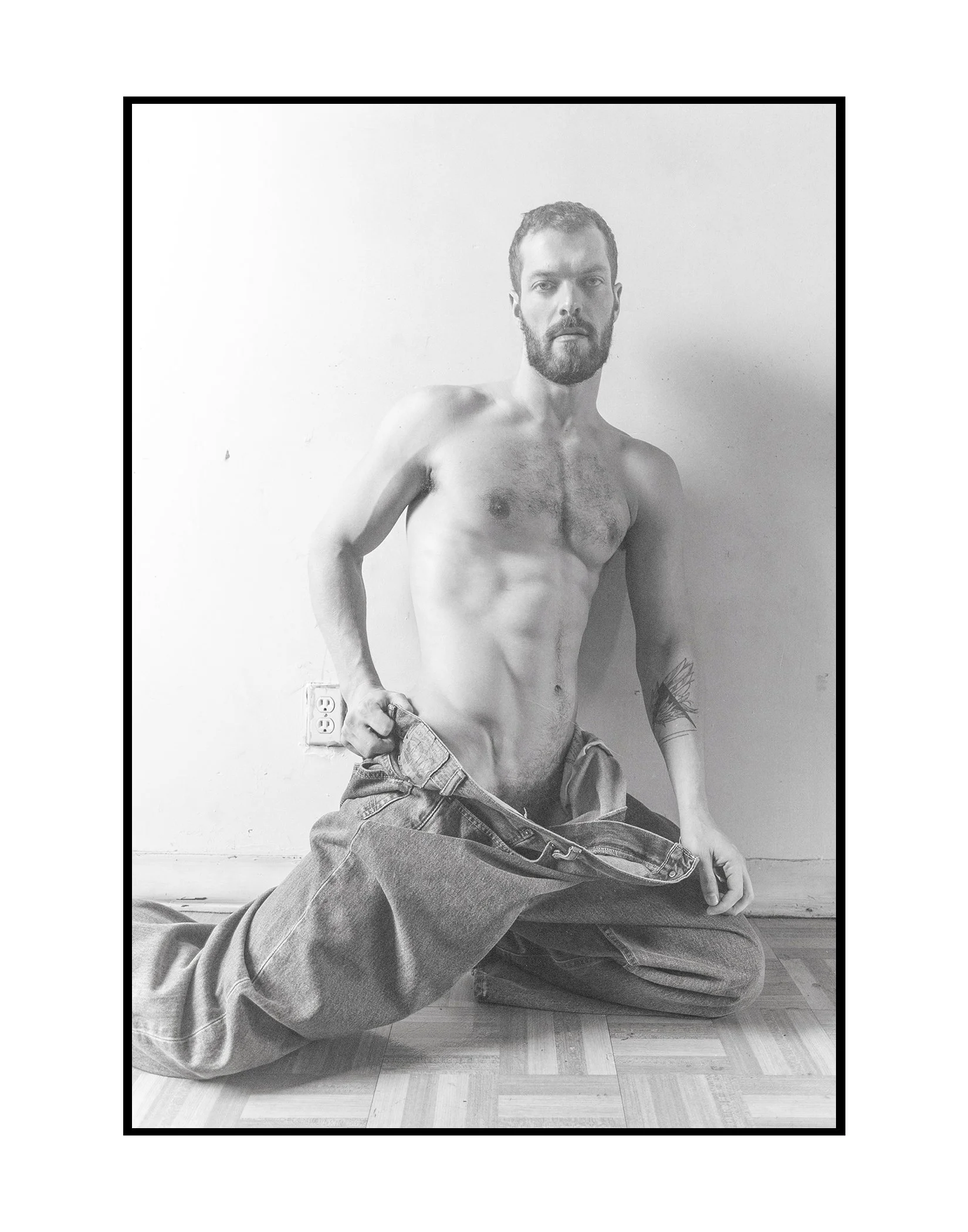
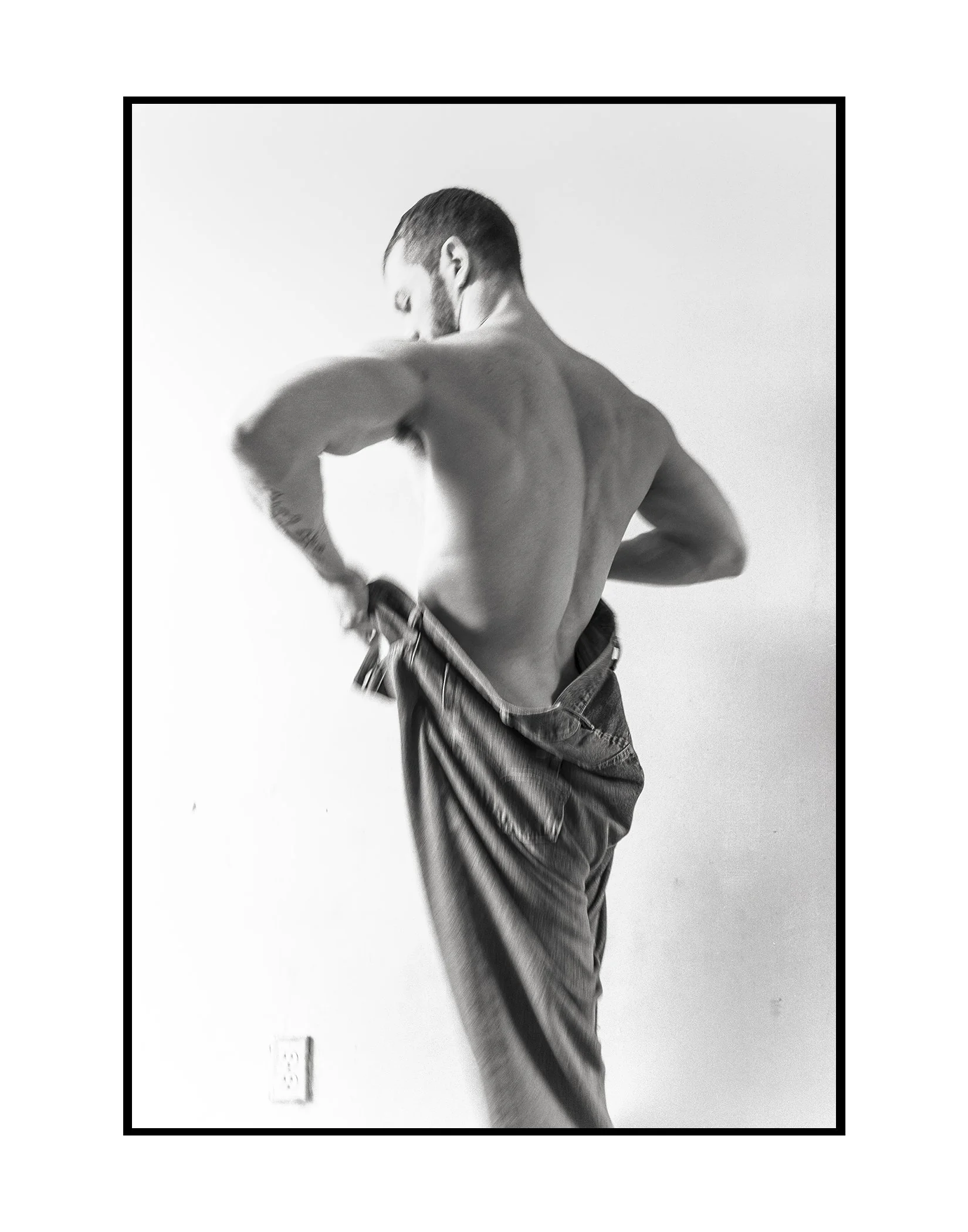
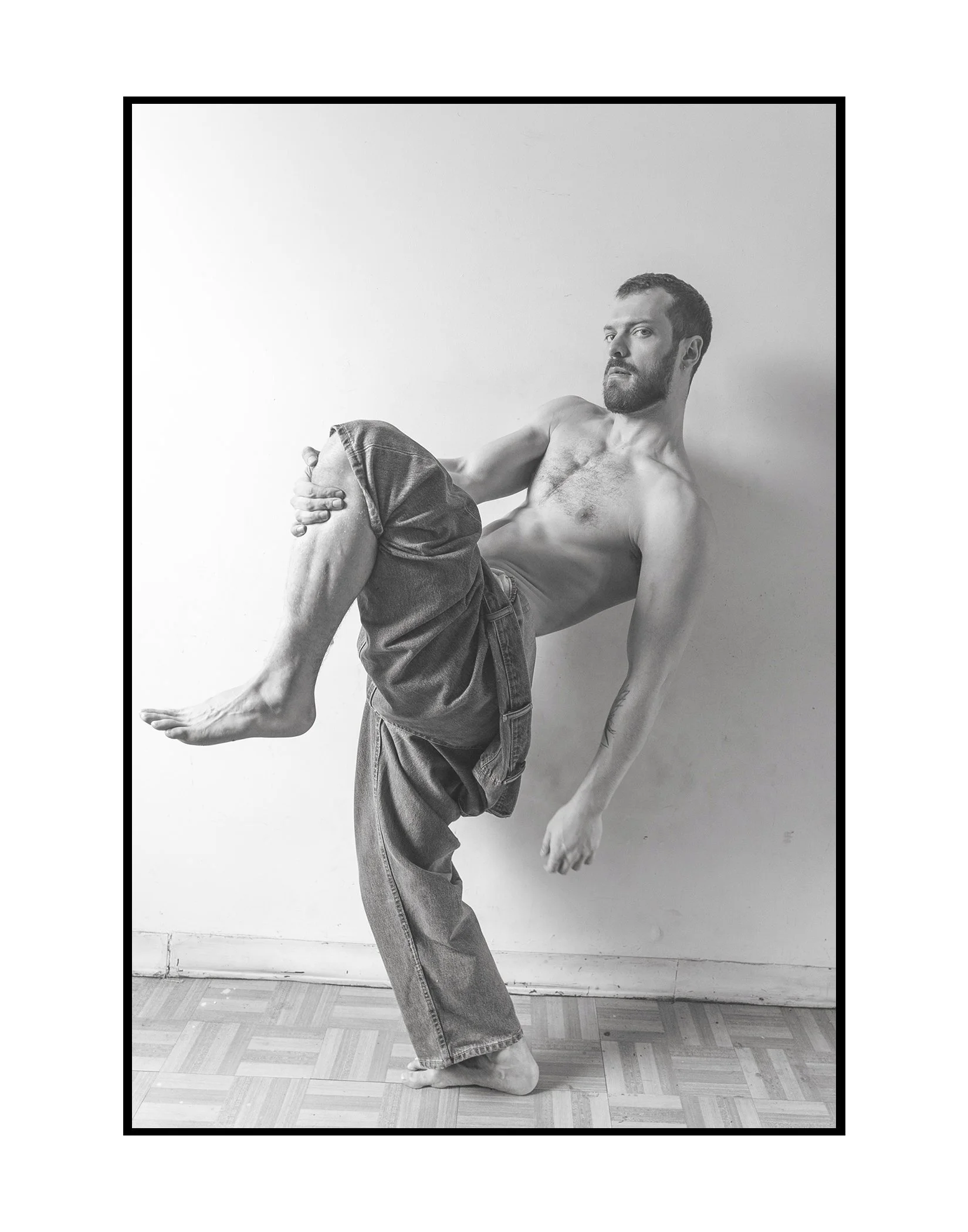
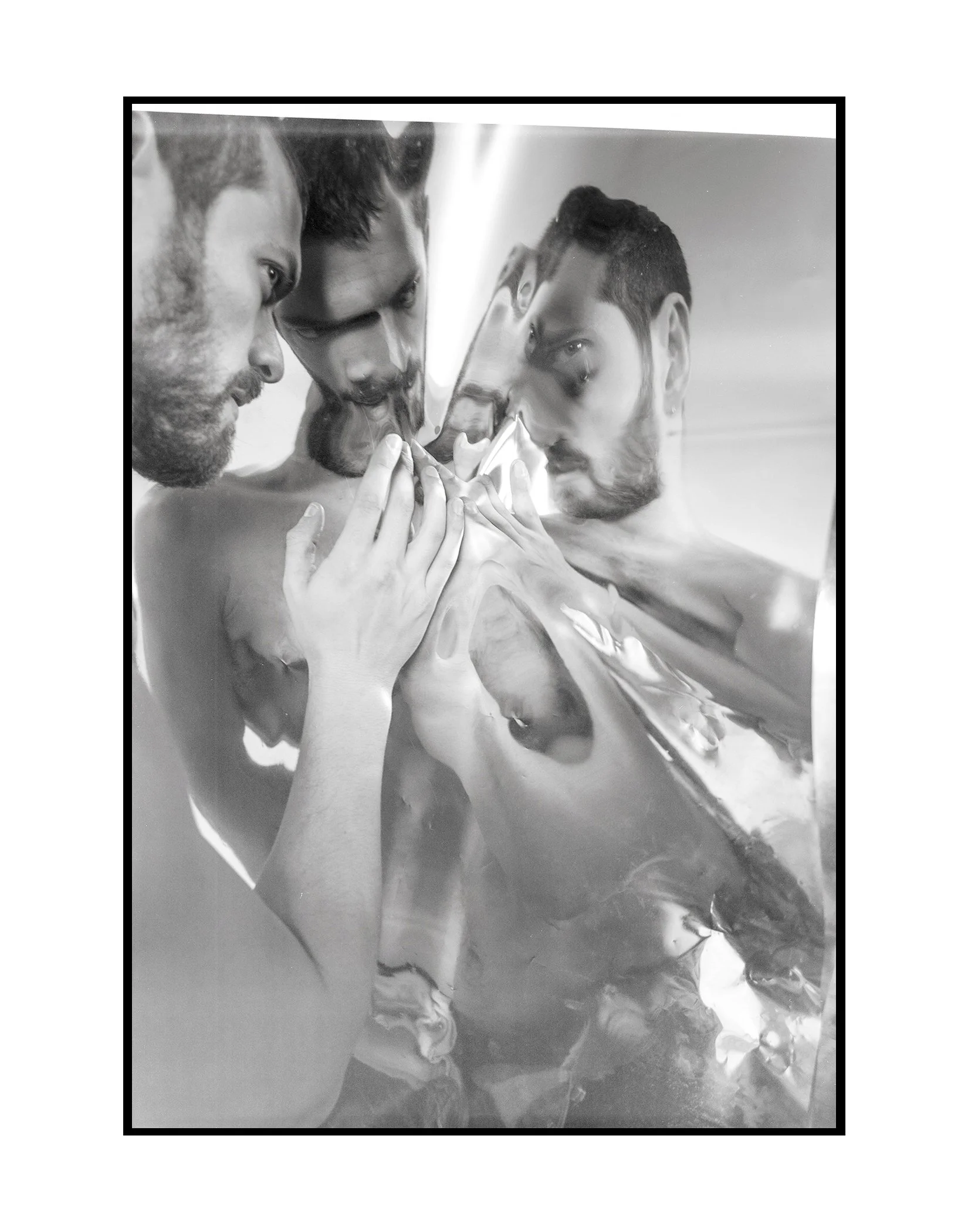
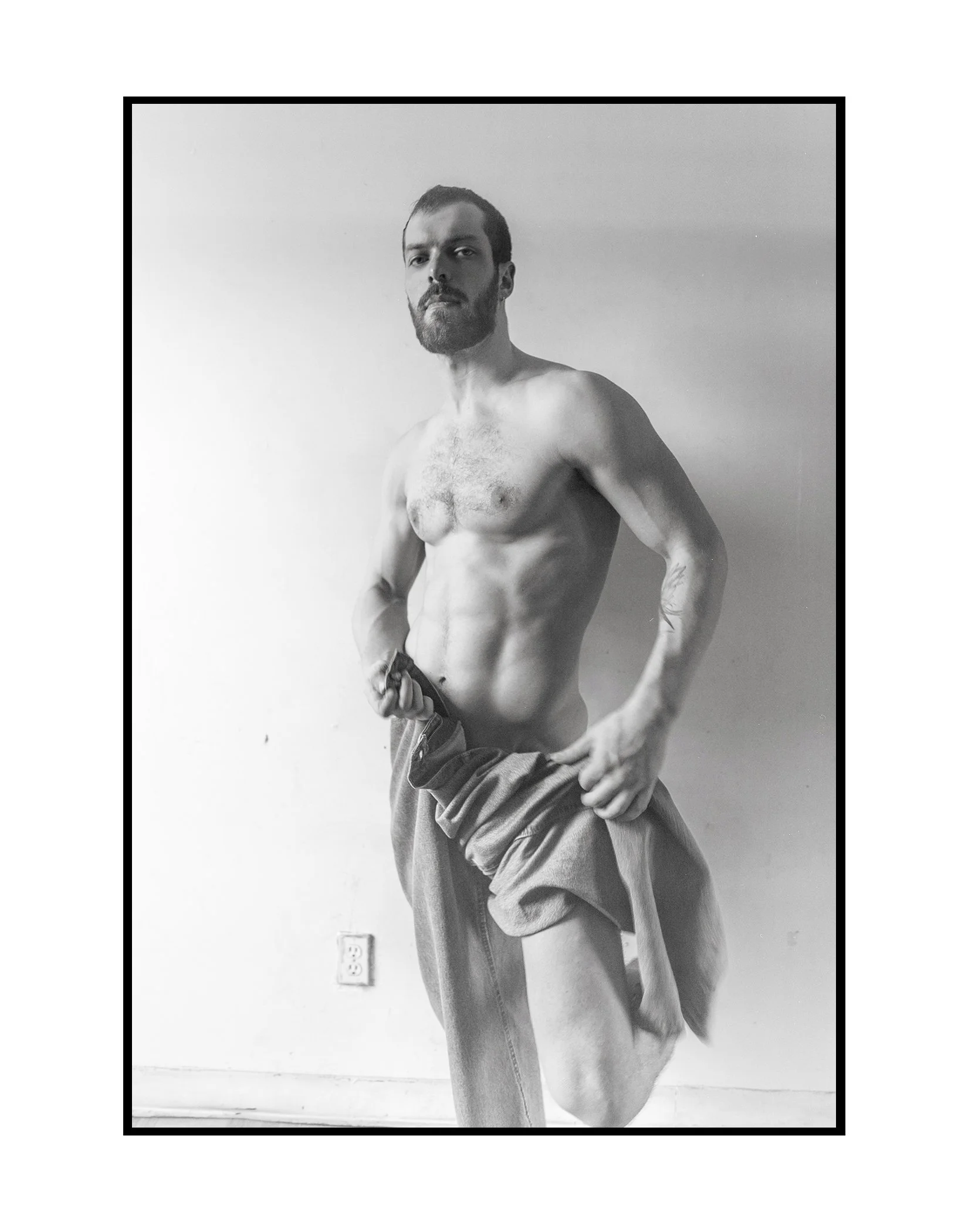
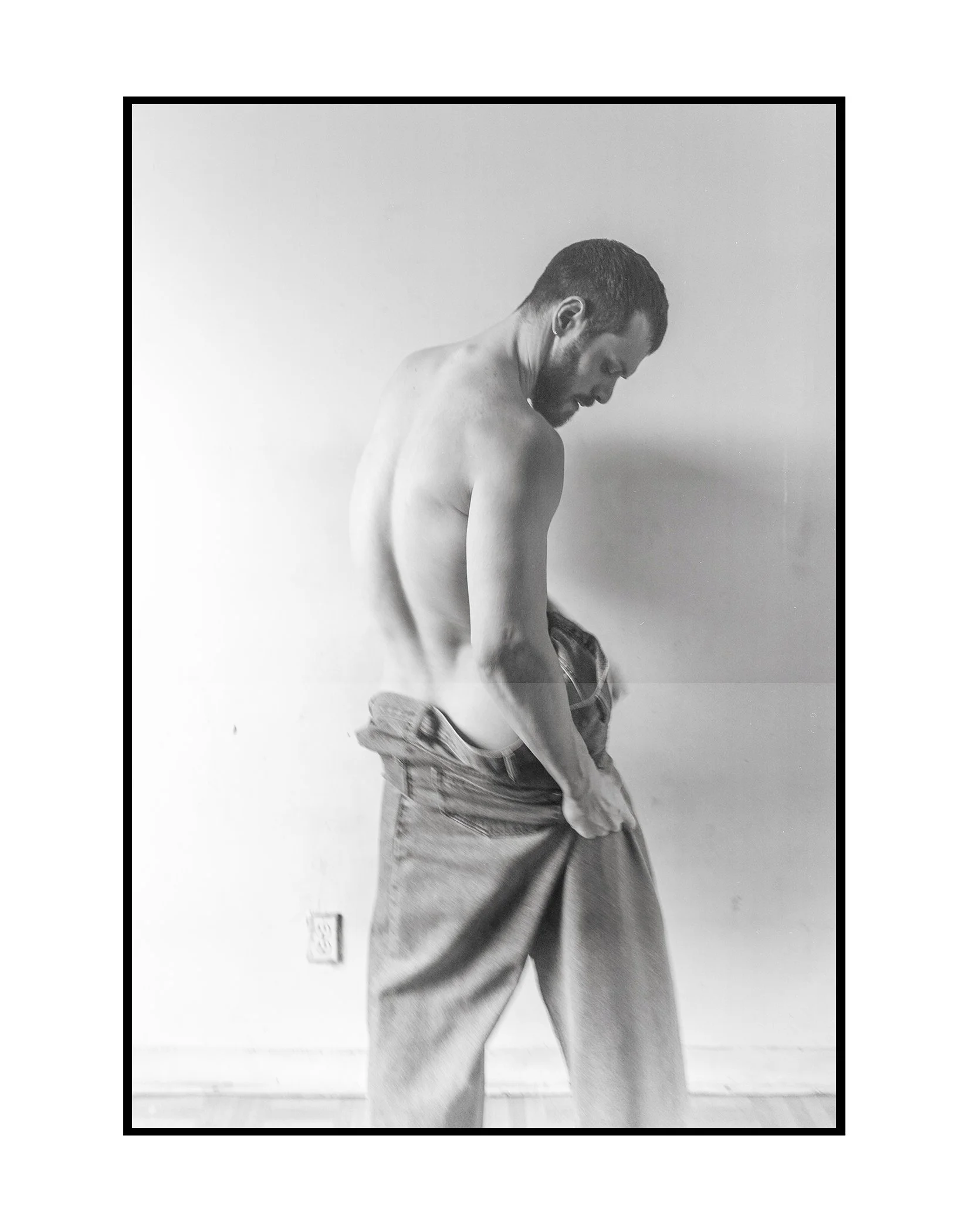
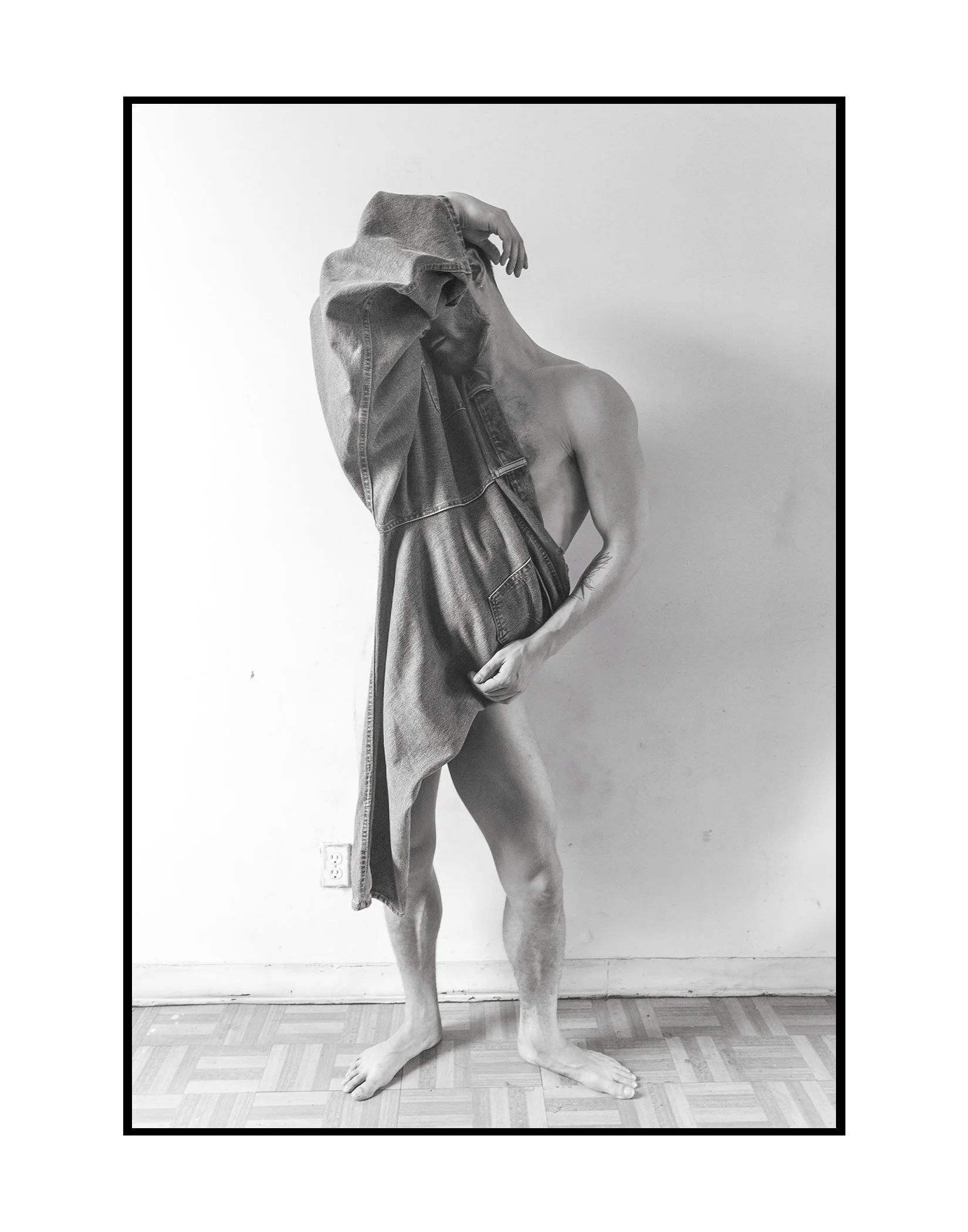
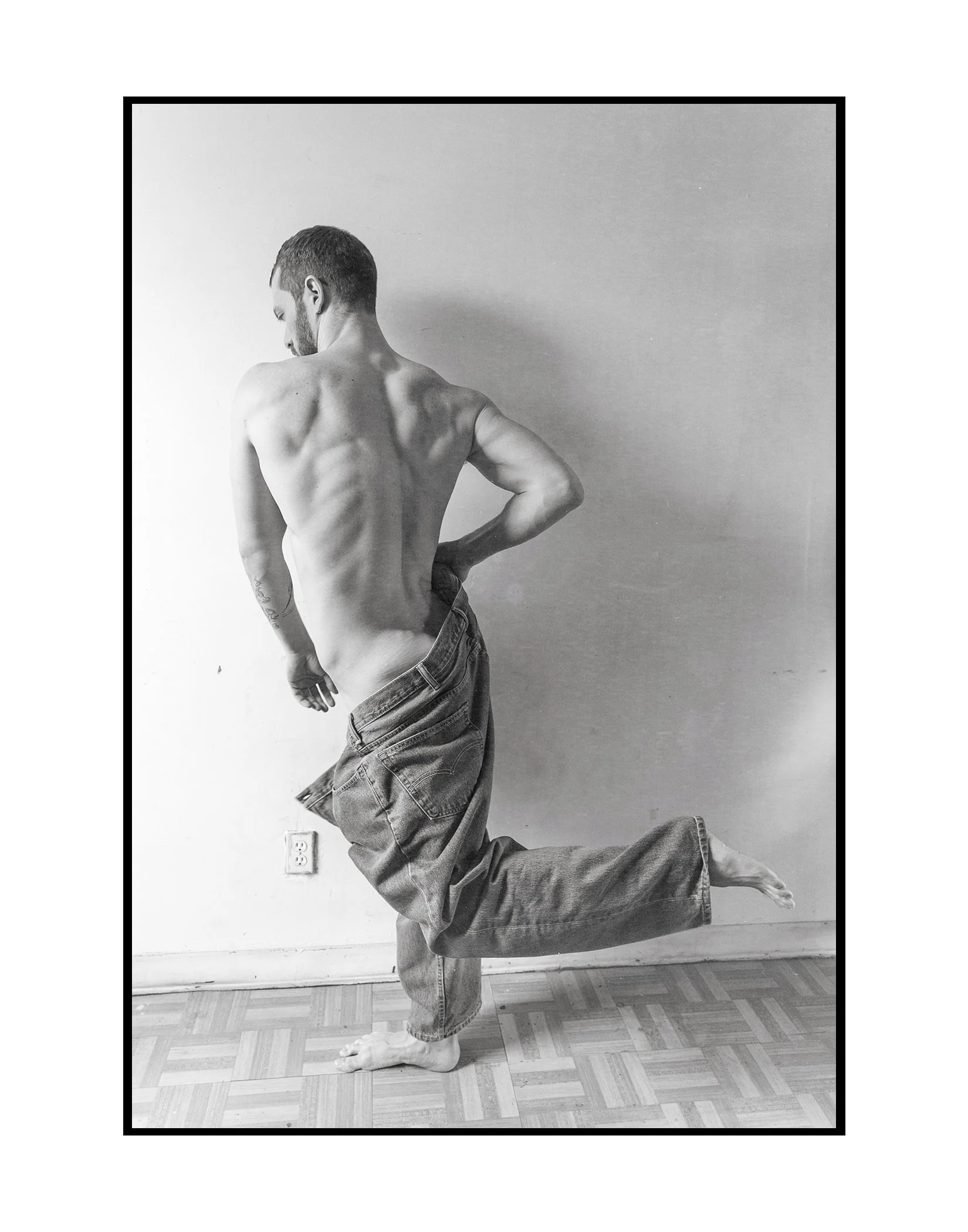
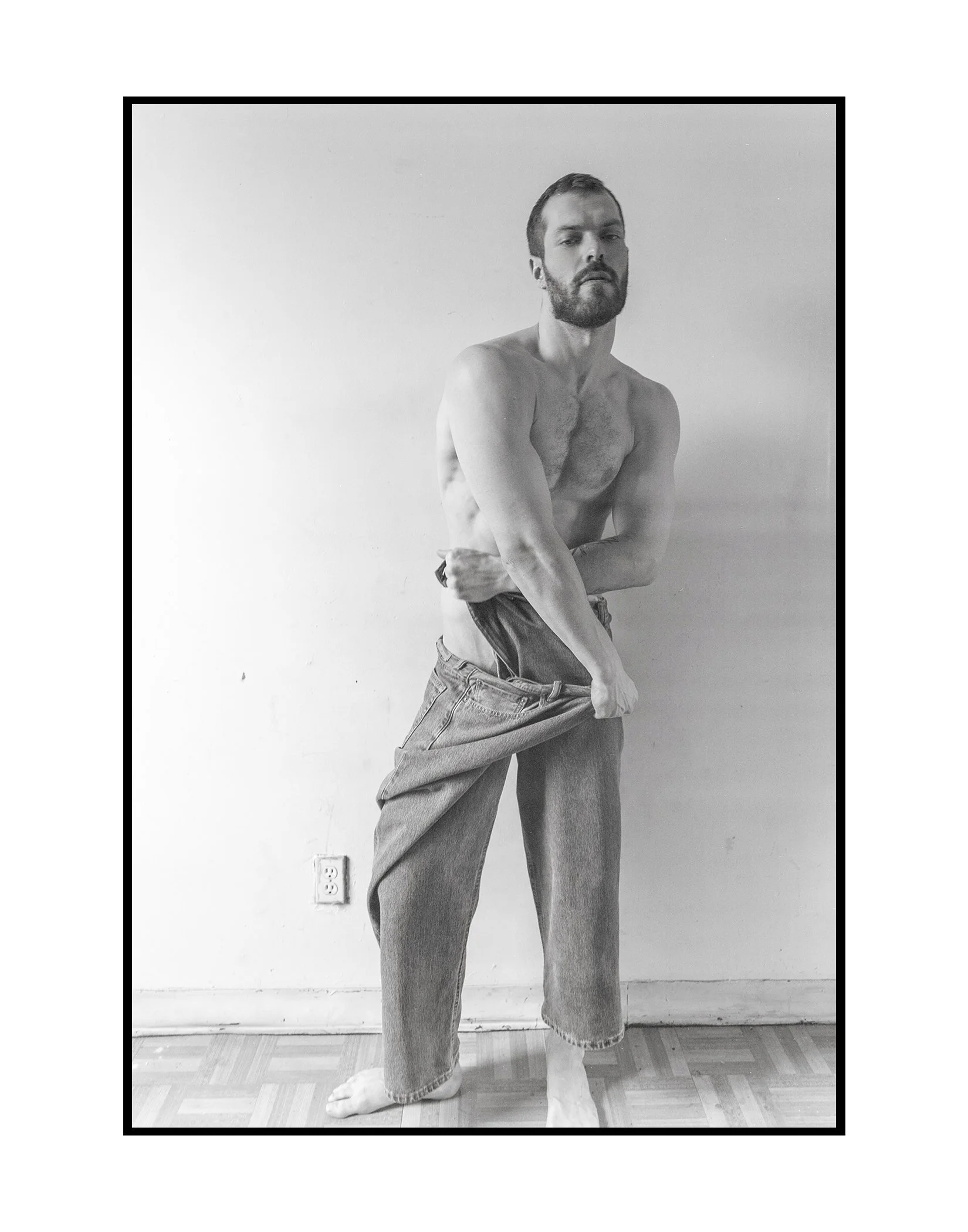
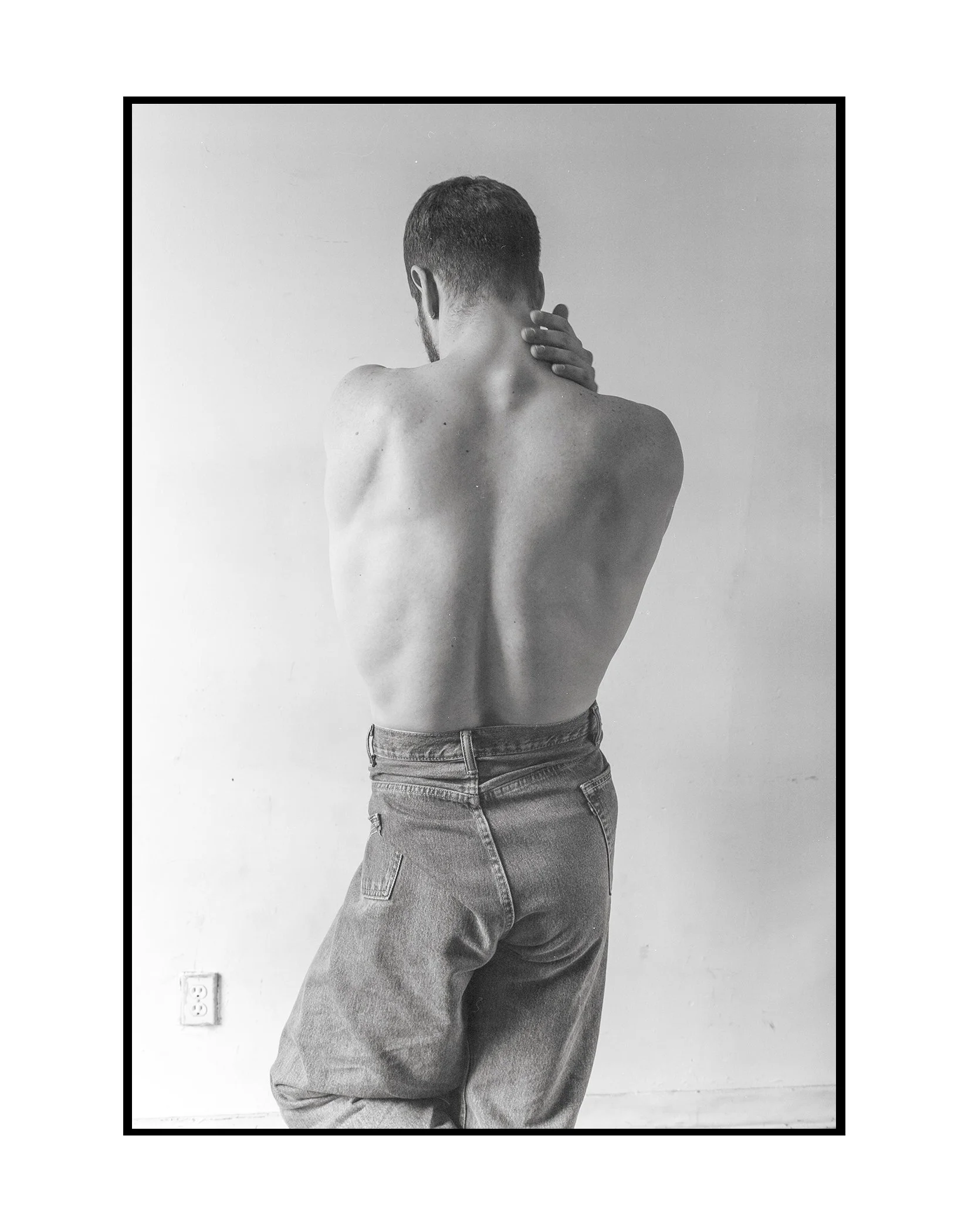
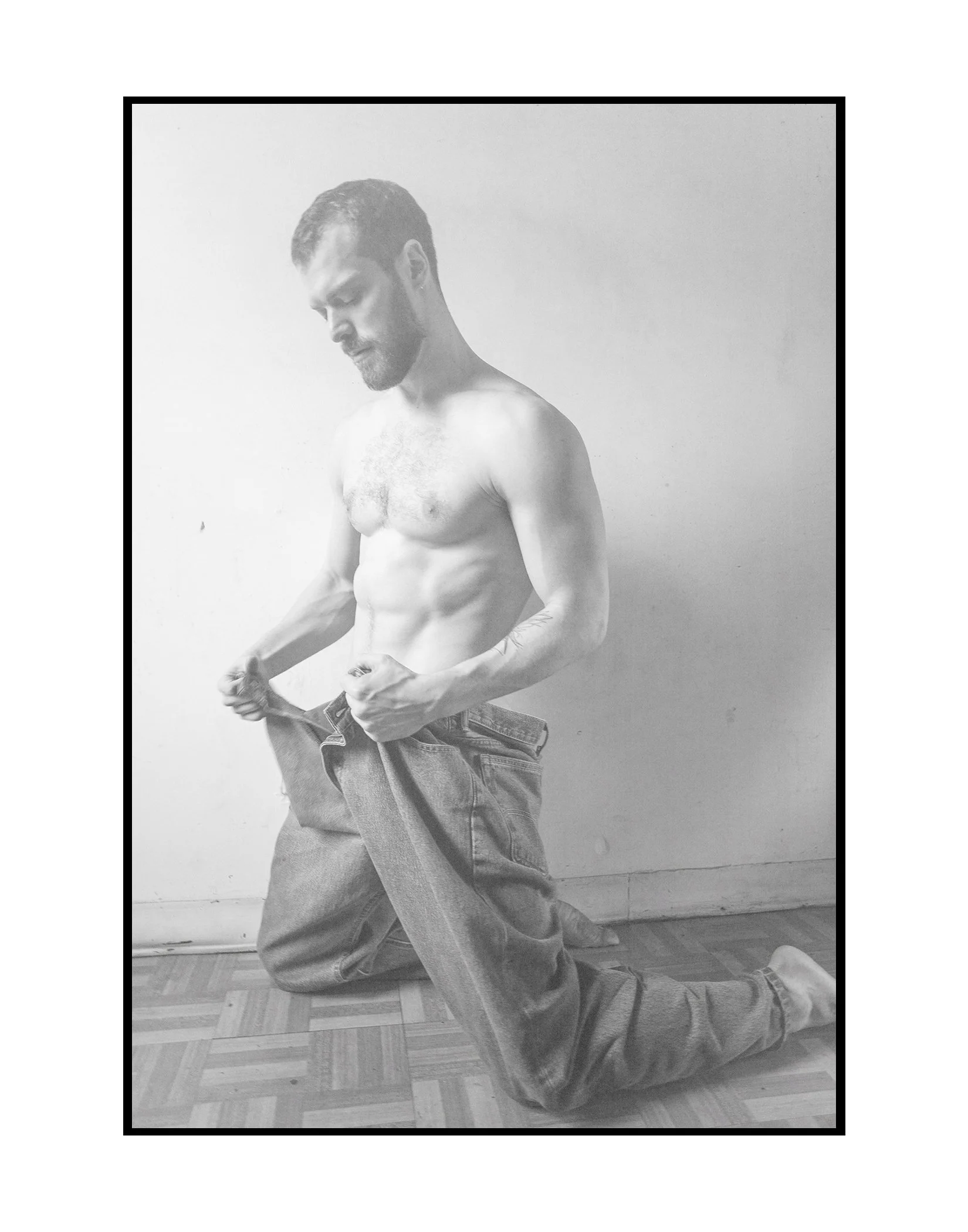
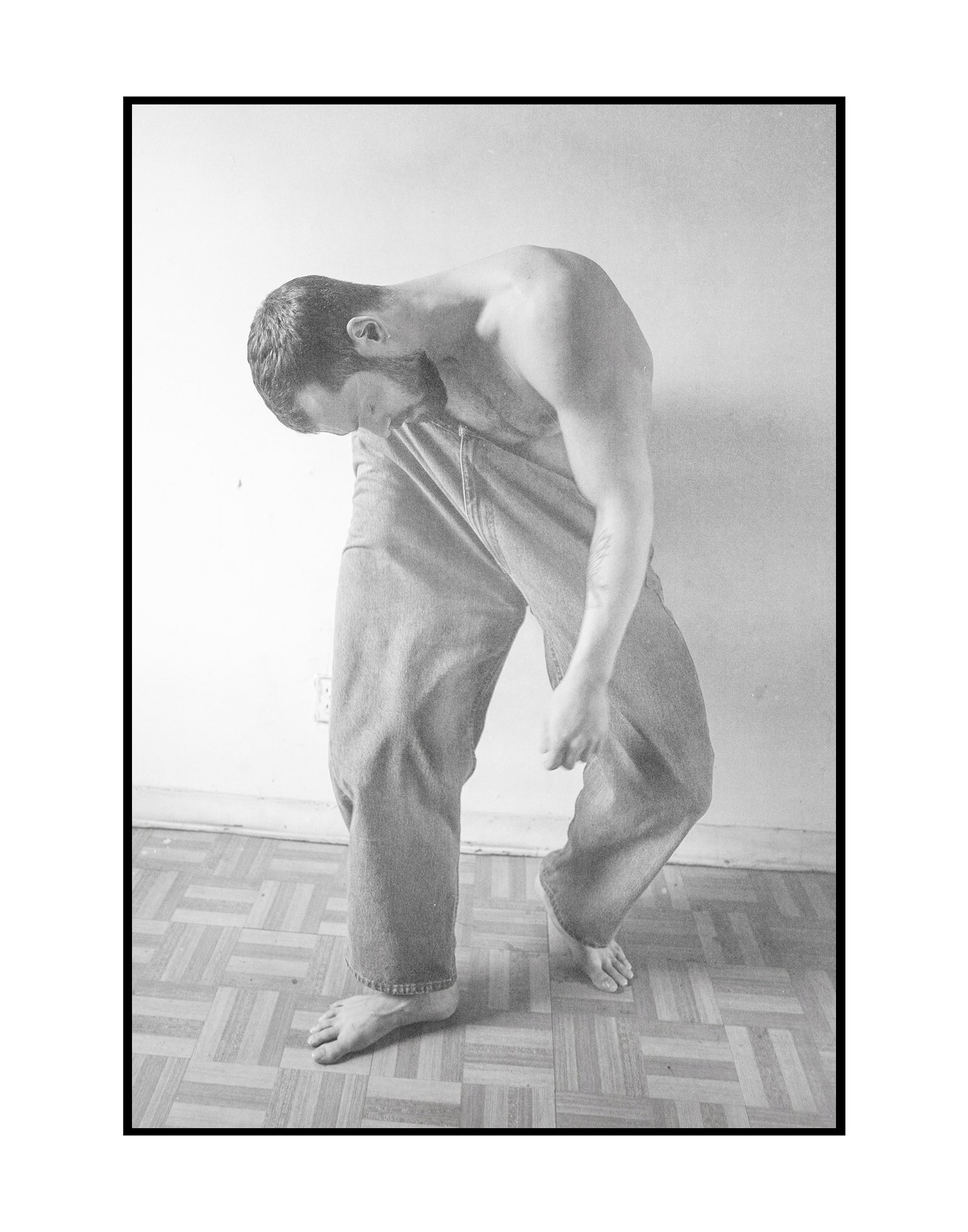
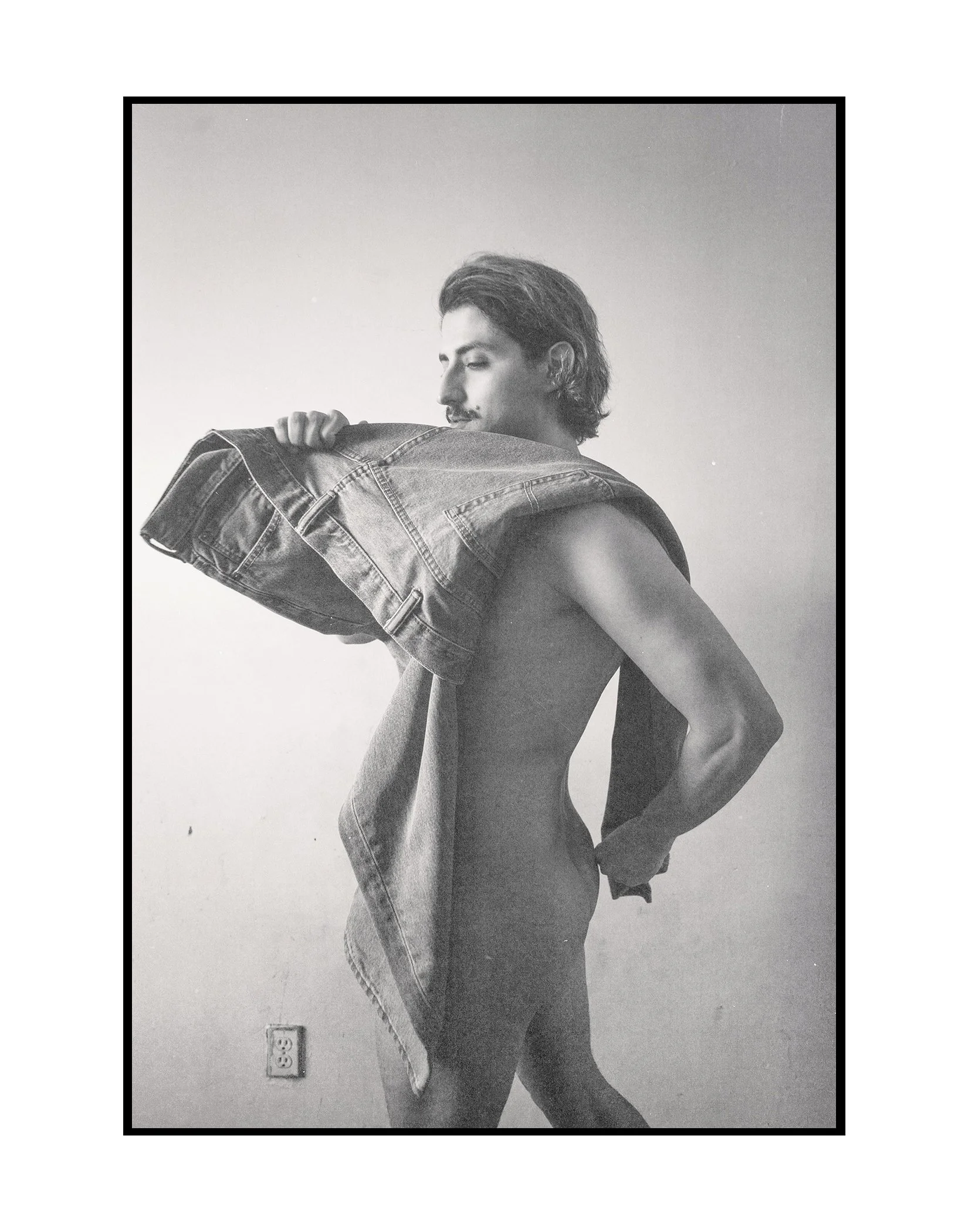
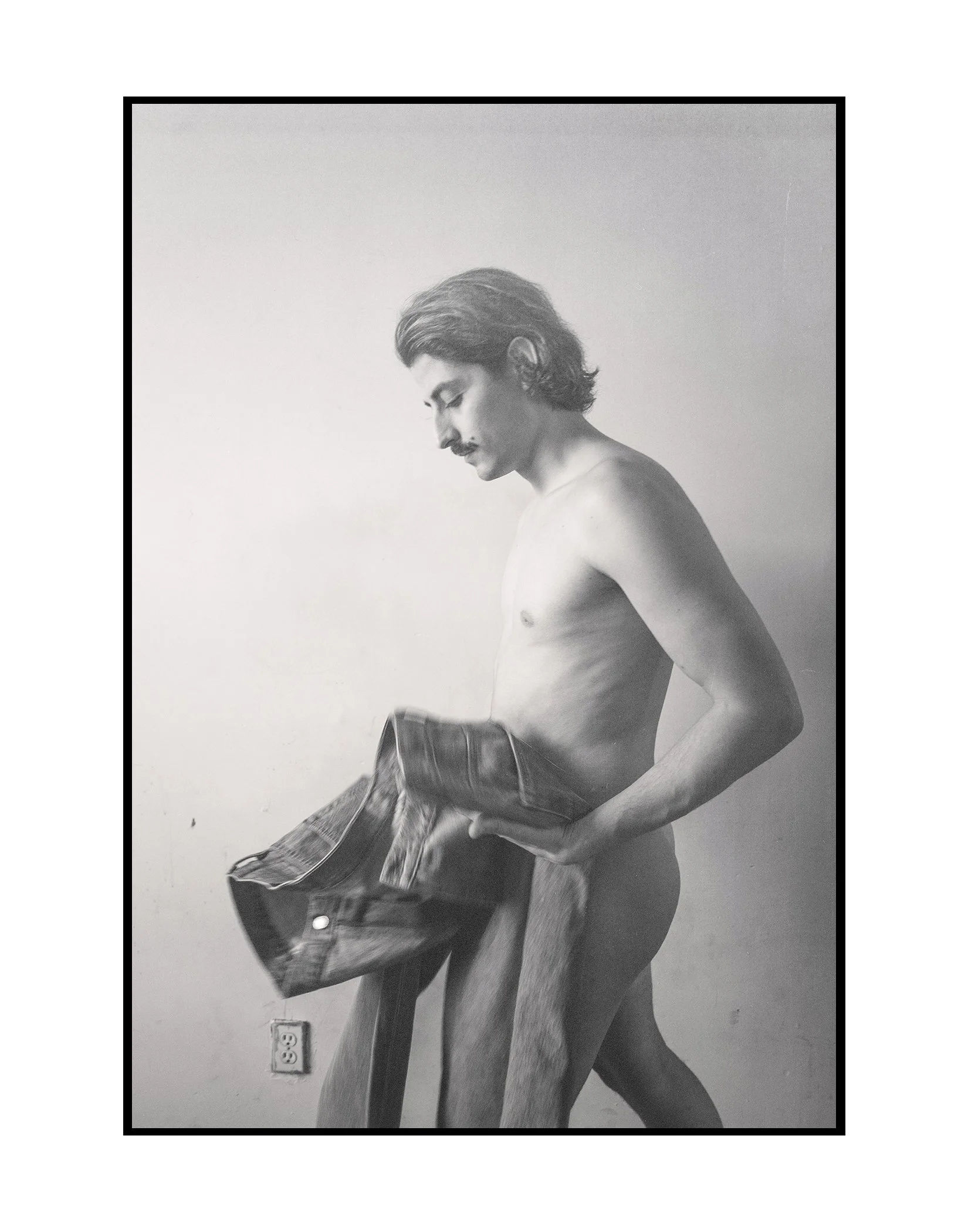
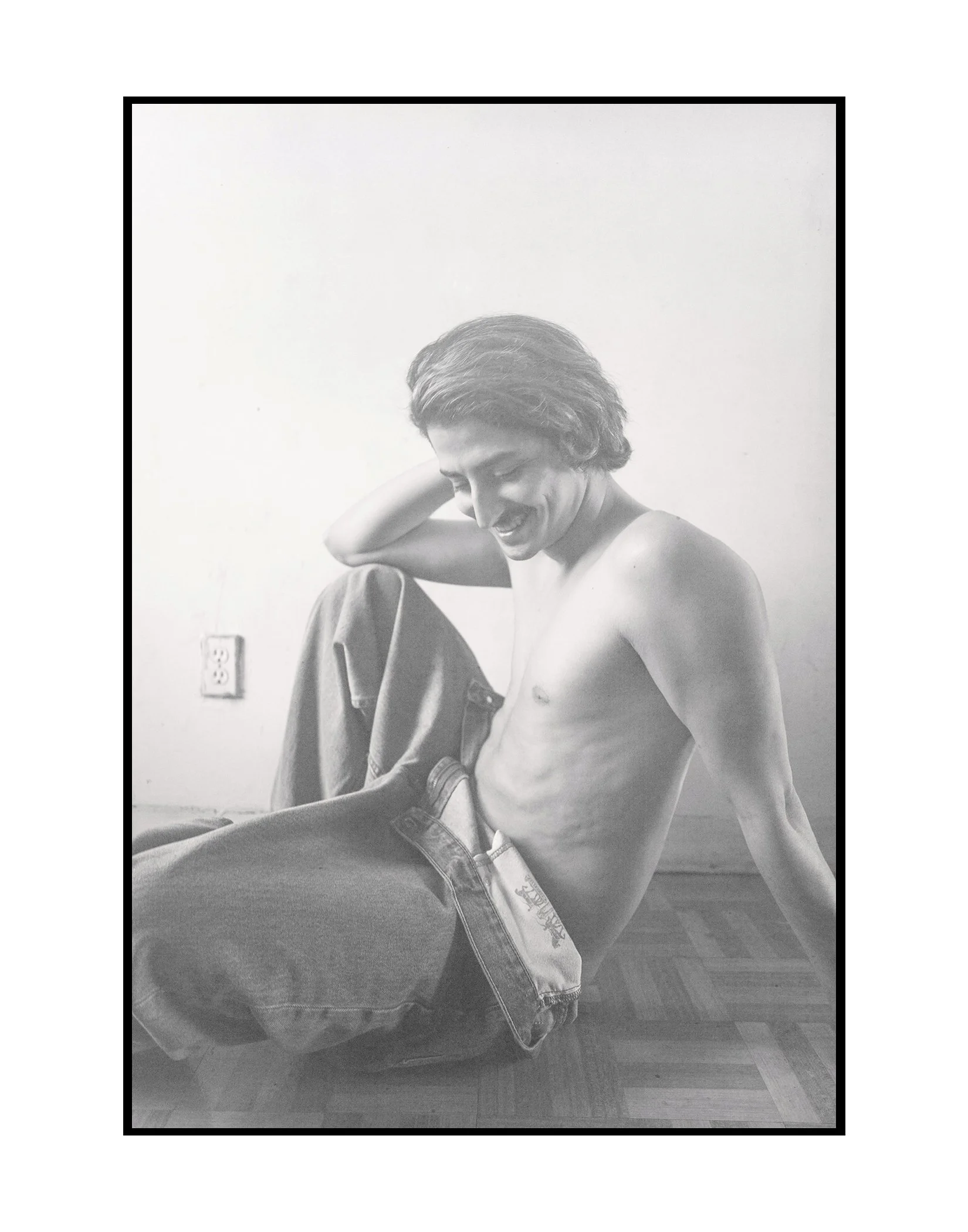
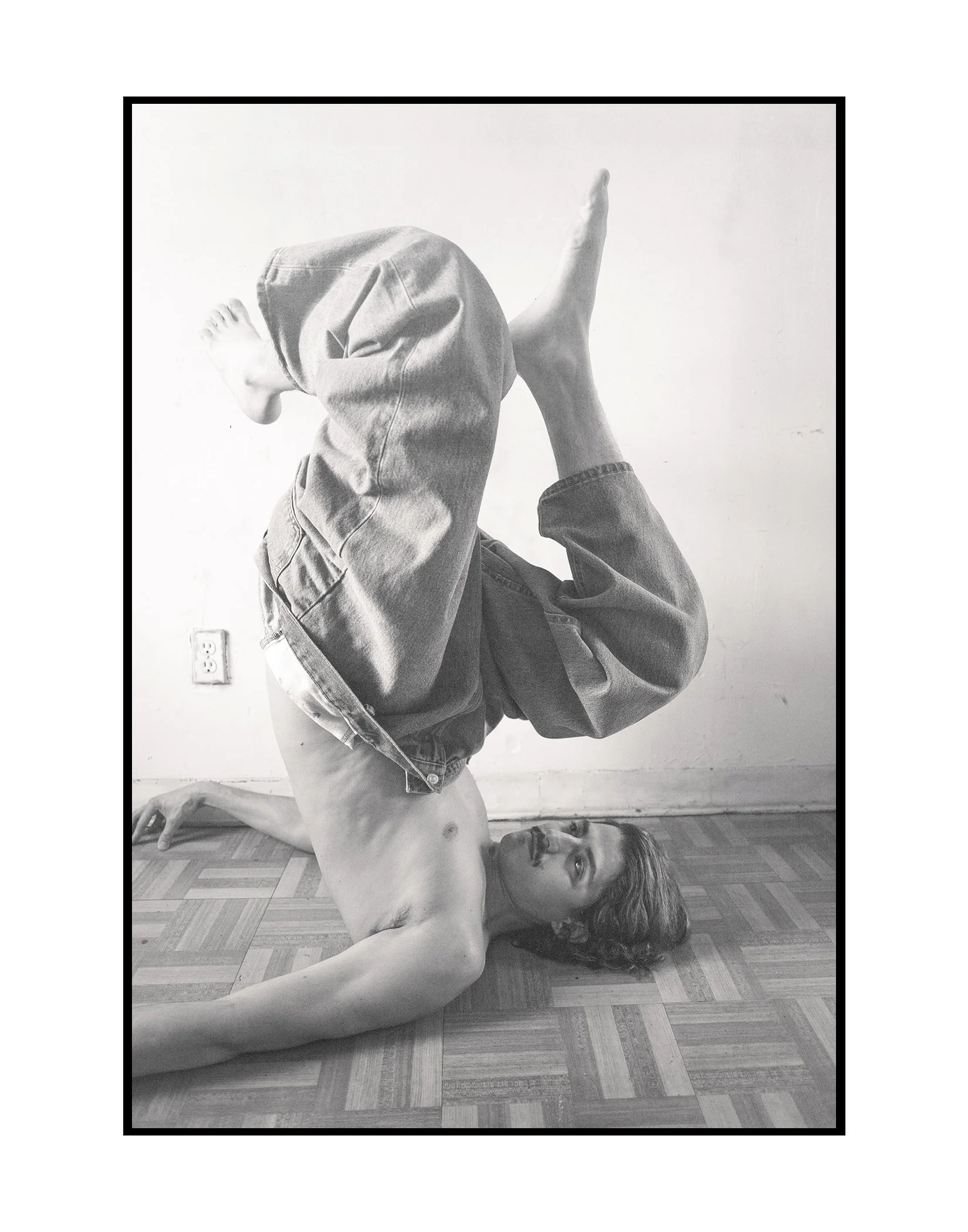
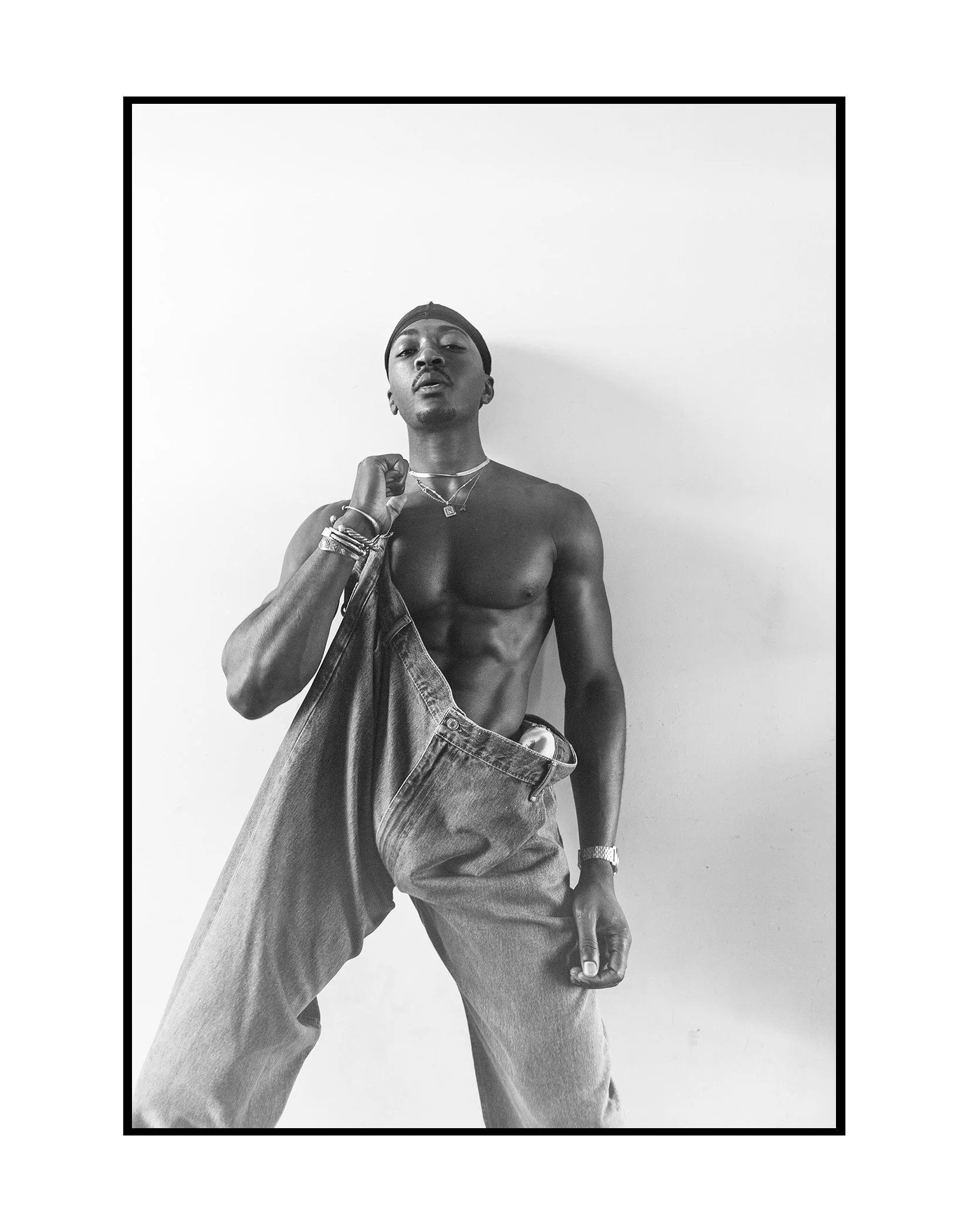
Today I photographed Doug, and the shoot unfolded exactly how you hope these days unfold—focused, fluid, and generous.
Doug, Giant Denim, and an Impossible Puzzle
Today I photographed Doug, and the shoot unfolded exactly how you hope these days unfold—focused, fluid, and generous.
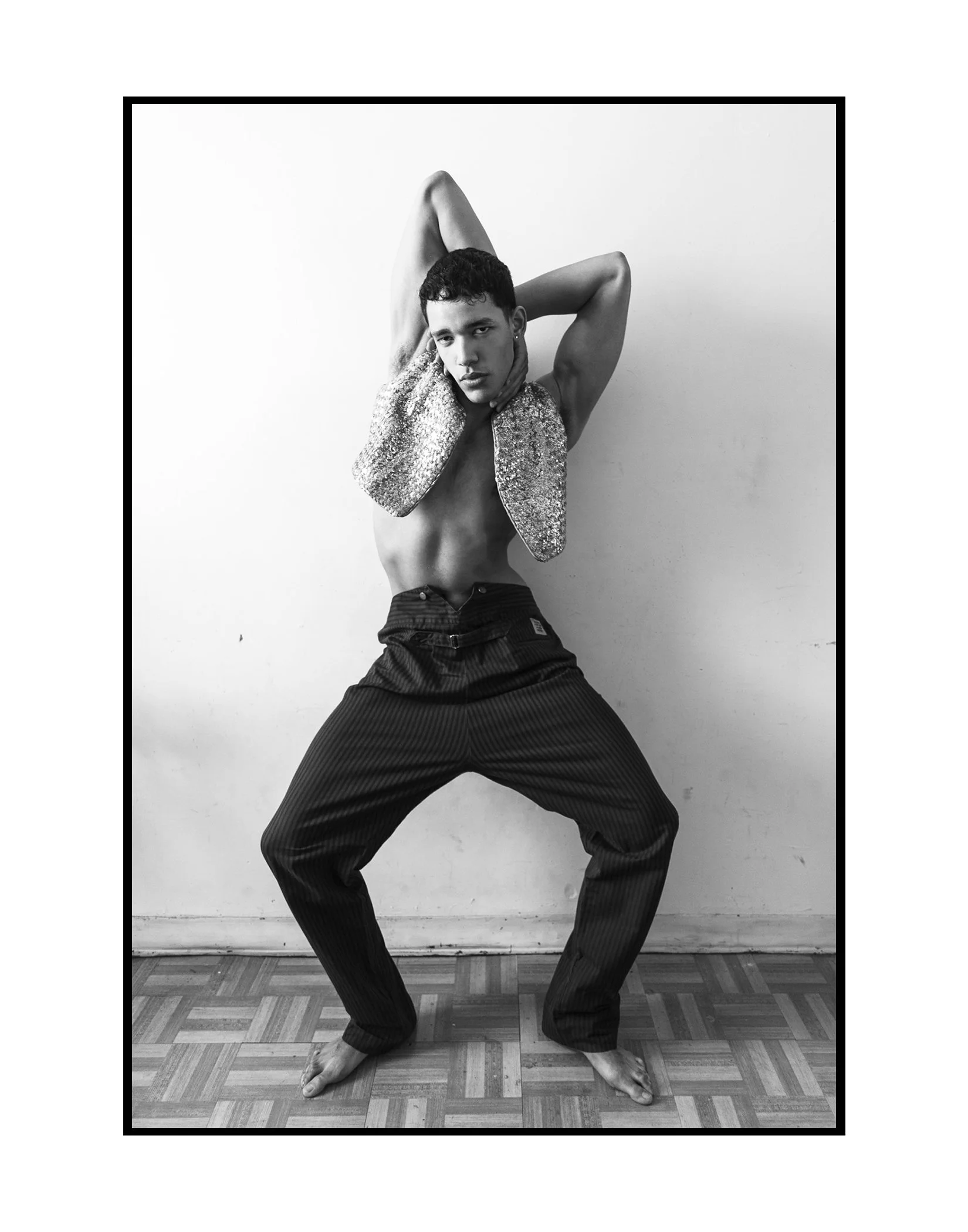
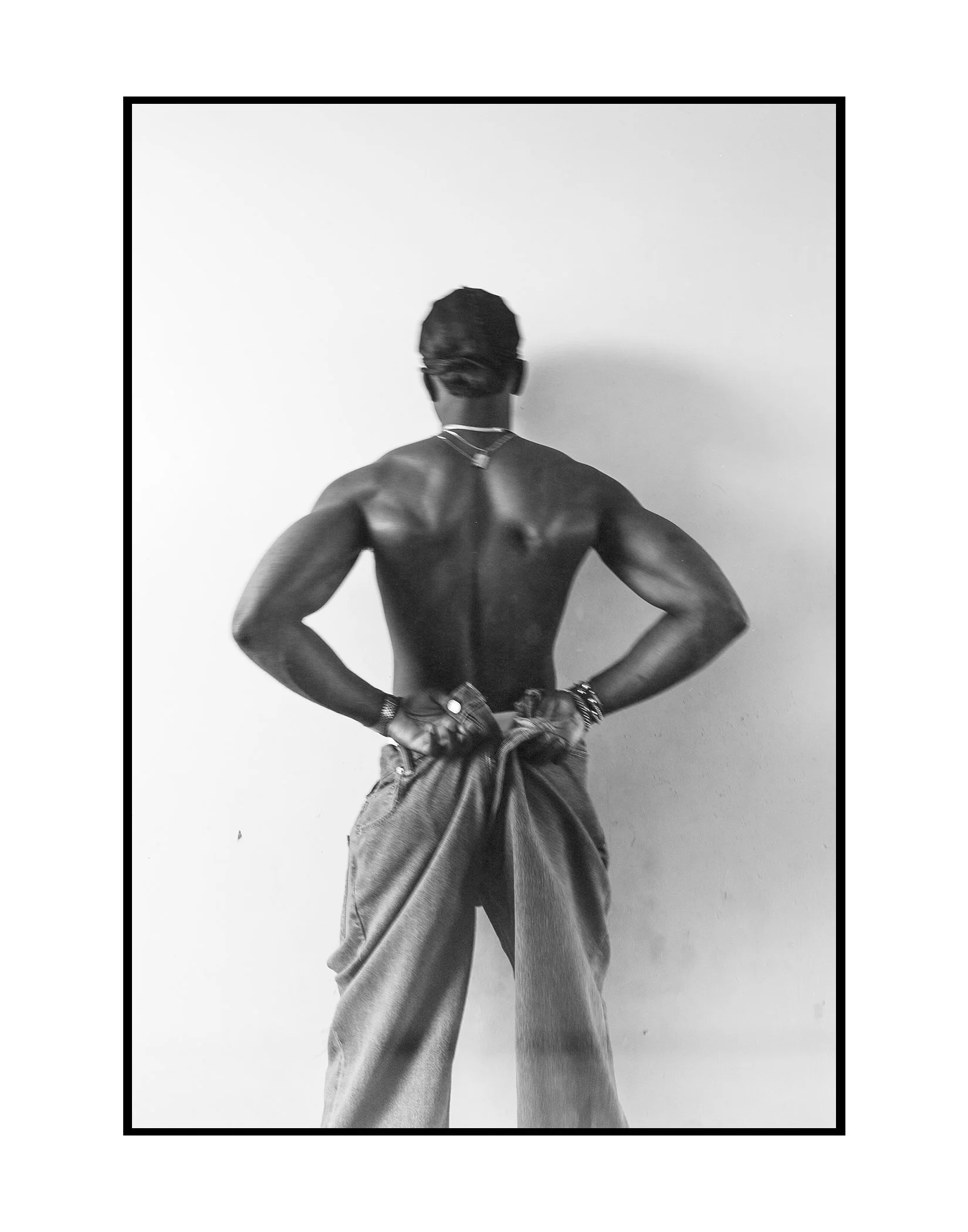
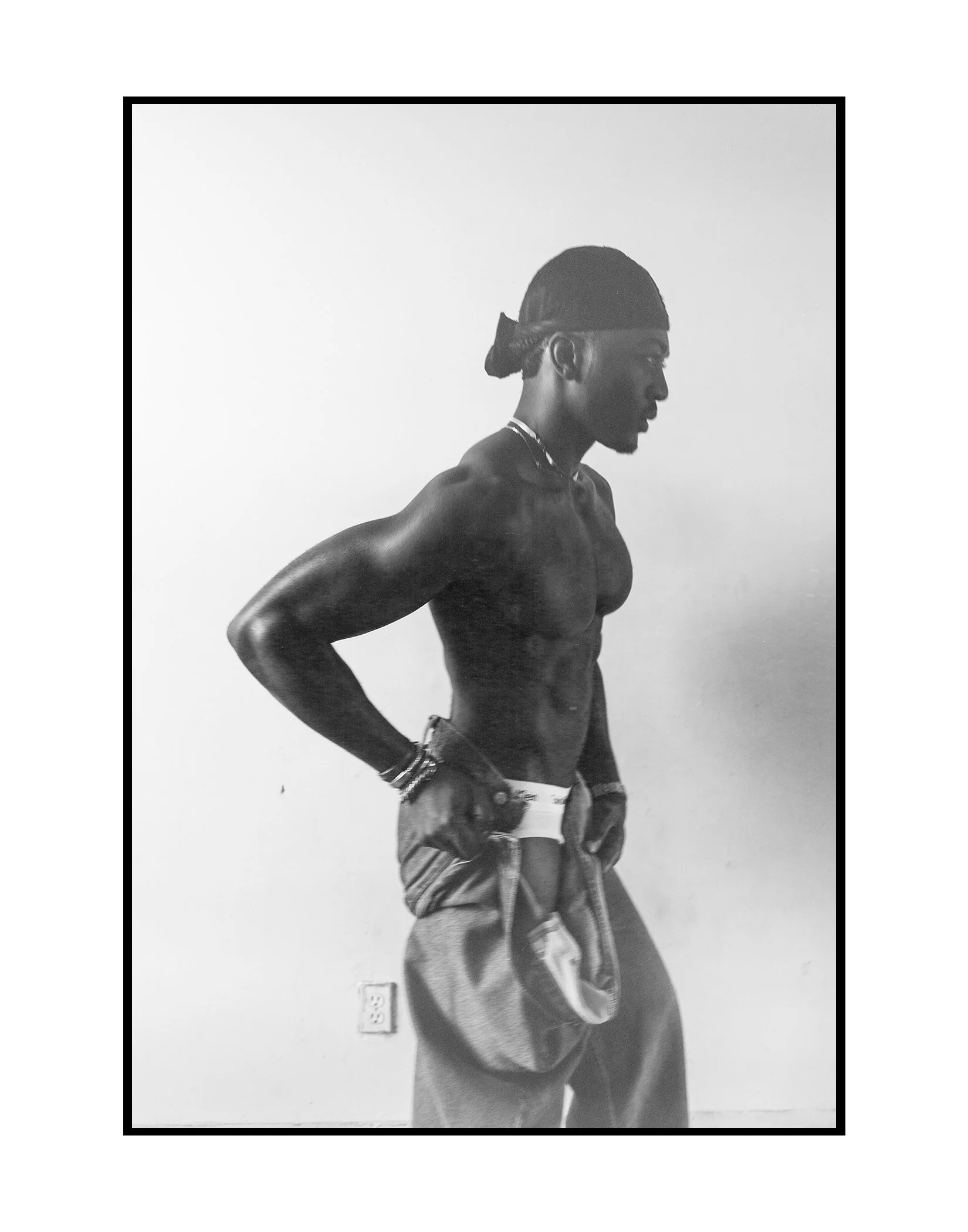
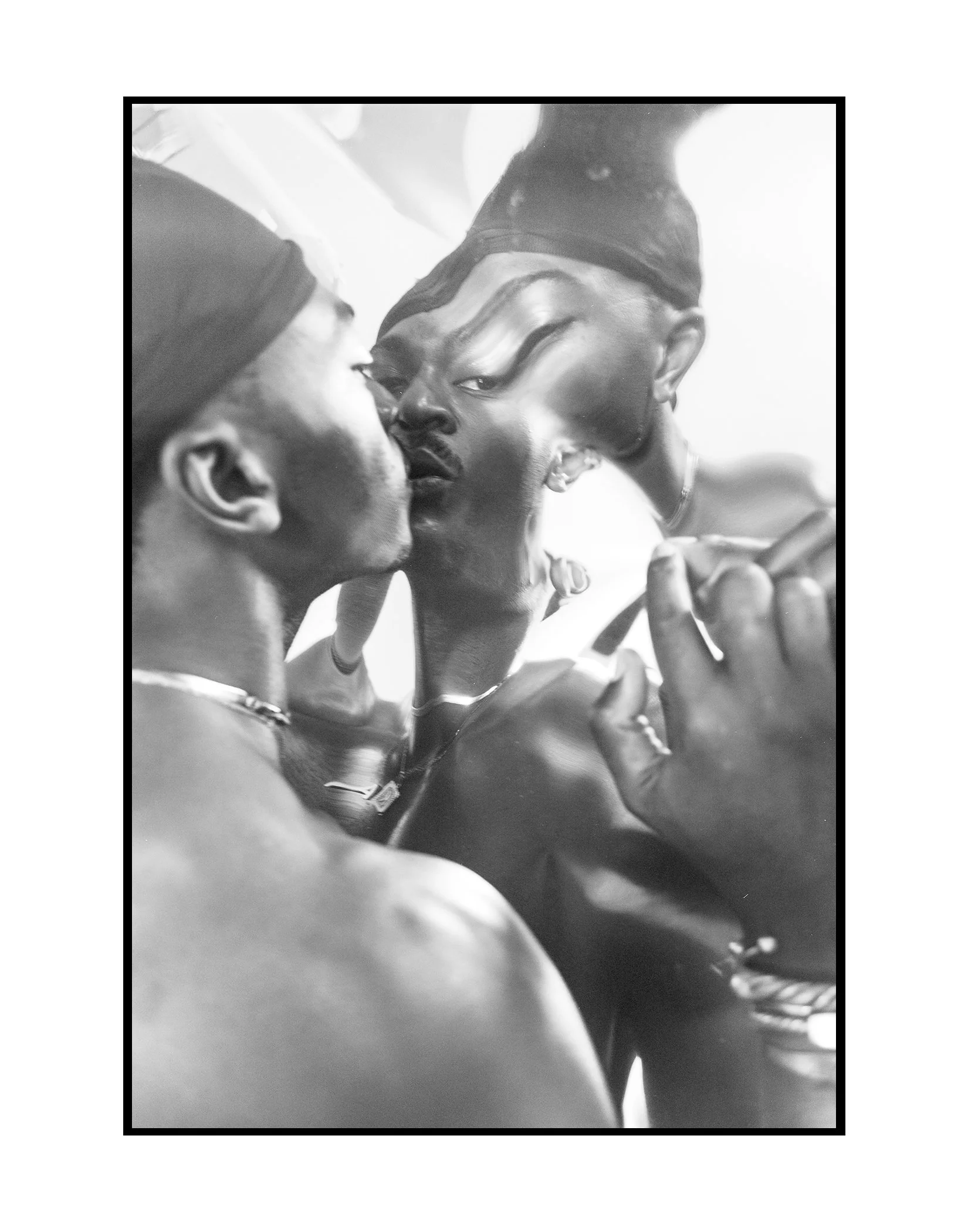
Doug is a dancer, and you feel that immediately in front of the camera. There’s an innate understanding of movement, pause, and shape that can’t be taught. In the giant denim, his body did what it needed to do—stretching fabric, finding negative space, creating moments that feel both controlled and accidental. The kind of presence that makes the work better without trying to.
I was able to get deep into editing and retouching right after the shoot, which felt like continuing the conversation rather than closing it. What you see here are some of the images so far—fragments of a larger body of work that keeps evolving with each person who steps into the denim.
You can see more from this shoot (and what’s coming next) on my Instagram:
@aanthonyamadeo
And follow Doug’s work here:
@douglasburkhardt
Somewhere between exporting files and living with the images for a bit, I also made a new Impossible Puzzle.
The Impossible Puzzles are 1,000-piece puzzles made from my portraits. They’re “impossible” not because they can’t be finished—but because the white backdrops create long stretches of ambiguity. Large fields of almost-nothing. You’re forced to slow down, to look harder, to trust subtle shifts in tone and texture. It’s frustrating in the best way, and incredibly satisfying when it finally comes together.
This new puzzle comes from the Giant Denim series—and yes, it’s as challenging as it sounds.
The puzzle is available now.
I dare you to try.
— Anthony
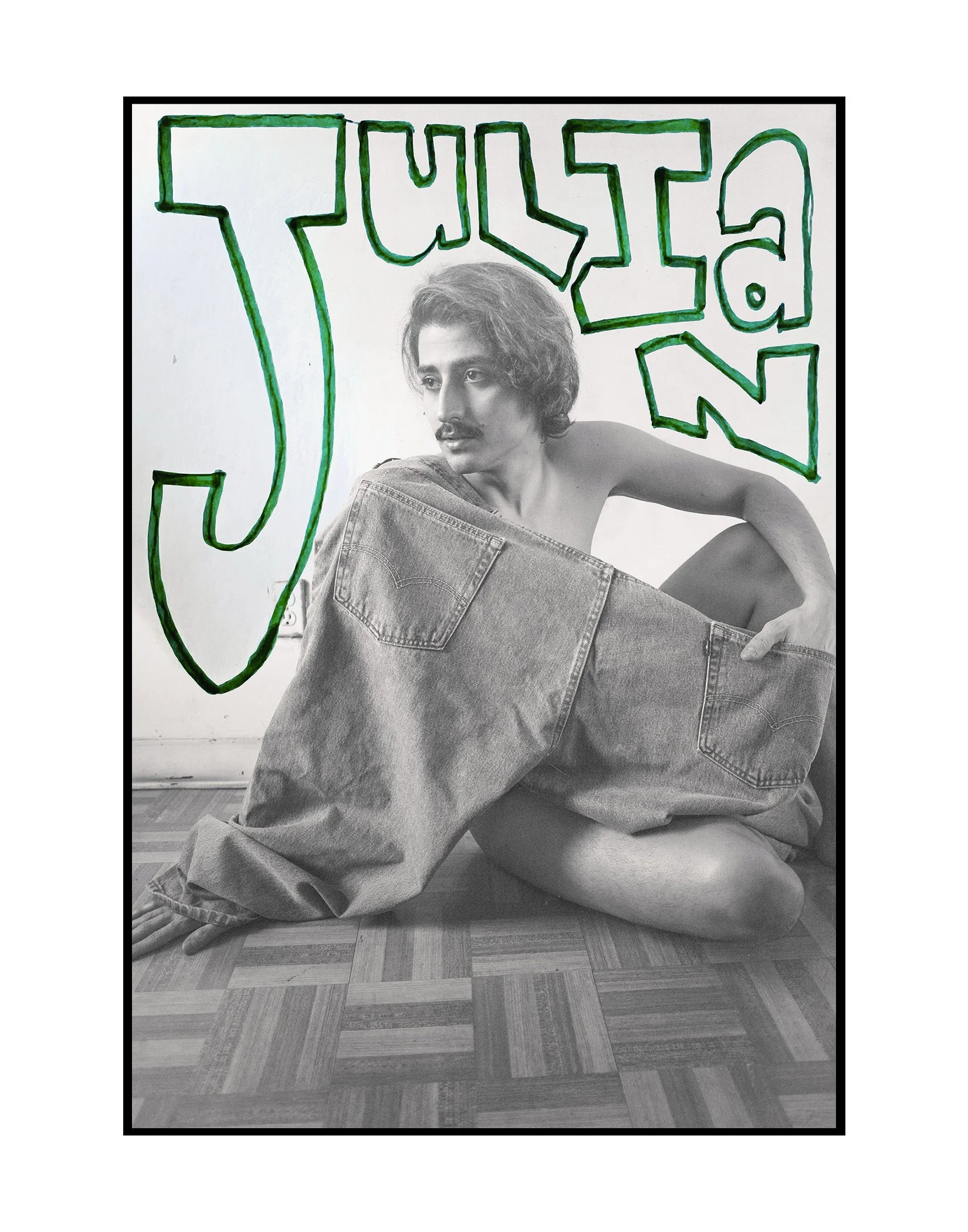
Julian — In the Studio
Julian Barbarino - An artist in the portrait studio of Anthony Amadeo
Julian Barbarino - An artist in the portrait studio of Anthony Amadeo
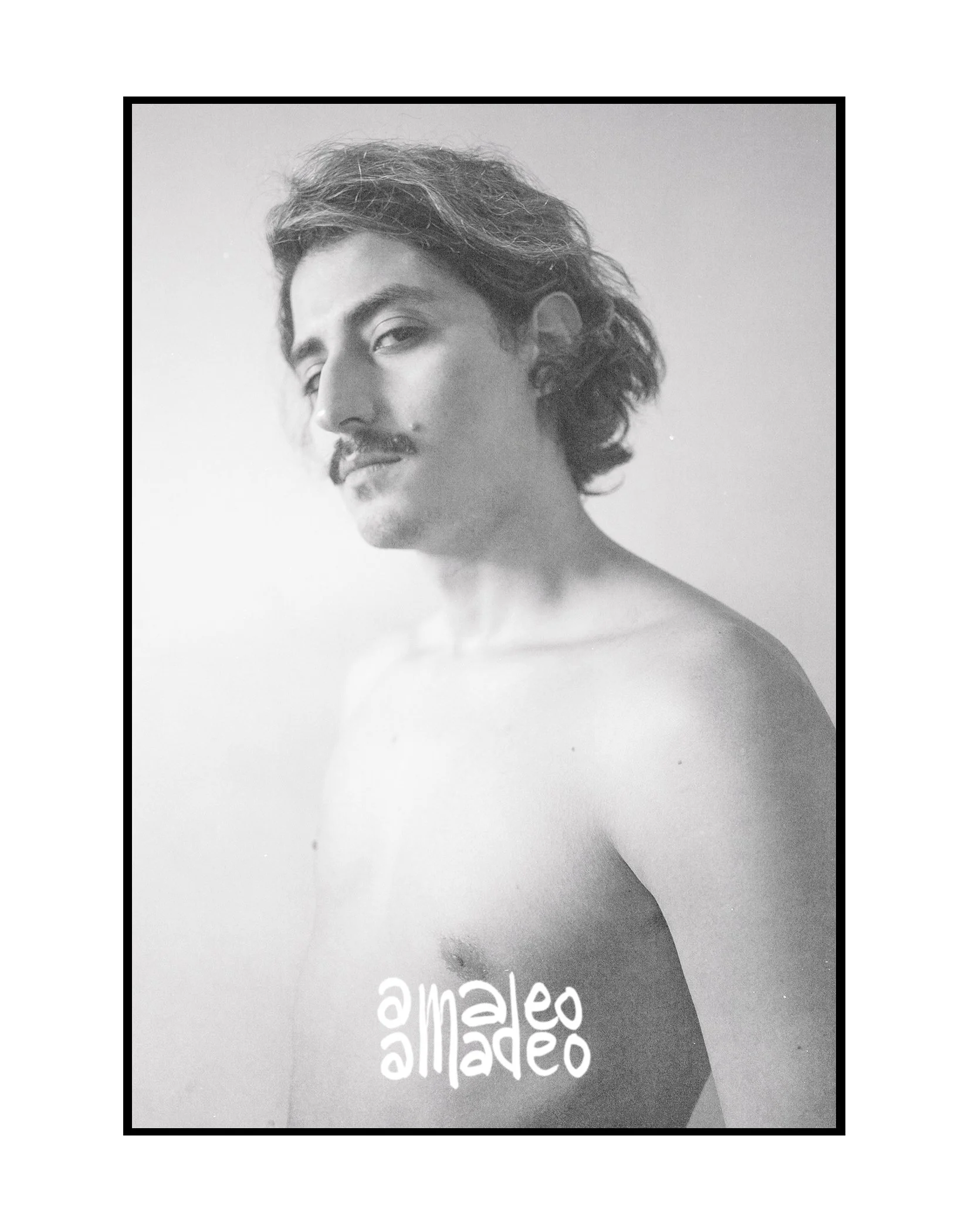
AA: You’ve been a figure study model for a long time. Do you remember the first time you ever stepped into that role—what pulled you toward it, and what surprised you once you were in the room?
JB: Like it was yesterday. I was 18 years old and at the end of my freshman year in college. I had a friend, Derek, and he wanted to do some photographs for his portfolio which involved body painting and I jumped right in. I think it’s like many art models get into modeling, they pose for a friend and it evolves from that. A couple of months later, because of how flexible the schedule could be for a full time student, I modeled my first figure drawing course. I have to admit it was a little awkward because I was modeling for a professor who was still teaching me in some courses and at the same time I had friends taking the course. I was incredibly nervous for that class, but what really surprised me was how natural it all seemed, as if nobody really cared that their friend was naked in front of them and that after a minute ot two it was just fine, they were focused on drawing and I was just posing.
—
AA: Figure modeling teaches a very specific awareness of the body—balance, tension, weight, negative space. How do you think that experience changed the way you move through the world outside the studio?
JB: I think I am more aware of my surroundings. I have become even more observant than I was, and I can carry several conversations at once. That second one comes from listening to students speak while I’m posing, which can be dangerous for those who speak at an earshot of me. Personality wise I haven’t changed at all from in the last 12 years since I started modeling, I’m still the introverted guy that won’t really engage in large groups, which I’m told is a little weird since I don’t have any shyness from being nude in front of 30 people.
—
AA: Watching you move during the shoot felt different—more intentional, more sculptural. When you’re posing, are you thinking like a model, like an artist, or like a material being shaped?
JB: Definitely more intentional, and I am mostly thinking like an artist, not a model. I think it has to do with modeling so long in groups where artists are drawing you from every angle, it made me incredibly aware of what others see. For a while I felt pressure to make sure that no matter what pose I do, everyone gets to do something interesting, not just the ones in front of me. So now when I’m modeling I know what is going to be on the other side from every angle, which is great for drawing sessions in groups, the artists end the session very happy and not thinking “I wish I had a better angle.” On the other hand, I do have to say I think it sometimes affects the spontaneity a session could have and I feel like I could be more relaxed.
—
AA: Where are you from, and what was your early relationship to making things? Was creativity encouraged where you grew up, or something you carved out on your own?
JB: I’m from Puerto Rico, even though I was born in Brooklyn, my family moved to the island in the late 90s and I remained there until 2020. So essentially lived my entire childhood and the early stages of adulthood there. In my family creativity was encouraged, especially from my mother’s side of the family. I remember spending summers and breaks in the town of Ciales, which is a mountain town of Puerto Rico, drawing, coloring books and doing crafts with my cousins, aside from also playing most of the day outside. I think that type of space and upbringing also encouraged us to not spend all of our time on video games and TV, and choose toys that sparked creativity and challenges. My brother would get anything for building and working o electronics like remote control car kits at RadioShack, while I would get anything to paint, draw or legos to build kits or or just make stuff up.
—
AA: Did school play a big role in shaping you as an artist, or did your real education happen elsewhere—studios, streets, sketchbooks, late nights?
JB: School played a crucial role in becoming an artist, especially High school. I took an art class in 11th grade the first one in 4 years, the teacher, Mayra Aguilar, took a huge interest in me and pushed me because she saw my potential. She would give me assignments and even donated materials for me to do the assignments, she had me read books and research artists. She eventually introduced me to my art school by giving me a private tour of it while completing my senior year, which I appreciated because at the time I didn’t think Puerto Rico had a dedicated art school, and I was mostly ready to jump to any college with a science program, which I was good at. I fell in love with the arts, and I wouldn’t be where I am today or do the things I have done if it wasn’t for Mayra’s push.
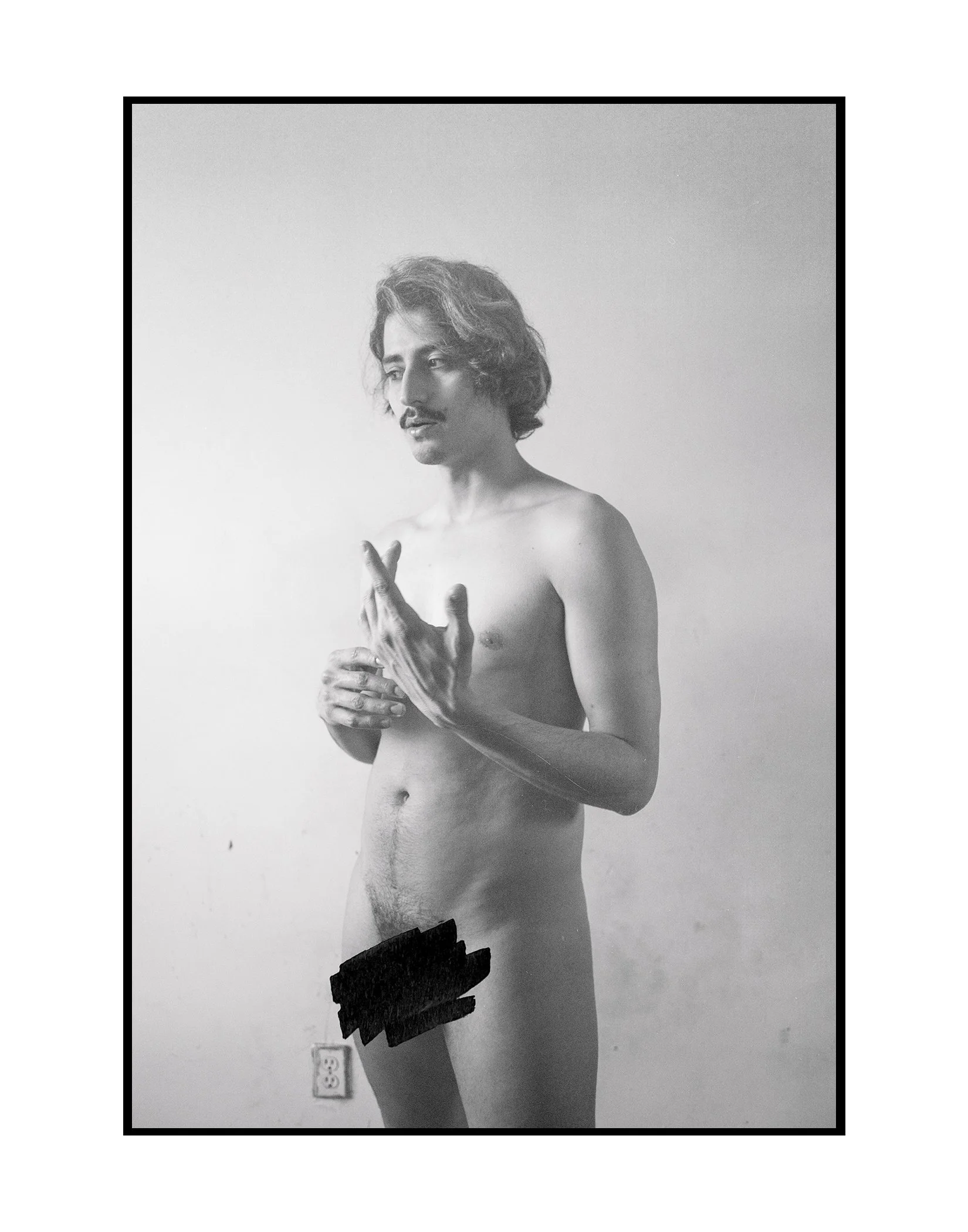
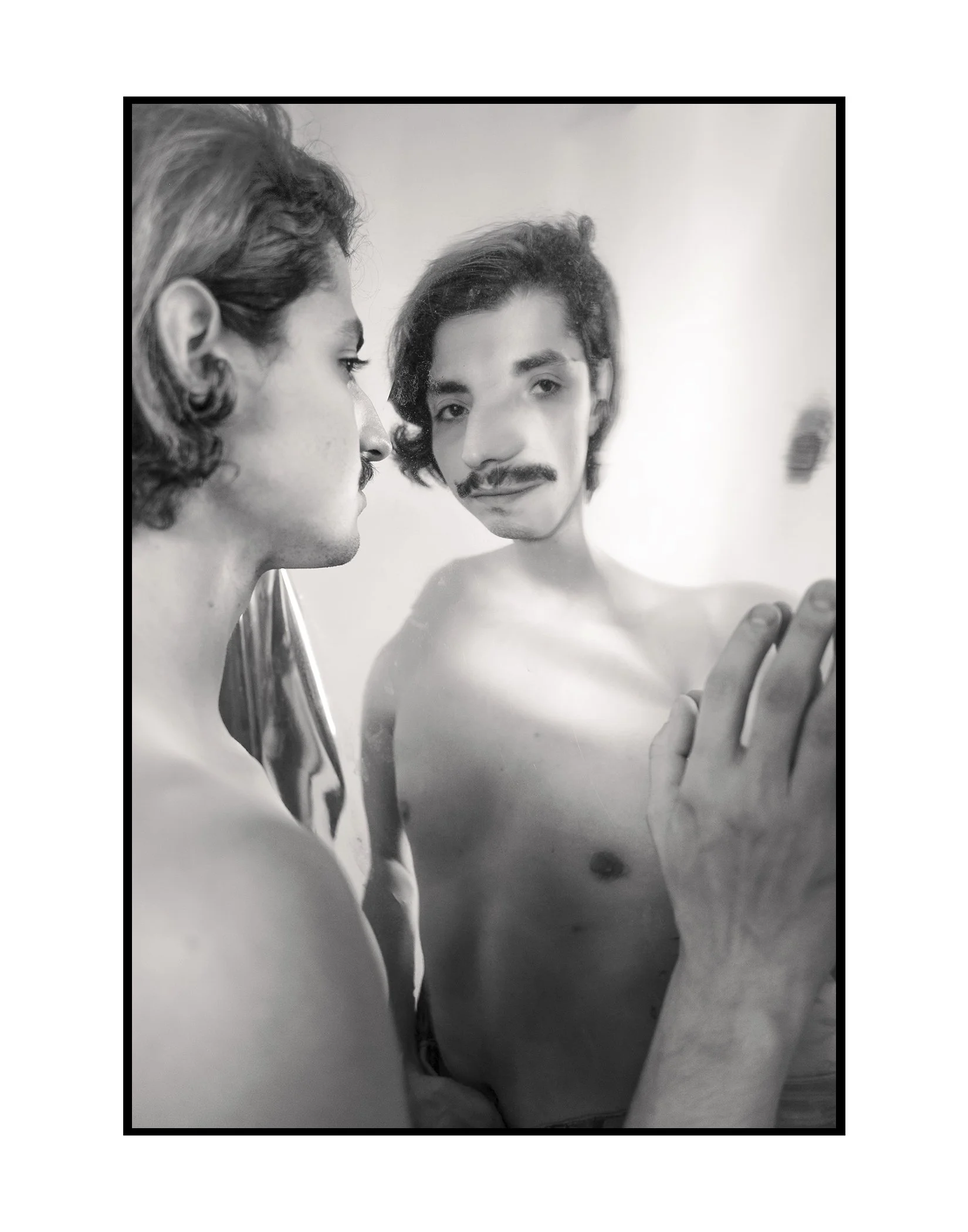
AA: You work across multiple mediums. Which ones do you return to the most, and which ones do you turn to when you’re stuck or restless?
JB: The one i feel like I always come back to is drawing. It’s how I work out most of my concepts, and use to get an idea running visually. I don’t do it as much anymore as I have been working with abstract concepts for the past year, but I do always try to get in a sketch whenever I can to keep the motor running, so to speak.
—
AA: Is there a medium that feels like “home” to you—and another that feels like a risk every time you touch it?
JB: I don’t think I have a medium the feels like home other than drawing, even then I don’t do it as much as I used to. I think working across different mediums keeps me learning, and there’s something underneath that won’t let me be comfortable with one medium and then stick with it for a long period of time. I always have this urge to change it up when working on a new idea which for is the risk for me. Trying out a new medium, most of the time learning it on my own, and trying to marry a concept with it is so difficult because I’m always trying and it doesn’t always work. But that moment you find the right one, it just feels like everything is right.
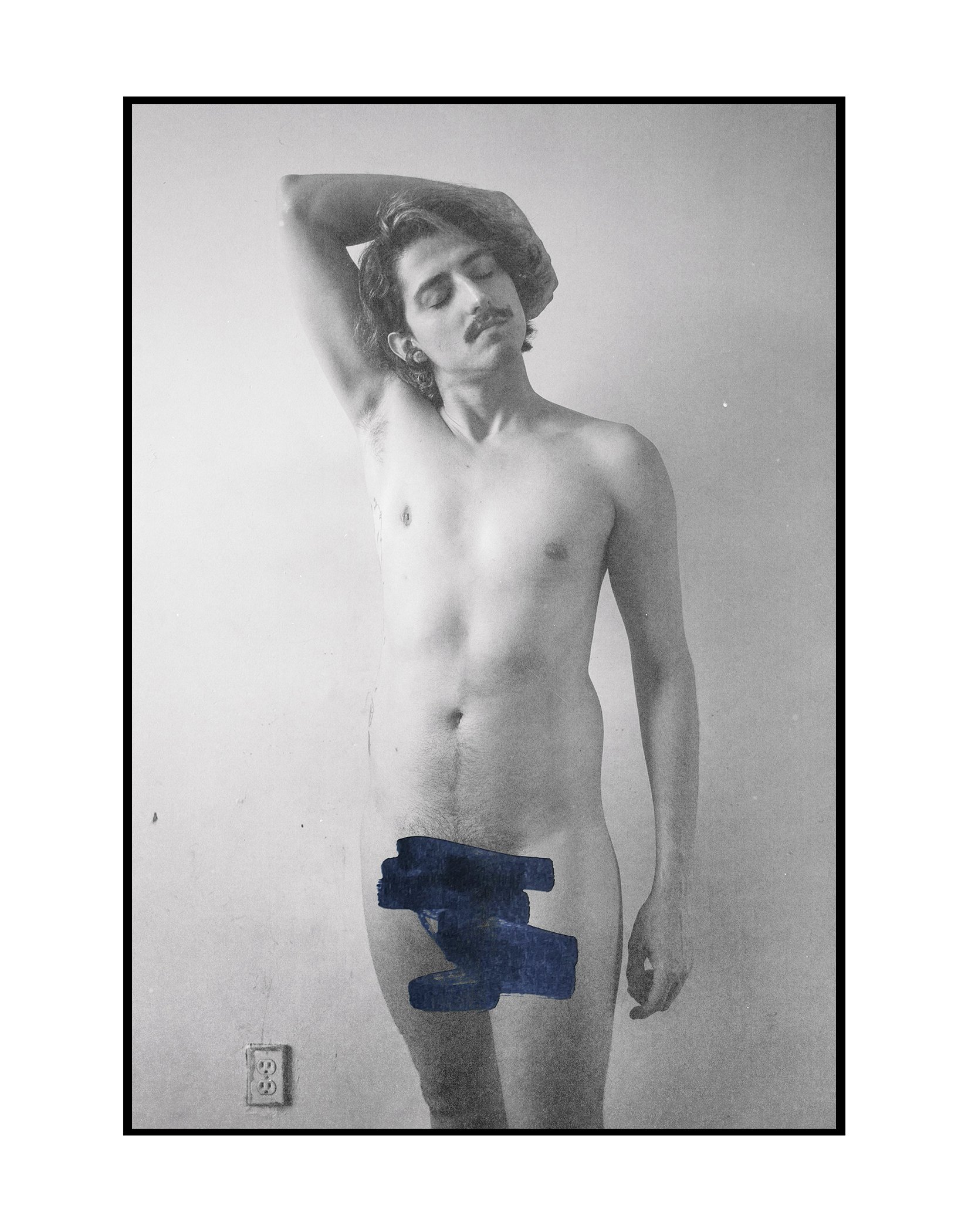
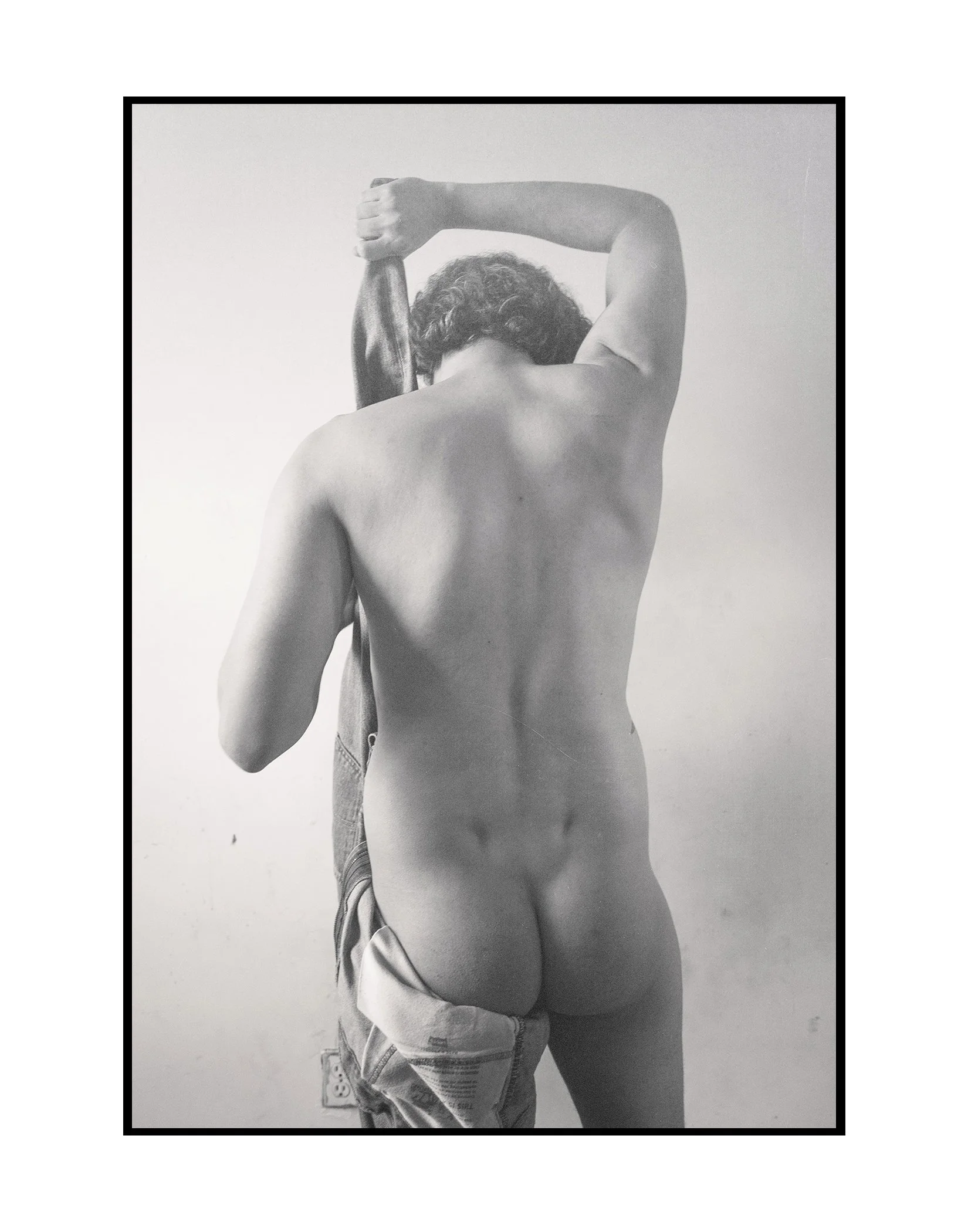
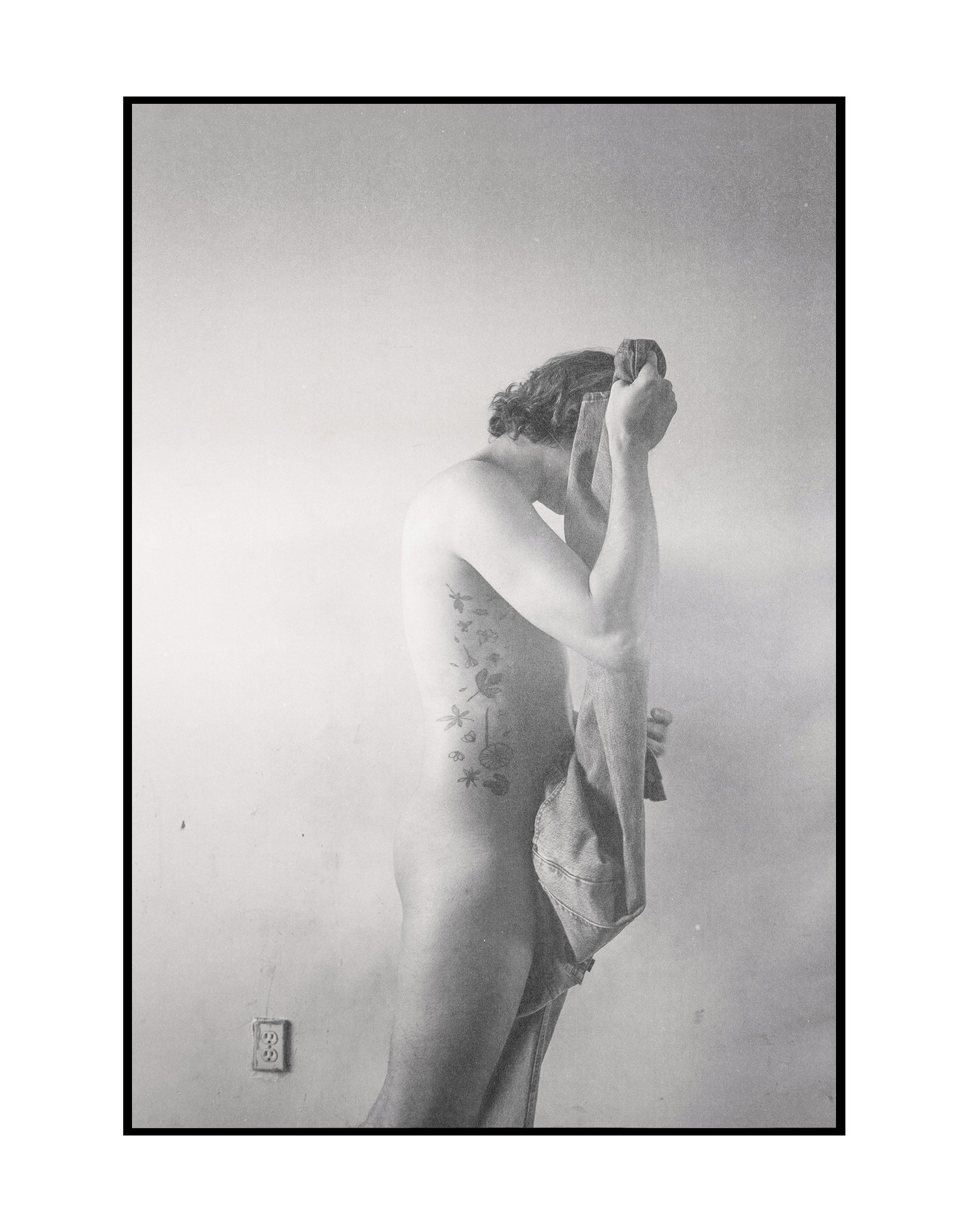
AA: What keeps you creatively alive right now—what are you feeding yourself visually, mentally, emotionally?
JB: What always keeps me creating is learning. It can be learning about history, a new medium or just plain experimenting to gain knowledge. I feel like it keeps my mind going and helps me see the bigger picture of things, especially when it comes to working on my art because it is so personal. I think vulnerability is something a lot of people aren’t comfortable with, and my work is about vulnerability, from the art I create to posing for others in the nude. There’s a certain connection that is made when you are seen without any walls. Not everyone is capable of being comfortable in front of vulnerability, and that’s where i try to sit in because It’s ok to be vulnerable. I think there’s so much we can learn about ourselves when we are.
—
AA: When creativity slows down (because it always does), what helps you reconnect—movement, music, solitude, conversation, repetition?
JB: When it slows down, I tend to take a break, and it’s not like a day or two, for me it tends to be a few weeks before I create again. In that time I’ll focus on reading, listening to music, share time with friends or even playing video games, anything to unwind and relax. When I feel ready, I can come back fresh and with new eyes, because sometimes when you work on something for too long you can’t always see the mistakes you’re making, so breaks are good and it stops me from burning out or abandoning a project.
—
AA: How does using your body—posing, holding tension, staying still—inform your art-making afterward, if at all?
JB: It tells me a lot. Most of the time when I pose I am not really present, at least for classes where I hold long poses. I’m usually thinking of my projects, I use it as “library” time, I think in my head and art classes tend to be very quiet, because everyone is so focused on their own thing, so they’re good for that. Sometimes seeing people work or seeing and artist do something can sort of spark an idea, and when that happens I feel like it’s just the environment, being in a creative space can just move things along because of the energy.
AA:. If you had to describe your creative process using only three textures, what would they be?
JB: I think I could only choose two, rough and uneven. Most of the process can be so long, and experimenting so much to find that one thing can feel like a very long process, especially when there are so many failures, and other times if feels like you found the right thing and after making a few pieces you look at it and are not “feeling” it and then you start from scratch.
—
AA: Choose one color that feels like your body and one that feels like your mind. Why those?
JB: For my body I would probably go with yellow, to me it's a color that feels like openness and comfort in a very energetic way. I think my mind would be blue, there’s a depth to what goes on, but I feel there’s trust, honesty and a calm that’s present even in the craziest moments.
—
AA: Finish this sentence:
“When I’m making something with my hands, I’m really trying to…”
JB: “… be vulnerable and honest”
AA: What are you currently working on—or quietly dreaming about making next?
JB: Right now I am working on expanding my current series “Geographical Landscapes of the Mind” which is based on damaged Polaroids but in fiber. So I am working with cotton and acrylic yarn that is then tufted or hand punched onto a cotton fabric backing known as monk cloth. Visually I recreate the frame of a Polaroid instant film exposure and then intervened where the photograph would be with degrading colors or patterns that reflect a specific emotional state based on text I had written at nights during a severe episode of depression in 2024. Each one is me pouring my all into each piece and making something that I find beautiful out of a rough time.
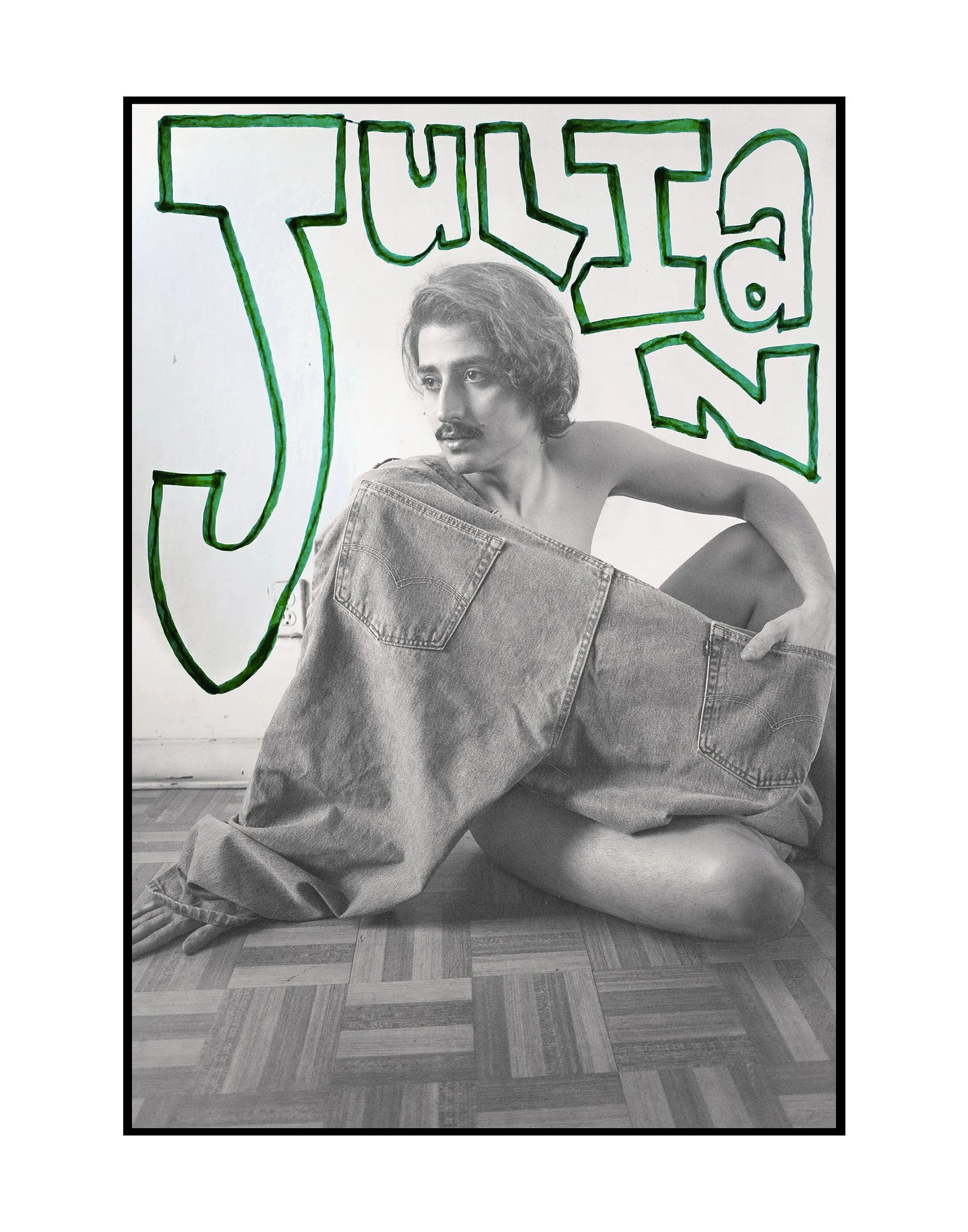
AA: Where can people find your work, follow along, or step into your world?
JB: Well that one is easy, you can find me in pretty much all socials under @JulianBarbarino, but Instagram is where I am active the most. Also my website julianbarbarino.com has pretty much everything I have ever done under my archive.
The Last Notes Before the Door Closes
Before the year ends, I like to take inventory — not in a business way, but in a what actually moved through my handsway. What I touched. What touched me back. What stayed. What didn’t.
This year, I made a lot. Some of it quietly. Some of it in public. Some of it only for myself.
A Year-End Studio Report
Before the year ends, I like to take inventory — not in a business way, but in a what actually moved through my handsway. What I touched. What touched me back. What stayed. What didn’t.
This year, I made a lot. Some of it quietly. Some of it in public. Some of it only for myself.
In January, I made ParisParis — collages born from walking, collecting, listening, and paying attention while moving through Paris. Paper became a way to remember before memory could blur things. Receipts, fragments, images, thoughts — all layered, all imperfect, all honest.
I created fourteen scent stories, each one a narrative waiting to be translated into liquid and air. I took them as far as the lab, knowing that not everything needs to arrive all at once.
I photographed close to two hundred new faces, building a living archive of portraits. Out of that came the denim series — bodies swallowed by giant jeans — an idea about belonging, scale, inheritance, and the strange comfort of things that don’t quite fit.
I released three incenses:
No. 1 — rose and clove
No. 2 — geranium and slate
No. 3 — tomato leaf and frankincense
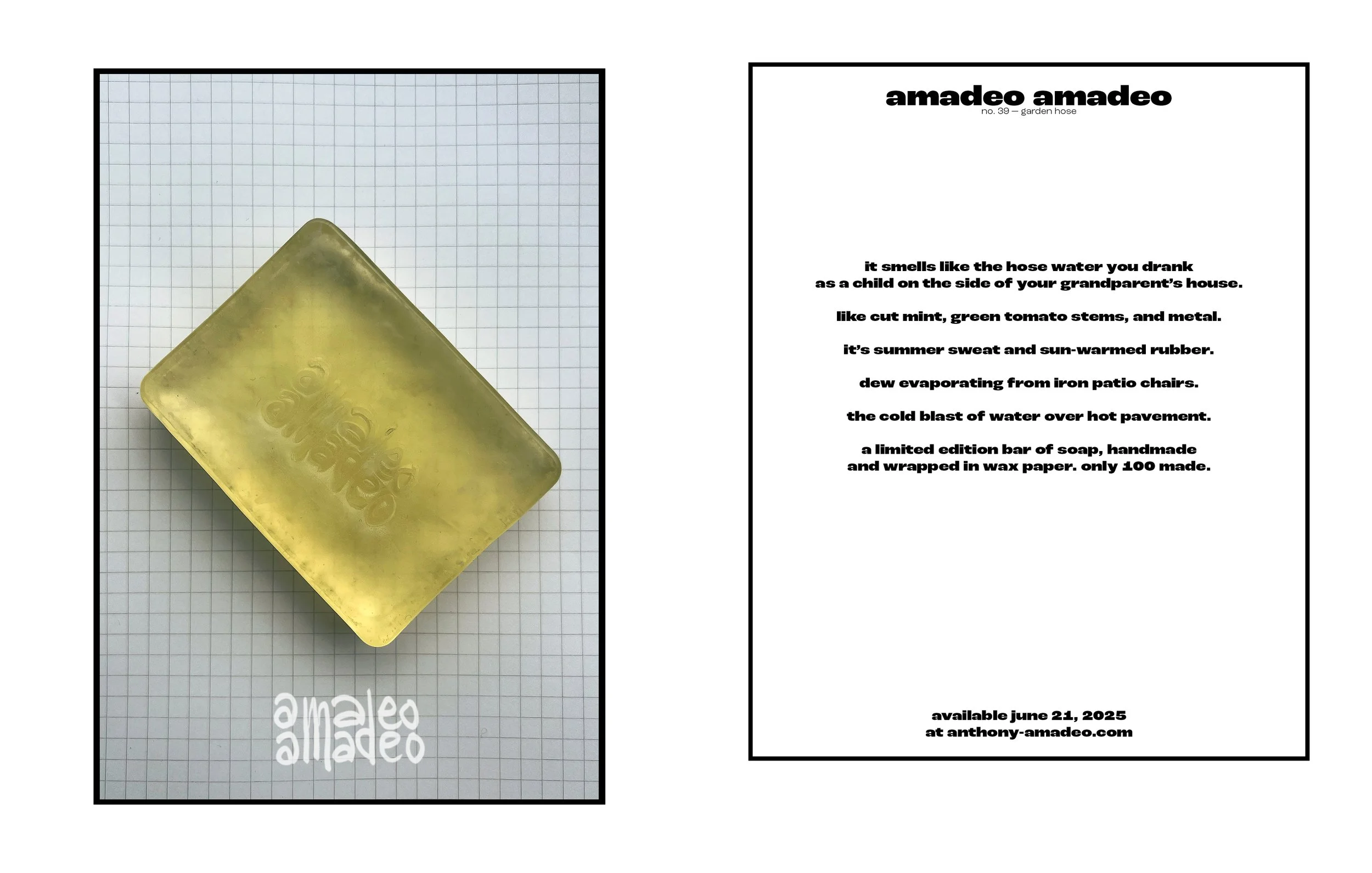
I made a soap — No. 39, Garden Hose — because sometimes nostalgia smells like rubber, sun, water, and your uncle’s backyard. Because sometimes that’s enough.
I brought my clowns back. I started writing them into a cabaret. Then into a children’s book. I let absurdity sit next to tenderness again.
I opened my studio — not as a room, but as an idea. A place to participate. To collect. To follow along. To be inside the process, not just the result.
I made new collages. I tested new painting techniques. I completed ten paintings, including one made with pigment created from seashells collected on family vacations — ground down, transformed, and returned as memory made physical.
Those are the facts. The objects. The proof.
But what surprised me most this year was this:
everything I want to make already exists inside my head.
The work wasn’t about inventing ideas — it was about finding the right medium to let them out. Journaling. Storytelling. Switching materials. Moving sideways instead of forward. Learning new languages just to say the same truth more clearly.
What Shifted
I stopped caring — or I’m learning to stop caring — about how my work is interpreted. Some people won’t like it. Some people will love it too much. Both are fine.
I started trusting my gut more. Letting intuition lead before explanation. Creating with less noise around me.
My work got slower and faster. Faster in output. Slower in thinking. More deliberate. More intentional.
It got louder in its reach — I want more people inside it now — but more domestic in its source. Familiar things rendered strange. Relatable ideas that take a second to recognize. Absurdity doing the work that literalness never could.
An Unofficial Trend Report
(Observed from the sidewalk, the studio floor, and the kitchen table)
I keep seeing texture. Velvet. High gloss. Rust. Tarnish. Wear. The evidence of time doing its job.
Deep colors. Acidic neons that look like they’ve aged badly — in a good way. Patterns getting bolder. Repetition everywhere.
I’m bored of safety. Bored of everything trying to be likable. Bored of ath-leisure and neutrality disguised as taste. Everyone acting the same. Wanting the same. Dressing the same.
“Basic” feels very in right now.
Luxury, to me, has nothing to do with price and everything to do with attention.
A croissant made by someone who’s spent a lifetime learning how to make it — that’s luxury. Even if it costs less than a dollar. You’re buying knowledge, repetition, failure, patience, inheritance.
This applies to everything.
I notice the hand now more than ever. The brushstroke. The imperfect stitch. The slight error that proves someone was there. Craftsmanship is visible if you’re willing to slow down enough to see it.
Forecasts (Read Between the Lines)
Next isn’t about newness.
It’s about refinement disguised as nostalgia.
Domestic fabrics will matter. Worn ones. Velvet will return — not precious, but lived-in. Fashion will soften without becoming weak.
Objects will feel familiar before you understand why. Memory will do more work than explanation.
The most interesting work will feel personal but speak collectively. It will invite participation instead of observation.
And the artists worth watching won’t rush to show you everything at once.
I’m stepping into the next year paying closer attention. To what’s already on the table. To what’s already in the room. To what’s already been said — just not yet heard.
It’s all there.
You just have to listen.
Or smell.
Or look.
Happy New Year.
— Anthony Amadeo and The Journal
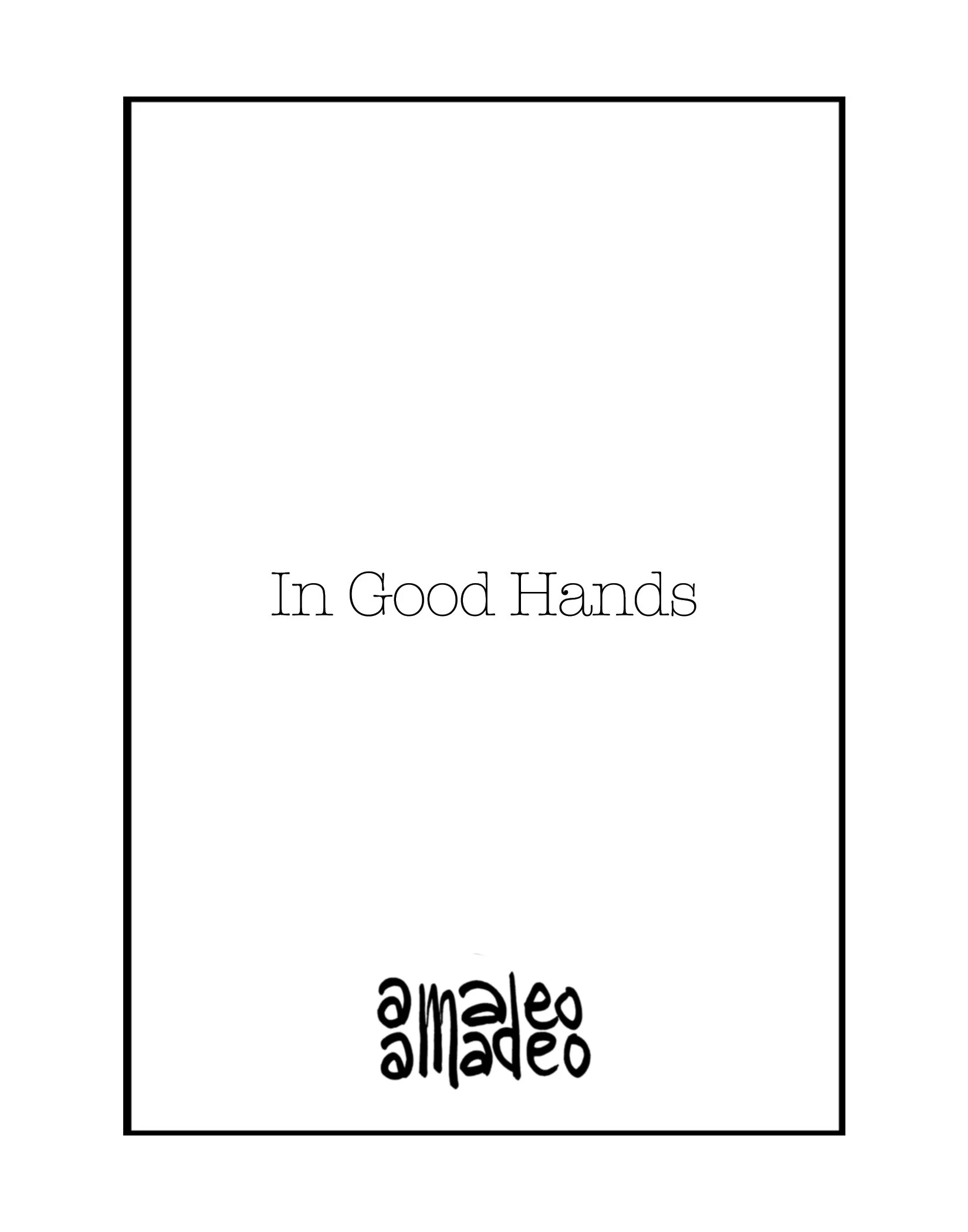
In Good Hands
This year, I paid more attention to hands than faces.
Hands tell you how long someone has been doing something.
They hold time differently.
They remember things the mind forgets.
These are the hands I kept returning to—the ones that make, that know, that feel, that carry knowledge forward quietly.
Not loud hands.
Practiced hands.
This year, I paid more attention to hands than faces.
Hands tell you how long someone has been doing something.
They hold time differently.
They remember things the mind forgets.
These are the hands I kept returning to—the ones that make, that know, that feel, that carry knowledge forward quietly.
Not loud hands.
Practiced hands.
Tailor
The tailor’s hands understand negotiation.
They know how to correct without erasing.
How to shape without overpowering.
How to listen to a body instead of fighting it.
Fabric is never rushed.
It’s guided.
Adjusted.
Asked politely to become something else.
These hands know when to stop.
They understand that perfection usually ruins the fit.
Nothing here is accidental.
Every stitch is a decision made slowly, with respect—for the cloth, and for the person who will live inside it.
Ceramicist
The ceramicist’s hands accept failure.
They know collapse intimately.
They know how much pressure is too much.
They know when to start again.
Clay records every hesitation.
Every moment of doubt lives inside the final form.
These hands understand that perfection is not the goal—
balance is.
To re-center something that has gone off course is its own kind of mastery.
To begin again without frustration is the real skill.
Painter
The painter’s hands unlearn.
They know how to cover something up without losing it.
How to erase without regret.
How to wait.
These hands are comfortable sitting with uncertainty.
Letting the work rest.
Letting it speak back.
The painting doesn’t arrive all at once.
It reveals itself slowly, in layers, in revisions, in moments of restraint.
These hands understand that finishing is not always the point.
Photographer
The photographer’s hands hesitate.
They wait for light to arrive on its own.
They recognize when the moment is close—but not ready.
The most experienced hands know when not to press the shutter.
When to let something pass.
When to trust that seeing is sometimes enough.
Framing is an act of care.
So is restraint.
These hands understand that presence matters more than capture.
Cook
The most important hands I learned from never used recipes.
They moved from memory.
From watching.
From a love that didn’t need to explain itself.
As a child, I would sit on the counter just to see better. Not to help—just to watch.
The way his hands moved through ingredients as if they already knew each other.
The way nothing was measured, yet nothing was ever wrong.
These hands taught without teaching.
You learned by paying attention.
By listening when nothing was being said.
By feeling when something was ready before it looked ready.
This wasn’t cooking as performance.
This was cooking as inheritance.
Every gesture had already been done before—
by his parents,
by their parents,
carried quietly through kitchens and years.
Even then, I knew this mattered.
That this wasn’t just dinner.
That this was something meant to outlive him.
Meant to be carried forward.
This is how the technique lives on.
Not written down.
Not corrected.
But trusted.
You watch.
You learn.
You listen.
You feel.
You love.
And one day, your hands remember before your mind does.
Farmer
The farmer’s hands understand patience.
They know that growth cannot be rushed.
That tending is more important than harvesting.
That care happens long before results are visible.
These hands work with seasons, not schedules.
They prune knowing something must be removed for something else to thrive.
Gardens are acts of faith.
You plant knowing you may never see the fullest version of what you started.
These hands work for a future they may never meet—
and do it anyway.
Presser
The presser’s hands believe in dignity.
Nothing was left untouched.
Shirts.
Jeans.
Even underwear was pressed with intention.
Creases mattered.
Starch mattered.
Presentation was a form of care.
These hands understood that how you show up says something about respect—
for yourself,
for others,
for the work it took to get there.
Heat, steam, pressure—applied patiently.
Restoring order.
Restoring pride.
These hands treated the ordinary as something worthy of attention.
These are the hands I trust.
The ones that take a lifetime.
The ones that don’t rush to explain themselves.
The ones that carry knowledge forward quietly.
This is how knowledge stays alive.

Mason Williams
By the end of a year, especially one packed with ideas, projects, scents, sketches, and long conversations with myself, I crave a reset. Something stripped down. Something honest. Something that reminds me why I make images in the first place.
A reset before the year turns
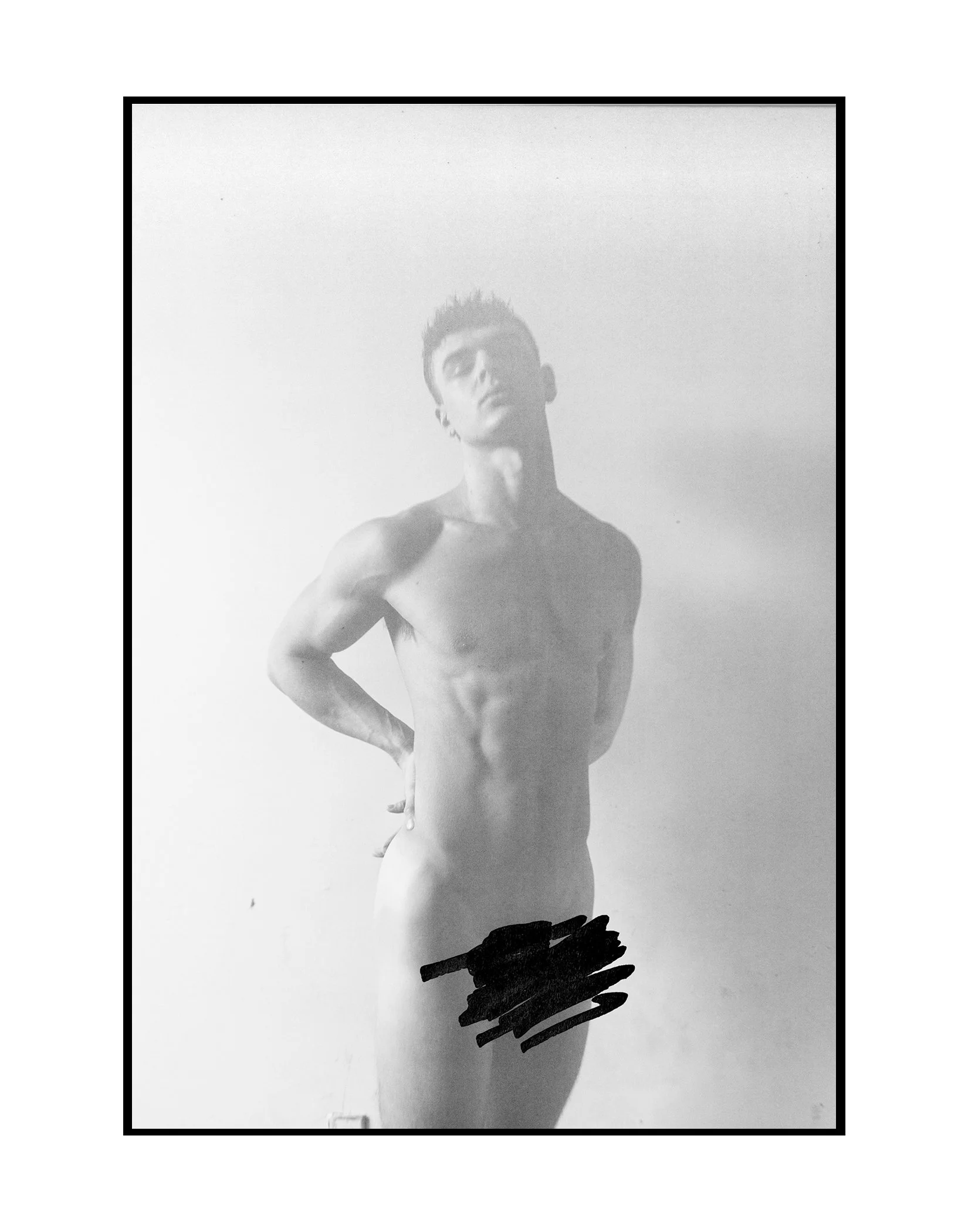
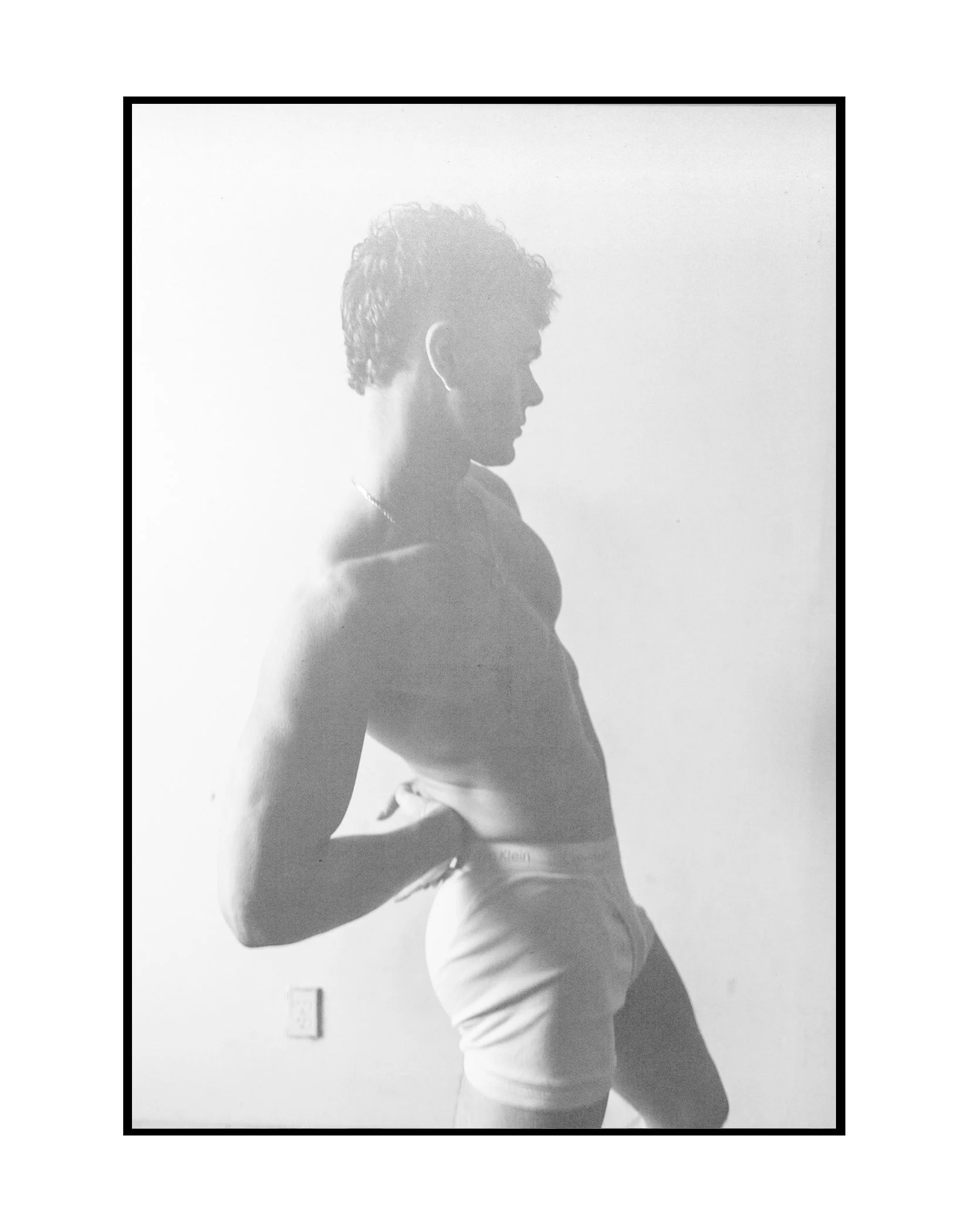
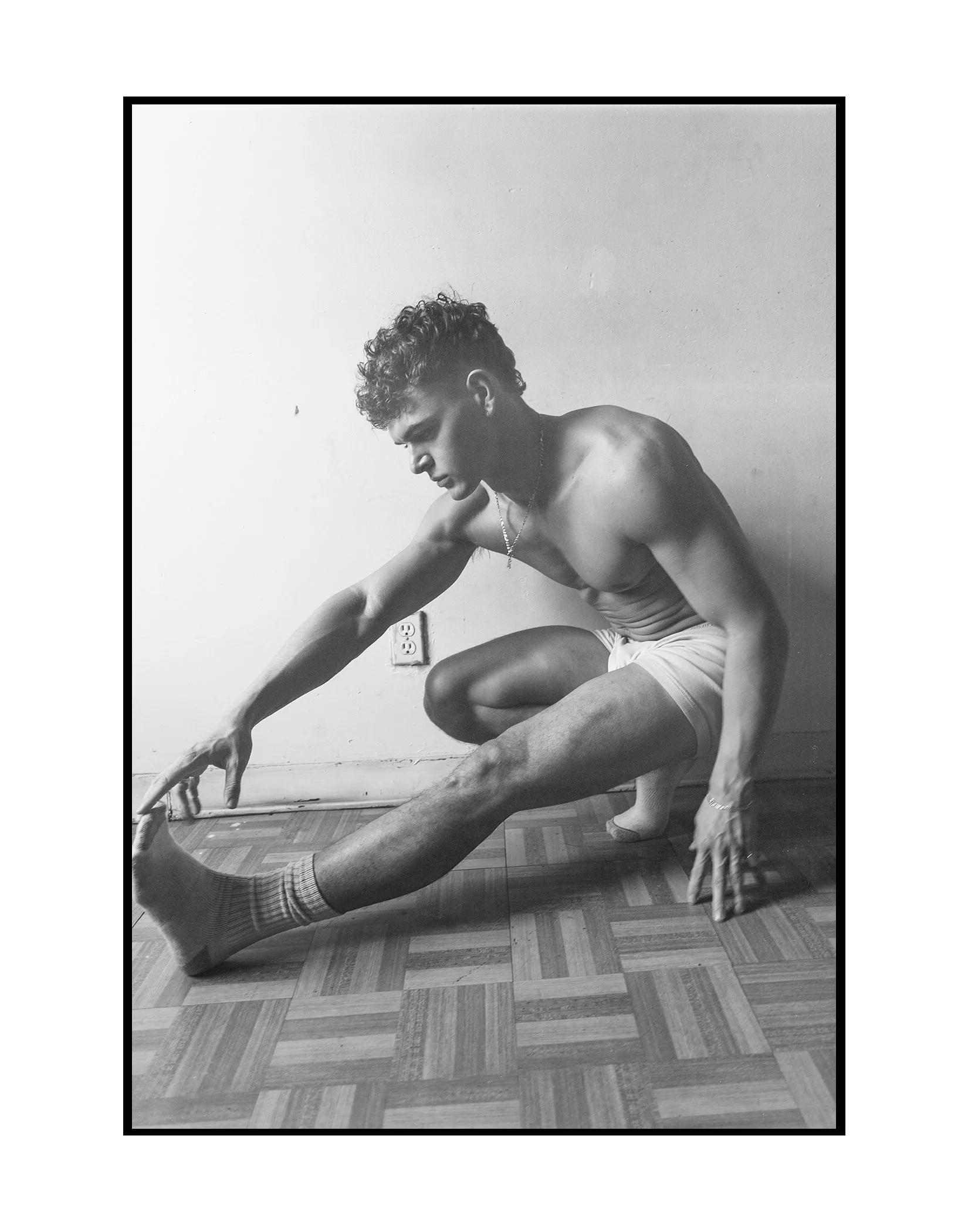
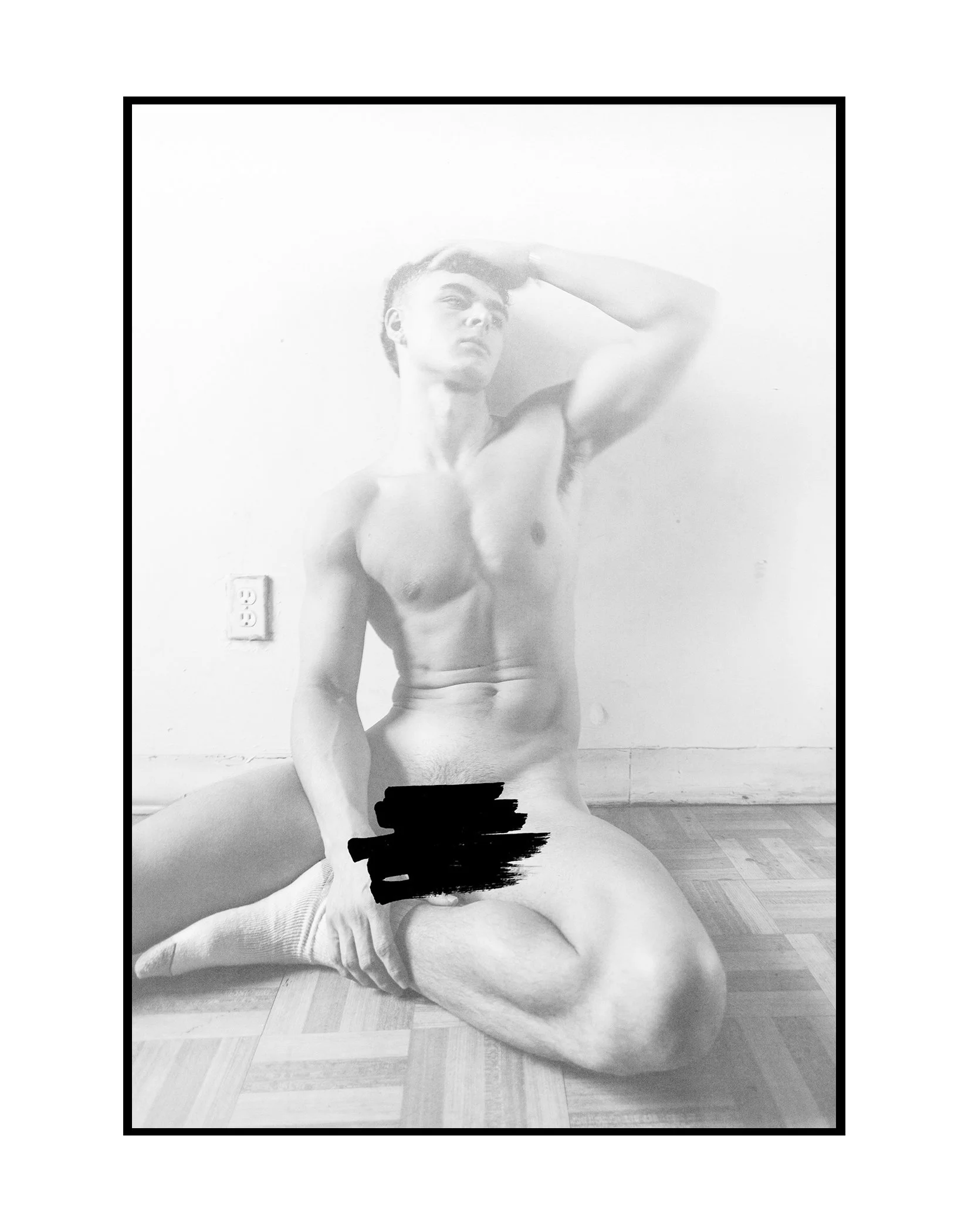
Mason Williams was one of the last shoots of 2025 — and that felt important.
By the end of a year, especially one packed with ideas, projects, scents, sketches, and long conversations with myself, I crave a reset. Something stripped down. Something honest. Something that reminds me why I make images in the first place.
So Mason and I decided to remove almost everything.
No clothes.
No set.
No narrative forced too early.
Just body and soul.
This shoot wasn’t about fashion in the traditional sense. There are no garments to credit, no silhouettes to dissect. And yet — this is fashion. Or at least my idea of it. The movement becomes the garment. The tension becomes the tailoring. The scribbles become the styling.
The censor marks weren’t an afterthought — they are the fashion. Graphic, imperfect, instinctual. They sit on the body the way a well-placed seam or an unexpected cutout would. They interrupt. They frame. They ask you to look again.
Mason moved like someone listening to his body instead of posing for the camera. Every shift felt intentional without being precious. There was strength, softness, hesitation, confidence — sometimes all in the same frame. I didn’t direct much. I didn’t want to. This was about allowing space for presence rather than performance.
The room was quiet.
The light was simple.
The floor creaked when he moved.
That was enough.
I keep thinking about these images as a palette cleanser — a visual deep breath before stepping into everything that’s coming next for amadeo amadeo. Bigger projects. More collaborations. More worlds being built. But before all of that, I needed to return to the body. To gesture. To the idea that fashion isn’t always something you put on — sometimes it’s something you are.
These images feel like a threshold.
A pause.
A clean page.
A reminder that at the core of all of this — photography, scent, clothing, objects, performance — is the human form moving through space, trying to be understood.
Thank you, Mason, for trusting the process and stepping into this moment with me.
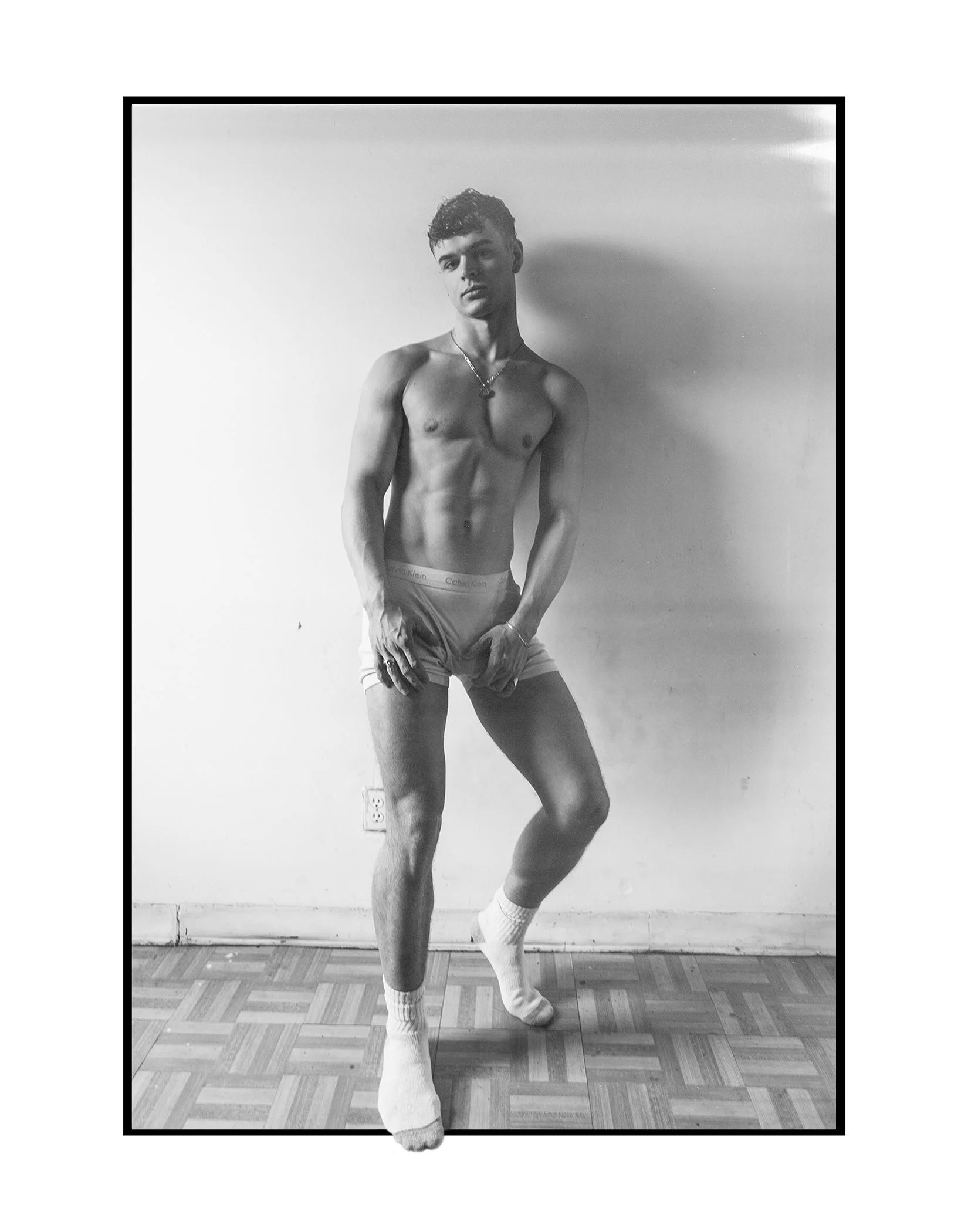
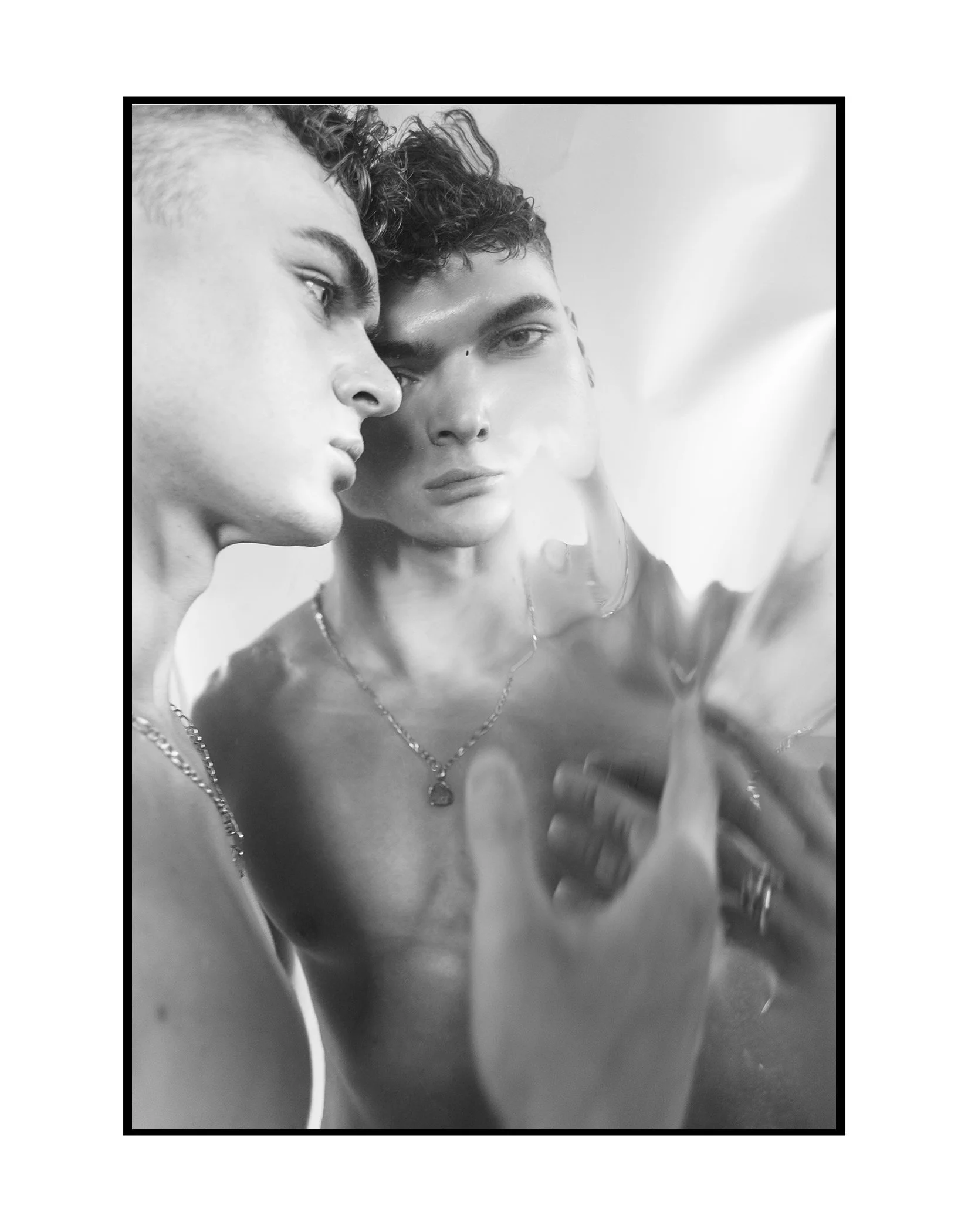
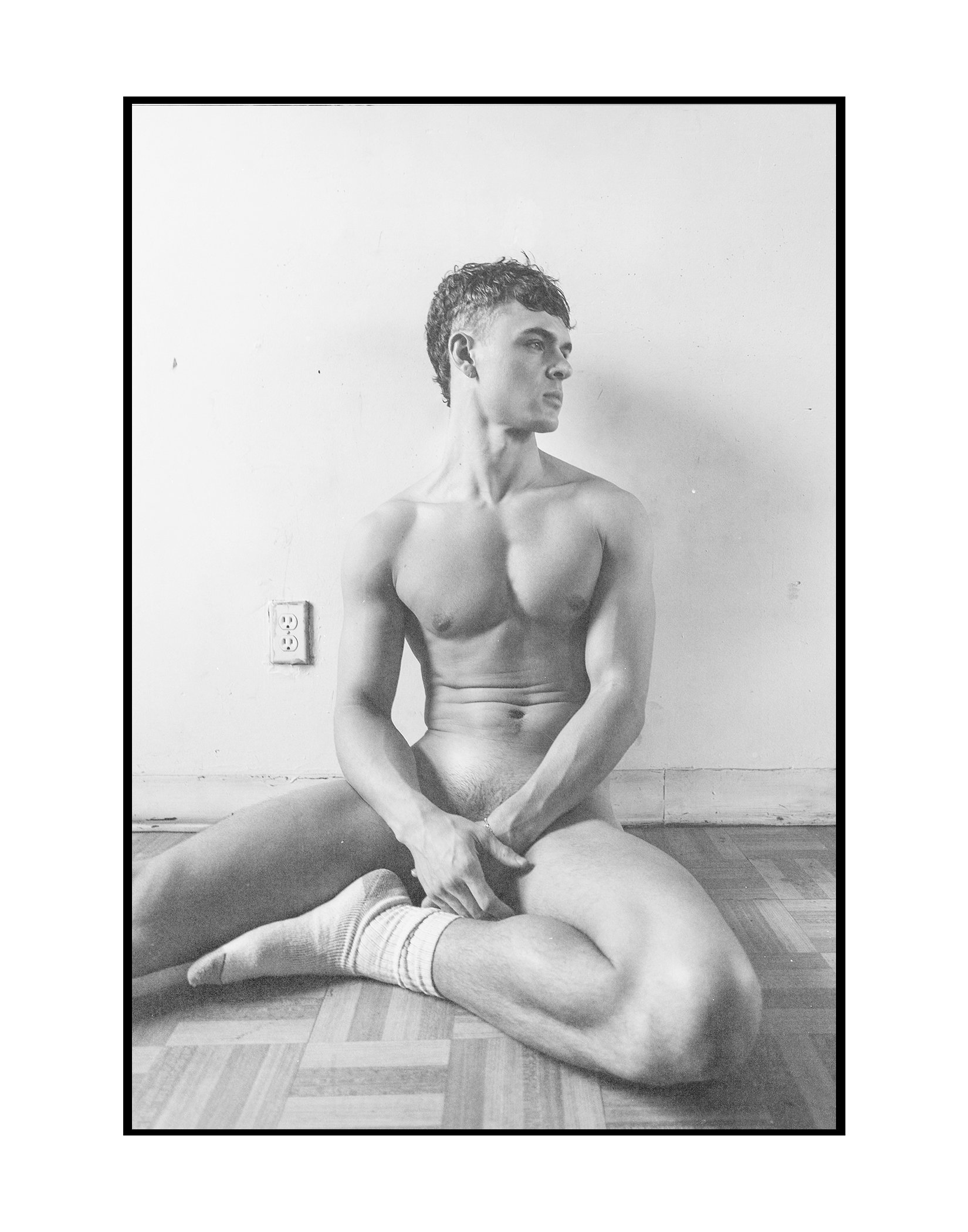
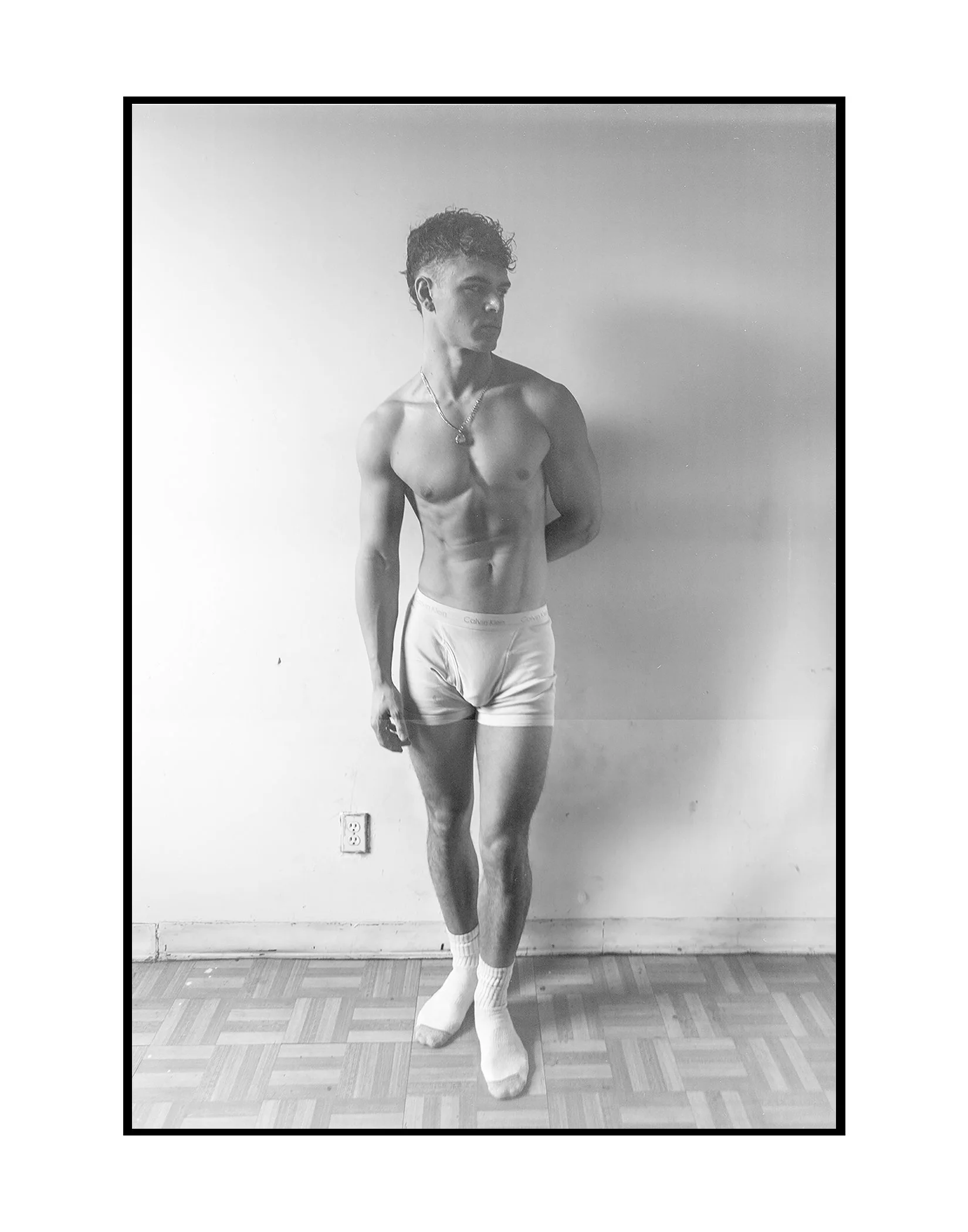
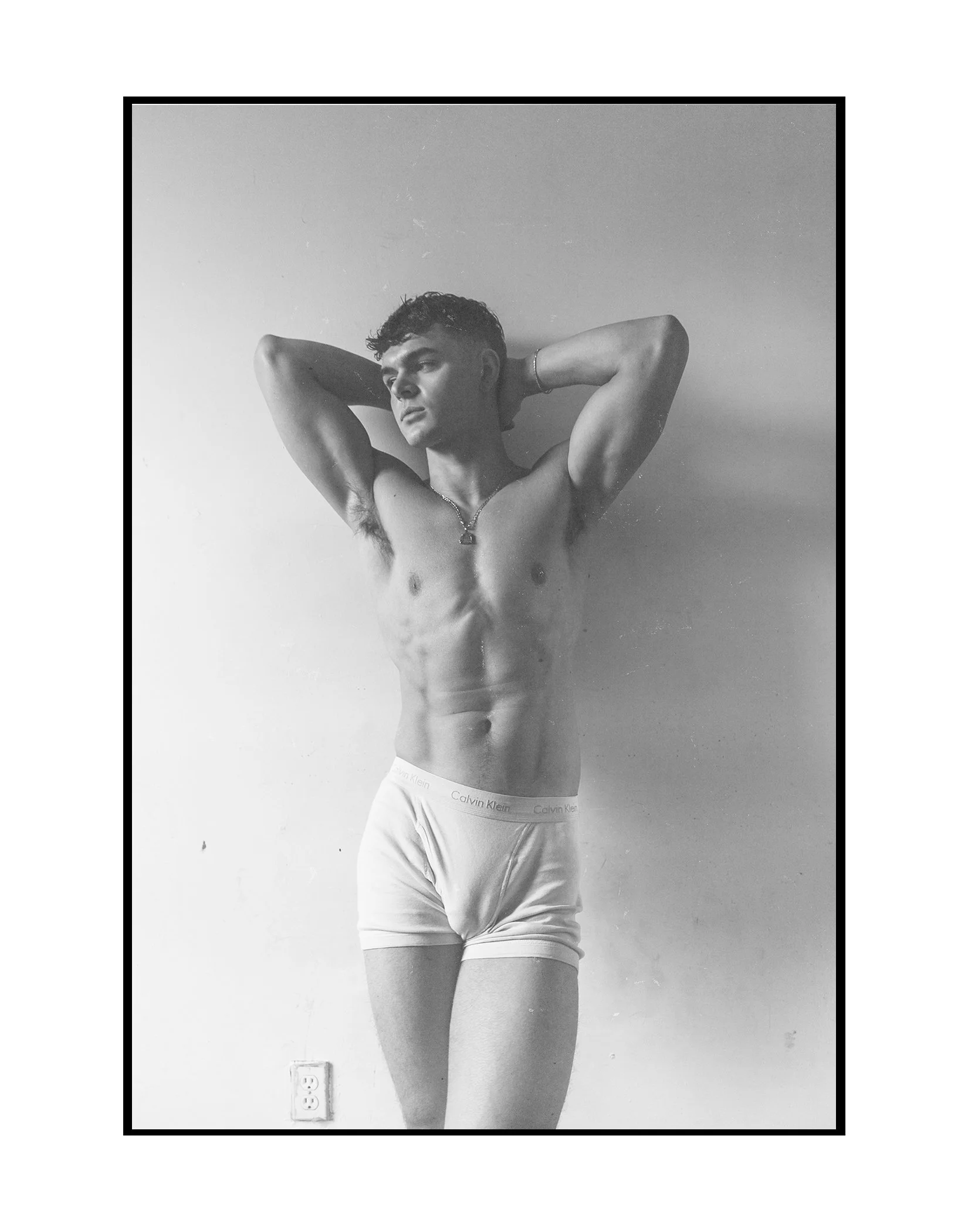
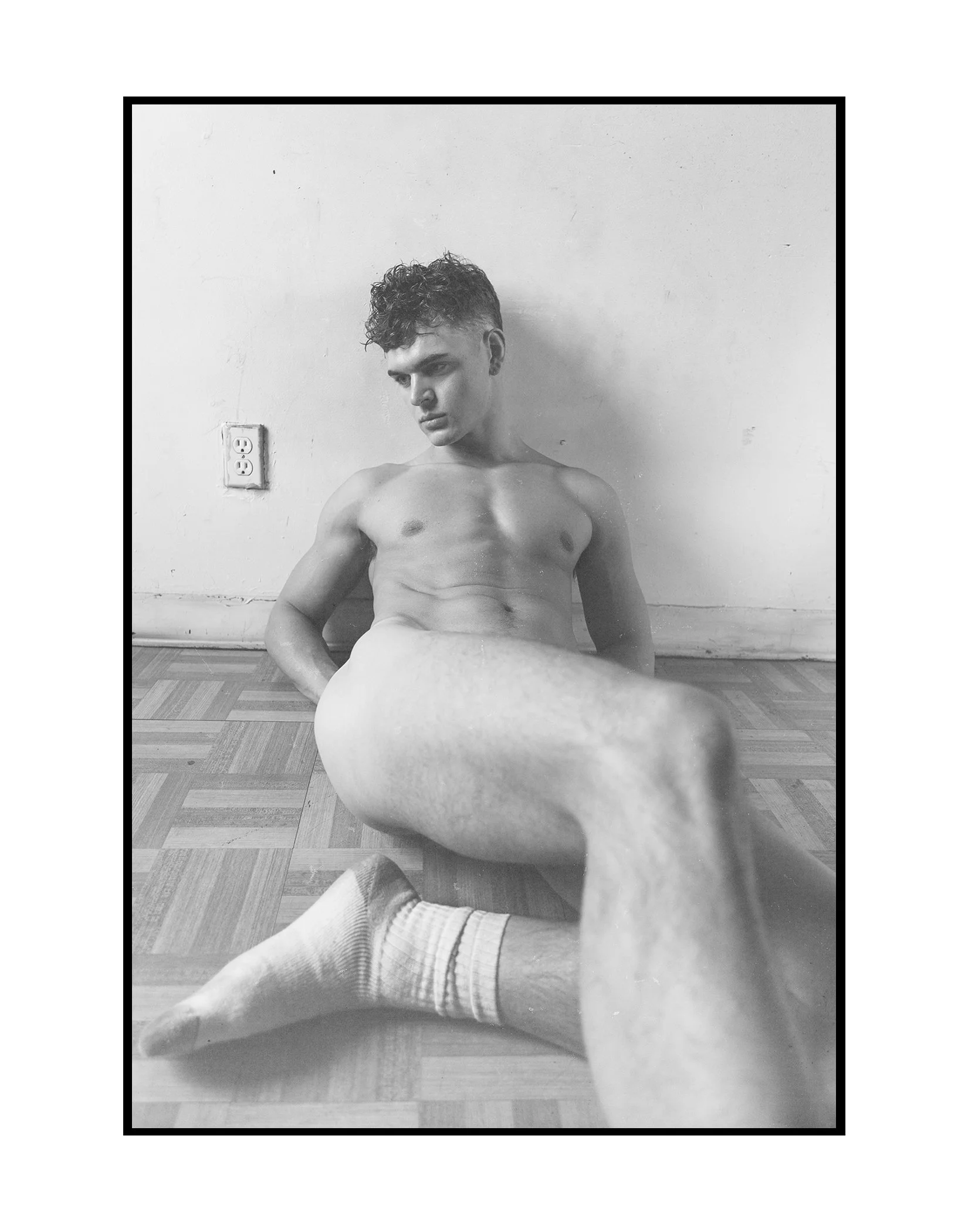
Here’s to the reset.
THE NOVEMBER INVENTORY
Every year around this time, I feel like I’m standing in the middle of my own studio floor, surrounded by boxes labeled: Keep, Toss, Transform.
What I’m Carrying Into the New Year (and What I’m Leaving Behind)
The Journal — November 30
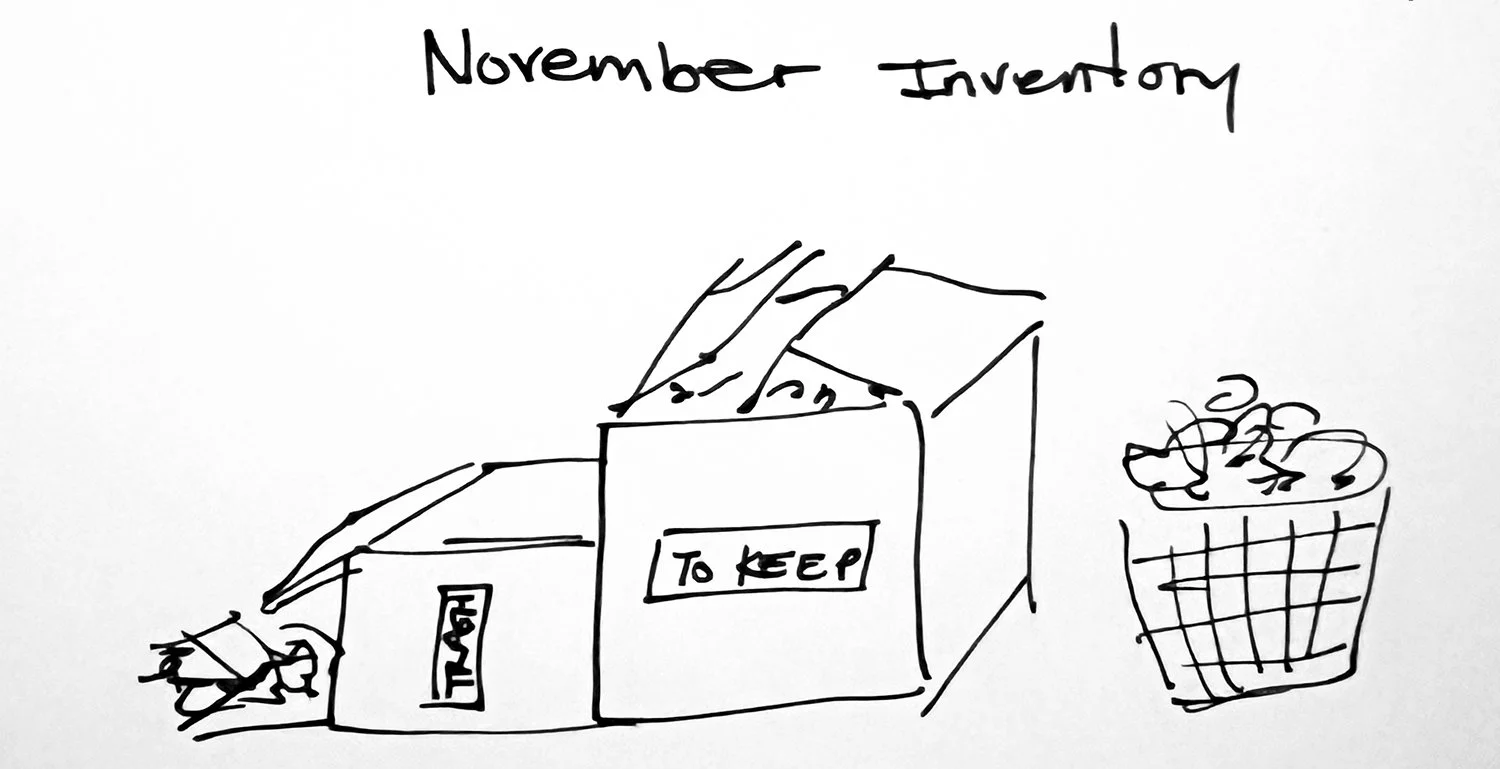
Every year around this time, I feel like I’m standing in the middle of my own studio floor, surrounded by boxes labeled: Keep, Toss, Transform.
The end of November has always been that soft threshold for me.
Not quite the end.
Not quite the beginning.
Just the moment where I pause, look around at everything I’ve made, everything I’ve tried, everything I’ve survived—and decide what’s coming with me into the next chapter.
This is my November inventory.
What I’m Carrying Forward
The world in my head
The drive to keep building the creative universe that I live in internally—and keep opening the door wider so other people can step further inside. amadeo amadeo is not just a brand; it’s a world. I’m choosing to lean into that fully.
Dadaist humor
The absurdity, the sideways jokes, the moments where things shouldn’t make sense but somehow do. Dadaism, to me, is a way of saying: I can tell the truth by breaking the rules of how truth is usually told. I’m carrying that with me in how I write, design, photograph, and perform.
Collaging in new ways
Not just paper, scissors, glue. Collaging feelings, timelines, faces, scents, archives. Analog collages, digital collages, and life collages. I’m bringing forward the urge to keep cutting things up and putting them back together in ways that tell a deeper story.
Painting as sculpture
I’m keeping the curiosity of: what even is a painting?
Layering, texturing, pulling paint across canvas like fabric, sculpting with brushstrokes, creating pleats and folds in color. Exploring color blocking not just as aesthetics, but as architecture.
Photographing fashion through abstraction
Continuing to photograph, but always with that amadeo amadeo twist: fashion as character, abstraction as truth, the body as a moving sculpture. Making images that sit somewhere between a campaign, a memory, and a glitch in reality.
Storytelling through scent
The Codex, the incense, the skin scents and rooms that smell like memory. I’m carrying forward my obsession with telling stories through top notes, heart notes, and drydowns—turning my life into olfactory chapters.
Clowning and the act of clowning
Bellamy, A. Clown, the Town Crier—the entire clown universe. I’m not leaving that behind. I’m deepening it. Clowning as a form of storytelling, as self-portrait, as emotional honesty. The clown as a mirror.
Learning through craft
I never want to sit stagnant. I’m carrying forward the commitment to keep learning—technically, emotionally, conceptually. To master things and then break the mold on purpose. To keep asking, what else can this become?
What I’m Leaving Behind
Burnout as a personality trait
I love to constantly be creating and thinking. That part I’m keeping.
But I’m leaving behind the version of myself that doesn’t know how to pause.
I want to build more space between ideas so curiosity has room to creep in instead of being chased.
Scattered ideas
My brain loves ten tracks at once. I’m leaving behind the chaos of letting each one run in a different direction with no center. I want all the different avenues—clowning, collage, fragrance, fashion, painting—to live on one path of identity. One story, many expressions.
Self-doubt and emotional clutter
I’m done carrying the heavy box of “Is this good enough?” and “Does this make sense?” My work makes sense in the way my world makes sense. That’s enough. I’m leaving behind the extra noise that tries to convince me otherwise.
What I’m Bringing In
Reinvention of the past
I don’t want to abandon where I’ve been; I want to reinvent it. I’m inviting in new ways of revisiting old work—new edits, new contexts, new mediums, new mashups. Old ideas with upgraded skins.
New scents, new collages, new worlds
More fragrances, more Codex chapters, more collage work, more layering of mediums. New explorations—geographically, emotionally, artistically. New ways of connecting people to the amadeo amadeo world.
A deeper amadeo amadeo universe
I’m calling in a richer, more immersive version of everything I’ve started: more entry points for people to step into, more continuity between the different projects, more cohesion in the chaos.
Investigation
Lots of deep digging into my past—family, memories, early work, first attempts—to understand what my future actually looks like. Letting the earlier versions of me sit at the same table as who I am now and who I’m becoming.
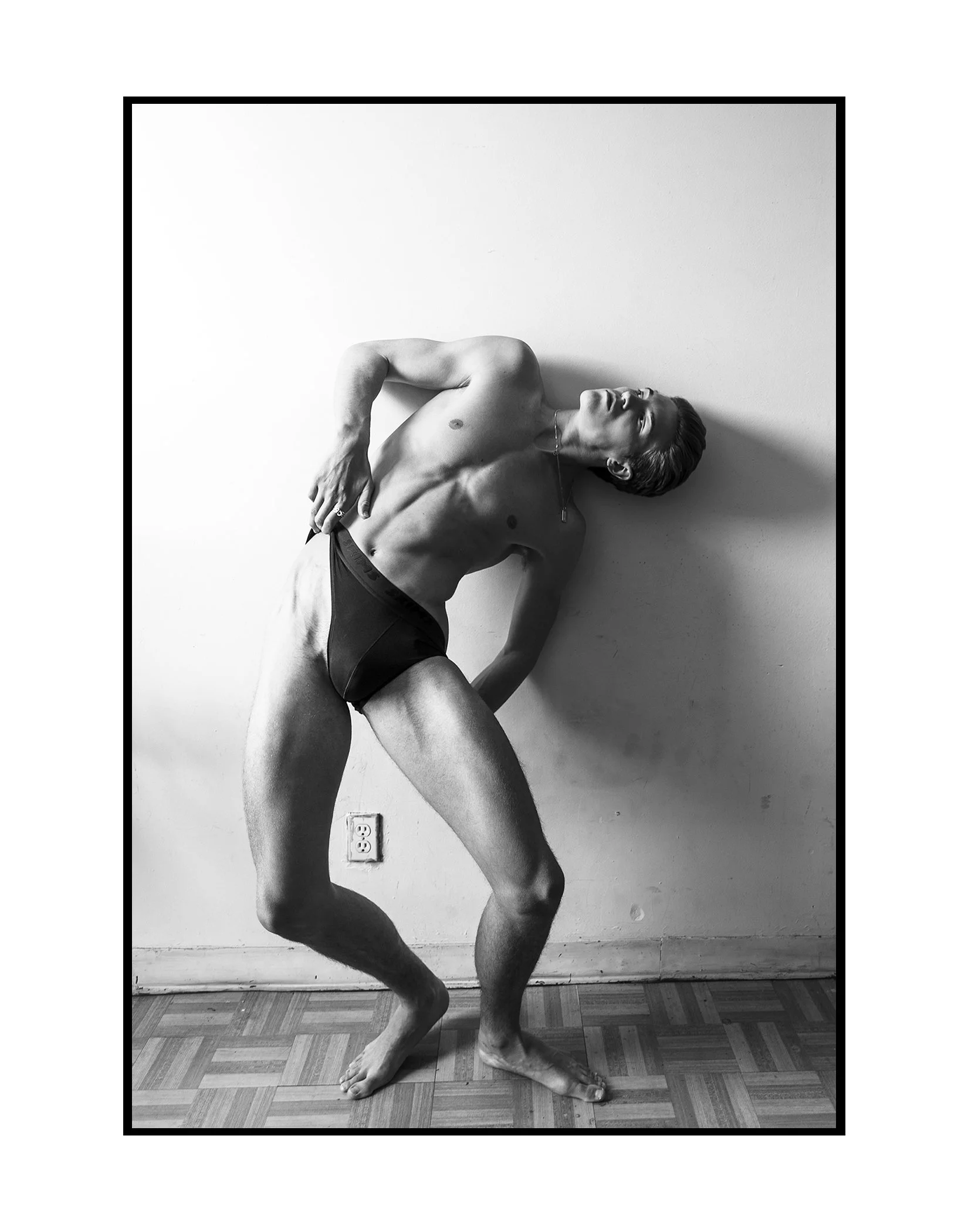
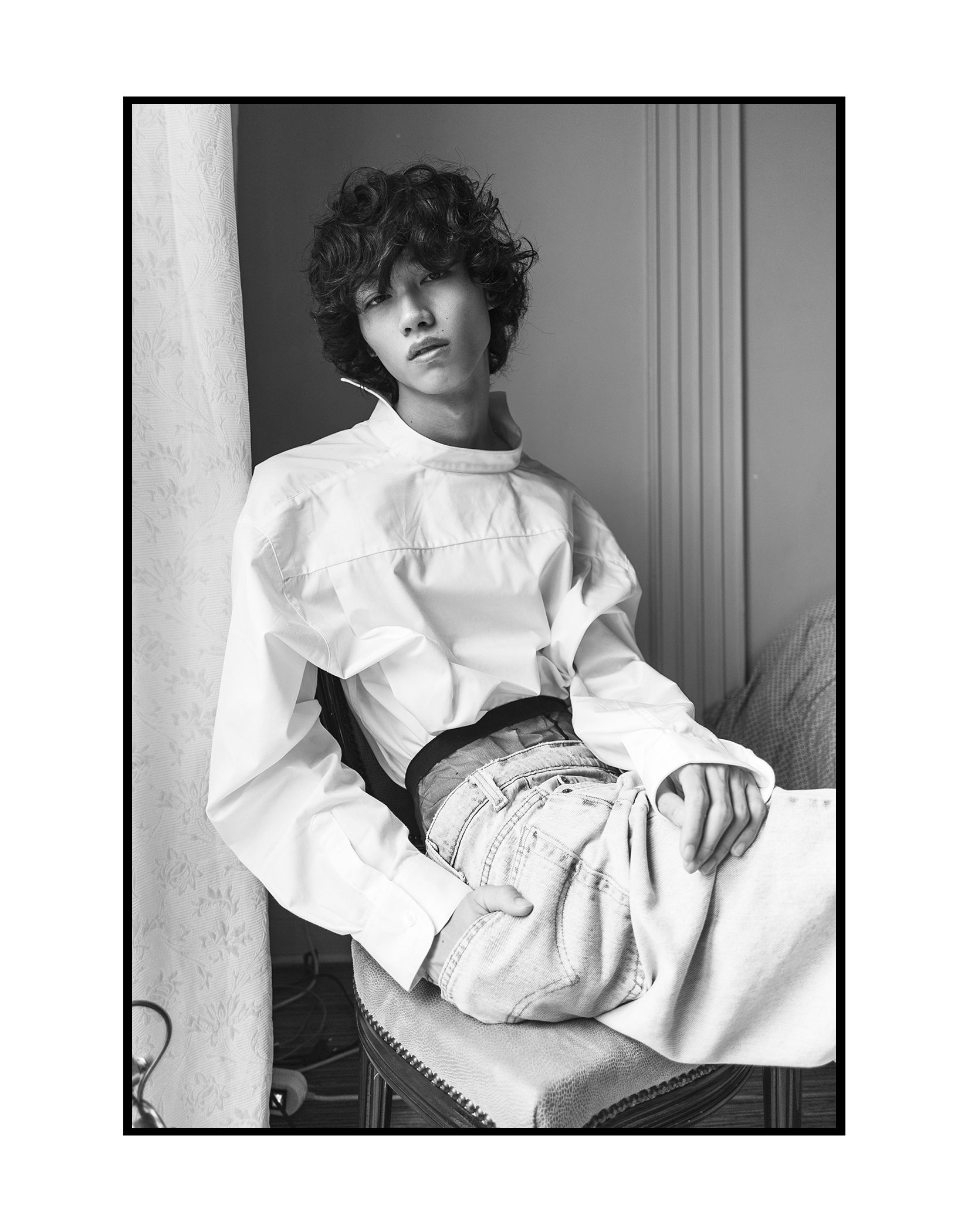
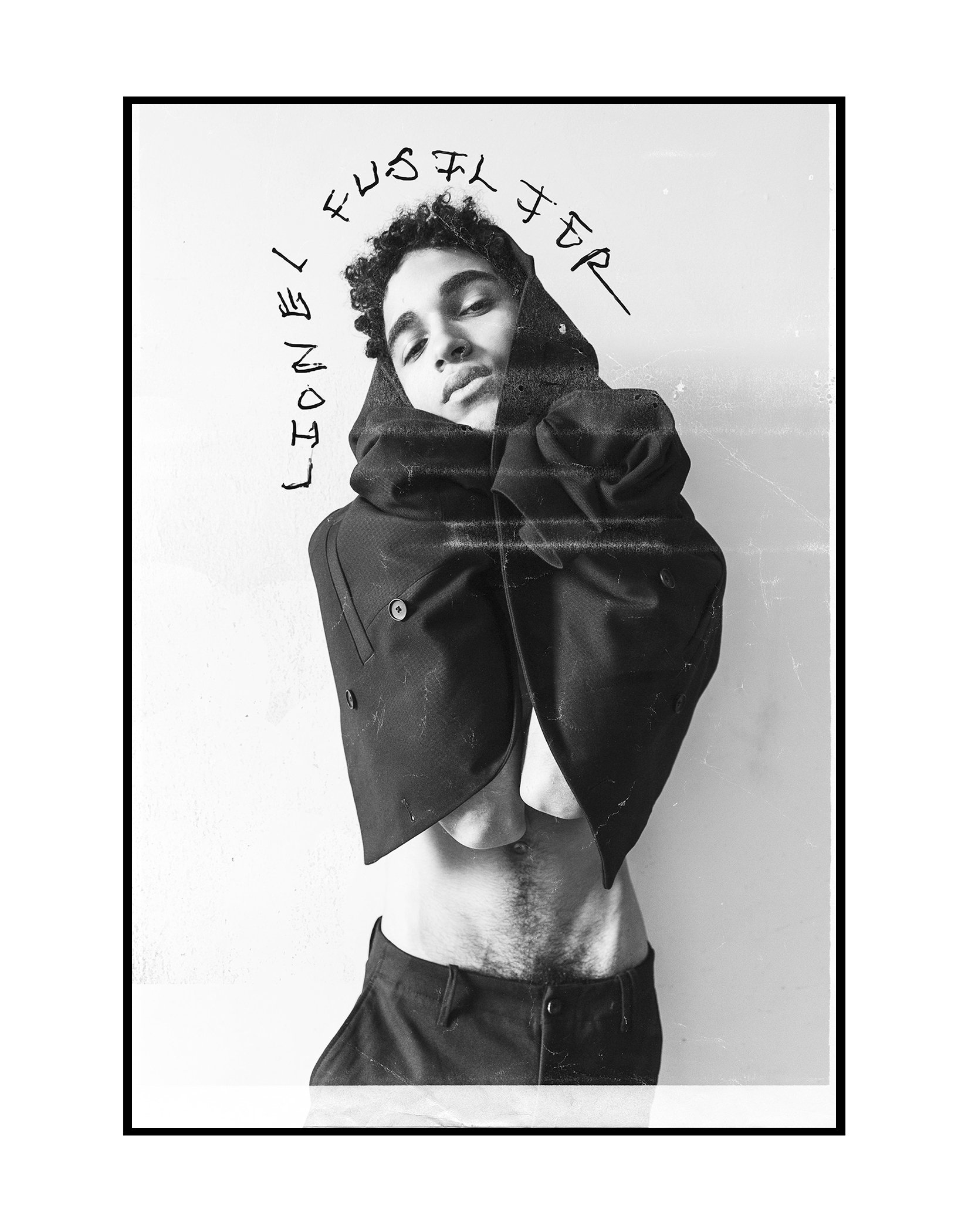
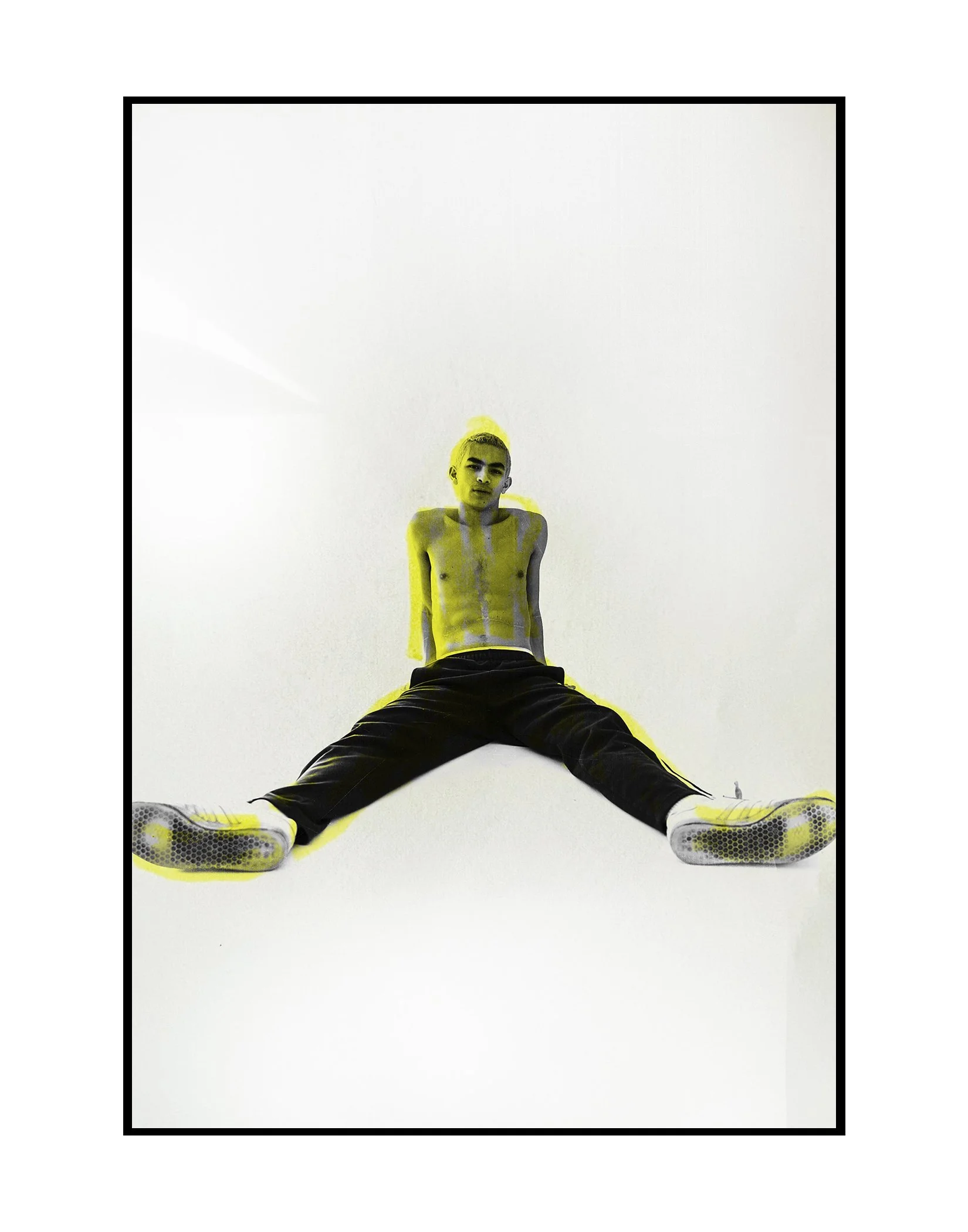
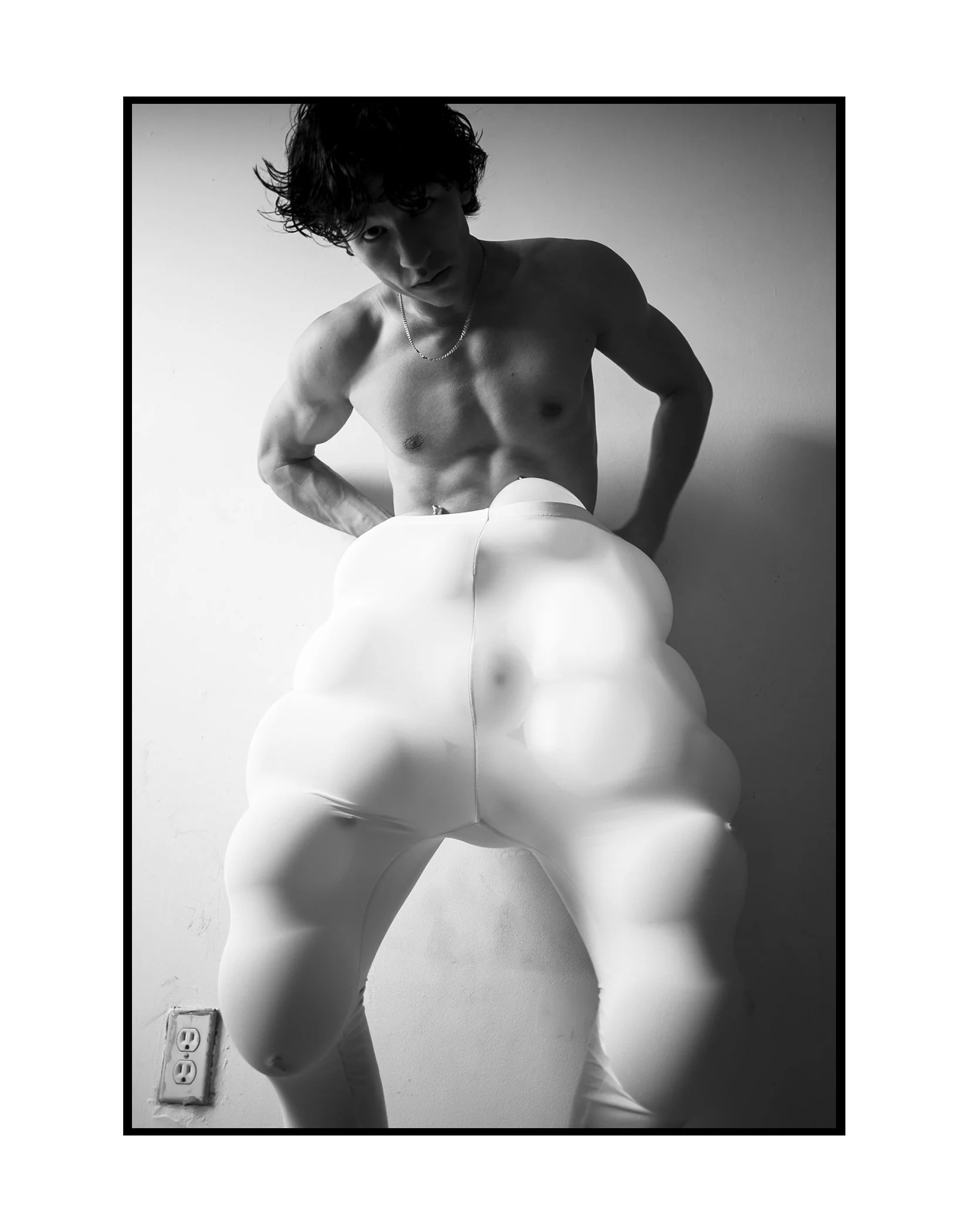
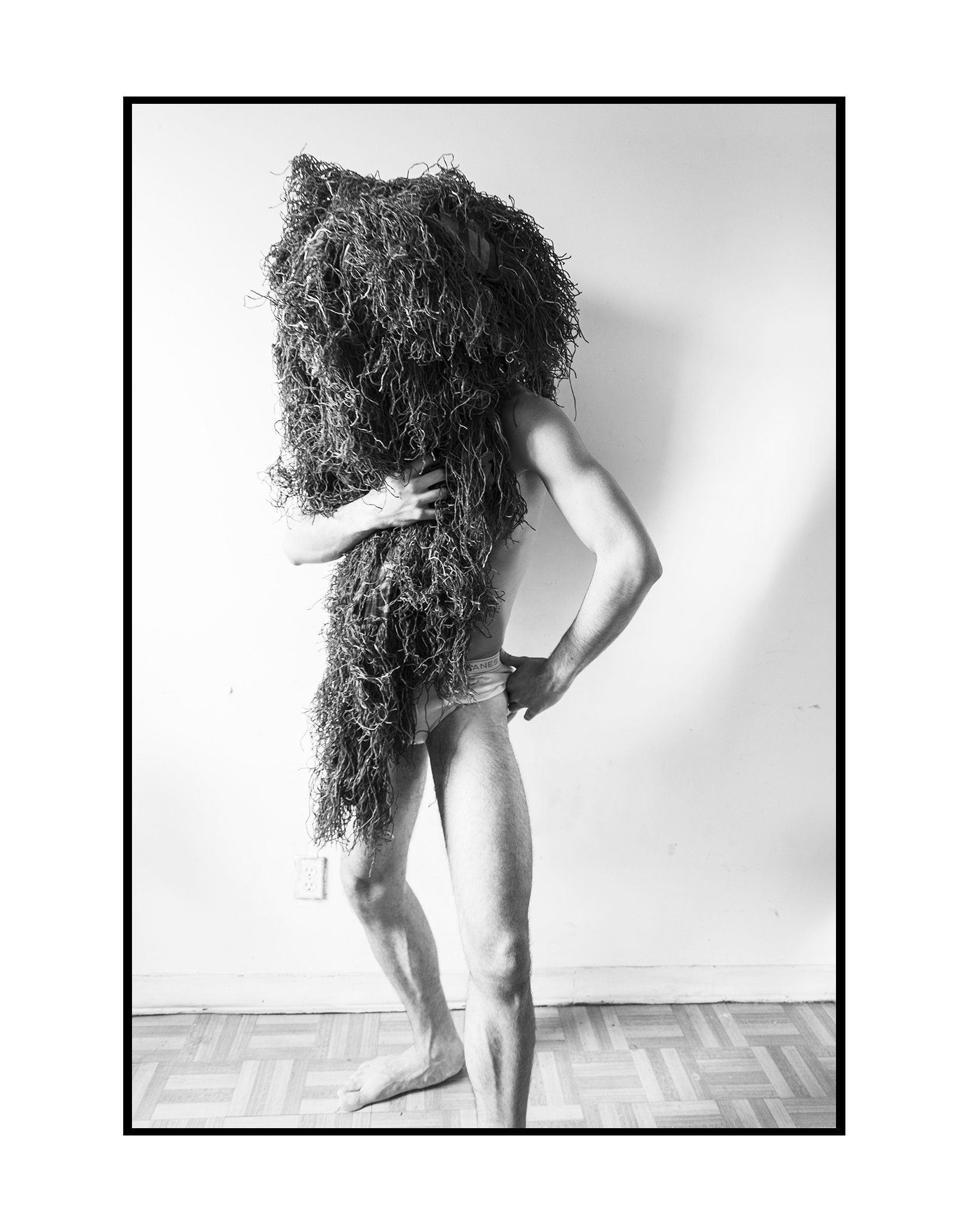
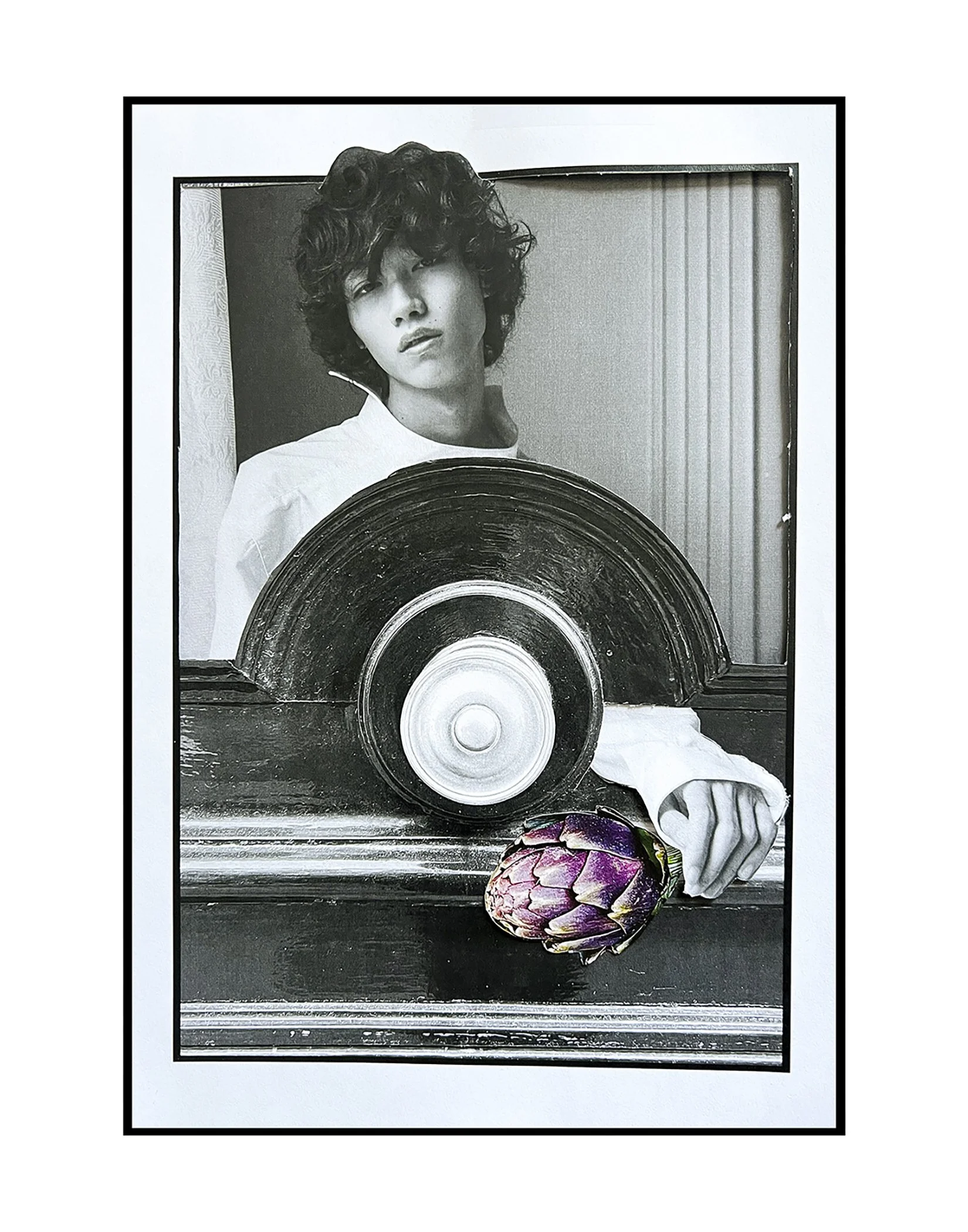
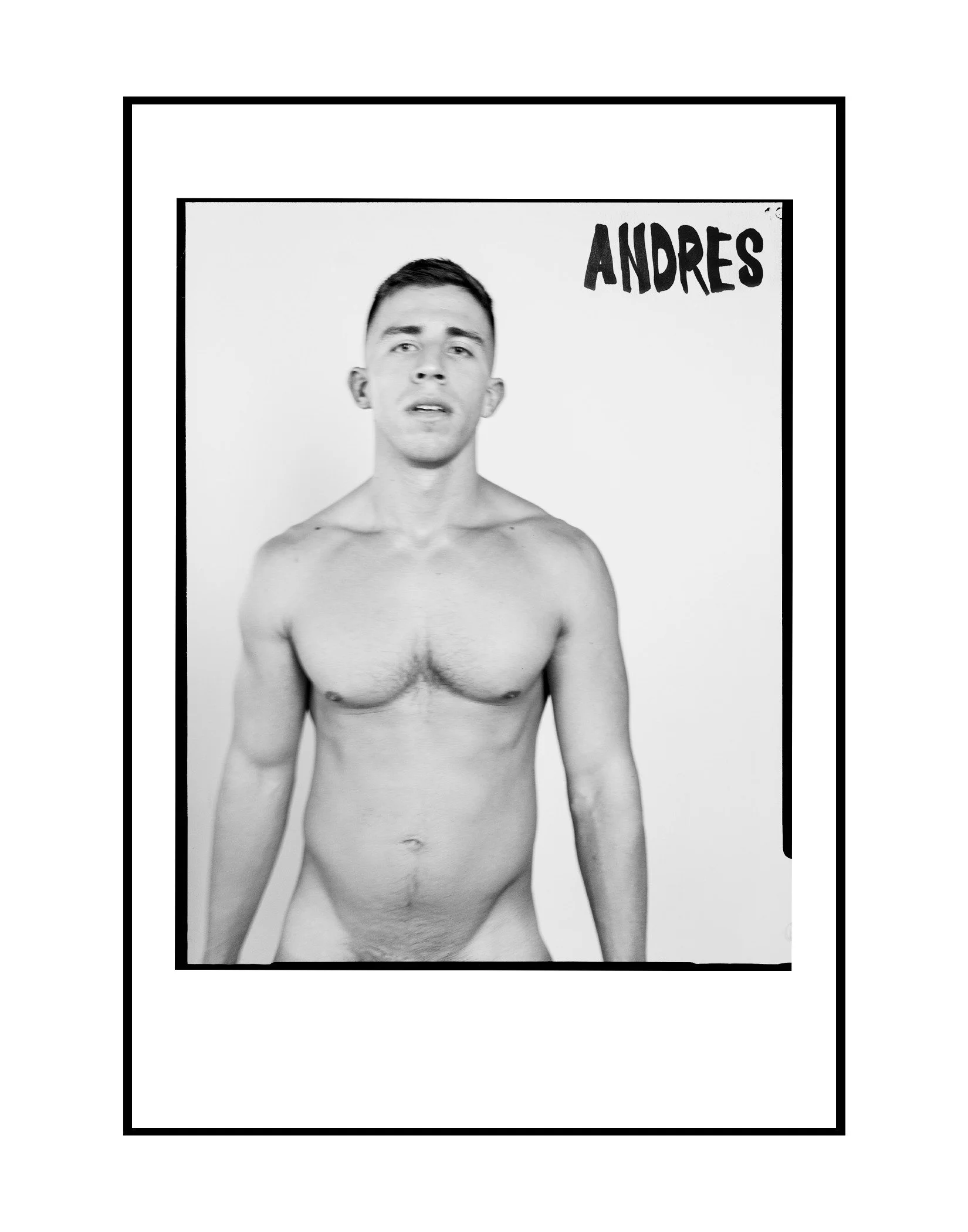
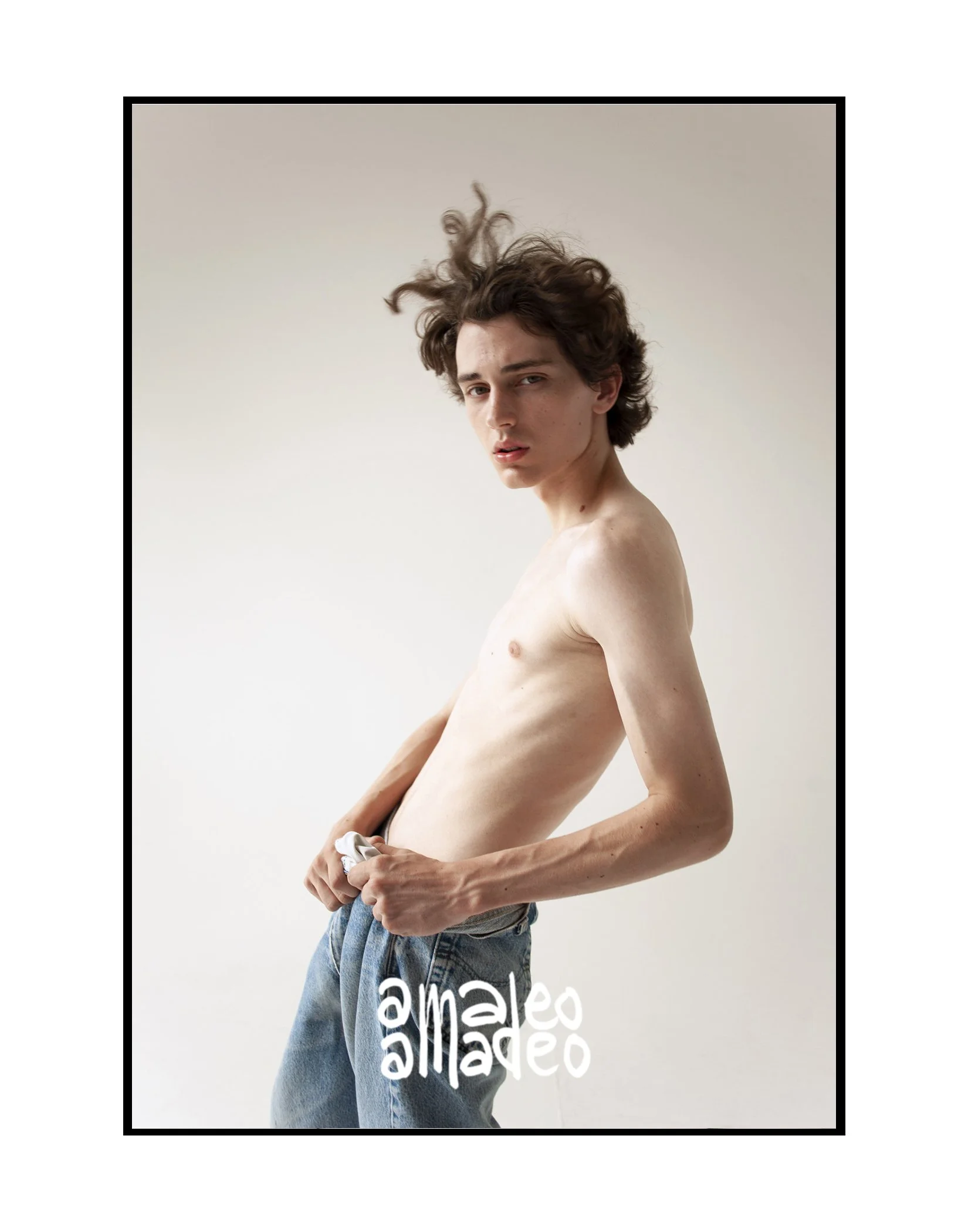
This is my inventory:
what stays, what goes, what’s invited in.
If you’re reading this, you’re already inside the world a little bit.
Next year, I want to pull you even further in.
— Anthony / amadeo amadeo
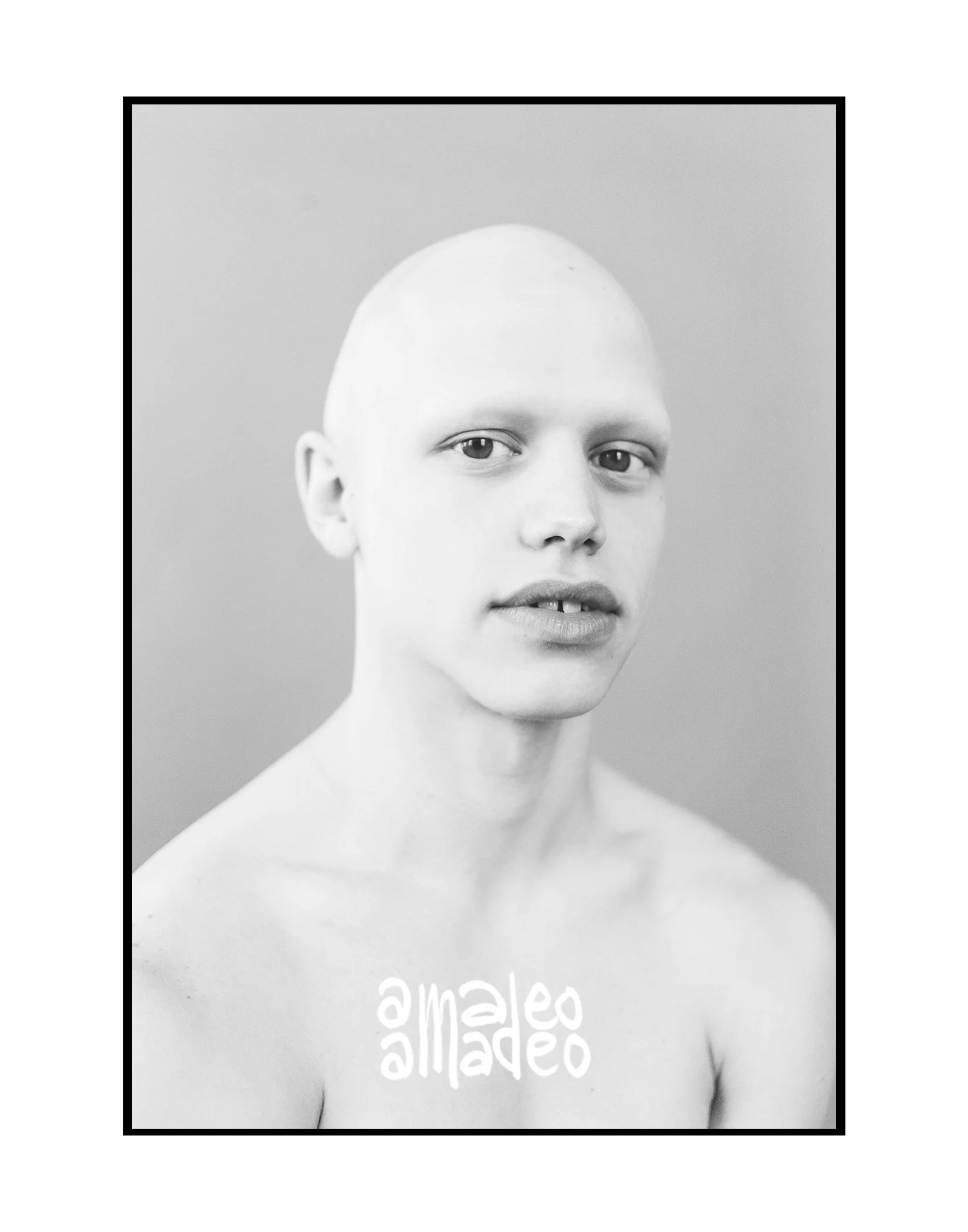
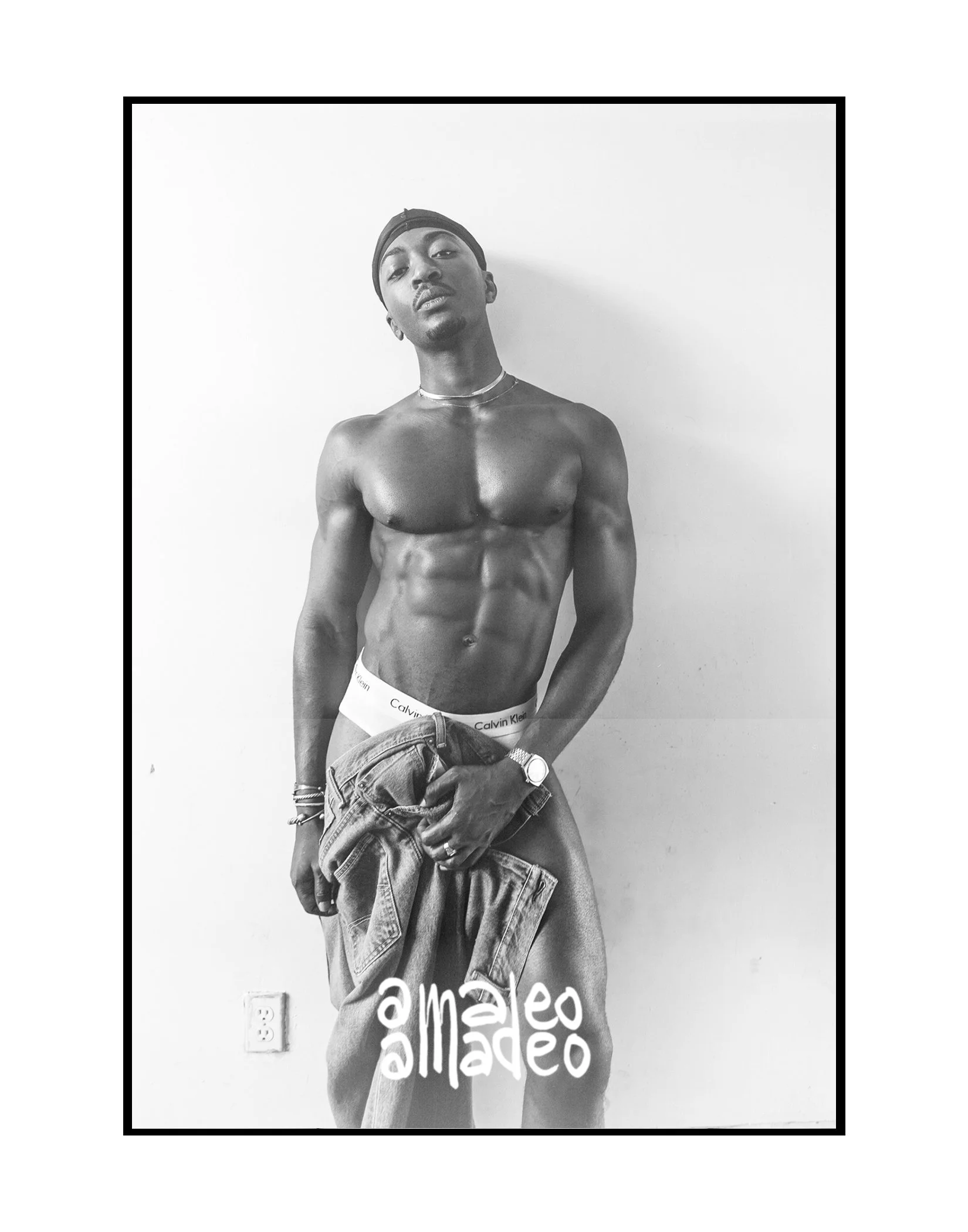
Why My Best Work Happens When I’m Not Looking At It
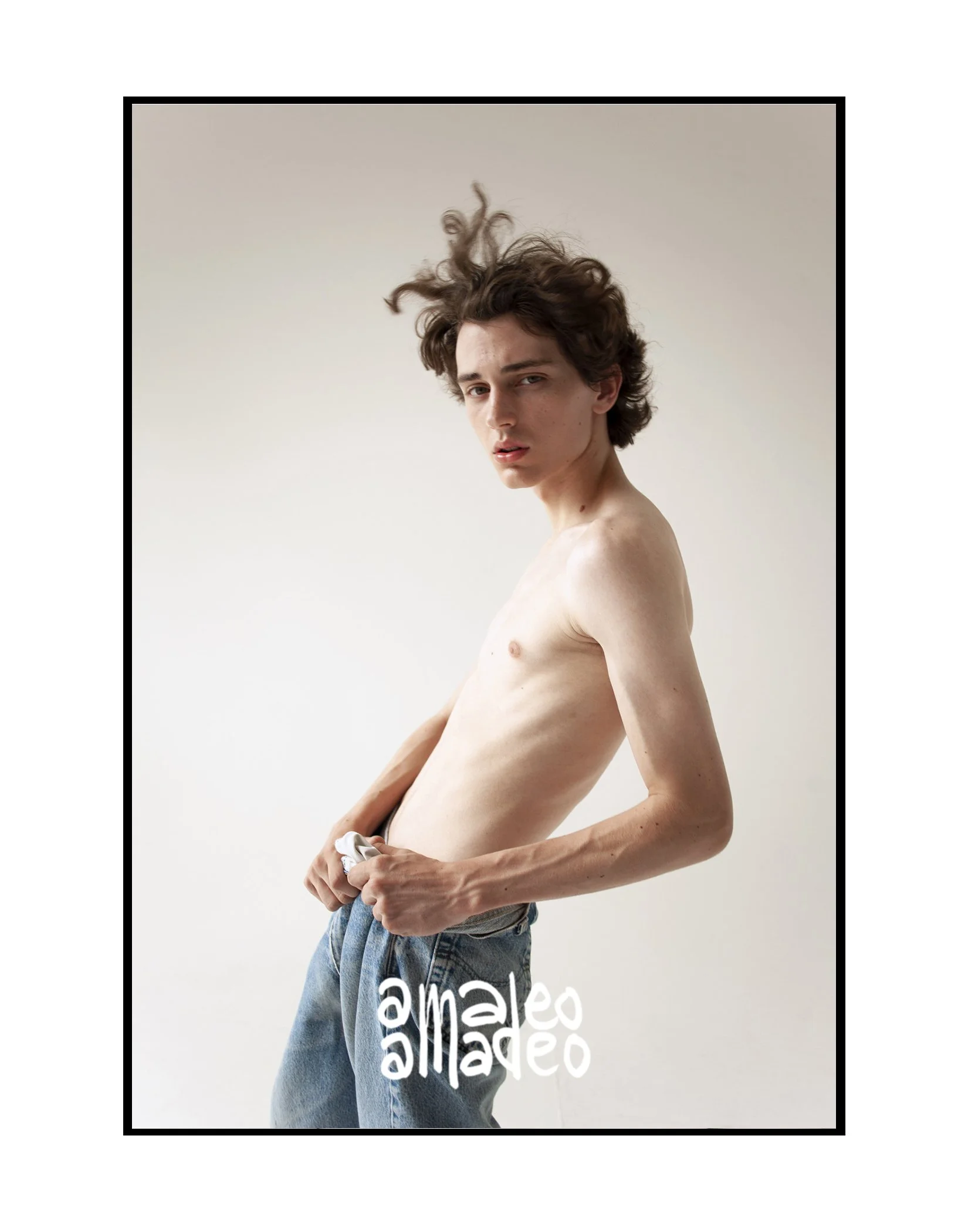
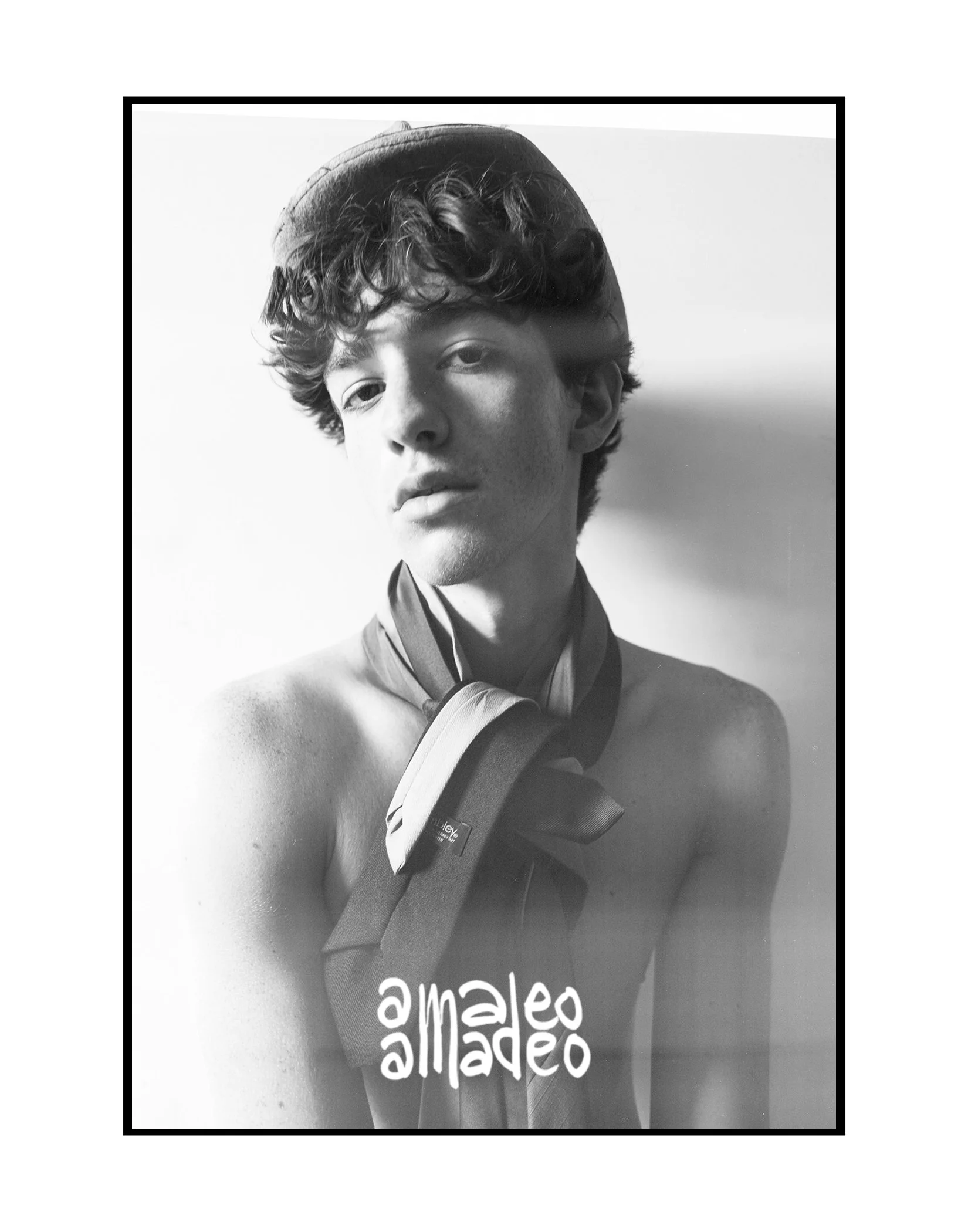
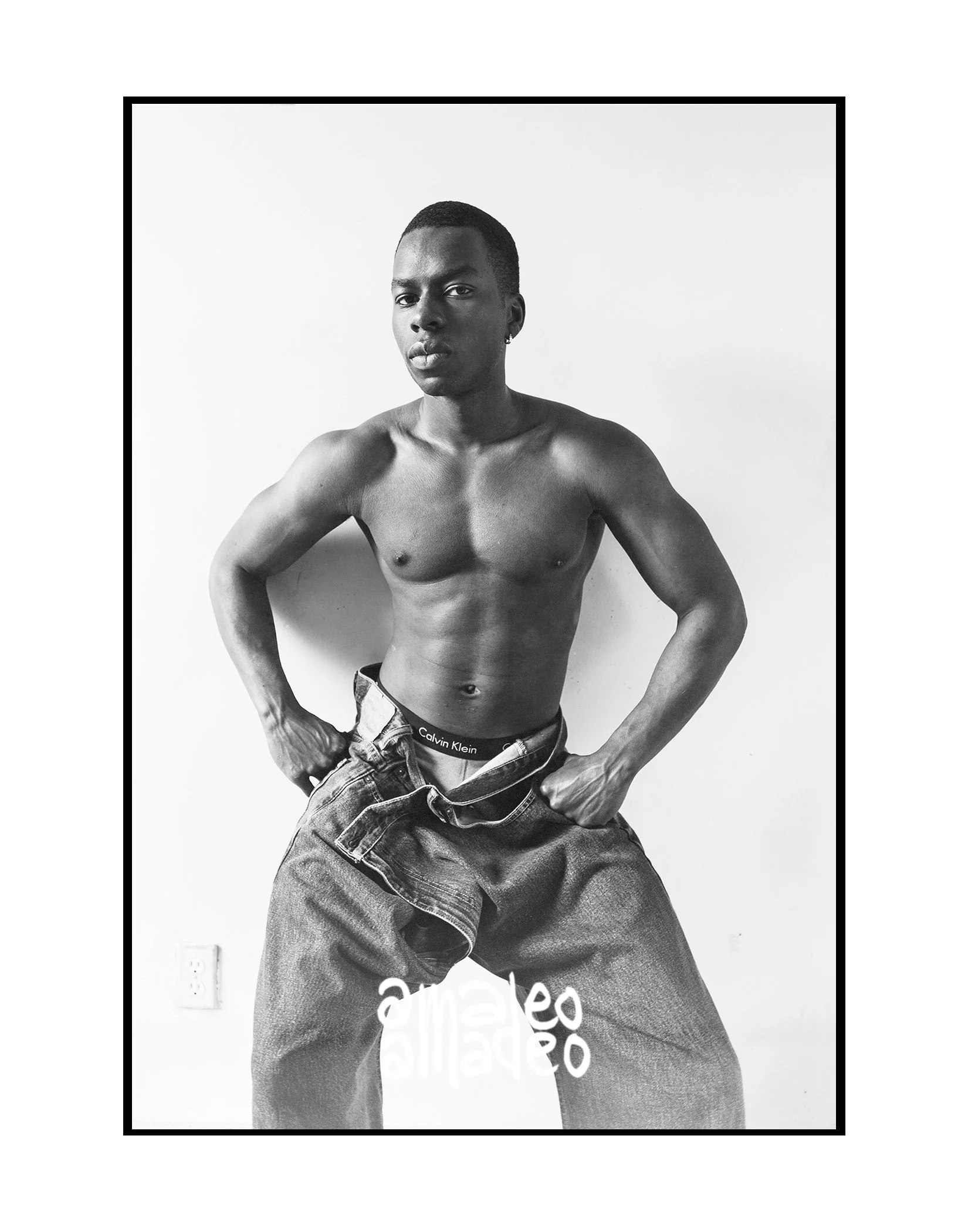
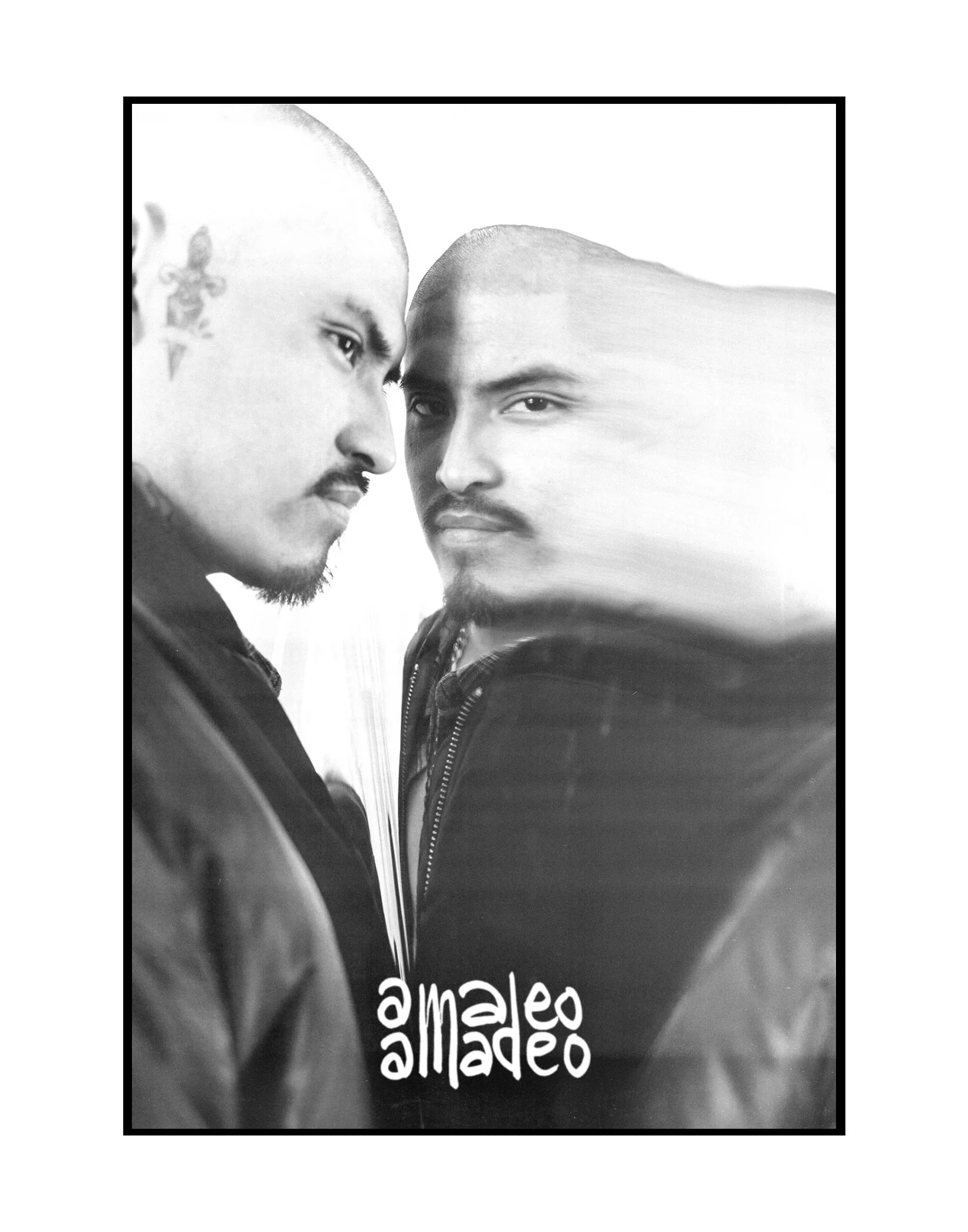
There’s a strange season that always hits me around the end of the year. It’s a kind of creative molting. Suddenly I want to drain every old file, every half-loved portrait, every forgotten RAW, and move it all into a new home. This year, that home has become my Tumblr—my private museum, my time capsule, my purgatory of past work where everything goes to live again, even if it’s only visible to people who bother to log in.
Why My Best Work Happens When I’m Not Looking At It
There’s a strange season that always hits me around the end of the year. It’s a kind of creative molting. Suddenly I want to drain every old file, every half-loved portrait, every forgotten RAW, and move it all into a new home. This year, that home has become my Tumblr—my private museum, my time capsule, my purgatory of past work where everything goes to live again, even if it’s only visible to people who bother to log in.
As I’ve been uploading my archives, something unexpected keeps happening:
I’m realizing how many images went unnoticed for years.
Images I barely glanced at when I took them.
Images I forgot existed.
Images that now—sitting in 2025 light—feel iconic.
It’s funny how my best work often waits for me.
It doesn’t yell.
It taps.
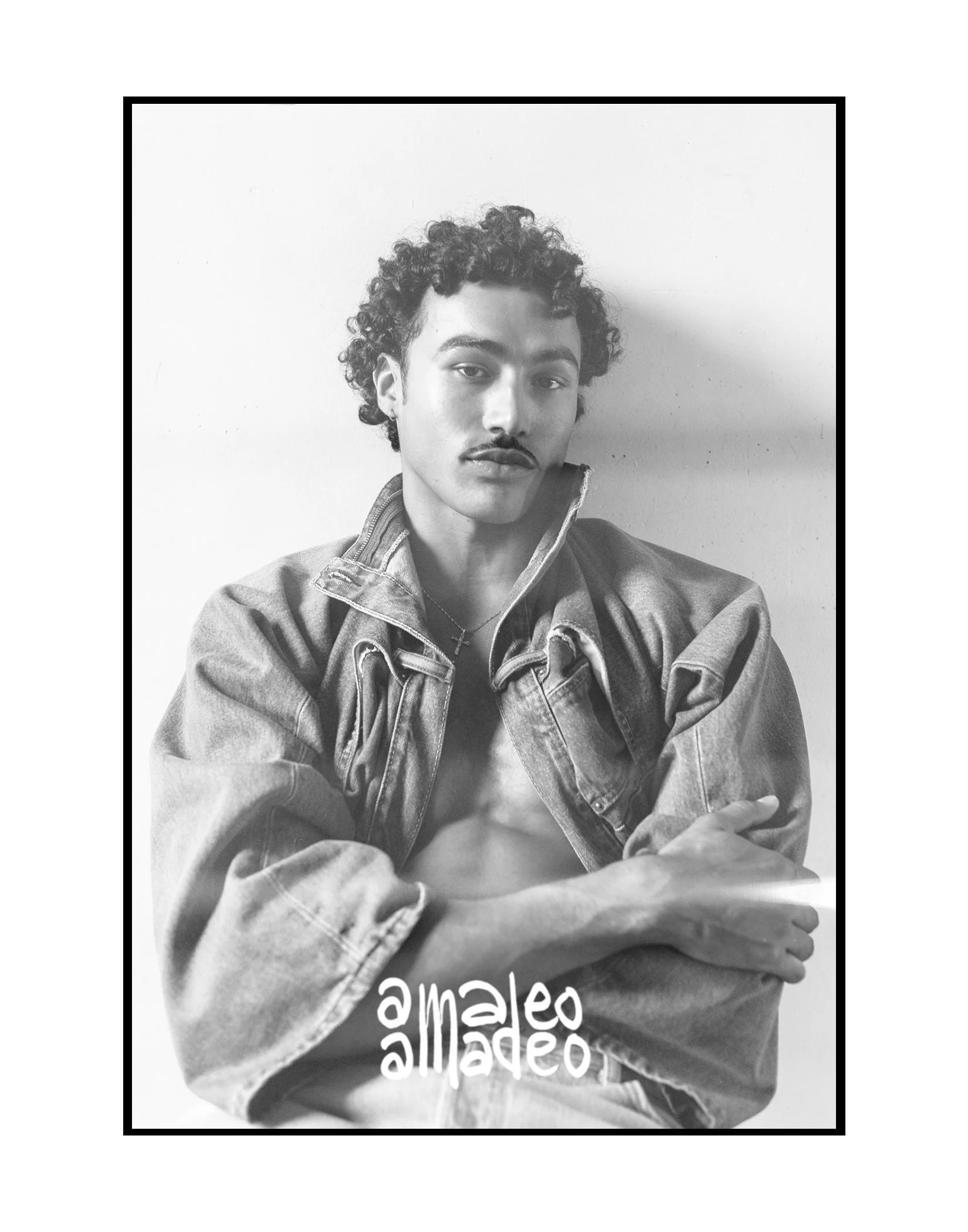
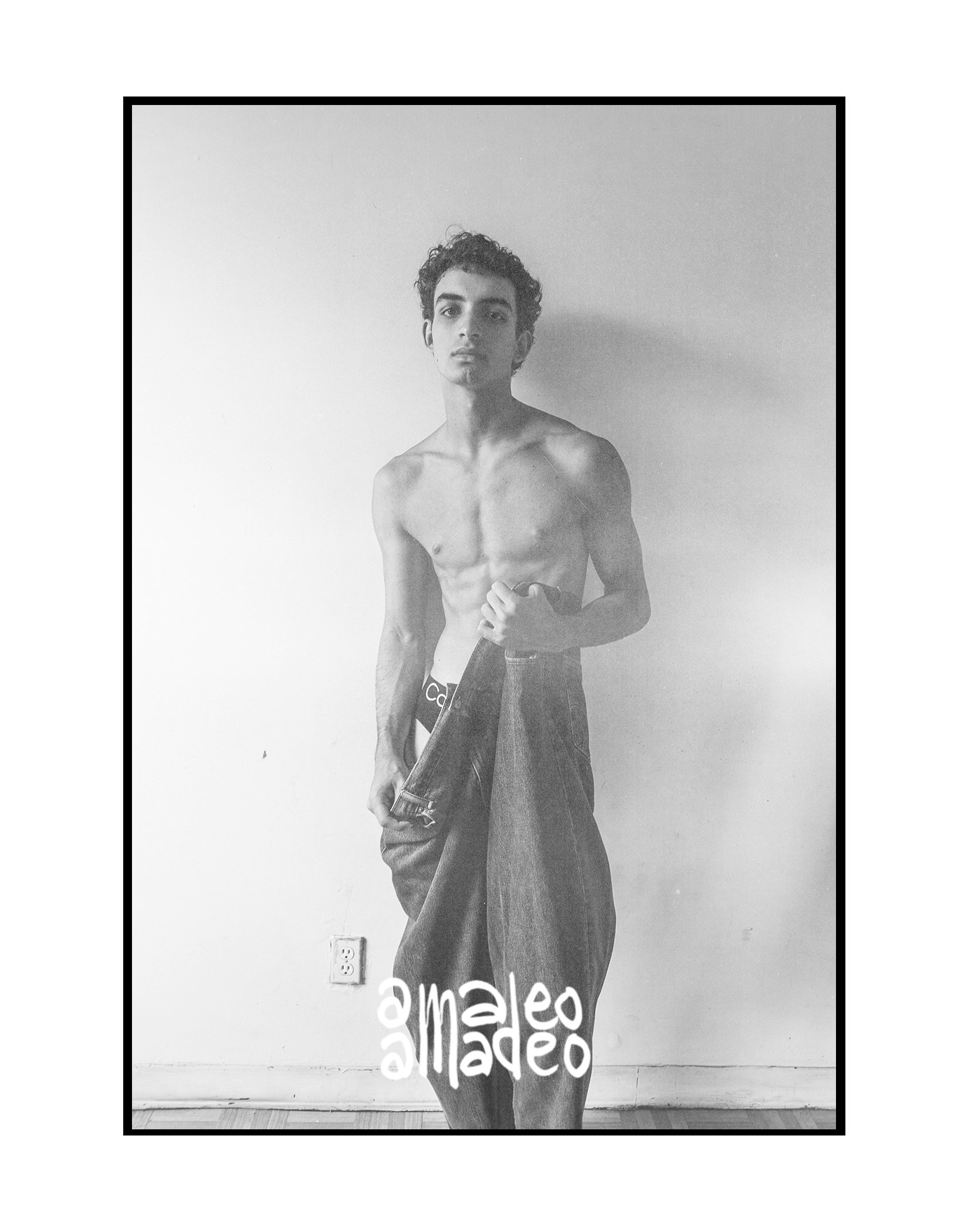
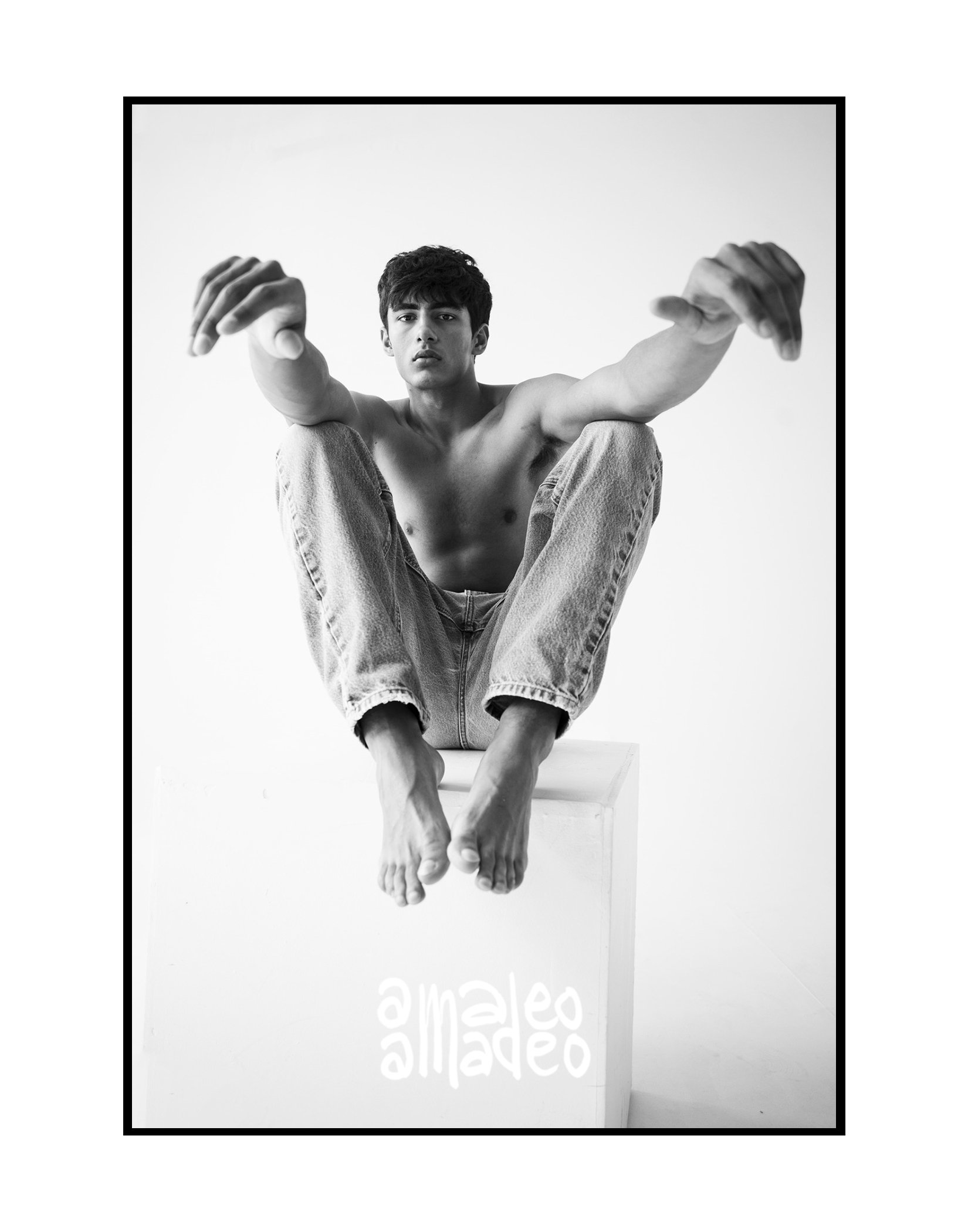
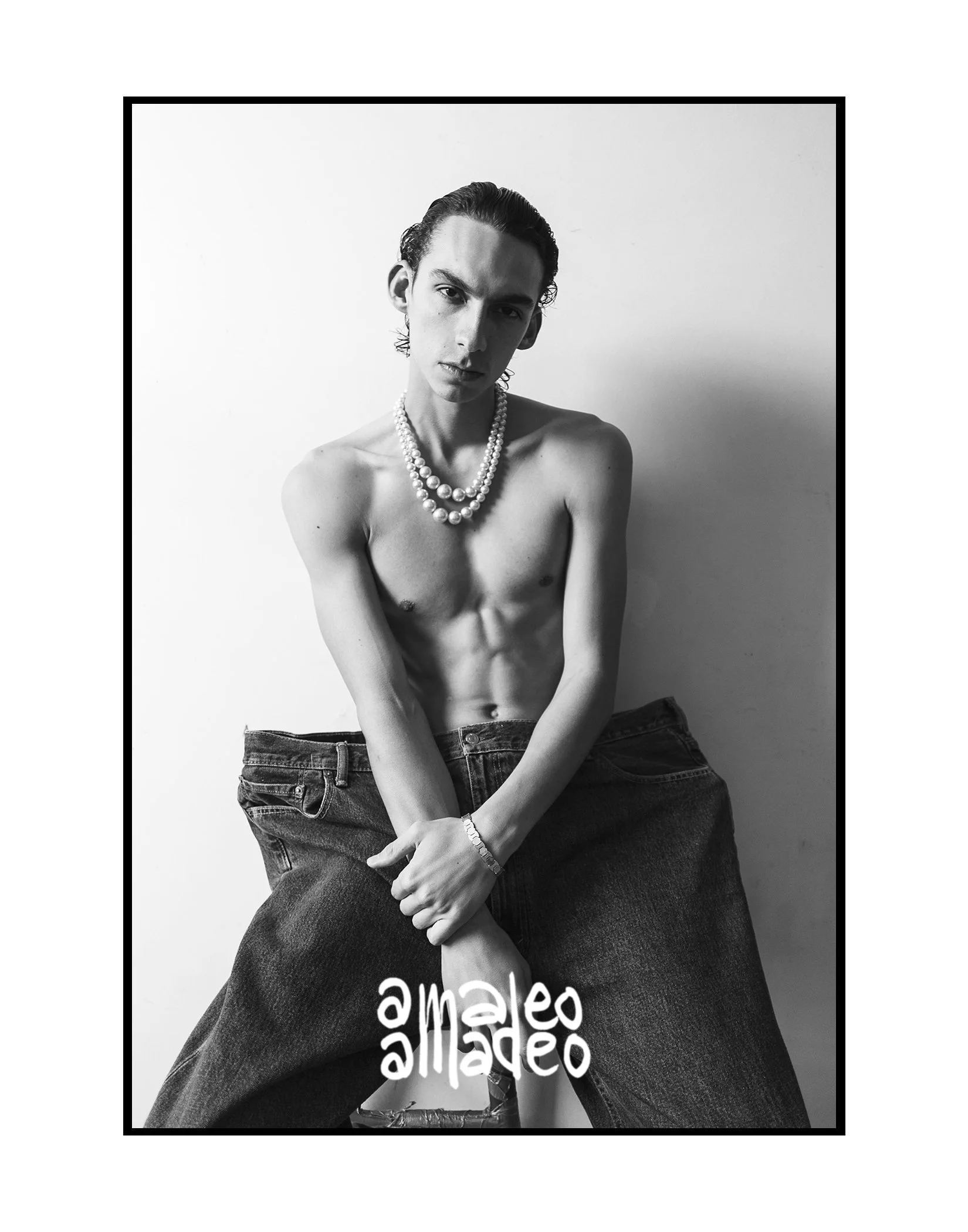
Memory Lives in the Contact Sheet
When I look at an old portrait, I remember everything from that day—more than I expect.
The weather.
The way the subject laughed through their nerves.
What we talked about in the first five minutes.
The exact second they stopped posing and started being.
I don’t shoot casually.
I put a lot of energy forward to get people comfortable as fast as possible.
To get them to open up.
To get them to step into images that might feel awkward at first—poses that look unnatural until they become art.
It takes trust.
And when someone trusts me enough to let themselves be seen, to lean into an uncomfortable position, to give me the version of them that isn’t rehearsed… that feels like the greatest gift a subject can offer.
It’s not lost on me.
I remember that trust years later, even when I barely remember the file name.
The Non-Linear Timeline of amadeo amadeo
I don’t move through my career in a straight line.
I never have.
The amadeo amadeo “timeline” is a non-linear organism—something breathing, pulsing, shifting. It’s like a giant memory map where past images suddenly make more sense in the present, and future ideas reach back to pick up pieces I left behind.
Sometimes a portrait I shot five years ago fits better next to the work I’m making now than it ever did then.
Sometimes I make something today that feels like a missing puzzle piece from 2019.
Sometimes the future asks for the past.
That’s why archiving doesn’t feel like “storage” to me.
It feels like rearranging DNA.
Digital Clutter, Digital Discovery
I only shoot digital, which means the archive is huge.
Massive.
A never-ending scroll of unused frames and alternative angles the models can grab for their books.
The blessing and the curse of digital photography is that I always shoot more than I ever need.
But that also means there are thousands of moments that never saw daylight.
And now, going through everything with new eyes, I’m realizing the overlooked frames are sometimes the most honest ones.
The blink.
The half-turn.
The breath before the pose.
Back then, they felt too raw.
Now, they feel like the point.
It makes me wonder how many other “unseen” parts of my life are waiting for me to come back to them with more patience and a different perspective.
The Work Ages With Me
The archive is aging like a living thing.
And I’m aging with it.
Sometimes I think I’m revisiting old work… but the truth is, the work is revisiting me.
Calling me out.
Reminding me of ideas I never followed.
Whispering new directions.
Showing me what I didn’t have the eyes for back then.
Maybe that’s why my best work happens when I’m not looking at it.
Because sometimes I’m too close to see it clearly in the moment.
Sometimes the image needs time.
Sometimes I need time.
This season of re-uploading, revisiting, and re-seeing has been unexpectedly grounding.
It’s reminding me why I do what I do.
It’s showing me the threads that have always been there—portraits, faces, trust, tension, vulnerability, the ability to build comfort quickly, the quiet intimacy between artist and subject.
And it’s reminding me that the work is far from over.
If You Want to Explore the Archive
You can see the ongoing upload process on my Tumblr—if you’re logged into Tumblr, that is.
(You’d think it was 2009 the way the platform makes you enter the gates.)
But if you do choose to look, here’s my request:
Find one image that speaks to you and tell me the first story it reminds you of.
No overthinking.
Just instinct.
The best ways into the future always start with revisiting the past.
— Anthony / amadeo amadeo
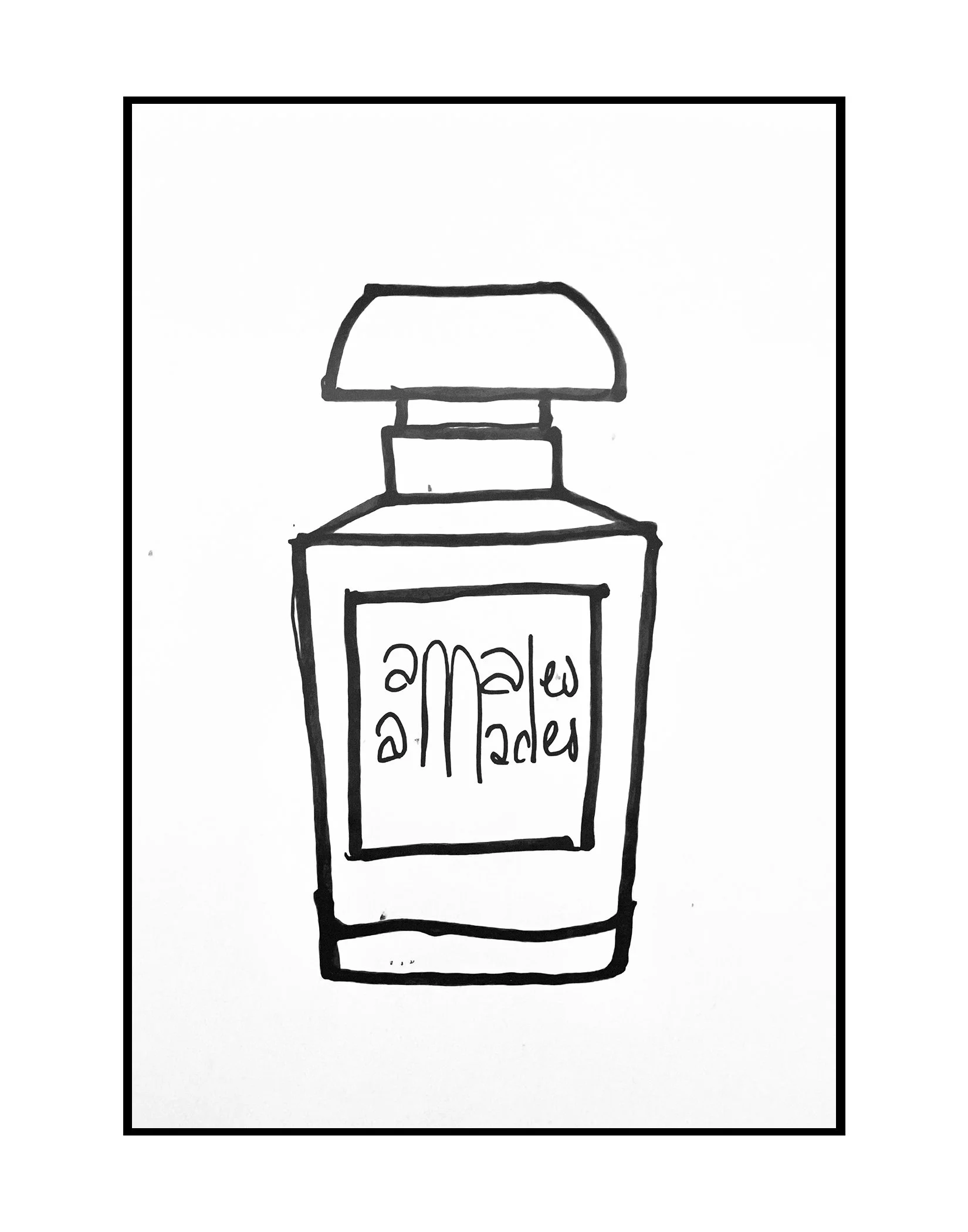
**What Do I Currently Smell Like?
There’s a running joke that if you’re standing within twenty feet of me, you’re inside my personal weather system. A micro-climate. A fog bank of oud, smoke, balsam, civet, aldehydes, apple skins, and whatever else I’ve decided to coat myself in that morning. Fragrance for me isn’t an accessory—it’s a psychological experiment I willingly run on myself and the unsuspecting public every day.
(A Seasonal Confession)**
by Anthony Amadeo
There’s a running joke that if you’re standing within twenty feet of me, you’re inside my personal weather system. A micro-climate. A fog bank of oud, smoke, balsam, civet, aldehydes, apple skins, and whatever else I’ve decided to coat myself in that morning. Fragrance for me isn’t an accessory—it’s a psychological experiment I willingly run on myself and the unsuspecting public every day.
This season, I’m living inside ten scents. Not ranked. Not organized. Not meant to make sense. But somehow, in the way of chaos becoming cohesion, they all work together to guide my day: sunrise, errands, afternoons in the studio, dinner, night walks, bed. Here’s what I currently smell like—spelled out so you can follow the breadcrumb trail of sillage I leave behind.
Black Orchid Reserve — Tom Ford
There’s a moment at sunset when the city gets impossibly cinematic—when the sidewalks feel like the set of a noir film and everyone suddenly looks more interesting. That’s when I spray this. It’s the older brother of the original Black Orchid, the one who went abroad, got mysterious, and came home with secrets.
The truffle at the top hits like a velvet punch. Dark. Smooth. Mature in the way a dimly lit hotel bar feels mature. It gathers people the way streetlights gather moths. I wear this when I want strangers to wonder if they’ve met me in another life.
Promise — Frederic Malle
This is my crisp-leaf, bright-sun morning. A cold autumn day in New York where everything feels like it’s glowing in 4K. The apple in this is not “apple,” it’s apple skin under a fingernail—fresh, crisp, bright, and a little defiant. It has the type of spice that feels optimistic.
I wear this on days when I need the world to feel lighter. It turns an ordinary coffee run into an orchard stroll.
Jungle Jezebel — Sarah Baker
Chaos bottled. A Bazooka bubblegum pop followed by a rotten banana drop. A civet-streaked performance art piece. It’s one of the only fragrances that makes me smile while also slightly terrifying the people around me.
When I wear this, the day becomes unpredictable. People either lean in or walk away.
The longevity? A full-day novella in scent form.
I wear it when I want to break the fourth wall of daily life.
Khanjar — OmanLuxury
This is the scent equivalent of rolling on the forest floor beneath a canopy of oud-soaked branches. Barnyard but opulent. Dirty but couture.
It’s a scent with gravity—people orbit around you without meaning to.
I save this for the darker hours—when the air gets still and the night feels like a secret. It’s warm, damp, feral elegance.
Hinoki — Bottega Veneta
My human-sized wooden cabin in a bottle.
Warm, resinous, meditative. The type of scent that doesn’t just sit on the skin—it wraps itself around you like a wool blanket that just came off the line.
When I wear this, I feel grounded. Present. A little more human. It clings to coats and scarves for days, like a ghost of good memories.
Occur! — Avon (1965)
My bedtime ghost of the 60s.
I wear this after a shower, right before bed, when the house is quiet and the world feels soft. Aldehydes, civet, musks, oak moss—memories of great aunts adjusting their jewelry, uncles kissing cheeks, and the hum of warm kitchen lights.
This scent is comfort. It’s lineage. It’s time travel.
Saffron Secret — Maison Crivelli
Imagine walking through an old spice market at golden hour—warm wood underfoot, everything glowing amber. That’s this scent.
It’s prickly and silky at the same time, like velvet warmed by sunlight.
I wear it in those in-between hours—when the day is fading but the night isn’t ready to begin. It’s one of my favorite cold-weather spices.
Basilicum — Fueguia
My morning shock to the system.
A blast of basil and lavender—like sticking your head in a summer garden when it’s still dew-wet. I use this when I need oxygen for the brain.
It’s the olfactory equivalent of putting one foot out from under the blanket to cool down.
Secretions Magnifiques — Etat Libre d’Orange
This scent is misunderstood.
I adore it. Marine, metallic, milky, iris-driven strangeness.
Most people think this is chaos in a bottle, but on my skin it blooms into something intimate and magnetic. I layer it under heavy ouds to give them a pulse. Or I wear it alone if I want to confuse people in elevators.
It’s bright, cold, and familiar in an unsettling way—like déjà vu.
Né il giorno né l'ora — Filippo Sorcinelli
I wore this in Paris and spent the entire trip wondering if I smelled incredible or like someone who had just walked uphill for too long.
It’s brutalist. Severe. Blunt cedar to the face that dries down into something surprisingly quiet.
I still haven’t decided if I love it or if I’m traumatized by it.
But I need a bottle.
To remember Paris.
To chase the confusion.
To re-live that scent-psychology experiment.
So What Do I Currently Smell Like?
All of these.
At once.
Layered, rotated, mood-dependent, weather-dependent, curiosity-dependent.
I wear fragrance like someone building a world. Each scent is a portal into a different version of myself—the cozy one, the feral one, the nostalgic one, the experimental one, the Paris one, the “I need to shock my system awake” one.
Scent moves me through the day.
It changes the way I walk.
It changes the way people look at me.
It’s a conversation I’m having with the air around me.
This is what I currently smell like—my seasonal olfactive diary. Ten bottles, endless stories, and a very crowded coat.

Samuel by Anthony Amadeo
This series was created with Samuel, signed to The Lions.
Photographing him was effortless—he carries a quiet strength and elegance that immediately translated into something sculptural.
This series was created with Samuel, signed to The Lions.
Photographing him was effortless—he carries a quiet strength and elegance that immediately translated into something sculptural.
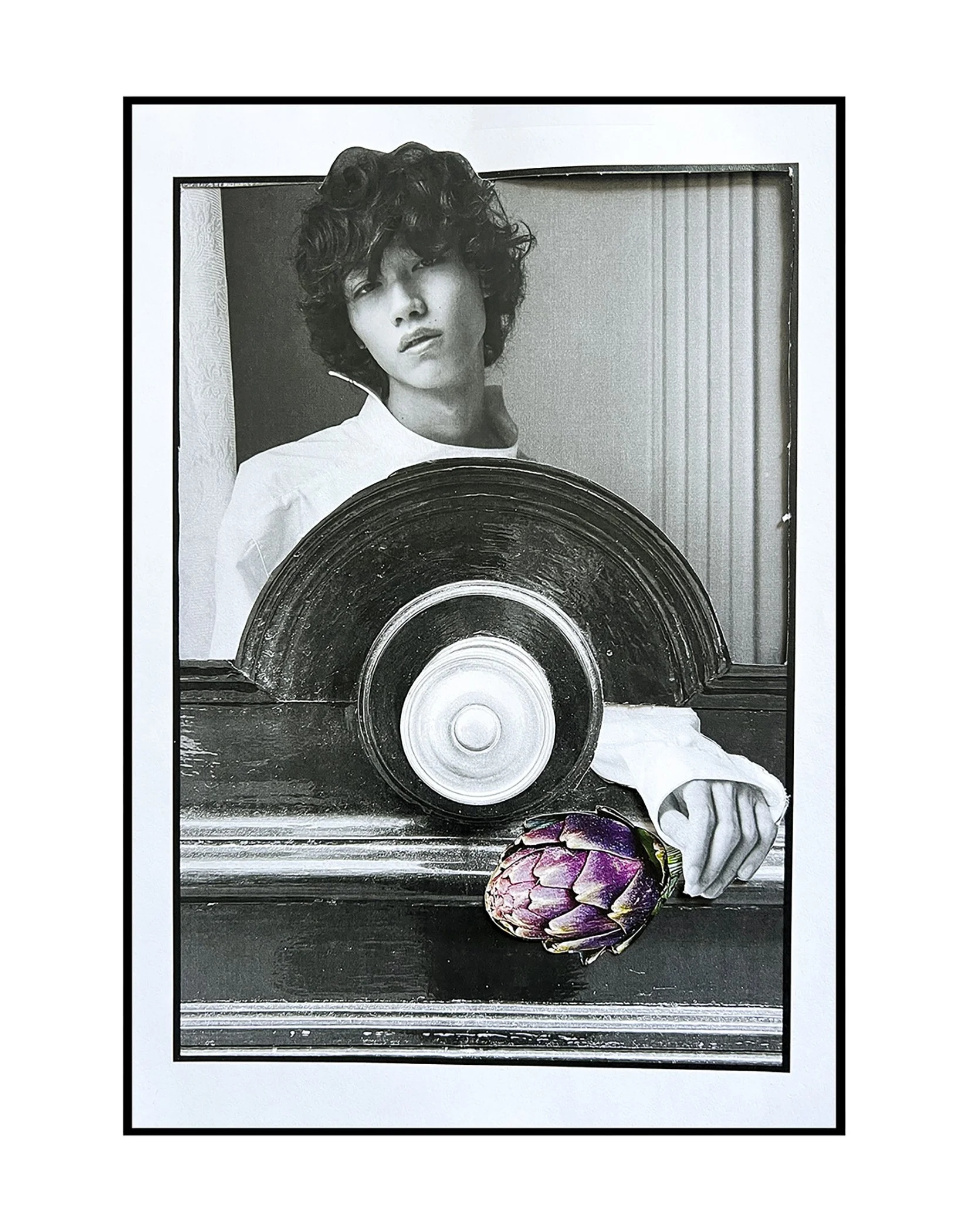
After the shoot, I turned the images into a set of analog collages. I love the process of cutting, layering, and reconfiguring—turning one image into two, and two into one. These pieces became about reflection, duality, and energy. Samuel’s presence—calm yet powerful—made the work come alive.
There’s something about collage that always feels like movement captured mid-thought. It’s part instinct, part accident, and all rhythm.
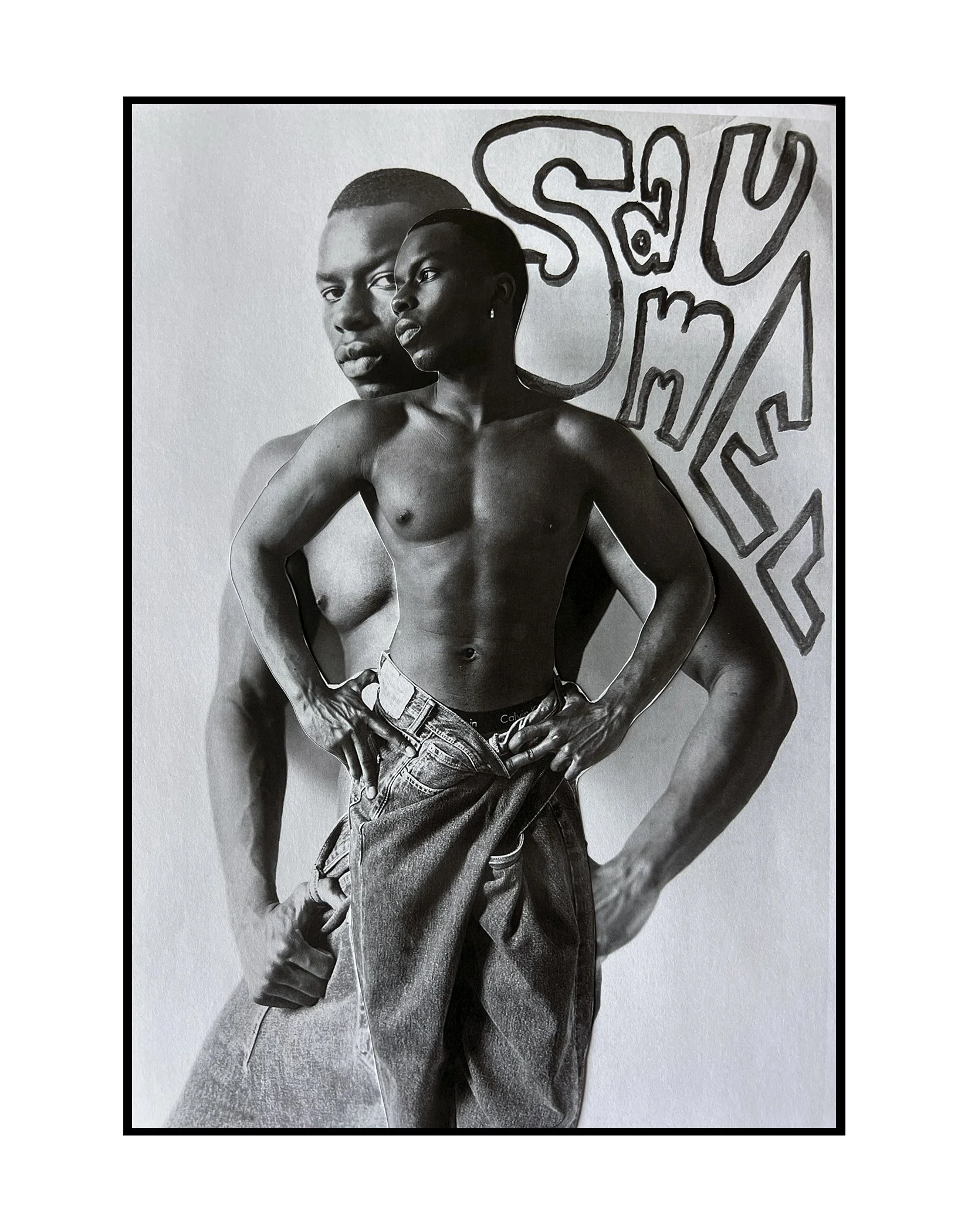
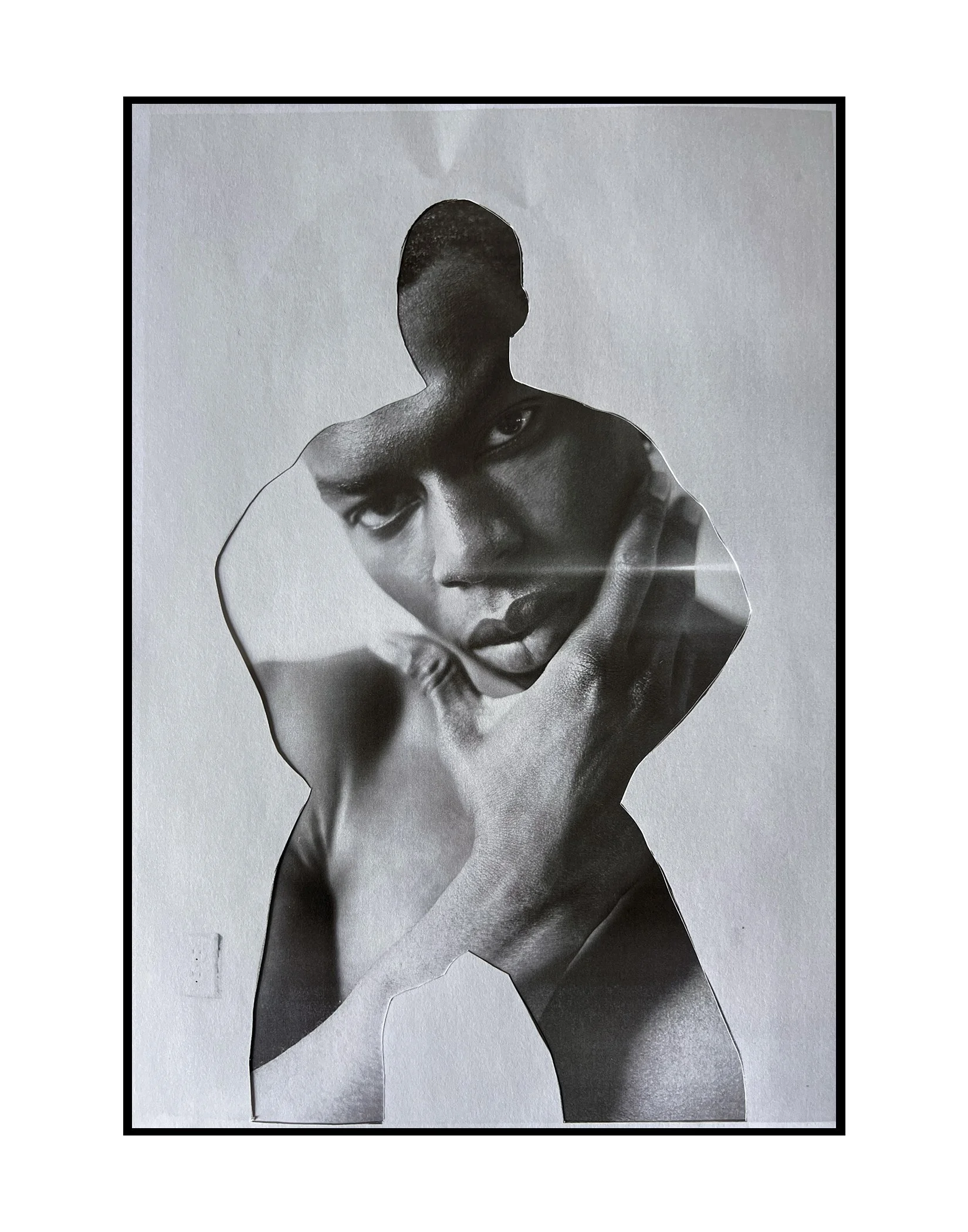

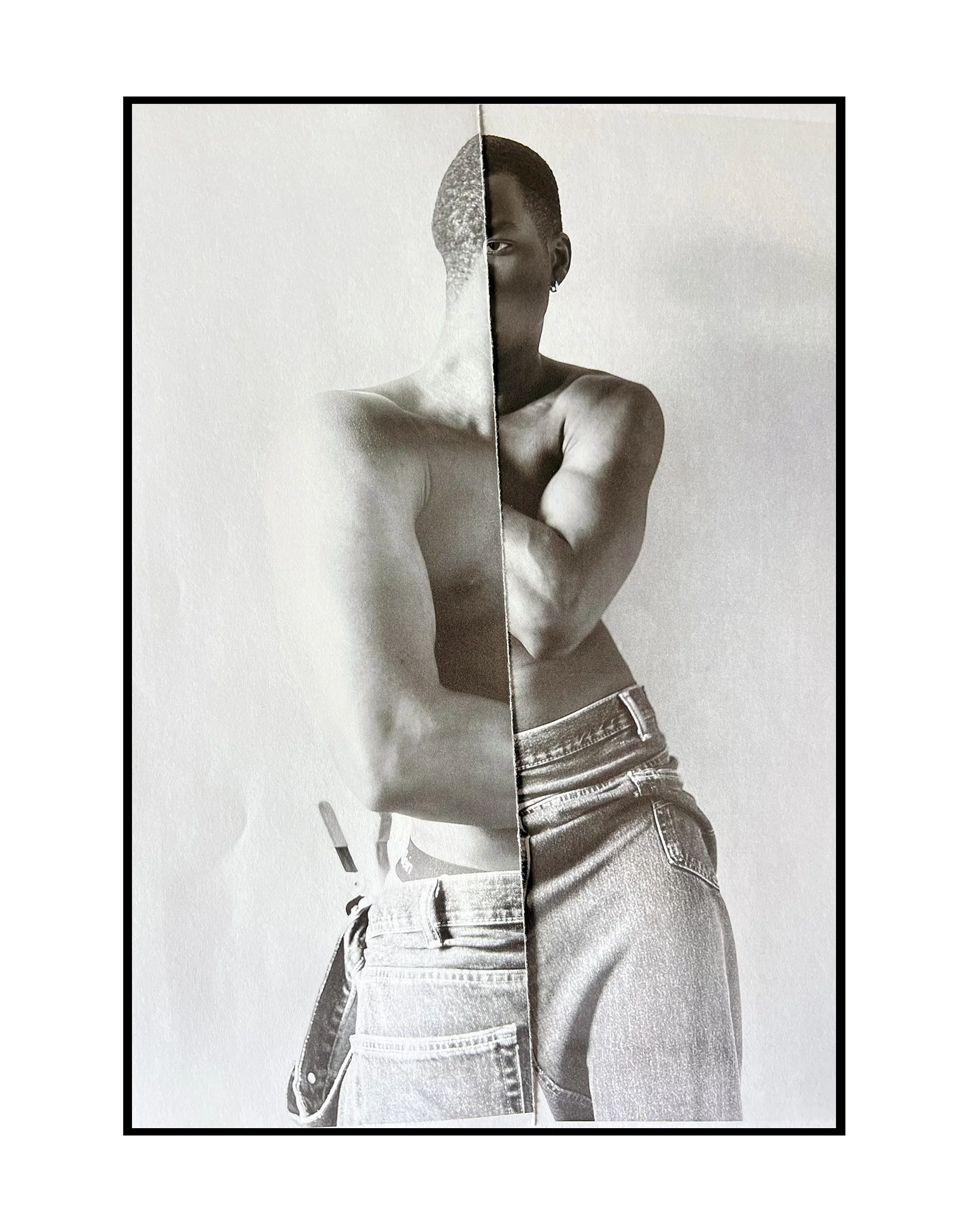
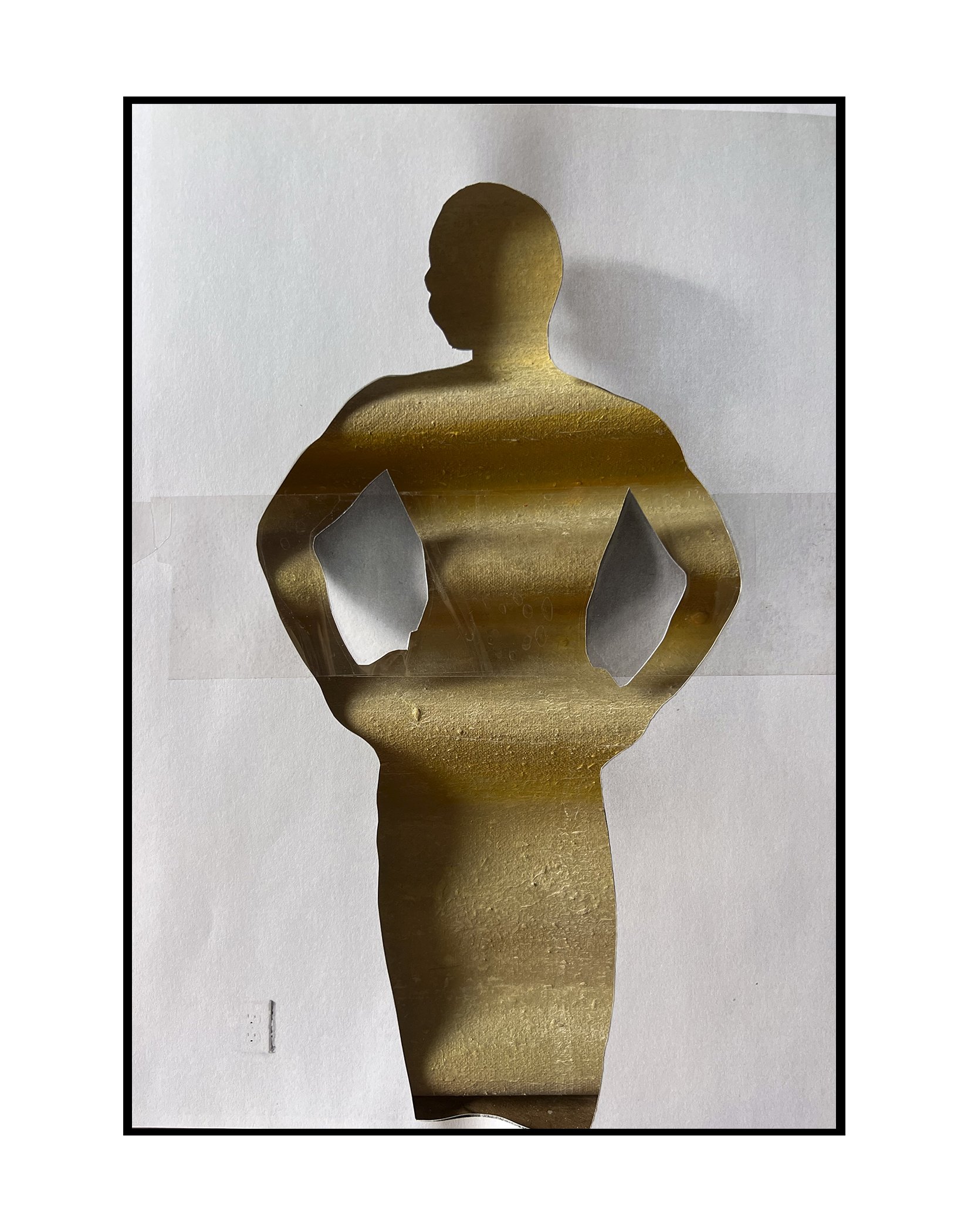

(Series photographed and collaged by Anthony Amadeo for amadeo amadeo.)

The Twin Collages — Ronnie & Adam Levi
There’s something about twins that’s always fascinated me — maybe because I am one. There’s an invisible mirror that exists between two people born at the same time, and it’s impossible to look at one without catching a glimpse of the other.
There’s something about twins that’s always fascinated me — maybe because I am one. There’s an invisible mirror that exists between two people born at the same time, and it’s impossible to look at one without catching a glimpse of the other.
This series features Ronnie and Adam Levi — twins who share a likeness so strong it feels cinematic, and yet, when photographed separately, their differences become magnetic. I photographed them individually, studying how they each inhabited their own space — the tilt of a head, a glance, a posture. Then I began to collage the images together, blending their forms into one analog body.
The process became a game of identity and symmetry — pushing, cutting, reassembling — until they began to merge into something that felt both familiar and strange. Each collage reveals a dialogue between them: the parts that align perfectly, and the edges that refuse to.
It was fun and instinctual, but it also stirred something deeper — memories of growing up with my own twin. That constant dance of wanting to be different even though you’re cut from the same photograph. There’s an odd beauty in sharing a life that’s both shared and separate.
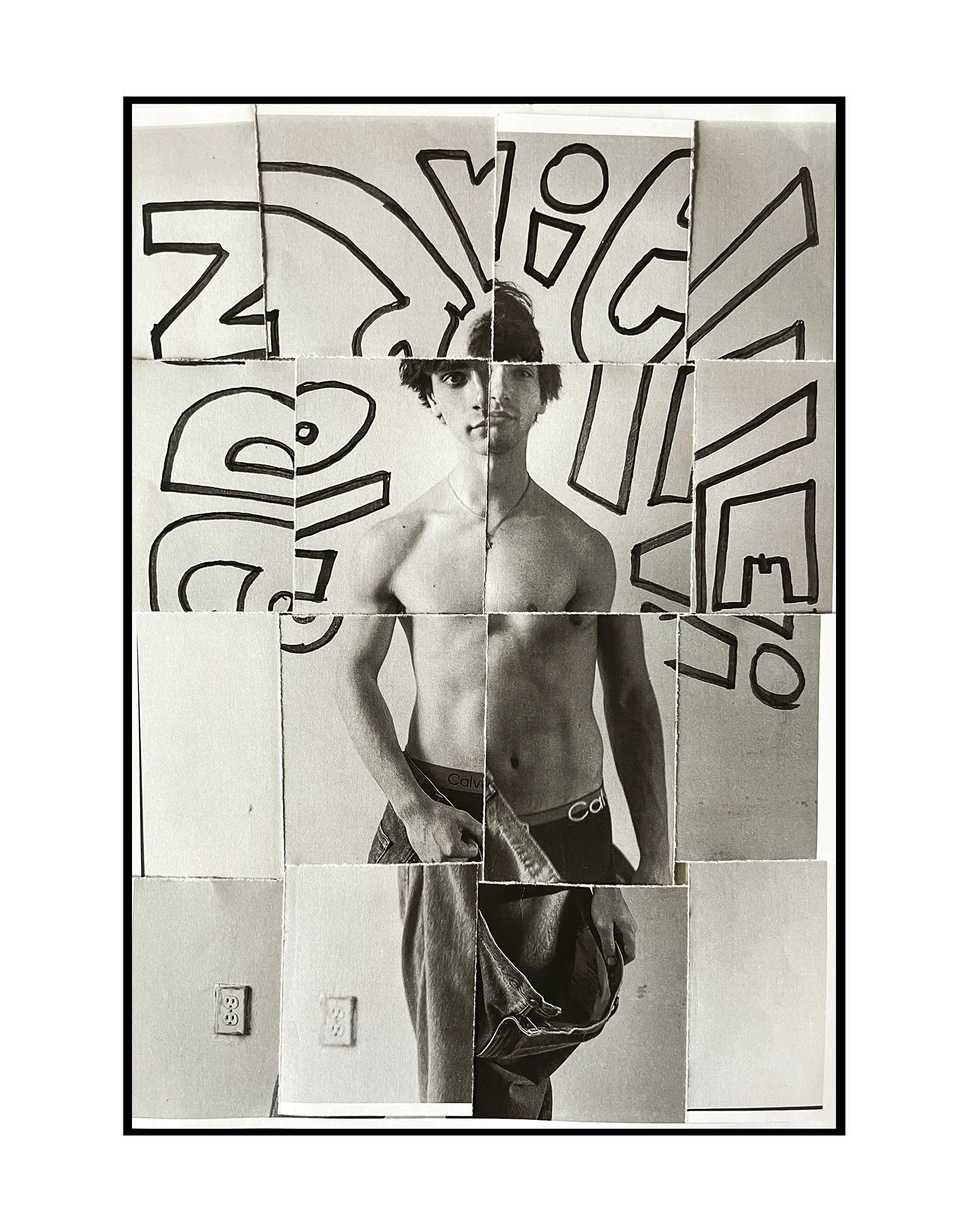


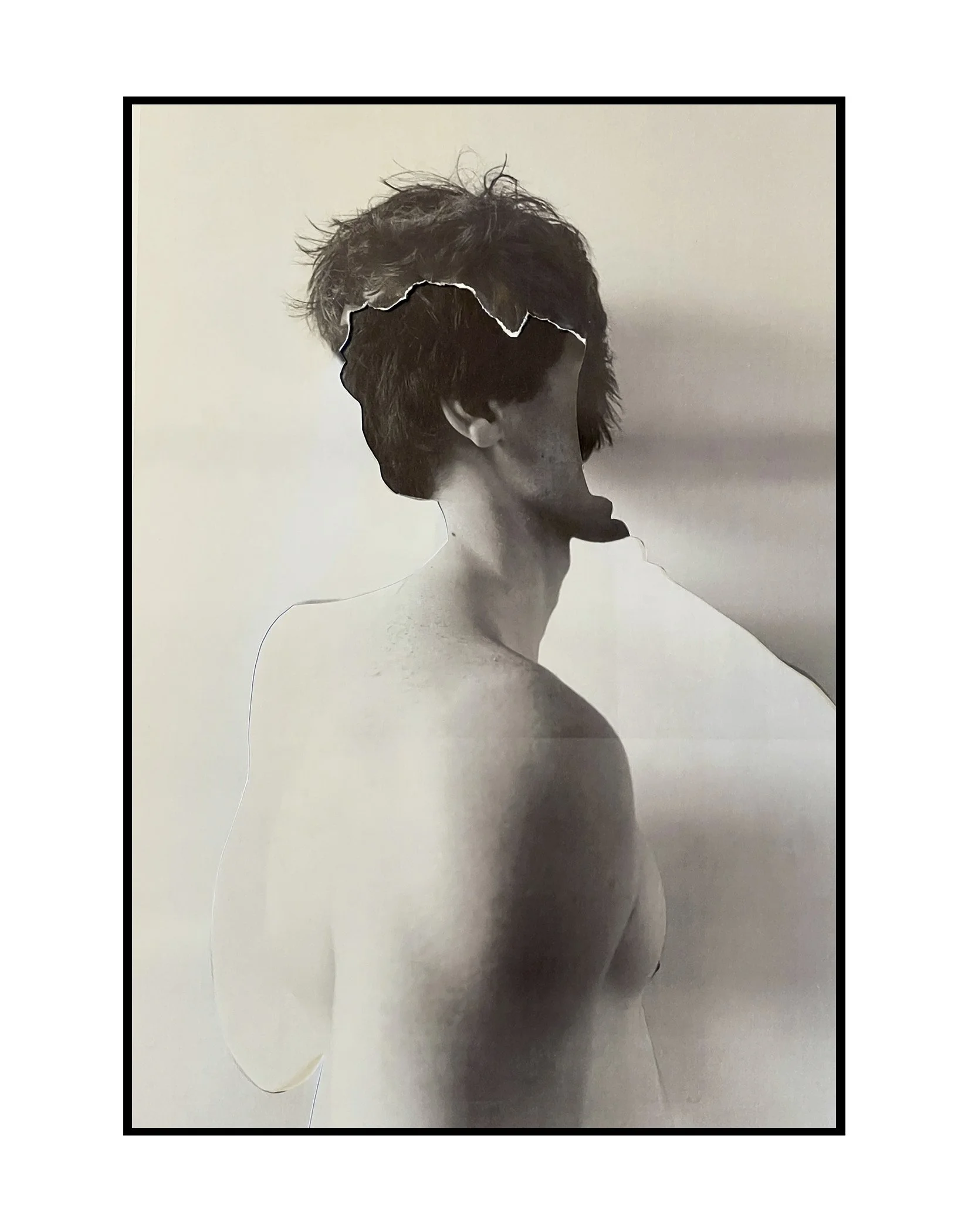
These collages live in that space — where sameness and individuality overlap. Two people, one portrait.

The Power of Scent with Arnold Kouassi
When I first came across Arnold Kouassi on Instagram, I knew instantly that I had to photograph him. There was something in his presence that felt like it belonged in the Giant Denim series—his energy, his movement, his ability to create shapes with his body that felt sculptural. What I loved most, though, was that he kept on his own jewelry for the shoot. Rings, watch, chains, bracelets—personal artifacts that added texture and narrative to the images. Those small details allowed the portraits to hold both his story and mine at the same time.
When I first came across Arnold Kouassi on Instagram, I knew instantly that I had to photograph him. There was something in his presence that felt like it belonged in the Giant Denim series—his energy, his movement, his ability to create shapes with his body that felt sculptural. What I loved most, though, was that he kept on his own jewelry for the shoot. Rings, watch, chains, bracelets—personal artifacts that added texture and narrative to the images. Those small details allowed the portraits to hold both his story and mine at the same time.
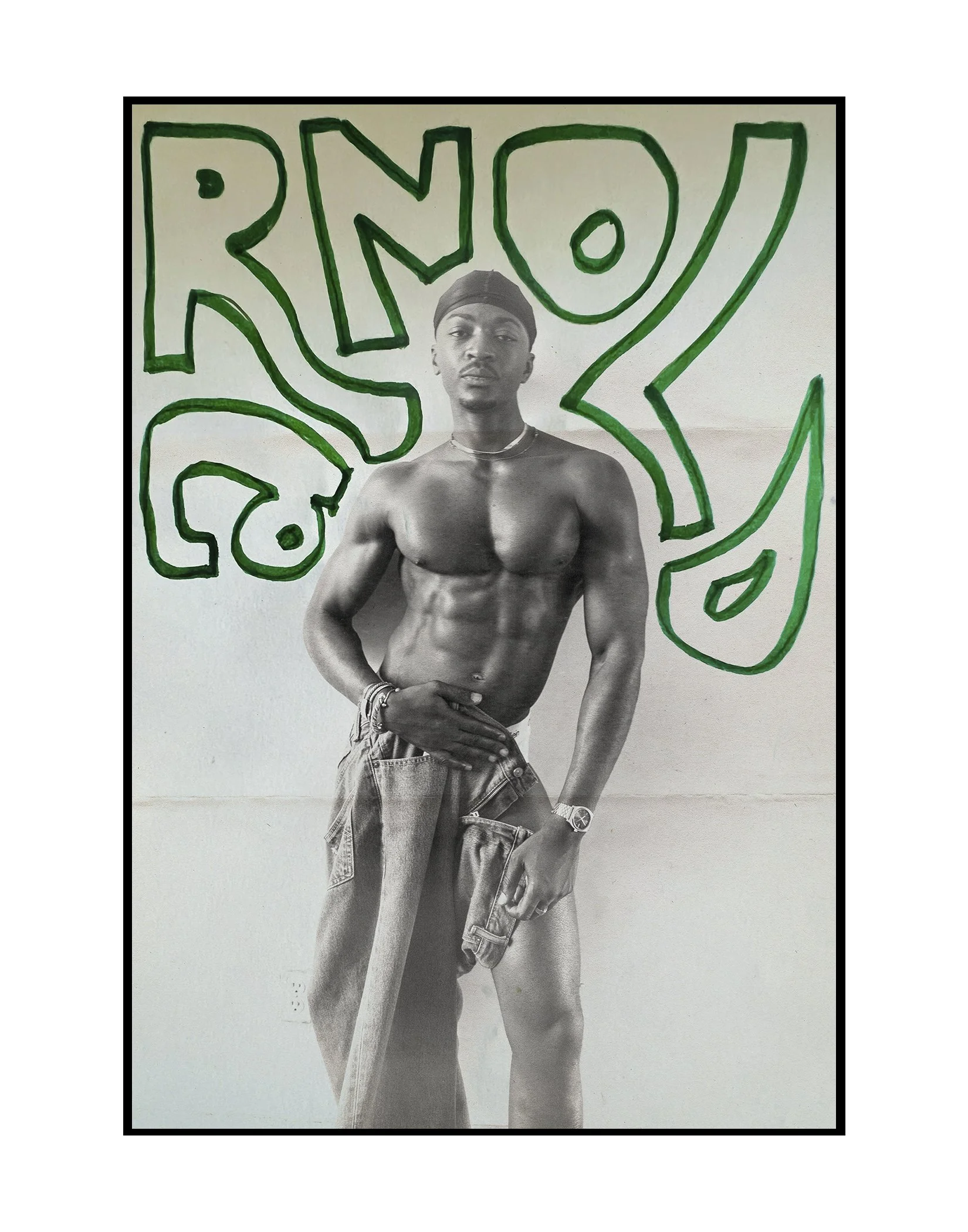
The juxtaposition of his shiny dark skin against the rough texture of oversized denim was magnetic. Every pose carried weight. Every shift in movement created new draping and new shapes. These are the moments that I live for in portraiture—when the collaboration between model and photographer creates something beyond just image-making.
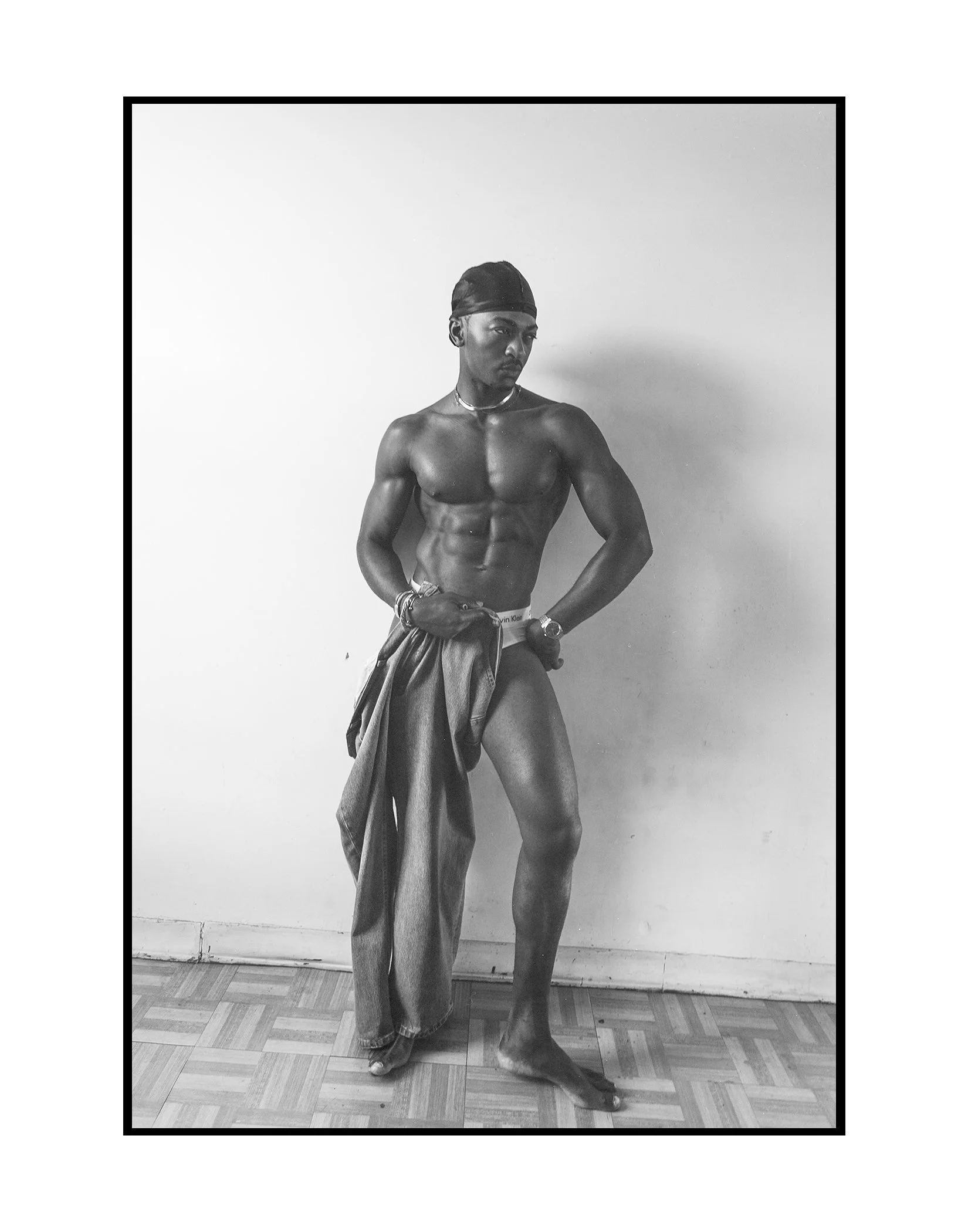

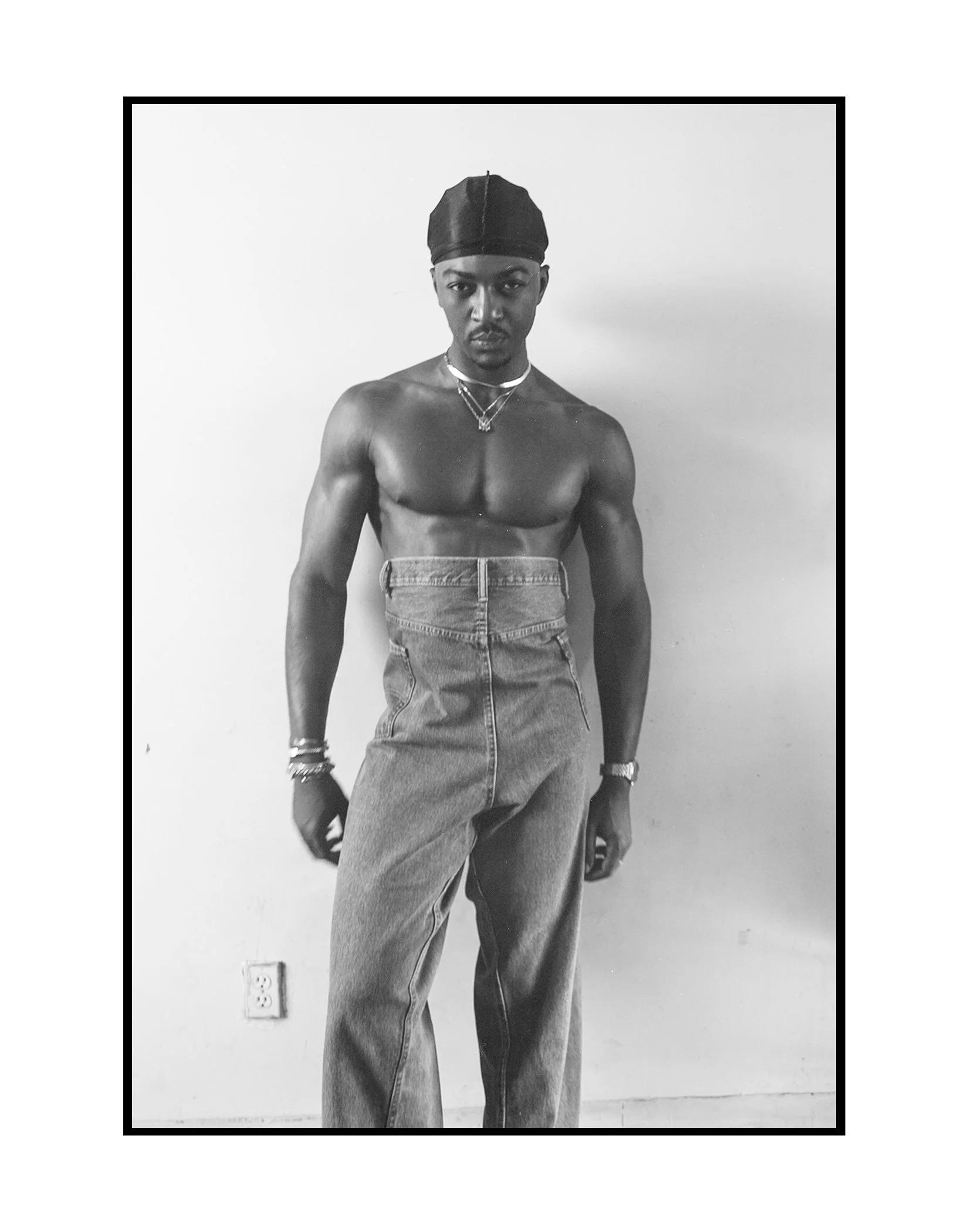
But what struck me most was Arnold’s scent. It carried a familiarity that immediately triggered a memory of my aunt. A flood of warmth, nostalgia, and connection. We started talking about the power of scent—the way it can narrate an entire lifetime of memories without a single word.
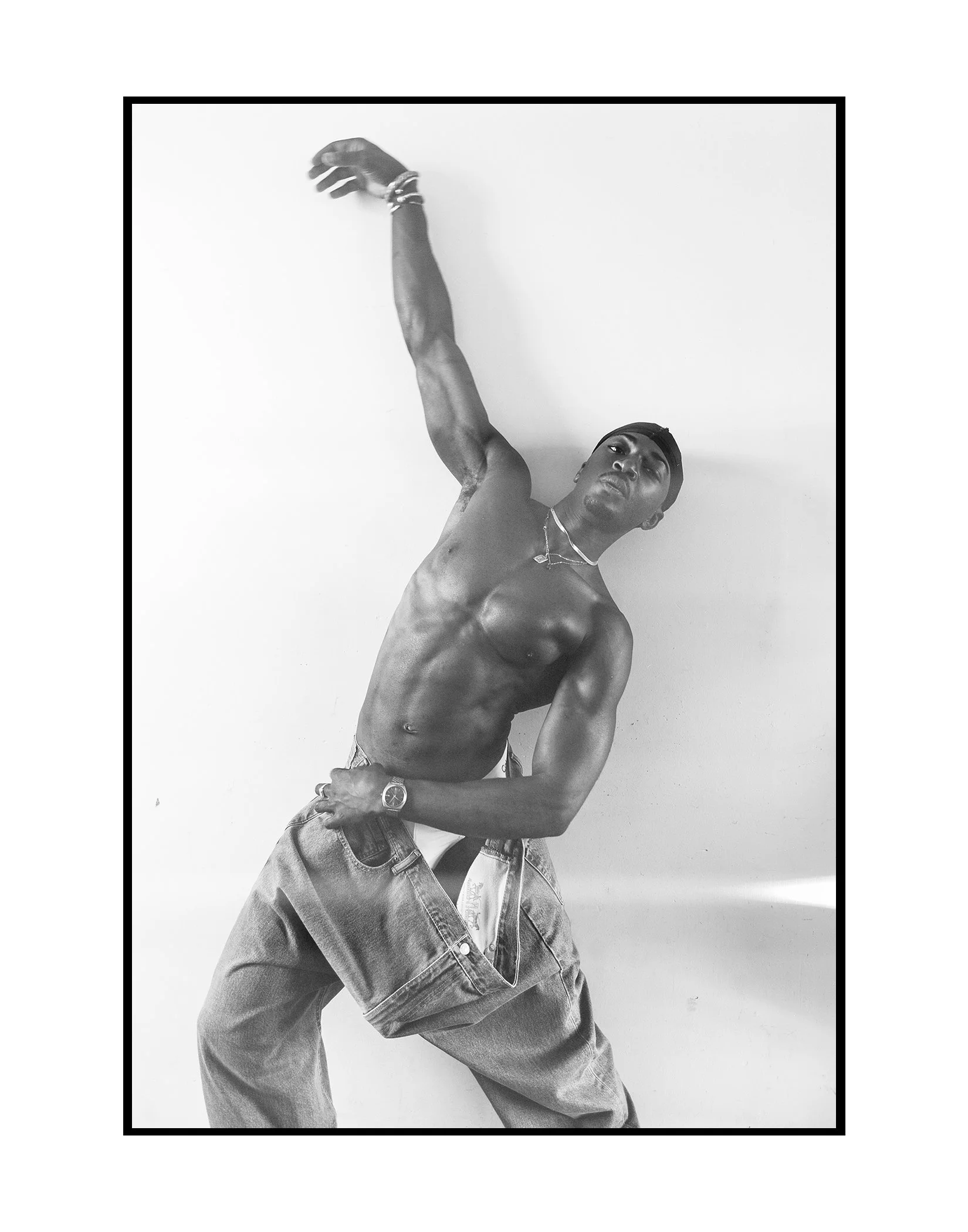
I believe that the very first time you wear a fragrance is sacred. That first wear should be set aside for something special: a new chapter, a celebration, or a moment you want to lock in forever. Because scent has the power to capture a core memory. You might not consciously recall the fragrance later, but your body will remember. When you cross paths with that note again—floral, musky, citrus, smoky—it will transport you back to that exact place, that exact feeling.
Think about the first time you meet someone while wearing a fragrance. They might not register the scent consciously, but they’ll remember you. The way you moved, spoke, or laughed—all tied to that invisible, unforgettable trail in the air. That’s the power of scent. It lingers, it shapes memory, it tells a story long after the moment has passed.
For me, scent is art. It’s a medium as powerful as photography, painting, or sound. It’s intangible yet deeply human. I’m currently working on a few scent-related art pieces that explore this exact idea, and I can’t wait to share them soon.
Photographing Arnold was not just about denim or portraits. It was about collaboration, about narrative, and about memory. These images carry the texture of denim, the glint of jewelry, the shine of skin, and the invisible weight of scent—the kind that lingers in your mind as much as in the air.
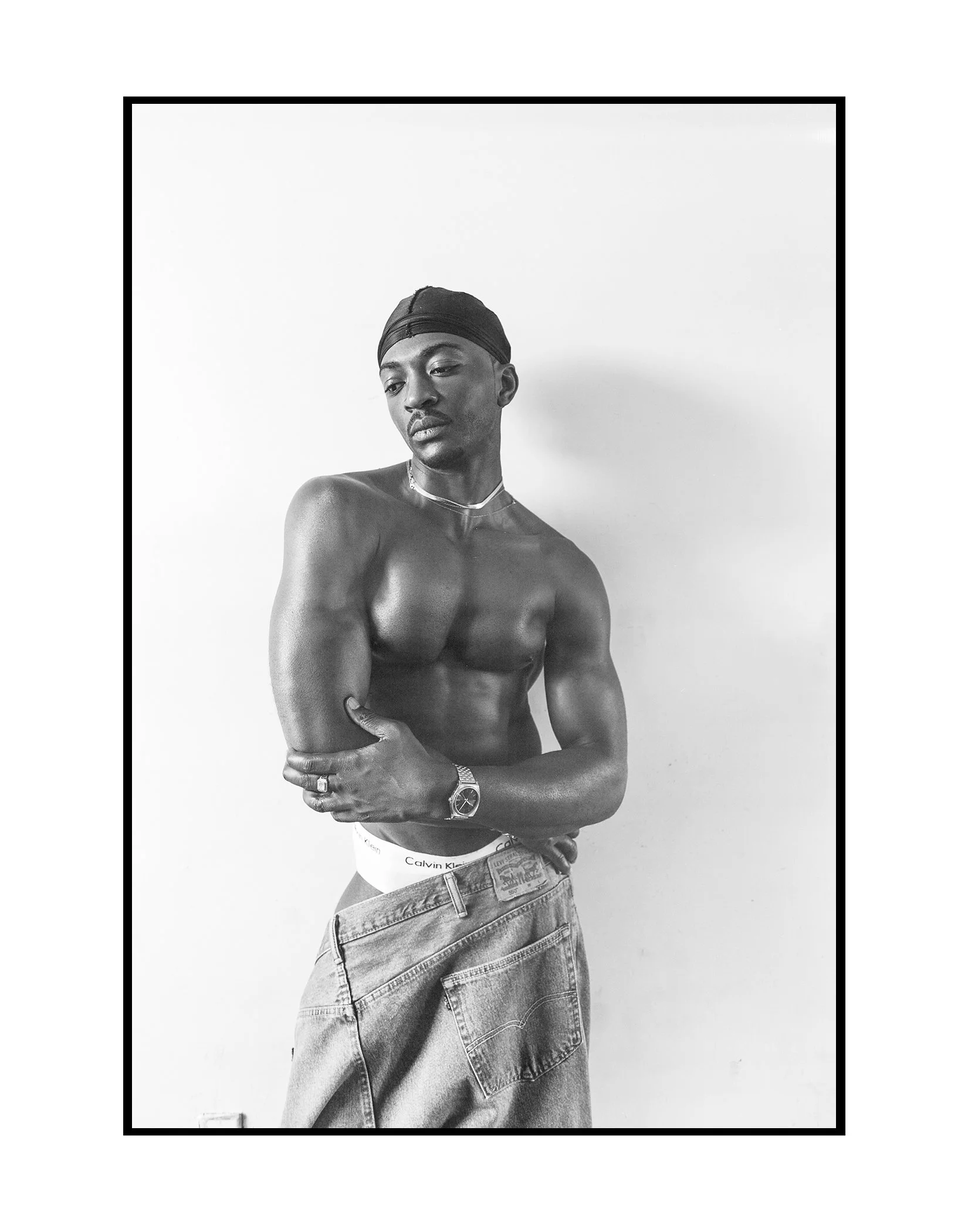
Look out for more images of Arnold from this series across my other platforms. This is just the beginning.

The return of A. Clown?
A. Clown hasn’t been seen in some time. He didn’t storm off stage, didn’t slam the door, didn’t even leave a note—he simply stepped behind the silver curtain and let the folds swallow him.
A. Clown hasn’t been seen in some time. He didn’t storm off stage, didn’t slam the door, didn’t even leave a note—he simply stepped behind the silver curtain and let the folds swallow him.
Once upon a time, I wore his face. Painted on a new mood every time. Sometimes a whisper, sometimes a scream. He lived in portraits, in paintings, in the way people’s eyes darted between fascination and discomfort. You either loved him or you couldn’t look at him. That’s the magic of a clown. That’s the danger of one, too.
But clowns aren’t built to vanish entirely. They hide in the air between you and the mirror. They hide in mylar wrinkles that turn a reflection into a puzzle. They hide in balloon animals—small, strange sculptures that carry a joke only the clown knows.
These portraits are a way to keep him close without summoning him fully back. Each face here is a flicker of him: the tilt of a head, the curve of light, the way a shadow smiles even when the lips don’t. The clown is still here. He’s just watching from behind the shimmer.
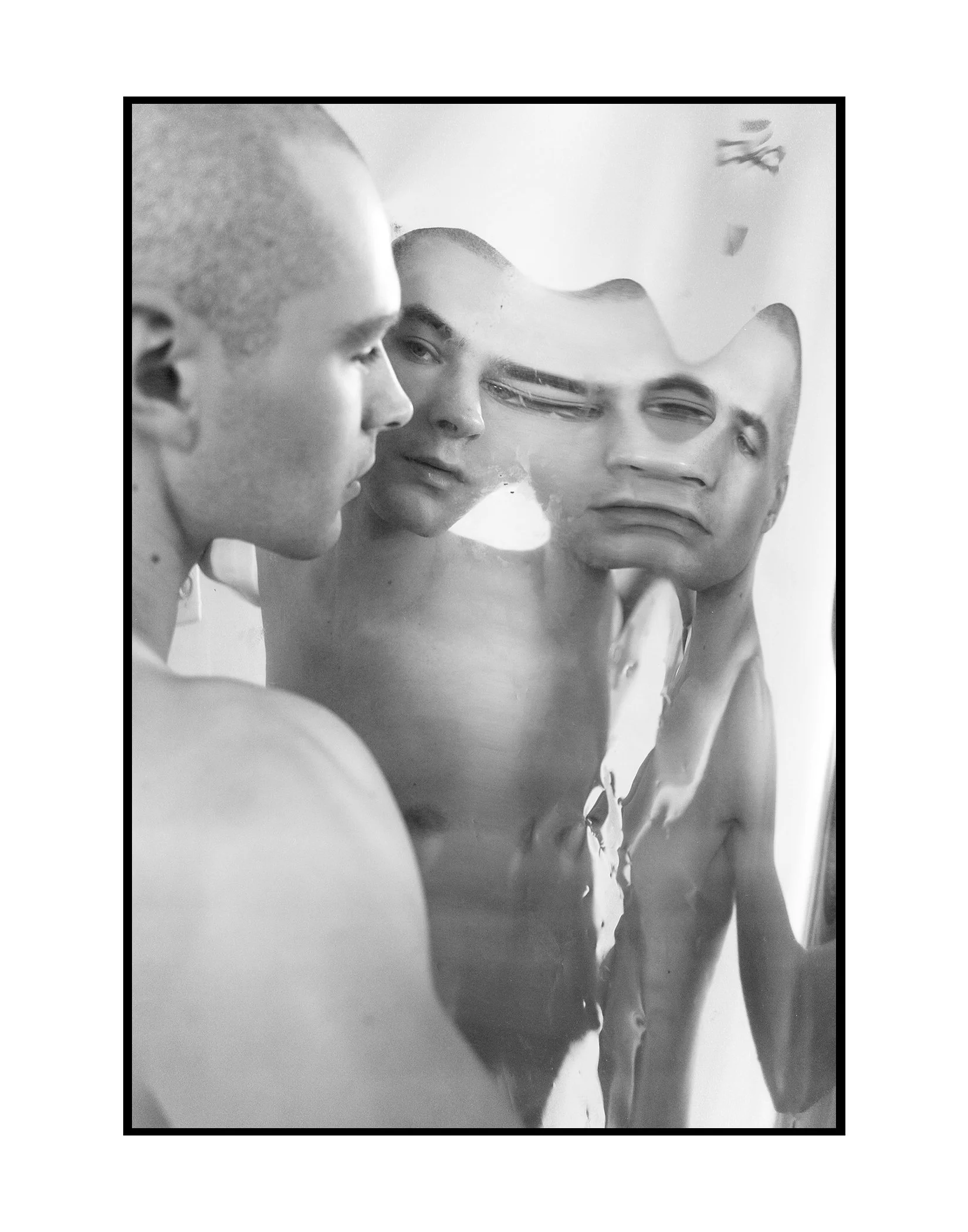
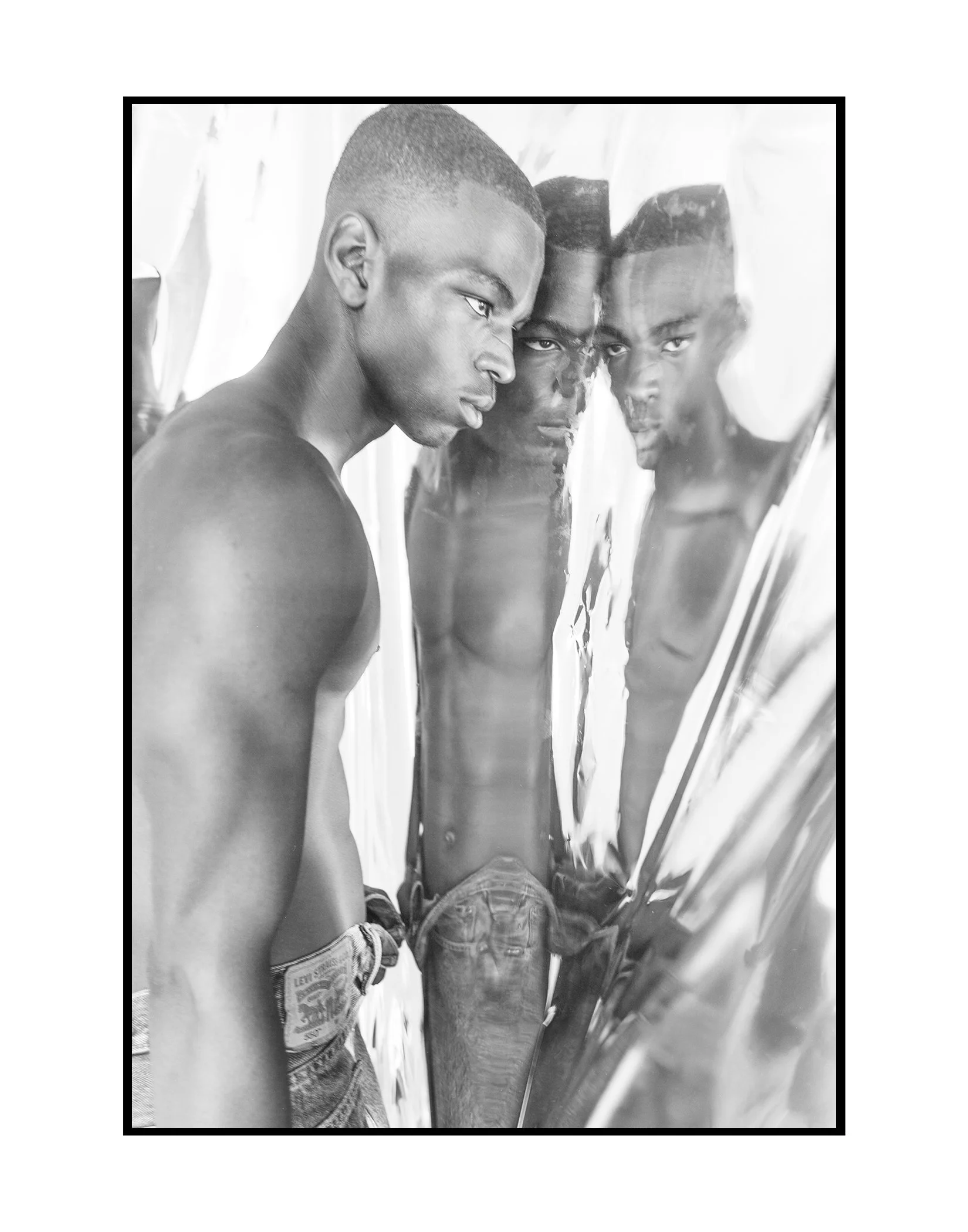
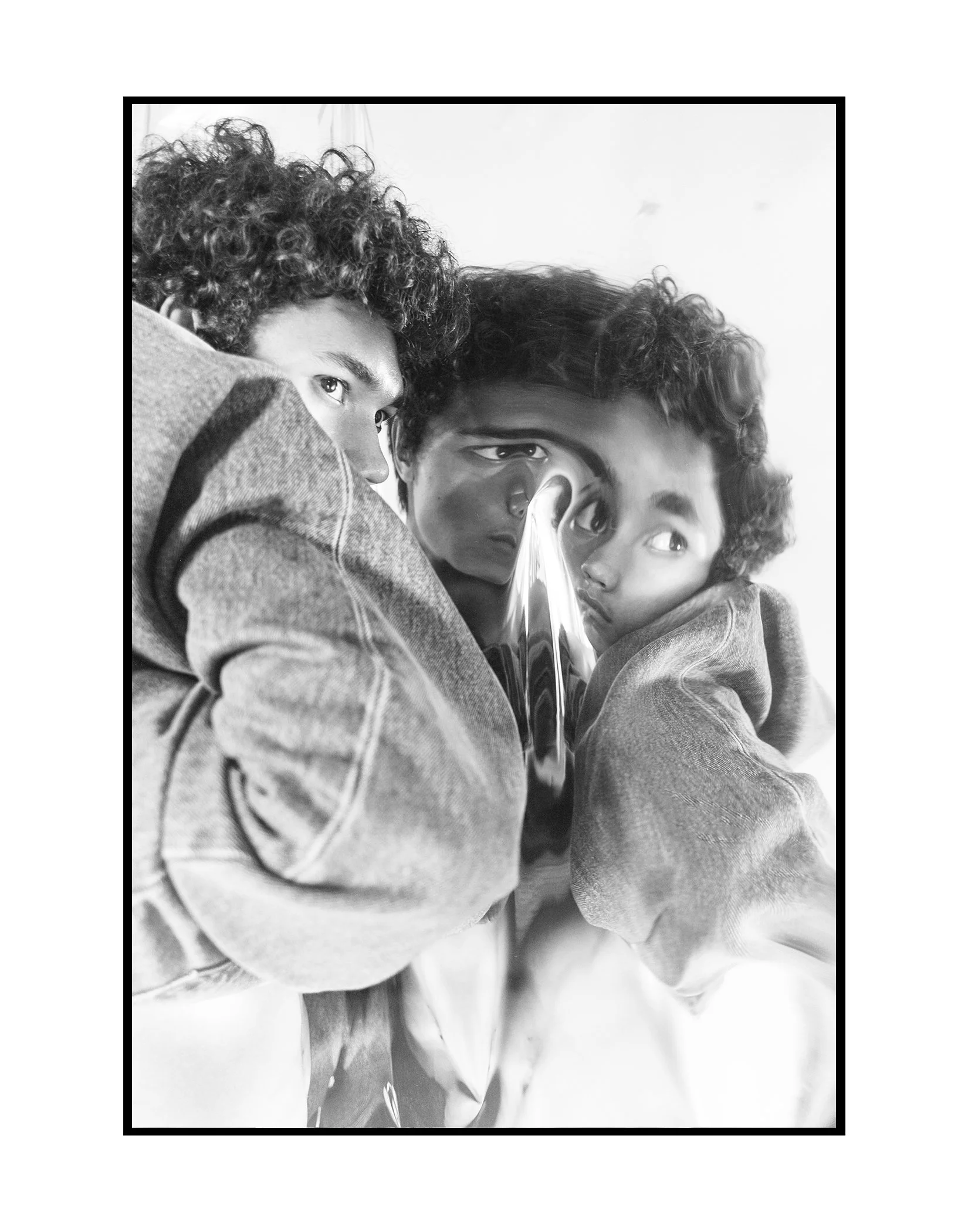
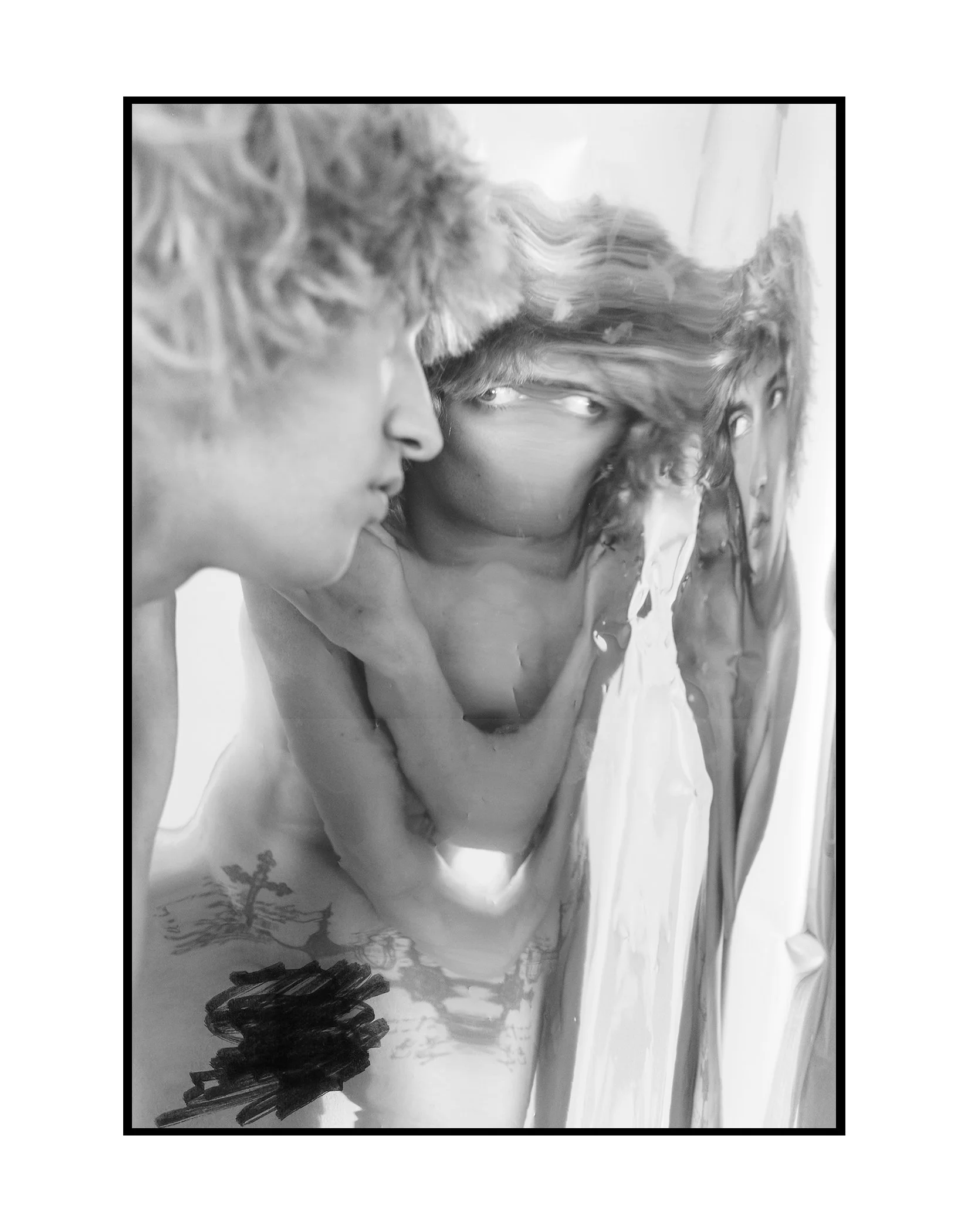
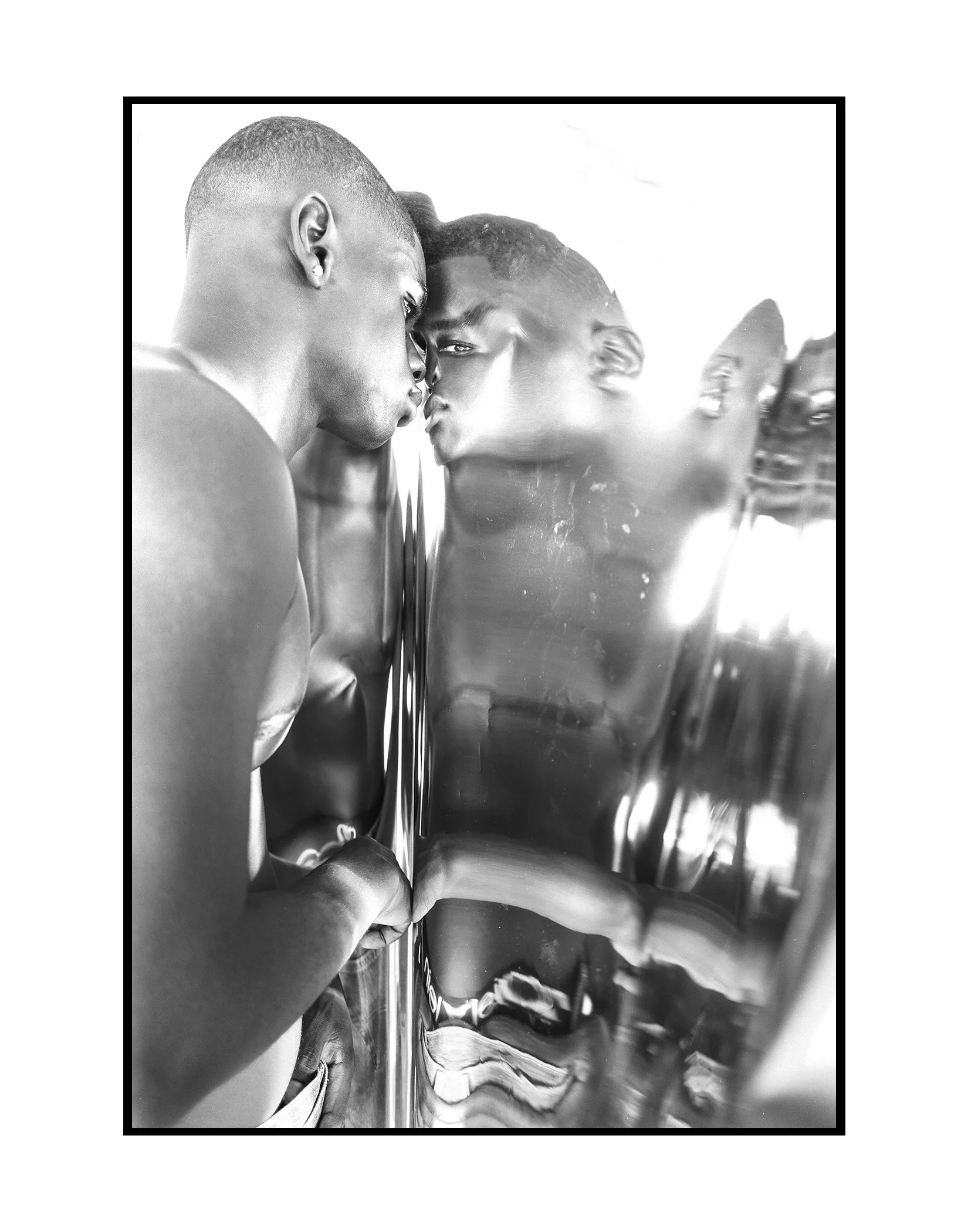
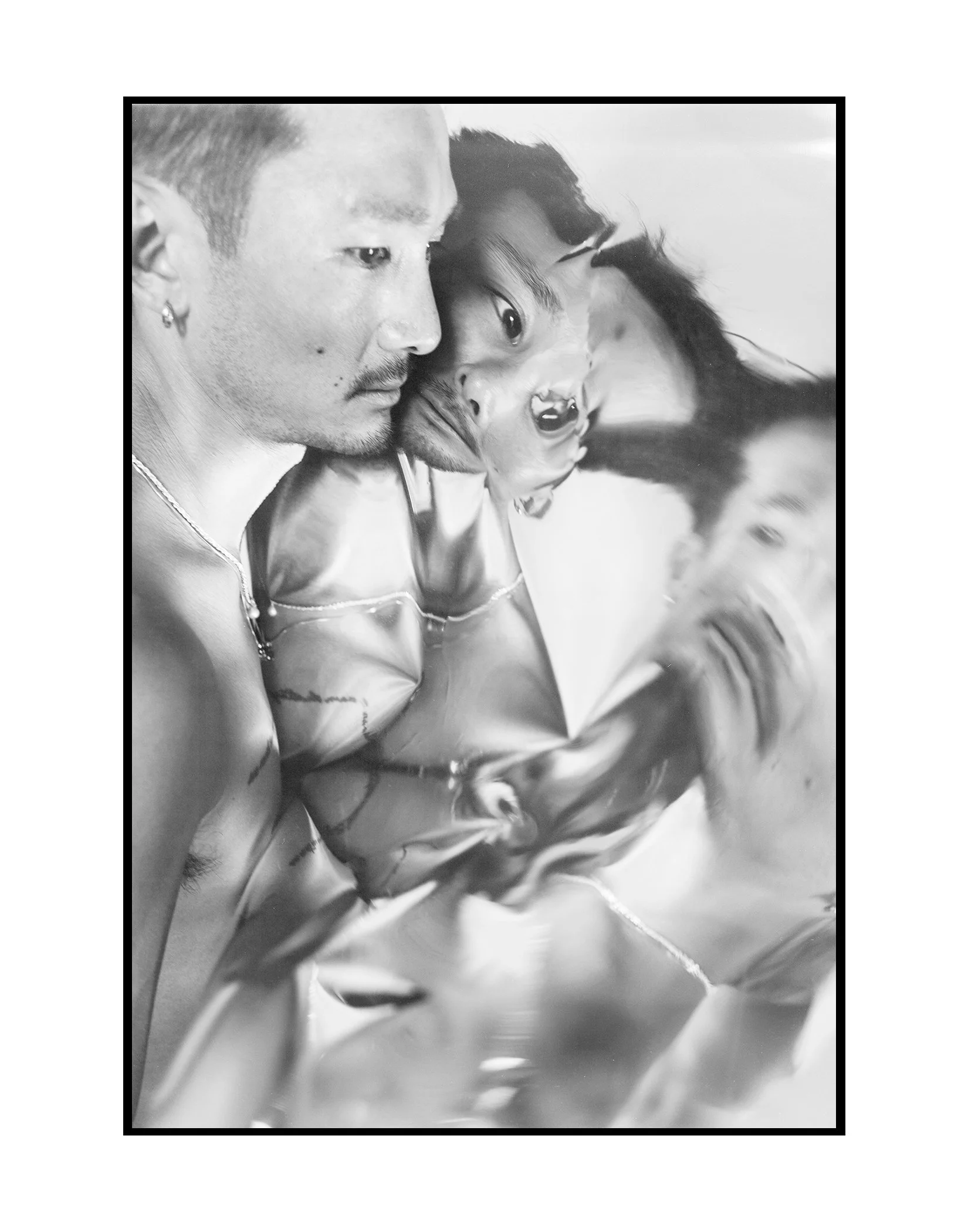

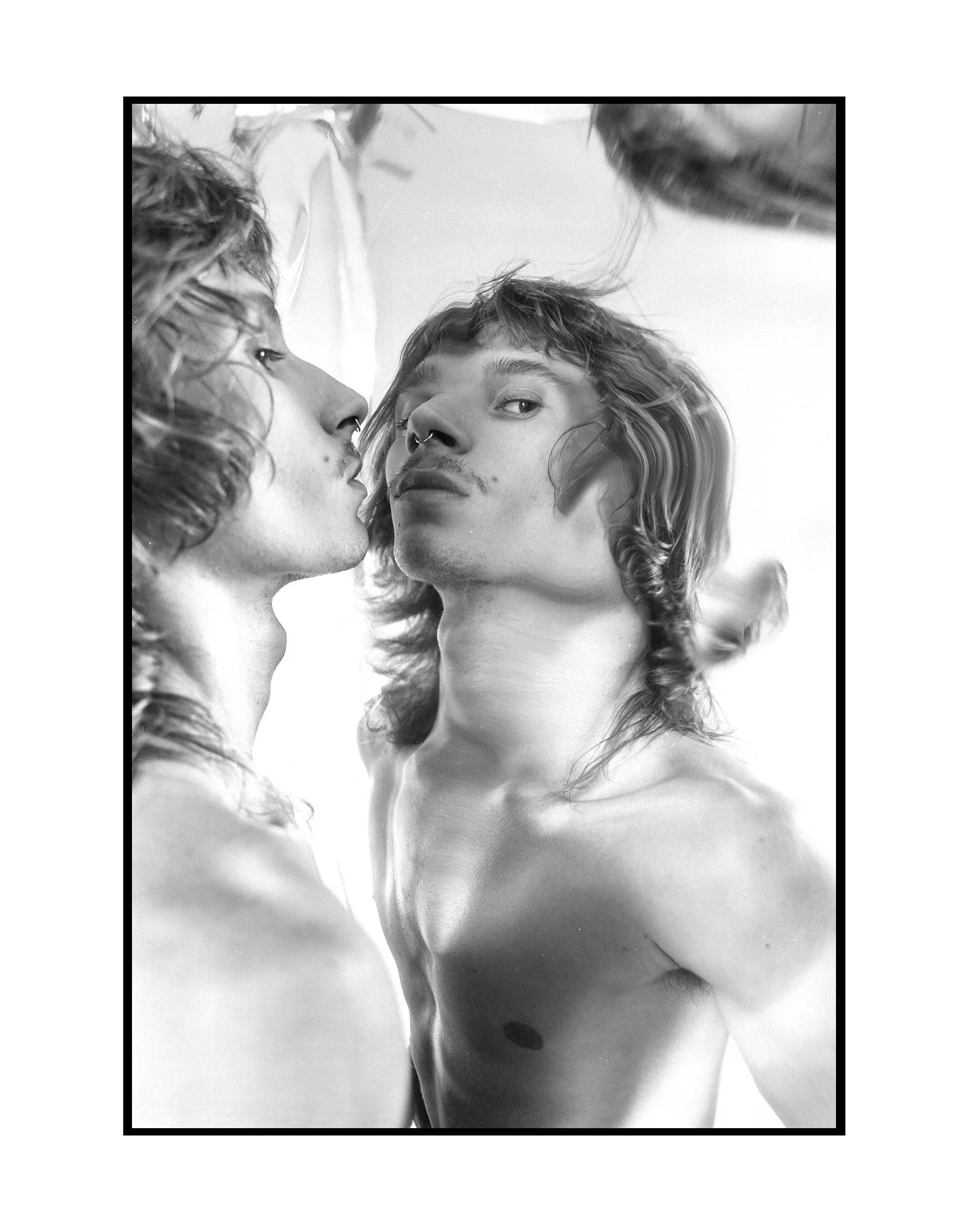

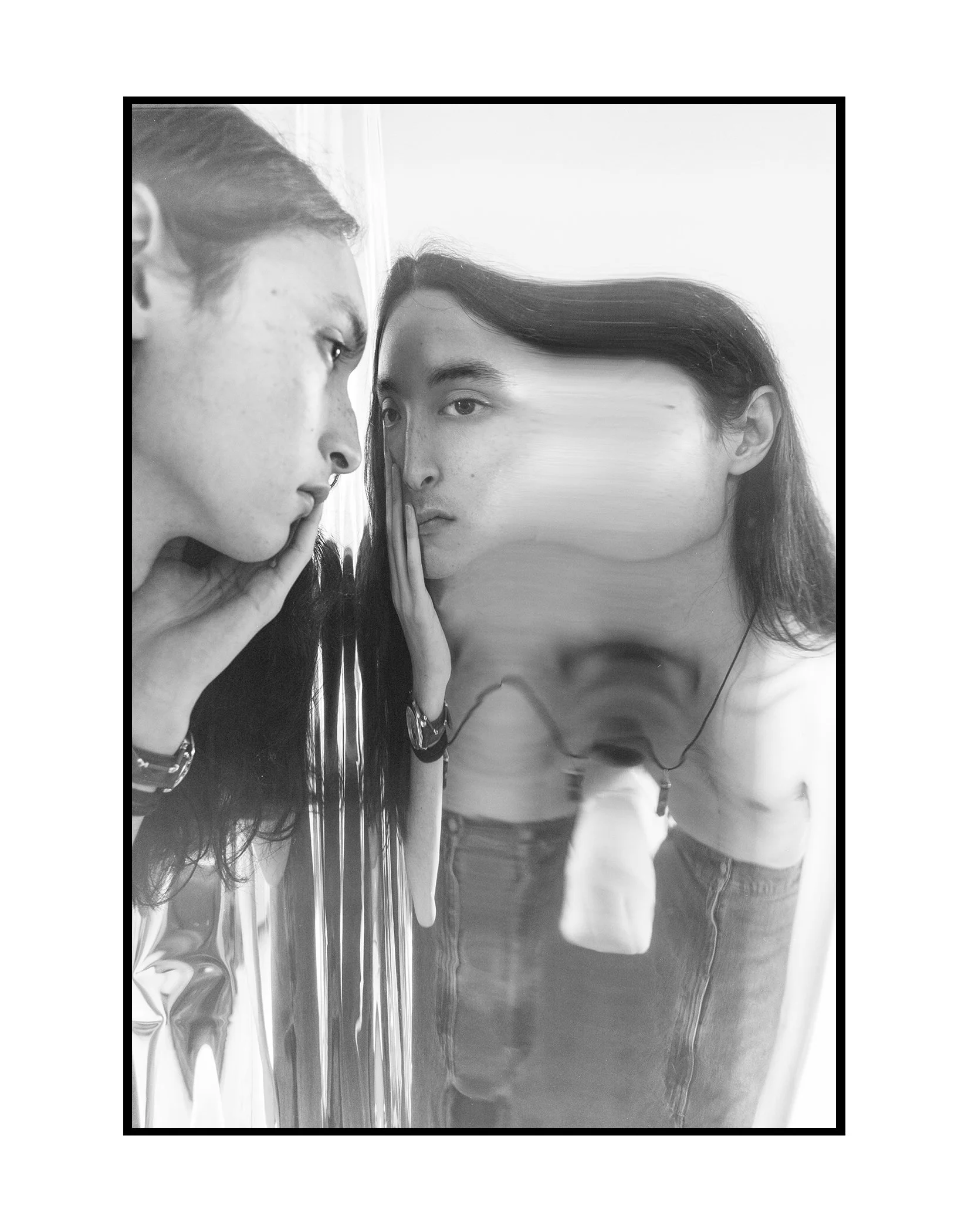
Now the question is—do you see him?

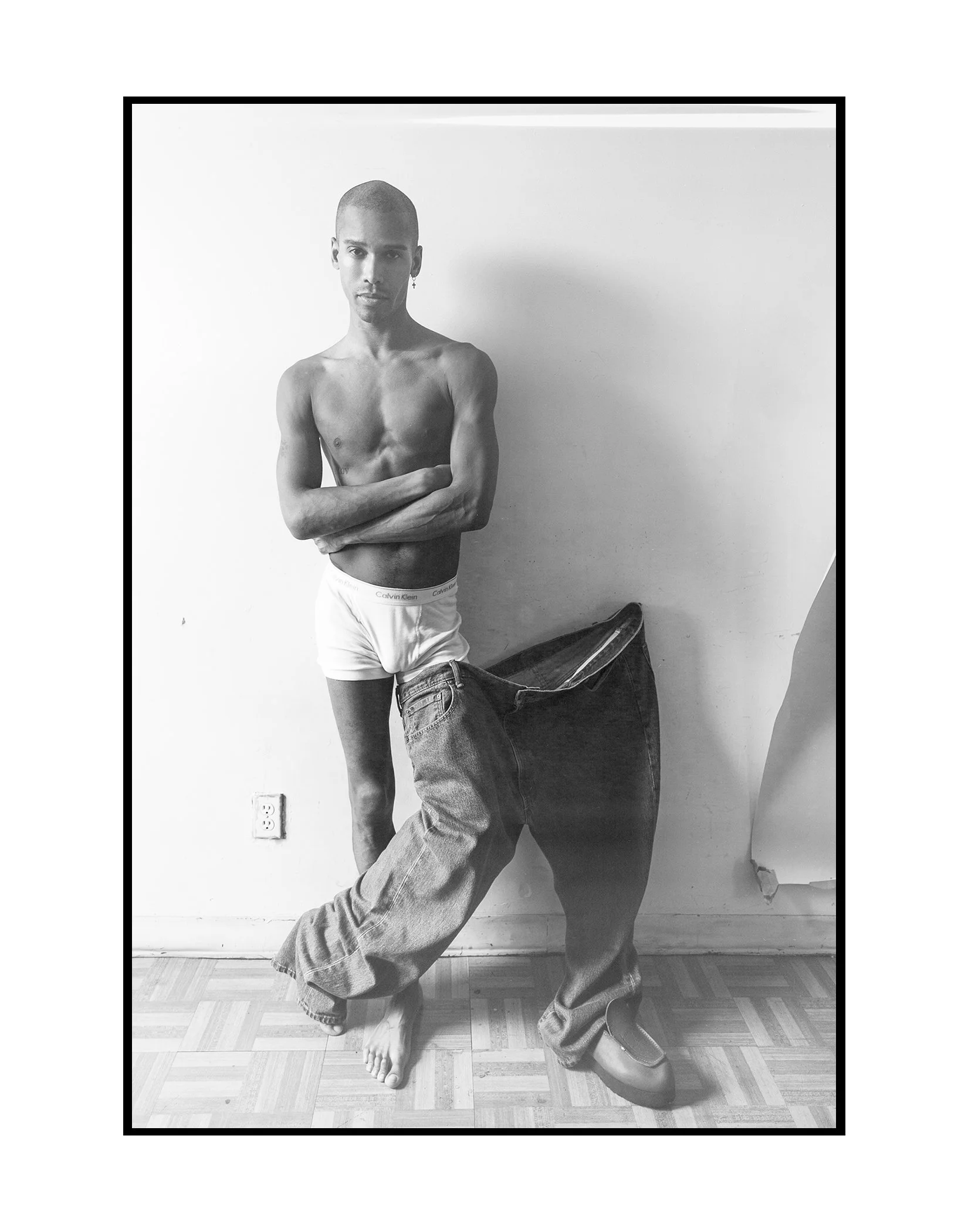
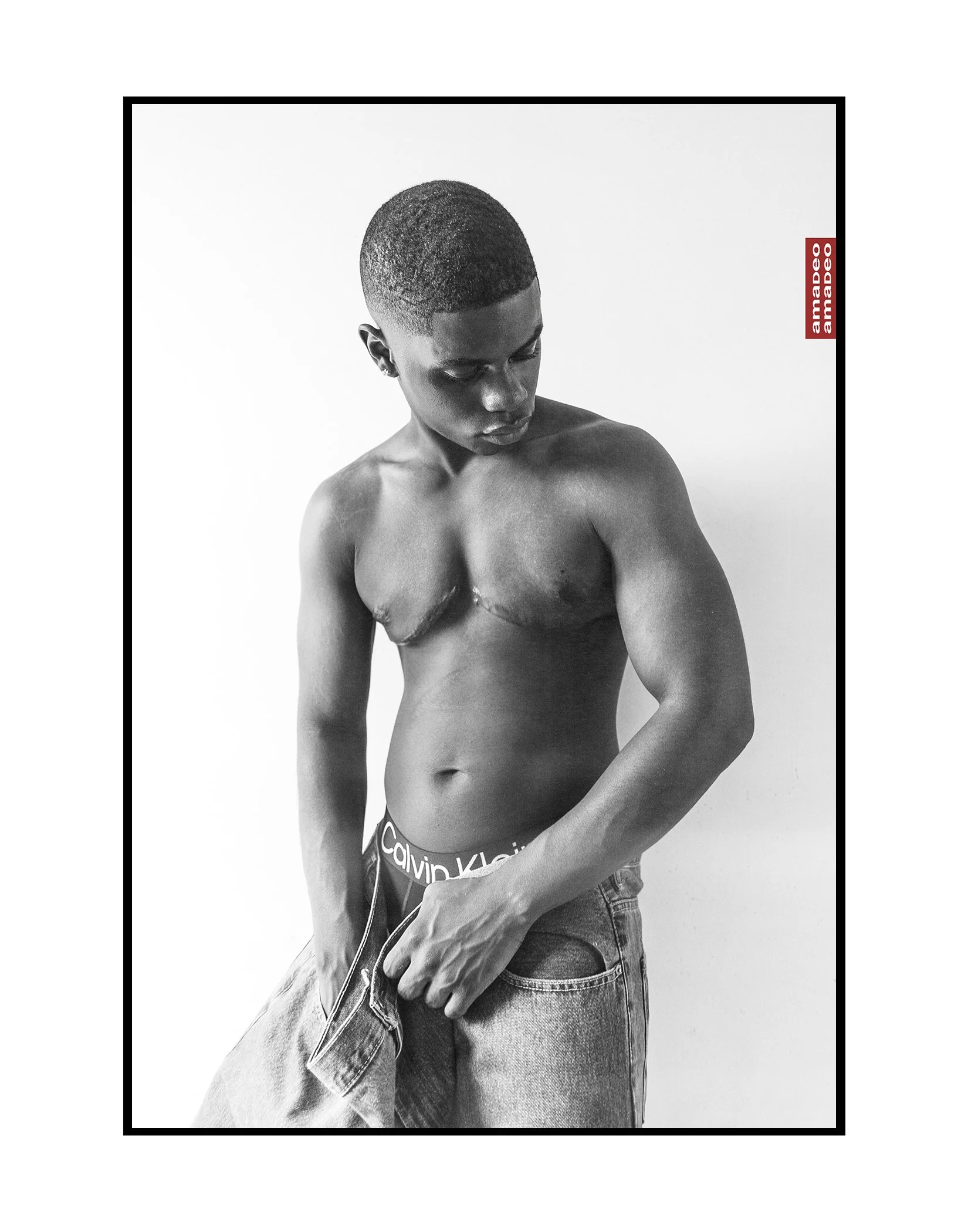
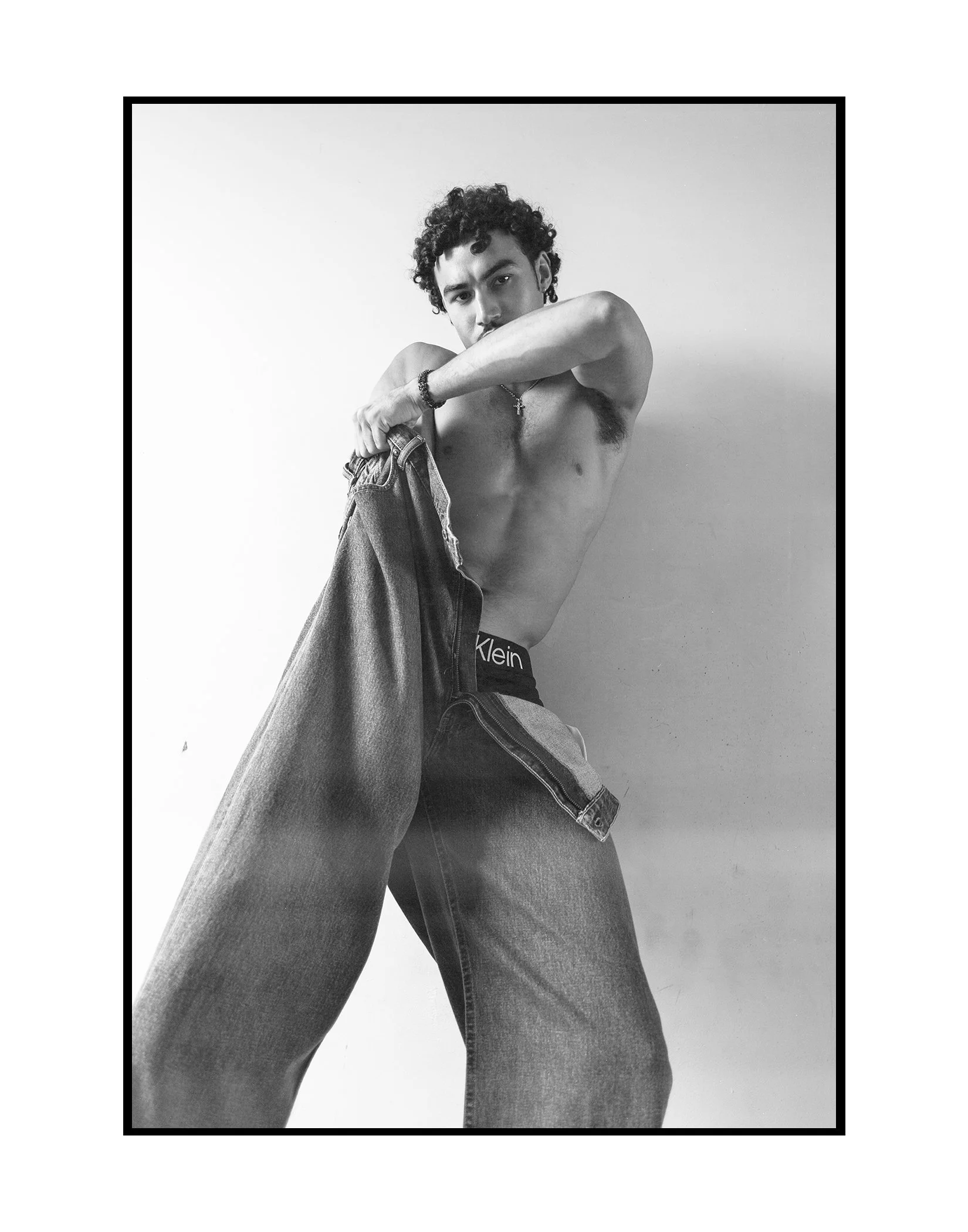
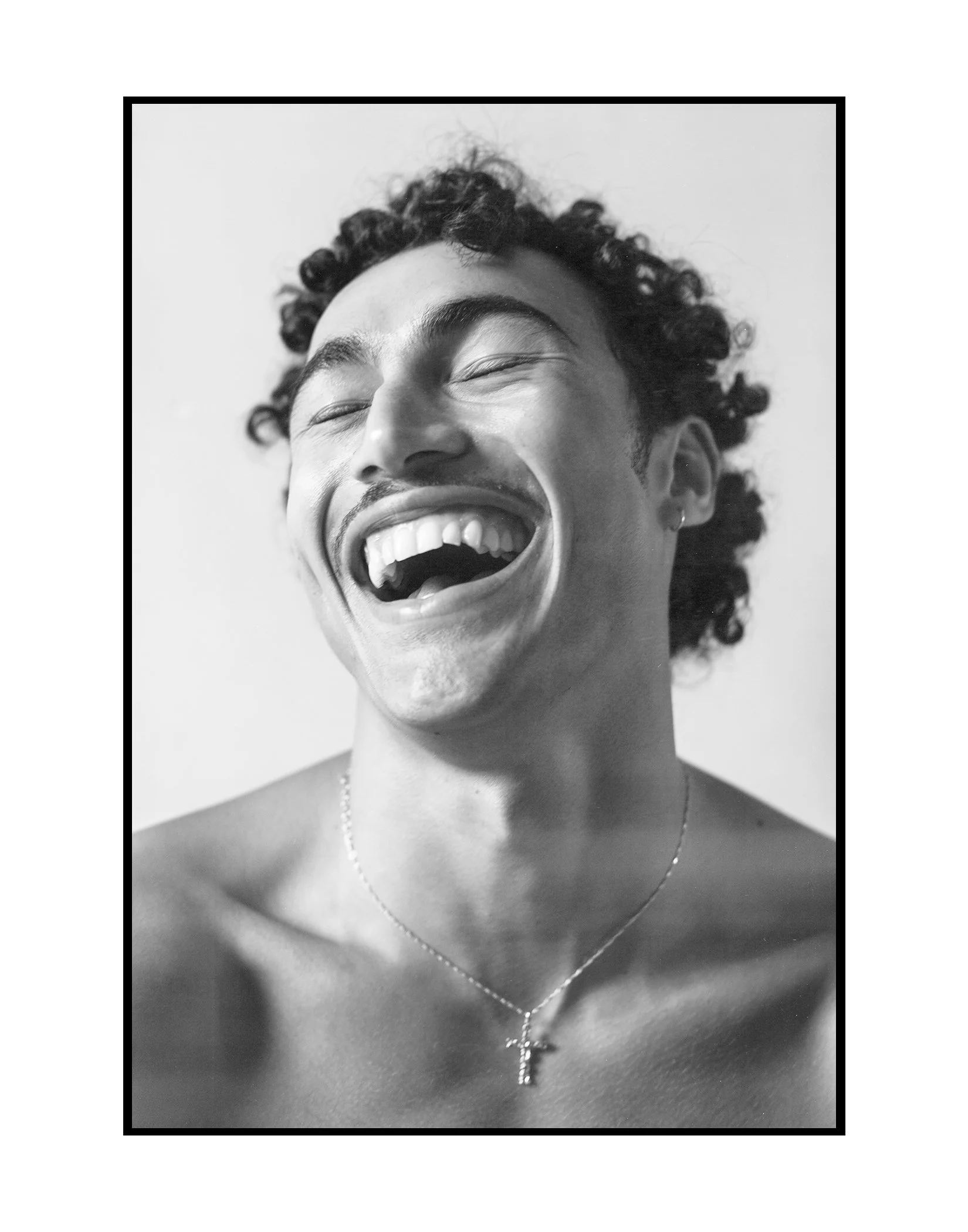
Giant Jeans
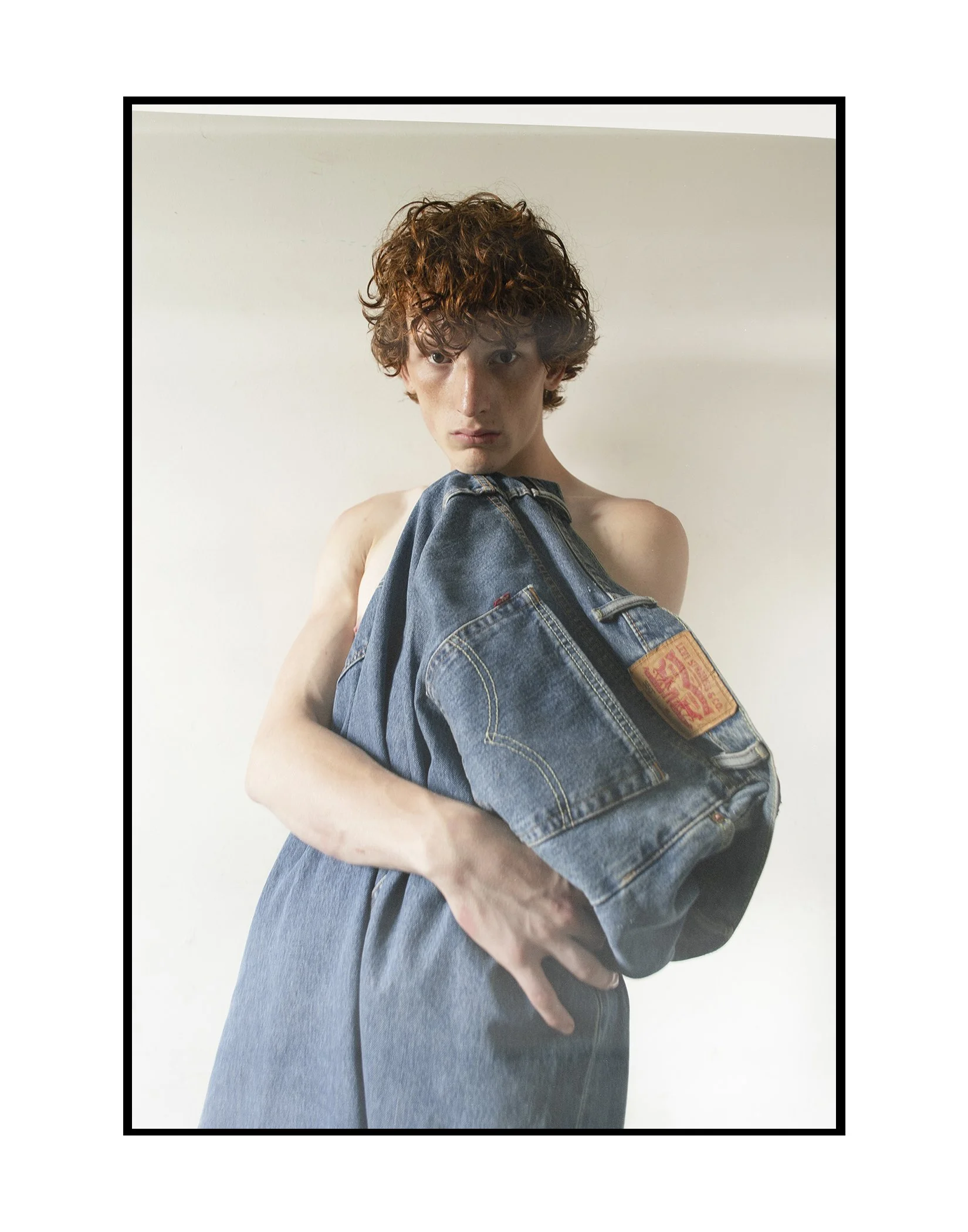
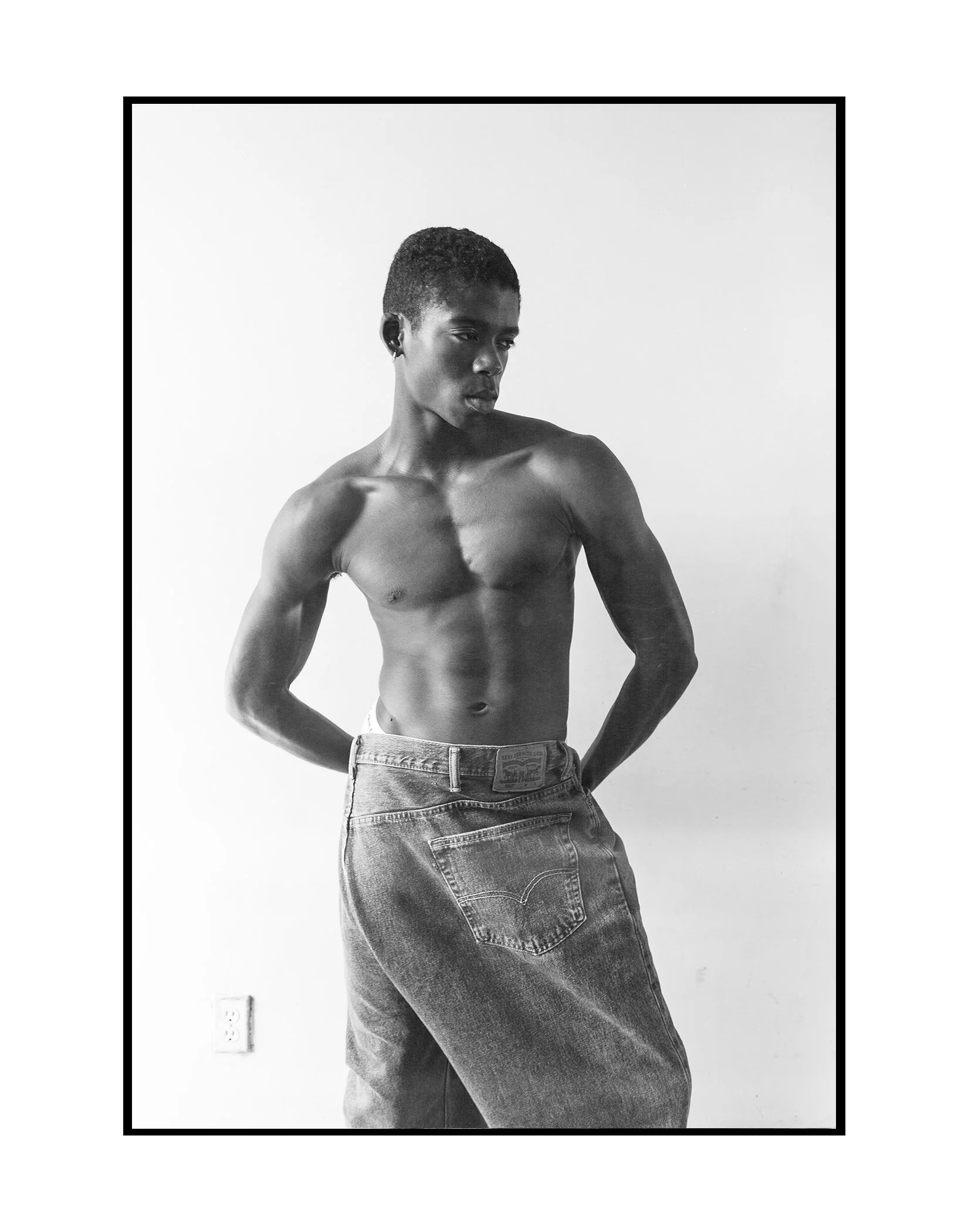
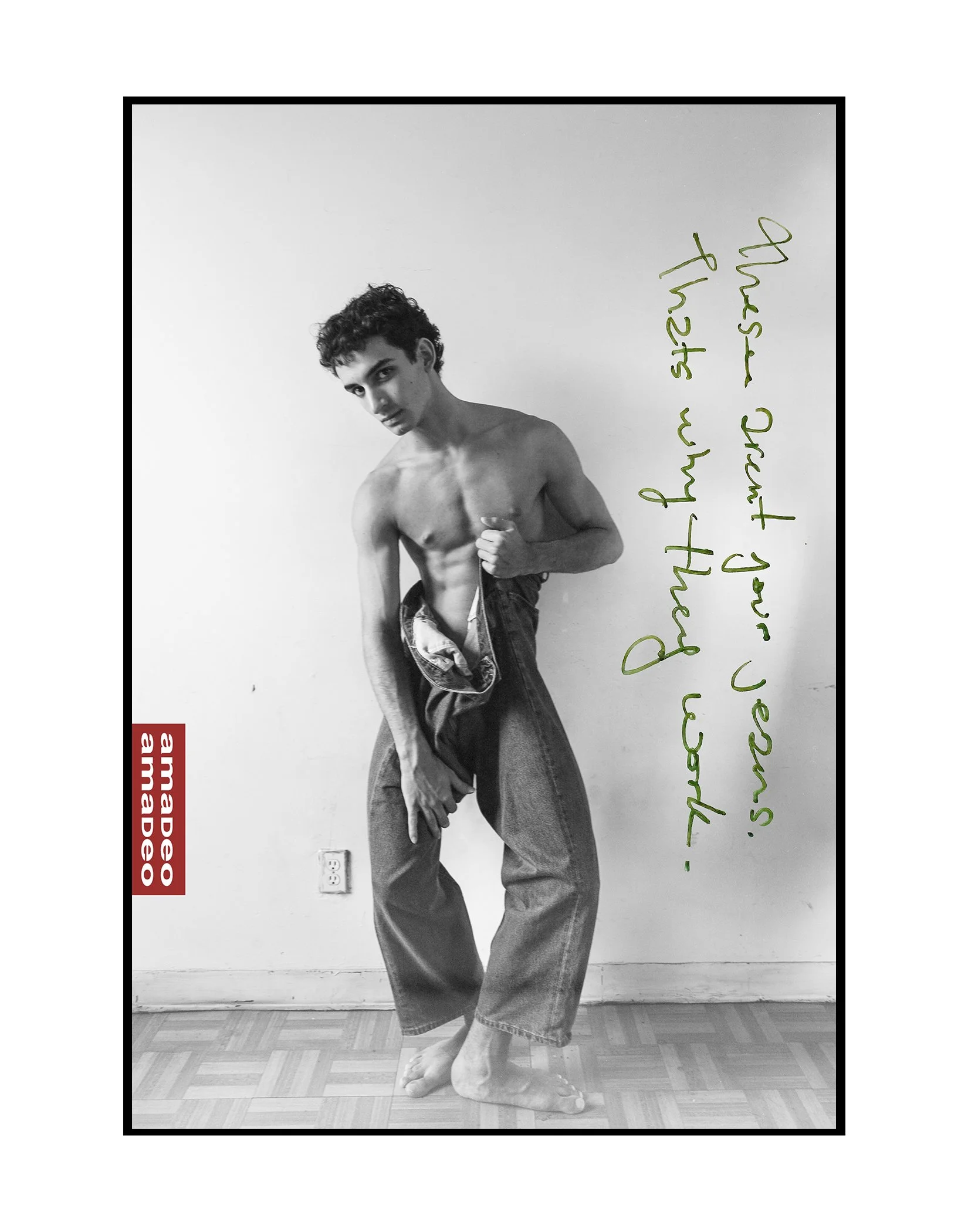
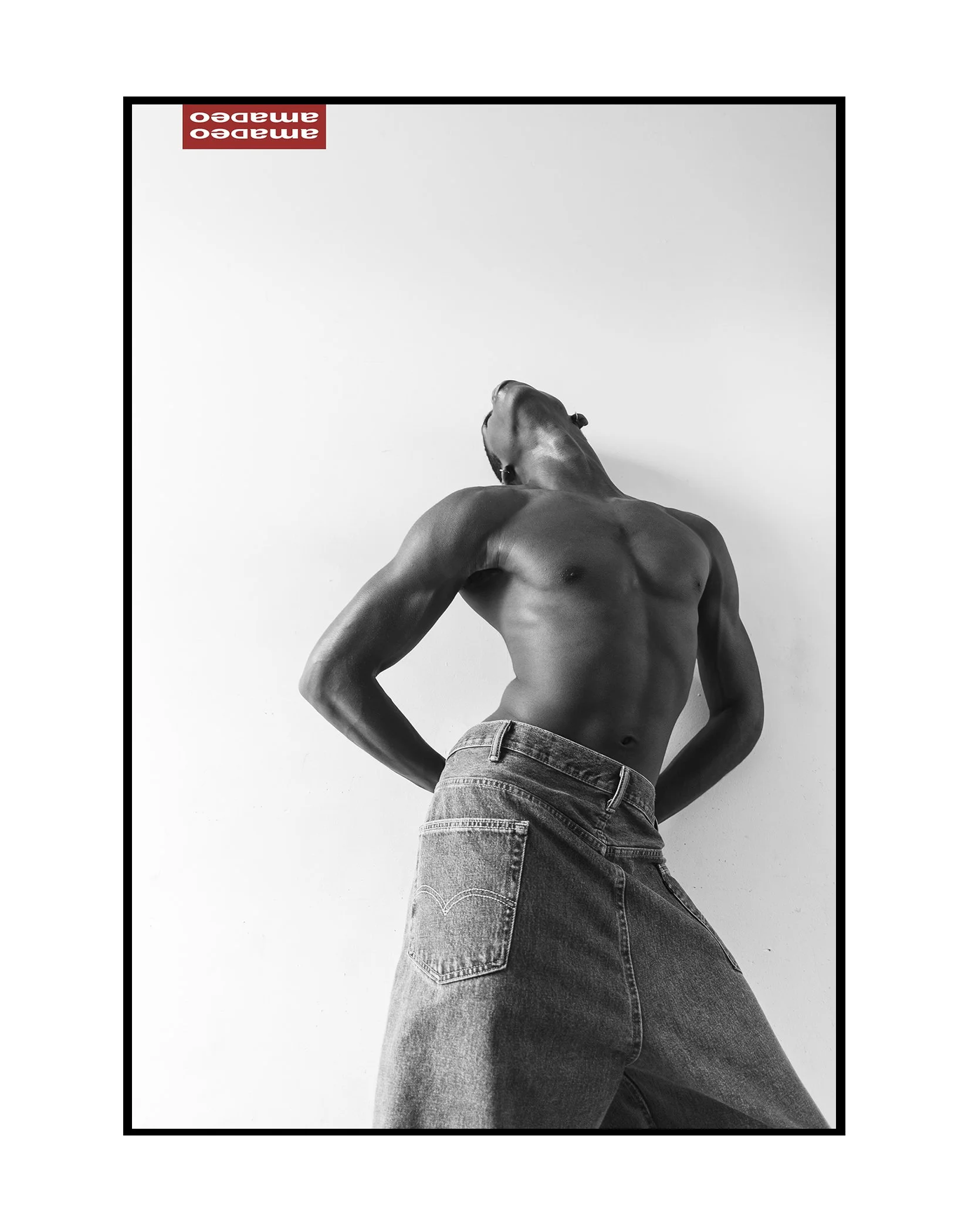
A short reflection on scale, shape, and the feeling of not fitting in. A written piece from Anthony Amadeo—before the images, just the words.
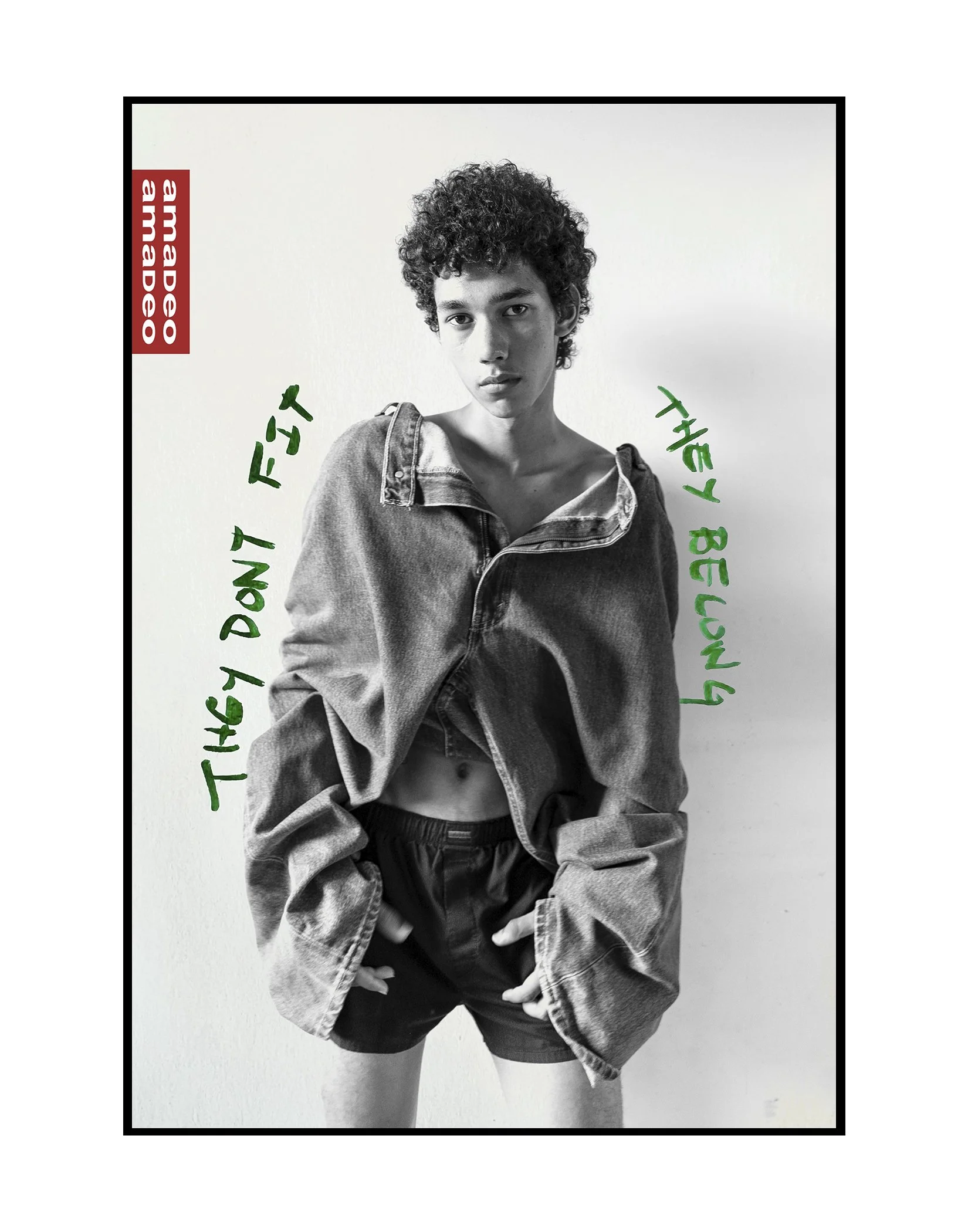
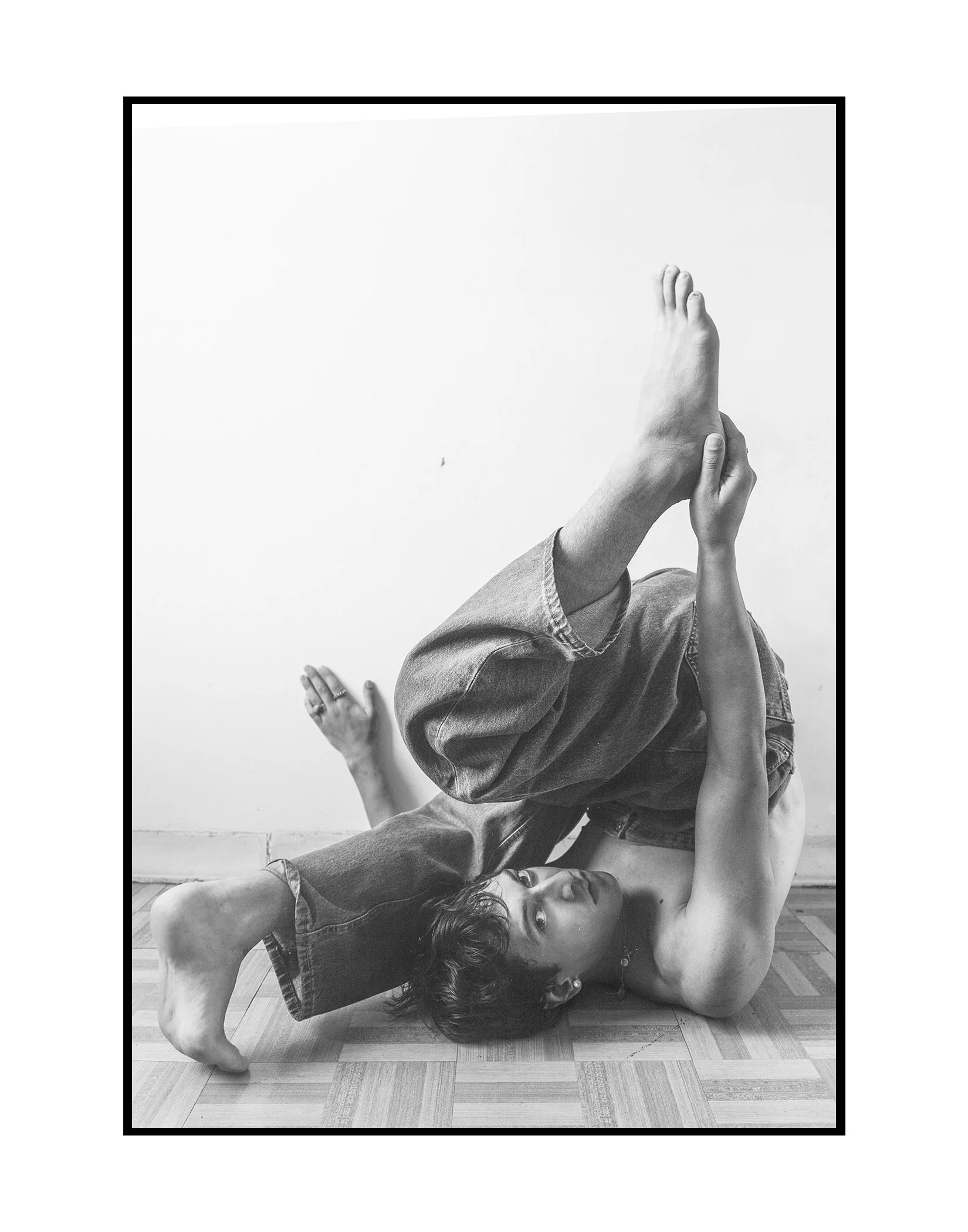
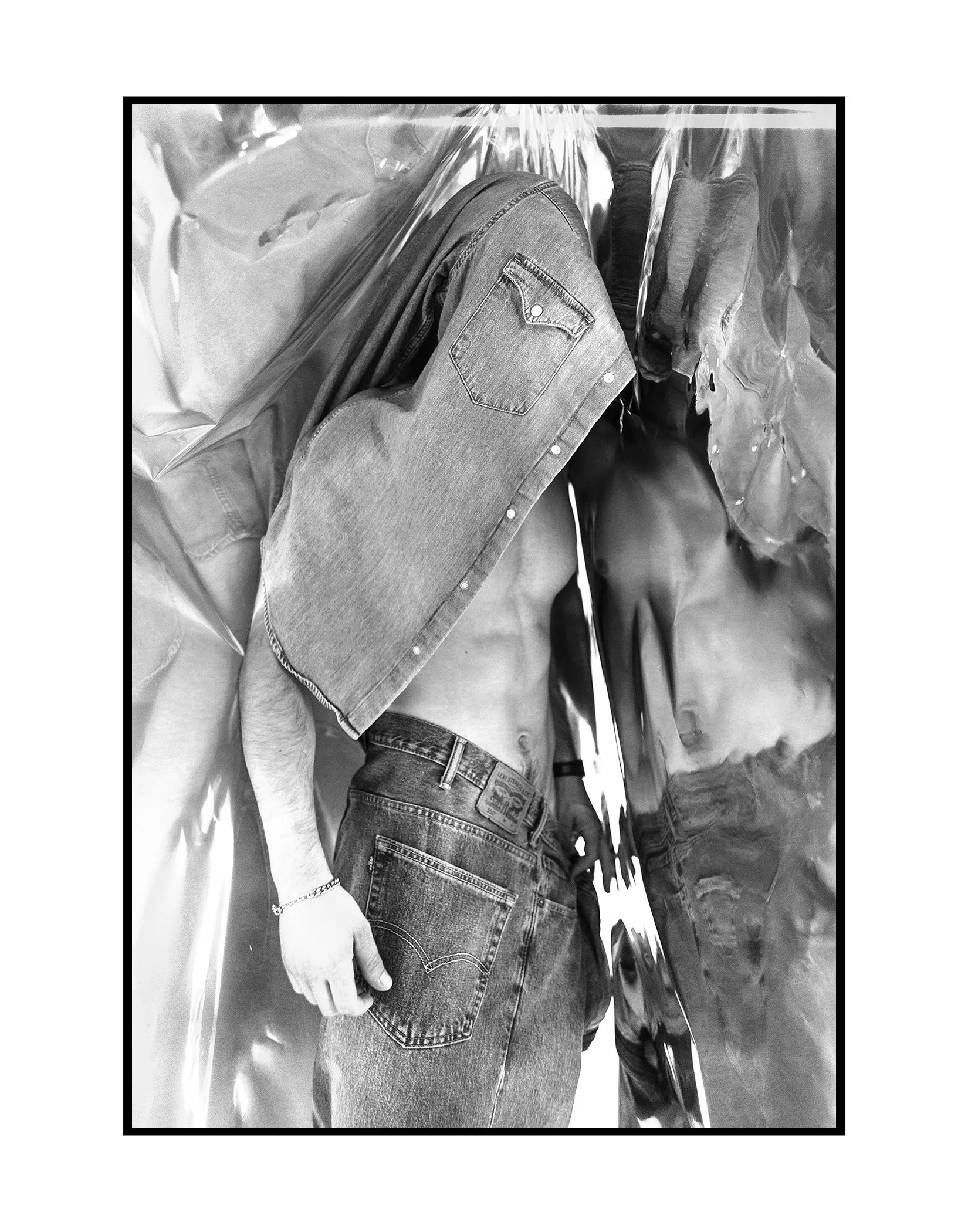
They don’t fit. They belong.
By Anthony Amadeo
Published in The Journal
There was a pair of jeans.
They arrived uninvited.
No tag. No origin. No proof of purchase.
Only folds. Only volume.
They hung like silence.
They draped like history.
They did not fit.
Which, in many circles, would be considered failure.

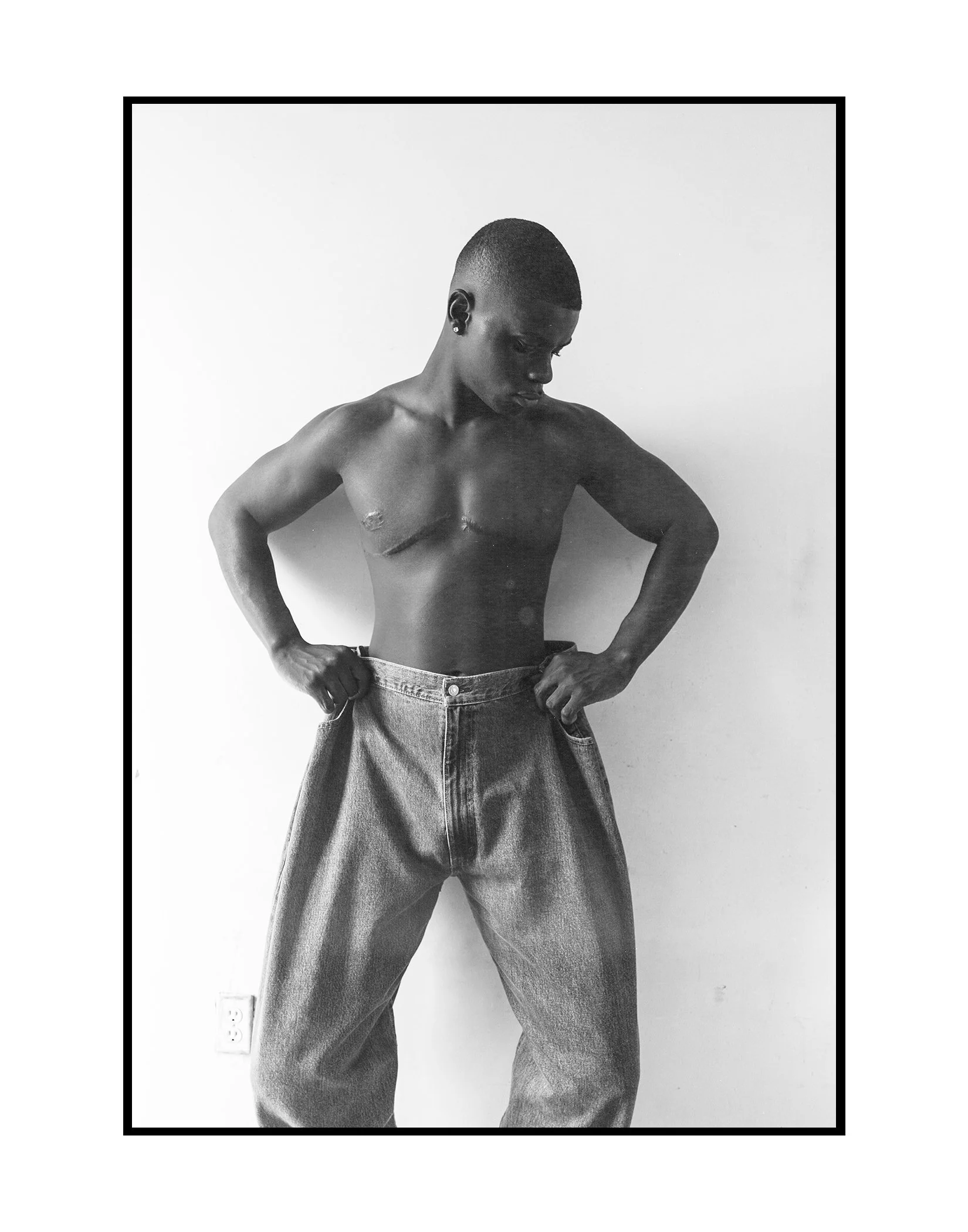

Tailors whispered. Stylists measured.
Photographers blinked.
They tried to make sense of the scale.
“Who are they for?”
“Where are the darts?”
“Should we hem them?”
The answer was no.
The answer was not now.
The answer was: they already are.
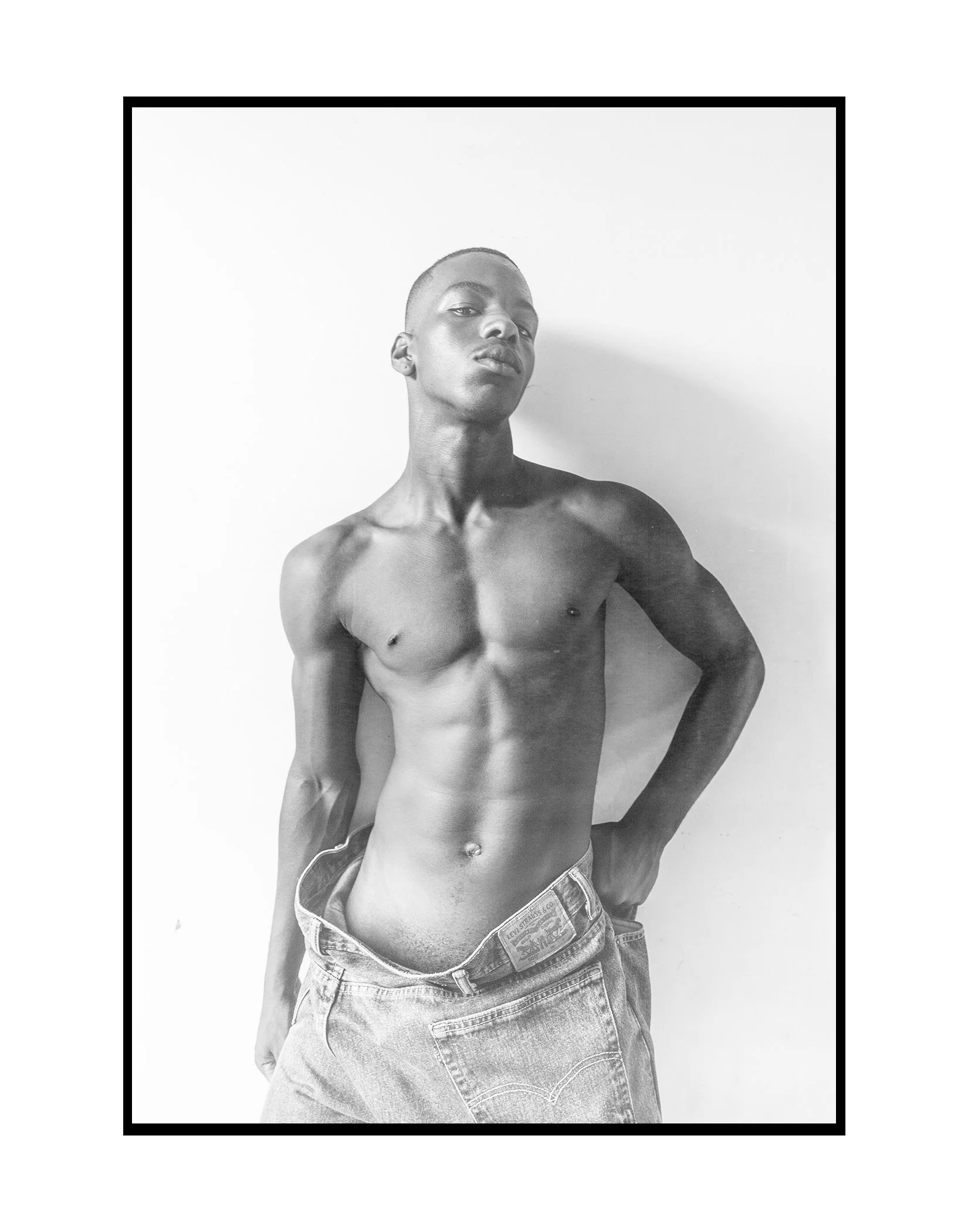
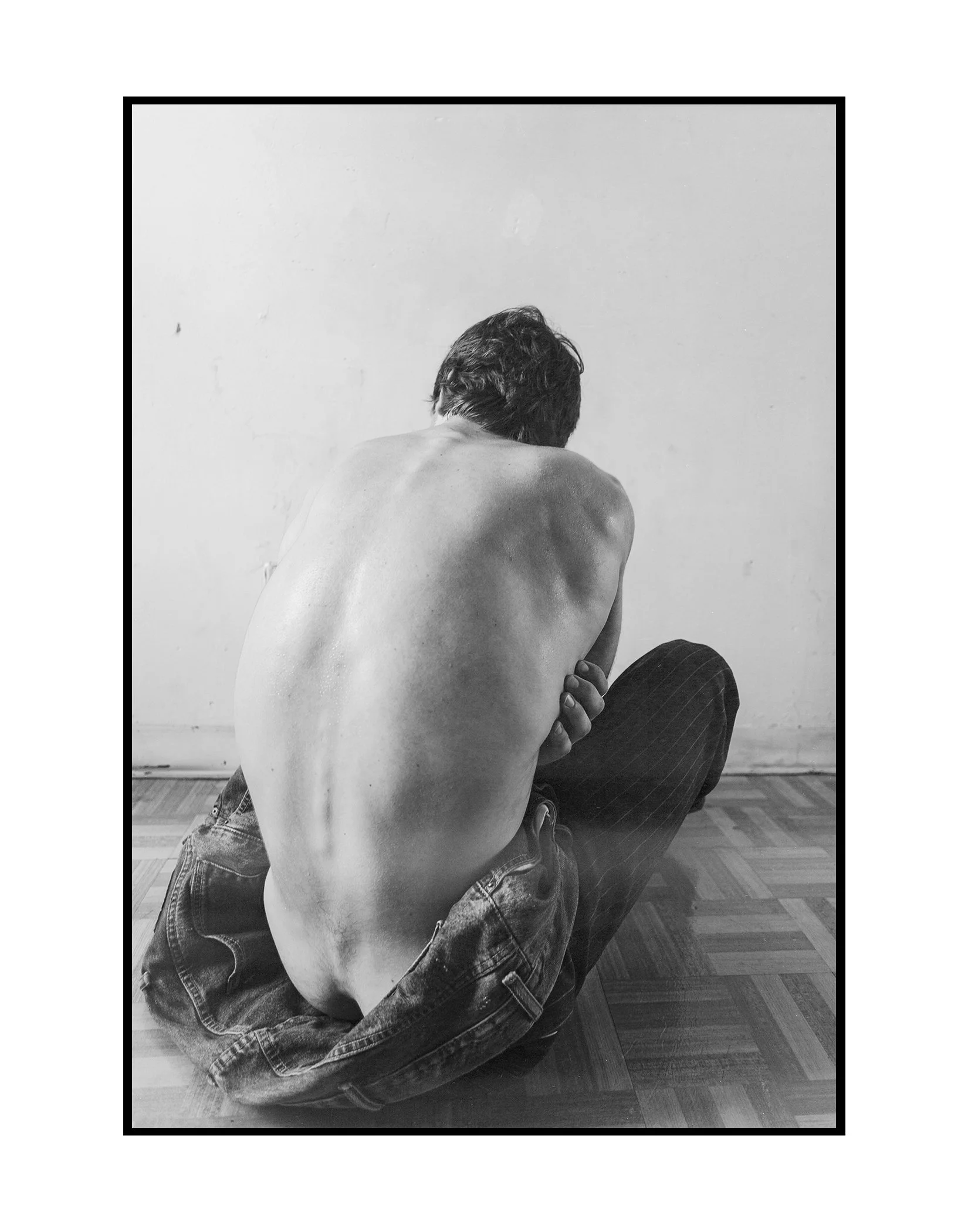
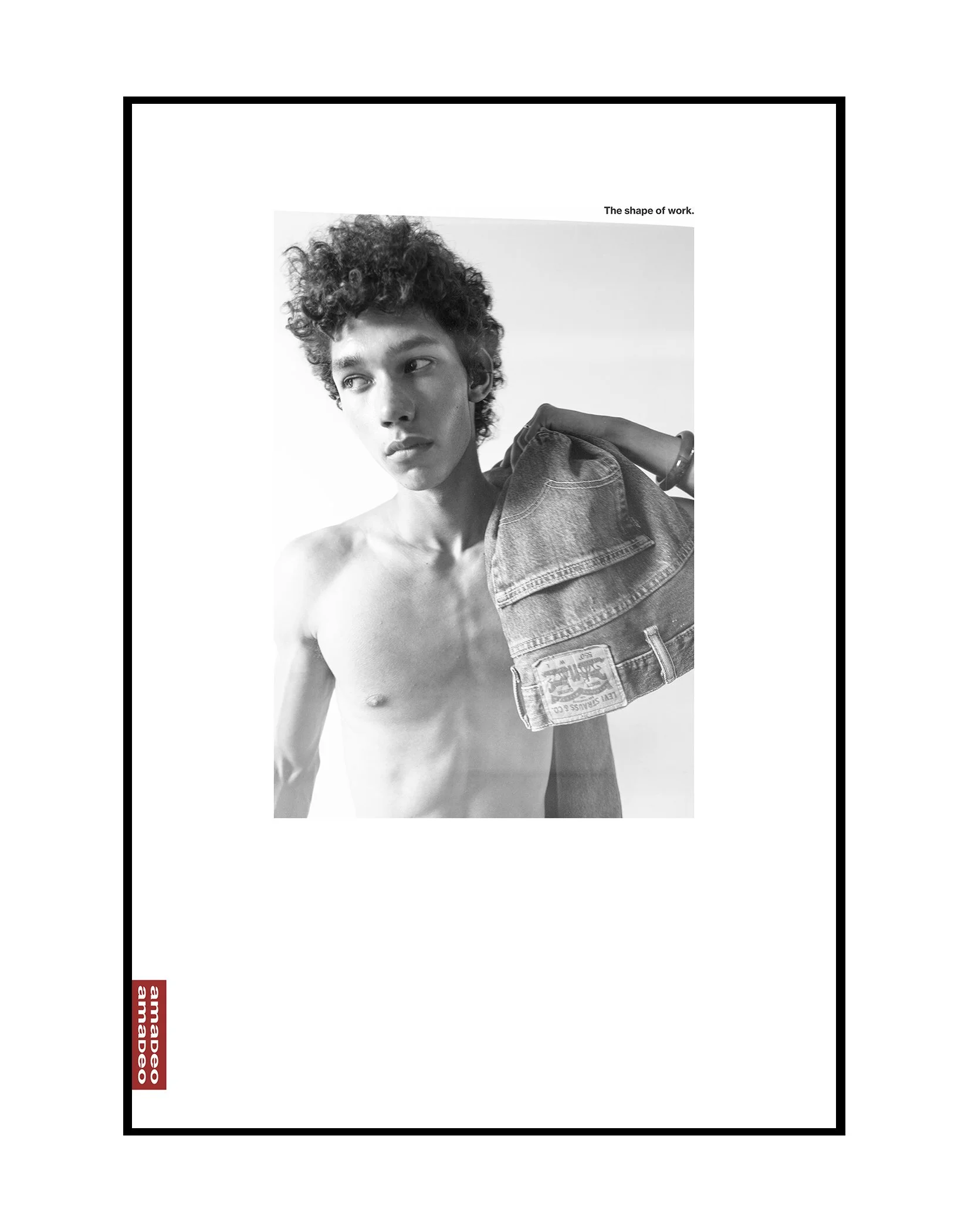
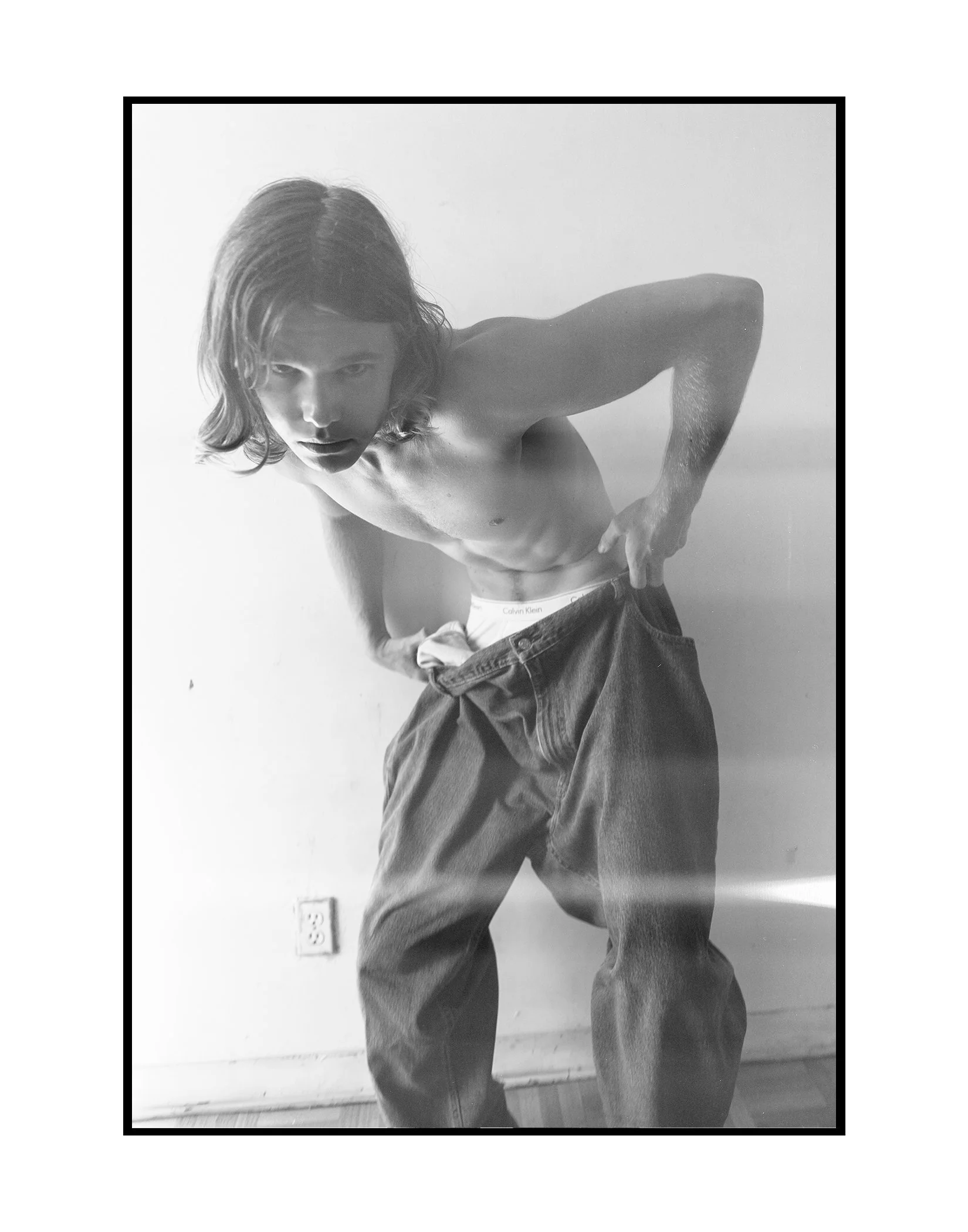
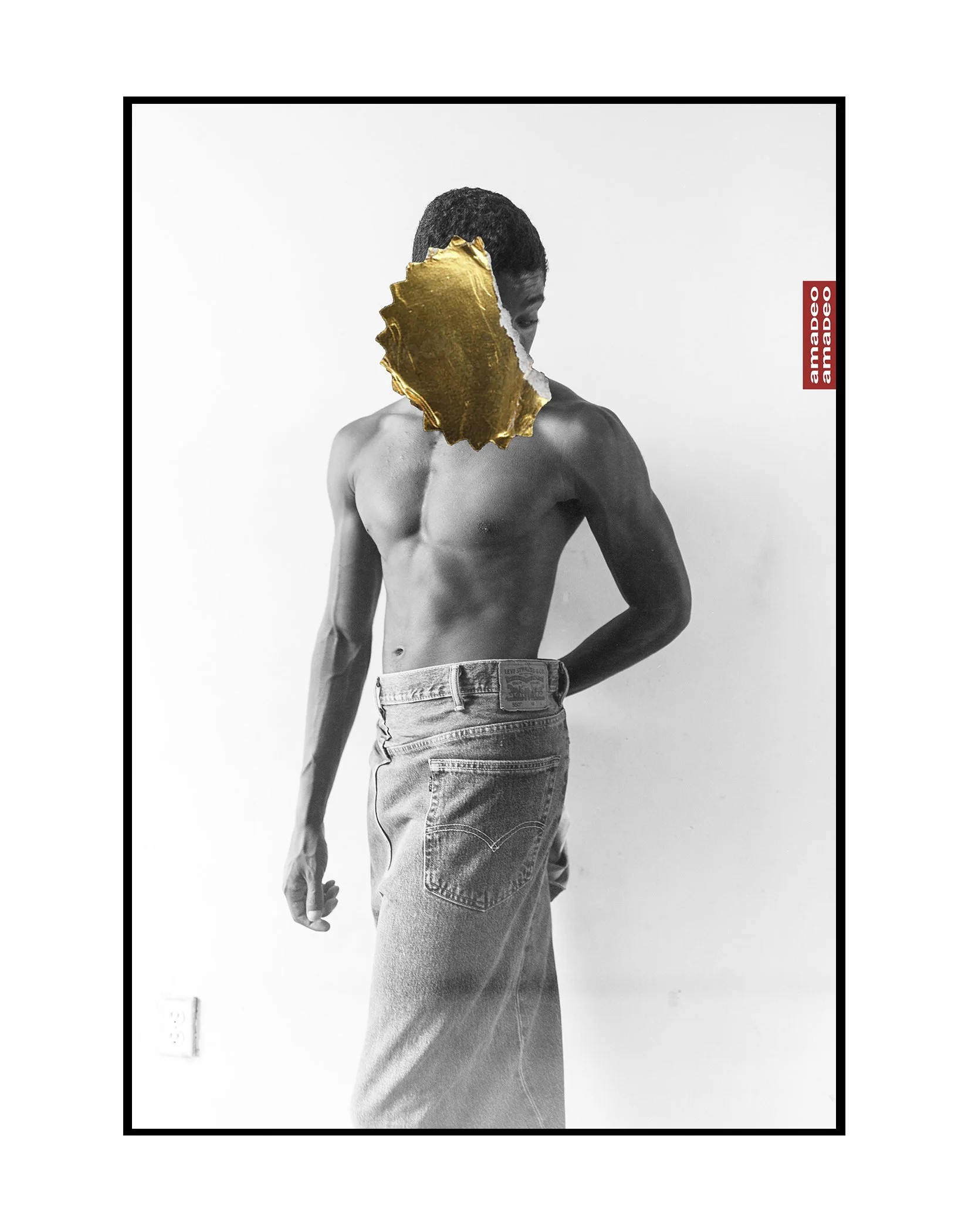

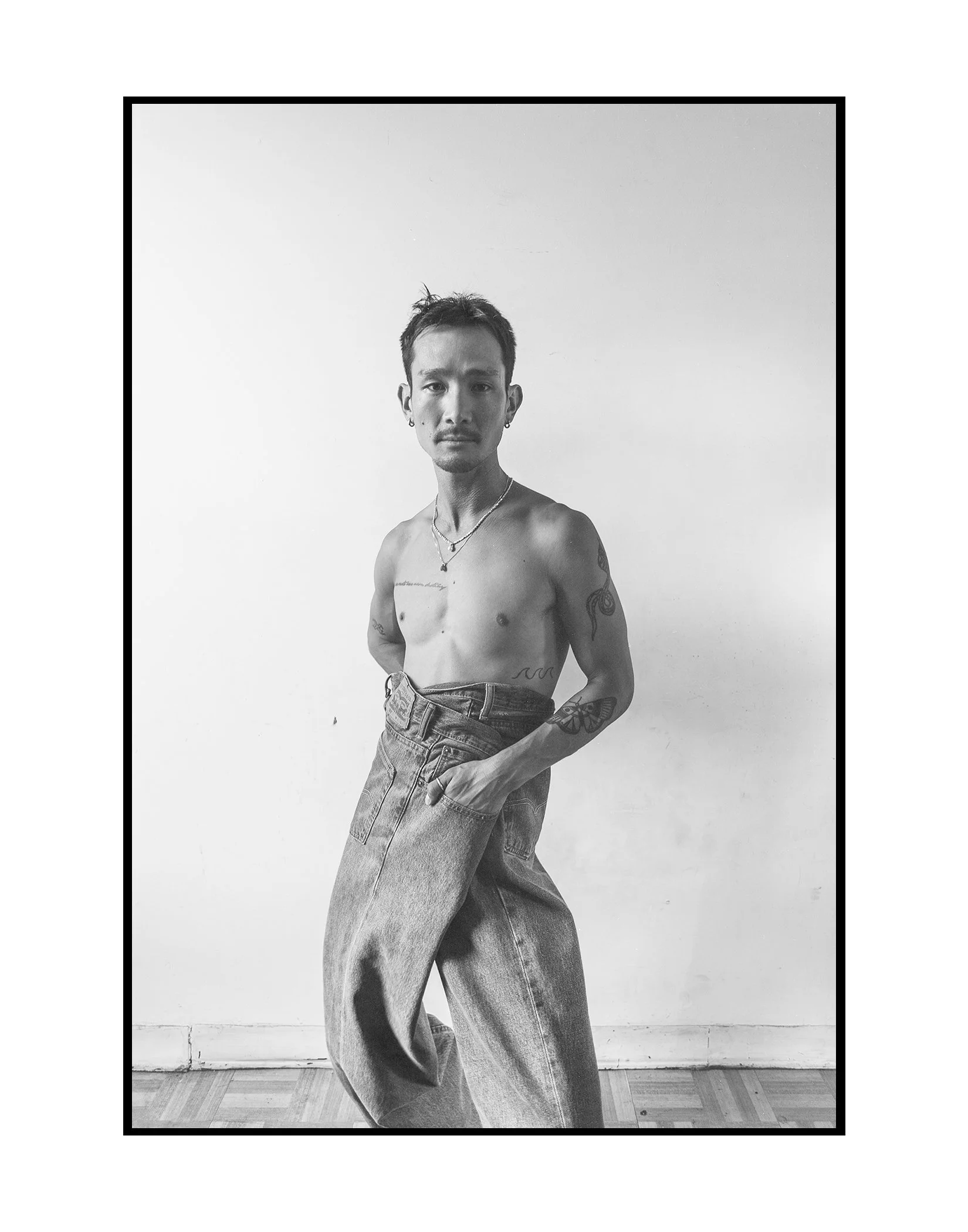
You see, the Giant Jeans weren’t made to flatter.
They were made to frame.
They weren’t worn to impress.
They were worn to exist.
Not a fit—an environment.
Not a garment—a gesture.
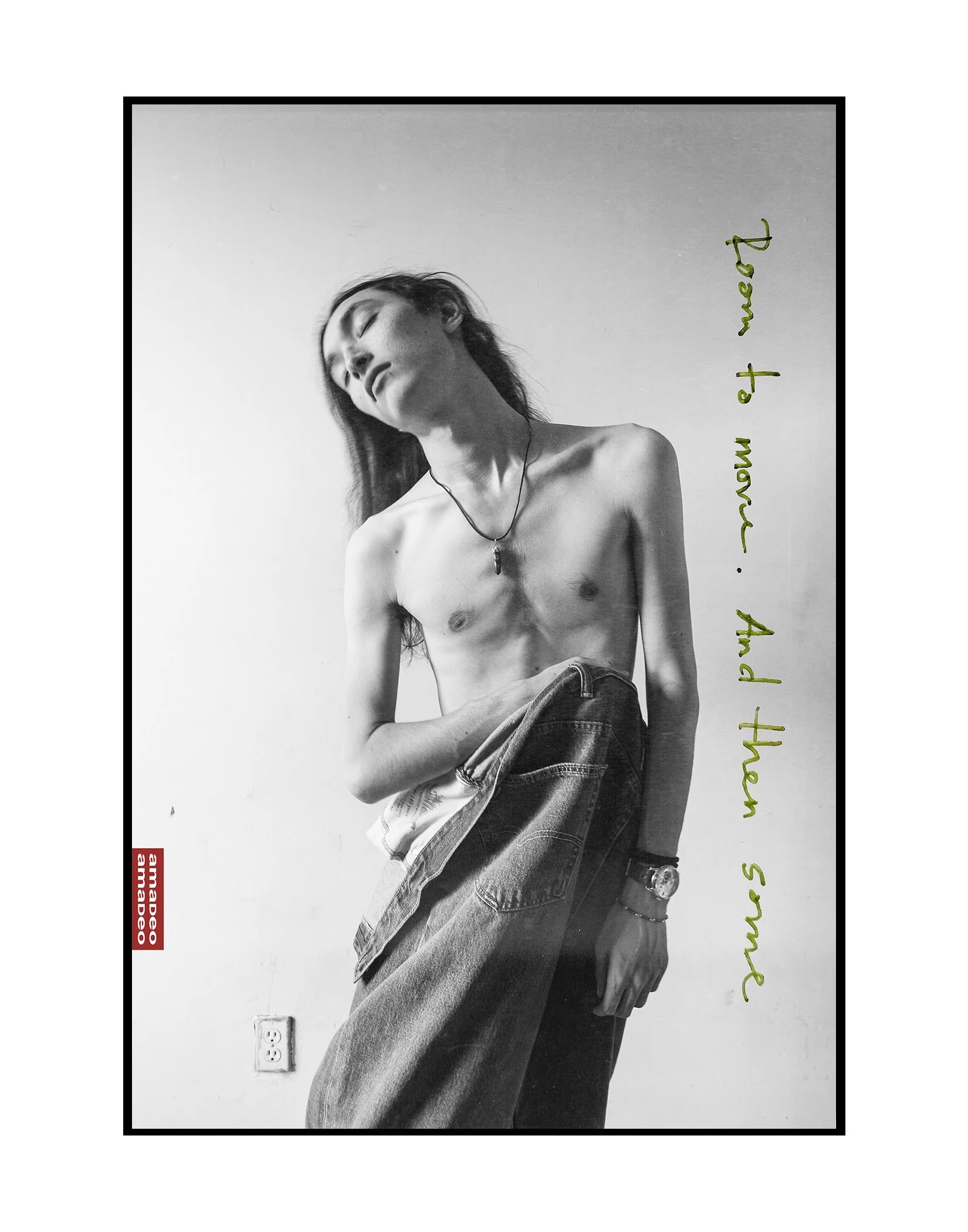
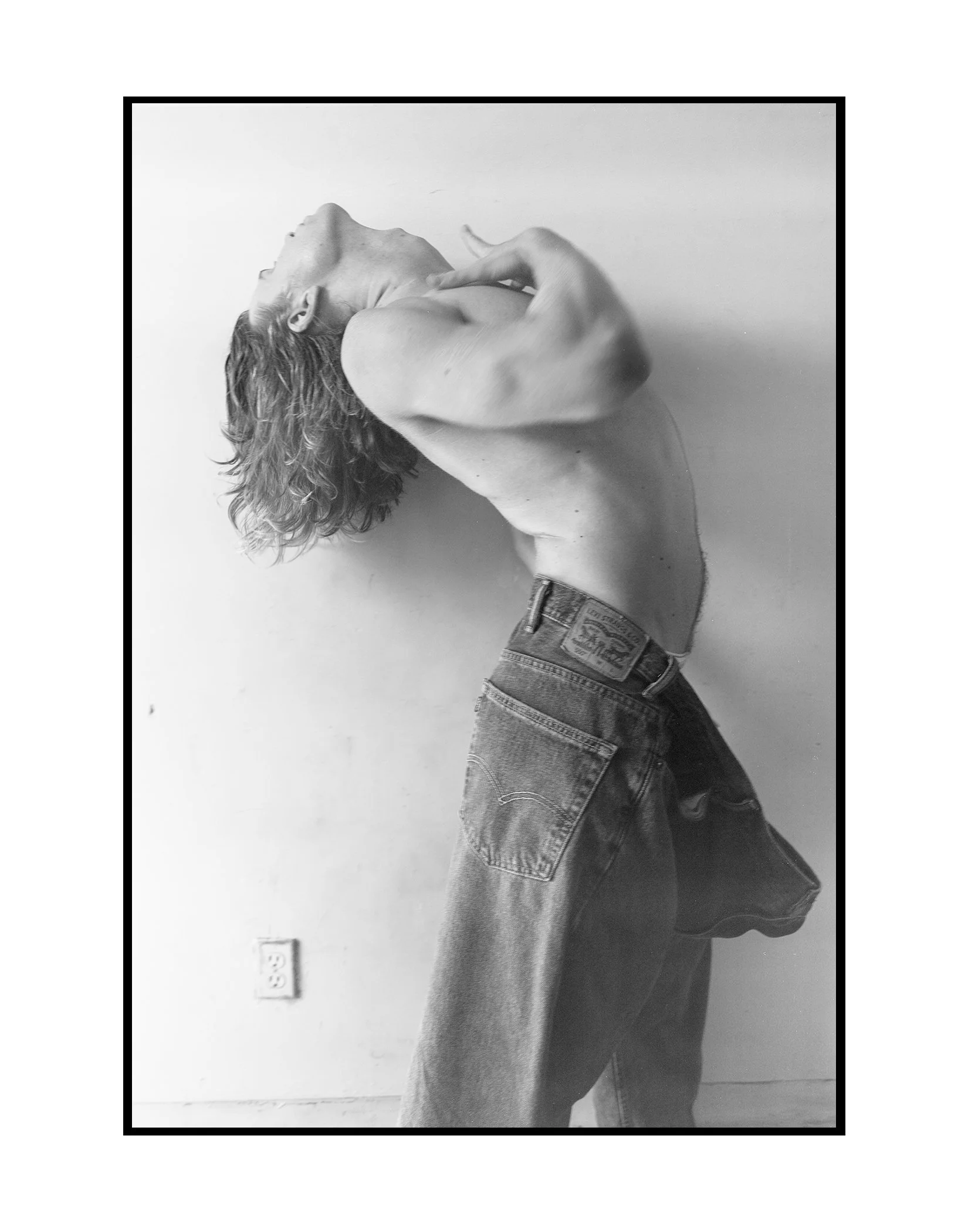
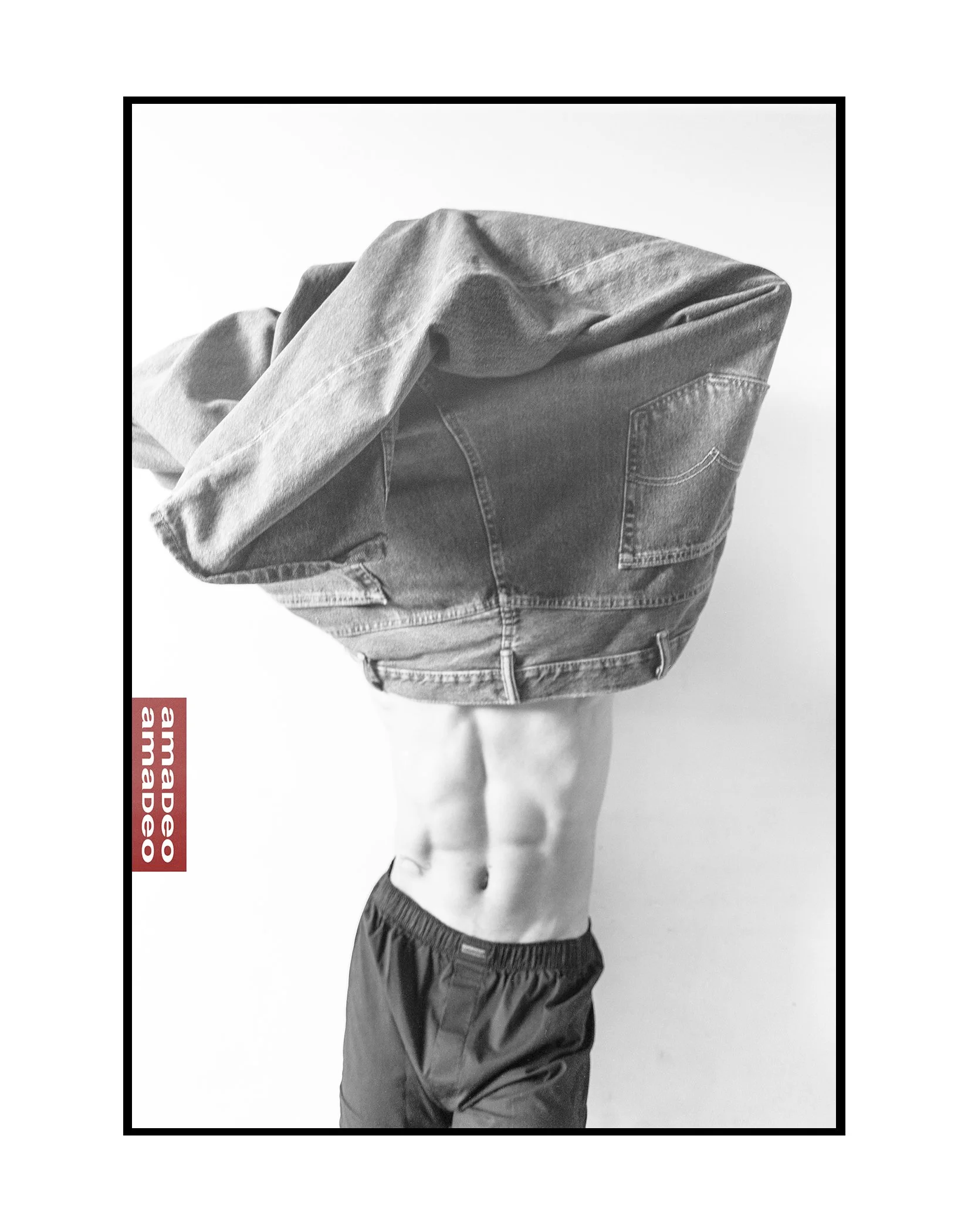

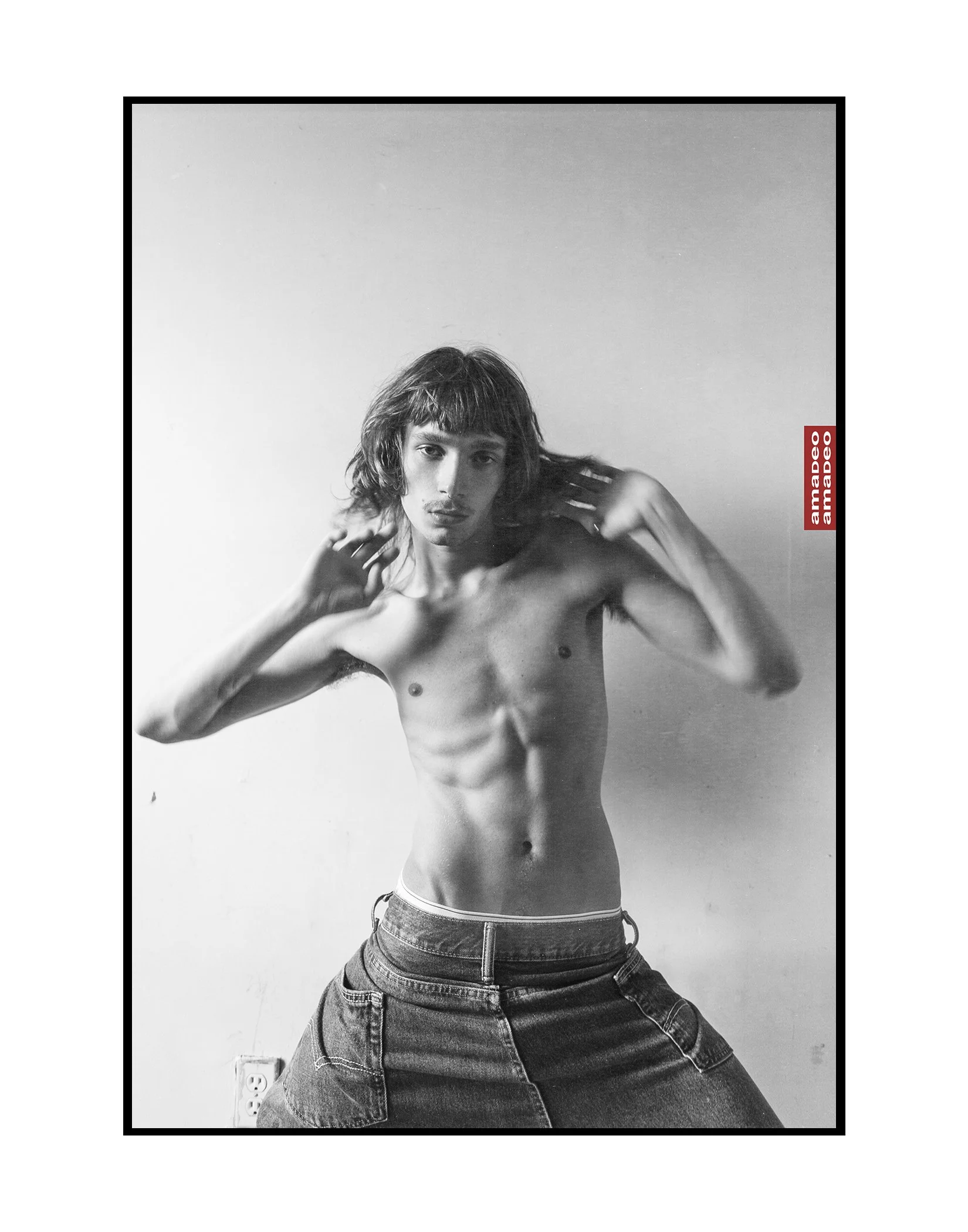
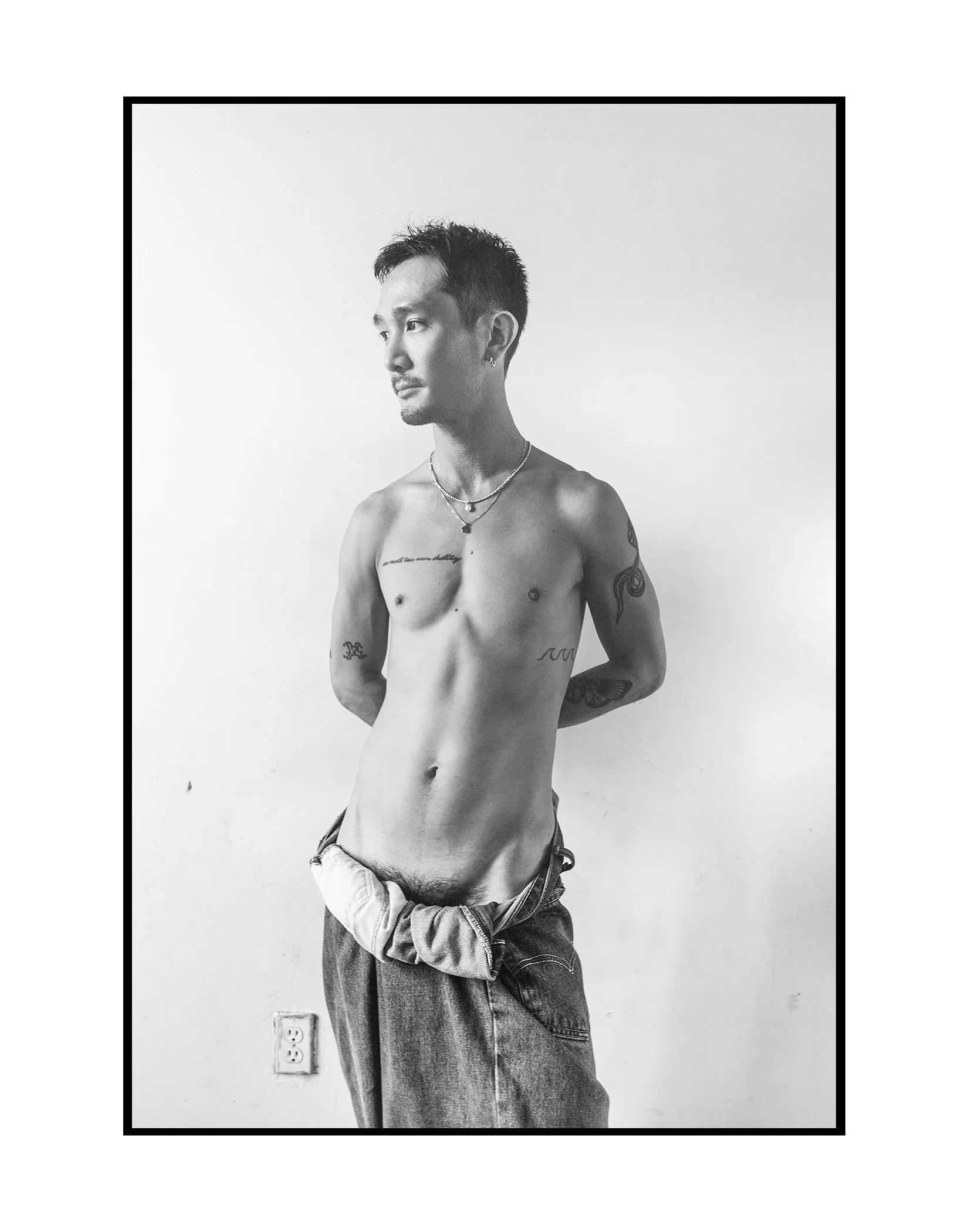

They moved through light like a second shadow.
They swallowed knees, hugged air, trailed behind like stories.
No one knew how to wear them “correctly.”
And yet, every body they touched looked... correct.

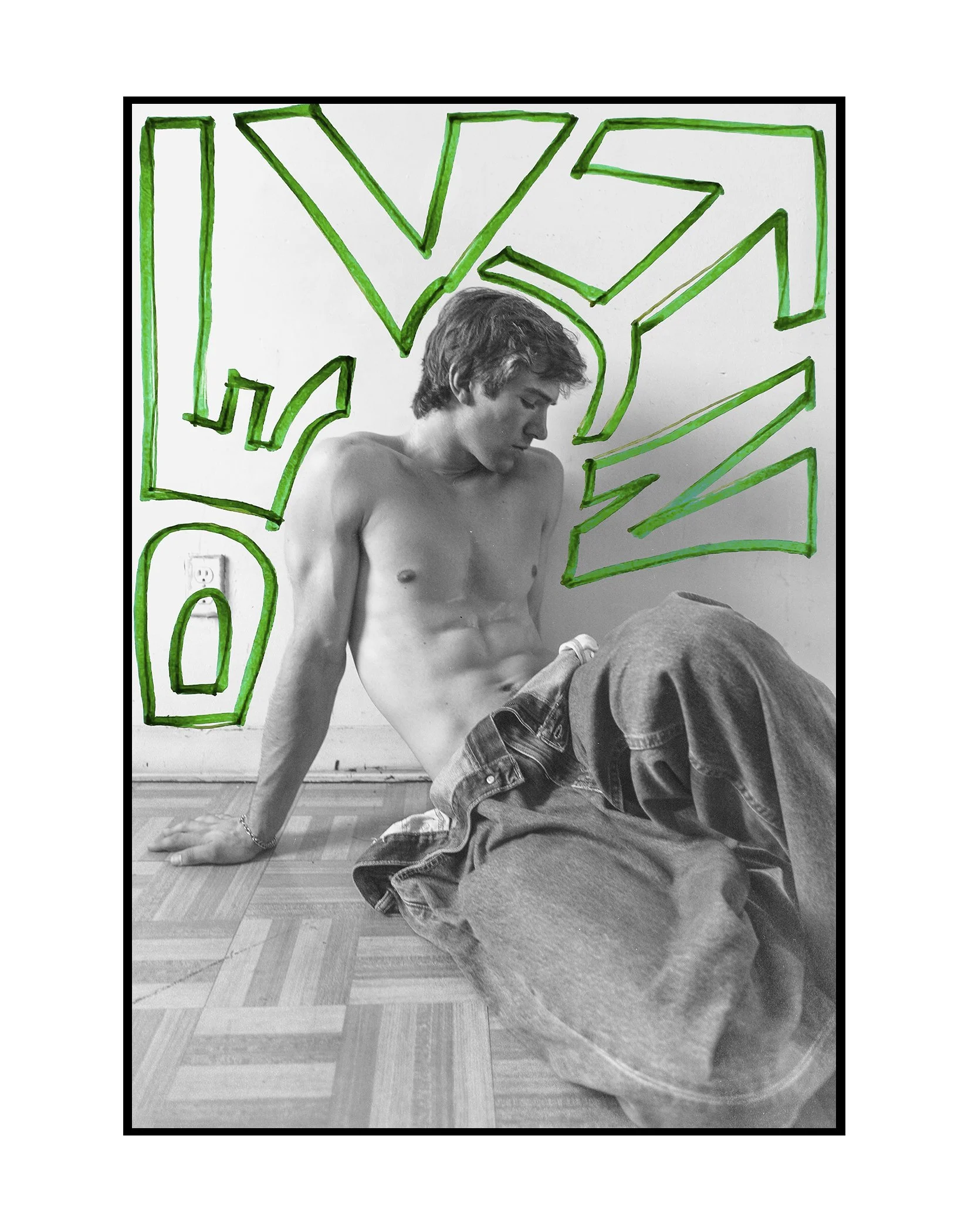


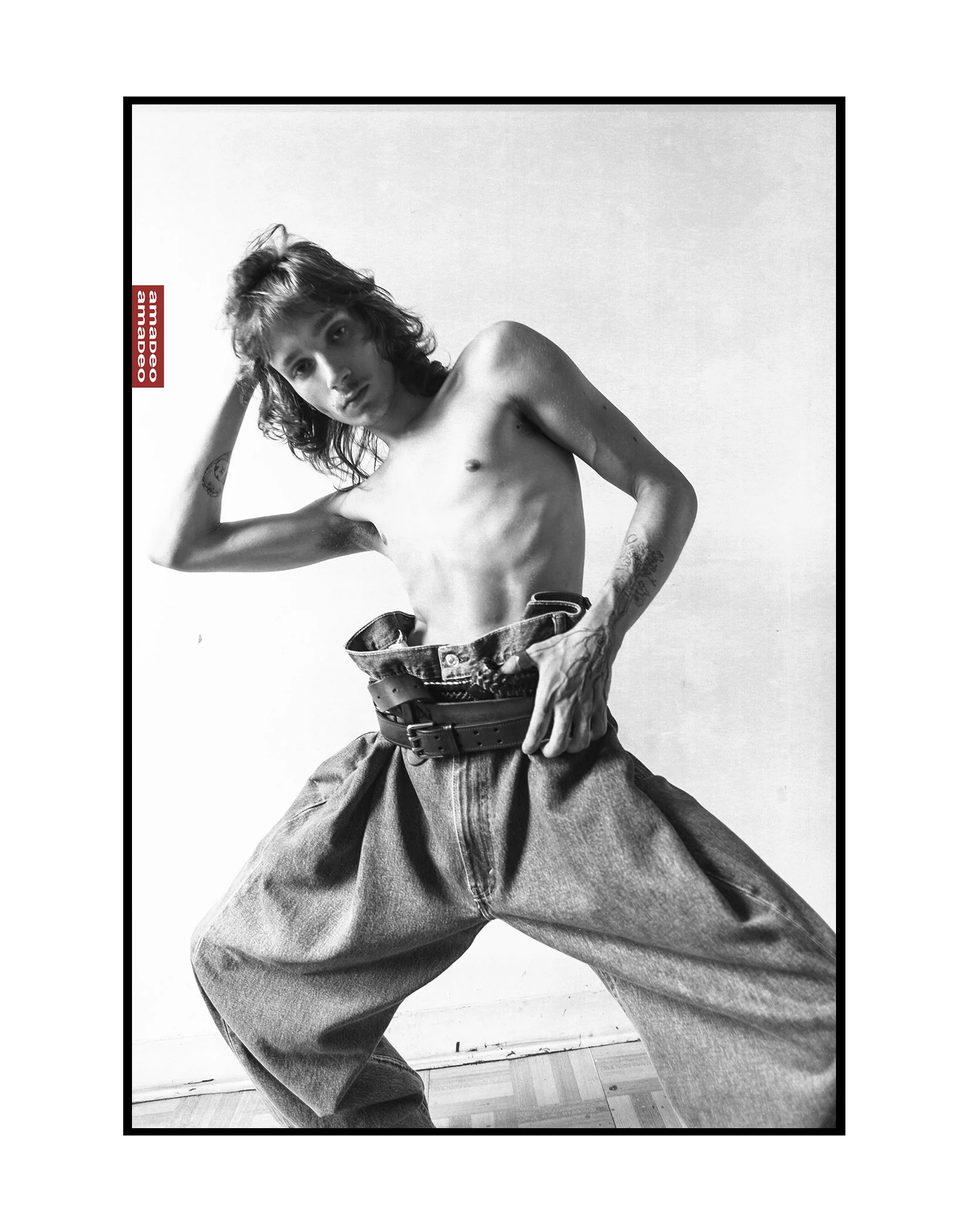

People began to talk.
Theorists. Teenagers.
Former models turned archivists.
They said the jeans weren’t real.
They said the photos were fake.
They said no one would make jeans that didn’t fit.
But they were wrong.
Or they were right.
Or both.
Because maybe the point was never to fit.
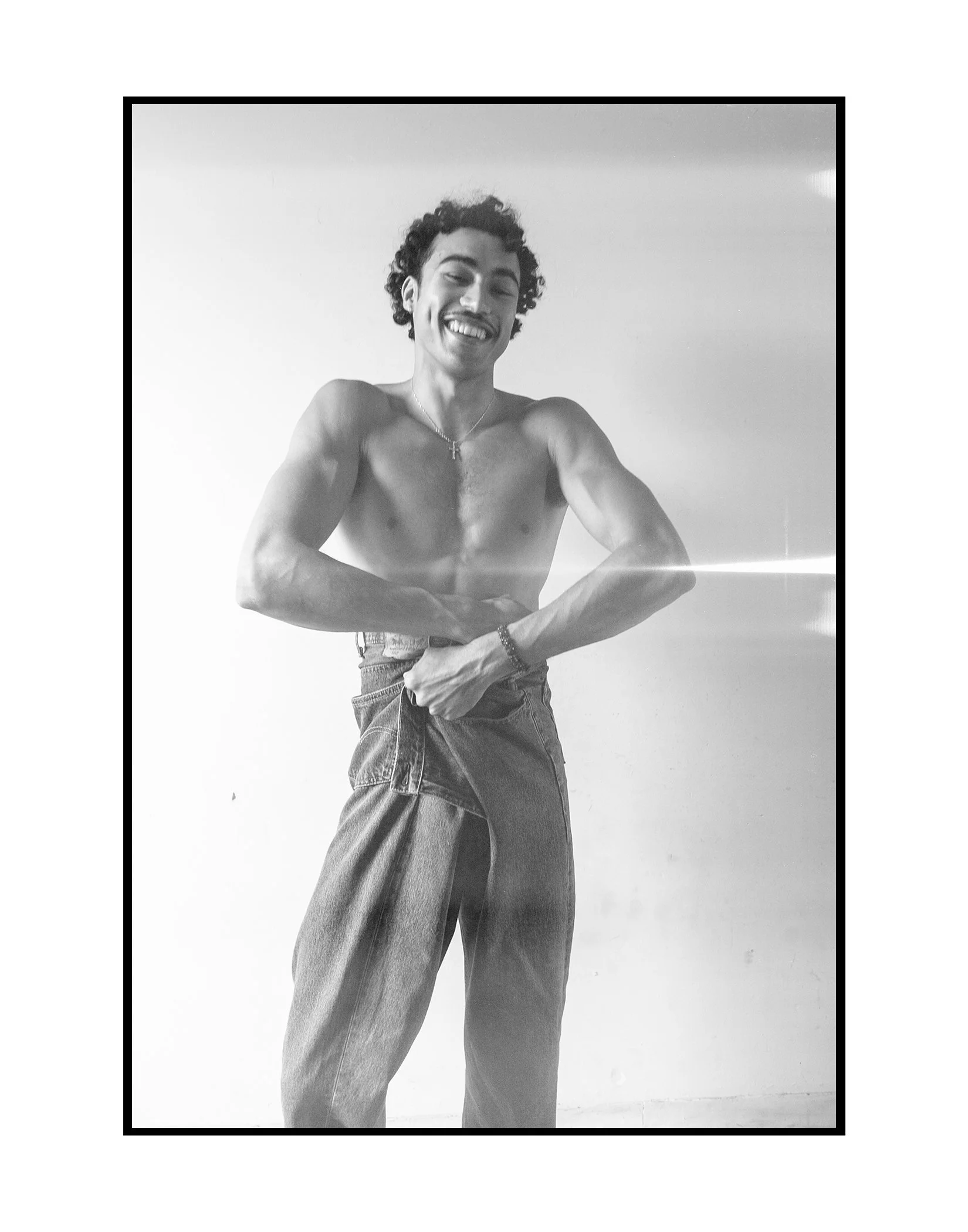
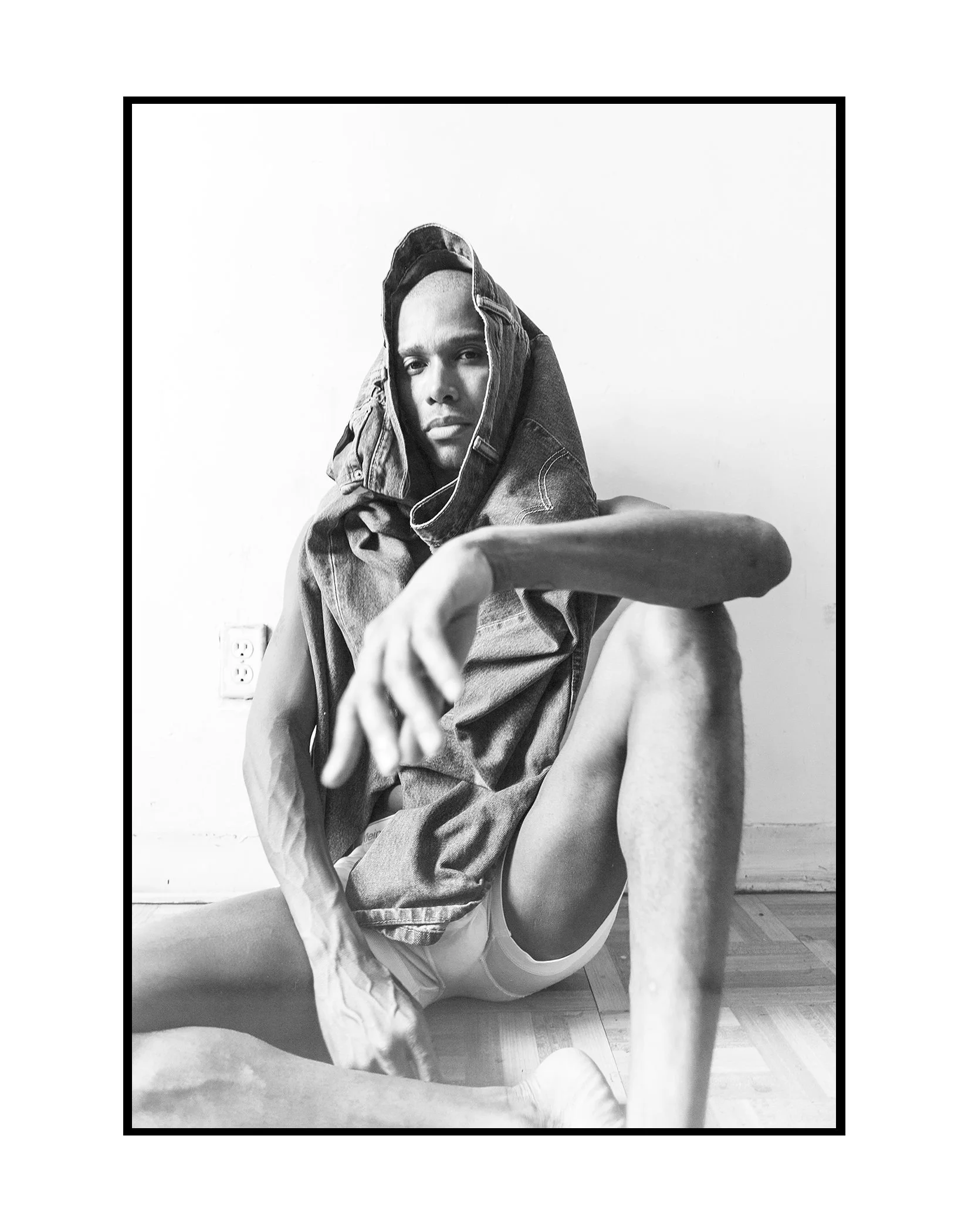
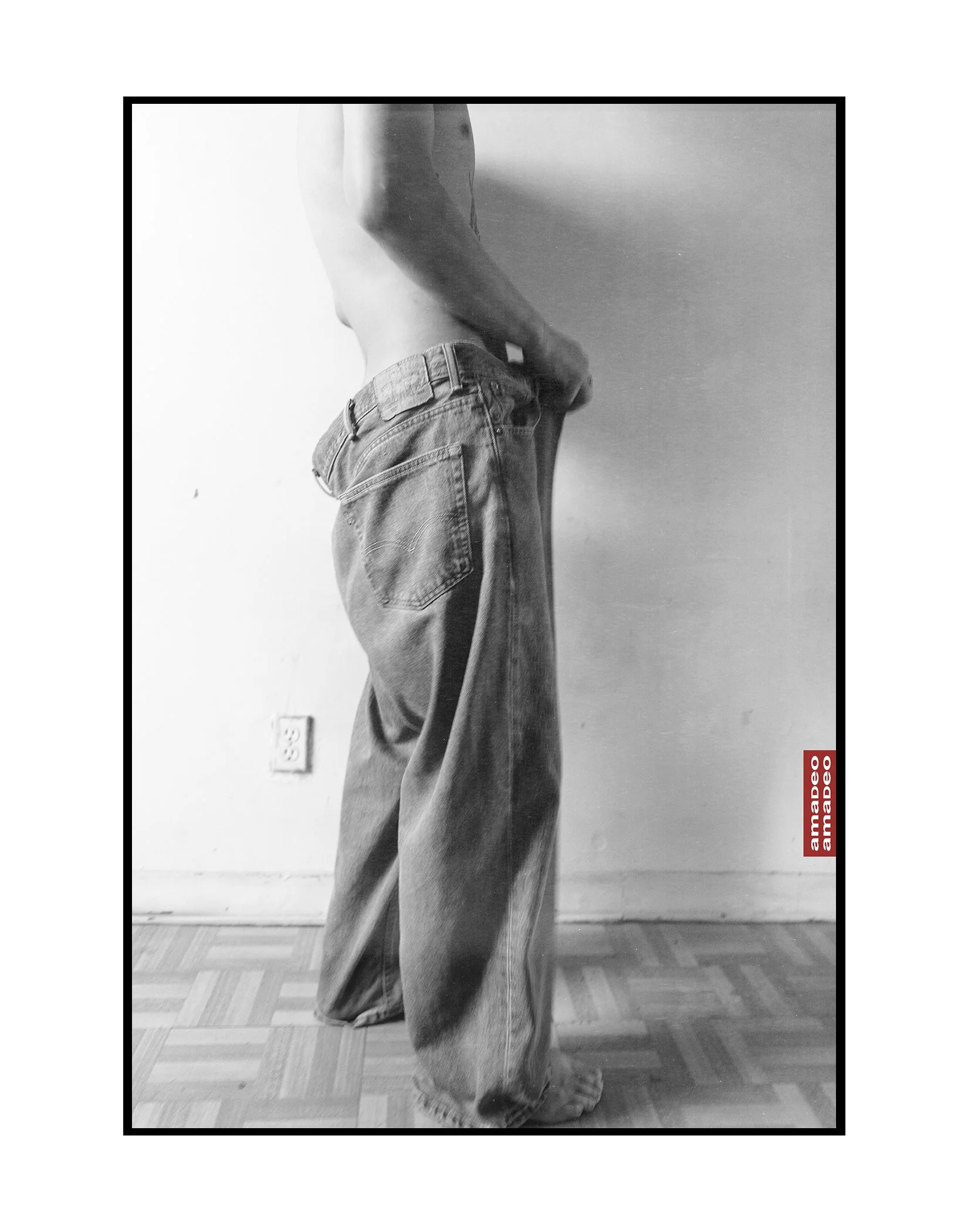
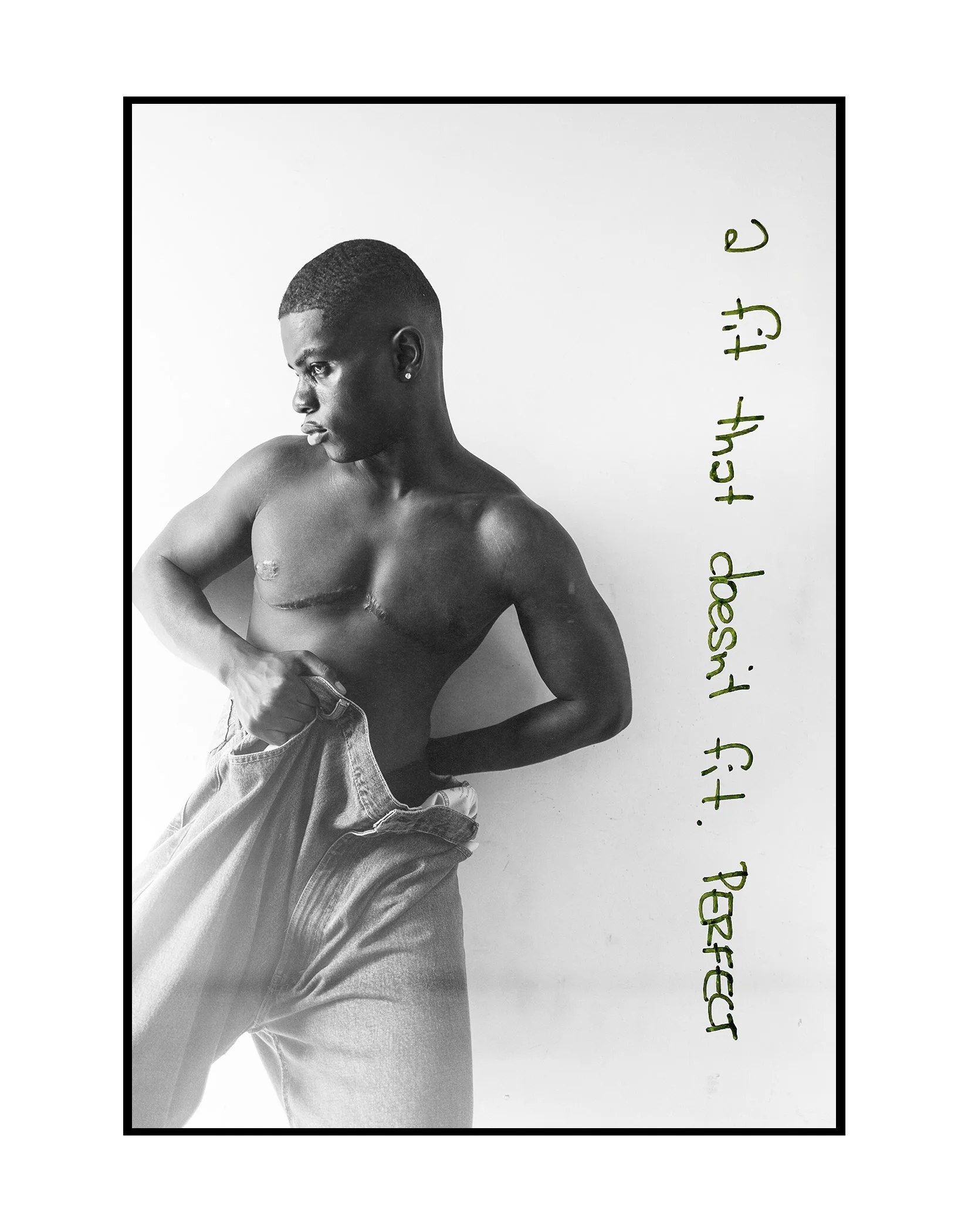
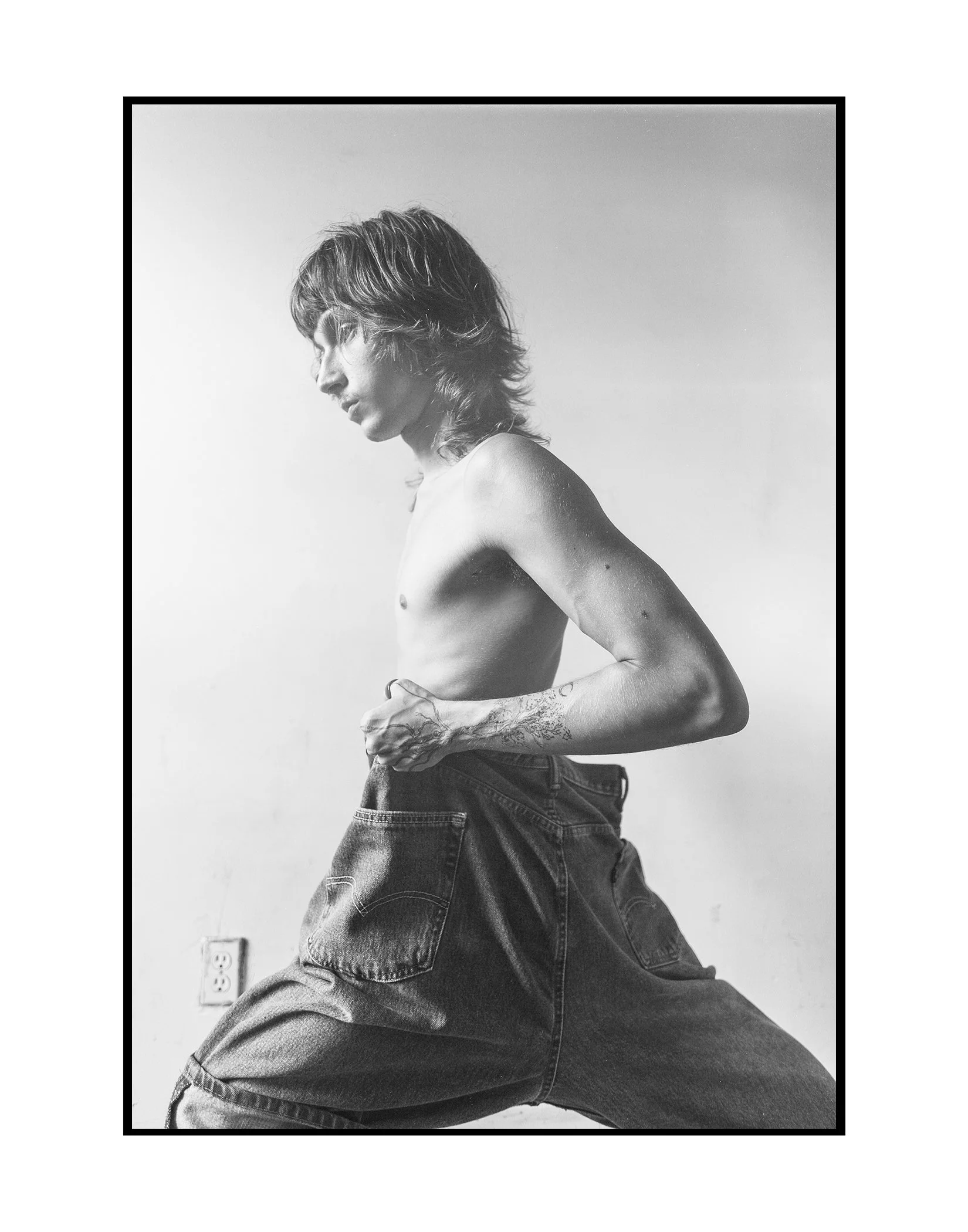
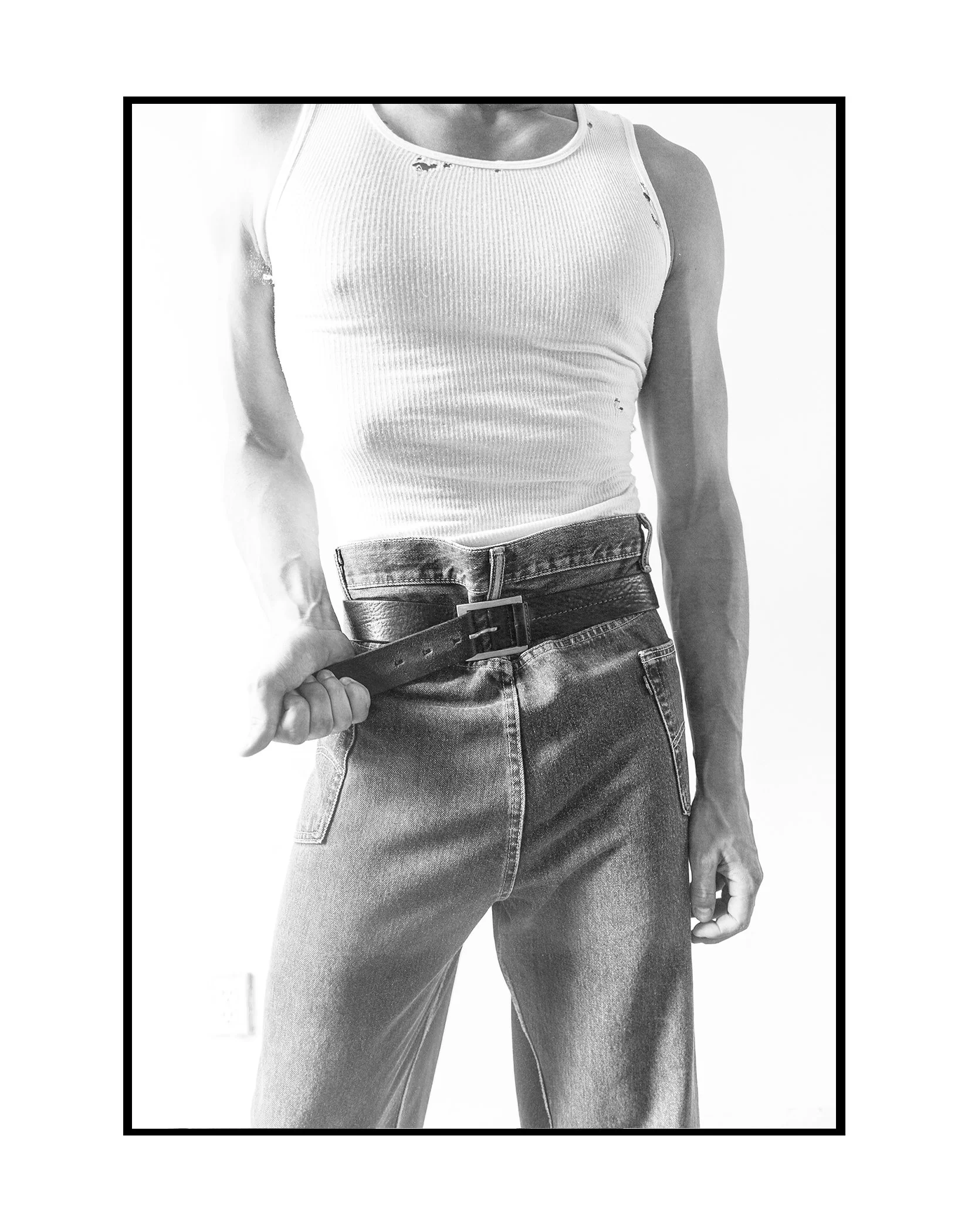
The campaign, if we’re calling it that, isn’t about jeans.
It’s about proportions that don’t apologize.
It’s about shape without shame.
It’s about showing up exactly as you are—too big, too loud, too much—and realizing:
You belonged here the whole time.
You were the fit.

Let the others tailor themselves into silence.
Let them cinch and compress and conform.
Let them ask what size you wear.
You don’t answer.
You walk.
In Giant Jeans.
Moving like a fact.
Unfolding into the space that was always yours.
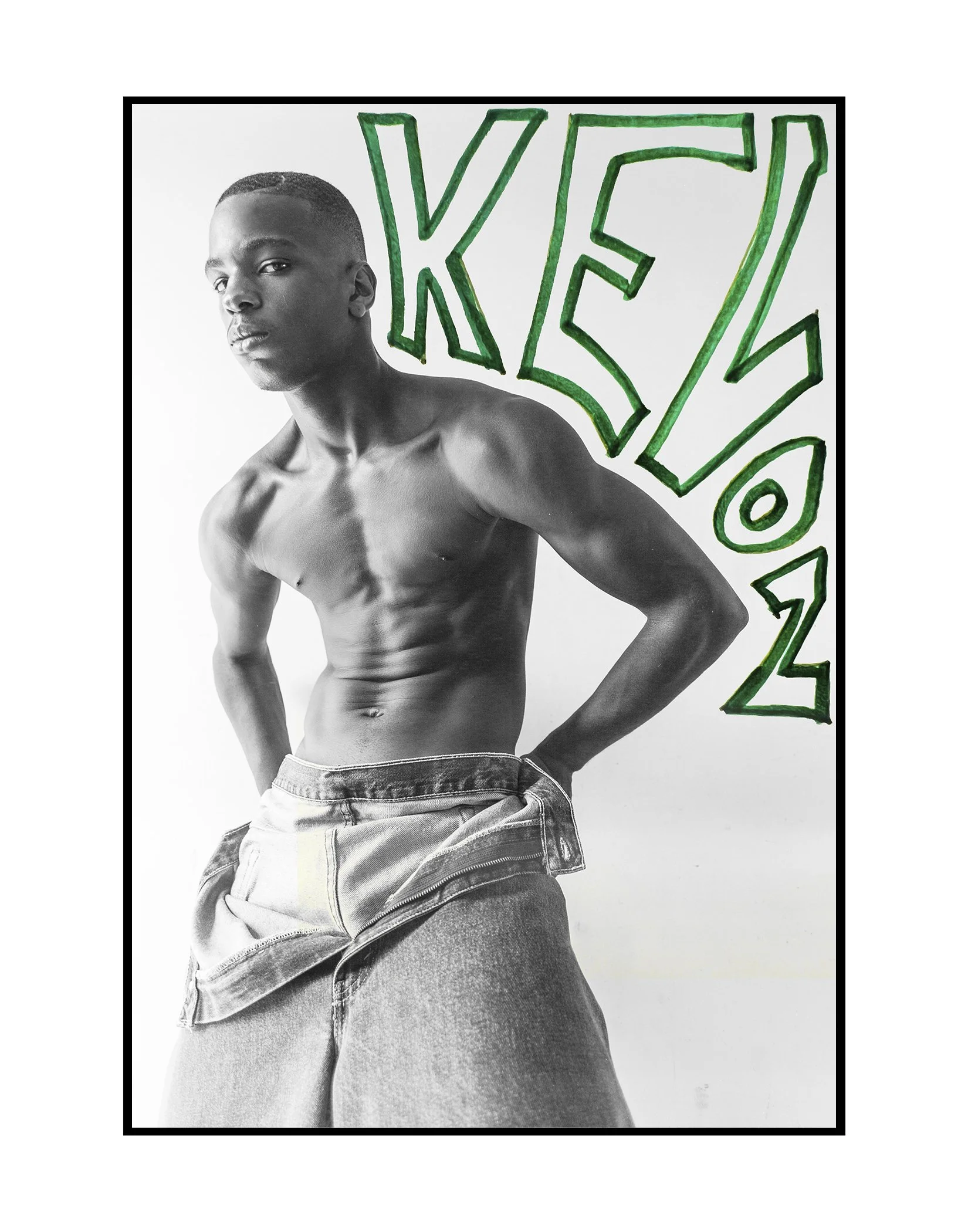
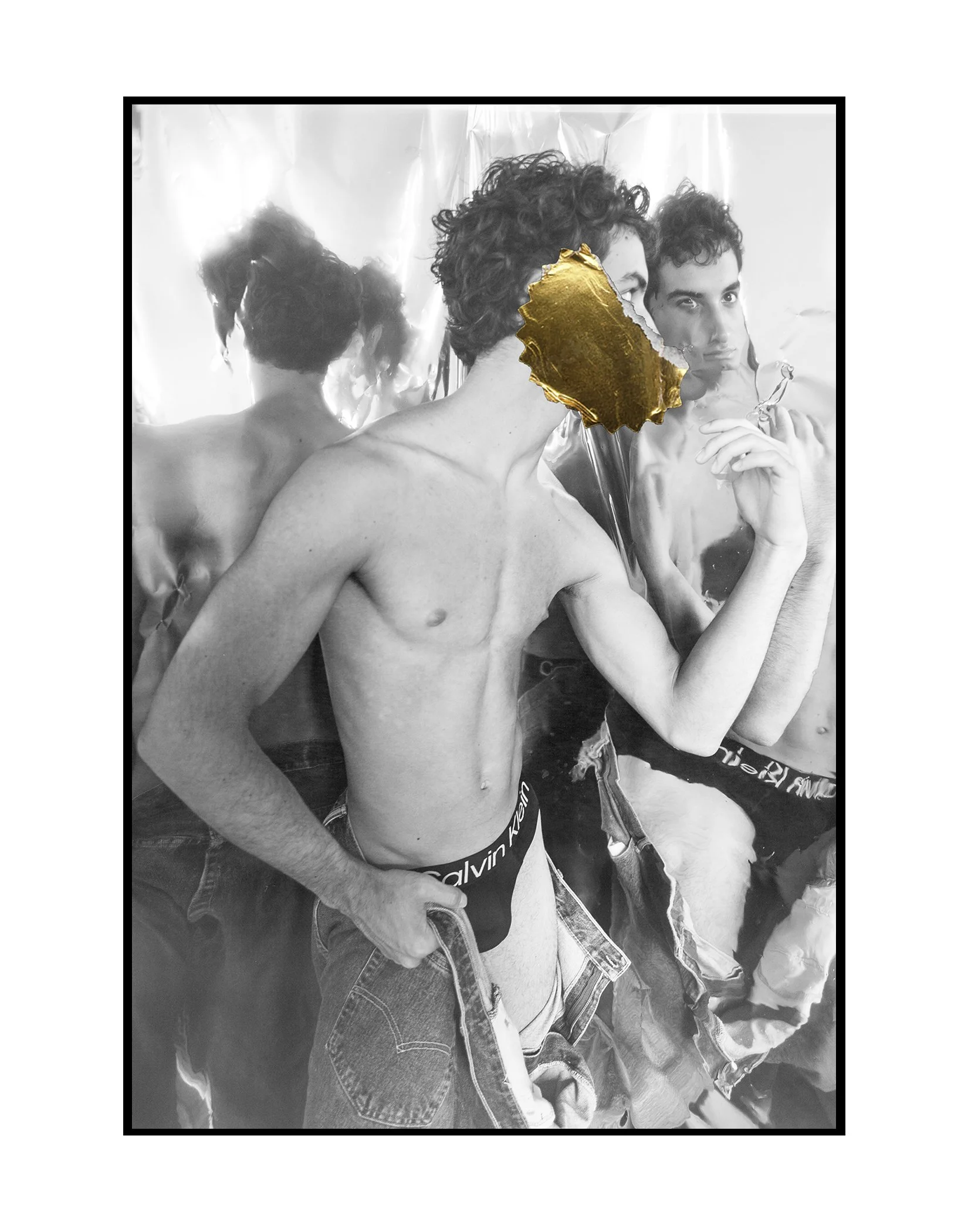
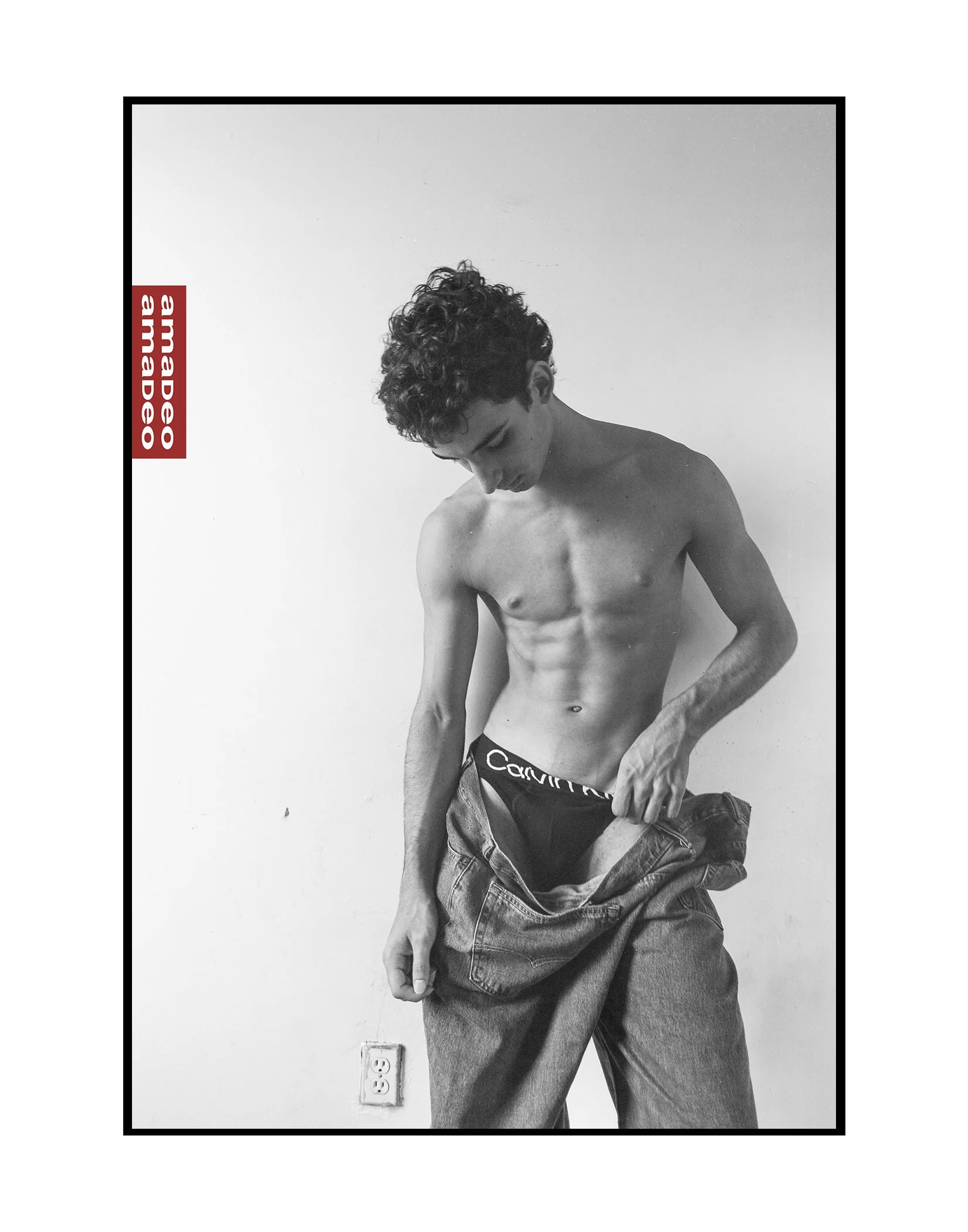
Photography + Art Direction by Anthony Amadeo
@anthonyxamadeo | @amadeoxamadeo
This is not a campaign. This is a confirmation.

amadeo amadeo: The Journal (SUMMER ISSUE)
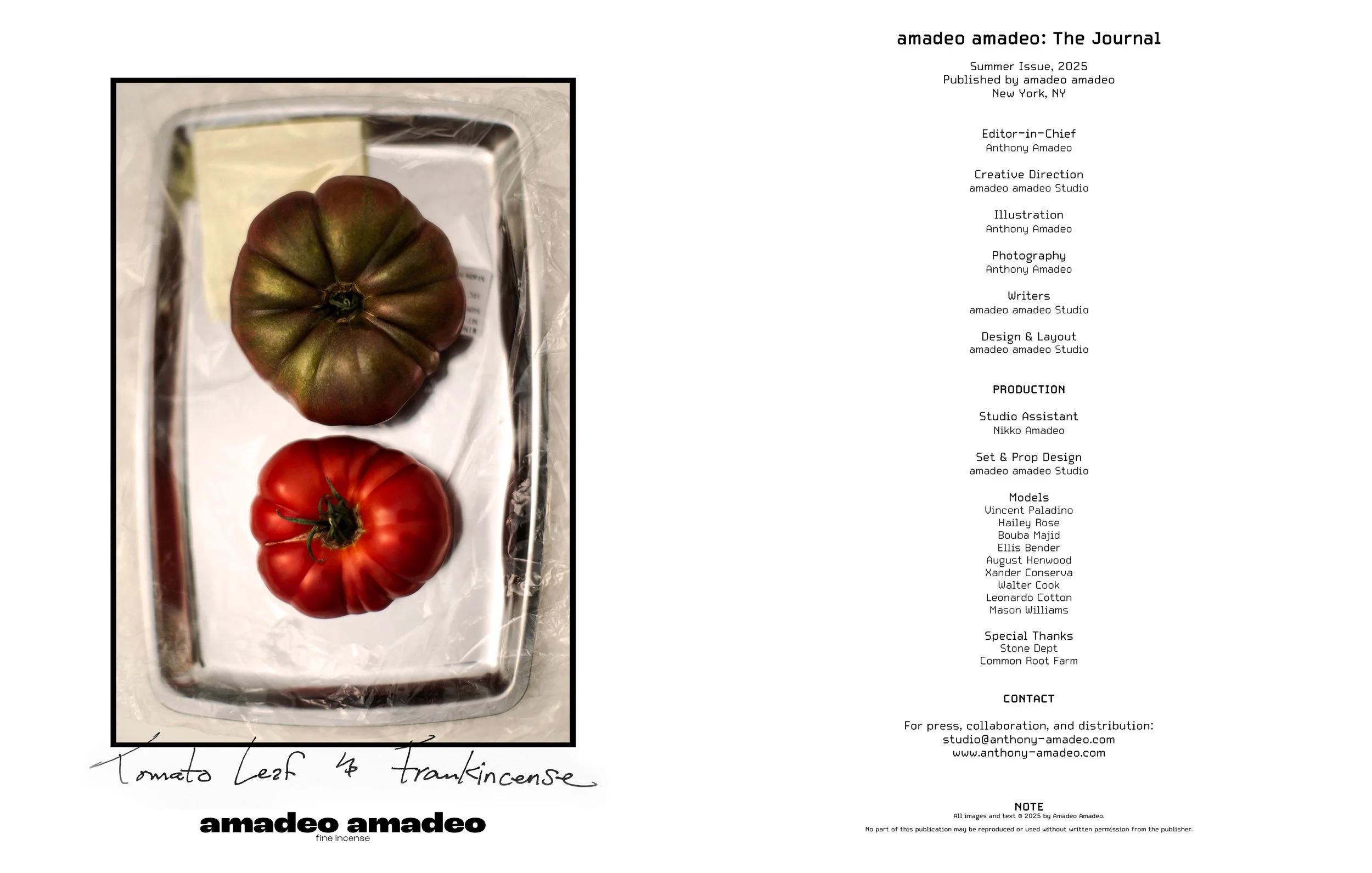
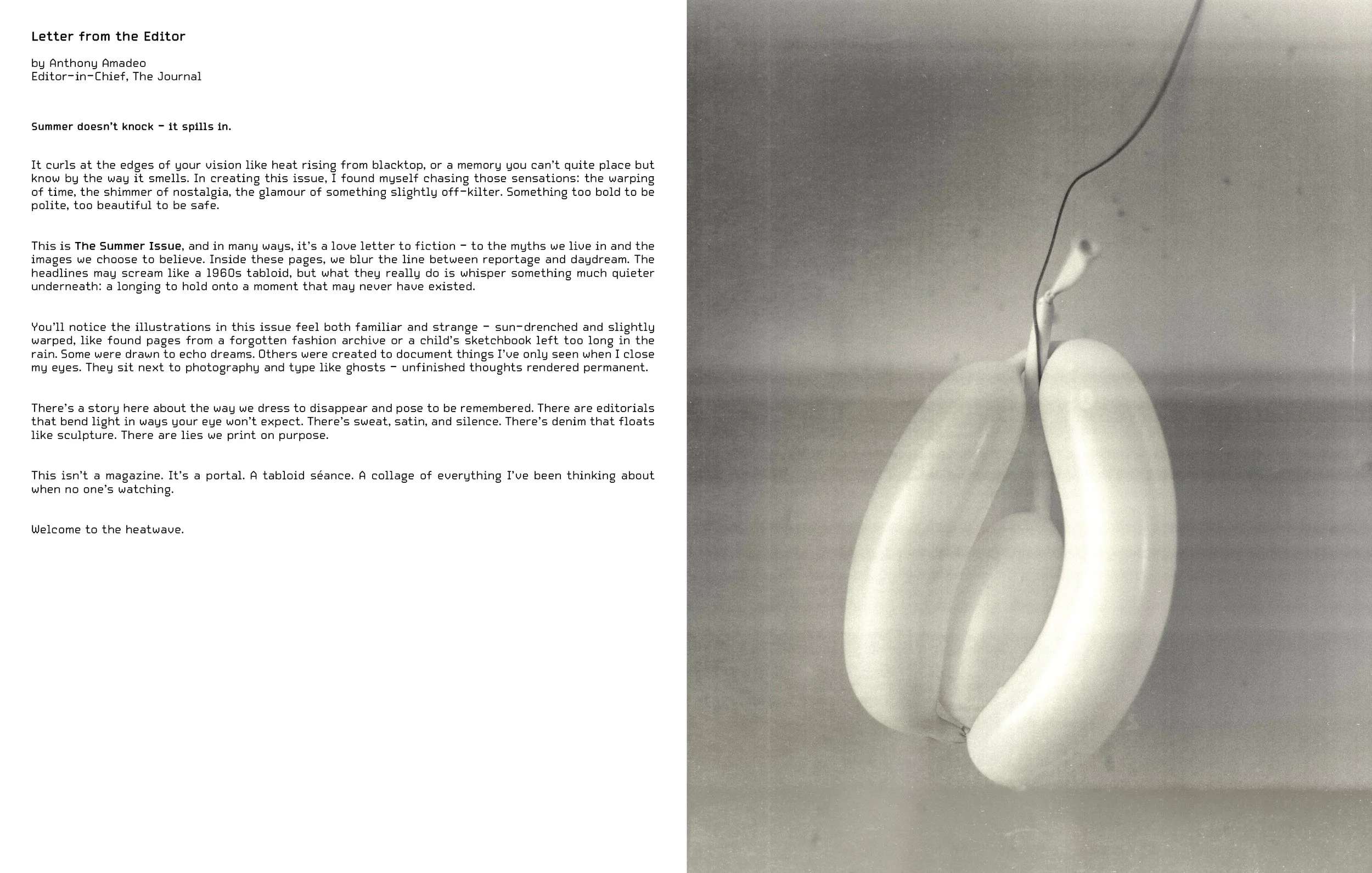
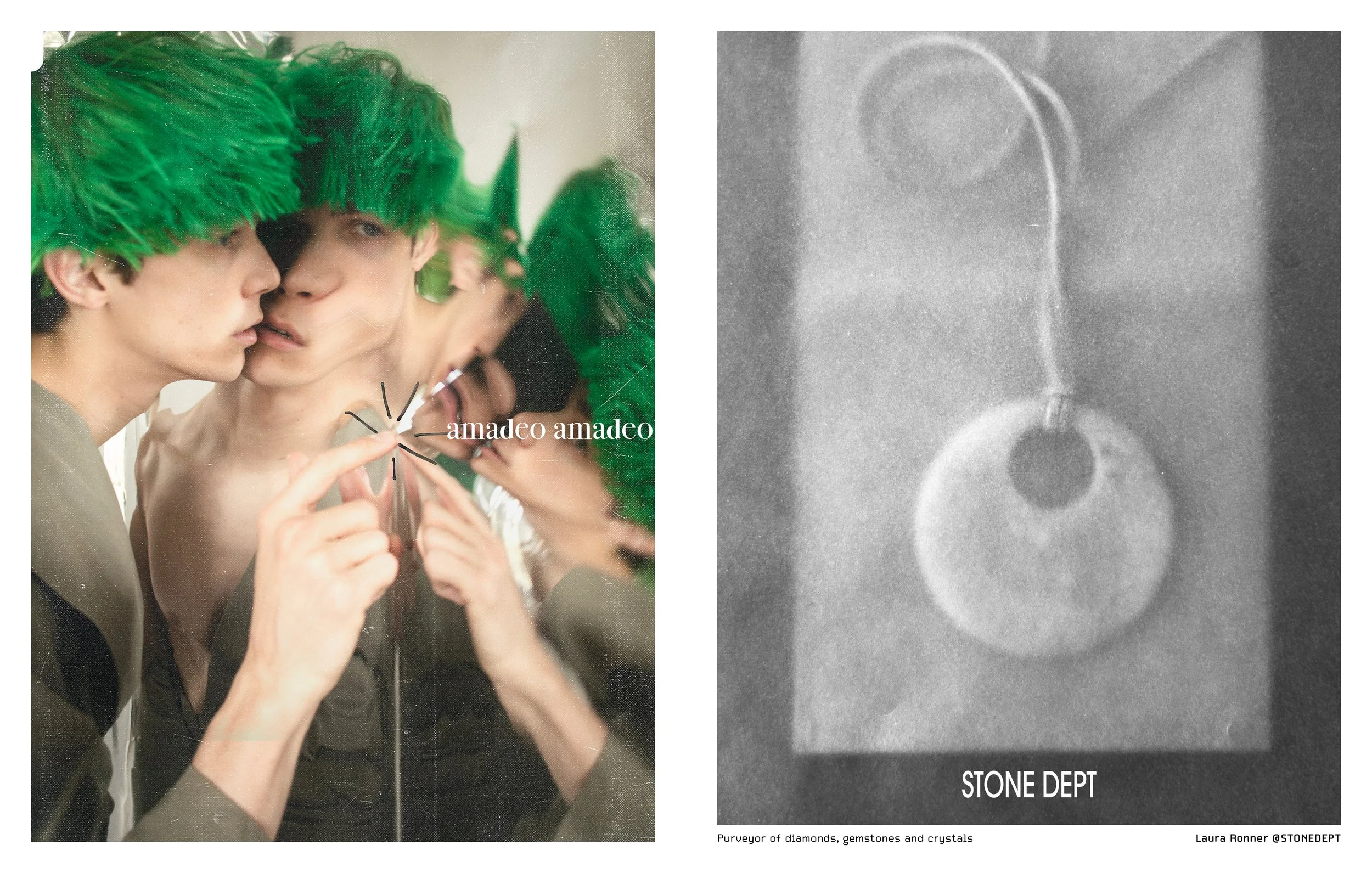
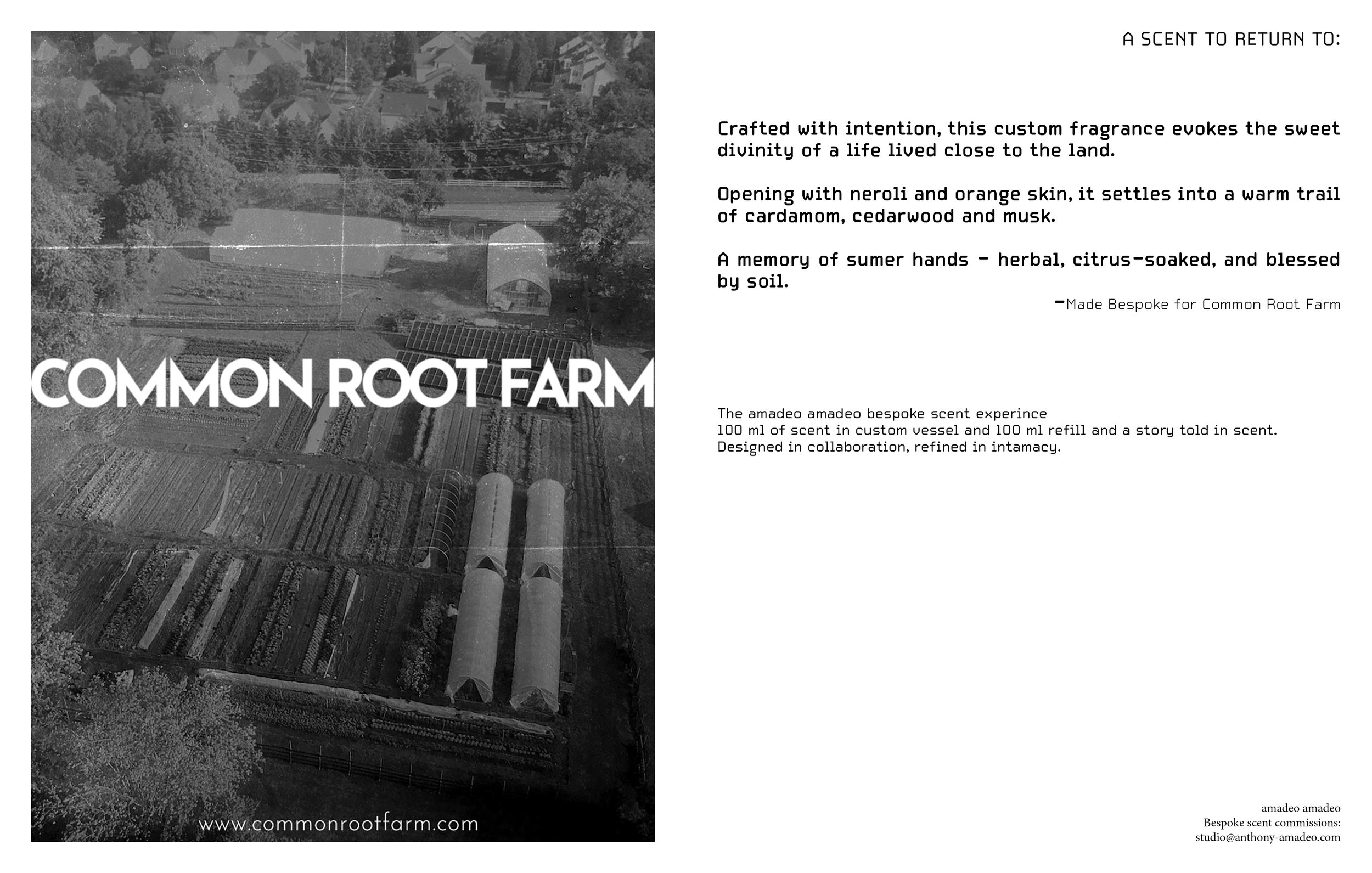
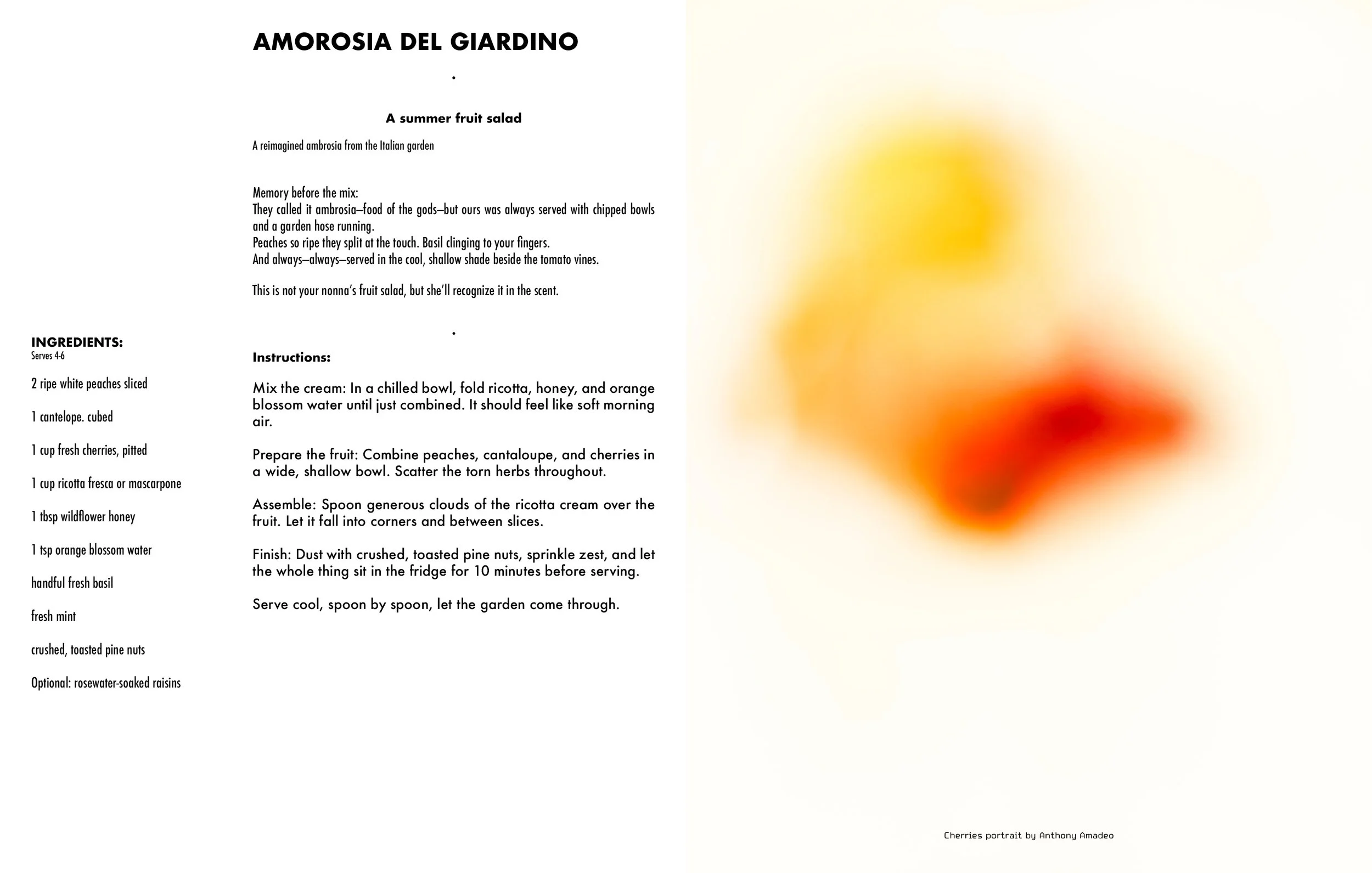
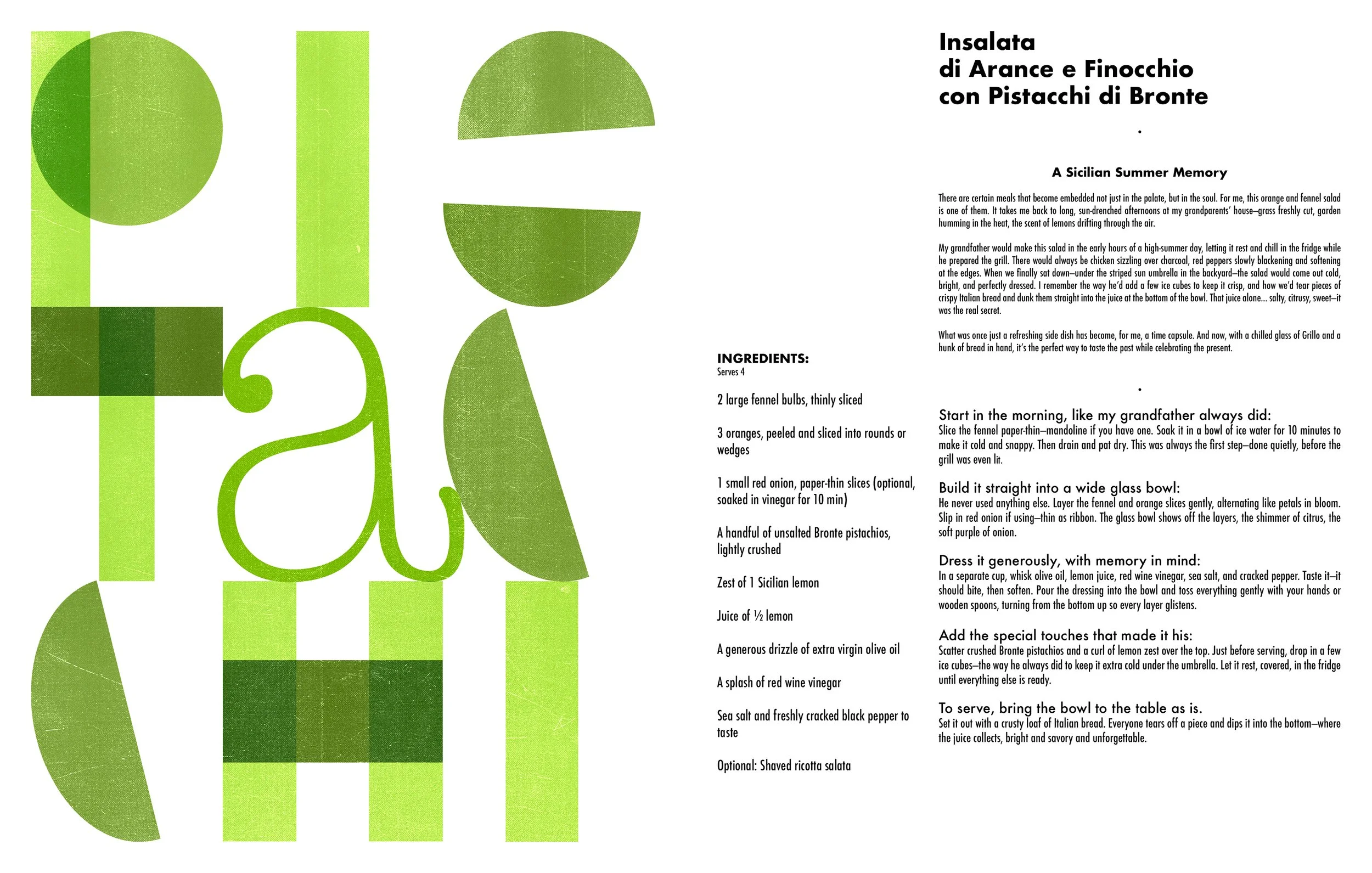
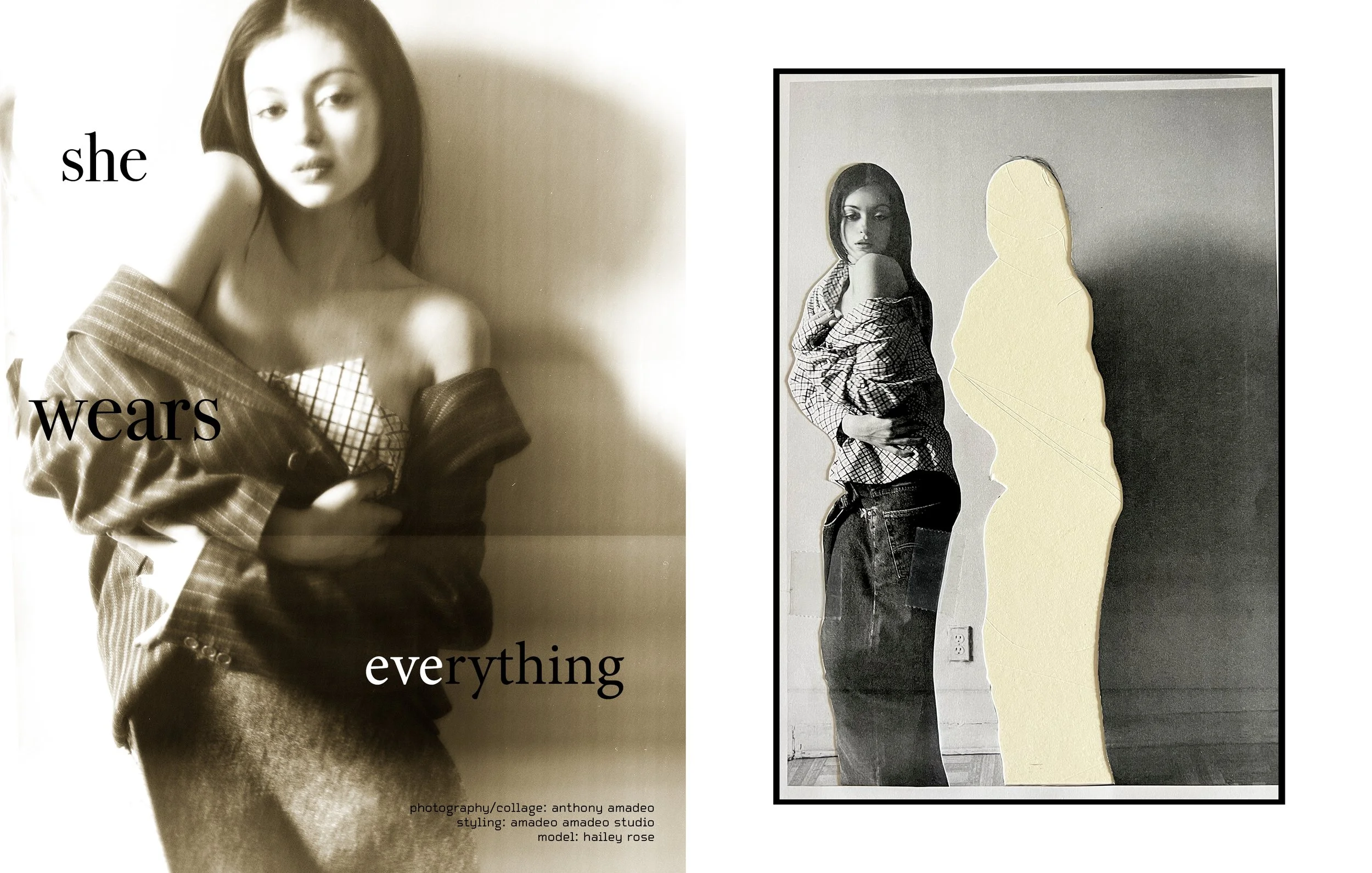
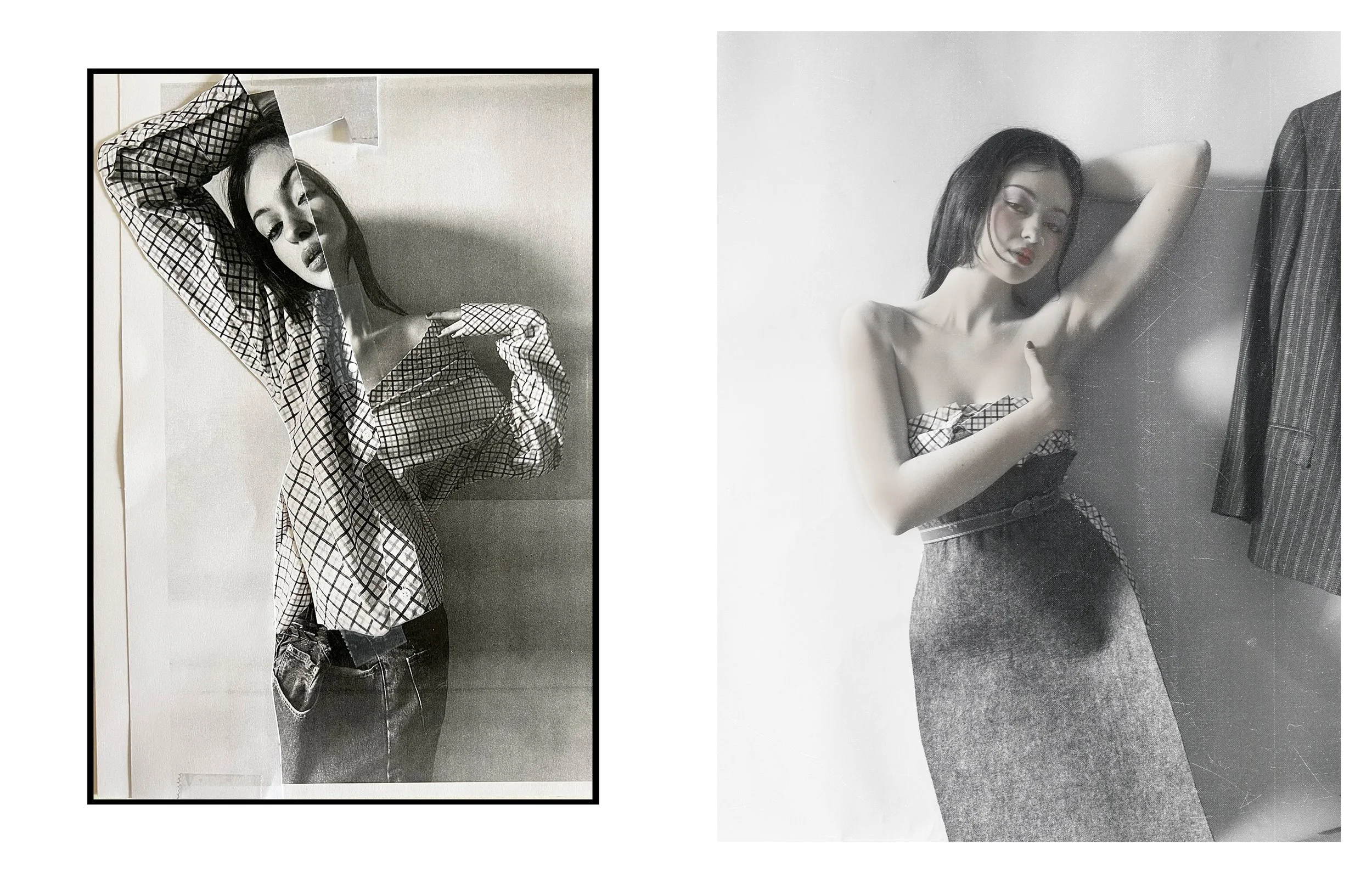
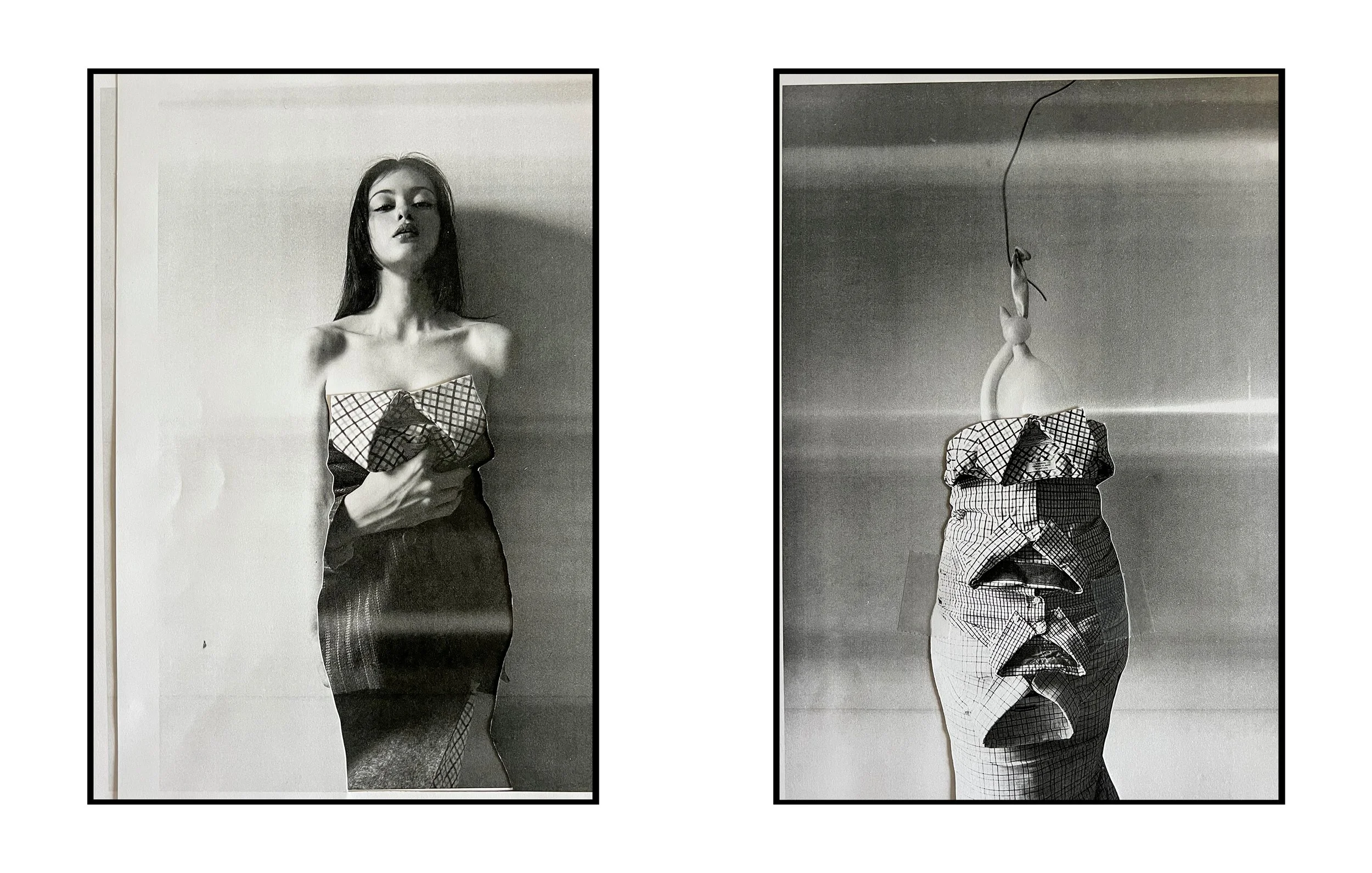
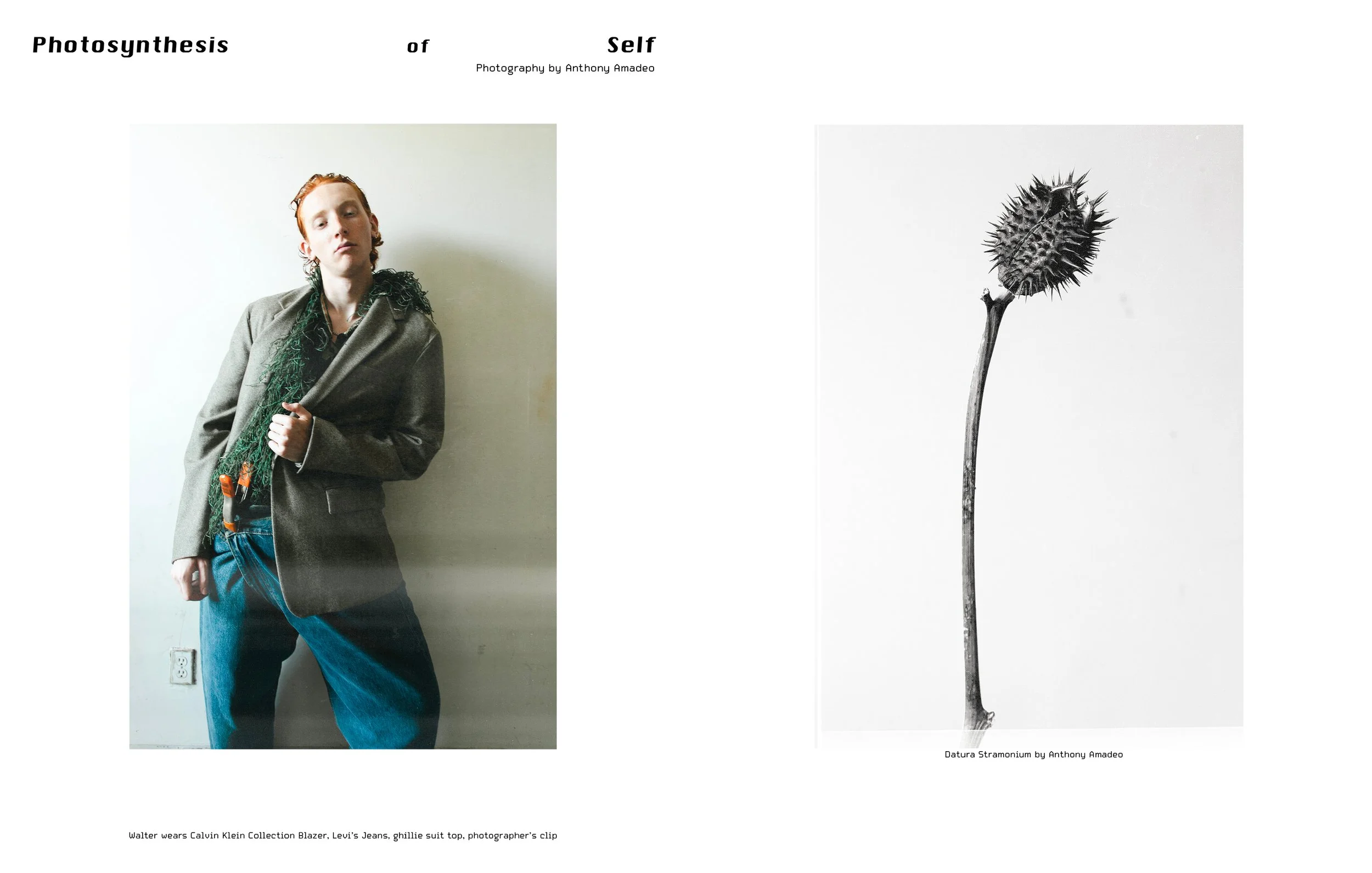
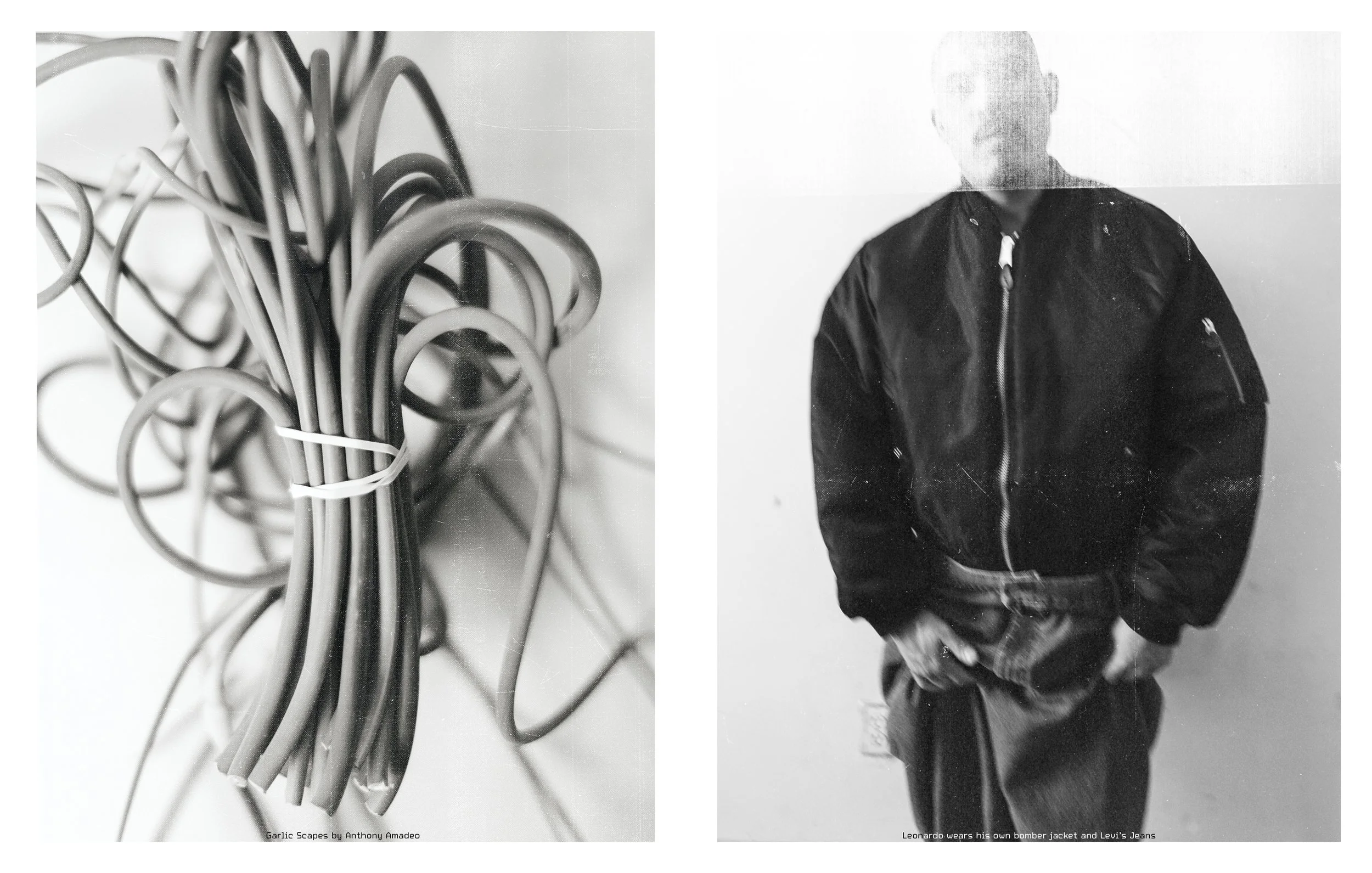
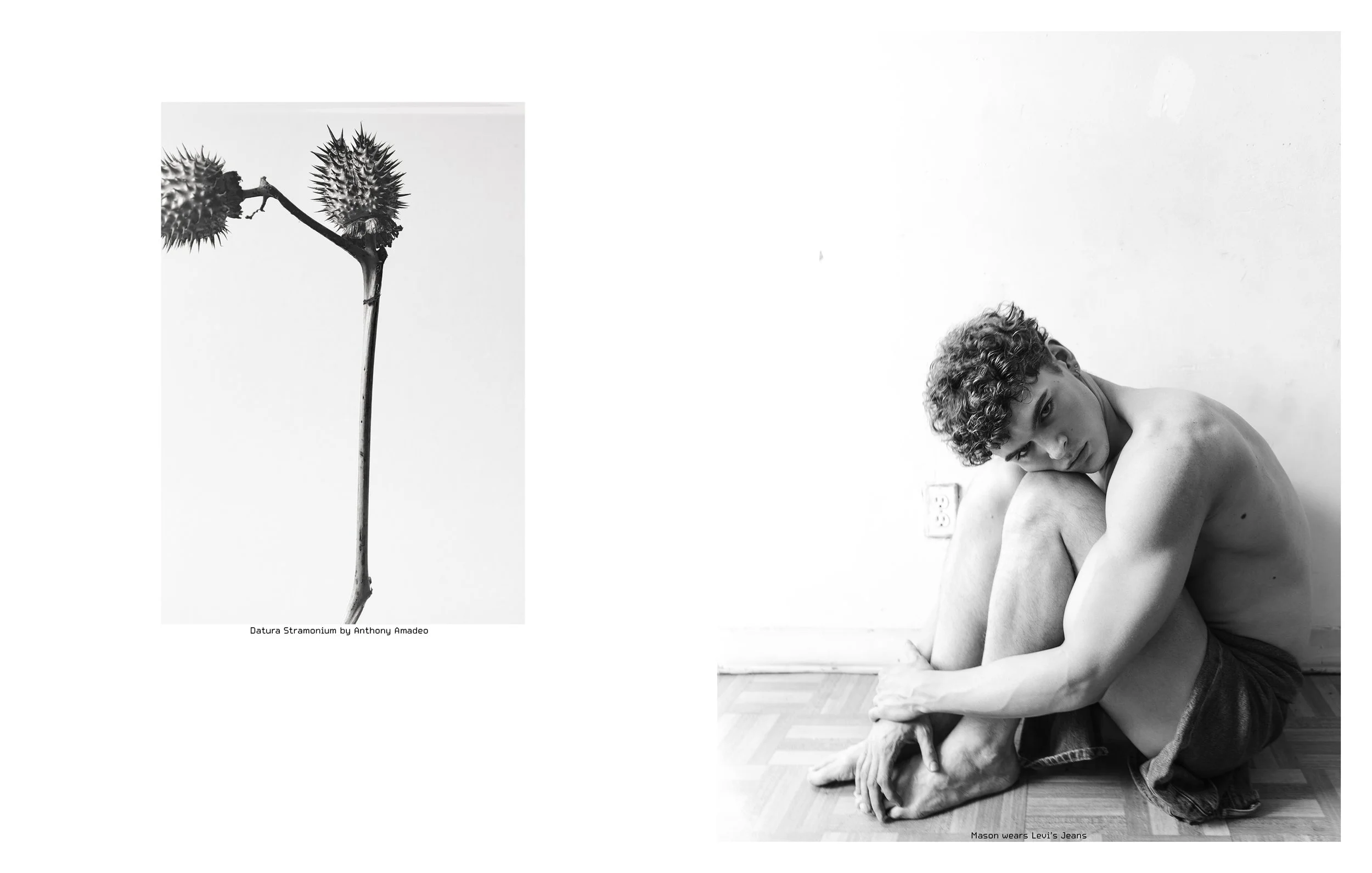
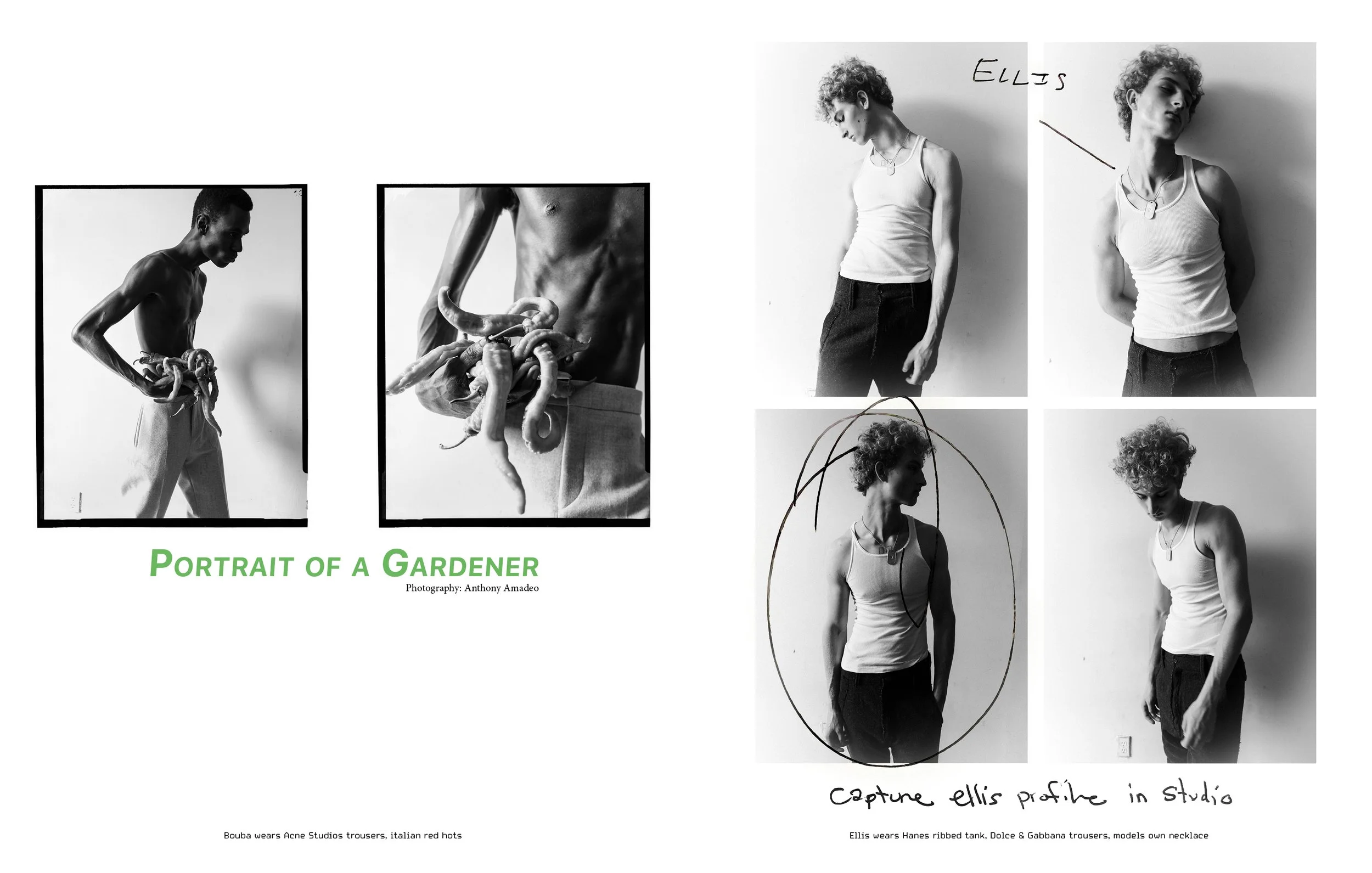
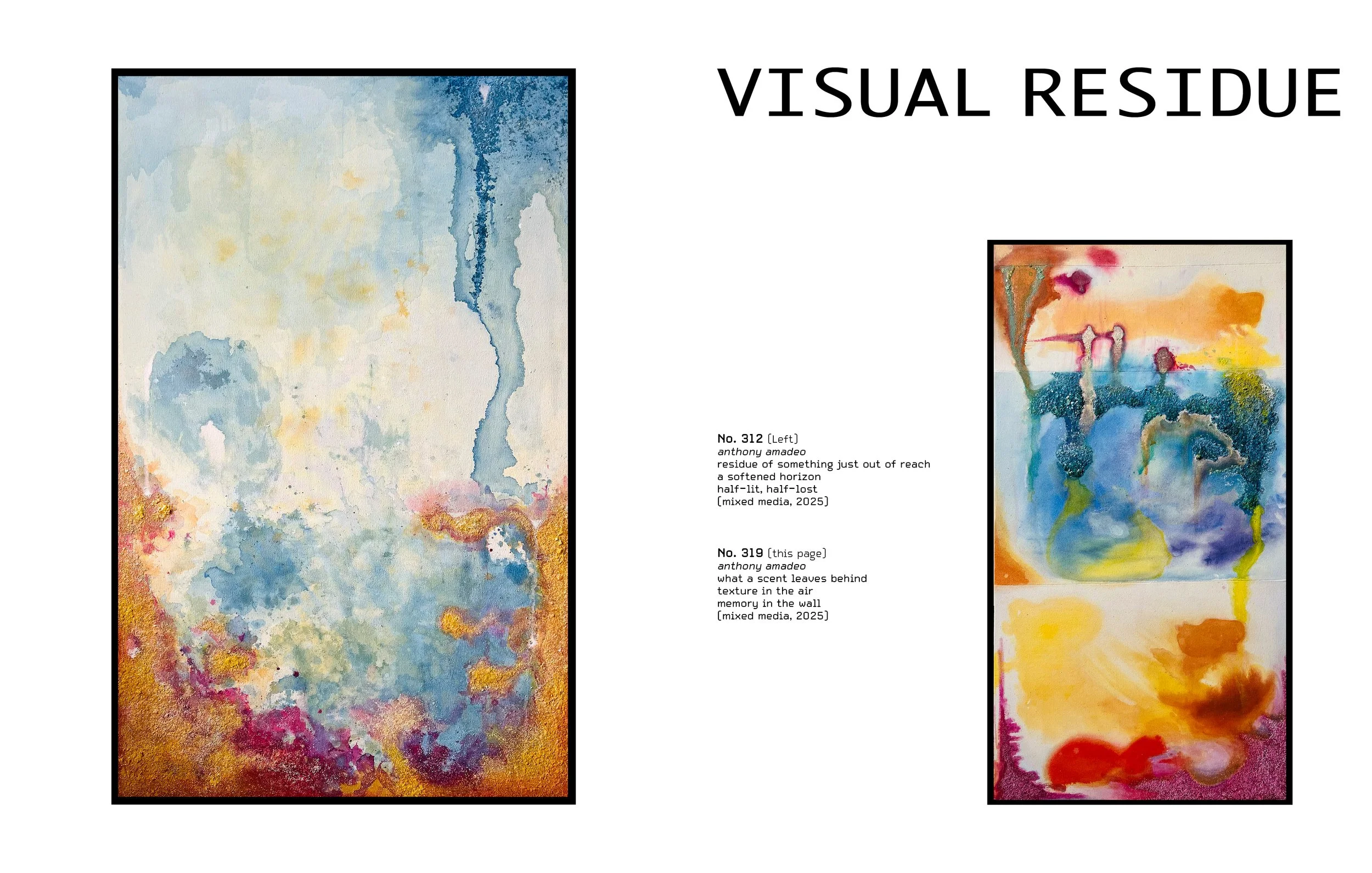
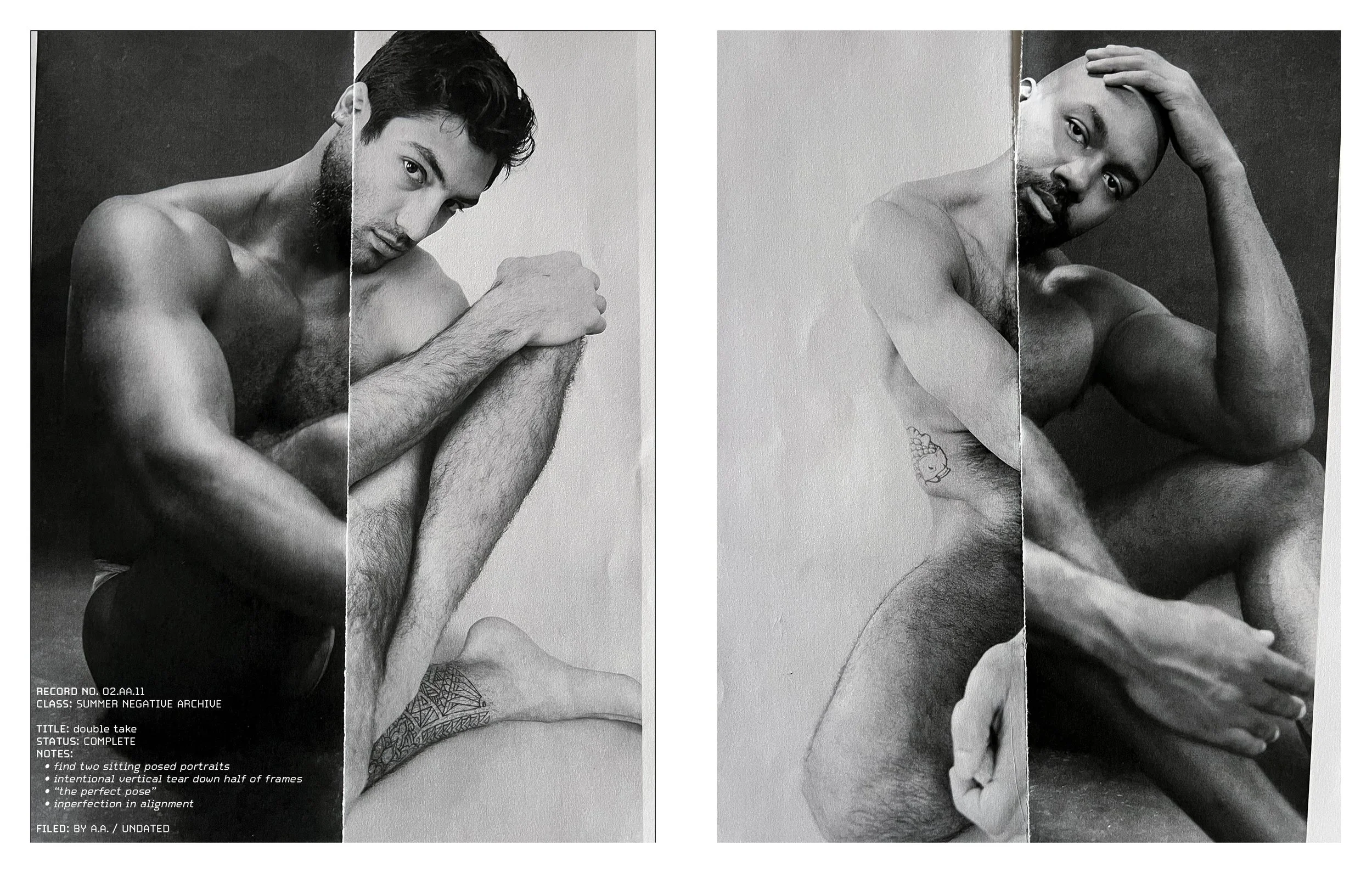
The Summer Issue is a sun-soaked archive of memory, body, scent, and image. From portraits that bloom like plants to fragrances that bottle heat and longing, this issue is a garden grown from nostalgia and stretched into modern myth. Featuring editorial collage, recipes, soap, and spoken moments for hot days and cool shadows.






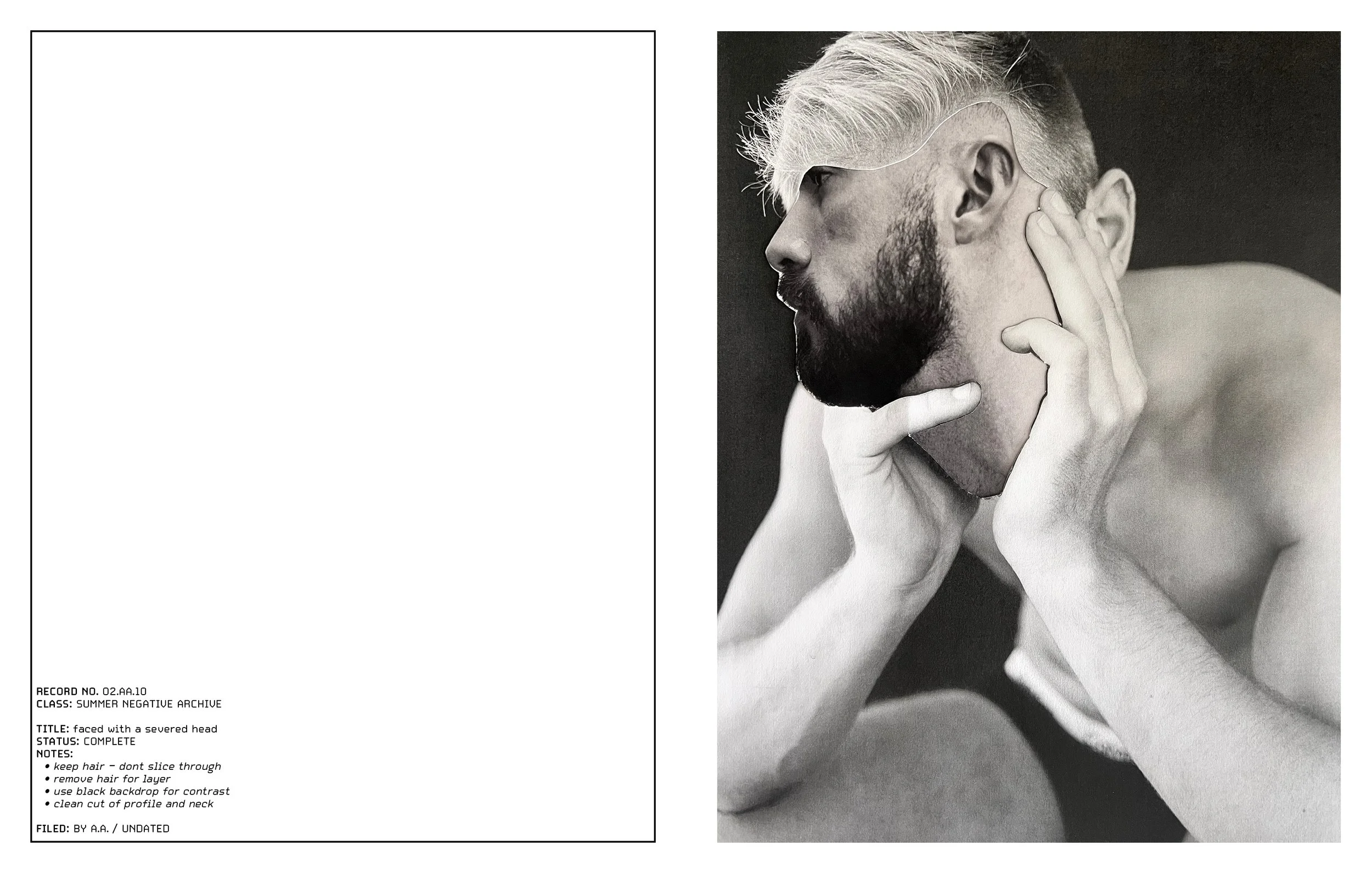
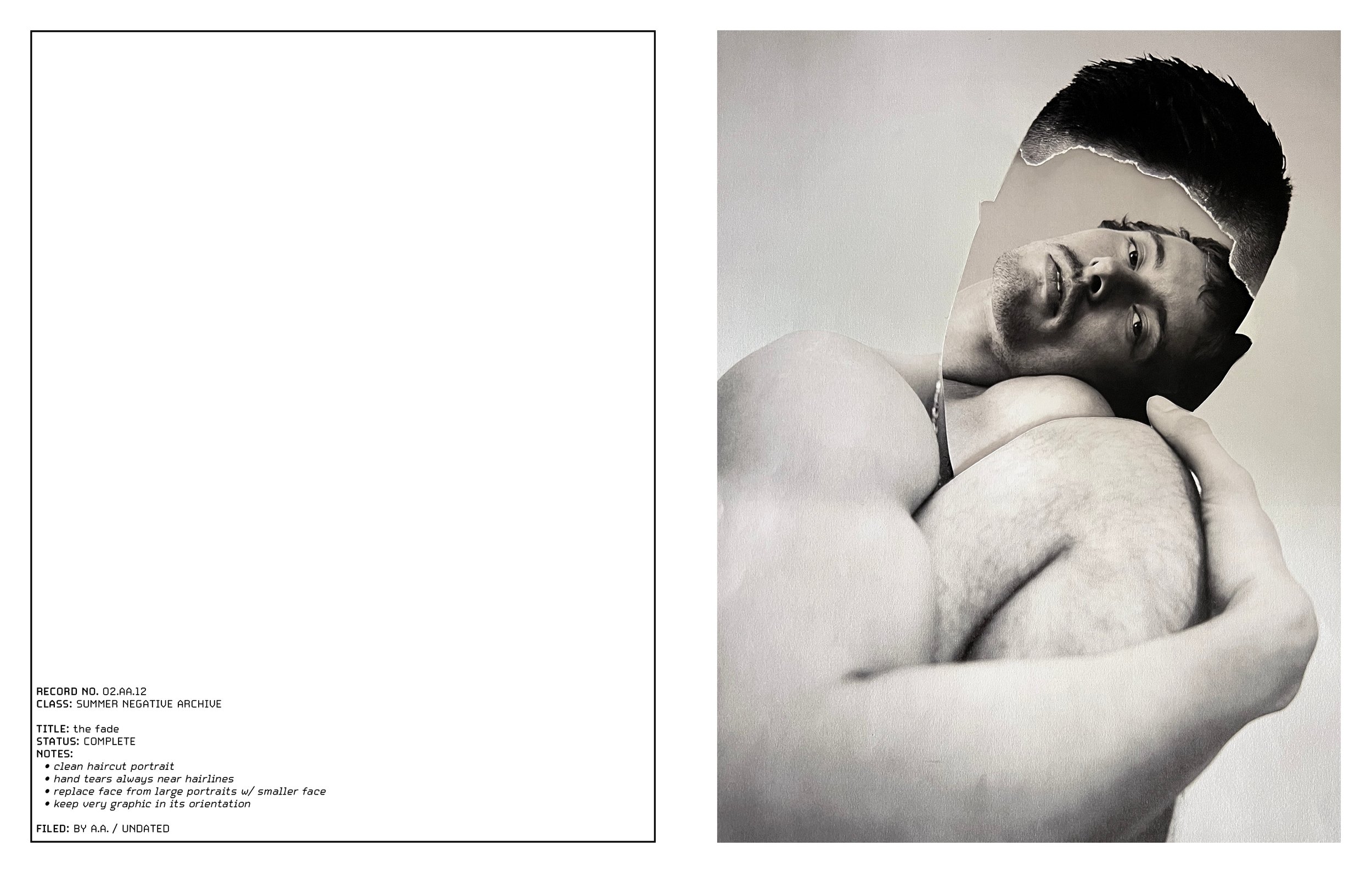
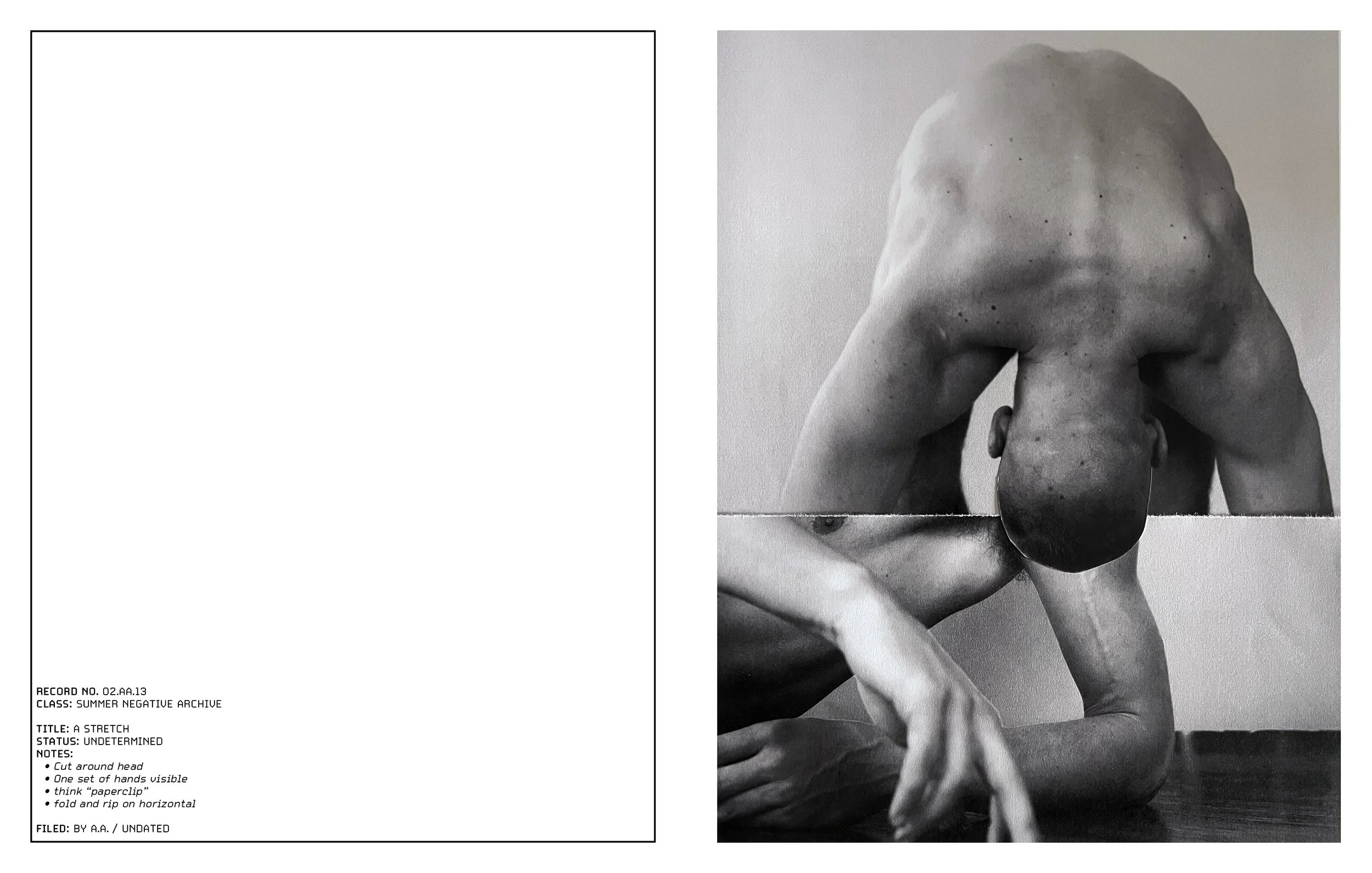
Introducing George Maragkos
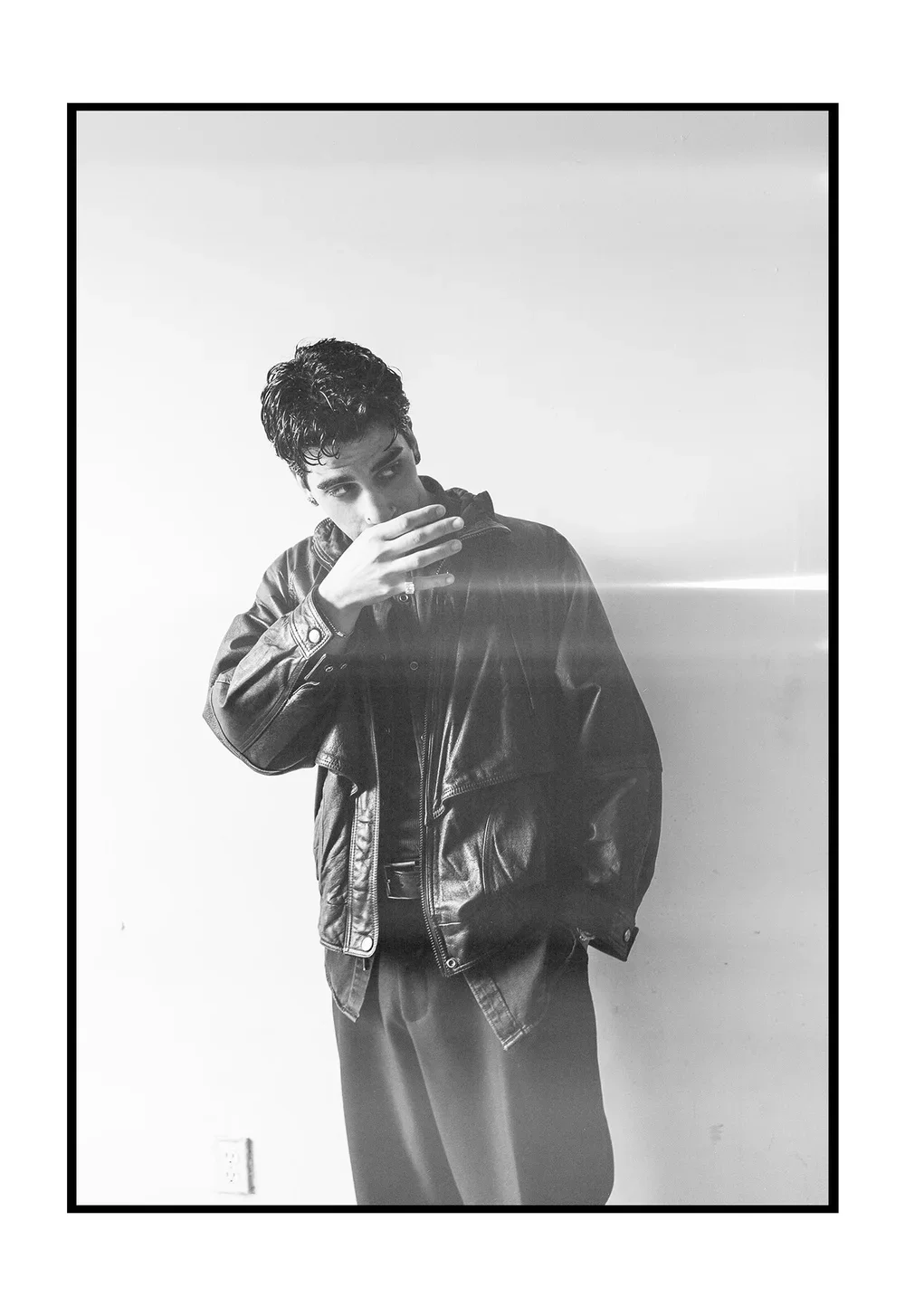
There’s a presence in the room before the shutter clicks.
George Maragkos—striking, sharp, and unmistakably cinematic—moves through frame with the ease of someone who’s been here before, even if this is just the beginning.
the first face of amadeo amadeo
There’s a presence in the room before the shutter clicks.
George Maragkos—striking, sharp, and unmistakably cinematic—moves through frame with the ease of someone who’s been here before, even if this is just the beginning.
In his debut session with amadeo amadeo, George arrived dressed in all black: pleated trousers, a leather jacket, a tailored blazer—clothing that clung to the light and carved out drama in the shadows. His Greek features carried the weight of myth, but his gestures were thoroughly modern: abstract, fluid, intentional.
We worked through reflections, distortions, and movement. At every turn, George didn’t just pose—he acted, reacted, told. A face not just for fashion, but for storytelling.
These first portraits mark the beginning of a portfolio designed to not only impress, but to mesmerize. He is the prototype of what we’re cultivating here: presence, poise, and personality.
Welcome George Maragkos, the first of many to come.


"All This Time, I Thought 'Art is a Bunch of BS' Meant Balloon Sculptures"
For years, I nodded along when people would dismissively mutter, "Art is just a bunch of BS."
And for years, I genuinely thought they meant Balloon Sculptures.
For years, I nodded along when people would dismissively mutter, "Art is just a bunch of BS."
And for years, I genuinely thought they meant Balloon Sculptures.
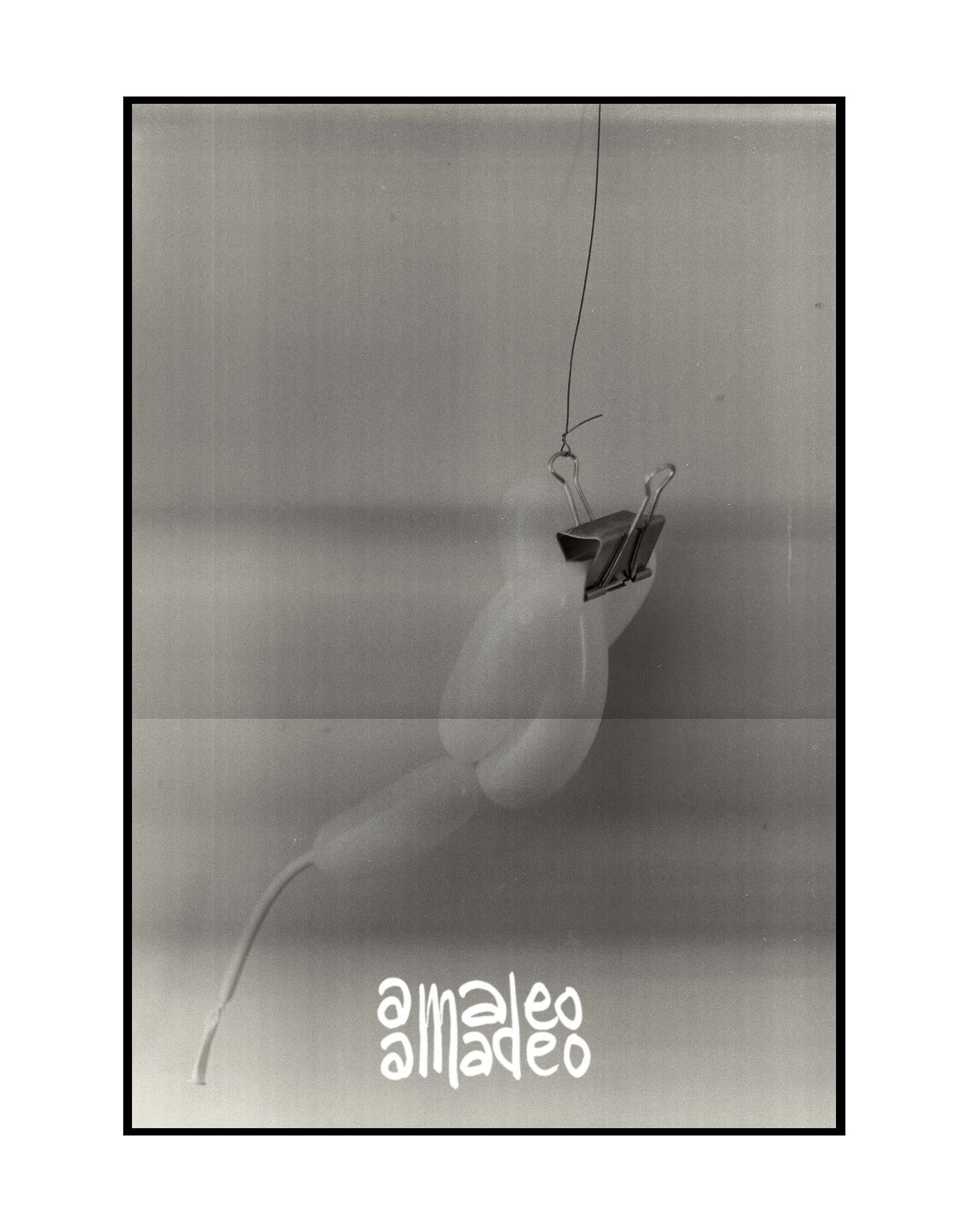
I imagined an entire secret society — one where artists twisted latex into abstract forms, floated their rebellion into the sky, and let the world misunderstand them entirely. To me, BS stood for an entire movement. It wasn’t an insult — it was a misunderstood compliment.
So I’ve decided to lean into it.
Introducing a new series: Balloon Sculptures — an earnest tribute to misunderstanding, miscommunication, and the beautifully absurd.
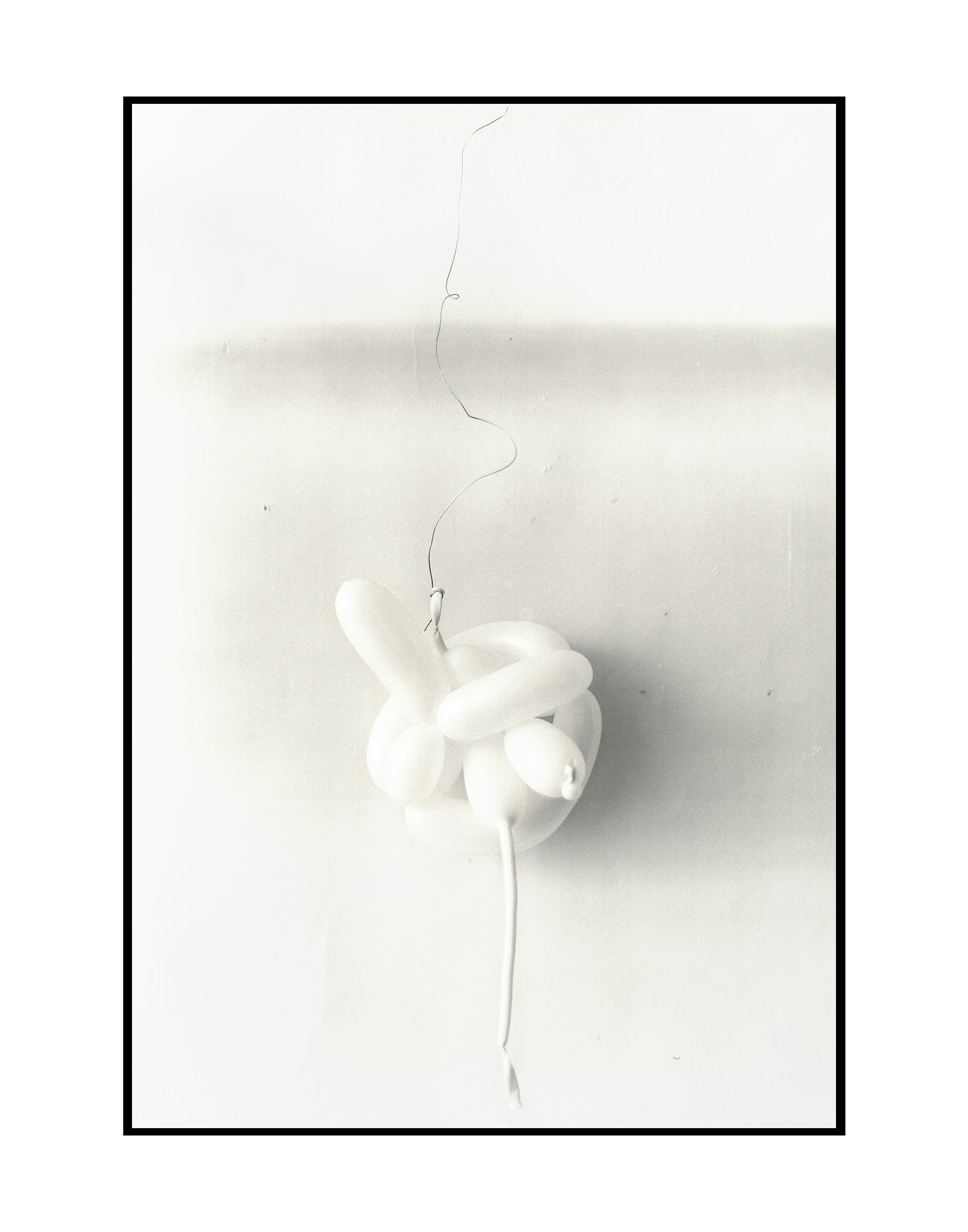


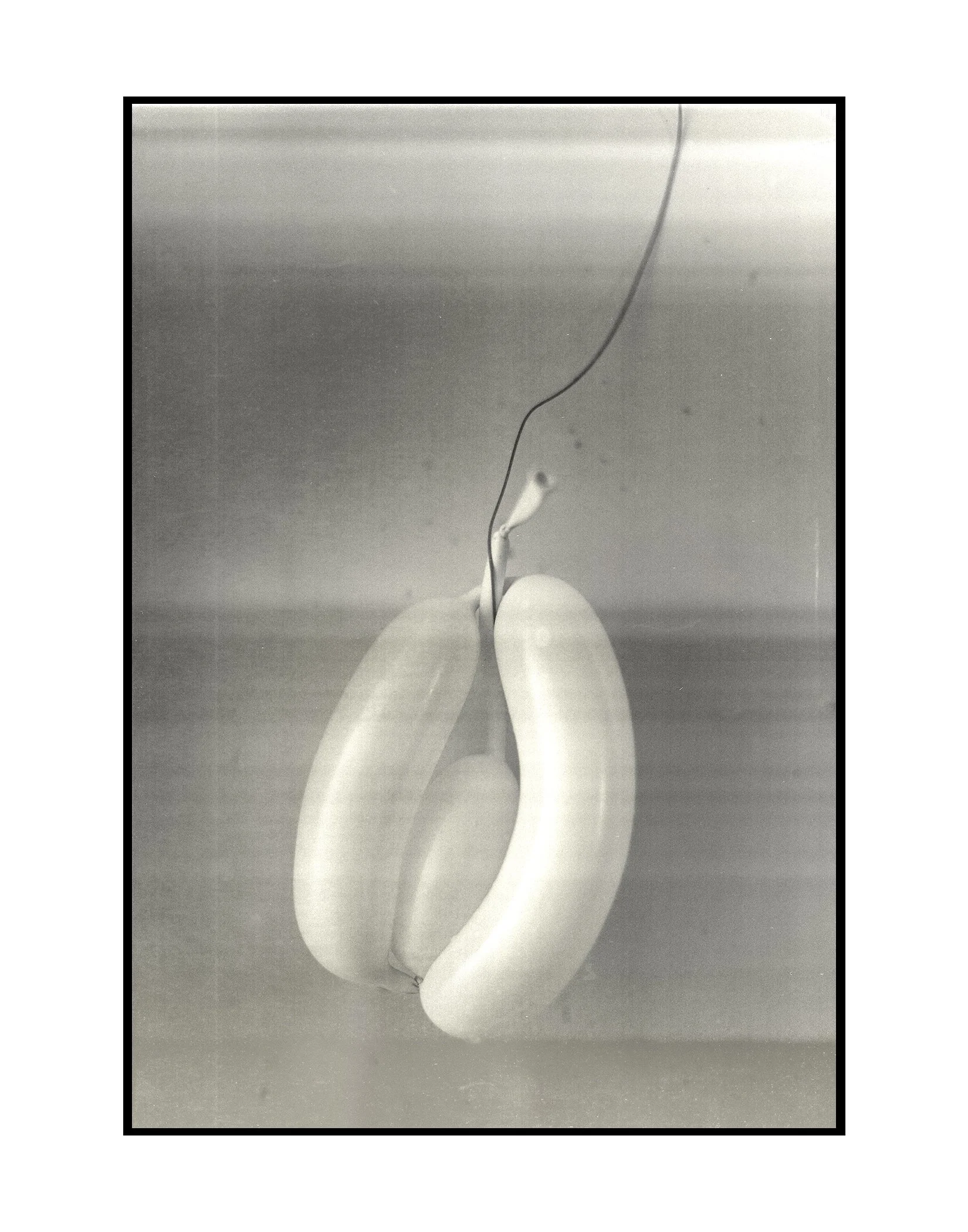
Each piece will be hand-twisted, hung, documented, and mythologized. A soft rebellion in thin air. Fragile, fleeting, and just serious enough to confuse you.
In a world that demands you defend your work with dissertations, I’m choosing to float a balloon.
And when they call it BS — they’ll be absolutely right.
- Anthony Amadeo, Amadeo Amadeo

THE NUMBERS THAT KNOW YOU
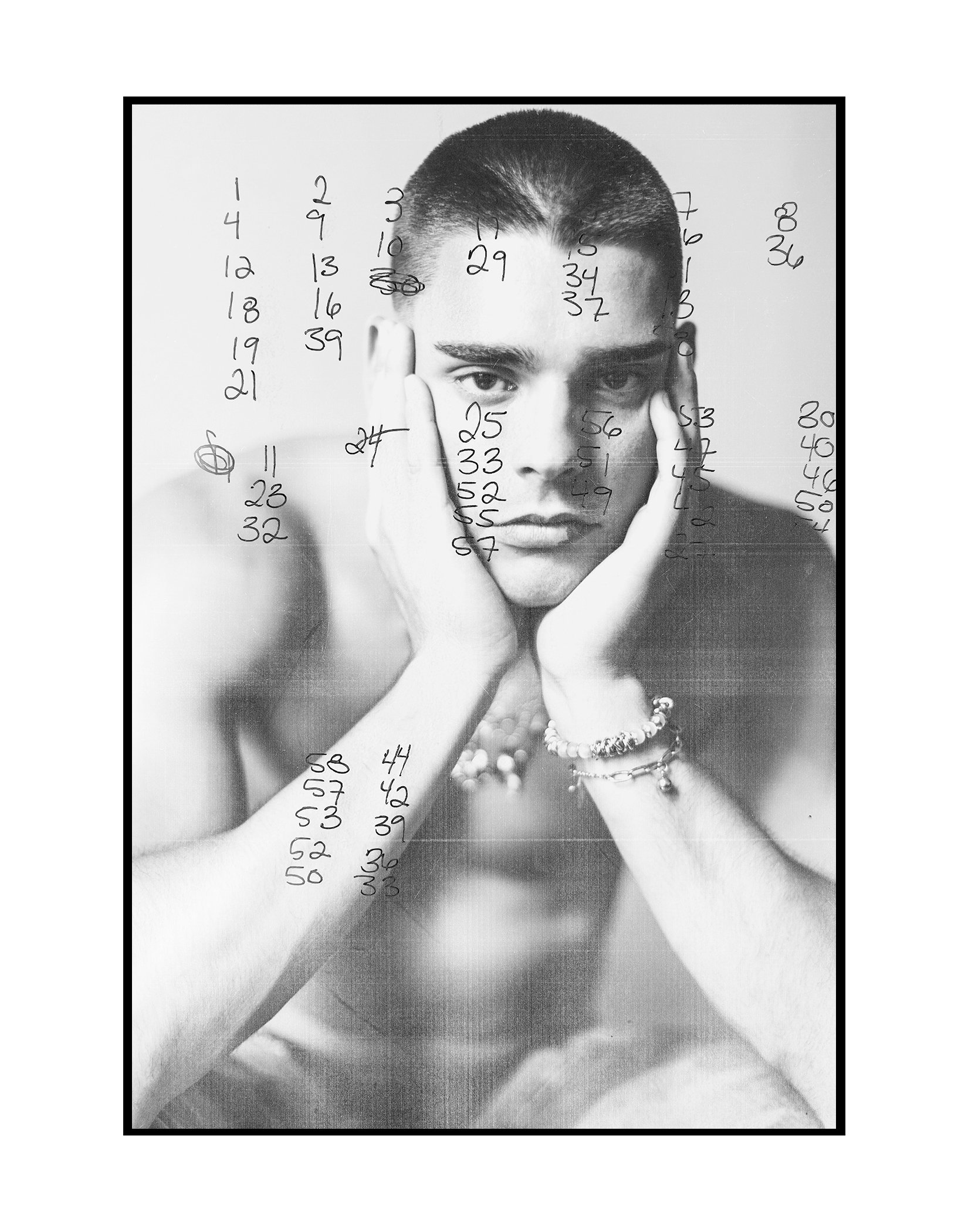
The black-and-white images recently leaked from the studio of Anthony Amadeo appear—at first glance—to be nothing more than striking portraits, poetic in their stillness, echoing the sculptural tension of classicism reimagined for a modern mythology. But to those who’ve looked deeper... something else has emerged.
THE NUMBERS THAT KNOW YOU
Are These Photocopies a Message From Beyond the Frame?

By An Observer of the Obscure
The Journal, Vol. I | Amadeo Amadeo Archives
“There are no coincidences—only coordinates waiting to be noticed.”
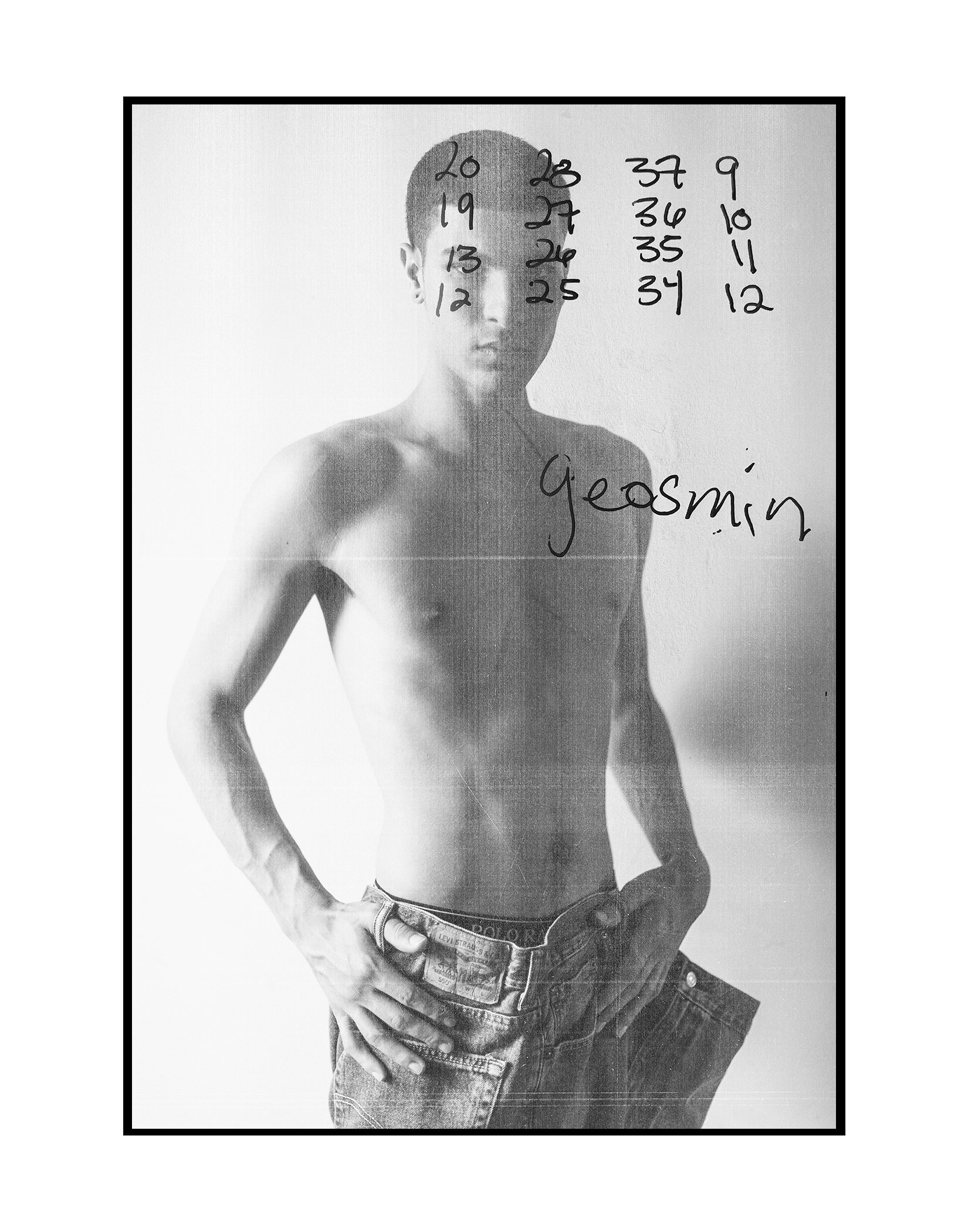
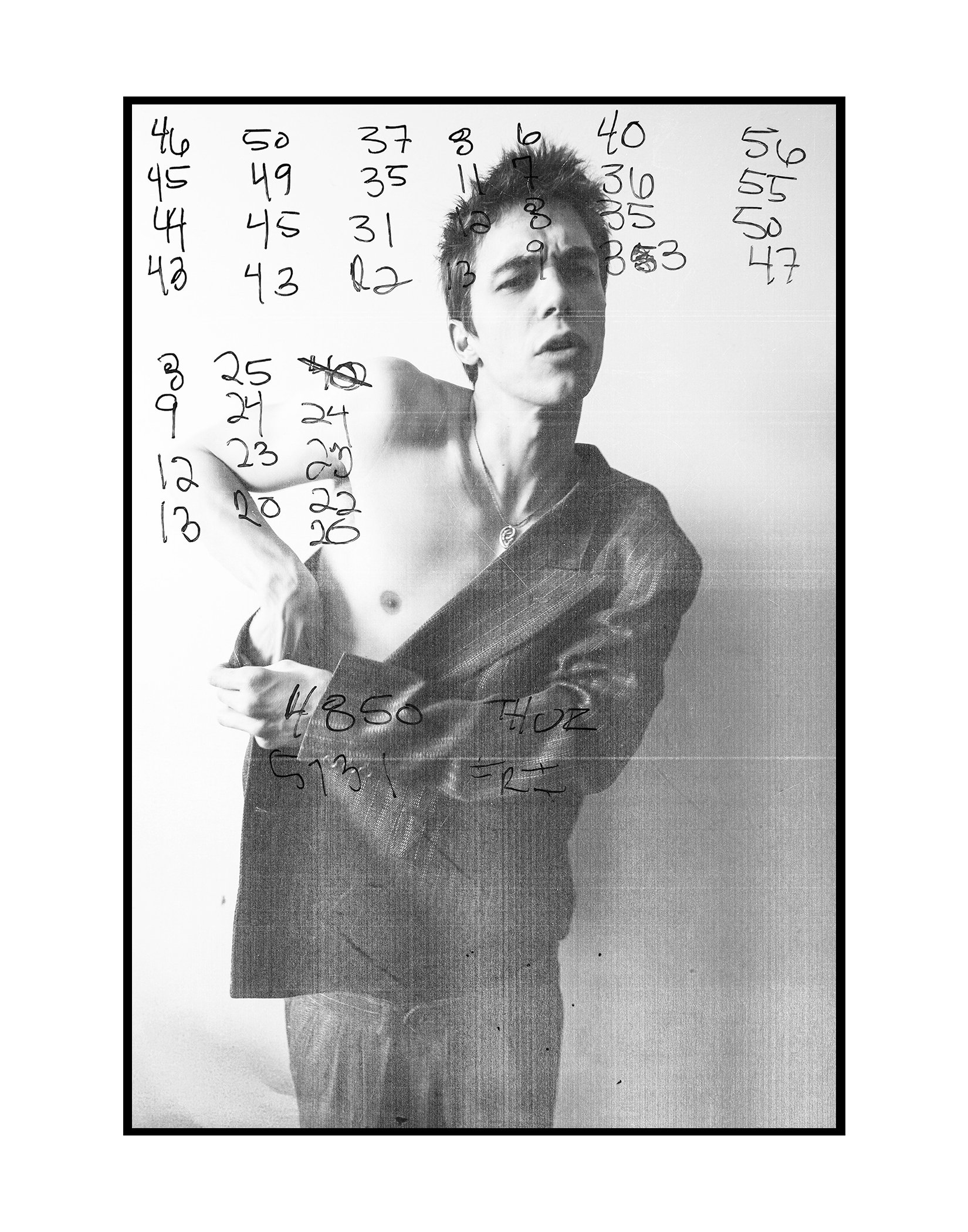
The black-and-white images recently leaked from the studio of Anthony Amadeo appear—at first glance—to be nothing more than striking portraits, poetic in their stillness, echoing the sculptural tension of classicism reimagined for a modern mythology. But to those who’ve looked deeper... something else has emerged.
Each photograph is overlaid with a grid of handwritten numbers—disorganized, looping, duplicated, circled, crossed out. Seemingly random. But nothing in the Amadeo Codex is ever random.
According to an anonymous source (who once claimed to have worked with the artist during a full moon in Florence), these images are not photographs—they’re receivers. And the numbers? They’re not annotations. They’re transmissions.
THE GEOSMIN THEORY
One image—titled only “Geosmin”—sent shivers through numerologists and ex-CIA codebreakers alike. “Geosmin” is the molecule that causes the smell of earth after rain... but why label a photocopy of a boy in oversized jeans with this word?
If you map the numbers across the faces, torsos, and arms, they align with ancient acupuncture meridians. One theory posits that Amadeo’s images are somatic charts for emotional memory—each number a timestamp tied to a forgotten personal truth.
What were you doing at 33?
What happened to you on the 12th?
Why do you always wake up at 3:37 a.m.?
We asked 57 people (note: a frequently appearing number) to randomly select one number from each image. 83% reported immediate recollections tied to that number—an age, a date, an address, a dream they’d forgotten until that moment. Coincidence? Or... recognition?
MULTIPLES OF MEANING
Some numbers reoccur across the images: 37, 53, 50. Are they codes? Coordinates? Or countdowns?
Photographic analysts suggest the repetitions create a pattern of activation—a trigger sequence for something not yet understood. There is evidence these photos were passed under red light at 3:00 AM for 7 nights in a row before being photocopied. Rumors suggest Amadeo used a Soviet-era duplicator found in a shuttered print shop in Bushwick.
Another theory states that these are calibration values for a non-human gaze—numbers that tell extraterrestrial observers where to focus when trying to decode human beauty.
ARE YOU PART OF THE EXPERIMENT?
What happens when you stare at the numbers?
Some claim these images shift in your periphery. That the numbers rearrange themselves. That your favorite number appears in a different spot each time.
One viewer reported dreaming of the numbers—waking with the imprint of “50” on their inner wrist. Another claims they saw their birth date, phone number, and childhood home’s address hidden across all four images.
So we ask you:
Do you see your number?
Do you know what it means?
And if not—why is it still following you?
THE AMADEO INCIDENT
THE AMADEO INCIDENT
Or, The Artist Who Came to Earth With a Camera and a Nose for Memory
by a former employee of the U.S. Bureau of Olfactory Surveillance
THE AMADEO INCIDENT
Or, The Artist Who Came to Earth With a Camera and a Nose for Memory
by a former employee of the U.S. Bureau of Olfactory Surveillance
For decades, whispers have swirled through the upper crust of the fashion elite, the fragrance underground, and certain dive bar booths in both Palermo and the Lower East Side. The whispers all ask the same question:
Who is Anthony Amadeo?
At first glance, he seems like just another artistic savant—blessed with impeccable taste, the eye of a Renaissance sculptor, and the eerie ability to extract perfume from a memory you forgot you had. But something doesn’t add up.
There are no childhood photos.
His studio doesn’t age.
Clients describe his portraits as “time loops.”
And every scent he crafts smells like a place that doesn’t exist—but should.
More curiously, he refers to his work under the brand “amadeo amadeo”—a doubling, a mirror, a signal. Linguistic experts say this kind of repetition is common in extraterrestrial code-switching, a phenomenon seen in transmissions intercepted by SETI and in the infamous 1987 Fragrance Files Leak (since suppressed).
But the most damning evidence? The Codex.
The Codex is a series of ten numbered fragrances, each with a storyline so detailed, so emotionally specific, it’s as if someone bottled alternate timelines. Theories abound:
No. 37 references a house that doesn’t appear on any official maps, yet people who’ve smelled it all remember the same backyard: overgrown basil, the scent of sun on vinyl, a garden hose still running.
No. 240 is said to summon images of people’s grandparents—regardless of their ethnicity or location—down to eerily precise details.
No. 88? We’re not allowed to speak of No. 88. Not after what happened in East LA last summer. The lowriders started levitating.
Witnesses claim Amadeo doesn’t create the scents—he retrieves them. Some say he’s a memory cartographer from a dying star system. Others claim he’s an archivist for the Council of Sensory Continuity, a galactic council tasked with bottling Earth before it disappears in the next reset.
The most fringe theory (and yet the one most cited in backroom dealer circles) is that Anthony Amadeo is not here to stay. He is only collecting. Fragments. Feelings. Faces. His showroom isn’t a business—it’s a beacon.
A signal back home.
Stay tuned. The scent is stronger than ever. And the next fragrance drop might be a countdown.
This has been a report from The Journal. Believe nothing. Smell everything.
MASON / MARBLE / DENIM
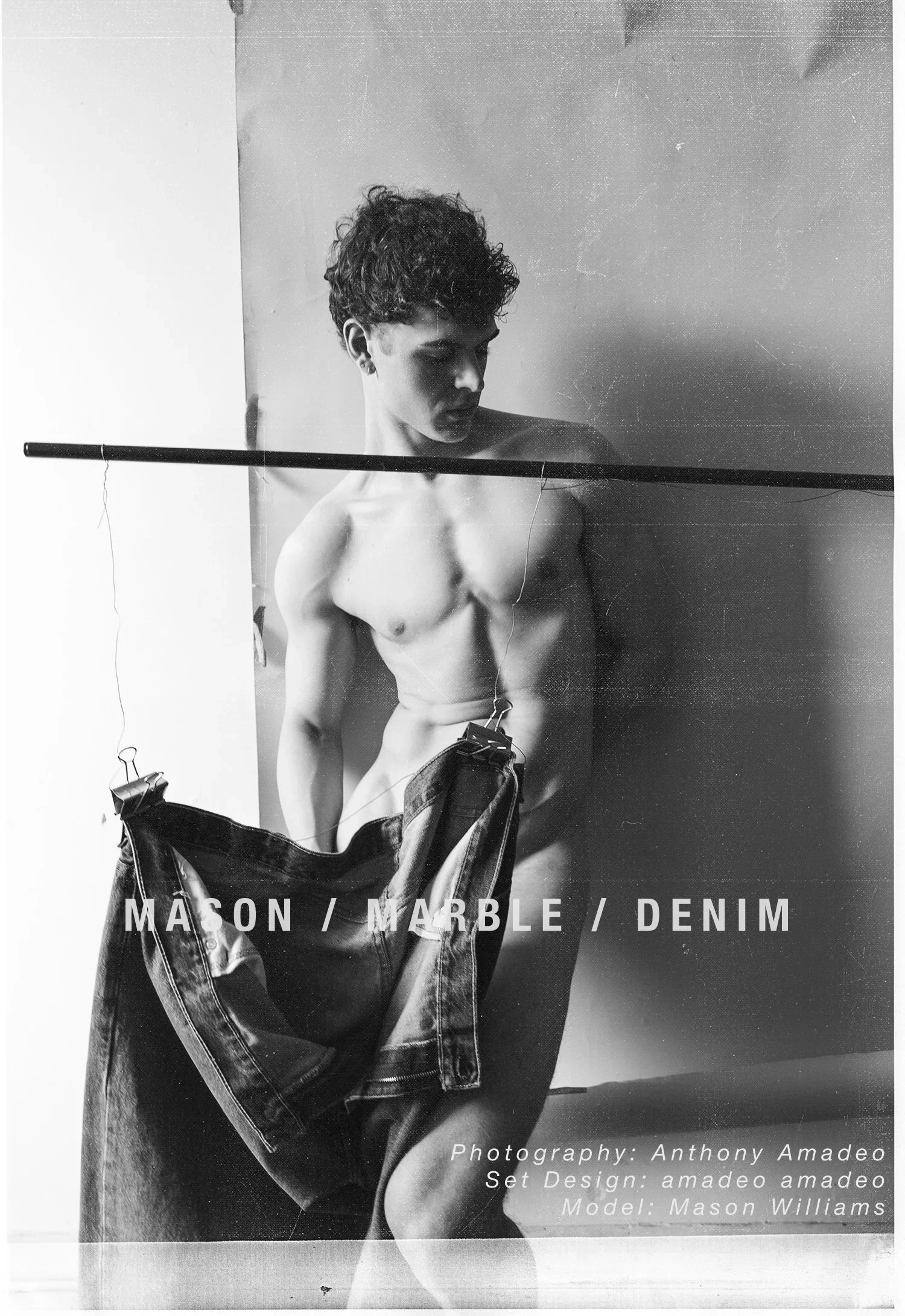
For our third shoot together, Mason Williams returns to the frame—this time suspended in a moment that feels part sculpture, part dream. The now-iconic giant denim makes its reappearance, floating like a relic of fashion surrealism. Hung in air, clipped like a cutout, it becomes a real-life collage, part Venus de Milo, part downtown atelier. Mason’s form echoes the soft shadows of marble statues I sketched while wandering the Louvre.

For our third shoot together, Mason Williams returns to the frame—this time suspended in a moment that feels part sculpture, part dream. The now-iconic giant denim makes its reappearance, floating like a relic of fashion surrealism. Hung in air, clipped like a cutout, it becomes a real-life collage, part Venus de Milo, part downtown atelier. Mason’s form echoes the soft shadows of marble statues I sketched while wandering the Louvre.
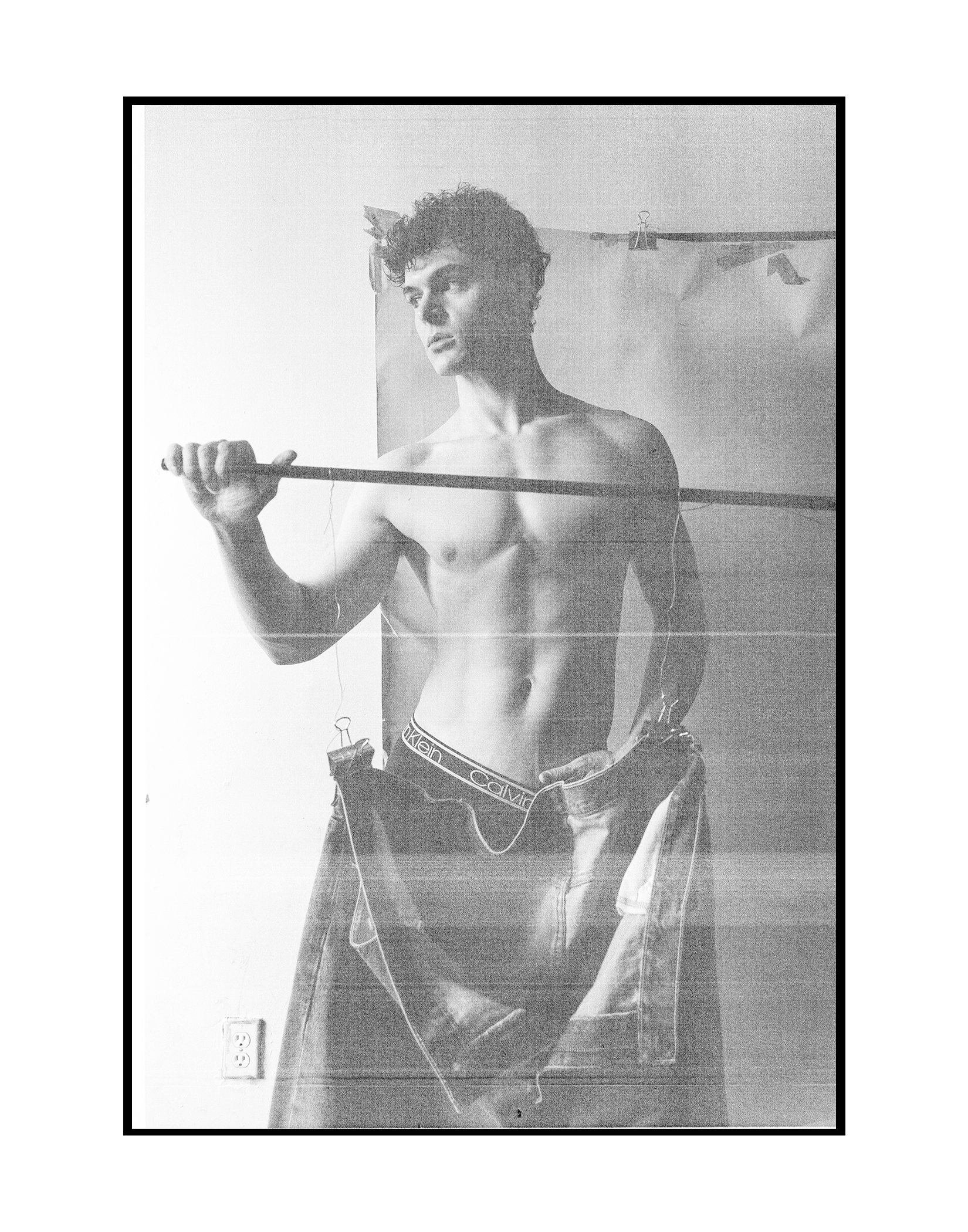


Set design: amadeo amadeo.
Photography: Anthony Amadeo.
Model: Mason Williams.
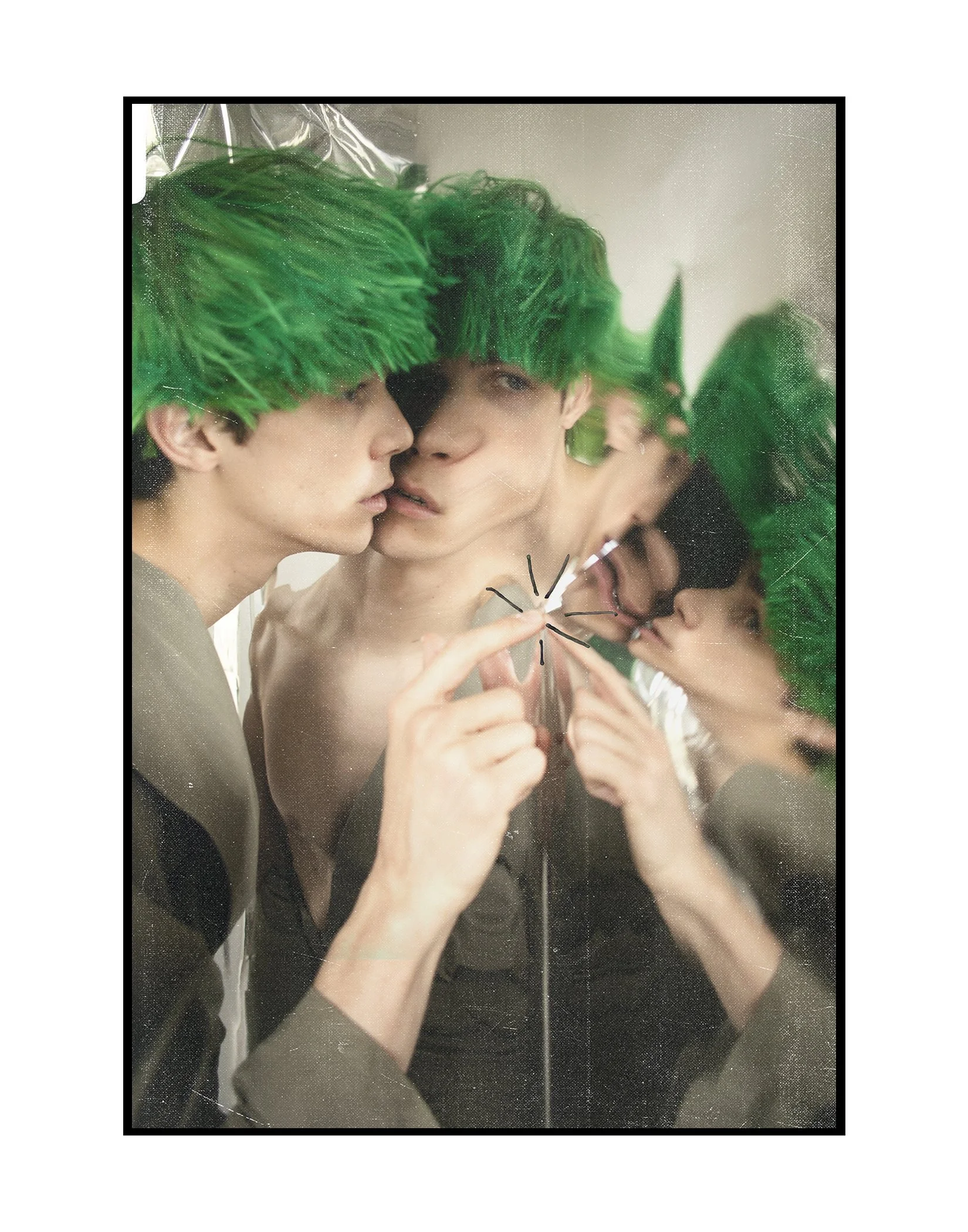
Vincent by Anthony Amadeo
Photocopies of Vincent Paladino by Anthony Amadeo
Photocopies of Vincent Paladino by Anthony Amadeo
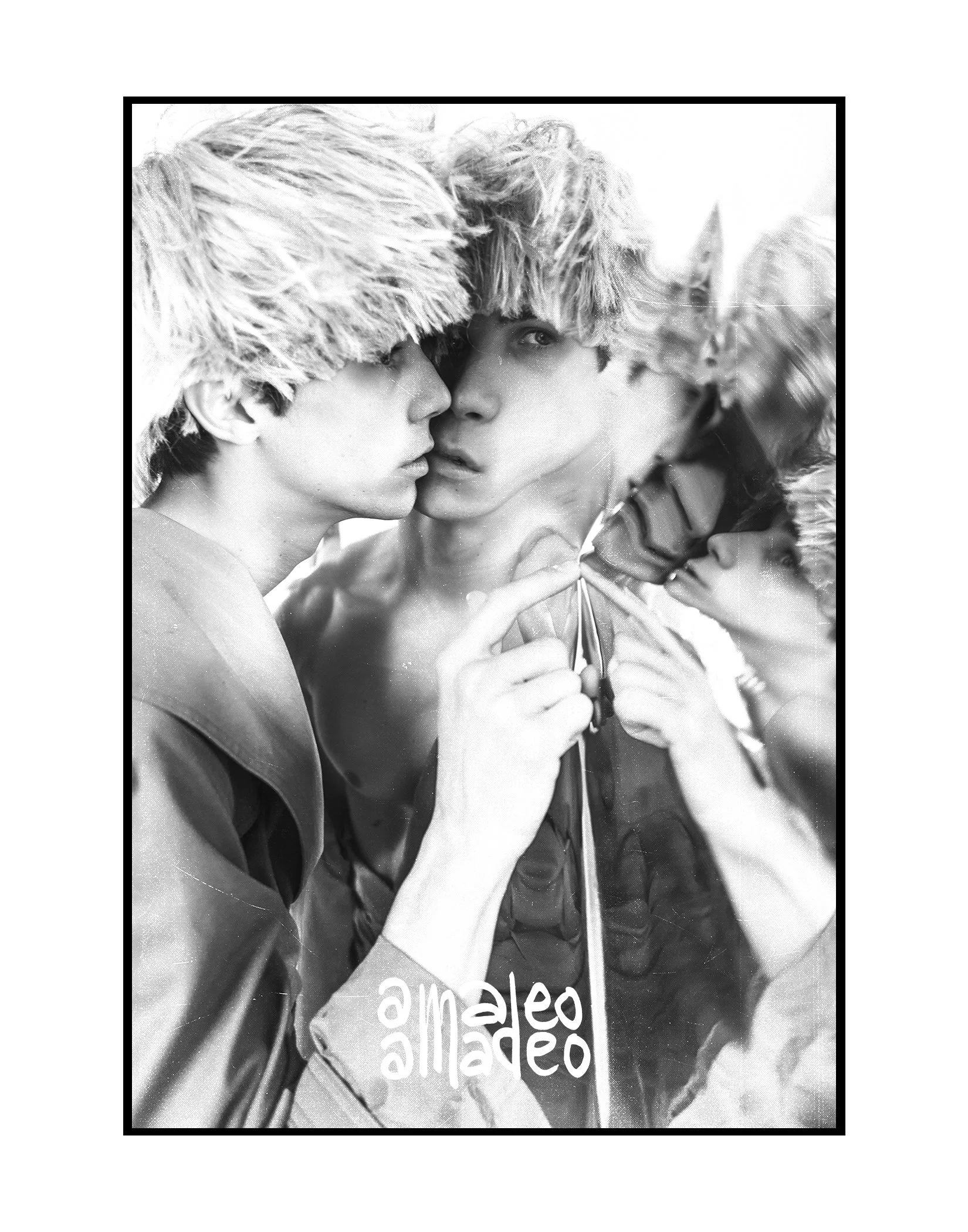
Wig by amadeoamadeo