A Summer Salad for a New Find
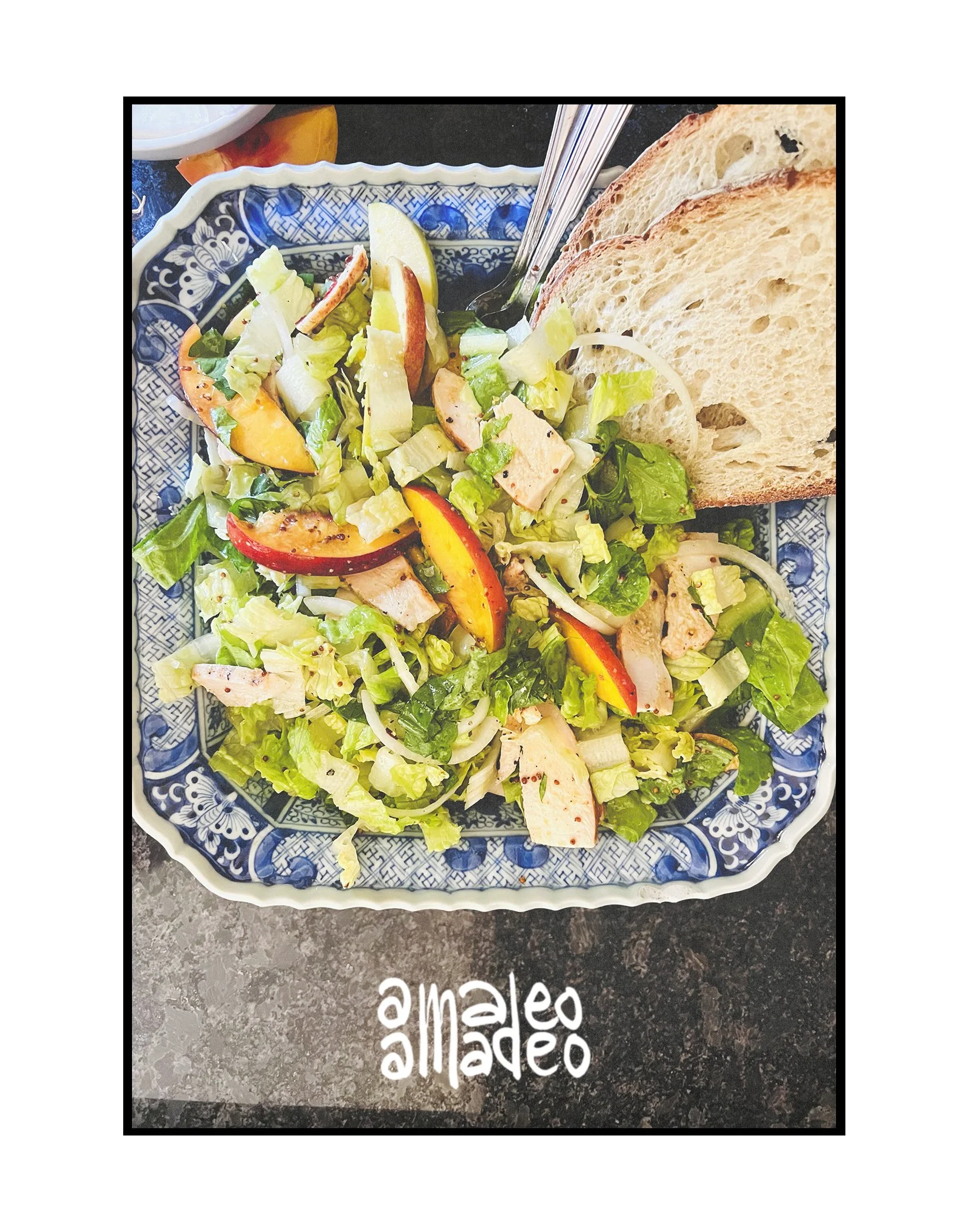
On an antiquing trip that didnt go according to plan, I was still able to find something in the hunt: a bowl
On an antiquing trip that didnt go according to plan, I was still able to find something in the hunt: a bowl
What first drew me in was the blue. That rich cobalt against the soft white porcelain felt instantly alive, classic, and full of possibility. I loved that the bowl was clearly hand-painted—the slight irregularities in the lines, the movement in the brushwork, the evidence of a person’s hand still present in the object. The ceramic has a beautiful thinness to it as well, delicate but still meant to be used. There are little mineral markings and subtle moments in the glaze that make it feel even more alive, as if the material itself wanted to leave behind its own record of being made.
I always love when an object can move quickly from being admired to being useful. This bowl felt like it wanted to hold something fresh and full of color. On such a hot summer day, a salad felt right—something crisp, fragrant, juicy, and bright. I wanted to make something simple but layered: greens, fruit, herbs, chicken, and a dressing with a little sweetness, acidity, spice, and depth.
So the bowl became the beginning of lunch.
Summer Salad with Peach, Apple, Herbs, and Chicken
Ingredients
For 2 generous servings:
1 grilled chicken breast, sliced
1 large head or heart of romaine, chopped
1 peach, sliced into wedges
1 apple, thinly sliced
1/4 onion, very thinly sliced
A handful of fresh basil, torn
A handful of parsley, roughly chopped
Black pepper
Optional: chili flakes, sesame seeds, garlic powder, coriander, or a little cumin
Quick onion treatment
Put the sliced onion in a small bowl with:
Juice of 1/2 lime
Pinch of salt
Tiny pinch of sugar or a drizzle of maple syrup
Let it sit for 10 minutes while you make the dressing. This makes the onion sharper, prettier, and less harsh.
Dressing
generous amount of olive oil
2 tablespoons soy sauce
1 lime, juiced
1 teaspoon mustard
1 teaspoon maple syrup
Pinch of chili flakes
Pinch of coriander
Black pepper, to taste
Optional pinch of garlic powder or onion powder
Method
In a small bowl, whisk together the olive oil, soy sauce, lime juice, mustard, maple syrup, chili flakes, coriander, and black pepper until combined.
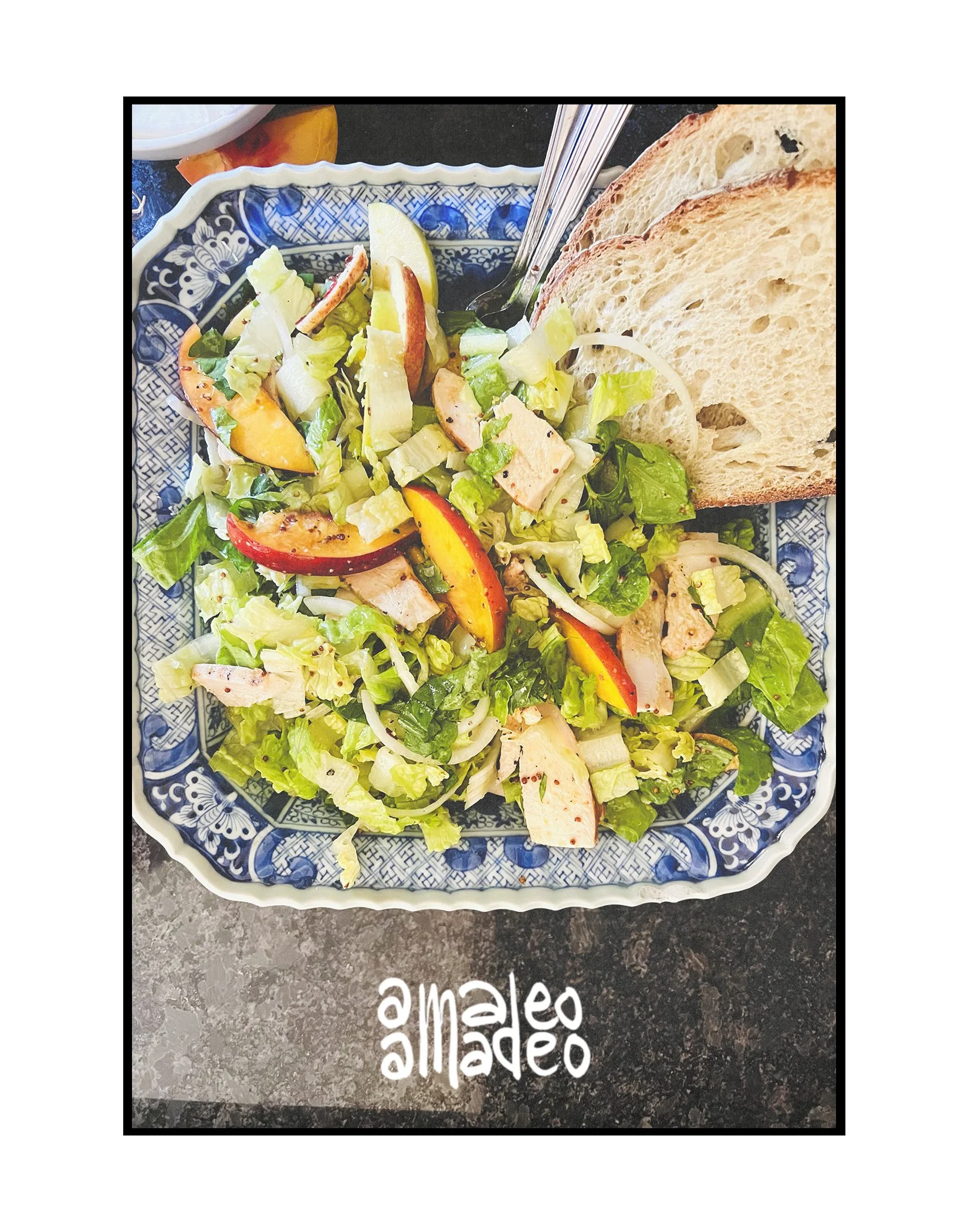
Arrange the chopped romaine in the bowl, then layer in the sliced chicken, peach, apple, onion, basil, and parsley. Drizzle with the dressing and toss lightly until everything is coated. Serve with slices of sourdough on the side.
Putting the salad together was one of those small pleasures that feels larger than it is. Watching the colors come alive against the blue of the bowl made the whole thing feel even fresher. The basil, especially, was so aromatic on such a hot day—bright and peppery and green as I picked and tore it. Even eating the salad, everything felt fragrant. It was a burst of freshness: garden-earthy, sweet, crisp, tart. Each bite gave something a little different—sometimes more parsley, sometimes apple, sometimes the soft sweetness of peach, then the gentle heat of the chili flake. The coriander, soy sauce, lime, and maple syrup all came together in a kind of symphony. It was a fragrant playscape, full of contrast and brightness, and exactly the kind of lunch this bowl seemed to ask for.
Nocturne in the Garden
There are certain evenings that do not feel like they are happening in real time. They feel arranged. Suspended. As if every object, scent, sound, and gesture has been placed inside a small spell.
The first gathering by amadeo amadeo
There are certain evenings that do not feel like they are happening in real time. They feel arranged. Suspended. As if every object, scent, sound, and gesture has been placed inside a small spell.
Nocturne in the Garden was the first gathering by amadeo amadeo created to bring together art, scent, curation, food, drink, and atmosphere. A small evening in the backyard, surrounded by trees, spring growth, and soft green light, became a way to show what the brand is slowly becoming: not only a collection of objects, but a world built through feeling.
The idea was simple at first. Three paintings. Three incense scents. One garden.
But simplicity, when treated carefully, can become its own kind of fantasy.
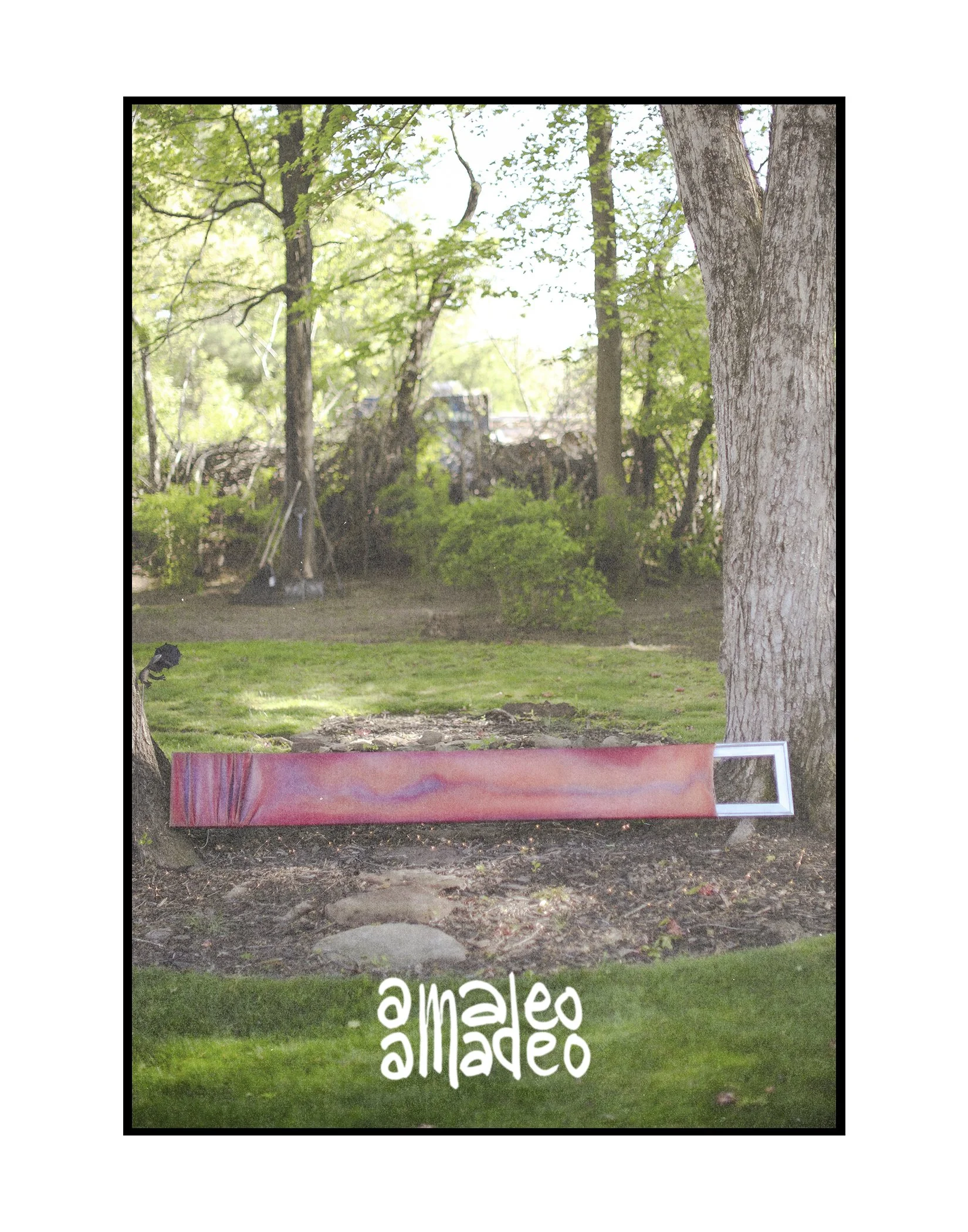
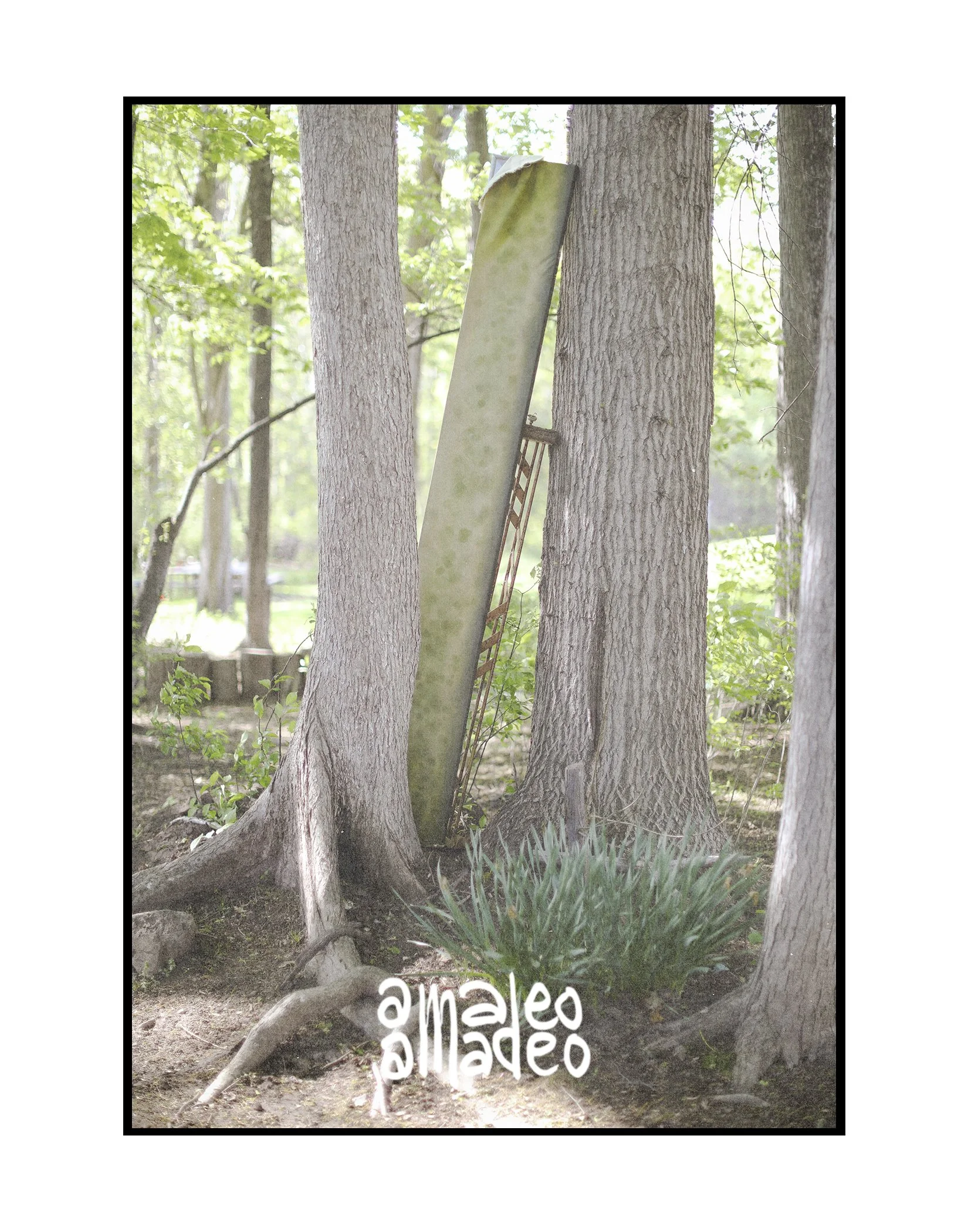
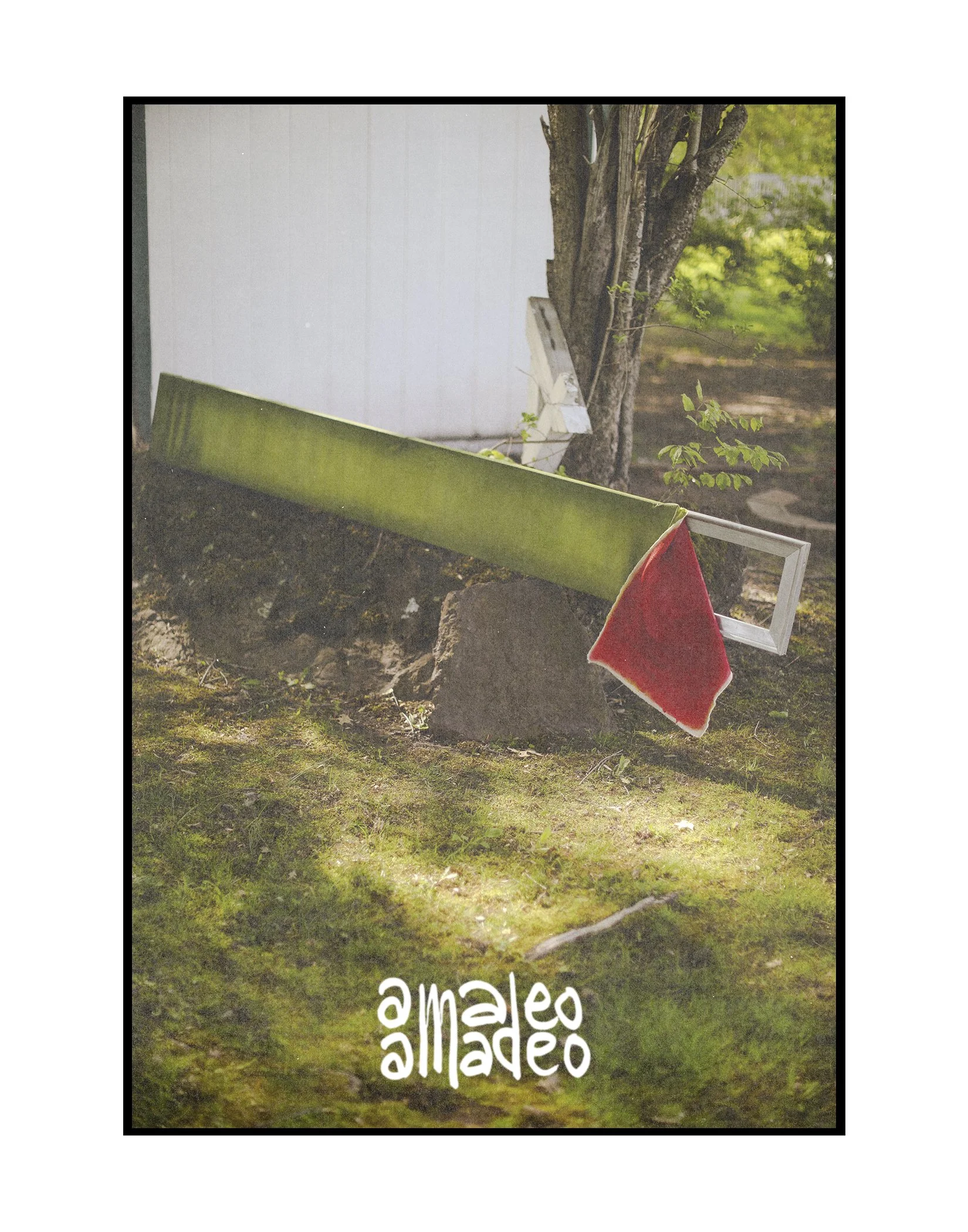
The three paintings were placed throughout the lawn and trees as if they had grown there. Each one measured nearly eight feet long and only twelve inches high, a strange and narrow proportion that made them feel less like traditional paintings and more like fragments, relics, banners, or architectural remains. They leaned into the landscape, slipped between trunks, and stretched across the grass with the quiet confidence of something planted there long before anyone arrived.
Each painting was created as a synesthetic translation of one of the three house incense scents of amadeo amadeo: Rose and Clove, Geranium and Slate, and Frankincense and Tomato Leaf.
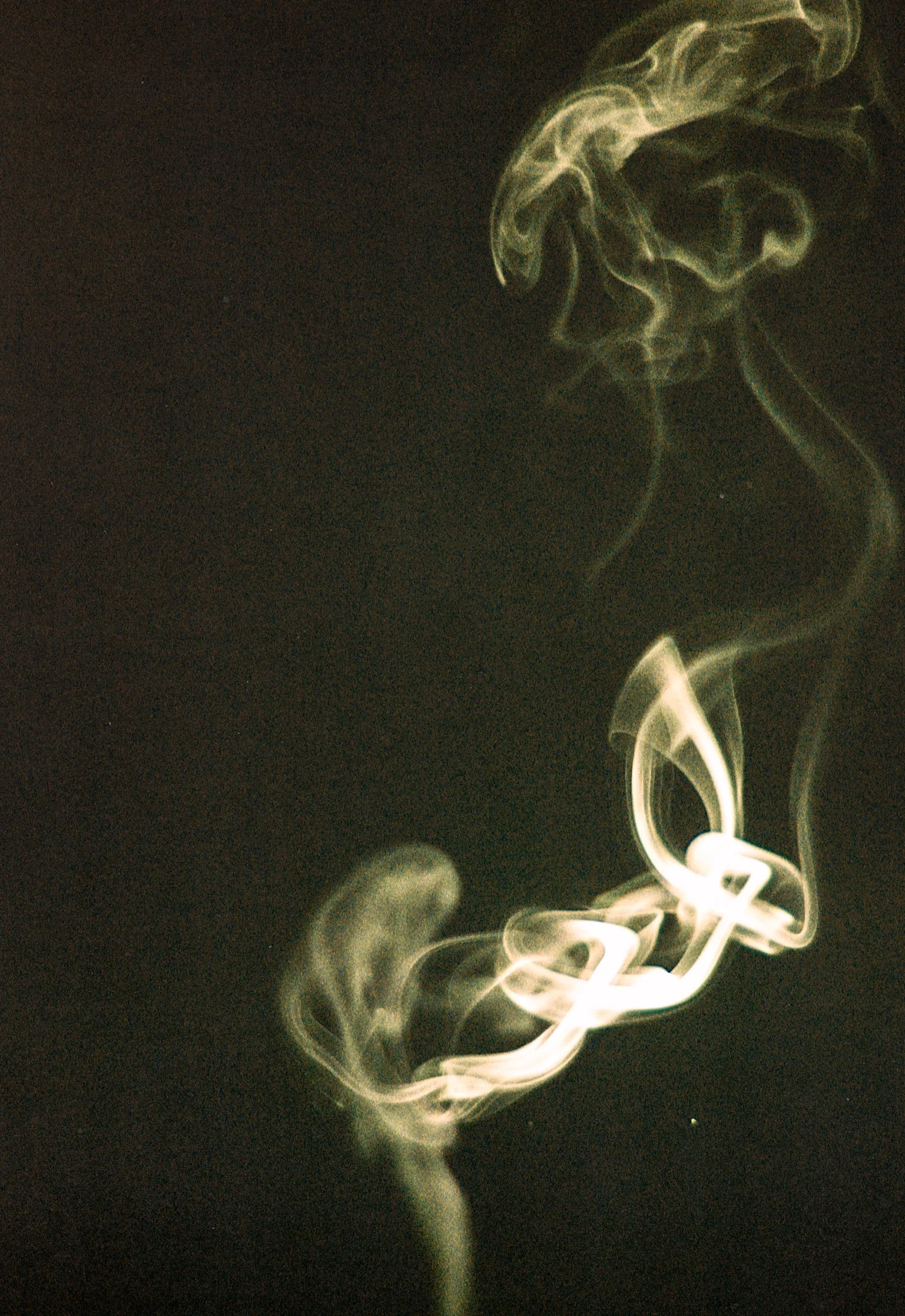
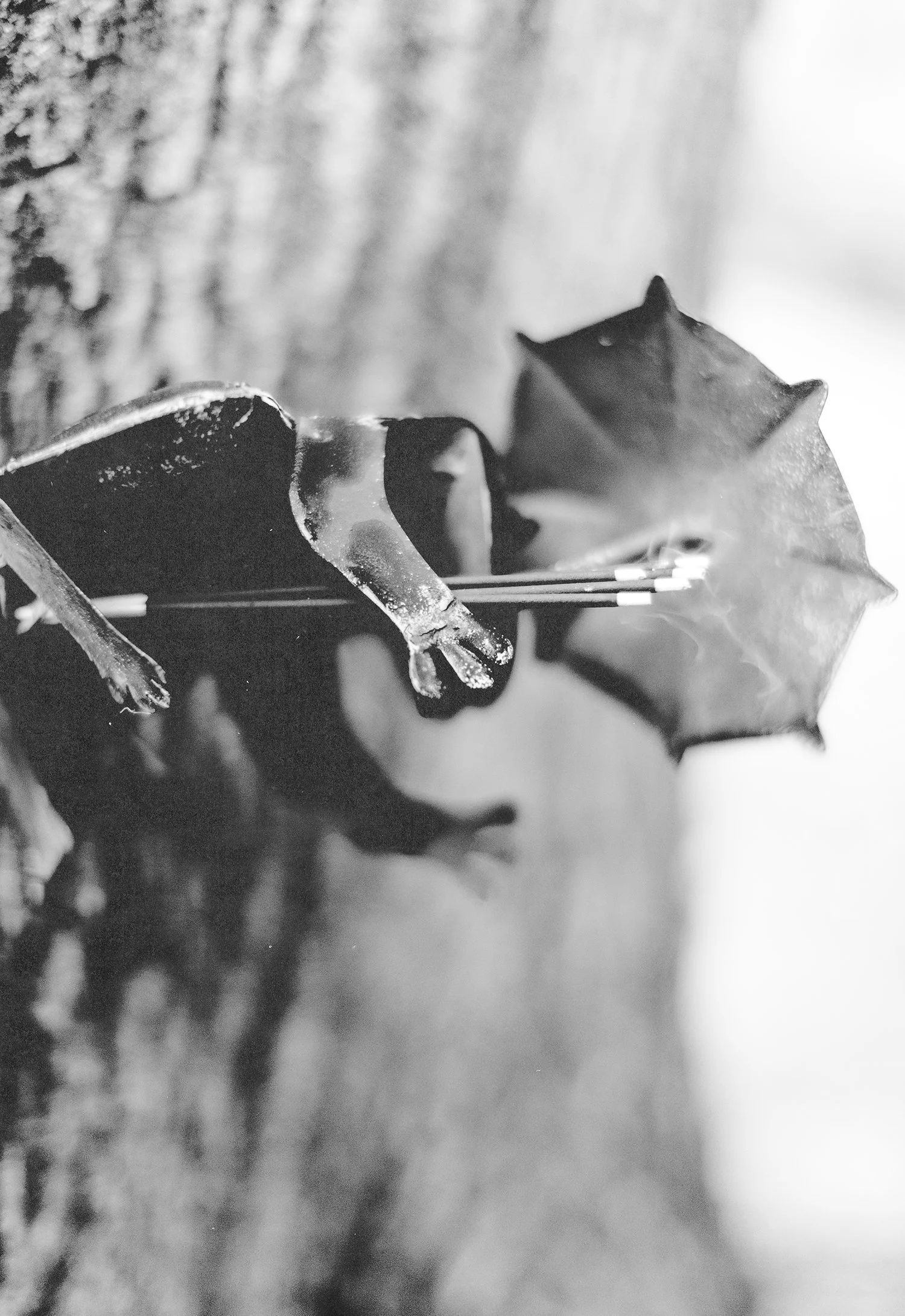
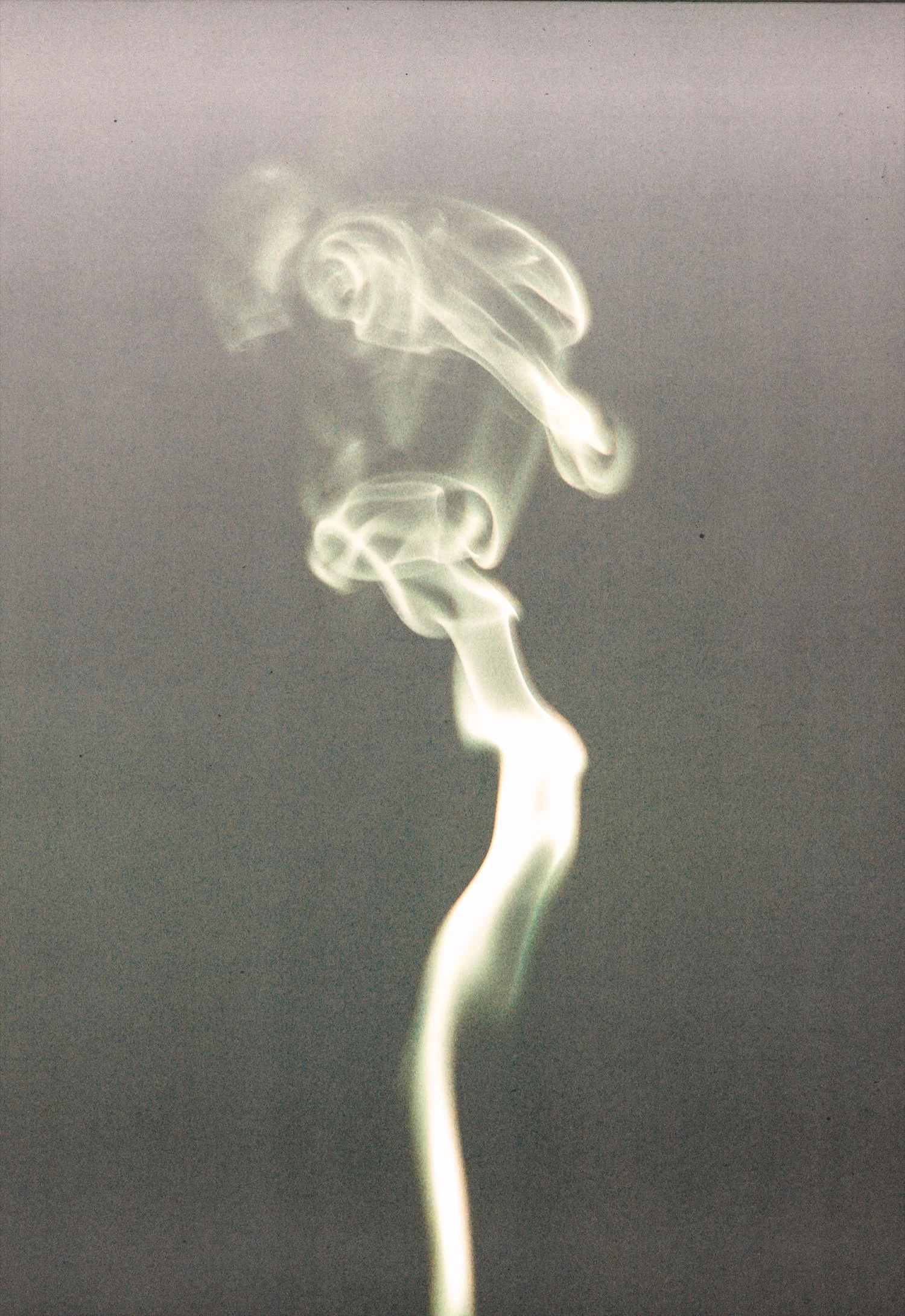
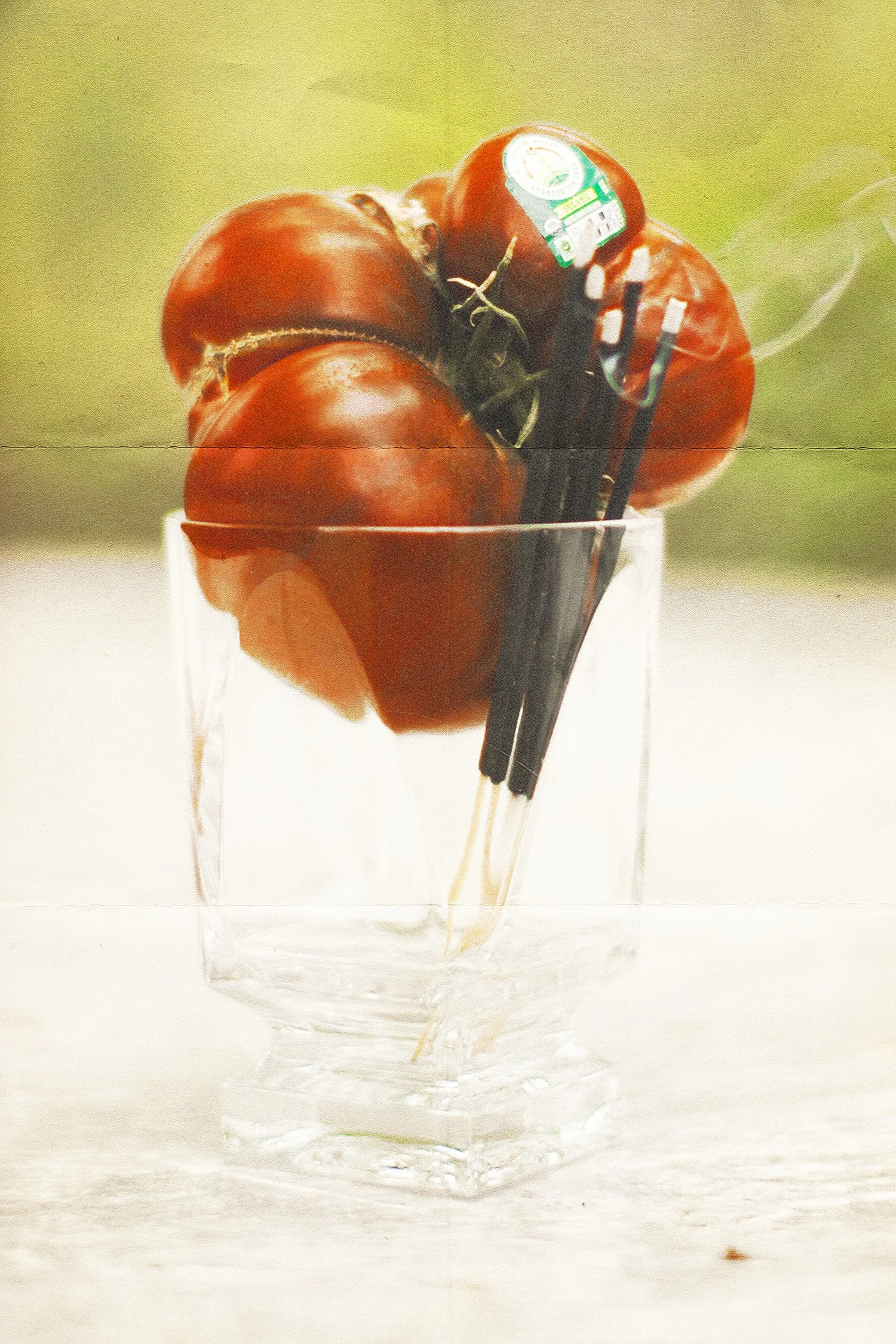

I wanted to understand what these scents might look like if they stopped being smoke and became color. What does rose become when it is not a flower, but a surface? What does clove look like when it darkens the edge of a painting? Can geranium become green without becoming literal? Can slate become texture? Can tomato leaf turn into something sharp, wet, and alive? Can frankincense stretch itself into a pale, sacred haze?
The paintings became answers without needing to explain themselves.
Near each painting, its corresponding incense burned in the grass. The smoke moved differently depending on the air, sometimes rising straight upward, sometimes bending into the trees, sometimes disappearing entirely. The paintings were not just being viewed. They were being scented. The lawn became a kind of open-air gallery where the work could be seen, smelled, and walked around. It was not about separating the senses. It was about letting them interrupt each other.
That is where amadeo amadeo feels most alive.
A visual object does not have to remain only visual. A scent does not have to stay invisible. Food can become sculpture. A drink can become an object. A backyard can become a stage. Domestic life can go beautifully rogue.
For the evening, I wanted the food and cocktail to feel just as considered as the paintings. Not catering. Not a board. Not a drink station. Something closer to a still life that had started misbehaving.
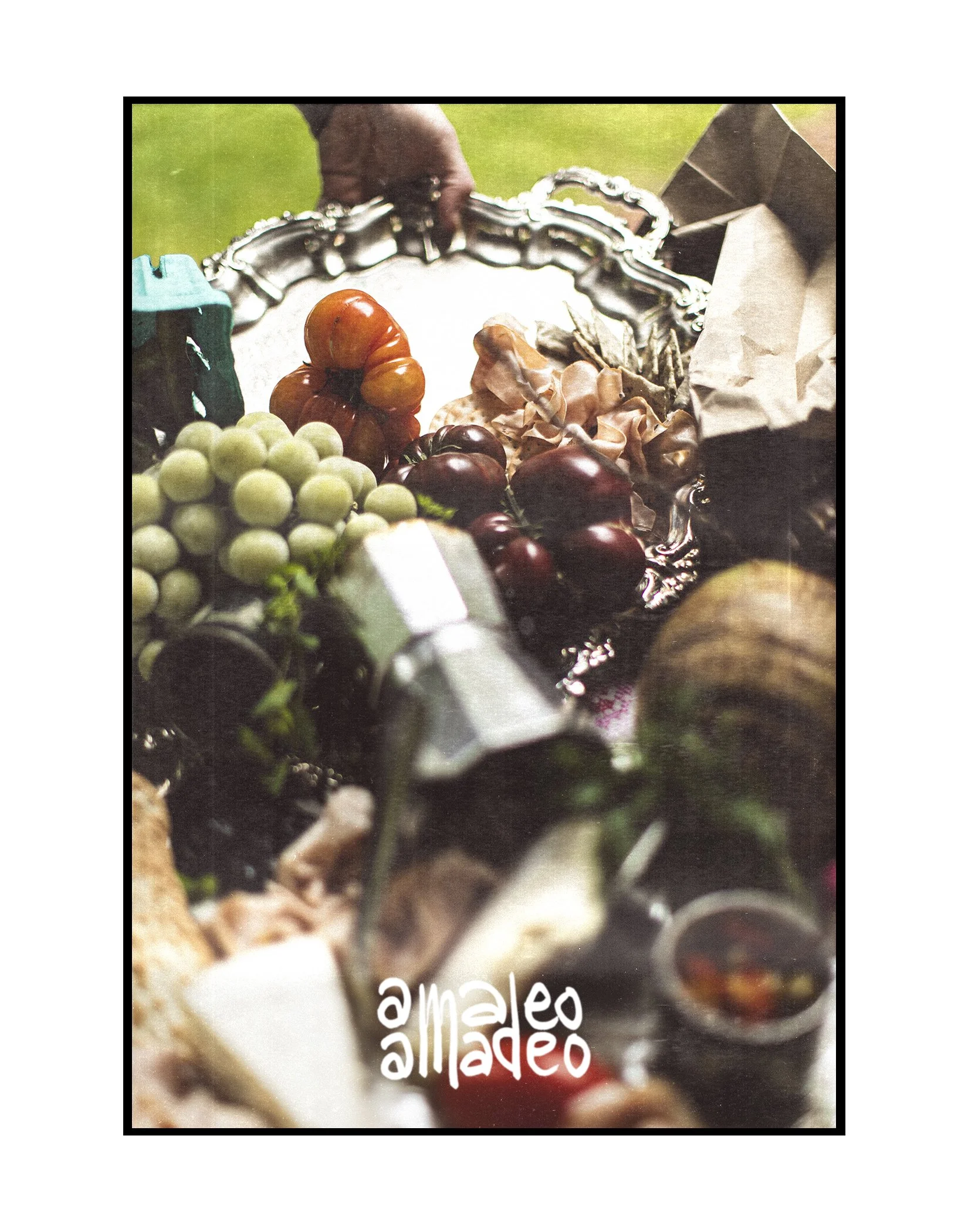
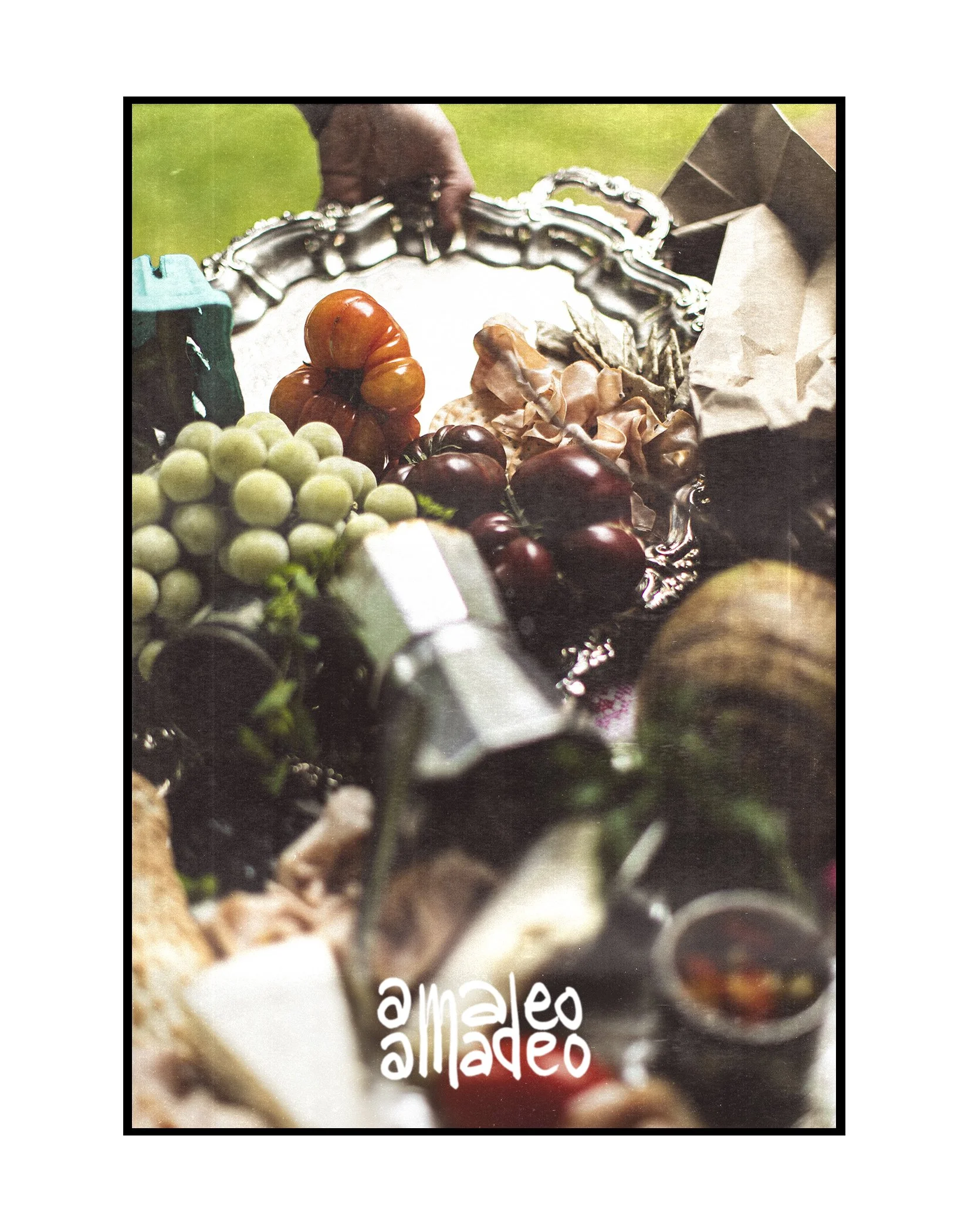
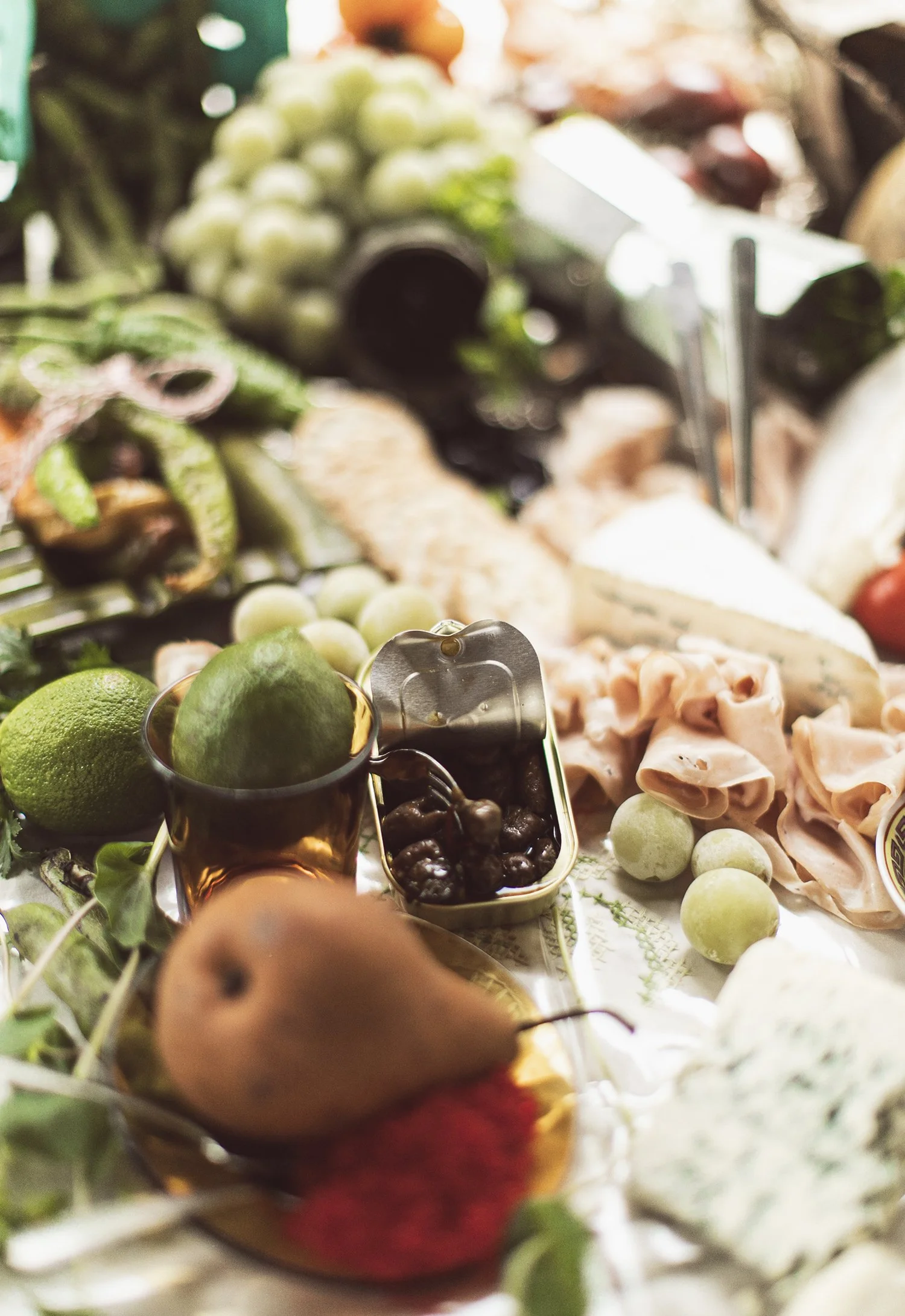
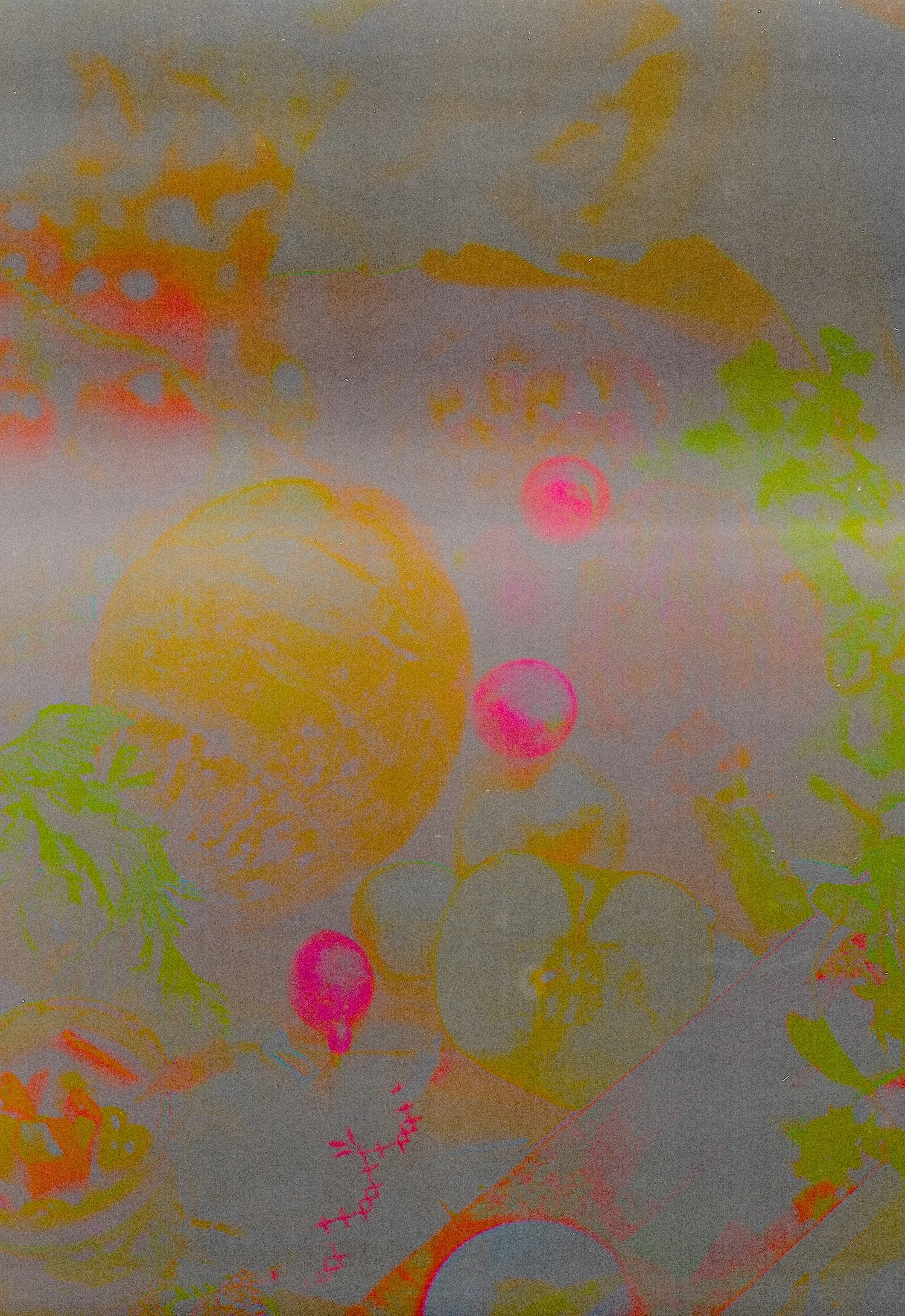
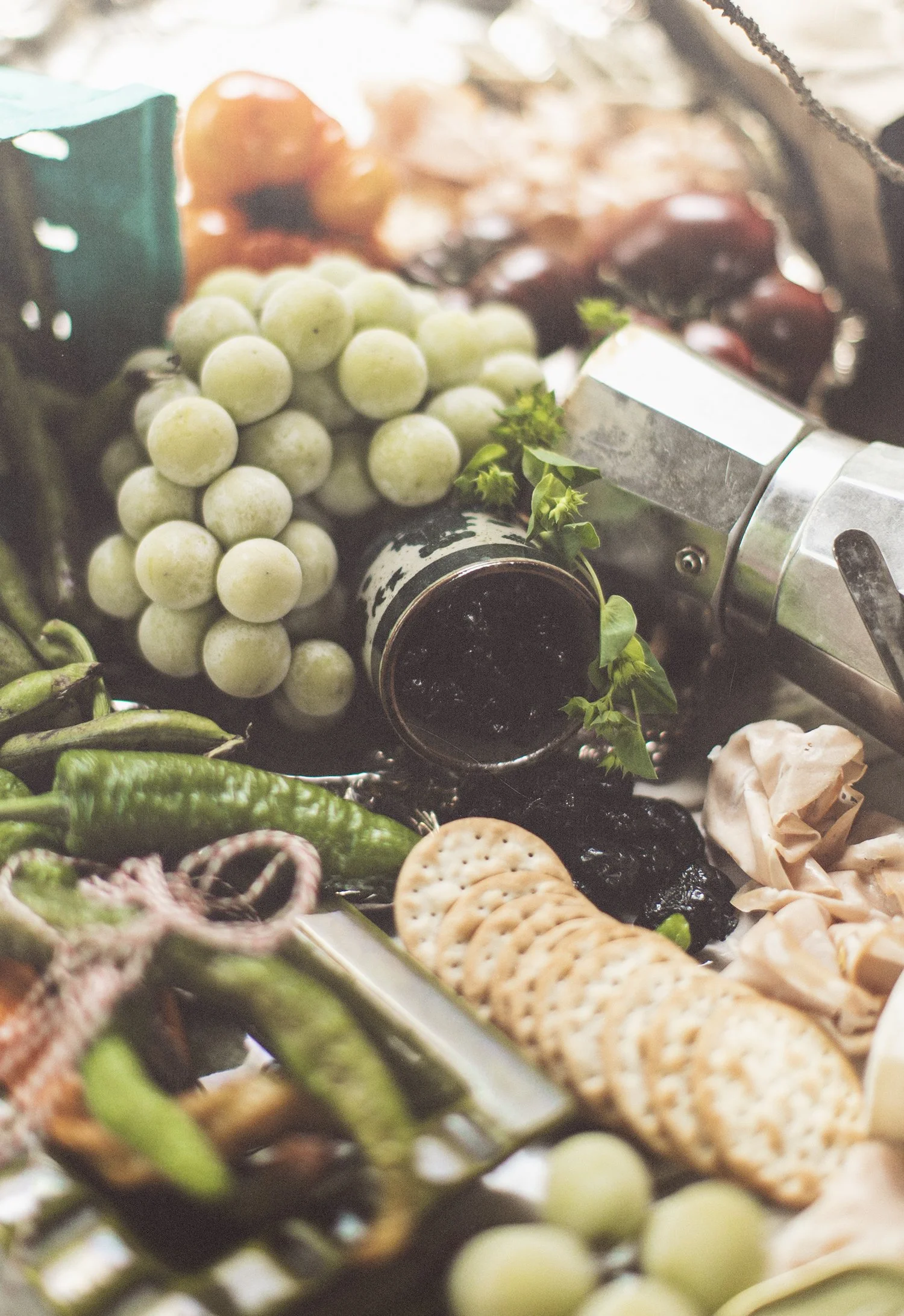
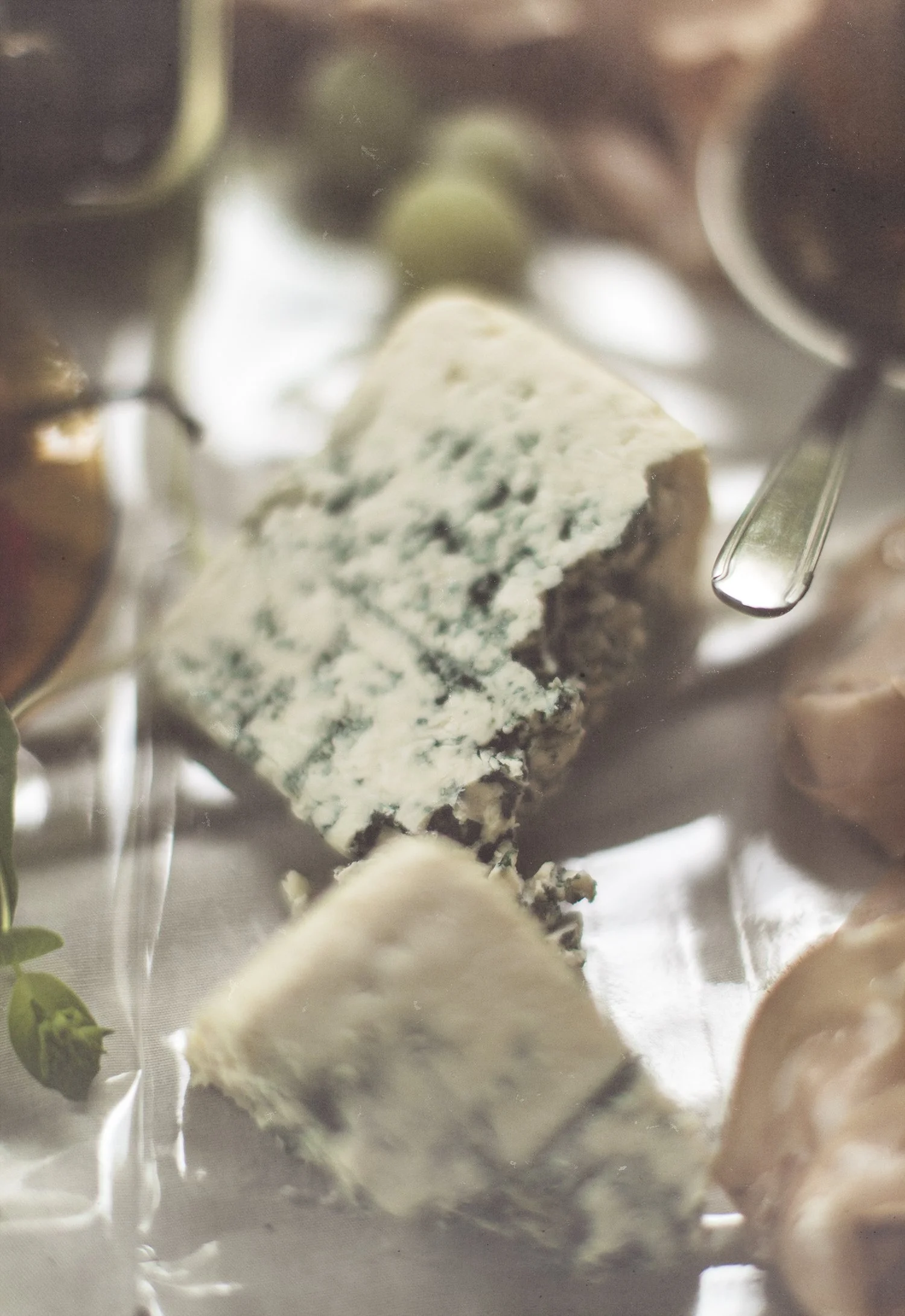
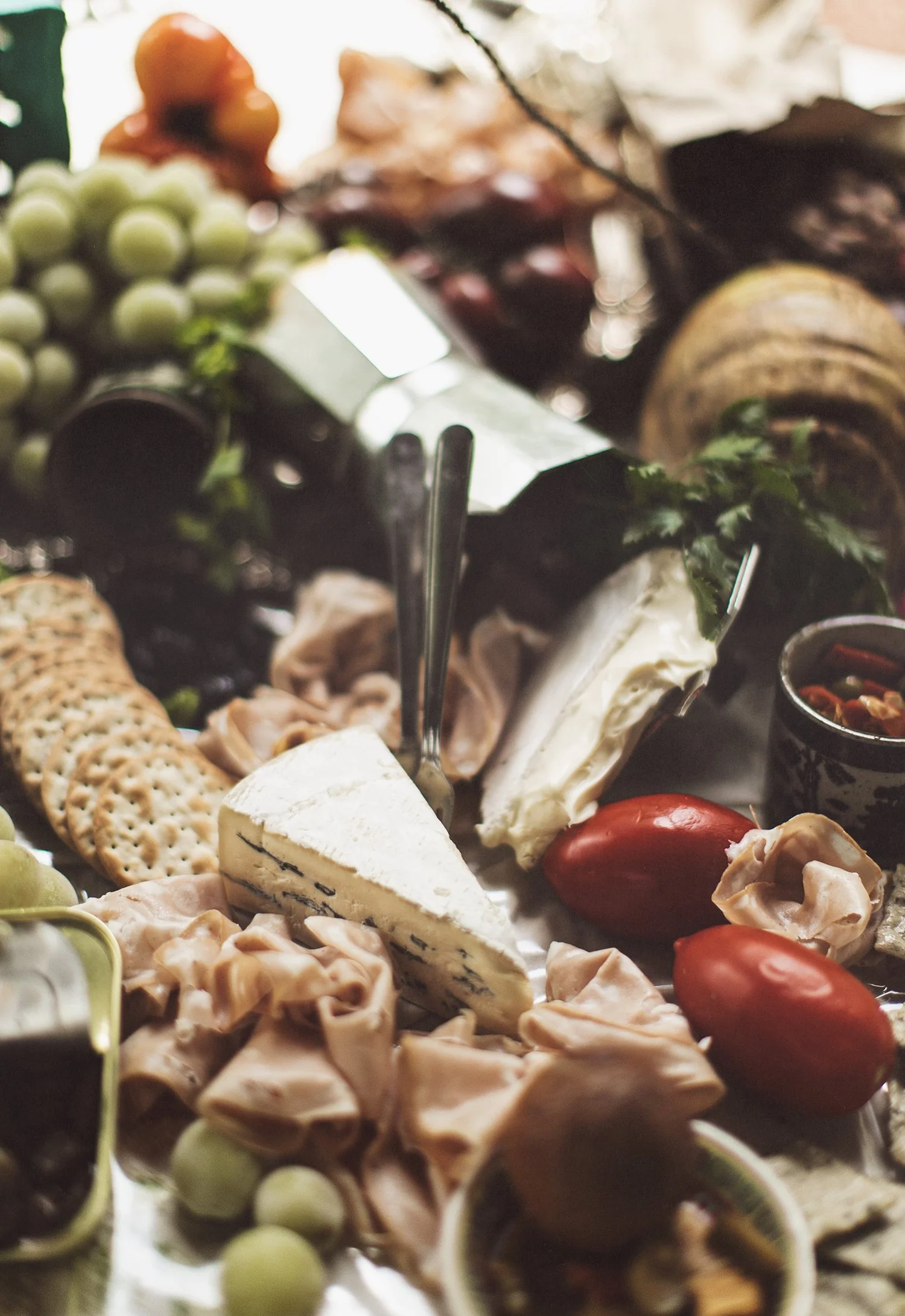
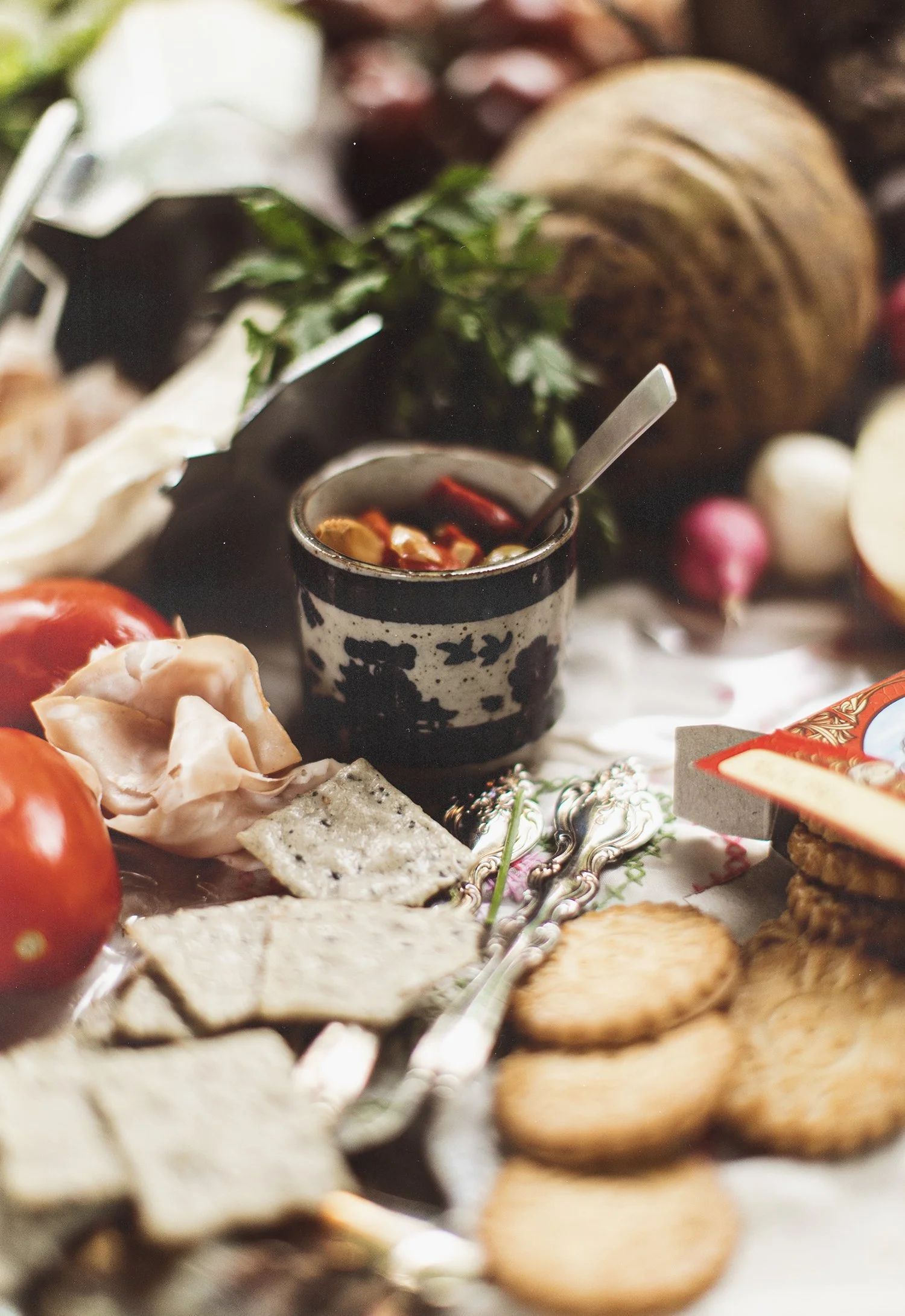
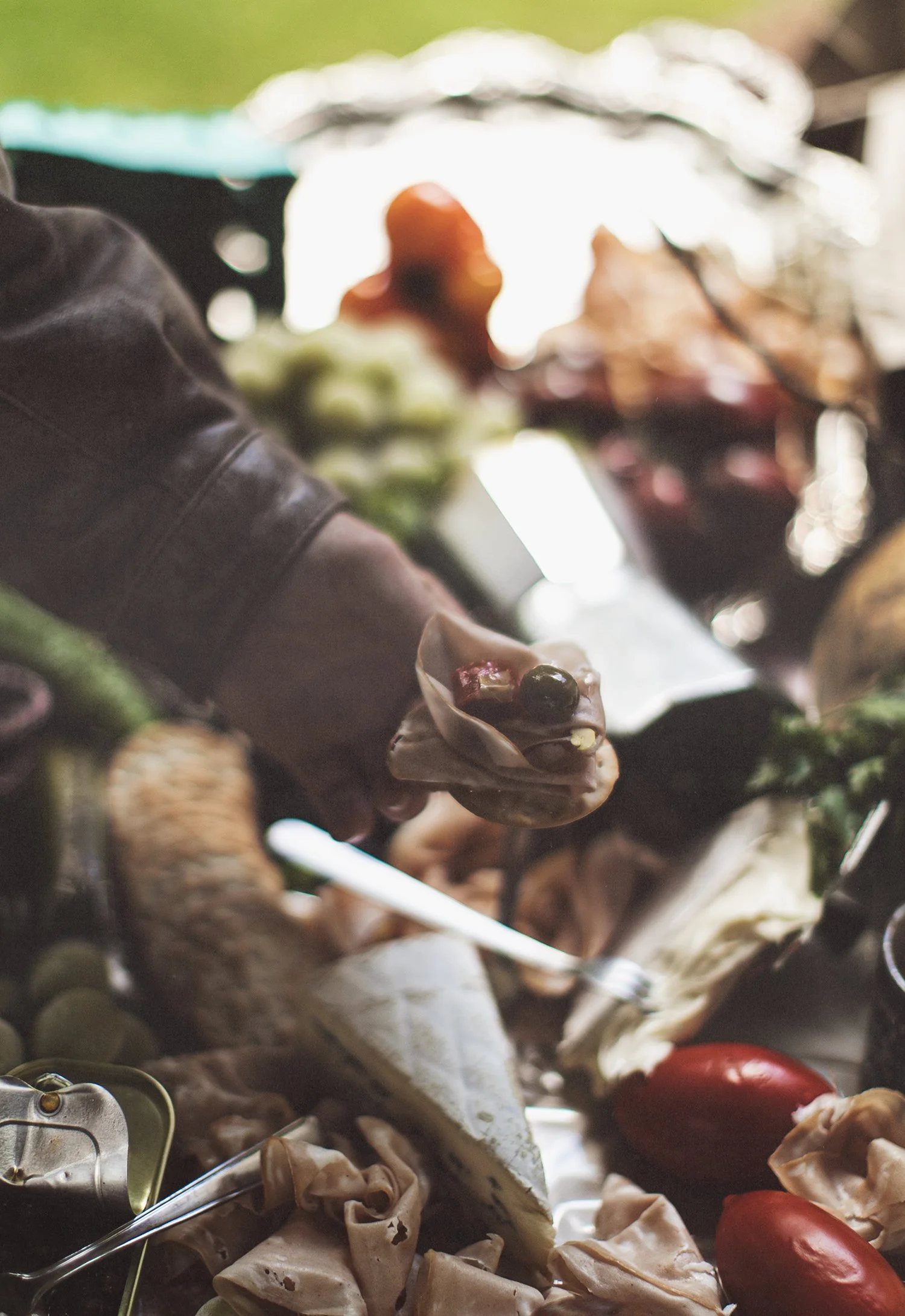
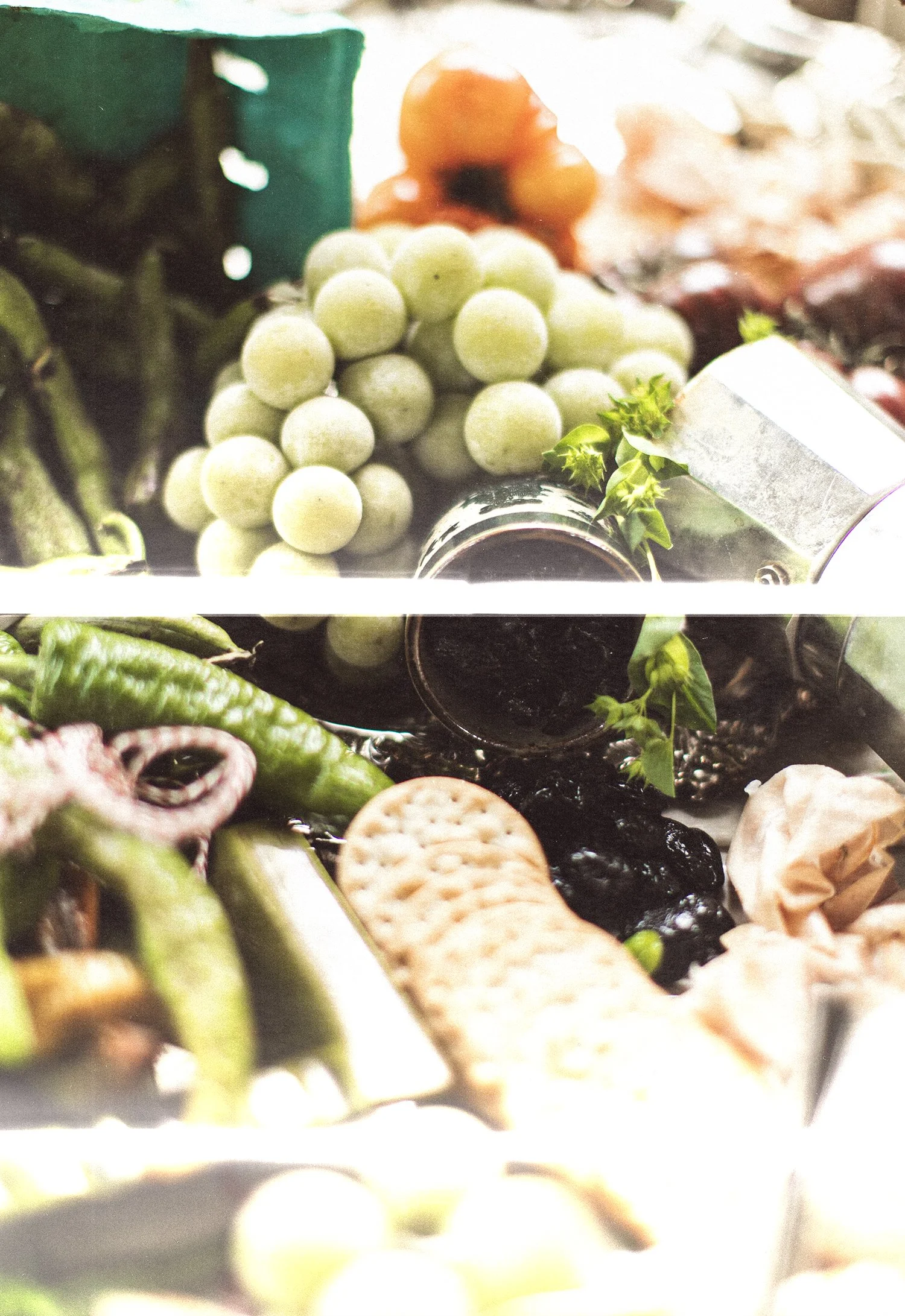
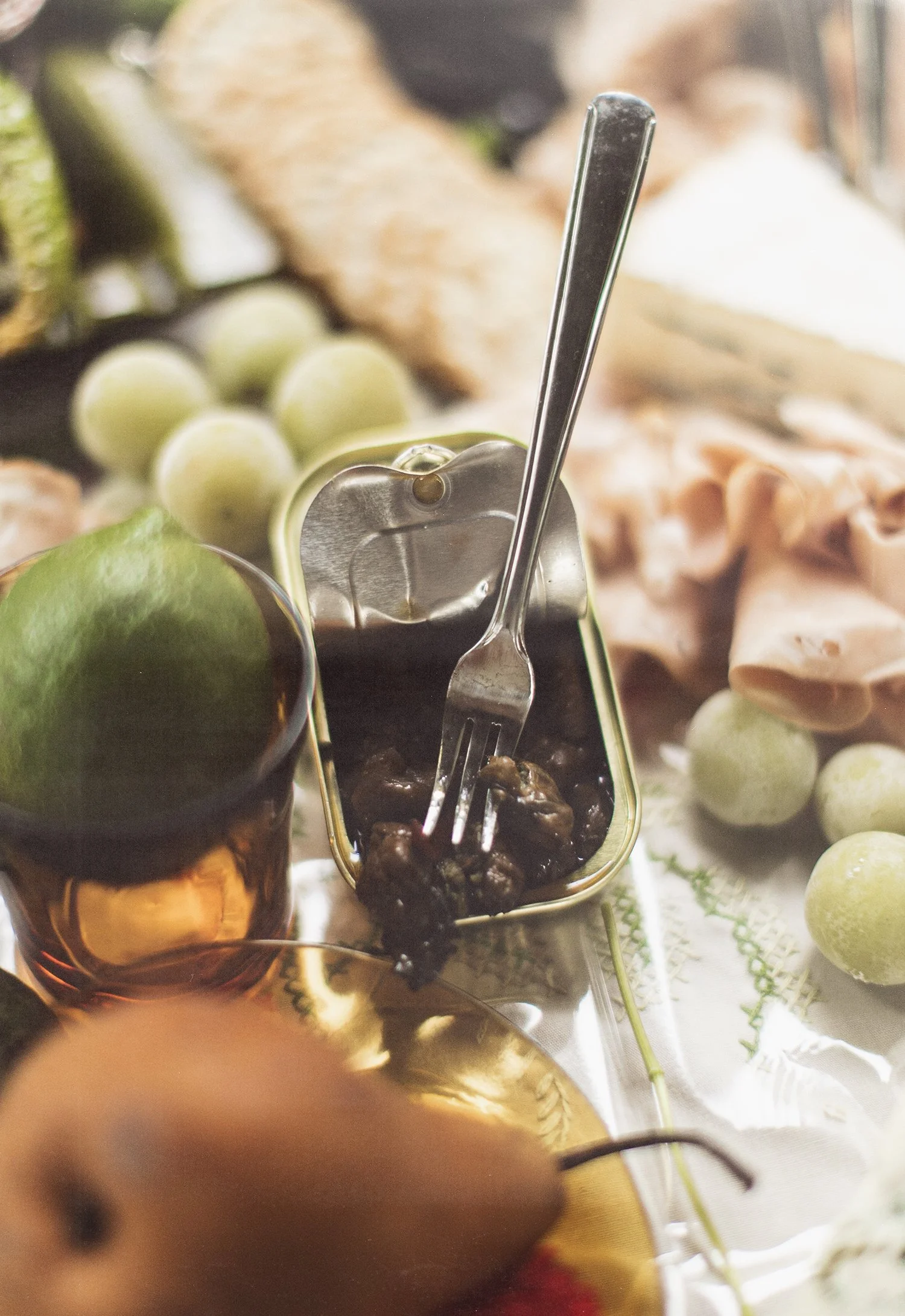
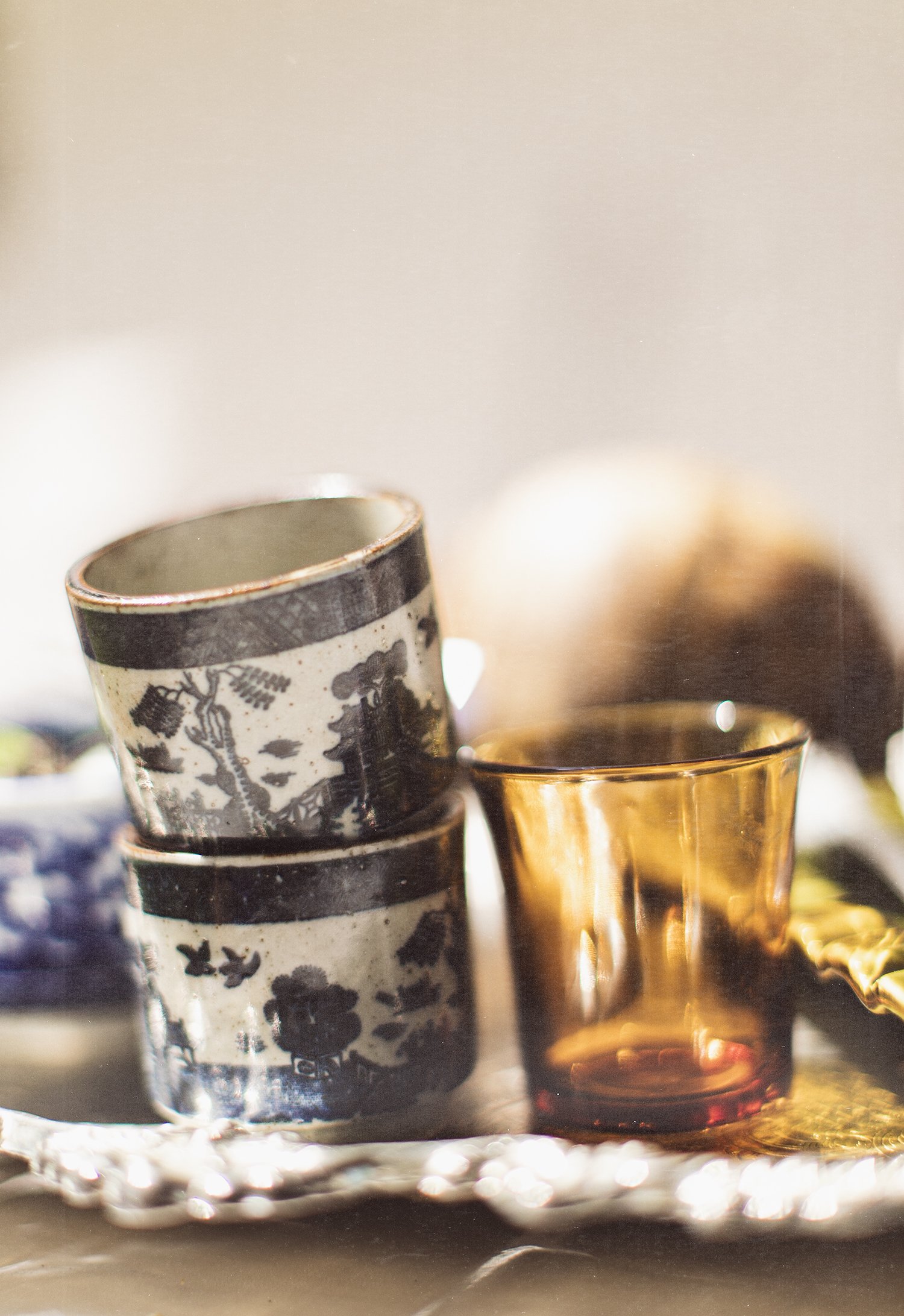
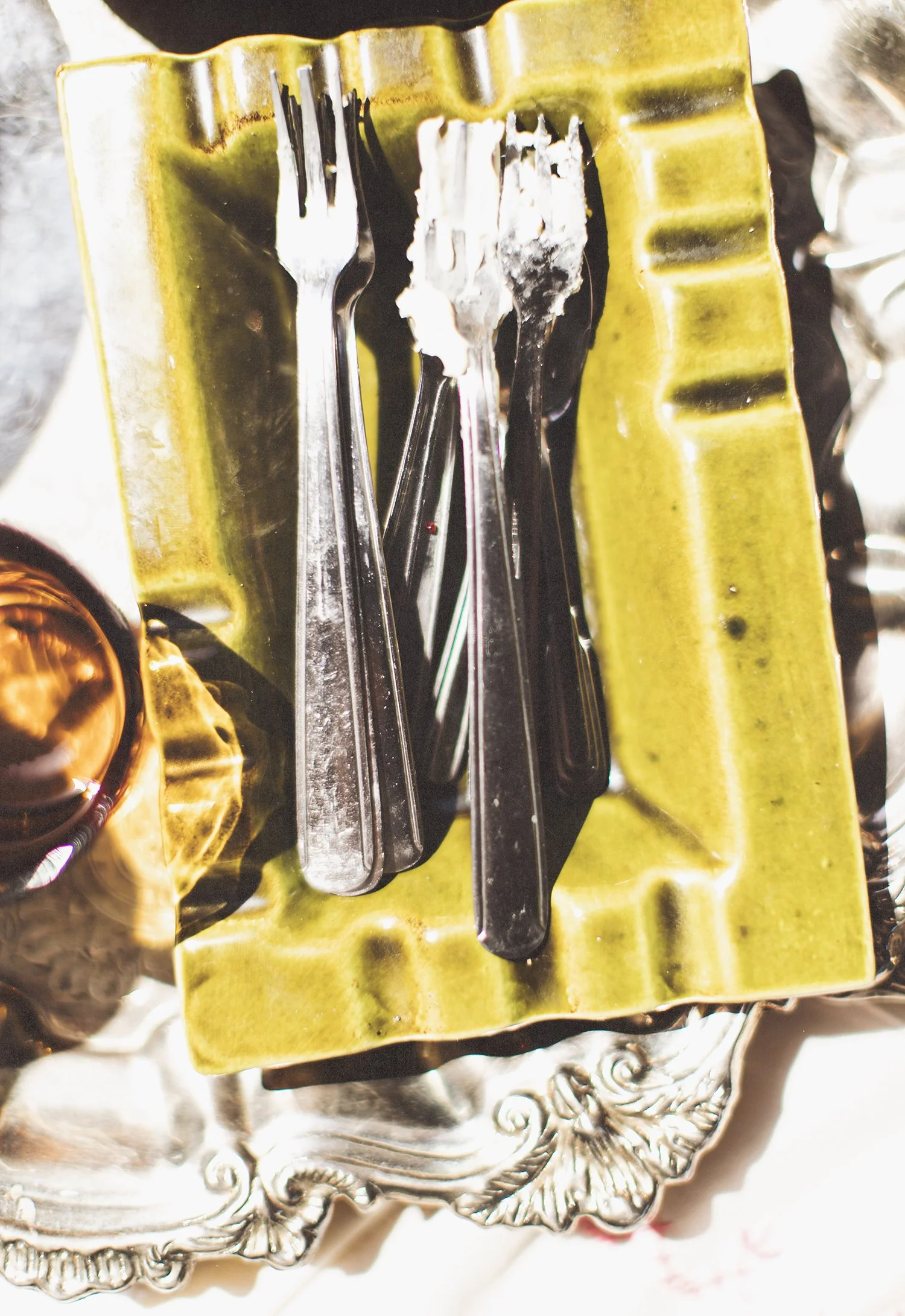
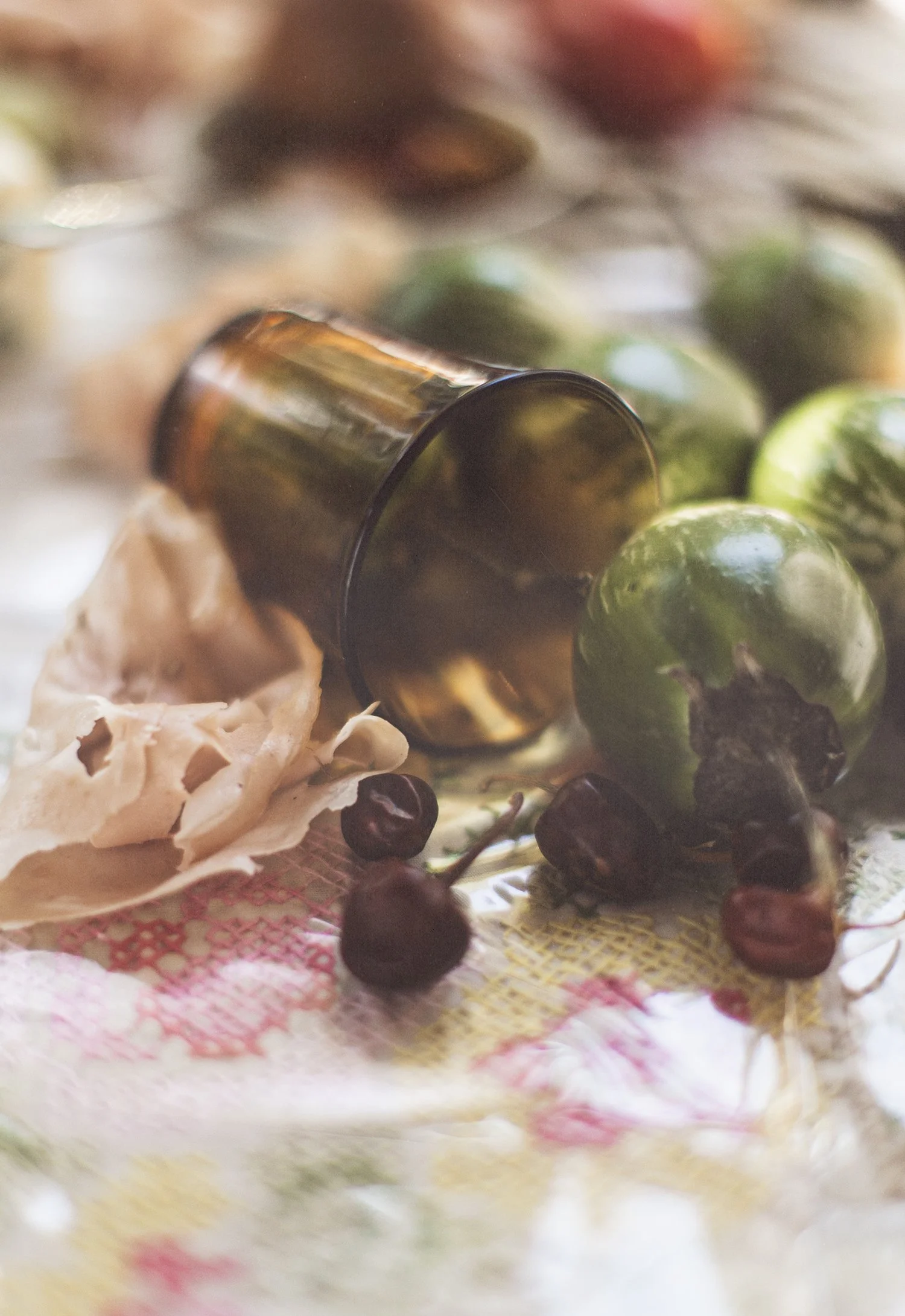
The table was built around a vintage silver platter that looked as if it had been frozen mid-collapse. It was tilted, spilling outward, as though it had just knocked itself over and released everything it had been holding. A moka pot lay overturned. Mortadella was folded in pale, soft layers like fabric. There were smelly cheeses, soft cheeses, blue-veined cheeses, crackers, smoked oysters, masago, whole fruits, vegetables, olives, grapes, and small edible interruptions everywhere.
It was decadent, but not polished. Domestic, but not obedient.
The platter became a cornucopia in the middle of losing control. Something inherited and ornate, suddenly caught in the act of falling apart. The fun of making it was in ignoring the usual rules of a charcuterie board. There are always rules for how something should be done: what belongs next to what, what is too much, what is too strange, what is not proper. But the more interesting part of creating anything is knowing when to break the rules so the thing can start speaking in your own language.
By the end of the night, the board had changed completely. It had been picked at, broken apart, rearranged by hands, appetite, conversation, and curiosity. That was part of the work too. It became less pristine and more alive the longer people gathered around it.
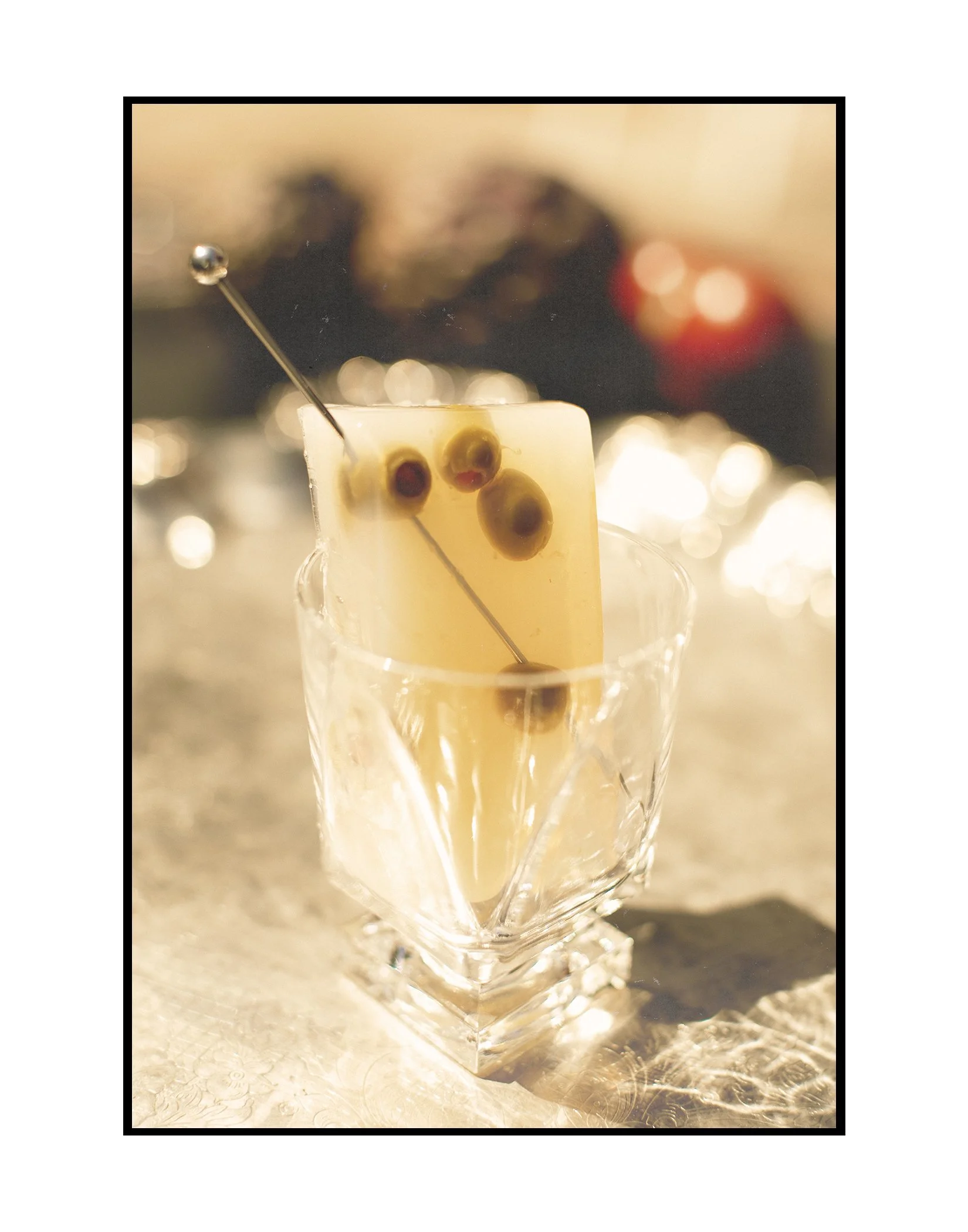
The cocktail followed the same logic. A dirty martini, but made surreal.
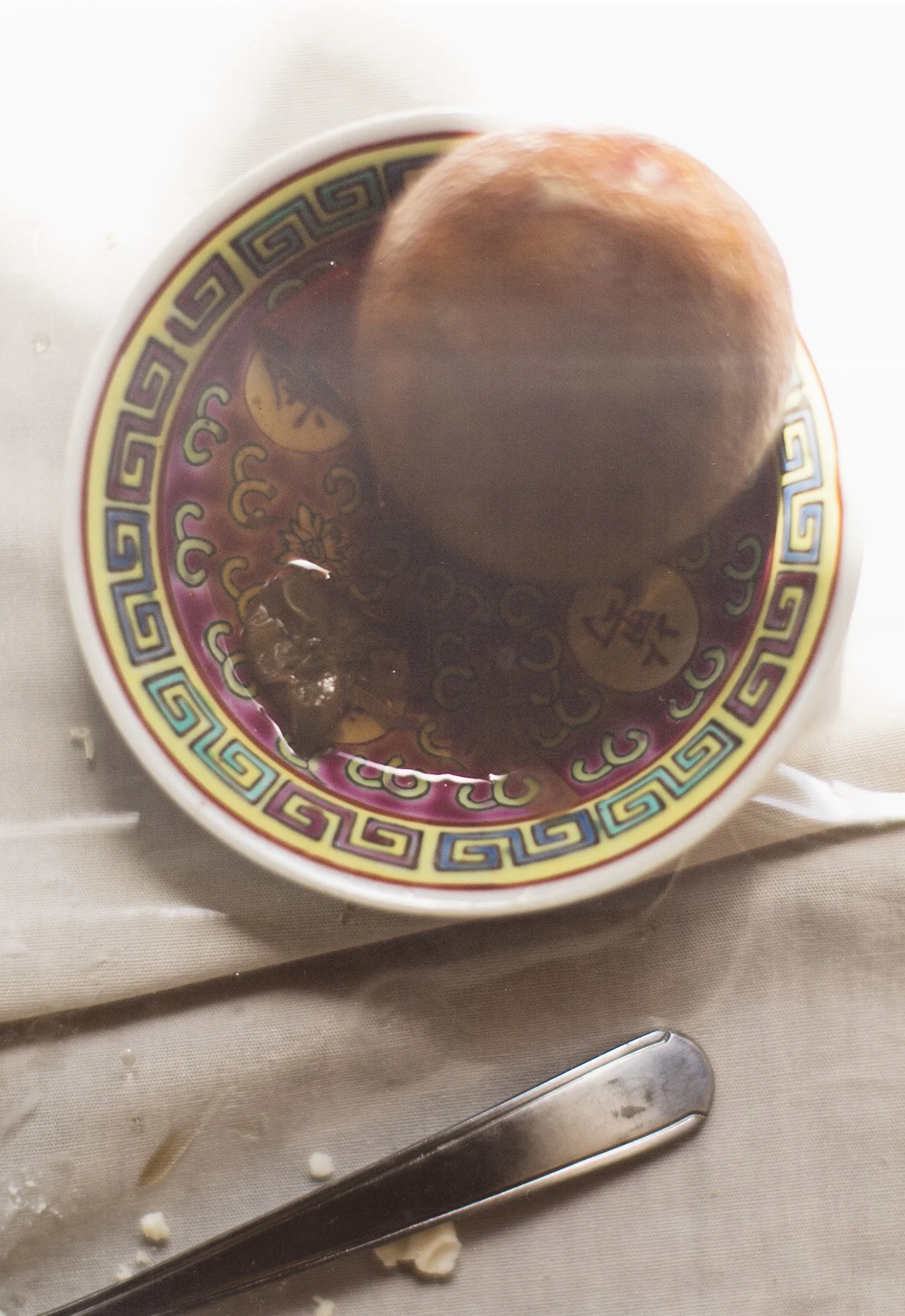
Instead of serving it as a liquid in a glass, I made a gelatin version of a classic dirty martini. A preserved martini. A cube. An olive suspended inside. Something familiar made slightly strange. It was cold, briny, absurd, elegant, and a little wrong in the best way. A cocktail turned into a relic. A martini that could be held, cut, looked at, and eaten.
That small shift—from drink to object—felt important. It turned hospitality into art direction.
Throughout the evening, there was the smell of incense, grass, cheese, smoke, brine, fruit, and spring air. The paintings lived between the trees. The food slowly collapsed into enjoyment. The martini became gelatin. The silver reflected everything. Nothing needed to be too loudly announced. The point was to let people discover.
That is what I want amadeo amadeo to be known for: the creation of moments that alter the senses and open a small door into fantasy, curiosity, and wonder. Not fantasy as escape, but fantasy as attention. A reminder that there is so much to see, taste, smell, arrange, touch, and witness if we refuse to take ordinary things for granted.
A backyard can become a gallery.
A painting can become scent.
An incense can become color.
A cheese board can become a domestic collapse.
A martini can become a cube.
A spring evening can become a ritual.
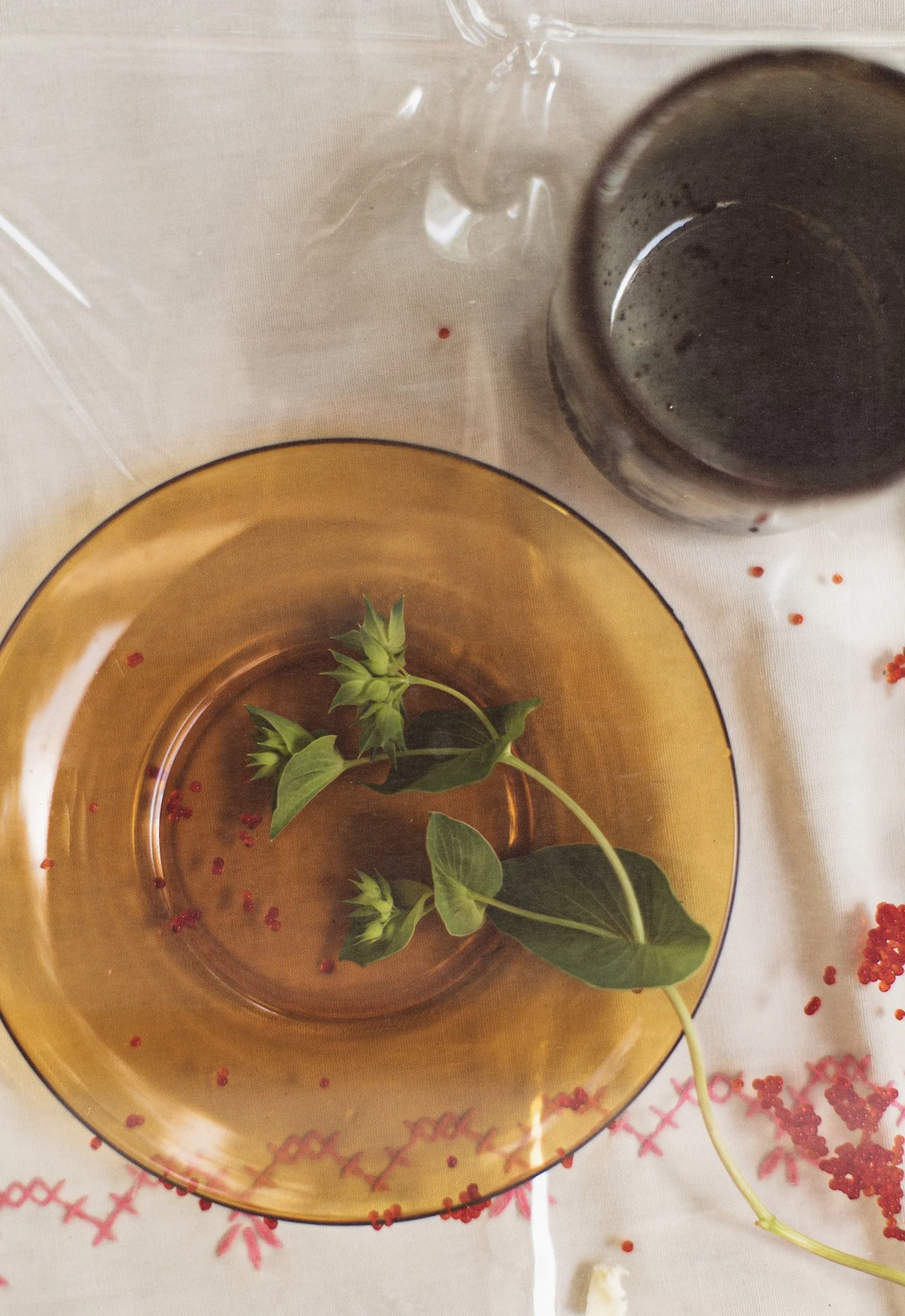
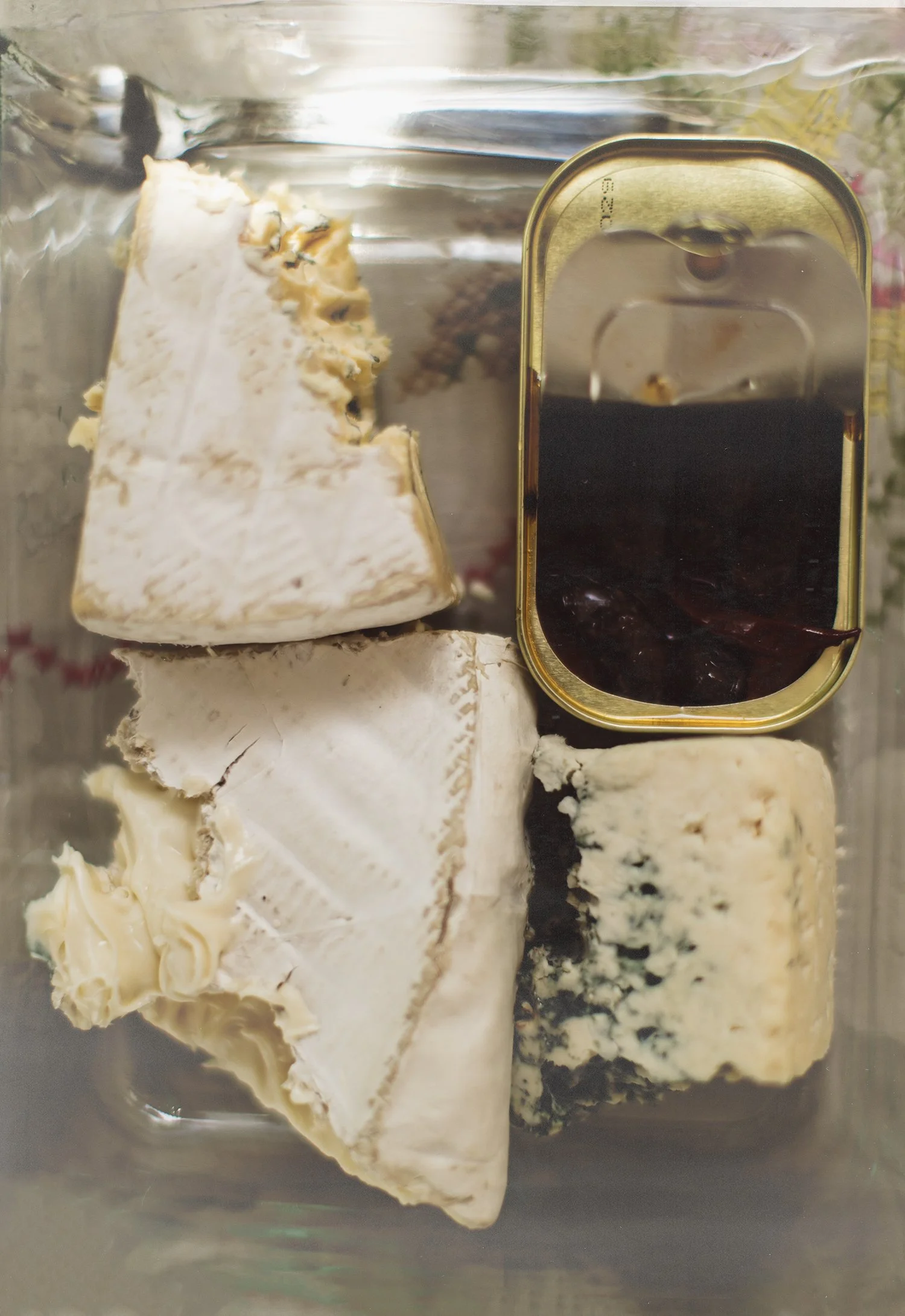
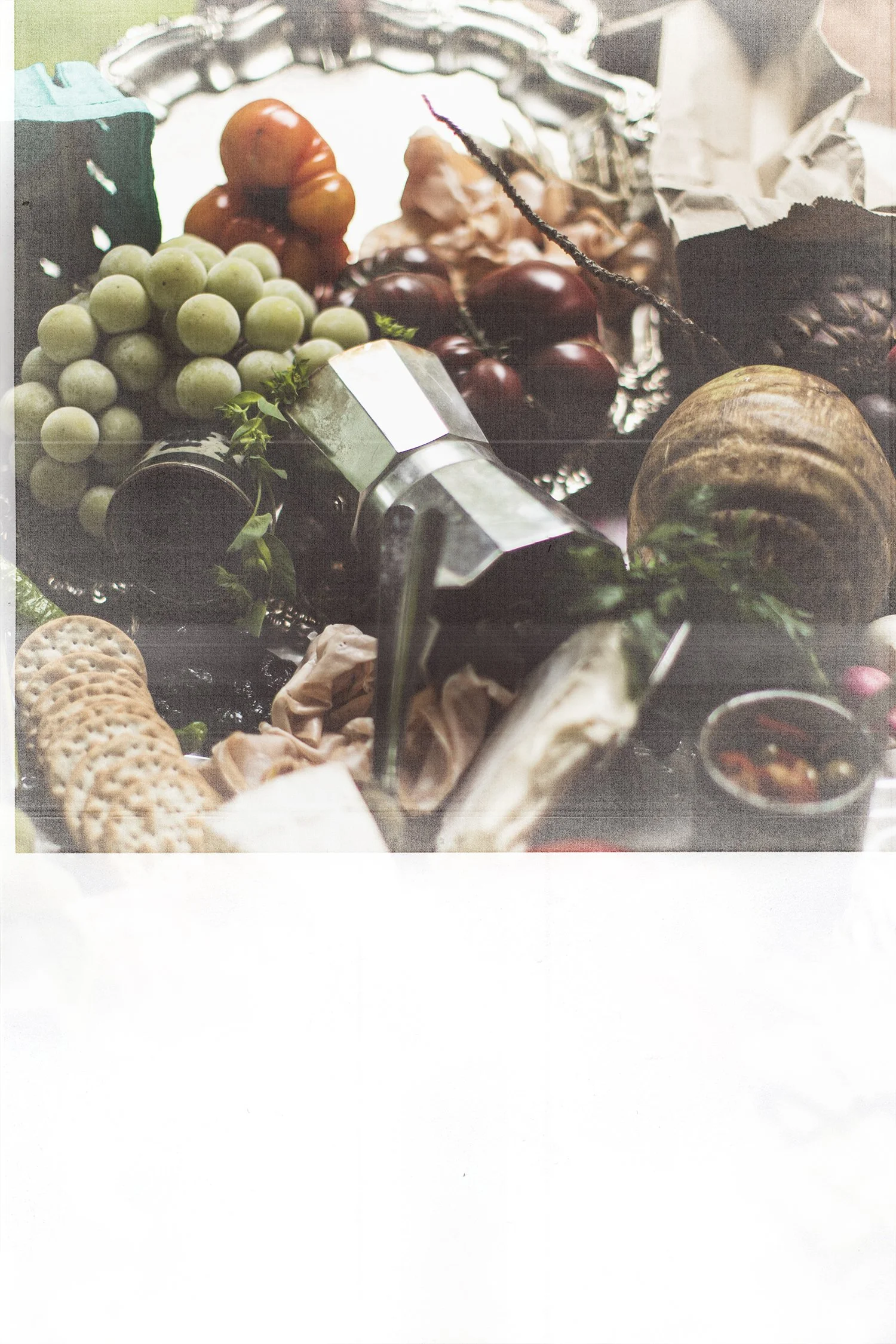
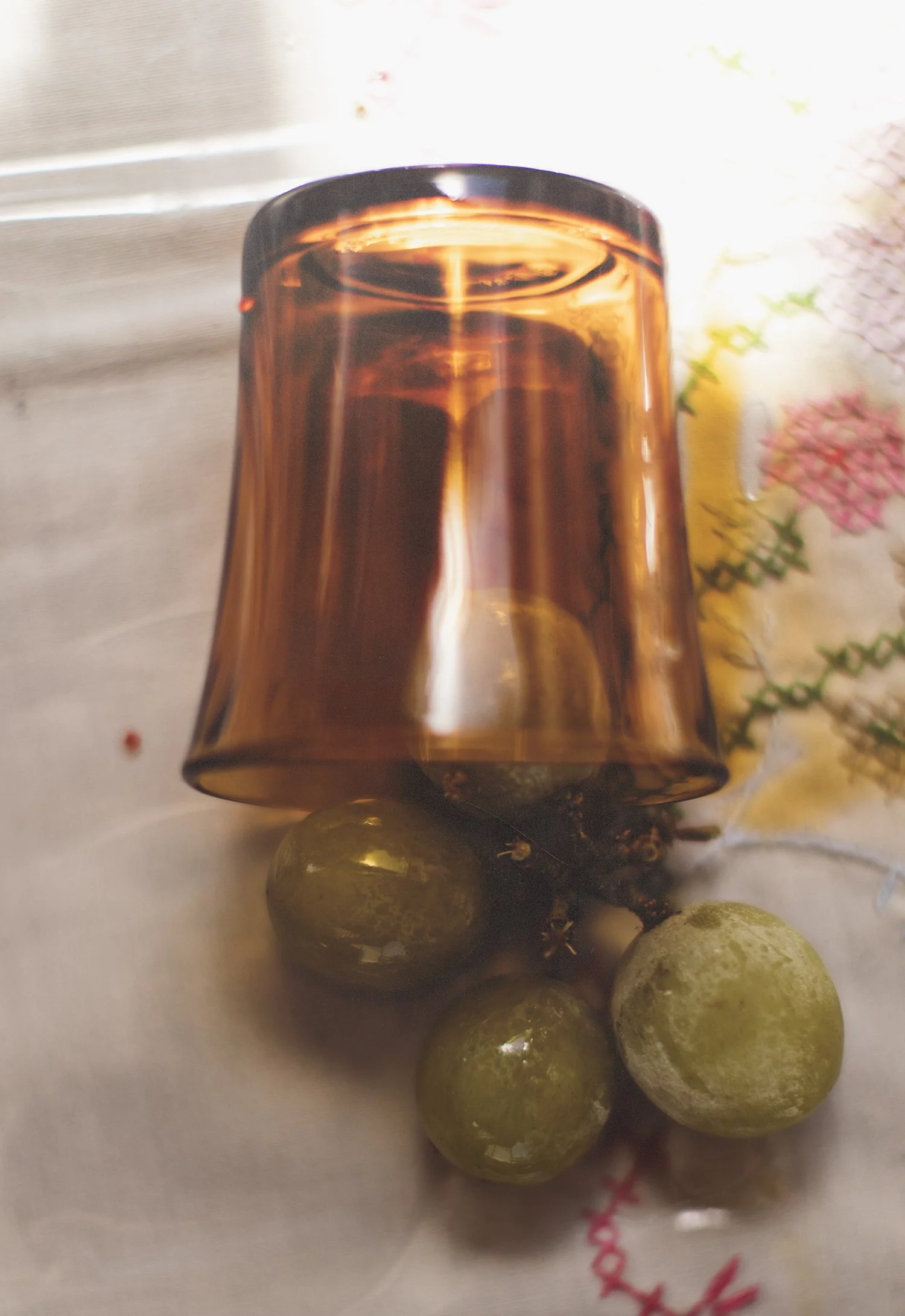
Nocturne in the Garden was the first gathering of this kind for amadeo amadeo, but it does not feel like it should be the last. It felt like the beginning of a language. A way to gather people not only around objects, but around atmosphere. Around taste. Around storytelling. Around the pleasure of seeing something familiar become unfamiliar again.
The evening brought together many of the things that amadeo amadeo is built from: creative direction, art direction, scent, painting, food, graphic design, curation, event planning, and culture. All of it working toward one feeling. One world.
And for one night, that world existed in the garden.
Paintings among trees.
Incense in the grass.
Silver on the table.
Smoke in the air.
A little fantasy, served cold.
A Rabbit Dinner
And as a kid, that just made sense to me.
Easter bunny… rabbit… dinner.
No questions asked.
That Which We Keep
There are things we keep without realizing we’ve decided to keep them.
Not objects. Not always.
Sometimes it’s the way someone ties an apron.
The way garlic hits hot oil.
The sound of a wooden spoon against a pot.
The smell of vinegar lifting through a stew.
Chiddu ca tinemu.
That which we keep.
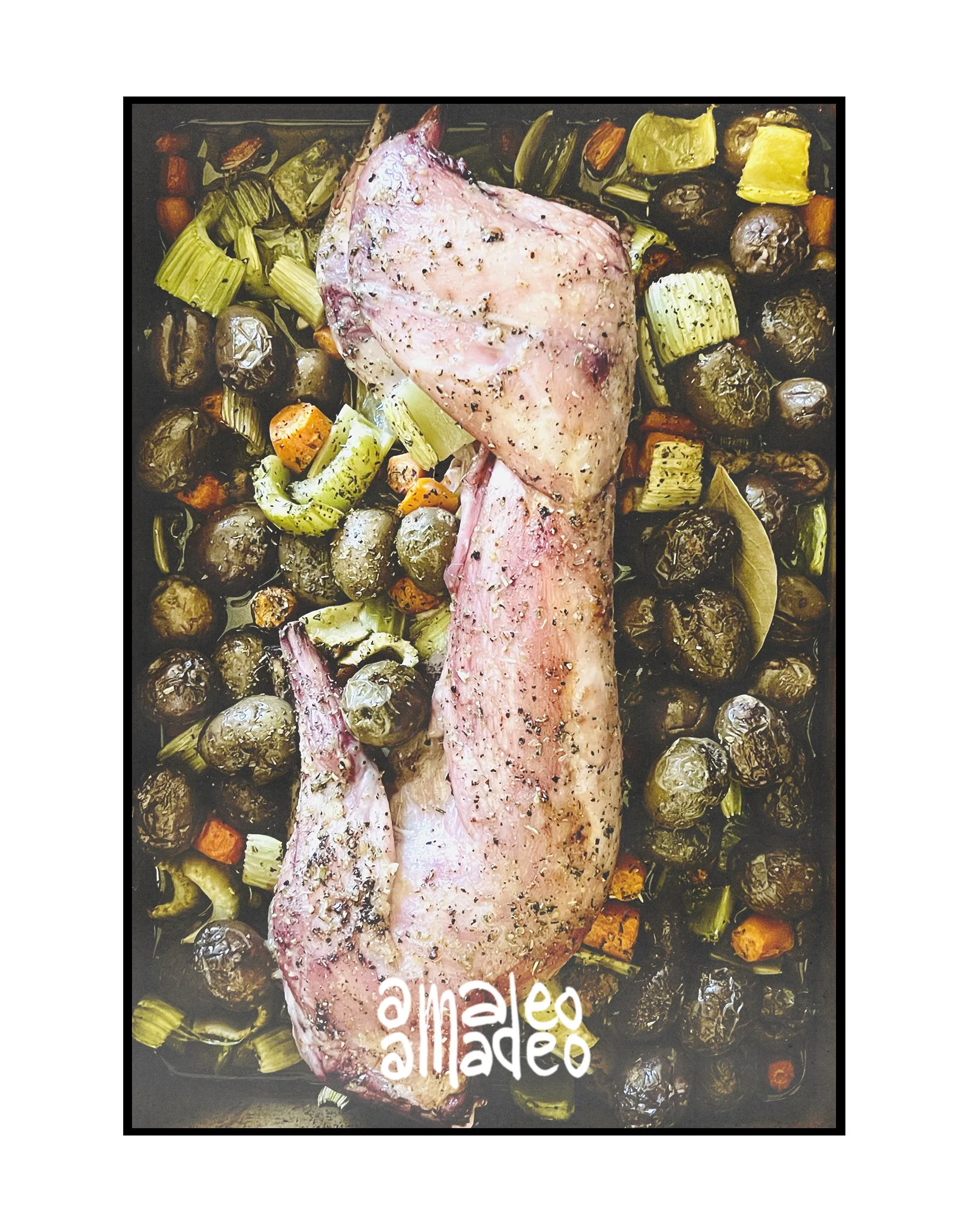
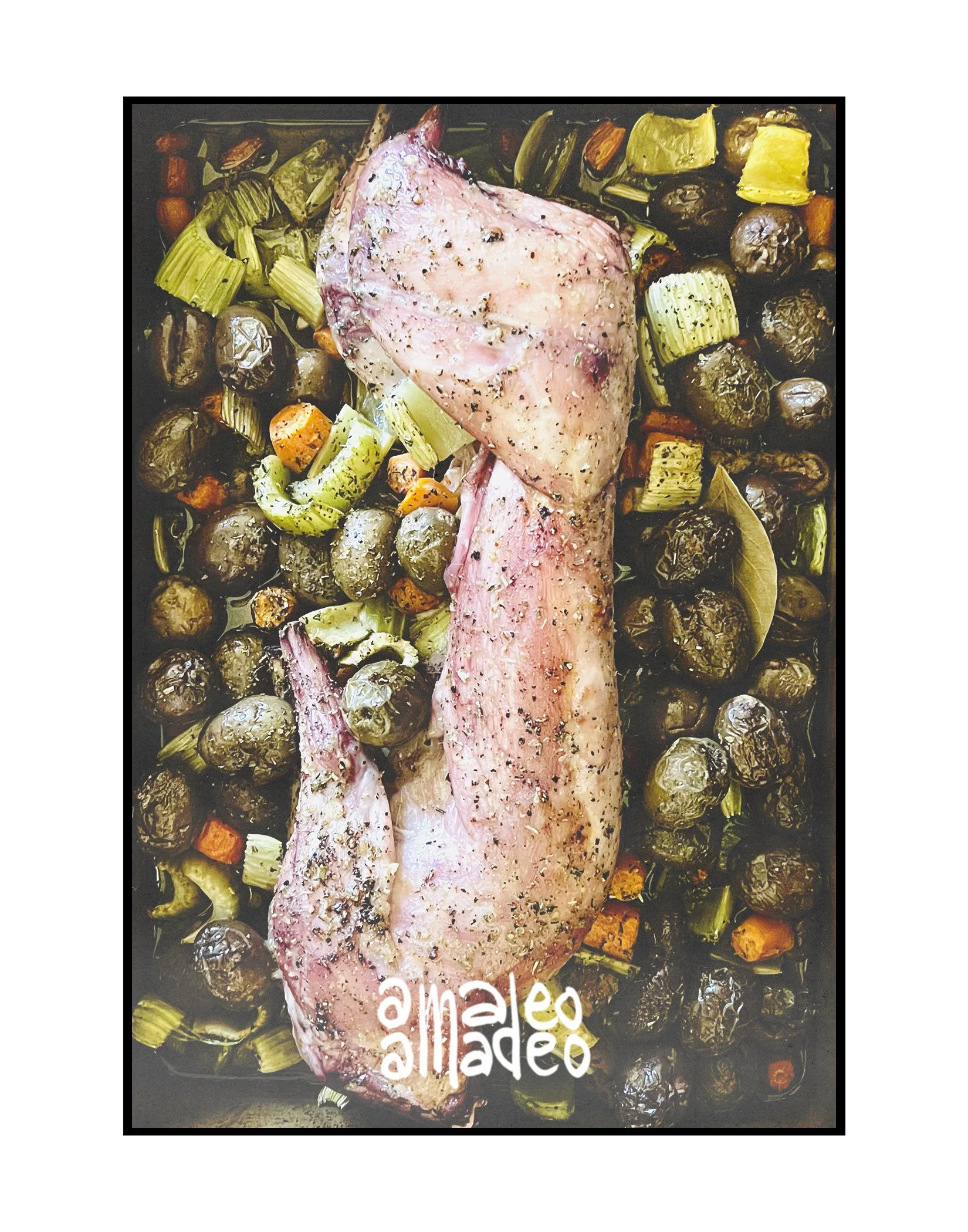
Last week, I made rabbit stemperata.
It’s something I’ve only ever known as an Easter dish. Not because someone told me that’s when you eat it—but because that’s when he made it. My grandfather. Pop.
In my family, it wasn’t chicken. It was rabbit. Always rabbit.
And as a kid, that just made sense to me.
Easter bunny… rabbit… dinner.
No questions asked.
I remember going with him to get it.
There was one place in town—Meadow Meat—down by the river.
You didn’t just walk into a store.
You walked into a giant refrigerator.
A heavy door. Cold air rushing out.
That immediate chill that hits your face and stays in your clothes.
Inside, it felt like a world not everyone knew about.
Almost like a private club for people who really cooked.
There were peppers for roasting.
Heads of garlic.
Jars of capers.
Hot peppers soaking in vinegar.
And somewhere in there, always, a hand-written sign:
“Sicilian green olives with pit.”
Pop would always get them.
A lot of them.
Because when we got home, he’d put on his white apron and start cooking—and one of the first things he’d do was pound the olives.
Not chop. Not slice.
Pound.
I didn’t know why at the time. I just knew it mattered.
And I knew I had to watch.
Even as a kid, there was this quiet feeling:
Pay attention. This is important.
No one said it out loud.
But I understood it.
At school, it was different.
I’d talk about what we ate at home—excited, proud.
Rabbit stew. Vinegar. Olives.
And it was always the same reaction:
“Ew.”
“Wait… rabbit??”
Laughter.
And I remember thinking—
How could something that feels this good, this full, be something to laugh at?
I didn’t have the language for it then, but I get it now:
Not everything meaningful translates.
Some things are meant to be experienced, not explained.
Last week, my brother and I went back.
Same place. Same building. Same door.
Meadow Meat
Nothing had changed.
It was still full of people who knew exactly why they were there.
People looking for something just a little more special than what you find in a grocery store.
We asked for rabbit.
The butcher disappeared into the back, and that’s when I saw it again:
“Sicilian green olives with pit.”
Of course.
When he came back, he asked,
“Anything else?”
And without even thinking:
“Yeah—one pound of green olives.”
He smiled.
“Ah… stemperata?”
Yes.
Exactly that.
There’s something about returning to a place like that—
not as a kid being brought along,
but as someone choosing to go back.
Choosing to continue it.
It stops being memory and becomes action.
This is what Chiddu ca tinemu is about.
Not just what we keep—but what we carry forward.
The recipes.
The rituals.
The small, specific ways of doing things that don’t exist anywhere else.
The things that might not make sense to everyone—
but mean everything to you.
This is the beginning of The Collection.
The pieces, the garments, the objects, the images—
they all come from this place.
From memory.
From inheritance.
From moments like standing in a cold room, watching someone you love prepare something with care.
Over the next few weeks, I’ll be sharing more of what I’ve kept.
Objects from my grandparents’ home.
Fragments. Textures.
Pieces of the collection.
All of it leading toward the full lookbook for
Collection 1: Chiddu ca tinemu.
Because at the end of the day,
this is what we really pass down:
Not things.
But ways of living.
This is Chiddu ca tinemu…
that which we keep, so we can one day give it away.
Heirloom at Comstock Ferre
Last night, my brother Nikko and I slipped into Heirloom at Comstock Ferre just as the evening settled in — around six, that soft hour when daylight is thinning but the room hasn’t fully turned to night.
Heirloom at Comstock Ferre
Old Wethersfield, Connecticut
There are places that feel designed for lingering.
Not rushed through. Not optimized. Just quietly built to hold people for a while.
Last night, my brother Nikko and I slipped into Heirloom at Comstock Ferre just as the evening settled in — around six, that soft hour when daylight is thinning but the room hasn’t fully turned to night.
We were greeted first by the pastry counter, still generously full in a way that immediately signals care. Cookies lined in rows. Cakes cut into clean slices. And, most importantly, the sourdough — weekend-only loaves that you learn quickly not to take for granted. When they’re gone, they’re gone.
We ordered instinctively.
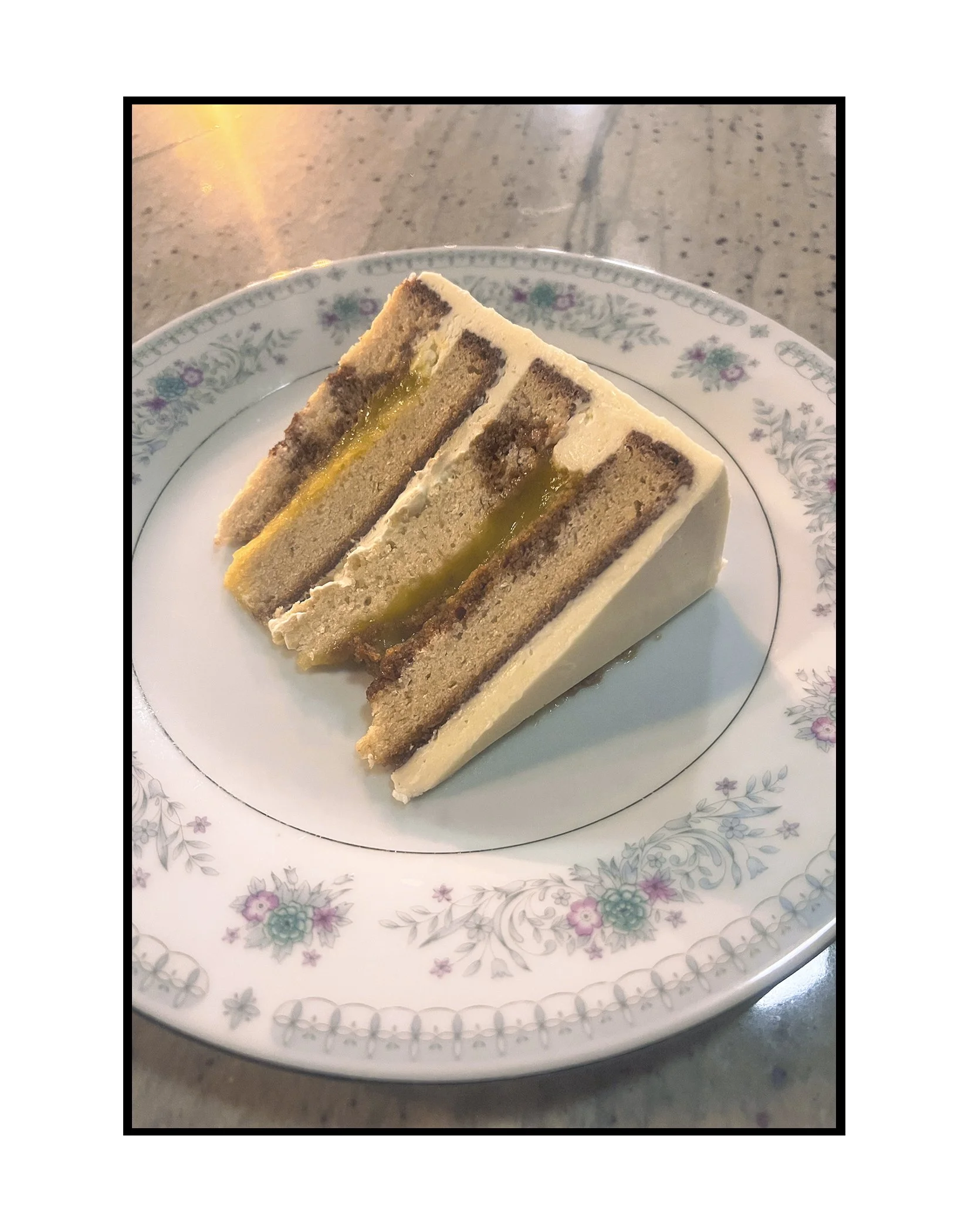
A slice of cake that read like a cousin to tiramisu, but brighter — layered with lemon curd running through the center. Light but grounded. Alongside it, a maple pecan cookie, which Nikko already knew to love.
Pastries in hand, we asked to sit at the bar.
At the Far End of the Bar
The bar was softly active — exactly the right temperature of energy.
Two women sat nearby, settled into their cocktails. Two men worked quietly on laptops. One had ordered a slice of pizza that looked convincing enough to note mentally for next time.
The music was low but rhythmic, just enough to hold the room together without asking for attention. It created that rare condition where conversation can unfold without strain — no raised voices, no leaning in too close just to be heard.
A place to talk.
A place to think.
The Drinks
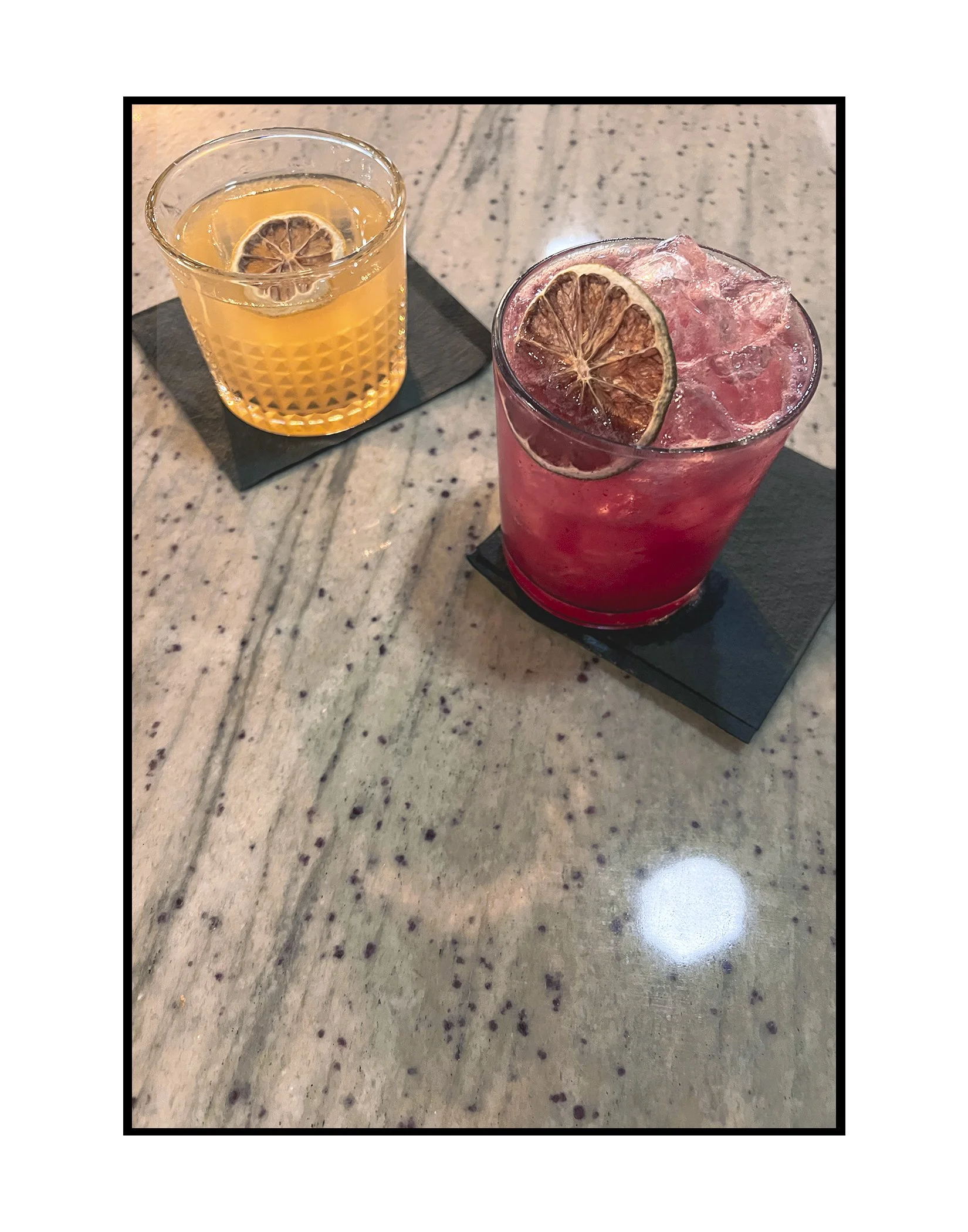
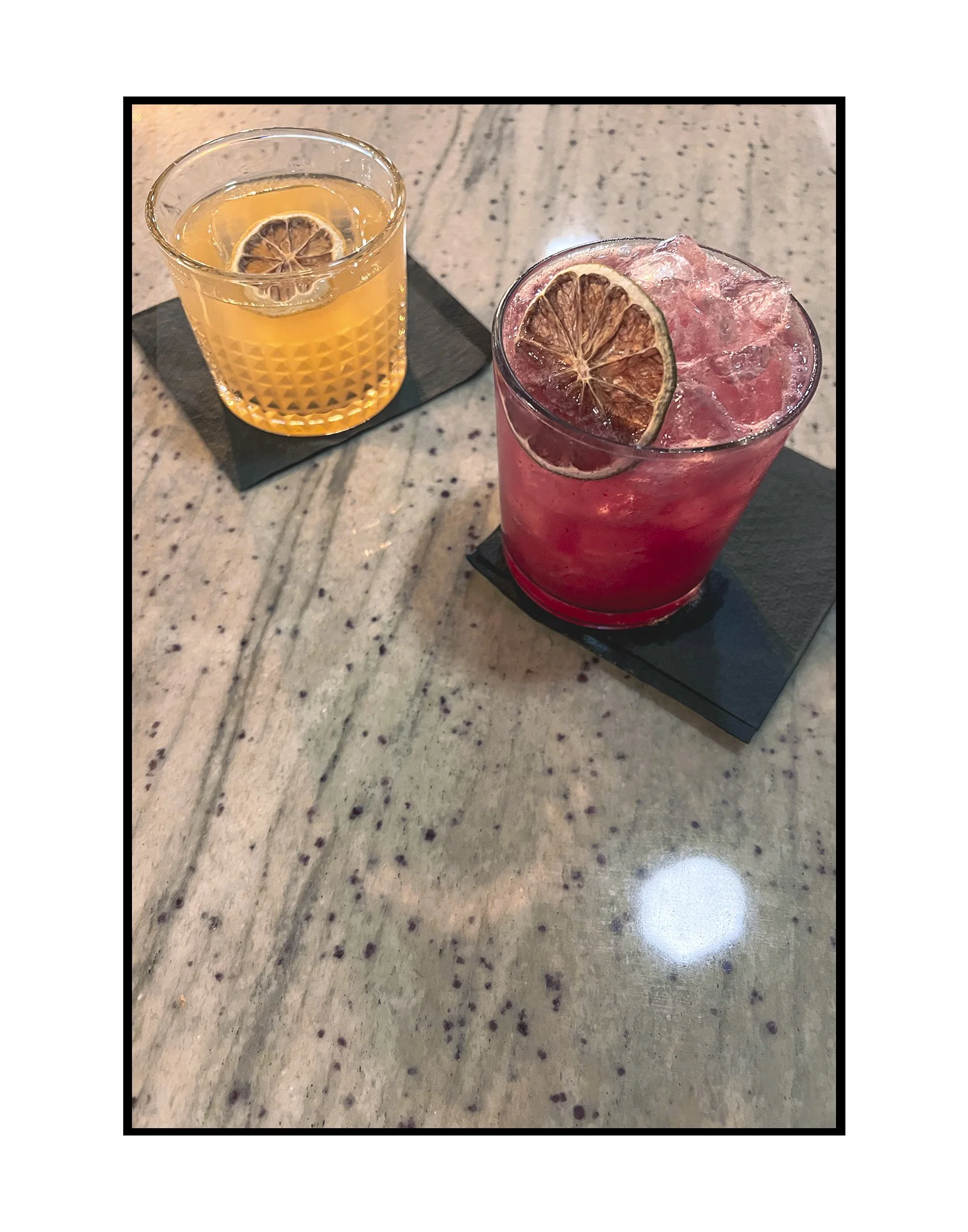
Nikko ordered the Honey Hole — Tomcat gin, lemon, ginger, honey lavender, finished with a scotch float.
When it arrived, the color was the first thing — a kind of liquid sunlight. He lifted the glass and immediately caught the scotch on the nose before even tasting.
The first sip led with the smoke of the float, quickly rounded by honey and the gentle heat of ginger. Warm but bright. Structured but easy.
His immediate read was simple:
perfect for any season.
Something that could warm you in winter but still feel refreshing in summer — a careful juxtaposition that kept revealing itself with each sip.
I ordered the Spicy Berry and Hibiscus — reposado, lime, blueberry, raspberry, hibiscus jam, finished with Scrappy’s bitters.
Where Nikko’s leaned golden, mine sat deeper in tone. Dark, warm, slightly spiced. The kind of drink that feels most at home beside a fireplace in the colder months. Soft fruit, gentle heat, and enough body to make you slow down while drinking it.
Both cocktails carried intention without heaviness.
Small Moments That Make a Room
At one point, a family with young children came in and took seats nearby.
Behind the bar, the bartender began torching large marshmallows — slow, deliberate passes of the flame — before placing them on top of the children’s hot chocolates. The room shifted almost instantly.
You could hear it happen.
Small oohs and ahhs from nearby tables. Curious glances. That quiet, shared delight that moves through a space when something simple is done well.
Later, the woman next to me ordered a cocktail garnished with a sprig of rosemary. The bartender passed the torch over it briefly, releasing that sharp, green aroma into the air.
For a few minutes, the room carried layers of scent:
Pastry sugar.
Toasted marshmallow.
Warm rosemary.
Fragrant citrus and spirits.
It punctuated the evening in the best way — subtle but immersive.
Conversations at the Bar
The bartender was warm and easy to talk with — the kind of presence that makes asking questions feel natural.
I had to ask about the bacon, egg, and cheese.
I’ve had it there before, and it lingers in memory the way truly good simple food does. Unfortunately, they were sold out for the evening — a disappointment, but an understandable one.
What softened the blow was learning what they offer to take home.
Par-baked biscuits.
House-made cinnamon buns ready for the oven.
Even sourdough dough available to bring back to your own kitchen.
This detail matters.
It extends the experience beyond the room itself — letting the ritual continue at home.
And then: the small victory.
Back at the pastry counter, two sourdough loaves remained. We managed to claim one of the last of the day — the kind of small win that quietly makes an evening feel complete.
Why Places Like This Matter
As we sat there — pastries half-finished, cocktails slowly disappearing — the conversation inevitably turned toward amadeo amadeo and the kind of world I’m building.
What struck me most is how aligned the atmosphere at Heirloom feels with a slower, more intentional way of living.
Nothing about the space pushes you out the door.
Nothing feels overworked.
There is craftsmanship here, but it isn’t performative.
In a town like Old Wethersfield, places like Heirloom matter because they create more than just a stop for coffee or a drink. They build a pocket of community. A place where you can sit, talk, work quietly, bring your family, or simply pause for a moment.
More personally, it offers something even harder to manufacture:
The feeling of being taken care of.
Of being able to settle in.
Of being allowed — even encouraged — to slow down in the middle of everything else moving quickly.
And in this moment, that kind of space feels less like a luxury and more like a necessity.
Winter Citrus & Fennel Ritual Plate
After time spent at Comstock Ferre — moving slowly between the produce, the seeds, the bread counter — it felt right to assemble something simple. Something seasonal. Something meant to be placed in the center of the table and passed between hands.
This plate began with sourdough from Heirloom at Comstock Ferre. Warm, structured, meant to be torn rather than carefully sliced. The kind of bread that immediately shifts a table into something more communal.
Everything else gathered around it.
Blood oranges for brightness in the depth of February.
Fennel for clean, cool lift.
Endive for bitterness.
Mint and parsley for green sharpness.
Olive oil, salt, pepper — enough, but not too much.
Toasted pistachios for texture.
Nothing here is rigid. Everything is adjustable.
This is less a fixed recipe and more a way of sharing time.
Winter Citrus & Fennel Ritual Plate
You’ll need (loosely):
Blood oranges (or any winter citrus you find)
1 fennel bulb, shaved thin
A few endives, leaves separated or sliced
Fresh mint
Fresh parsley
Extra virgin olive oil
Flaky sea salt
Fresh cracked black pepper
Toasted pistachios, lightly crushed
Sourdough from Heirloom at Comstock Ferre
Optional: a soft cheese such as ricotta or burrata
To assemble
Slice the citrus into thin rounds or soft half-moons, removing any seeds. Let the juice fall naturally onto the plate — it becomes part of the dressing.
Arrange the citrus across a large shallow platter. Scatter the shaved fennel over and between the slices so the textures begin to intermingle.
Tuck in the endive leaves, allowing some height and structure to form naturally. Tear the mint and parsley gently with your hands and let them fall where they may.
Drizzle generously with good olive oil. Finish with flaky sea salt, several turns of black pepper, and a loose scattering of toasted pistachios.
If using cheese, add soft spoonfuls or torn pieces across the plate — not too neat.
To serve
Grill or warm the sourdough until the edges are crisp and the interior stays tender.
Place the bread alongside the platter and serve immediately, encouraging everyone at the table to tear, scoop, and build their own bites.
This dish is meant to be moved through slowly — passed, adjusted, shared.
Swap the citrus.
Change the herbs.
Use what looks best that day.
The ritual matters more than the precision.
Break the bread.
Pour the oil.
Stay at the table a little longer than planned.
Circles, Squares, and Scent Trails: Day 2 in Paris
Today began as all great journeys do—with breakfast. A meal? No, a ritual. Eggs cracked like the cosmos, bread toasted to the precise hue of a sepia photograph. Fueled, prepped, and curious, I ventured into the Parisian ether with no plan, no map, no compass but whimsy. Paris whispered, “Follow me,” and I obeyed.
Today began as all great journeys do—with breakfast. A meal? No, a ritual. Eggs cracked like the cosmos, bread toasted to the precise hue of a sepia photograph. Fueled, prepped, and curious, I ventured into the Parisian ether with no plan, no map, no compass but whimsy. Paris whispered, “Follow me,” and I obeyed.





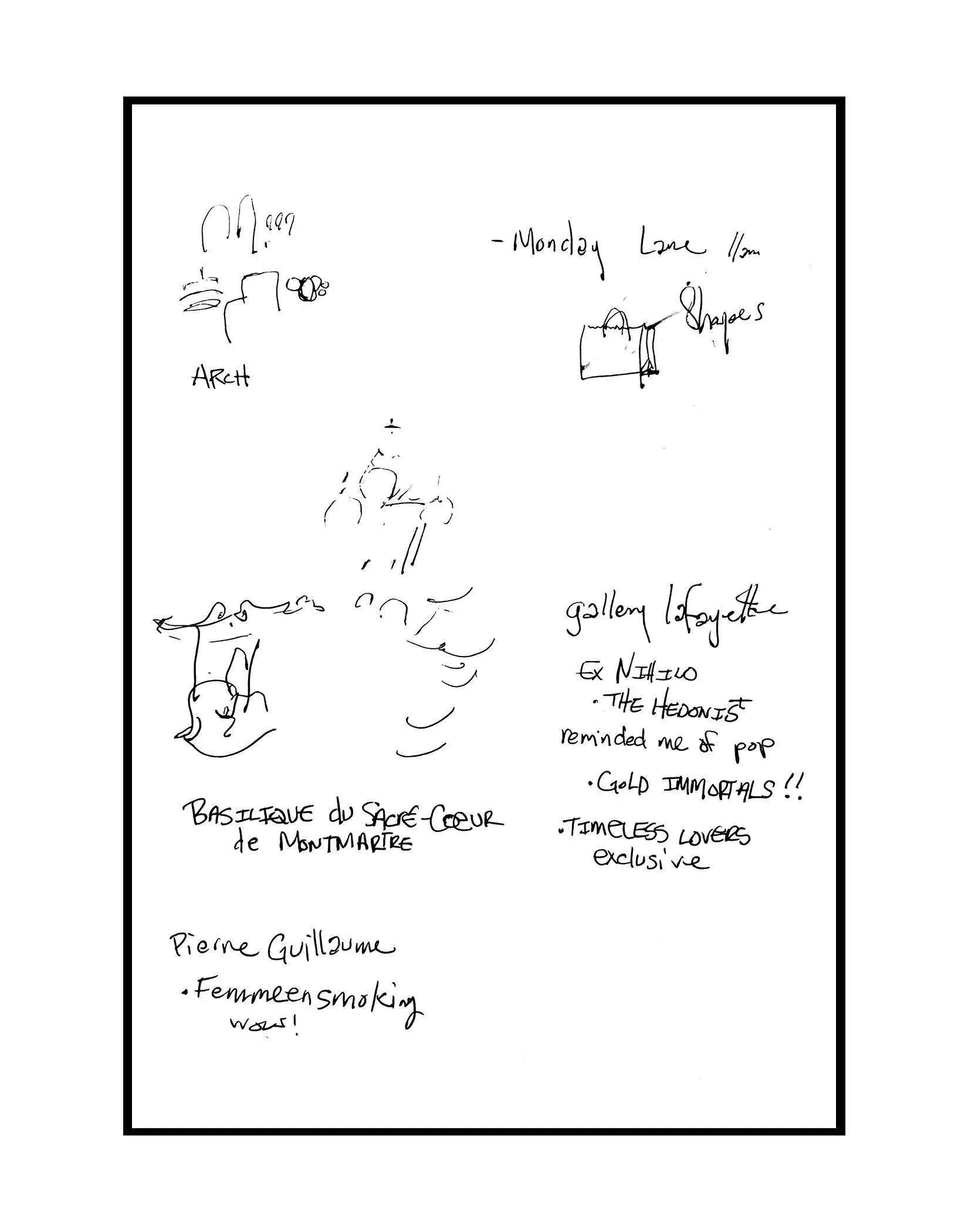
First stop: Galeries Lafayette, a cathedral to commerce and scent. The atrium engulfed me—golden arches framing a glass dome that transformed the space into a Saint Honoré cake, and I, the cherry. I sniffed my way to the Ex Nihilo booth. Hedonist transported me back to my grandfather’s kitchen: citrus zest cutting through ginger, grapefruit sparkling on a base of amber like sunlight through stained glass. Gold Immortals? Sweet, floral silk. And Timeless Lovers—a store exclusive—left me reeling. I felt gilded, perfumed, like a ghost draped in velvet.
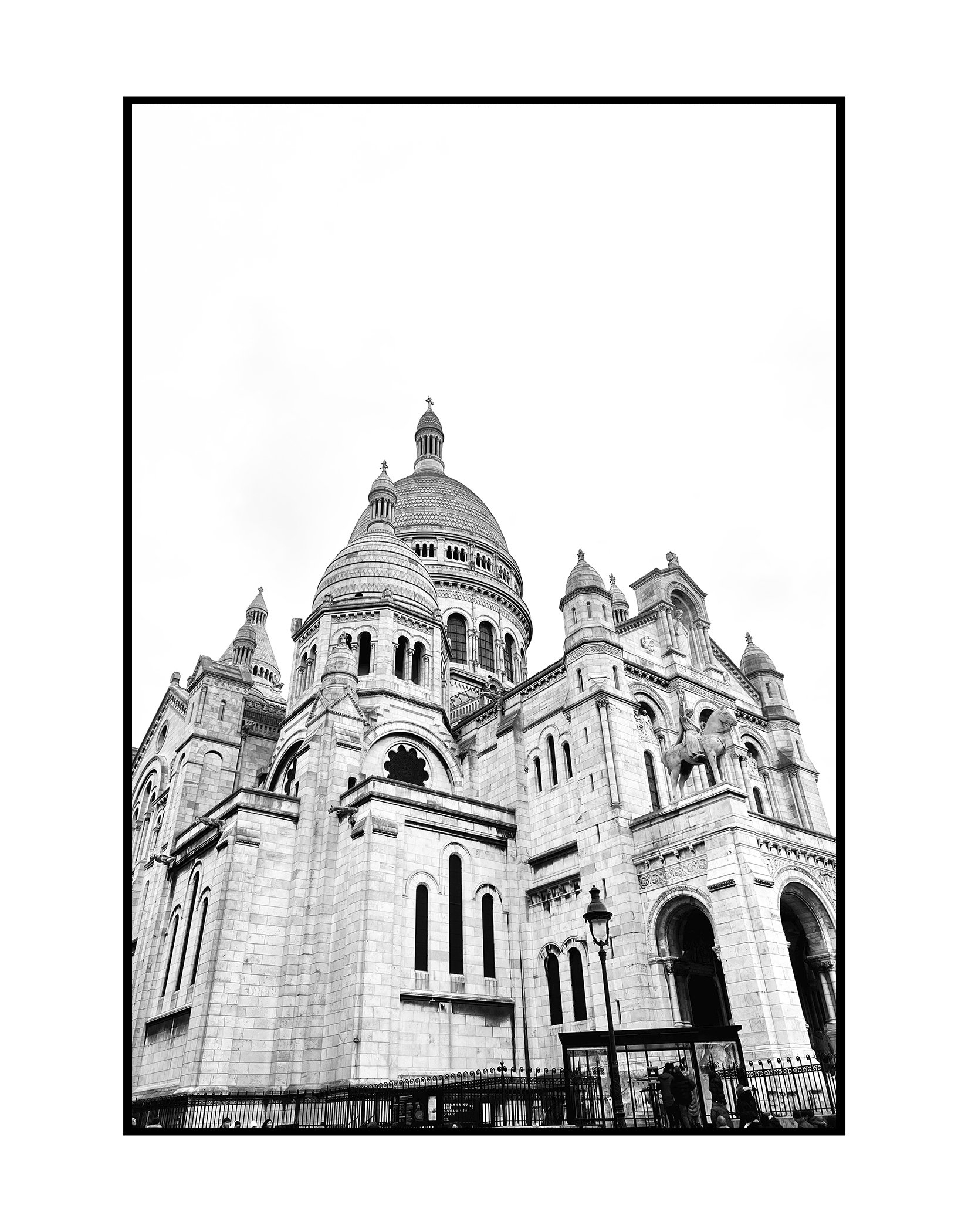
Out into the streets, up the serpentine path to Montmartre, my nose trailing behind boulangeries, fromageries, and florists. The pastries taunted me, each one a jewel of sugared perfection: Paris-Brest, Chouquettes, Mille-feuille. The list stretched endlessly like the hill before me. Every step closer to Sacré-Cœur was marked by a gasp—first at the domes, then at the carousel spinning in concentric circles, then at the view. Paris sprawled out below like an impressionist painting. The artists in Montmartre sketched tourist faces, and I wondered if they could draw the scent of the crêpes folding delicately into the air.
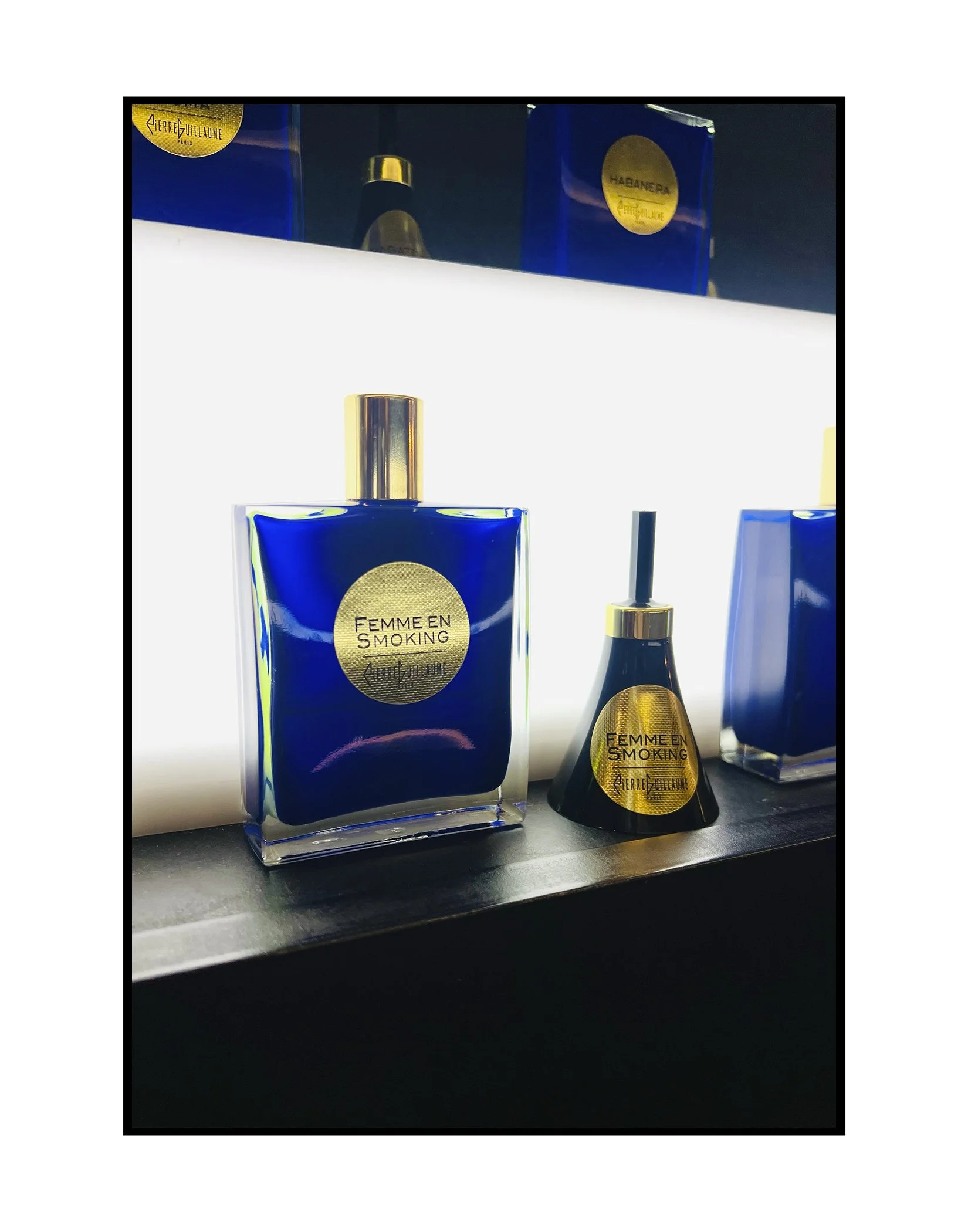
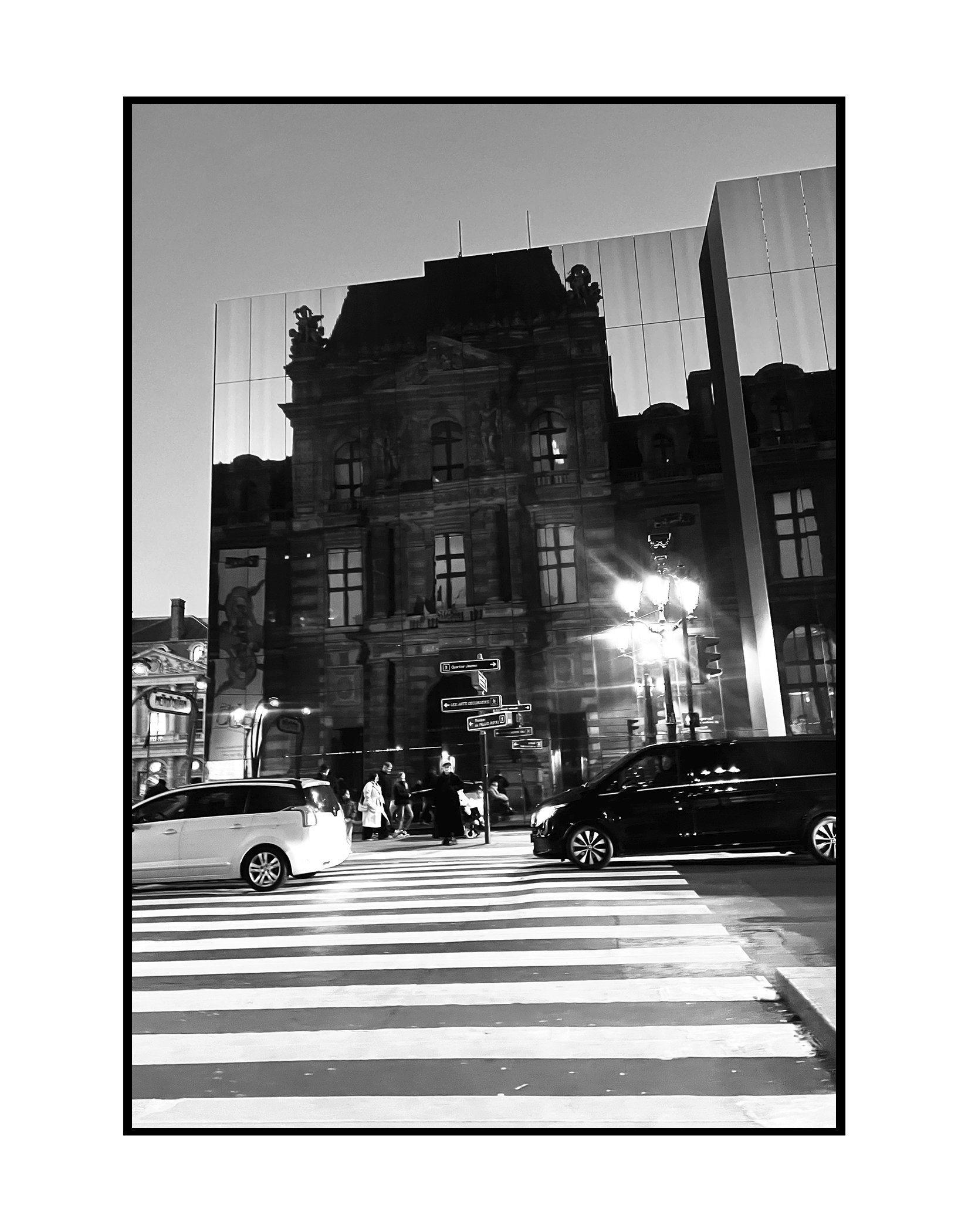
Onward to Jardin du Palais Royal, where trees lined up in cubist rows, their stark geometry slicing through my morning of domes and spirals. My brain shifted: circles gave way to squares, curves to sharp angles. Pierre Guillaume’s logo echoed this transformation, leading me instinctively to his store. There I met “Femme en Smoking,” a scent I couldn’t define—feminine, floral, but woody, sharp. The spray on my wrist became a breadcrumb in my day’s trail, guiding me forward.
By evening, I crossed the Seine to Notre Dame, its towers pressing against the Parisian sky like a hymn. My phone’s battery dwindled as I wandered, drawn to the bookstands along the riverbanks, their yellowing pages humming stories to me. Under a nearby bridge, a ghost of my younger self appeared—a memory of a photograph taken here 16 years ago. Full circle, or square? I can’t say.
With my phone at 3%, I backtracked my way home, or maybe “Femme en Smoking” led me. A final stop at the Monop for a baguette—another ritual. I stood in line as the battery threatened to extinguish, praying for one last charge to complete my purchase. Success: baguette secured.
Now, as I collapse into my apartment, I leave you with this: Follow my scent trail, the invisible breadcrumbs of “Femme en Smoking” through circles and squares, spirals and angles. Tomorrow is another abstraction waiting to be explored.

Stay curious. Stay scented. Stay tuned.